1. Search Result
Search Result
Results for "

enzyme-activated

" in MedChemExpress (MCE) Product Catalog:

9

Inhibitors & Agonists

1

Peptides

Cat. No. Product Name Target Research Areas Chemical Structure
  • HY-156112

    Ser/Thr Protease Cancer
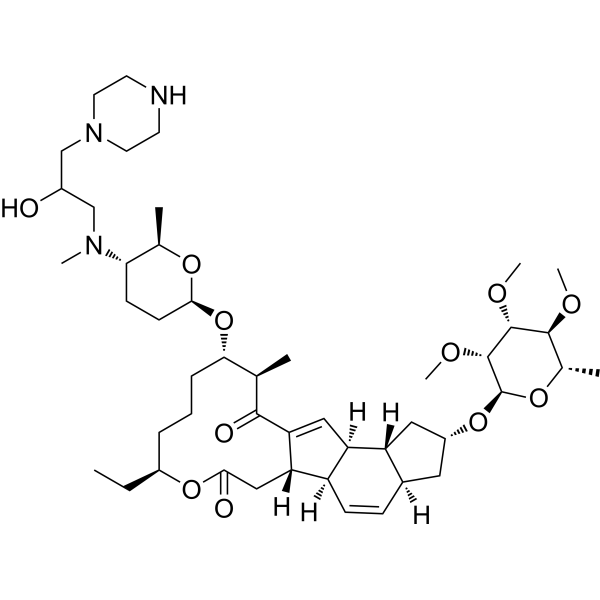
    LM2I is a derivative of Spinosyn A (SPA). LM2I is argininosuccinate synthase (ASS1) enzyme activator, and tumor inhibitor that directly interact with ASS1. LM2I has significant antiproliferative activity in seven colorectal cancer cell-lines and xenograft tumors of colorectal cancer. LM2I inhibits colorectal cancer cell growth via the EGFR pathway .
    LM2I
  • HY-16677A

    MDL72974A

    Monoamine Oxidase Neurological Disease
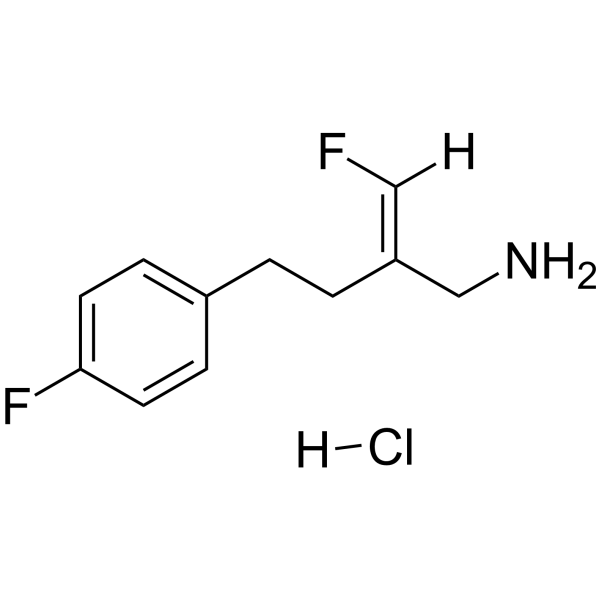
    Mofegiline hydrochloride (MDL72974A) is an orally active and selective enzyme-activated irreversible inhibitor of MAO-B, with marked selectivity on the MAO-B over MAO-A with IC50s of 3.6 nM (MAO-B) and 680 nM (MAO-A), respectively. Mofegiline hydrochloride is also an inhibitor of semicarbazide-sensitive amine oxidase (SSAO) .
    Mofegiline hydrochloride
  • HY-W010989

    Biochemical Assay Reagents Bacterial Infection Neurological Disease Inflammation/Immunology Cancer
    Gly-His-Lys acetate is a natural, circulating regulatory and antimicrobial tripeptide derived from extracellular matrix proteins. Gly-His-Lys acetate binds Cu 2+ to support copper enzyme activation, antioxidant processes, cellular bioenergetics, and the synthesis of elastin, collagen and catecholamines. Gly-His-Lys acetate regulates cell growth, differentiation and tissue repair, and exerts regenerative, anxiolytic, anti-inflammatory, analgesic and immunosuppressive activities. Gly-His-Lys acetate induces liver degenerative changes. Gly-His-Lys acetate can be used for the research of infections, anxiety, pain-related behaviors and immune-associated liver diseases .
    Gly-His-Lys acetate
  • HY-174811

    PROTACs Epigenetic Reader Domain PD-1/PD-L1 Inflammation/Immunology Cancer
    PROTAC BRD4 Degrader-33 is an enzyme activated clickable BRD4 PROTAC degrader with favorable tumor microenvironment-response. PROTAC BRD4 Degrader-33 has superior tumor tissue penetration capabilities and efficiently inhibits PD-L1 protein expression. PROTAC BRD4 Degrader-33 shows potent anti-tumoral immunomodulation activity in 4T1 tumor-bearing mice model . Pink: BRD4 ligand (HY-174812); Blue: CRBN ligase ligand (HY-10984); Black: linker
    PROTAC BRD4 Degrader-33
  • HY-163346

    Biochemical Assay Reagents Metabolic Disease
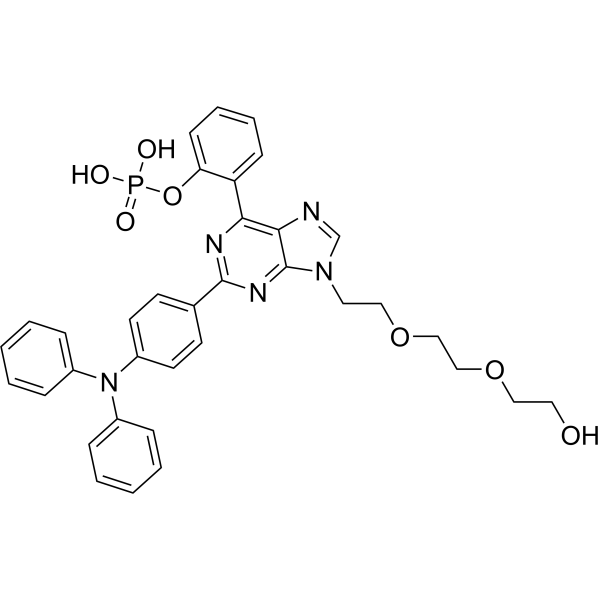
    TPEG-P is an enzyme-activated intramolecular hydrogen bond (IMHB) enhanced probe, developed for ALP detection in cells and mice models of DILI .
    TPEG-P
  • HY-107546

    Guanylate Cyclase Cardiovascular Disease
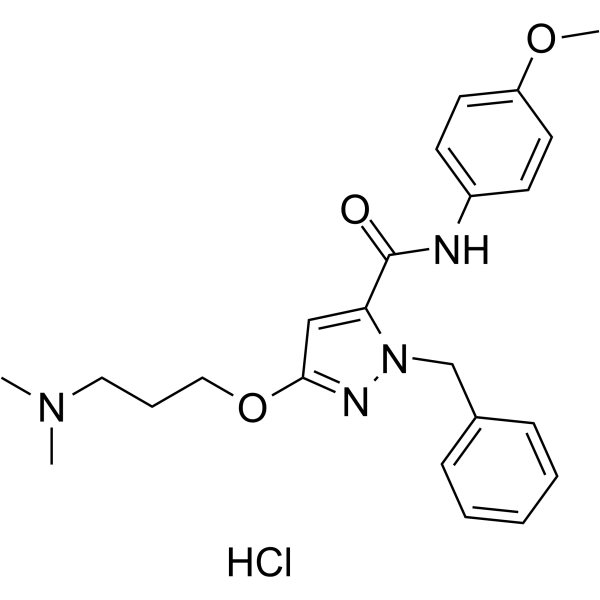
    CFM 1571 hydrochloride is the stimulator of the nitric oxide receptor, soluble guanylate cyclase (sGC) with an EC50 and IC50 of 5.49 μM and 2.84 μM, respectively. Soluble guanylate cyclase (sGC) is a key signal-transduction enzyme activated by nitric oxide (NO). CFM 1571 hydrochloride has the potential for the research of cardiovascular and other diseases .
    CFM 1571 hydrochloride
  • HY-149545

    1,3-Dipalmitoyl-2-docosahexaenoyl glycerol

    Carnitine Palmitoyltransferase (CPT) Fatty Acid Synthase (FASN) Metabolic Disease
    1,3-Palmitin-2-docosahexaenoin (1,3-Dipalmitoyl-2-docosahexaenoyl glycerol) is the isomer of triacylglycerol (TAG), in which docosahexaenoic acid (DHA) is located at the β position (sn-2) of the glycerol backbone. 1,3-Palmitin-2-docosahexaenoin inhibits fatty acid synthase and cholesterol metabolism enzymes, activates carnitine palmitoyltransferase (CPT) in liver mitochondria and promotes β-oxidation of fatty acids. 1,3-Palmitin-2-docosahexaenoin exhibits lipid metabolism regulating activity .
    1,3-Palmitin-2-docosahexaenoin
  • HY-179376

    Bacterial Infection
    Anti-virulence factor-IN-3 (Compound 21) is a covalent β-aminosulfinyl type anthrax edema factor (EF) inhibitor, with a Ki value of 0.44 μM. Anti-virulence factor-IN-3 generates an active ethylene sulfinyl intermediate, which forms an irreversible covalent bond with the Lys residue at the active center of EF, permanently inhibiting the adenylate cyclase activity of EF. Anti-virulence factor-IN-3 effectively inhibits the cAMP production induced by EF, with an EC50 value of 0.15 μM. Anti-virulence factor-IN-3 can be used for research on anthrax Infection .
    Anti-virulence factor-IN-3
  • HY-107546R

    Reference Standards Guanylate Cyclase Cardiovascular Disease
    CFM 1571 hydrochloride (Standard) is the analytical standard of CFM 1571 (hydrochloride) (HY-107546). This product is intended for research and analytical applications. CFM 1571 hydrochloride is the stimulator of the nitric oxide receptor, soluble guanylate cyclase (sGC) with an EC50 and IC50 of 5.49 μM and 2.84 μM, respectively. Soluble guanylate cyclase (sGC) is a key signal-transduction enzyme activated by nitric oxide (NO). CFM 1571 hydrochloride has the potential for the research of cardiovascular and other diseases .
    CFM 1571 hydrochloride (Standard)

Inquiry Online

Your information is safe with us. * Required Fields.

Salutation


Country or Region *

Applicant Name *


Organization Name *

Department *


Email Address *


Product Name *

Cat. No.


Requested quantity *

Phone Number *


Remarks

Inquiry Online

Inquiry Information

Product Name:
Cat. No.:
Quantity:
MCE Japan Authorized Agent:

