16 Results for "

functional pain

" in MedChemExpress (MCE) Product Catalog:
Products (16)

16 Results for "functional pain" in MCE Product Catalog:

1
1 Cited Publications
Cat. No.: HY-N0340
CAS No.: 149-64-4
Synonyms: Hyoscine butylbromide; (-)-Scopolamine butylbromide; Butylscopolamine bromide
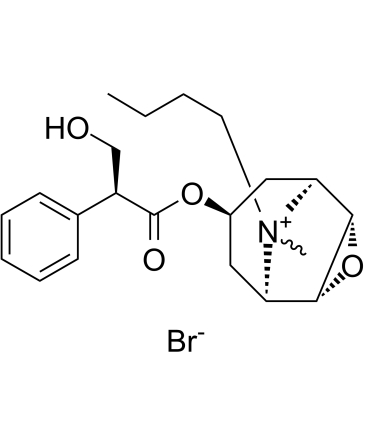
Scopolamine butylbromide (Hyoscine butylbromide) is an orally active anticholinergic agent and spasmolytic. Scopolamine butylbromide binds with high affinity to rat cardiac M2 (Ki 83 nmol/L), hM2 (Ki 233 nmol/L), rat intestinal M3 (Ki 290 nmol/L) and hM3 (Ki 643 nmol/L) muscarinic receptors. Scopolamine butylbromide exerts a dose-dependent antagonistic effect on Carbachol-induced gastrointestinal smooth muscle spasm. Scopolamine butylbromide can be used for the research of abdominal colic and pain associated with gastrointestinal spasm, functional abdominal pain, chronic gastropathy and gastric ulcer .
loading...
    loading...
1
1 Cited Publications
Cat. No.: HY-120380
CAS No.: 133314-07-5
Purity:  99.8%
Target:  

MOFs PARP

Research Areas:  

Neurological Disease

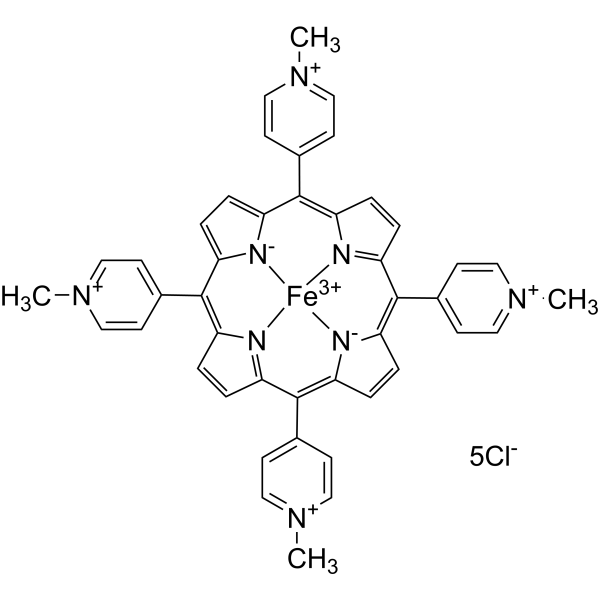
FeTMPyP is an orally active poly (ADP-ribose) polymerase (PARP) inhibitor. FeTMPyP inhibits cell death, nitrotyrosine formation, and depolarization of mitochondrial transmembrane potential. FeTMPyP reduces homocysteine-induced nitrosative stress and partially restores TFEB protein and mRNA levels. FeTMPyP improves functional and behavioral deficits caused by chronic constriction injury in rats. FeTMPyP alleviates acute cerebral infarction in a rat model of middle cerebral artery occlusion with mild hyperglycemia. FeTMPyP can be used in studies related to neuropathic pain, renal aging, ischemic penumbra, and hyperglycemic stroke .
loading...
    loading...
1
1 Cited Publications
Cat. No.: HY-14900
CAS No.: 916591-01-0
Purity:  99.94%
Synonyms: GRC-10693
Target:  

Cannabinoid Receptor

Research Areas:  

Inflammation/Immunology

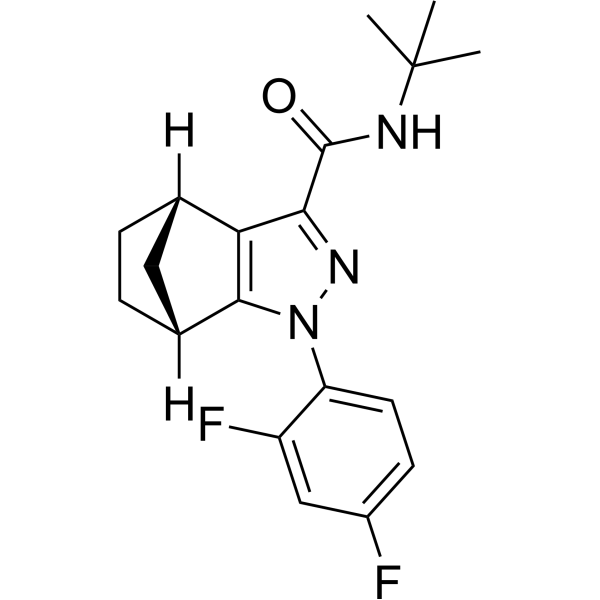
Tedalinab (GRC-10693) is a potent, orally active, and selective cannabinoid receptor 2 (CB2) agonist. Tedalinab has >4700-fold functional selectivity for CB2 over CB1. Tedalinab has potential for neuropathic pain and osteoarthritis treatment .
loading...
    loading...
Cat. No.: HY-108667
CAS No.: 61368-63-6
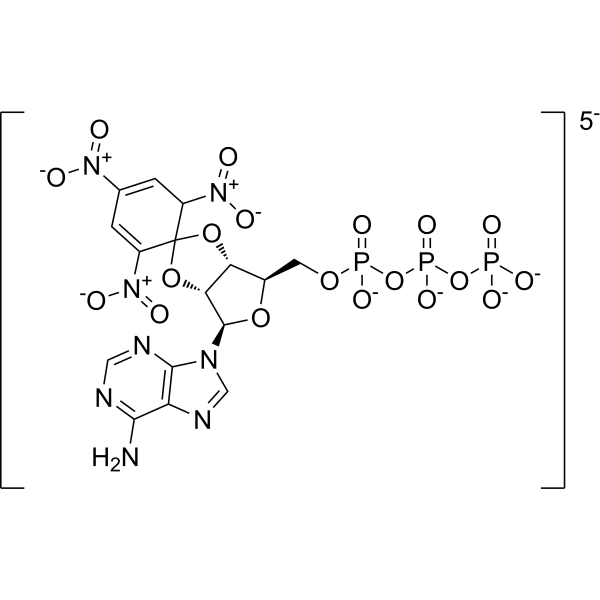
TNP-ATP triethylammonium is a P2X receptor antagonist with an IC50 of 0.010 μM for P2X3 and an IC50 of 0.062 μM for P2X2/3. TNP-ATP triethylammonium acts as an inhibitor of CheA autophosphorylation, with a Ki of 0.7 µM. TNP-ATP triethylammonium blocks the functional activation of P2X1-7 receptors. TNP-ATP triethylammonium attenuates hypoxia-induced IL-1β expression and release. TNP-ATP triethylammonium alleviates visceral pain, and improves hypoxia-induced cognitive impairment, insufficient myelination and neuroinflammation. Binding of TNP-ATP triethylammonium to CheA enhances the fluorescence of the TNP group. TNP-ATP triethylammonium can be used in studies related to visceral pain. NP-ATP triethylammonium can be used in studies related to hypoxia-induced insufficient myelination and cognitive decline .
loading...
    loading...
Cat. No.: HY-142701
CAS No.: 2747928-27-2
Target:  

Somatostatin Receptor

Research Areas:  

Neurological Disease

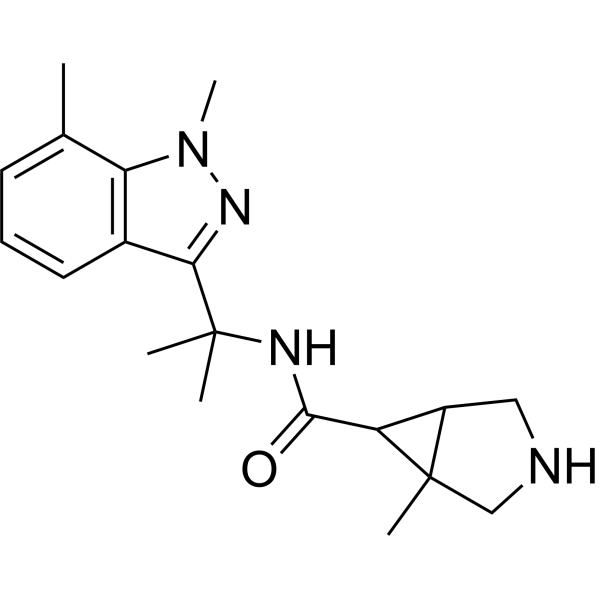
SSTR4 agonist 4 is a somatostatin receptor 4 (SSTR4) agonist. SSTR4 agonist 4 functionally activates SSTR4. SSTR4 agonist 4 has the potential for the research of pain .
loading...
    loading...
Cat. No.: HY-167862
CAS No.: 2411412-36-5
Target:  

Endogenous Metabolite

Research Areas:  

Neurological Disease

UCM-05194 is a selective LPA1 receptor agonist with activity to improve neuropathic pain. UCM-05194 is a LPA1 agonist that exhibits potent and selective properties in its pharmacologically similar properties. UCM-05194 triggers LPA1-mediated cellular effects and leads to internalization of the receptor, resulting in functional inactivation in primary sensory neurons. UCM-05194 effectively reduces pain perception in in vivo models. UCM-05194 can be used to conduct research on progressive systemic diseases .
loading...
    loading...
Cat. No.: HY-N12777
CAS No.: 29066-43-1
Coixenolide can be isolated from coix seeds, and exhibits anti-inflammatory, anti-tumor and pain-reducing activities. Coixenolide stimulates the lung, heart, striated and smooth muscles at low doses, while inhibits at high doses. Coixenolide dilates pulmonary veins and improves pulmonary blood circulation. Coixenolide can also be used as nutraceuticals and functional foods. Coixenolide enhances the prodcutionof mycelia biomass and polysaccharides when added to the media of submerged culture of G. lucidum. Coixenolide affects the synthesis level of phosphoglucose isomerase and α-phosphoglucomutase .
loading...
    loading...
Cat. No.: HY-117683
CAS No.: 464152-46-3
Target:  

TRP Channel

Research Areas:  

Neurological Disease

BCTP is a TRPV1 antagonist. BCTP activated at low pH showed functional antagonist activity against human TRPV1 in CHO cells (IC50=18 nM). BCTP can be used in the study of chronic pain .
loading...
    loading...
Cat. No.: HY-168166
CAS No.: 2489231-47-0
Target:  

Endogenous Metabolite

Research Areas:  

Neurological Disease

CHET3 is a sex-selective activator with potent analgesic activity. CHET3 was discovered to be a highly selective omnidirectional modulator of TASK-3-containing K2P channels, including TASK-3 homologues and TASK-3/TASK-1 heterologues. CHET3 exhibited significant analgesic effects in multiple acute and chronic pain models in mice, which could be abolished by pharmacological means or genetic knockout of TASK-3. CHET3 is able to functionally modulate the membrane excitability of specific small sensory neurons, which supports its analgesic effects on thermal hypersensitivity and mechanical hyperalgesia in chronic pain .
loading...
    loading...
Cat. No.: HY-N0340R
CAS No.: 149-64-4
Synonyms: Hyoscine butylbromide (Standard); (-)-Scopolamine butylbromide (Standard); Butylscopolamine bromide (Standard)
Scopolamine butylbromide (Standard) is the analytical standard of Scopolamine butylbromide (HY-N0340). This product is intended for research and analytical applications. Scopolamine butylbromide (Hyoscine butylbromide) is an orally active anticholinergic agent and spasmolytic. Scopolamine butylbromide binds with high affinity to rat cardiac M2 (Ki 83 nmol/L), hM2 (Ki 233 nmol/L), rat intestinal M3 (Ki 290 nmol/L) and hM3 (Ki 643 nmol/L) muscarinic receptors. Scopolamine butylbromide exerts a dose-dependent antagonistic effect on Carbachol-induced gastrointestinal smooth muscle spasm. Scopolamine butylbromide can be used for the research of abdominal colic and pain associated with gastrointestinal spasm, functional abdominal pain, chronic gastropathy and gastric ulcer .
loading...
    loading...
Cat. No.: HY-144827
CAS No.: 2820337-96-8
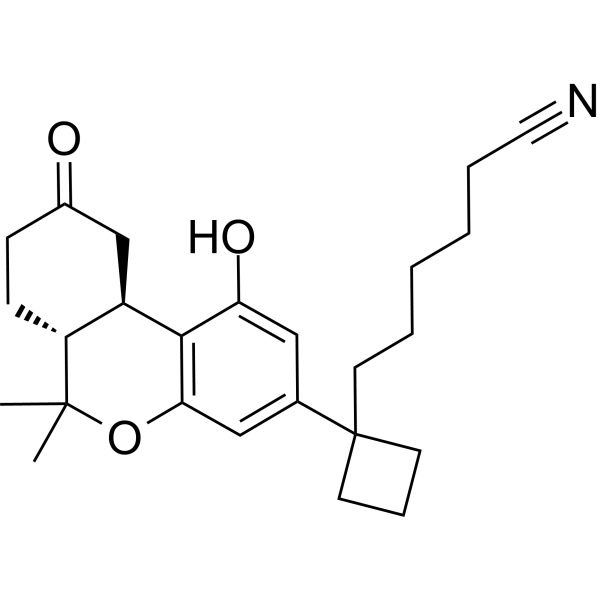
AM8936 acts as a balanced and potent cannabinoid receptor type-1 (CB1) agonist in functional assays (EC50s of 8.6 and 1.4 nM for rCB1 and hCB1, respectively). AM8936 exhibits high affinity for rat CB1 (rCB1) with Ki of 0.55 nM. AM8936 is a potent and efficacious CB1 agonist in vivo. AM8936 can be used for the research of CNS and metabolic disorders, pain, glaucoma, etc .
loading...
    loading...
Cat. No.: HY-187029
CAS No.: 1274711-50-0
Target:  

Others

Research Areas:  

Neurological Disease

GCH-I-IN-1 is a GCH-I inhibitor with an undefined potency profile. GCH-I-IN-1 blocks the rate-limiting enzyme in tetrahydrobiopterin (BH4) biosynthesis. GCH-I-IN-1 can be used for the research of pain (inflammatory pain, nociceptive pain, functional pain, or neuropathic pain) .
loading...
    loading...
Cat. No.: HY-182351
CAS No.: 253306-39-7
Target:  

Calcium Channel

Research Areas:  

Neurological Disease

ONO-2921 is an orally active and selective N-type calcium channel blocker. ONO-2921 functionally blocks N-type calcium channels. ONO-2921 reduces paw withdrawal responses during persistent nociception and hyperalgesia to heat in neuropathic pain models. ONO-2921 can be used for research on neuropathic pain and nociceptive pain .
loading...
    loading...
Cat. No.: HY-182597
CAS No.: 65248-90-0
Tracizoline is an orally active I2-imidazoline receptor agonist. Tracizoline functionally modulates I2-imidazoline receptors, regulates hippocampal FADD cell fate adaptor, attenuates mechanical and thermal hyperalgesia, activates α2A-adrenergic receptors with very weak partial agonism, and induces antidepressant-like activity via 5-HT1A receptor activation. Tracizoline can be used for the research of inflammatory pain, neuropathic pain, and depression .
loading...
    loading...
Cat. No.: HY-108459
CAS No.: 859171-97-4
Target:  

TRP Channel

Research Areas:  

Neurological Disease

6-Iodonordihydrocapsaicin is a TRPV1 antagonist. 6-Iodonordihydrocapsaicin functionally blocks TRPV1-mediated responses, including capsaicin-induced ion currents in dorsal root ganglion neurons and distension-induced firing of jejunal spinal afferent fibers in mice. 6-Iodonordihydrocapsaicin can be used in the research of visceral pain and anxiety disorders .
loading...
    loading...
Cat. No.: HY-L105
2,602 compounds

Peptides are a group of biologically active substances that are involved in various cellular functions of organisms. Peptides are often used in functional analysis, vaccine research and especially in the field of drug research and development. At present, more than 80 peptide drugs have reached the market for a wide range of diseases, including diabetes, cancer, osteoporosis, multiple sclerosis, HIV infection and chronic pain.

MedChemExpress (MCE) offers a comprehensive collection of 2,602 peptides, including bioactive peptides, amino acid derivatives, and blocking peptides. MCE Peptide Library can be used for peptide library screening, peptide drug discovery, vaccine development, target verification, structural activity research, etc.

  • 1

