13 Results for "

helminth

" in MedChemExpress (MCE) Product Catalog:
Products (13)

13 Results for "helminth" in MCE Product Catalog:

15
15 Cited Publications
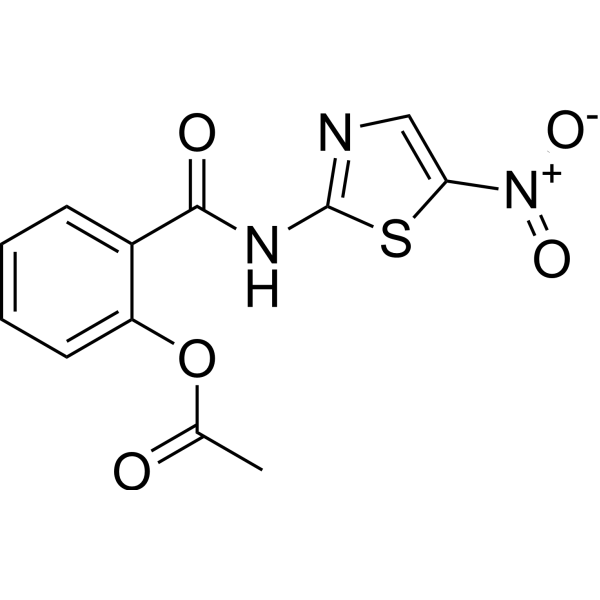
Cat. No.: HY-B0217
CAS No.: 55981-09-4
Synonyms: NTZ; NSC 697855
Research Areas:  

Infection Cancer

Nitazoxanide (NTZ), an anthelmintic agent, exhibits a broad spectrum of activities against a wide variety of helminths, protozoa, and enteric bacteria infecting animals and humans. Nitazoxanide inhibits Giardia lamblia trophozoite proliferation in axenic culture with an IC50 of 2.4 μM . Nitazoxanide can be used for the research of parasitic gastroenteritis. Nitazoxanide shows anti-Japanese encephalitis virus (JEV) activity in a mouse model .
loading...
    loading...
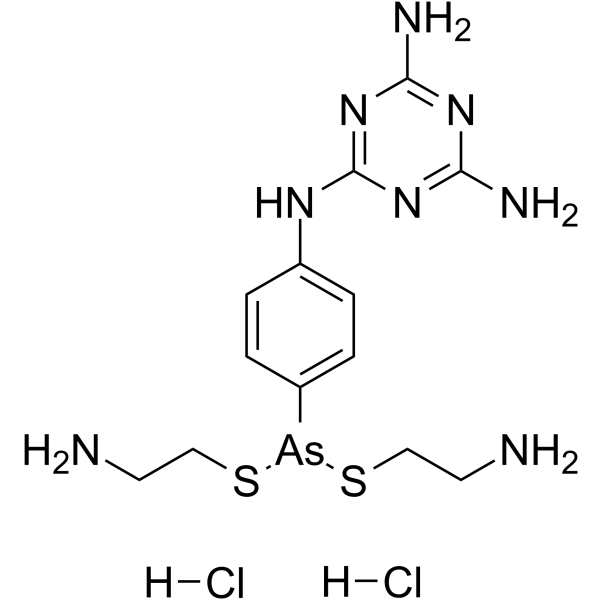
Cat. No.: HY-138502A
CAS No.: 89141-50-4
Target:  

Parasite

Research Areas:  

Infection

Melarsomine dihydrochloride is a trivalent arsenical compound used as an adulticide. Melarsomine dihydrochloride can be used for the reserach of canine heartworm disease and other helminth infections .
loading...
    loading...
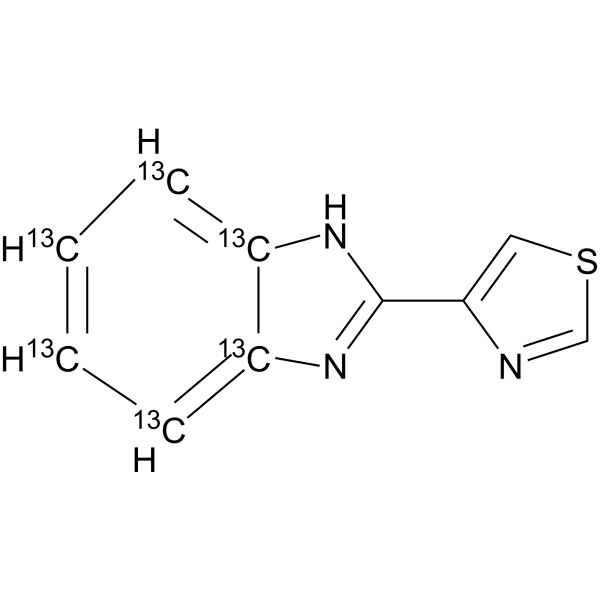
Cat. No.: HY-B0263S1
CAS No.: 2140327-29-1
Synonyms: 2-(4-Thiazolyl)benzimidazole-13C6
Thiabendazole- 13C6 is the 13C6 labeled Thiabendazole. Thiabendazole inhibites the mitochondrial helminth-specific enzyme, fumarate reductase, with anthelminthic property.
loading...
    loading...
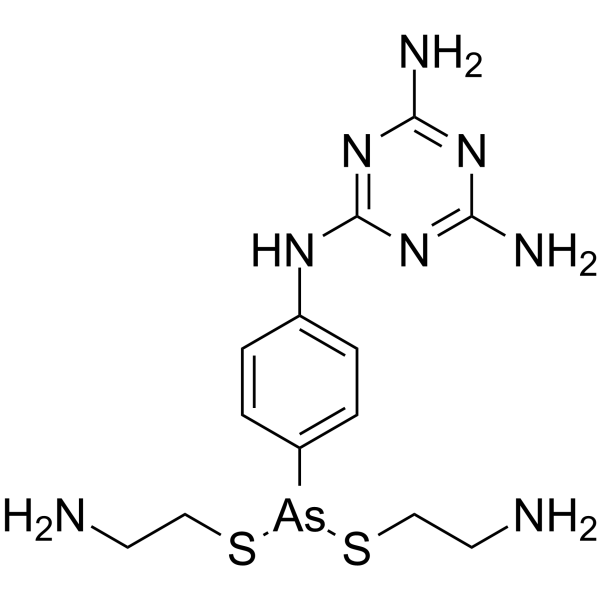
Cat. No.: HY-138502
CAS No.: 128470-15-5
Target:  

Parasite

Research Areas:  

Infection

Melarsomine is a trivalent arsenical compound used as an adulticide. Melarsomine can be used for the reserach of canine heartworm disease and other helminth infections .
loading...
    loading...
Cat. No.: HY-B0217R
CAS No.: 55981-09-4
Synonyms: NTZ (Standard); NSC 697855 (Standard)
Nitazoxanide (Standard) is the analytical standard of Nitazoxanide. This product is intended for research and analytical applications. Nitazoxanide (NTZ), an anthelmintic agent, exhibits a broad spectrum of activities against a wide variety of helminths, protozoa, and enteric bacteria infecting animals and humans. Nitazoxanide inhibits Giardia lamblia trophozoite proliferation in axenic culture with an IC50 of 2.4 μM . Nitazoxanide can be used for the research of parasitic gastroenteritis. Nitazoxanide shows anti-Japanese encephalitis virus (JEV) activity in a mouse model .
loading...
    loading...
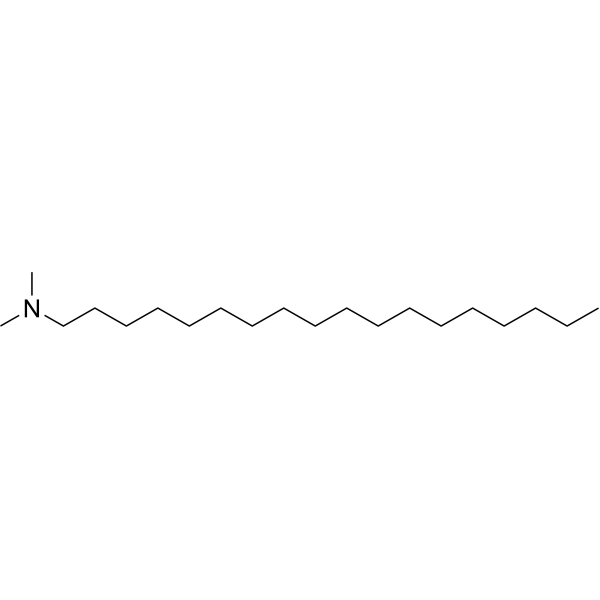
Cat. No.: HY-121429
CAS No.: 124-28-7
Purity:  ≥97.0%
Synonyms: N,N-Dimethyloctadecan-1-amine
Research Areas:  

Infection

Dymanthine (N,N-Dimethyloctadecan-1-amine) is a broad-spectrum intestinal anthelmintic. Dymanthine is used in research related to various helminth infections (Ascaris lumbricoides, Trichuris trichiura, and Ancylostoma duodenale) .
loading...
    loading...
Cat. No.: HY-158423
CAS No.: 615281-26-0
Research Areas:  

Infection

NPD8790 is a species selective mitochondrial respiratory complex I inhibitor with an IC50 of 2.4 µM for C. elegans complex I. NPD8790 is more selective for nematode species mitochondria than human, bovine, and mouse mitochondria. NPD8790 is an anthelmintic that kills adult soil-transmitted helminths .
loading...
    loading...
Cat. No.: HY-164052
CAS No.: 556055-08-4
Target:  

Parasite

Research Areas:  

Infection

Antiparasitic agent-23 (compound 14) is an anthelmintic and insecticide that inhibits insect or helminth parasitism .
loading...
    loading...
Cat. No.: HY-B2180
CAS No.: 2893-78-9
Research Areas:  

Infection

Dichloroisocyanurate sodium is a synthetic organochlorine compound belonging to triazine derivatives, and is commonly used as a disinfectant and biocide. Dichloroisocyanurate sodium can release hypochlorous acid to inactivate waterborne bacteria, viruses, helminths and protozoa, and can act as a hypochlorous acid reservoir to provide sustained biocidal protection .
loading...
    loading...
Cat. No.: HY-122431
CAS No.: 299-86-5
Target:  

Insecticide Parasite

Research Areas:  

Infection

Crufomate is an organophosphate insecticide. Crufomate is used to control warble fly maggot infections and botfly infestations in dairy cows, and accumulates in milk fat. Crufomate reduces mating responses, conception rates, pup survival rates, and post-weaning body weights of offspring in mice. Crufomate is used in studies related to botfly infestations and gastrointestinal parasitic infections .
loading...
    loading...
Cat. No.: HY-180388
CAS No.: 15489-16-4
Stibophen is a potent antiparasitic agent is effective against Litomosoides carinii, Dipetalonema witei, and Brugia pahangi. Stibophen inhibits lactate accumulation and phosphofructokinases (PFK) activity in adult filariids. Stibophen also inhibits Ascaris and Hymenolepis diminuta PFK without inhibiting mammalian liver PFK. Stibophen can be used for the research of schistosomiasis and filariid infections .
loading...
    loading...
Cat. No.: HY-L082
659 compounds

A parasite is an organism that lives on or in a host organism and gets its food from or at the expense of its host. Parasites of humans include protozoans, helminths, and ecto-parasites (organisms that live on the external surface of a host). They are responsible for many diseases and are transmitted to their hosts most often through the ingestion of contaminated food, water or through the bite of an arthropod (e.g., a fly or tick), which can act as an intermediate host and as a vector. Parasitic diseases of humans are a major global health problem causing significant morbidity and mortality, especially in developing countries. Each year there are hundreds of millions of people infected with disease-causing parasites, particularly in tropical and subtropical regions of the world, resulting in an estimated one million deaths. Therefore, there is a dire need of novel anti-parasitic drugs.

MCE has a unique collection of 659 compounds with validated anti-parasitic activity which offer researchers an opportunity to screen novel anti-parasitic targets.

Cat. No.: HY-184082
CAS No.: 3784-99-4
Target:  

Parasite

Research Areas:  

Infection

Stilbazium iodide is an orally effective pyridinium quaternary ammonium repellent. Stilbazium (iodide) exhibits broad-spectrum activity against a variety of human and animal intestinal parasites. Stilbazium iodide eliminates both mature and immature worms, reduces egg counts, reddens feces, and causes mild gastrointestinal irritation. Stilbazium iodide can be used in research related to intestinal parasitic infections including pinworm, whipworm, and strongyloidiasis .
loading...
    loading...
  • 1

