4 Results for "

histone H1.2

" in MedChemExpress (MCE) Product Catalog:
Products (4)

4 Results for "histone H1.2" in MCE Product Catalog:

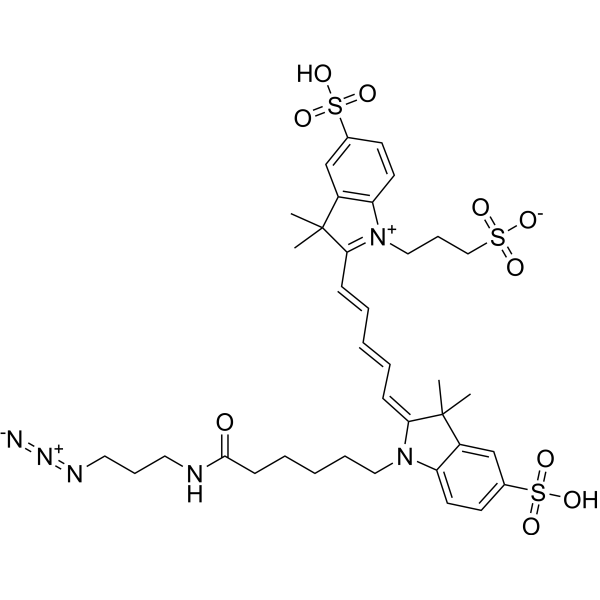
Cat. No.: HY-145746
CAS No.: 1782950-80-4
Sulfo-Cy5 azide is a near-infrared fluorescent probe with favorable click chemistry reactivity. Sulfo-Cy5 azide enables fluorescence imaging, tissue and cellular visualization of PD-L1 in tumors, and site-specific modification of anti-PD-L1 antibodies. Sulfo-Cy5 azide has been employed for RNA labeling and imaging. Sulfo-Cy5 azide can be conjugated to targeting agents for fluorescence imaging in atherosclerosis and breast cancer models (Ex/Em = 645/670 nm) .
loading...
    loading...
Cat. No.: HY-P80158
Synonyms: H1F2, HIST1H1C, H1-2, histone H1.2, histone H1c, histone H1d, histone H1s-1

Host:  

Rabbit

Application:  

WB, IHC-P, ICC/IF, ChIP, IF-Tissue

Reactivity:  

Human, Mouse, Rat

loading...
    loading...
Cat. No.: HY-P87526
Synonyms: H1F2, HIST1H1C, H1-2, histone H1.2, histone H1c, histone H1d, histone H1s-1

Host:  

Rabbit

Application:  

WB, ICC/IF, FC

Reactivity:  

Human, Mouse, Rat

loading...
    loading...
Cat. No.: HY-13689G
CAS No.: 133053-19-7
Go 6983 GMP is Go 6983 (HY-13689) produced by using GMP guidelines. GMP small molecules works appropriately as an auxiliary reagent for cell therapy manufacture. Go 6983 is a dual inhibitor targeting Suv39h1/2 (KMT1A/KMT1B) and PKC, as well as a transcriptional activator capable of inducing DNA hypomethylation. Go 6983 stimulates the transcription of Prdm14 by reducing Suv39h1/2 protein levels, decreasing histone modifications in the Prdm14 promoter region, and increasing the recruitment of RNA polymerase II. Go 6983 induces genome-wide DNA hypomethylation by inhibiting de novo methyltransferase expression and increasing Tet1/Tet2 levels, thereby promoting self-renewal and pluripotency maintenance of stem cells. Meanwhile, Go 6983 can block PKC-mediated signaling pathways to reduce the expression of EMT-related genes and eliminate the upregulation of antioxidant genes downstream of NRF2. Go 6983 is mainly used in mechanism studies related to myocardial ischemia/reperfusion injury .
loading...
    loading...

