

16 Results for "

human AD brain

" in MedChemExpress (MCE) Product Catalog:
Products (16)

16 Results for "human AD brain" in MCE Product Catalog:

31
31 Cited Publications
Cat. No.: HY-11068
CAS No.: 193551-21-2
Purity:  99.15%
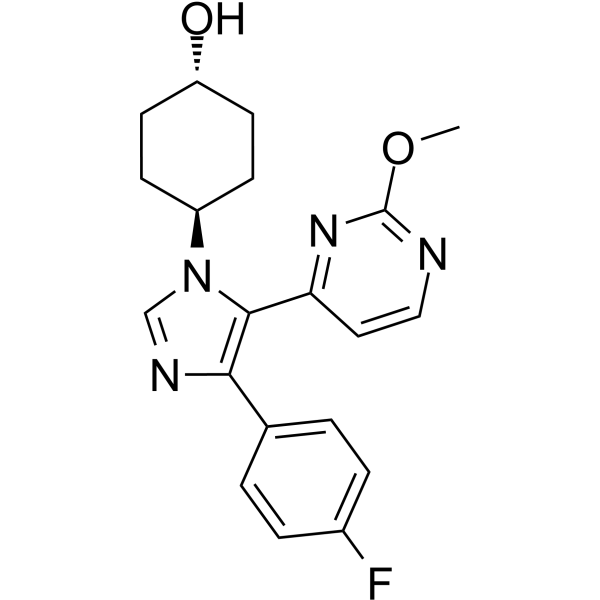
SB 239063 is a potent, selective and orally active p38 MAPK inhibitor, exhibits an IC50 of 44 nM for recombinant purified human p38α, with equipotent inhibitory activity against p38α and p38β. SB 239063 has no effect on p38γ or p38δ. With anti-asthma activity and also be used to enhance memory which is impaired due to aging or medical conditions, such as, AD. SB 239063 can penetrate the blood brain barrier (BBB) .
loading...
    loading...
Cat. No.: HY-P9999
CAS No.: 2568868-35-7
Synonyms: RG6102; RO-7126209

Target:  

Amyloid-β

Research Areas:  

Neurological Disease

Trontinemab (RG6102) is a brain-penetrant, anti-amyloid, bispecific and humanizedized IgG1-κ antibody, targeting to plaques and transferrin receptor 1 (TFR1). Trontinemab binds to fibrillar as well as plaques triggering plaque clearance by engaging immune cells on Alzheimer disease (AD) brain sections. Trontinemab also shows specific affinity to cynomolgus and human TFR1 .
loading...
    loading...
Cat. No.: HY-P9967
CAS No.: 1384260-65-4
Synonyms: BIIB037

Target:  

Amyloid-β

Research Areas:  

Neurological Disease

Aducanumab (BIIB037) is a human monoclonal antibody that selectively targets aggregated amyloid-beta (Aβ). Aducanumab shows blood-brain-barrier penetration, and can be used for Alzheimer's disease (AD) research .
loading...
    loading...
Cat. No.: HY-161117
CAS No.: 1497439-74-3
Target:  

Acetyl-CoA synthetase

Research Areas:  

Cancer

AD-8007 is a blood-brain barrier-permeable ACSS2 inhibitor with human IC50 of 0.89 μM and Kd of 116.6 μM. AD-8007 reduces colony-forming ability, lipid storage levels and FASN protein expression, and induces cancer cell death. AD-8007 shrinks established tumors, acts synergistically with radiotherapy to inhibit tumor growth, reduces tumor burden, causes no obvious toxicity to normal brain tissue, and prolongs survival. AD-8007 exhibits superior metabolic stability. AD-8007 is applicable to research related to breast cancer brain metastasis .
loading...
    loading...
Cat. No.: HY-11044
CAS No.: 1039399-17-1
Purity:  99.1%
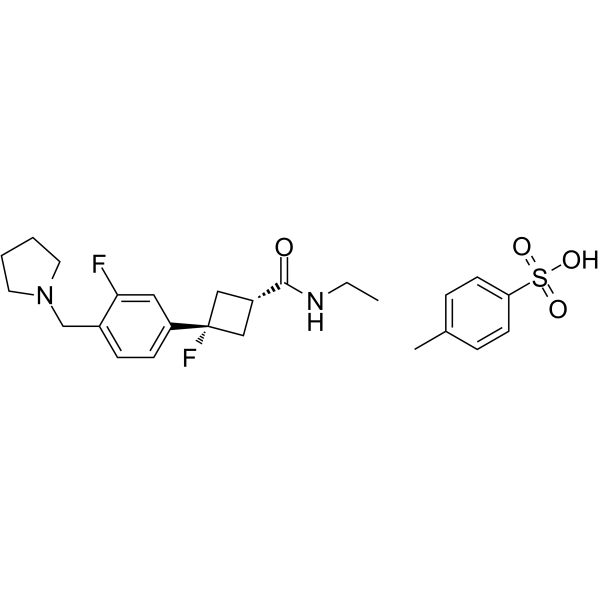
PF-03654746 Tosylate is a potent, selective and brain-penetrant histamine H3 receptor antagonist. PF-03654746 Tosylate reduces allergen-induced nasal symptoms . PF-03654746 Tosylate has potential for treatment of human cognitive disorders, improves cognitive efficacy and disease-modifying effects in Alzheimer's disease (AD) .
loading...
    loading...
Cat. No.: HY-137472
CAS No.: 503860-57-9
Purity:  99.63%
Target:  

GSK-3

Research Areas:  

Neurological Disease

SAR502250 is a potent, selective, ATP competitive, orally active and brain-penetrant inhibitor of GSK3, with an IC50 of 12 nM for human GSK-3β. SAR502250 displays antidepressant-like activity. SAR502250 can be used for the research of Alzheimer’s disease (AD) .
loading...
    loading...
Cat. No.: HY-173396
CAS No.: 1432438-14-6
Synonyms: VU319
Target:  

mAChR

Research Areas:  

Neurological Disease

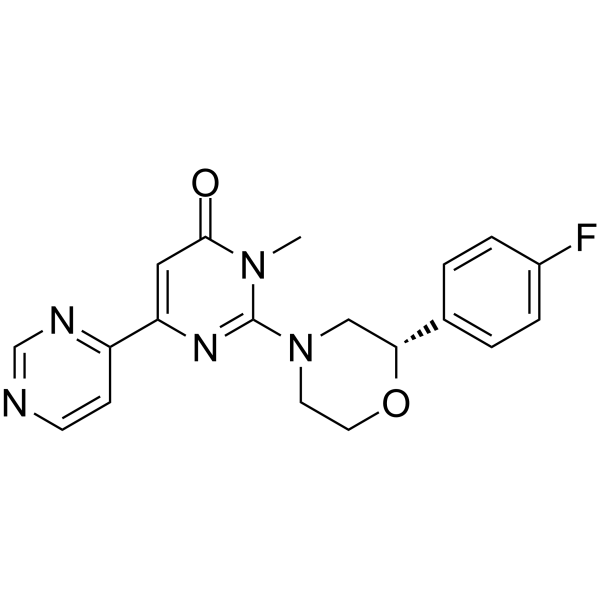
VU0467319 (Compound VU319) is a highly selective and blood-brain-permeable, orally active M1 positive allosteric modulator (PAM) (EC50: 492 nM). VU0467319 is selective (EC50 > 30 μM) versus M2-5 for both human and rat. VU0467319 improves cognitive impairment in Alzheimer's disease (AD) through central M1 muscarinic receptors. VU0467319 does not induce cholinergic adverse reactions and has potential in AD research .
loading...
    loading...
Cat. No.: HY-118363
CAS No.: 1186229-95-7
Target:  

mAChR

Research Areas:  

Neurological Disease

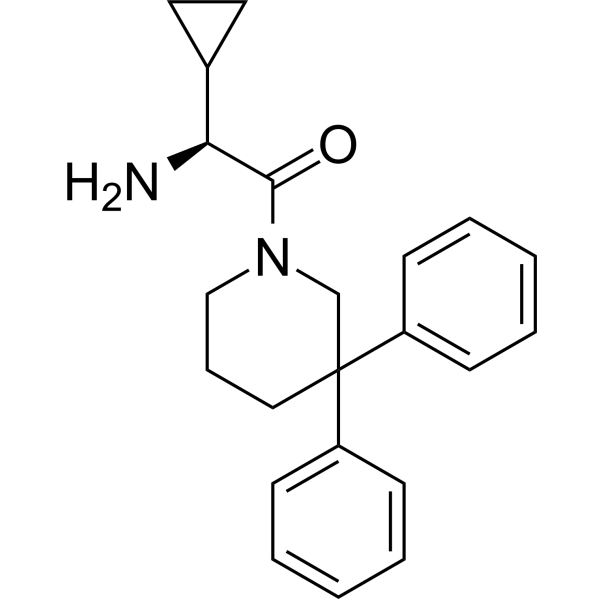
Lu AE51090 is selective muscarinic M1 receptor agonist with blood-brain barrier penetration. Lu AE51090 activates human M1 receptor with EC50 of 61 nM, while showing no significant agonism at M2-M5 receptors. Lu AE51090 exerts procognitive effects in mice. Lu AE51090 can be used for the study of Alzheimer’s disease (AD) and cognitive impairment associated with schizophrenia (CIAS) .
loading...
    loading...
Cat. No.: HY-124609
CAS No.: 2071209-49-7
Purity:  99.39%
Research Areas:  

Neurological Disease

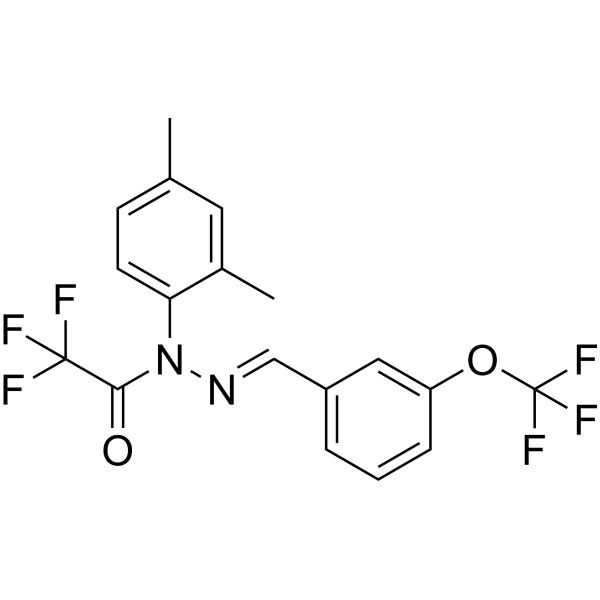
CAD031 is an orally active AMPK/ACC1 signaling pathway activator and a derivative of the Alzheimer's disease (AD) targeted agent J147 (HY-13779) (more active than J147 in human neural stem cell assays). CAD031 can cross the blood-brain barrier, activate AMPK and inhibit ACC1, thereby increasing ac-CoA levels, improving mitochondrial function and reducing free fatty acid synthesis. CAD031 has neuroprotective, neurogenesis-promoting and memory-improving activities and can be used in the study of Alzheimer's disease and aging-related neurodegenerative diseases. CAD031 effectively enhances the memory of mice, improves dendritic structure, and stimulates cell division in the germinal zone of the brain of elderly mice .
loading...
    loading...
Cat. No.: HY-148547
CAS No.: 1352477-22-5
Target:  

Amyloid-β

Research Areas:  

Neurological Disease

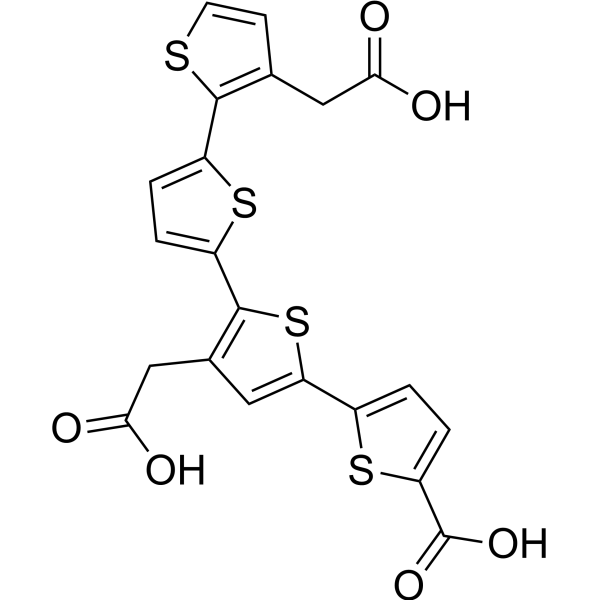
q-FTAA is an oligothiophene. q-FTAA competes for binding to the X-34 binding site on fibrils. q-FTAA is applicable to research related to Alzheimer's disease .
loading...
    loading...
Cat. No.: HY-152671
CAS No.: 1666119-75-0
Purity:  99.70%
Target:  

Monoamine Oxidase

Research Areas:  

Neurological Disease

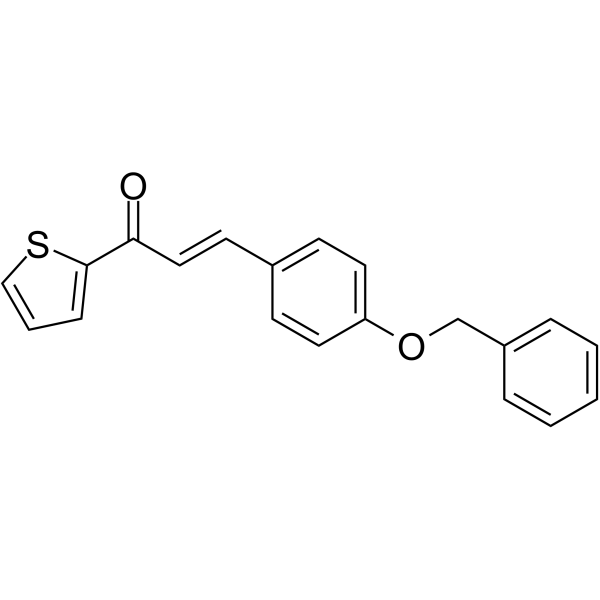
hMAO-B-IN-4 (compound B10) is a selective, reversible and blood–brain barrier (BBB) penetrable human monoamine oxidase-B (hMAO-B) inhibitor with an IC50 value and a Ki value of 0.067 and 0.03 μM, respectively. hMAO-B-IN-4 inhibits hMAO-A with an IC50 value of 33.82 μM. hMAO-B-IN-4 can be used for Alzheimer’s disease (AD) and Parkinson’s disease (PD) research .
loading...
    loading...
Cat. No.: HY-178356
BChE-IN-44 is a potent, brain-penetrant, highly selective BChE inhibitor [equine BChE IC50 = 18.00 pM, human BChE IC50 = 1.50 nM]. BChE-IN-44 shows neuroprotective effects against the Aβ1-42-induced injury model and inhibitory effects on Aβ1-42 self-aggregation. BChE-IN-44 reduces the levels of inflammatory factors (NO, IL-6, and TNF-α) in Lipopolysaccharides (HY-D1056)-induced BV2 cells. BChE-IN-44 can significantly ameliorate Scopolamine (HY-N0296)-induced cognition impairment. BChE-IN-44 exhibits capacity in the regulation of BChE and acetylcholine levels in the mouse hippocampus. BChE-IN-44 can be used for the study of Alzheimer’s disease (AD) .
loading...
    loading...
Cat. No.: HY-P2473
Target:  

Peptides

Research Areas:  

Neurological Disease

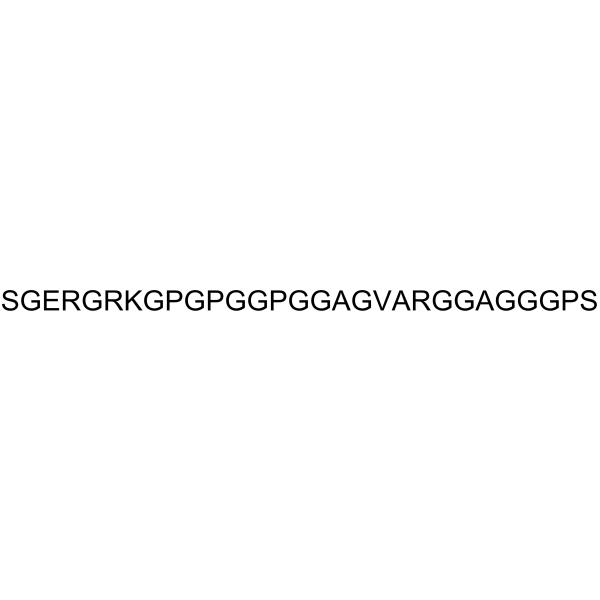
Neurogranin (48-76), human is a dominant endogenous peptide in Alzheimer's disease (AD) brain tissue. Neurogranin (48-76) is a potential biomarker for synaptic function in AD .
loading...
    loading...
Cat. No.: HY-157400
CAS No.: 2955577-14-5
Target:  

Monoamine Oxidase

Research Areas:  

Neurological Disease

hMAO-B-IN-7 (compound 11n) is a potent and blood–brain barrier (BBB) penetrable inhibitor of human monoamine oxidase-B (hMAO-B), with the IC50 value of 0.79±0.05 μM. hMAO-B-IN-7 can be used for Alzheimer’s disease (AD) and Parkinson’s disease (PD) research .
loading...
    loading...
Cat. No.: HY-167898
CAS No.: 955376-42-8
Target:  

Amyloid-β

Research Areas:  

Neurological Disease

MeS-IMPY is a ligand of β-amyloid plaques. MeS-IMPY shows a high binding affinity to β-amyloid plaques extracted from Alzheimer's disease (AD) human brains or AD brain homogenates compared to IMPY (Ki=7.93 and 8.95 nM, respectively). [ 11C]MeS-IMPY is a potential radioligand for imaging β-amyloid plaques with positron emission tomography (PET) .
loading...
    loading...
Cat. No.: HY-185545
CAS No.: 2922277-92-5
NTRK1-ligand-1 (Compound 15) is a NTRK1 ligand. NTRK1-ligand-1 serves as a Ligand for Target Protein for PROTAC, which is applicable to the development and design of PROTAC NTRK1 degraders, such as PROTAC NTRK1 degrader-1 (HY-181052). NTRK1-ligand-1 can be used in the research of solid tumors .
loading...
    loading...
  • 1

