10 Results for "

human LX-2 cells

" in MedChemExpress (MCE) Product Catalog:
Products (10)

10 Results for "human LX-2 cells" in MCE Product Catalog:

1
1 Cited Publications
Cat. No.: HY-19796
CAS No.: 246529-22-6
Synonyms: Aramchol; C20-FABAC
Research Areas:  

Metabolic Disease

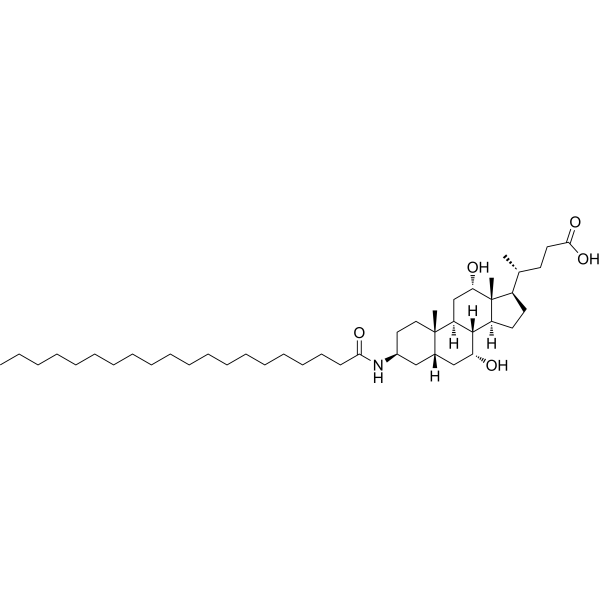
Icomidocholic acid (Aramchol) is a lipid molecule synthesized from cholic acid and arachidic acid. Icomidocholic acid is an orally active SCD1 inhibitor and cholesterol solubilizer with antifibrotic effects. Icomidocholic acid can reduce liver fat content, dissolve cholesterol crystals and prevent gallstone formation. Icomidocholic acid can be used in the study of nonalcoholic fatty liver disease (NAFLD) and nonalcoholic steatohepatitis (NASH) .
loading...
    loading...
Cat. No.: HY-N2441
CAS No.: 74805-90-6
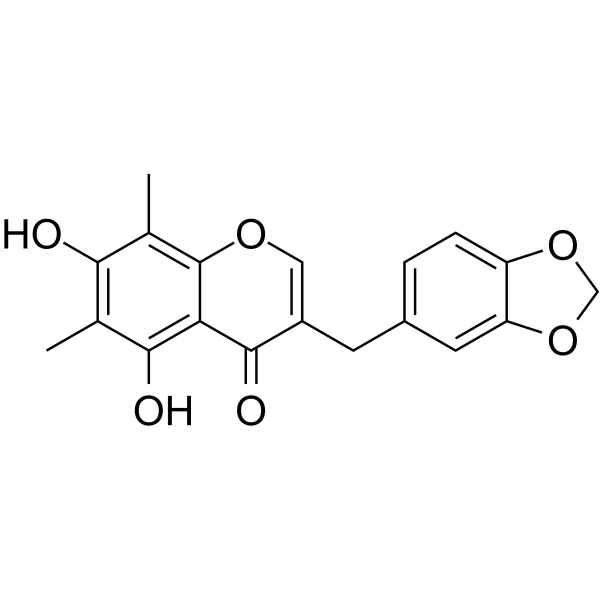
Methylophiopogonone A is a homoisoflavonoid compound found in the tuberous roots of Ophiopogon japonicus. Methylophiopogonone A inhibits lipopolysaccharide-induced NO production in mouse microglia with an IC50 of 19.2 μM. Methylophiopogonone A blocks the proliferation of LX-2 hepatic stellate cells and downregulates TGF-β1-induced expressions of type I collagen and α-SMA. Methylophiopogonone A blocks RELA/EGFR-mediated hepatic stellate cell activation, inhibits the MAPK12 pathway to reduce extracellular matrix accumulation, and simultaneously suppresses inflammatory signal transduction. Methylophiopogonone A can be used in studies related to chronic hepatitis B-associated hepatic fibrosis and neuroinflammation .
loading...
    loading...
Cat. No.: HY-N7695
CAS No.: 23133-56-4
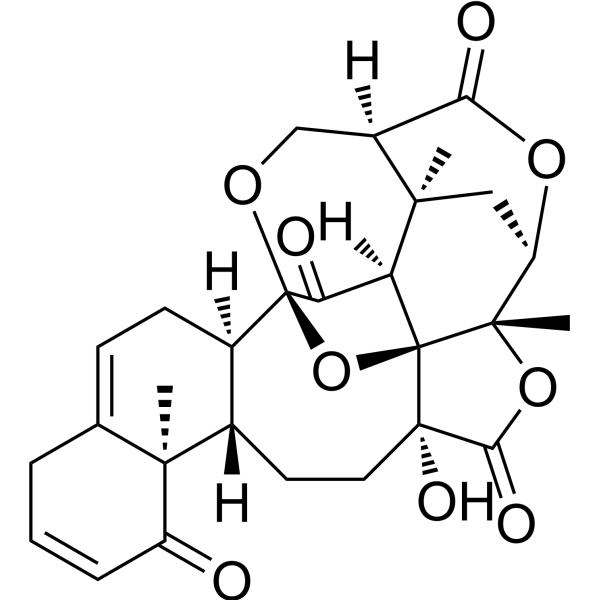
Physalin B is an orally active anti-inflammatory and anticancer agent. Physalin B can be isolated from Physalis alkekengi L. var. Franchetii. Physalin B inhibits the activation of the NF-κB, NLRP3 inflammasome, STAT3, PI3K/Akt and Hedgehog signaling pathways, regulates the phosphorylation levels of GSK-3β, p38 MAPK, ERK1/2 and JNK, and promotes the nuclear translocation of NRF2. Physalin B reduces the levels of pro-inflammatory cytokines and factors, induces mitochondrial reactive oxygen species (mito-ROS) production, Apoptosis, G2/M cell cycle arrest and incomplete Autophagy, alters cytoskeleton structure and alleviates oxidative stress. Physalin B reduces cancer cell viability, ameliorates liver and lung tissue damage and alleviates liver fibrosis. Physalin B can be used in research related to ulcerative colitis, breast cancer, acute lung injury, colon cancer, non-alcoholic steatohepatitis, liver fibrosis, lung cancer, pancreatic cancer, lymphoma, ovarian cancer, sarcoma and leukemia .
loading...
    loading...
Cat. No.: HY-121212
CAS No.: 1253909-57-7
Purity:  97.28%
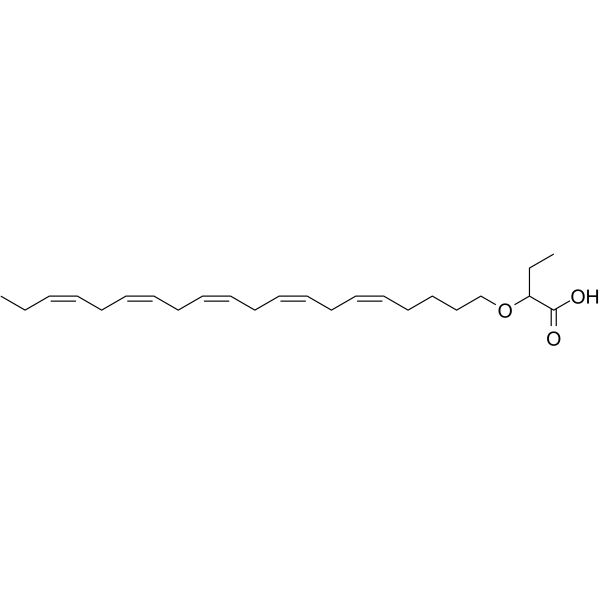
Icosabutate is an orally active engineered fatty acid and a dual FFAR1/FFAR4 (GPR40/GPR120) agonist with EC50 values of 10 μM and 15.5 μM, respectively. Icosabutate acts as a partial agonist of PPAR-α, with an EC50 of 208 nM. Icosabutate inhibits the arachidonic acid cascade and exhibits antioxidant and anti-apoptotic activities. Icosabutate can be used in the research of nonalcoholic steatohepatitis, metabolic dysfunction-associated steatohepatitis, and atherosclerosis .
loading...
    loading...
Cat. No.: HY-156523
CAS No.: 2478592-86-6
Purity:  99.73%
Target:  

MAP4K

Research Areas:  

Cancer

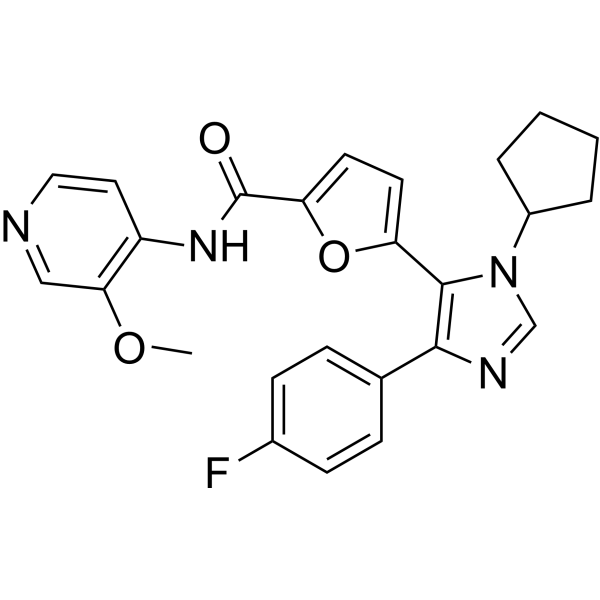
TNIK&MAP4K4-IN-1 (compound A-39) is a dual inhibitor of TNIK and MAP4K4/HGK with IC50s of 1.29 nM and <10 nM,respectively,in human hepaticstellate cell LX-2. TNIK&MAP4K4-IN-1 can be used for cancer and fibrosis inhibition .
loading...
    loading...
Cat. No.: HY-N2441R
CAS No.: 74805-90-6
Methylophiopogonone A (Standard) is the analytical standard of Methylophiopogonone A (HY-N2441). This product is intended for research and analytical applications. Methylophiopogonone A is a homoisoflavonoid compound found in the tuberous roots of Ophiopogon japonicus. Methylophiopogonone A inhibits lipopolysaccharide-induced NO production in mouse microglia with an IC50 of 19.2 μM. Methylophiopogonone A blocks the proliferation of LX-2 hepatic stellate cells and downregulates TGF-β1-induced expressions of type I collagen and α-SMA. Methylophiopogonone A blocks RELA/EGFR-mediated hepatic stellate cell activation, inhibits the MAPK12 pathway to reduce extracellular matrix accumulation, and simultaneously suppresses inflammatory signal transduction. Methylophiopogonone A can be used in studies related to chronic hepatitis B-associated hepatic fibrosis and neuroinflammation .
loading...
    loading...
Cat. No.: HY-N2595
CAS No.: 5574-24-3
Synonyms: O-Methylatheroline
Oxoglaucine (O-Methylatheroline) is a natural product with multiple activities including autophagy activation, anti-inflammation, antibacterial activity, and immunoregulation. Oxoglaucine inhibits the TRPV5/calmodulin/CAMK-II pathway, suppresses TGFβ-induced Smad2 phosphorylation by upregulating Smad7, blocks Ca 2+ influx, activates autophagy, alleviates apoptosis and inflammation, inhibits ROS production and the expression of fibrosis markers in hepatocytes, and regulates immune cell populations and responses. Oxoglaucine protects against infections caused by Candida albicans and Klebsiella pneumoniae, and exerts effects on adjuvant-induced arthritis. Oxoglaucine can be used in studies related to arthritis, liver fibrosis, bacterial infections, and fungal infections .
loading...
    loading...
Cat. No.: HY-181808
CAS No.: 2170935-59-6
Research Areas:  

Metabolic Disease

HSF1/AMPK activator 1 is a compound that modulates the HSF1/AMPK axis and the TGF-β1/Smad signaling pathway. HSF1/AMPK activator 1 exhibits anti-hepatic fibrosis activity and metabolic stability. HSF1/AMPK activator 1 inhibits fibrosis formation and cell proliferation in activated hepatic stellate cells. HSF1/AMPK activator 1 alleviates liver injury and hepatic fibrosis symptoms in fibrotic mice. HSF1/AMPK activator 1 is applicable to research related to hepatic fibrosis .
loading...
    loading...
Cat. No.: HY-181486
Target:  

VD/VDR

Research Areas:  

Metabolic Disease

VDR agonist 5 is an oral active VDR agonist. VDR agonist 5 activates VDR-mediated signaling to reduce liver fibrosis progression. VDR agonist 5 does not induce hypercalcemia. VDR agonist 5 can be used for the research of hepatic fibrosis .
loading...
    loading...
Cat. No.: HY-182038
Research Areas:  

Metabolic Disease

TGF-β1/Smad3-IN-2 is an orally active antifibrotic agent. TGF-β1/Smad3-IN-2 has high affinity for VDR and can inhibit the TGFβ/SMAD3 signaling pathway. TGF-β1/Smad3-IN-2 inhibits hepatic stellate cell activation, reduces extracellular matrix deposition, and alleviates liver fibrosis in a bile duct ligation mouse model. TGF-β1/Smad3-IN-2 can be used for the research of liver fibrosis .
loading...
    loading...

