1. Search Result
Search Result
Results for "

human P2X3

" in MedChemExpress (MCE) Product Catalog:

14

Inhibitors & Agonists

1

Recombinant Proteins

Cat. No. Product Name Target Research Areas Chemical Structure
  • HY-B1901

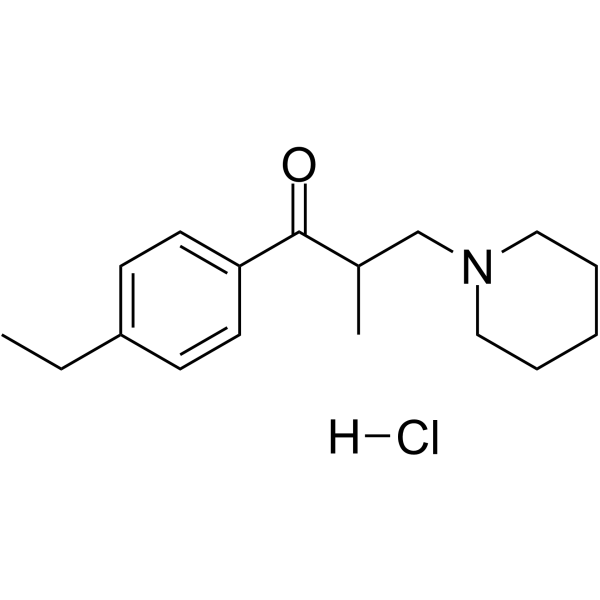
    (±)-Eperisone hydrochloride

    P2X Receptor Neurological Disease
    Eperisone Hydrochloride ((±)-Eperisone hydrochloride) is an orally active antispastic agent with a vasodilator effect, used for the research of muscle stiffness and pain. Eperisone Hydrochloride is a potent and selectively P2X7 receptor antagonist, also shows antagonism for human P2X3. Eperisone Hydrochloride works by relaxing both skeletal muscles and vascularsmooth muscles, demonstrating a variety of effects such as reduction ofmyotonia, improvement of circulationand and suppression of the pain reflex .
    Eperisone hydrochloride
  • HY-14483
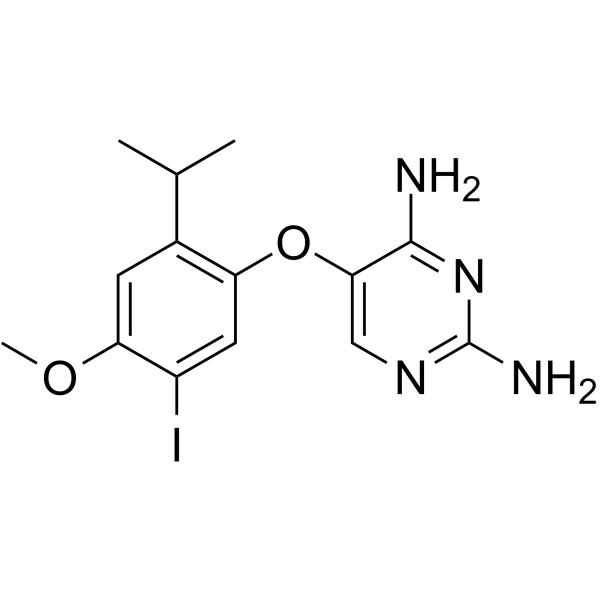
    AF-353
    1 Publications Verification

    Ro-4

    P2X Receptor Cancer
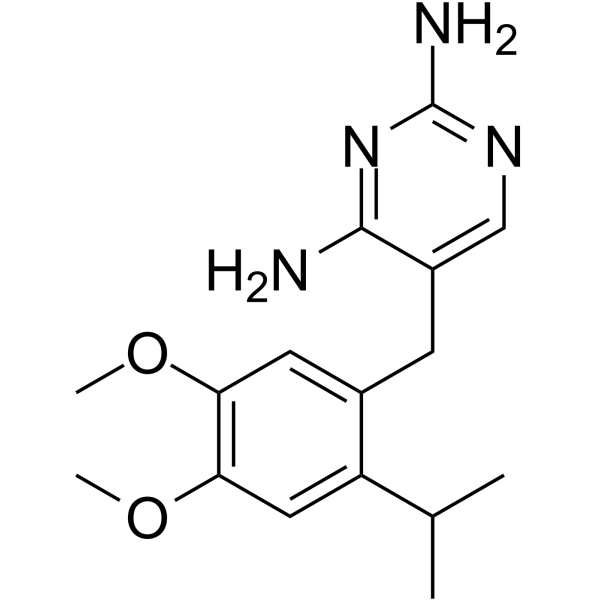
    AF-353 (Ro-4) is a potent, selective and orally bioavailable P2X3/P2X2/3 receptor antagonist, with a pIC50 of 8.0 for both human and rat P2X3, and with a pIC50 of 7.3 for human P2X2/3 .
    AF-353
  • HY-135976

    P2X Receptor Neurological Disease Inflammation/Immunology
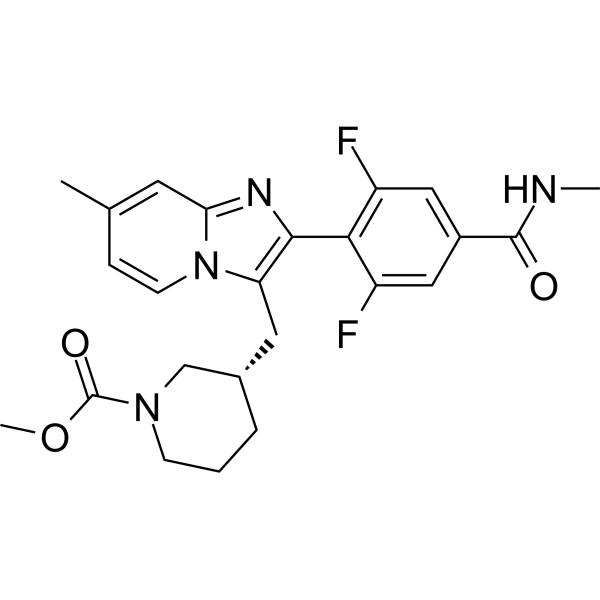
    P2X3 antagonist 34 is a potent, selective and orally active P2X3 homotrimeric receptor antagonist with IC50s of 25 nM, 92 nM and 126 nM for human P2X3, rat P2X3 and guinea pig P2X3 receptors, respectively. P2X3 antagonist 34 is less active against human, rat and guinea pig P2X2/3 heterotrimeric receptors. P2X3 antagonist 34 has strong anti-tussive effect .
    P2X3 antagonist 34
  • HY-108676
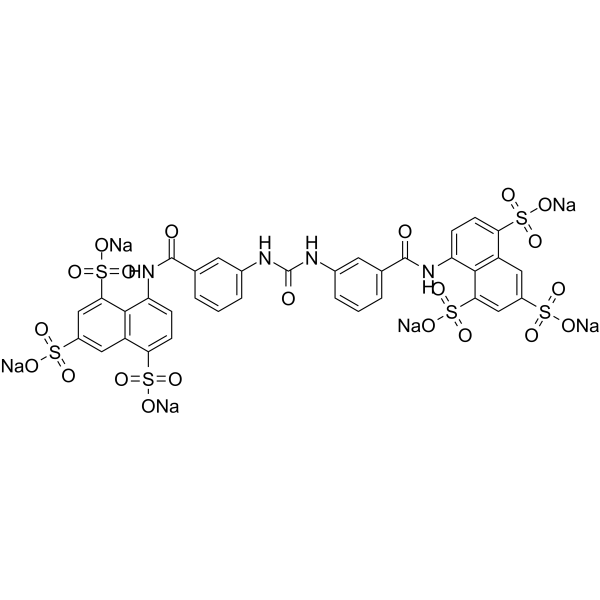
    NF023 hexasodium
    1 Publications Verification

    P2X Receptor Neurological Disease
    NF023 hexasodium is a selective and competitive P2X1 receptor antagonist, with IC50 values of 0.21 μM, 28.9 μM, > 50 μM and > 100 μM for human P2X1, P2X3, P2X2, and P2X4-mediated responses respectively .
    NF023 hexasodium
  • HY-108667

    P2X Receptor Interleukin Related Fluorescent Dye Neurological Disease
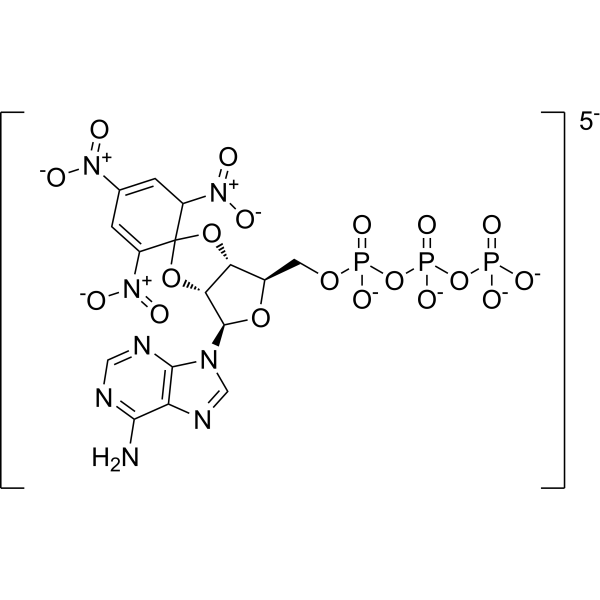
    TNP-ATP triethylammonium is a P2X receptor antagonist with an IC50 of 0.010 μM for P2X3 and an IC50 of 0.062 μM for P2X2/3. TNP-ATP triethylammonium acts as an inhibitor of CheA autophosphorylation, with a Ki of 0.7 µM. TNP-ATP triethylammonium blocks the functional activation of P2X1-7 receptors. TNP-ATP triethylammonium attenuates hypoxia-induced IL-1β expression and release. TNP-ATP triethylammonium alleviates visceral pain, and improves hypoxia-induced cognitive impairment, insufficient myelination and neuroinflammation. Binding of TNP-ATP triethylammonium to CheA enhances the fluorescence of the TNP group. TNP-ATP triethylammonium can be used in studies related to visceral pain. NP-ATP triethylammonium can be used in studies related to hypoxia-induced insufficient myelination and cognitive decline .
    TNP-ATP triethylammonium
  • HY-B1901R

    (±)-Eperisone hydrochloride (Standard)

    P2X Receptor Reference Standards Neurological Disease
    Eperisone (hydrochloride) (Standard) is the analytical standard of Eperisone (hydrochloride). This product is intended for research and analytical applications. Eperisone Hydrochloride ((±)-Eperisone hydrochloride) is an orally active antispastic agent with a vasodilator effect, used for the research of muscle stiffness and pain. Eperisone Hydrochloride is a potent and selectively P2X7 receptor antagonist, also shows antagonism for human P2X3. Eperisone Hydrochloride works by relaxing both skeletal muscles and vascularsmooth muscles, demonstrating a variety of effects such as reduction ofmyotonia, improvement of circulationand and suppression of the pain reflex .
    Eperisone hydrochloride (Standard)
  • HY-109173

    BAY 1902607

    P2X Receptor Cytochrome P450 Inflammation/Immunology
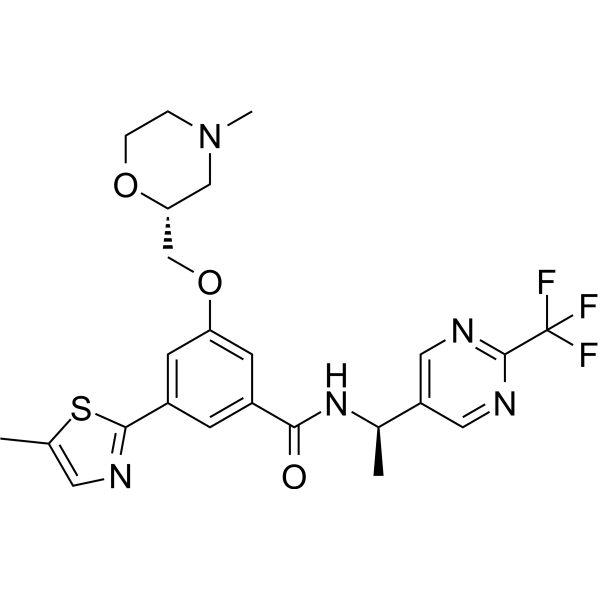
    Filapixant (BAY 1902607) is an orally active and selective P2X3 receptor antagonist. Filapixant is applicable to the research of refractory chronic cough .
    Filapixant
  • HY-19978

    P2X Receptor Neurological Disease
    RO-3 is a potent, and orally active P2X3 and P2X2/3 antagonist with pIC50s of 5.9 and 7.0 for human homomultimeric P2X3 and heteromultimeric P2X2/3 receptors, respectively. RO-3 shows selectivity for P2X3 and P2X2/3 over all other functional homomultimeric P2X receptors (IC50 >10 μM at P2X1,2,4,5,7) .
    RO-3
  • HY-137610A

    P2X Receptor P2Y Receptor Neurological Disease
    TNP-ATP is an antagonist of purinergic P2Y1, P2X3, and P2X2/3 receptors (IC50 = 6, 0.9, and 7 nM, respectively, in HEK293 cells expressing human receptors). TNP-ATP reduces acetate-induced calcium flux in 1321N1 cells expressing P2X3 and P2X2/3 receptors (IC50 = 100 and 62 nM, respectively). TNP-ATP dose-dependently attenuates acetate-induced abdominal contractions in a mouse visceral pain model (ED50 = 6.35 µmol/kg) [1][2].
    TNP-ATP tetrasodium
  • HY-14483A

    Ro-4 hydrochloride

    P2X Receptor Cancer
    AF-353 hydrochloride is a potent, selective and orally bioavailable P2X3/P2X2/3 receptor antagonist, with a pIC50 of 8.0 for both human and rat P2X3, and with a pIC50 of 7.3 for human P2X2/3 .
    AF-353 hydrochloride
  • HY-14483R

    Ro-4 (Standard)

    P2X Receptor Reference Standards Cancer
    AF-353 (Standard) is the analytical standard of AF-353. This product is intended for research and analytical applications. AF-353 (Ro-4) is a potent, selective and orally bioavailable P2X3/P2X2/3 receptor antagonist, with a pIC50 of 8.0 for both human and rat P2X3, and with a pIC50 of 7.3 for human P2X2/3 .
    AF-353 (Standard)
  • HY-183056

    P2X Receptor Others Neurological Disease Inflammation/Immunology
    P2X3 antagonist 40 is a P2X3 antagonist with a human P2X3 receptor pIC50 < 4.52. P2X3 antagonist 40 can be used for research on ATP-mediated proinflammatory fingerprint, including overactive bladder, pain, and chronic cough .
    P2X3 antagonist 40
  • HY-186112

    P2X Receptor Inflammation/Immunology
    PSFL2915 is a P2X receptor inhibitor with oral effectiveness, with an IC50 of 0.319 μM for human P2X3, 0.261 μM for rat P2X2/3, and 13.3 μM for human P2X2, and exhibits ~42-fold selectivity for human P2X3 over human P2X2. PSFL2915 inhibits human P2X3 activation by preventing allosteric tightening of the inner pocket of the head domain required for channel opening, with magnesium-dependent inhibition. PSFL2915 inhibits rat P2X2/3 and human P2X2 receptor activation, and has low activity against human P2X1, P2X4, and P2X7 receptors. PSFL2915 can be used for the research of chronic cough .
    PSFL2915
  • HY-122163

    P2X Receptor UGT Cytochrome P450 Pregnane X Receptor (PXR) Neurological Disease
    MK-3901 is a selective P2X3 receptor antagonist with an IC50 of 24 nM. MK-3901 inhibits UGT1A1 (with an IC50 of 1 μM) and CYP2C9 (with an IC50 of 5.7 μM). MK-3901 activates PXR. MK-3901 induces hyperbilirubinemia. MK-3901 can be used for the research of inflammatory pain .
    MK-3901

Inquiry Online

Your information is safe with us. * Required Fields.

Salutation


Country or Region *

Applicant Name *


Organization Name *

Department *


Email Address *


Product Name *

Cat. No.


Requested quantity *

Phone Number *


Remarks

Inquiry Online

Inquiry Information

Product Name:
Cat. No.:
Quantity:
MCE Japan Authorized Agent:

