1. Search Result
Search Result
Results for "

hydrangea

" in MedChemExpress (MCE) Product Catalog:

11

Inhibitors & Agonists

10

Natural
Products

Cat. No. Product Name Target Research Areas Chemical Structure
  • HY-N2263
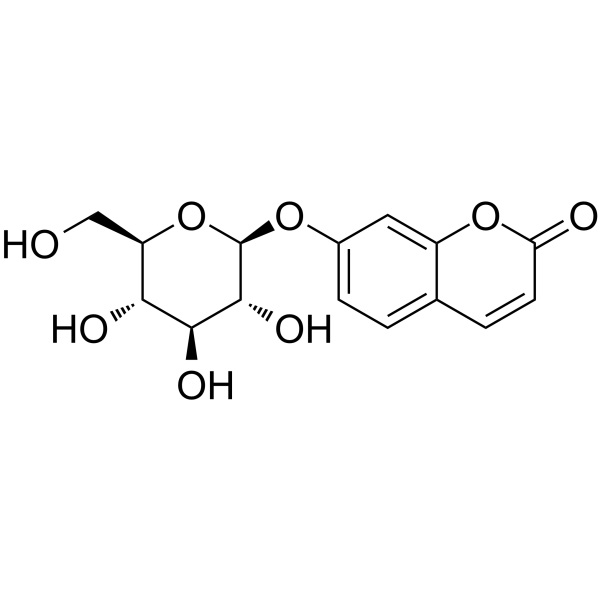
    Skimmin
    1 Publications Verification

    Umbelliferone glucoside

    Interleukin Related TGF-β Receptor TNF Receptor Parasite Inflammation/Immunology
    Skimmin (Umbelliferone glucoside) is a major pharmacologically active and orally active molecule present in Hydrangea paniculata, a medical herb used in traditional Chinese medicine as an anti-inflammatory agent. Skimmin has renal protective activity. Skimmin can improve creatinine clearance, and reduce plasma creatinine, and kidney injuries. Skimmin has good anti-amoebic activity against the HM1:IMMS strain of Entamoeba histolytica. Skimmin has anti-cancer and neuroprotective activities. Skimmin reduces cardiac fibrosis as well as decreasing TNF-α, IL-6, IL1β, and TGFβ1 in cardiac tissues. Skimmin can be studied in research for diabetes and diabetes-related diseases .
    Skimmin
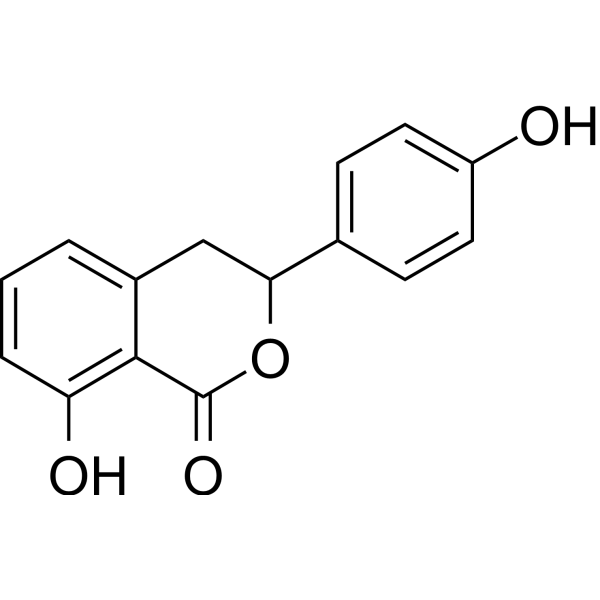
  • HY-N4028

    MMP COX Interleukin Related p38 MAPK ERK Keap1-Nrf2 Inflammation/Immunology
    Hydrangenol is an orally active antiphotoaging compound. It can be isolated from Hydrangea serrata leaves. Hydrangenol prevents wrinkle formation by reducing MMP and inflammatory cytokine expression and increasing moisturizing factors and antioxidant genes level .
    Hydrangenol
  • HY-W044525

    Phosphodiesterase (PDE) Metabolic Disease Inflammation/Immunology
    Phyllodulcin is an orally active sweetener found in Hydrangea macrophylla var. thunbergii. Phyllodulcin acts as a non-selective phosphodiesterase inhibitor and exerts anti-allergic effects by suppressing lymphocyte activation. Phyllodulcin can be used to combat obesity by regulating levels of leptin, fat browning-related genes, and hypothalamic BDNF-TrkB signaling .
    Phyllodulcin
  • HY-W010409

    n-Hexyl methyl ketone

    Environmental Pollutants Others
    2-Octanone (n-Hexyl methyl ketone) is a Flavonoids product that can be isolated from the herbs of Hydrangea macrophylla .
    2-Octanone
  • HY-N4027

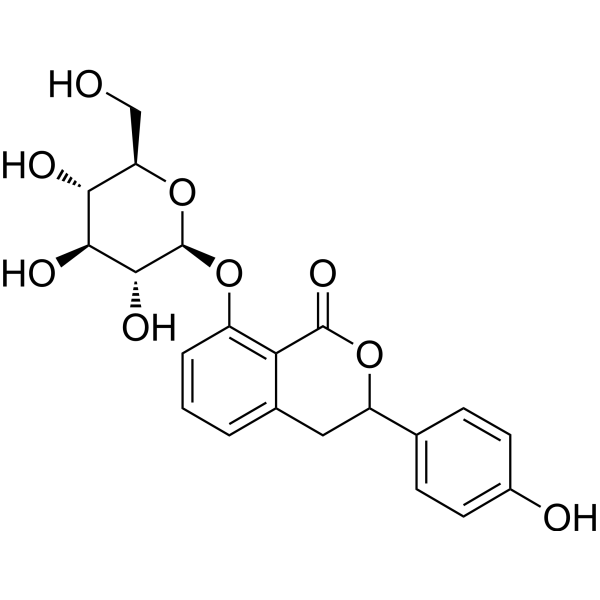
    Hydrangenol 8-O-β-D-glucopyranoside

    Cholinesterase (ChE) Neurological Disease
    Hydrangenol 8-O-glucoside (Hydrangenol 8-O-β-D-glucopyranoside) can be isolated from Hydrangea macrophyllu. Hydrangenol 8-O-glucoside is an AChE inhibitor (IC50: 22.66 μM). Hydrangenol 8-O-glucoside inhibits passive cutaneous anaphylaxis (PCA) reaction .
    Hydrangenol 8-O-glucoside
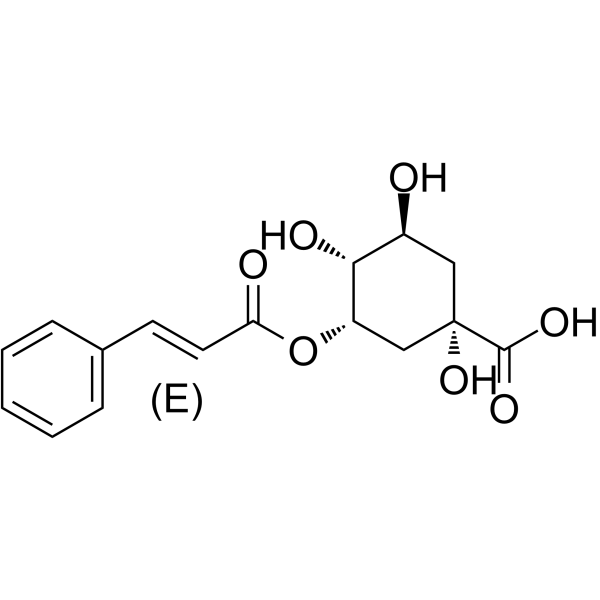
  • HY-N8224A

    Others Others
    (E)-5-O-Cinnamoylquinic acid is the isomer of 5-O-Cinnamoylquinic acid. 5-O-Cinnamoylquinic acid is a co-pigment. 5-O-Cinnamoylquinic acid could form the stable blue solution to clarify the mechanism of blue sepal-color development of hydrangea .
    (E)-5-O-Cinnamoylquinic acid
  • HY-N8868

    Others Others
    Hemiphroside B nonaacetate is a Phenols product that can be isolated from the herbs of Hydrangea macrophylla .
    Hemiphroside B nonaacetate
  • HY-N0962A

    Others Others
    (3S)-Hydrangenol 8-O-glucoside pentaacetate is a Flavonoids product that can be isolated from the herbs of Hydrangea macrophylla .
    (3S)-Hydrangenol 8-O-glucoside pentaacetate
  • HY-N0962

    Others Others
    (3R)-Hydrangenol 8-O-glucoside pentaacetate is a Flavonoids product that can be isolated from the herbs of Hydrangea macrophylla .
    (3R)-Hydrangenol 8-O-glucoside pentaacetate
  • HY-W010409R

    n-Hexyl methyl ketone (Standard)

    Others Reference Standards Others
    2-Octanone (n-Hexyl methyl ketone) (Standard) is the analytical standard of 2-Octanone (HY-W010409). This product is intended for research and analytical applications. 2-Octanone is a Flavonoids product that can be isolated from the herbs of Hydrangea macrophylla .
    2-Octanone (Standard)
  • HY-N17773

    PPAR GLUT TNF Receptor Metabolic Disease
    Hydrangeic acid is an orally effective stilbene-type glycolipid metabolism regulator that lowers blood glucose and lipids. It can be isolated from processed leaves of Hydrangea macrophylla var. thunbergii. Hydrangeic acid is associated with glycolipid metabolism and insulin sensitivity regulation. Hydrangeic acid does not directly activate PPARγ or PPARα, but instead upregulates the mRNA expression of adiponectin, PPARγ2, GLUT4, and fatty acid-binding protein aP2, and downregulates TNF-α mRNA expression, promoting adipogenesis, glucose uptake, and GLUT4 translocation in 3T3-L1 cells. Simultaneously, Hydrangeic acid inhibits inflammatory factor-induced NO production, exerting activity in improving insulin resistance. Hydrangeic acid can be used in research related to type 2 diabetes and does not cause liver weight gain as a side effect.
    Hydrangeic acid

Inquiry Online

Your information is safe with us. * Required Fields.

Salutation


Country or Region *

Applicant Name *


Organization Name *

Department *


Email Address *


Product Name *

Cat. No.


Requested quantity *

Phone Number *


Remarks

Inquiry Online

Inquiry Information

Product Name:
Cat. No.:
Quantity:
MCE Japan Authorized Agent:

