

From 11:00 pm to 12:00 pm EST ( 8:00 pm to 9:00 pm PST ) on January 6th, the website will be under maintenance. We are sorry for the inconvenience. Please arrange your schedule properly.
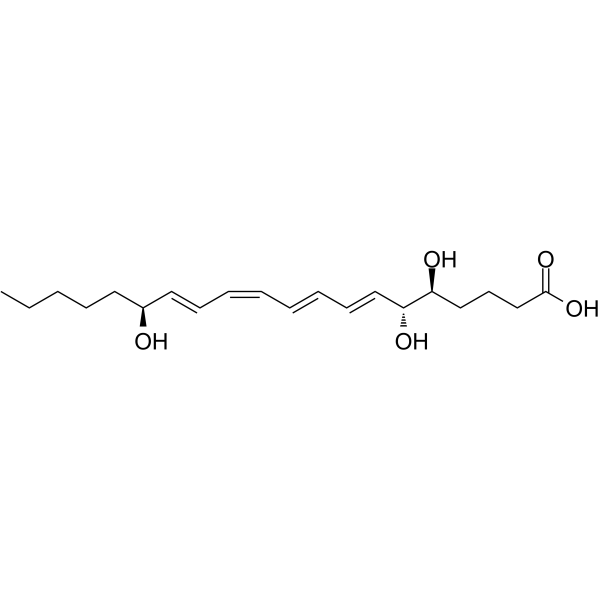
Lipoxin A4 (LXA4), an endogenous lipoxygenase-derived eicosanoid mediator, has potent dual pro-resolving and anti-inflammatory properties . Lipoxin A4 inhibits proliferation and inflammatory cytokine/chemokine production of human epidermal keratinocytes (NHEKs) associated with the ERK1/2 and NF-kB pathways . Lipoxin A4 inhibits serum amyloid A (SAA)-mediated IL-8 release with an IC50 value of 25.74 nM .
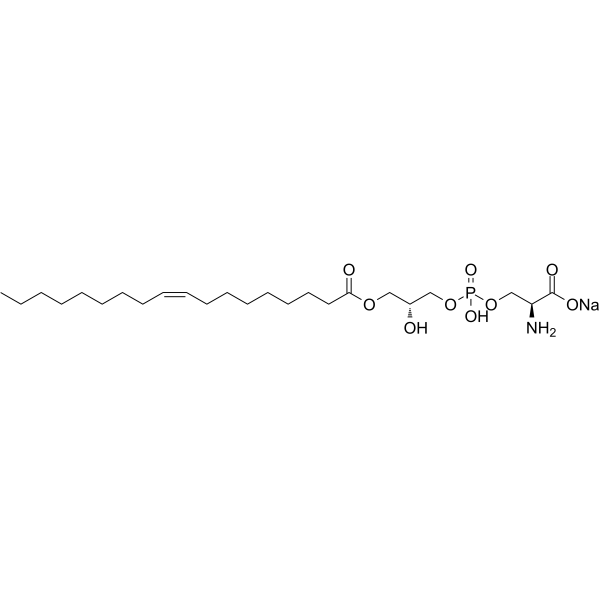
Oleoyl-2-hydroxy-sn-glycero-3-phospho-L-serine sodium (18:1 Lyso-PS) is a modified PS product generated following NADPH oxidase activation and Lyso-PS signal transduction. 1-Oleoyl-2-hydroxy-sn-glycero-3-phospho-L-serine sodium signals through macrophage G2A to enhance the phagocytic uptake of PS-dependent apoptotic (apoptosis) neutrophils and PS-exposed activated neutrophils. 1-Oleoyl-2-hydroxy-sn-glycero-3-phospho-L-serine sodium enhances macrophage phagocytic uptake of apoptotic cells, carboxylate-modified microspheres, and PS-exposed non-apoptotic activated neutrophils. 1-Oleoyl-2-hydroxy-sn-glycero-3-phospho-L-serine sodium serves as an acyl acceptor substrate for the lysophosphatidyltransferase At1g78690p to generate diacylphosphatidylserine. 1-Oleoyl-2-hydroxy-sn-glycero-3-phospho-L-serine sodium reduces the secretion of IL-8 and decreases the proportion of viable colon cancer cells. 1-Oleoyl-2-hydroxy-sn-glycero-3-phospho-L-serine sodium is applicable to studies on peritonitis and inflammatory bowel disease .
SM-7368 is a potent NF-kB inhibitor that targets downstream of MAPK p38 activation . SM-7368 inhibits TNF-α-induced MMP-9 upregulation. SM-7368 can be used for the research of chemotherapies targeting TNF-α-mediated tumor invasion and metastasis .
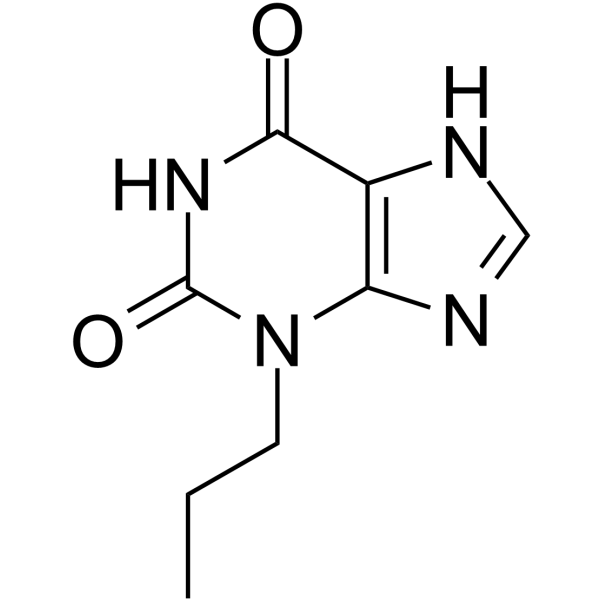
Enprofylline acts as a selective and competitive A2B receptor antagonist with the Ki of 7 μM. Enprofylline also acts as a phosphodiesterase inhibitor. Enprofylline can be used for the research of asthma, chronic obstructive pulmonary disease .
TP4 (Nile tilapia piscidin) is an orally active amphipathic α-helical cationic antimicrobial peptide. TP4 (Nile tilapia piscidin) exerts broad-spectrum bactericidal activity against Gram-positive and Gram-negative bacteria by disrupting cell membrane structures, and also exhibits certain hemolytic activity. TP4 (Nile tilapia piscidin) regulates the innate immune system and enhances the expression of lysozymes, cytokines and antioxidant enzymes to resist bacterial infection. TP4 (Nile tilapia piscidin) also stimulates the proliferation of keratinocytes and fibroblasts, and significantly promotes the healing of wounds infected with MRSA. TP4 (Nile tilapia piscidin) can be used in research related to bacterial infection, peritonitis, wound healing and other fields .
Undecane is a potent cAMP agonist with anti-allergic and anti-inflammatory activities. Undecane inhibits degranulation and the secretion of histamine and TNF-α. Undecane reverses the increased levels of p38 phosphorylation, NF-κB transcriptional activity and target cytokine/chemokine genes, including thymus and activation-regulated chemokine (TARC), macrophage-derived chemokine (MDC) and interleukin-8(IL-8). Undecane can be used for the study of skin inflammatory disorders, such as atopic dermatitis .
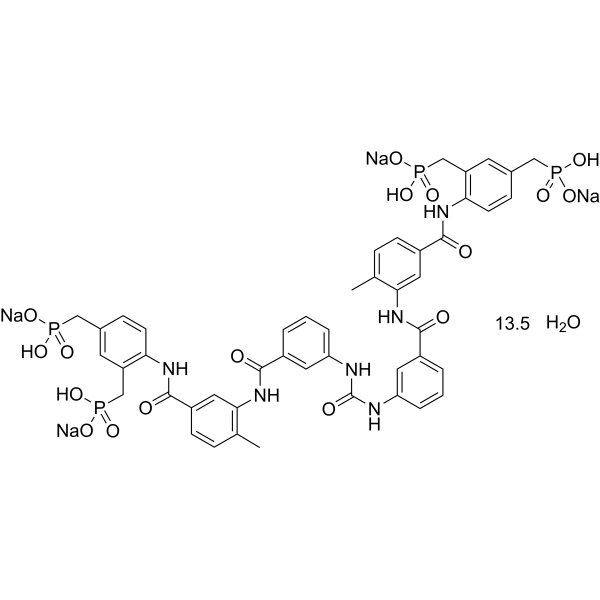
NF546 (hydrate) is a selective non-nucleotide P2Y11 agonist with a pEC50 of 6.27. NF546 (hydrate) stimulates release of interleukin-8 from human monocyte-derived dendritic cells .
Human CXCR1 mRNA encodes the human C-X-C motif chemokine receptor 1 (CXCR1) protein, a member of the G-protein-coupled receptor family. CXCR1 is a receptor for interleukin 8 (IL8). It binds to IL8 with high affinity, and transduces the signal through a G-protein activated second messenger system.
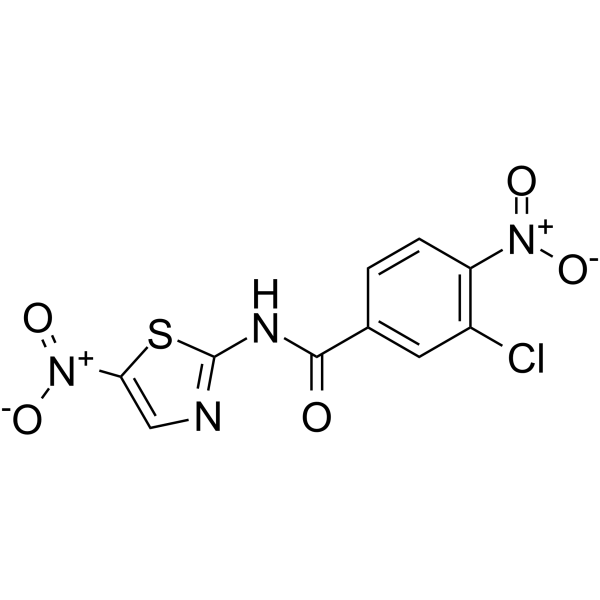
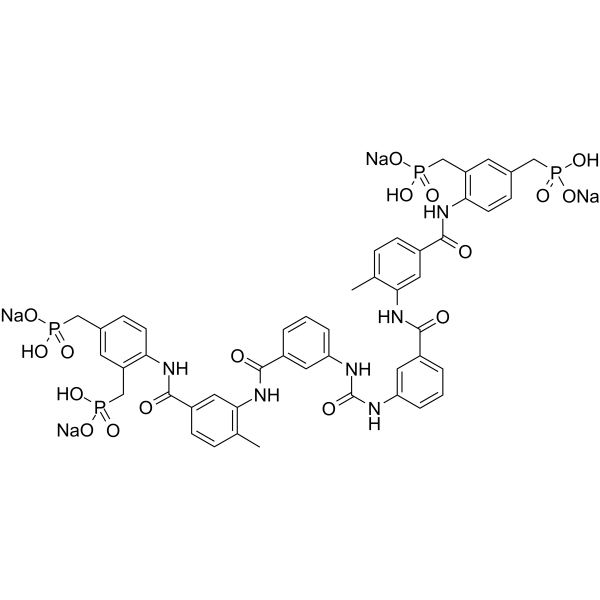
NF546 is a selective non-nucleotide P2Y11 agonist with a pEC50 of 6.27. NF546 stimulates release of interleukin-8 from human monocyte-derived dendritic cells .
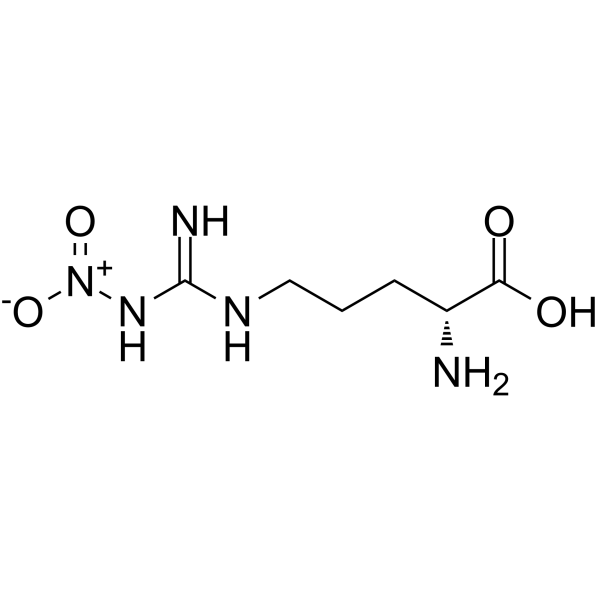
N'-Nitro-D-arginine, a nitric oxide synthesis inhibitor, also is a vasodilator that relaxes the smooth muscles and increases blood flow to the penis, improving erections. N'-Nitro-D-arginine also inhibits neutrophil migration by blocking receptors for tumour necrosis factor alpha (TNFα) and interleukin 8 (IL8) .
Undecane (Standard) is an analytical standard of Undecane (HY-N8593).Undecane is a potent cAMP agonist with anti-allergic and anti-inflammatory activities. Undecane inhibits degranulation and the secretion of histamine and TNF-α. Undecane reverses the increased levels of p38 phosphorylation, NF-κB transcriptional activity and target cytokine/chemokine genes, including thymus and activation-regulated chemokine (TARC), macrophage-derived chemokine (MDC) and interleukin-8(IL-8). Undecane can be used for the study of skin inflammatory disorders, such as atopic dermatitis .
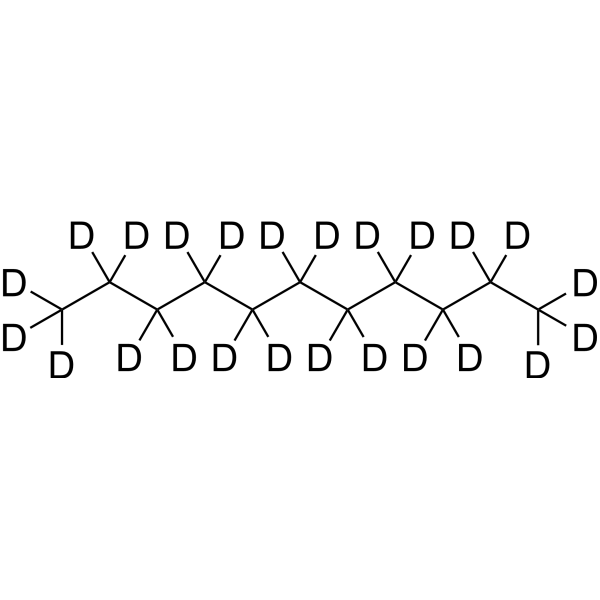
Undecane-d24 is the deuterium labeled Undecane (HY-N8593).Undecane is a potent cAMP agonist with anti-allergic and anti-inflammatory activities. Undecane inhibits degranulation and the secretion of histamine and TNF-α. Undecane reverses the increased levels of p38 phosphorylation, NF-κB transcriptional activity and target cytokine/chemokine genes, including thymus and activation-regulated chemokine (TARC), macrophage-derived chemokine (MDC) and interleukin-8(IL-8). Undecane can be used for the study of skin inflammatory disorders, such as atopic dermatitis .
Betamethasone 17-Propionate is a compound used to study its effects on endotoxin-induced uveitis in rats. It has the activity of inhibiting the infiltration of cells into the aqueous humor in endotoxin-induced uveitis by eye drops and systemic administration at a certain dose. However, its inhibitory effect is relatively weak compared with some other compounds. At the same time, the dose for systemic administration is 1mg/kg. In addition, Betamethasone 17-Propionate has a weaker inhibitory effect on the release of IL-8 from rat peritoneal exudate cells in an in vitro interleukin-8 (IL-8) release assay than betamethasone. Moreover, the simultaneous addition of betamethasone dipropionate and betamethasone 17-Propionate reduces the inhibitory effect of betamethasone on cell infiltration and IL-1β gene expression.
Human IL8 mRNA encodes the human interleukin 8 (IL8) protein, a member of the CXC chemokine family. IL8 is a major mediator of the inflammatory response. It also functions as a chemotactic factor by guiding the neutrophils to the site of infection.
HB-107 is a peptide with wound healing properties. HB-107 promotes the proliferation of keratinocytes and increased leukocyte infiltration at the wound site, and it also stimulates cultured endothelial cells to secrete interleukin 8(IL-8). HB-107 holds potential for research in the fields of wound healing and inflammation .
Human CXCR2 mRNA encodes the human C-X-C motif chemokine receptor 2 (CXCR2) protein, a member of the G-protein-coupled receptor family. CXCR2 is a receptor for interleukin 8 (IL8). It binds to IL8 with high affinity, and transduces the signal through a G-protein activated second messenger system. This receptor also binds to chemokine (C-X-C motif) ligand 1 (CXCL1/MGSA), a protein with melanoma growth stimulating activity, and has been shown to be a major component required for serum-dependent melanoma cell growth.
AMY109 is an anti-human interleukin-8(IL-8) monoclonal antibody, with IC50 values of 0.14 μg/mL and 0.37 μg/mL against human IL-8, a Ka of 36.8 pM for human IL-8, and a Ka of 380 pM for cynomolgus monkey IL-8.\nAMY109 binds to human and cynomolgus monkey IL-8 in a pH-dependent manner, inhibits IL-8-mediated activation of CXCR1 and CXCR2, and blocks the downstream biological activities of IL-8. AMY109 inhibits neutrophil recruitment to endometriotic lesions and suppresses monocyte chemoattractant protein-1 production by neutrophils. AMY109 is applicable to research related to endometriosis .
(6R,7R)-Epoxy-1-oleanen-3-ol is a triterpenoid that can be found in Boswellia ovalifoliolata, exhibiting anti-inflammatory activity. (6R,7R)-Epoxy-1-oleanen-3-ol inhibits TNF-α, IL-6, IL-8, and NO production in LPS (HY-D1056)-activated murine neutrophils. (6R,7R)-Epoxy-1-oleanen-3-ol can be used for the research on inflammatory conditions .
Sphingomab (LT1002) is a mouse-derived IgG1 κ monoclonal antibody and also an inhibitor targeting S1P, with high affinity for S1P and a Kd value of 0.03 ± 0.002 nM. Sphingomab blocks S1P-mediated IL-8 release in ovarian cancer cells. Sphingomab exhibits anti-angiogenic activity in a mouse model of choroidal neovascularization. Sphingomab reduces peripheral blood lymphocyte counts. Sphingomab can be used in the research of ovarian cancer and age-related macular degeneration .
Betamethasone 17-Propionate is a compound used to study its effects on endotoxin-induced uveitis in rats. It has the activity of inhibiting the infiltration of cells into the aqueous humor in endotoxin-induced uveitis by eye drops and systemic administration at a certain dose. However, its inhibitory effect is relatively weak compared with some other compounds. At the same time, the dose for systemic administration is 1mg/kg. In addition, Betamethasone 17-Propionate has a weaker inhibitory effect on the release of IL-8 from rat peritoneal exudate cells in an in vitro interleukin-8 (IL-8) release assay than betamethasone. Moreover, the simultaneous addition of betamethasone dipropionate and betamethasone 17-Propionate reduces the inhibitory effect of betamethasone on cell infiltration and IL-1β gene expression.
TP4 (Nile tilapia piscidin) is an orally active amphipathic α-helical cationic antimicrobial peptide. TP4 (Nile tilapia piscidin) exerts broad-spectrum bactericidal activity against Gram-positive and Gram-negative bacteria by disrupting cell membrane structures, and also exhibits certain hemolytic activity. TP4 (Nile tilapia piscidin) regulates the innate immune system and enhances the expression of lysozymes, cytokines and antioxidant enzymes to resist bacterial infection. TP4 (Nile tilapia piscidin) also stimulates the proliferation of keratinocytes and fibroblasts, and significantly promotes the healing of wounds infected with MRSA. TP4 (Nile tilapia piscidin) can be used in research related to bacterial infection, peritonitis, wound healing and other fields .
N'-Nitro-D-arginine, a nitric oxide synthesis inhibitor, also is a vasodilator that relaxes the smooth muscles and increases blood flow to the penis, improving erections. N'-Nitro-D-arginine also inhibits neutrophil migration by blocking receptors for tumour necrosis factor alpha (TNFα) and interleukin 8 (IL8) .
HB-107 is a peptide with wound healing properties. HB-107 promotes the proliferation of keratinocytes and increased leukocyte infiltration at the wound site, and it also stimulates cultured endothelial cells to secrete interleukin 8(IL-8). HB-107 holds potential for research in the fields of wound healing and inflammation .
MCE HOLO Human Interleukin-8 (IL-8) Detection Kit is a homogeneous luminescence-based assay used for the quantitative detection of human IL-8 concentrations in biological samples such as buffer solutions, cell culture supernatants, or serum.
AMY109 is an anti-human interleukin-8(IL-8) monoclonal antibody, with IC50 values of 0.14 μg/mL and 0.37 μg/mL against human IL-8, a Ka of 36.8 pM for human IL-8, and a Ka of 380 pM for cynomolgus monkey IL-8.\nAMY109 binds to human and cynomolgus monkey IL-8 in a pH-dependent manner, inhibits IL-8-mediated activation of CXCR1 and CXCR2, and blocks the downstream biological activities of IL-8. AMY109 inhibits neutrophil recruitment to endometriotic lesions and suppresses monocyte chemoattractant protein-1 production by neutrophils. AMY109 is applicable to research related to endometriosis .
Sphingomab (LT1002) is a mouse-derived IgG1 κ monoclonal antibody and also an inhibitor targeting S1P, with high affinity for S1P and a Kd value of 0.03 ± 0.002 nM. Sphingomab blocks S1P-mediated IL-8 release in ovarian cancer cells. Sphingomab exhibits anti-angiogenic activity in a mouse model of choroidal neovascularization. Sphingomab reduces peripheral blood lymphocyte counts. Sphingomab can be used in the research of ovarian cancer and age-related macular degeneration .
Lipoxin A4 (LXA4), an endogenous lipoxygenase-derived eicosanoid mediator, has potent dual pro-resolving and anti-inflammatory properties . Lipoxin A4 inhibits proliferation and inflammatory cytokine/chemokine production of human epidermal keratinocytes (NHEKs) associated with the ERK1/2 and NF-kB pathways . Lipoxin A4 inhibits serum amyloid A (SAA)-mediated IL-8 release with an IC50 value of 25.74 nM .
Undecane is a potent cAMP agonist with anti-allergic and anti-inflammatory activities. Undecane inhibits degranulation and the secretion of histamine and TNF-α. Undecane reverses the increased levels of p38 phosphorylation, NF-κB transcriptional activity and target cytokine/chemokine genes, including thymus and activation-regulated chemokine (TARC), macrophage-derived chemokine (MDC) and interleukin-8(IL-8). Undecane can be used for the study of skin inflammatory disorders, such as atopic dermatitis .
Undecane (Standard) is an analytical standard of Undecane (HY-N8593).Undecane is a potent cAMP agonist with anti-allergic and anti-inflammatory activities. Undecane inhibits degranulation and the secretion of histamine and TNF-α. Undecane reverses the increased levels of p38 phosphorylation, NF-κB transcriptional activity and target cytokine/chemokine genes, including thymus and activation-regulated chemokine (TARC), macrophage-derived chemokine (MDC) and interleukin-8(IL-8). Undecane can be used for the study of skin inflammatory disorders, such as atopic dermatitis .
(6R,7R)-Epoxy-1-oleanen-3-ol is a triterpenoid that can be found in Boswellia ovalifoliolata, exhibiting anti-inflammatory activity. (6R,7R)-Epoxy-1-oleanen-3-ol inhibits TNF-α, IL-6, IL-8, and NO production in LPS (HY-D1056)-activated murine neutrophils. (6R,7R)-Epoxy-1-oleanen-3-ol can be used for the research on inflammatory conditions .
IL-8/CXCL8 protein, a vital chemotactic factor, orchestrates inflammatory responses by attracting neutrophils, basophils, and T-cells to clear pathogens. It activates neutrophils and binds to CXCR1/CXCR2 receptors, initiating downstream signaling pathways. IL-8/CXCL8 homodimerizes, disrupted by tick evasin-3, and interacts with TNFAIP6, potentially regulating chemokine activity in the inflammatory microenvironment. IL-8/CXCL8 Protein, Porcine is the recombinant Porcine-derived IL-8/CXCL8 protein, expressed by E. coli , with tag free.
Interleukin-8 (IL-8), also known as CXCL8 or NAP-1, is a pro-inflammatory CXC chemokine. IL-8 acts on human neutrophils via two receptors, CXCR1 and CXCR2. IL-8 has a conserved Glu-Leu-Arg (ELR) N-terminal motif, and is an agonist for CXCR1/CXCR2. IL-8 is produced by various cells including leukocytes, endothelial cells, and epithelial cells. IL-8/CXCL8 Protein, Human (HEK293, His) is produced in HEK293 cells with six C-Terminal His-tags. It consists of 79 amino acids (E21-S99).
IL-8/CXCL8 protein, a vital chemotactic factor, orchestrates inflammatory responses by attracting neutrophils, basophils, and T-cells to clear pathogens. It activates neutrophils and binds to CXCR1/CXCR2 receptors, initiating downstream signaling pathways. IL-8/CXCL8 homodimerizes, disrupted by tick evasin-3, and interacts with TNFAIP6, potentially regulating chemokine activity in the inflammatory microenvironment. Animal-Free IL-8/CXCL8 Protein, Pig (His) is the recombinant pig-derived animal-FreeIL-8/CXCL8 protein, expressed by E. coli , with C-His labeled tag. This product is for cell culture use only.
CXCR2, the receptor for interleukin-8 (IL-8), orchestrates neutrophil activation through a G-protein-mediated phosphatidylinositol-calcium second messenger system upon IL-8 binding. Exhibiting high-affinity binding to IL-8, CXCR2 also interacts with other ligands like CXCL3, GRO/MGSA, and NAP-2. The involvement of GNAI2 underscores the intricate signaling mechanisms regulating neutrophil function through CXCR2. CXCR2 Protein, Human (His-SUMO) is the recombinant human-derived CXCR2 protein, expressed by E. coli , with N-SUMO, N-6*His labeled tag.
CXCR2 protein acts as a receptor for interleukin-8 and induces neutrophil activation through the G protein-mediated phosphatidylinositol-calcium second messenger system. In addition to IL-8, CXCR2 also exhibits high-affinity binding to ligands such as CXCL3, GRO/MGSA, and NAP-2. CXCR2 Protein, Mouse (Cell-Free, His) is the recombinant mouse-derived CXCR2 protein, expressed by E. coli Cell-free , with N-10*His labeled tag.
IL-8/CXCL8 protein, a vital chemotactic factor, orchestrates inflammatory responses by attracting neutrophils, basophils, and T-cells to clear pathogens. It activates neutrophils and binds to CXCR1/CXCR2 receptors, initiating downstream signaling pathways. IL-8/CXCL8 homodimerizes, disrupted by tick evasin-3, and interacts with TNFAIP6, potentially regulating chemokine activity in the inflammatory microenvironment. IL-8/CXCL8 Protein, Human (HEK293) is the recombinant human-derived IL-8/CXCL8 protein, expressed by HEK293, with tag free.
CXCR2, the receptor for interleukin-8 (IL-8), orchestrates neutrophil activation through a G-protein-mediated phosphatidylinositol-calcium second messenger system upon IL-8 binding. Exhibiting high-affinity binding to IL-8, CXCR2 also interacts with other ligands like CXCL3, GRO/MGSA, and NAP-2. The involvement of GNAI2 underscores the intricate signaling mechanisms regulating neutrophil function through CXCR2. CXCR2 Protein, Human (Cell-Free, His) is the recombinant human-derived CXCR2, expressed by E. coli Cell-free, with N-10*His labeled tag. The total length of CXCR2 Protein, Human (Cell-Free, His) is 360 a.a..
IL-8/CXCL8 protein, a vital chemotactic factor, orchestrates inflammatory responses by attracting neutrophils, basophils, and T-cells to clear pathogens. It activates neutrophils and binds to CXCR1/CXCR2 receptors, initiating downstream signaling pathways. IL-8/CXCL8 homodimerizes, disrupted by tick evasin-3, and interacts with TNFAIP6, potentially regulating chemokine activity in the inflammatory microenvironment. Animal-Free IL-8/CXCL8 Protein, Human (His) is the recombinant human-derived animal-FreeIL-8/CXCL8 protein, expressed by E. coli , with C-His labeled tag. This product is for cell culture use only.
CXCL8 protein, a crucial chemotactic factor, drives inflammatory responses by attracting neutrophils, basophils, and T-cells, contributing to pathogen clearance. It plays a pivotal role in activating neutrophils and binds to CXCR1/CXCR2 receptors, initiating downstream signaling pathways. CXCL8 homodimerizes and interacts with TNFAIP6, potentially regulating chemokine activity in the inflammatory microenvironment. IL-8/CXCL8 Protein, Rhesus macaque (His) is the recombinant Rhesus Macaque-derived CXCL8 protein, expressed by E. coli , with N-6*His labeled tag.
CXCL8 protein, a crucial chemotactic factor, drives inflammatory responses by attracting neutrophils, basophils, and T-cells, contributing to pathogen clearance. It plays a pivotal role in activating neutrophils and binds to CXCR1/CXCR2 receptors, initiating downstream signaling pathways. CXCL8 homodimerizes and interacts with TNFAIP6, potentially regulating chemokine activity in the inflammatory microenvironment. IL-8/CXCL8 Protein, Rhesus macaque (HEK293, His) is the recombinant rhesus macaque-derived CXCL8 protein, expressed by HEK293, with C-His labeled tag.
Interleukin-8 (IL-8), also known as CXCL8 or NAP-1, is a pro-inflammatory CXC chemokine. IL-8 acts on human neutrophils via two receptors, CXCR1 and CXCR2. IL-8 has a conserved Glu-Leu-Arg (ELR) N-terminal motif, and is an agonist for CXCR1/CXCR2. IL-8 is produced by various cells including leukocytes, endothelial cells, and epithelial cells. IL-8/CXCL8 Protein, Canine is produced in E.coil, and consists of 79 amino acids (A23-P101).
Interleukin-8 (IL-8), also known as CXCL8 or NAP-1, is a pro-inflammatory CXC chemokine. IL-8 acts on human neutrophils via two receptors, CXCR1 and CXCR2. IL-8 has a conserved Glu-Leu-Arg (ELR) N-terminal motif, and is an agonist for CXCR1/CXCR2. IL-8 is produced by various cells including leukocytes, endothelial cells, and epithelial cells. IL-8/CXCL8 Protein, Human (77a.a, HEK293) is produced in HEK293 cells, and consists of 77 amino acids (A23-S99).
Interleukin-8 (IL-8), also known as CXCL8 or NAP-1, is a pro-inflammatory CXC chemokine. IL-8 acts on human neutrophils via two receptors, CXCR1 and CXCR2. IL-8 has a conserved Glu-Leu-Arg (ELR) N-terminal motif, and is an agonist for CXCR1/CXCR2. IL-8 is produced by various cells including leukocytes, endothelial cells, and epithelial cells. IL-8/CXCL8 Protein, Human (HEK293, Fc) is produced in HEK293 cells with a N-Terminal Fc-tag.
Interleukin-8 (IL-8), also known as CXCL8 or NAP-1, is a pro-inflammatory CXC chemokine. IL-8 acts on human neutrophils via two receptors, CXCR1 and CXCR2. IL-8 has a conserved Glu-Leu-Arg (ELR) N-terminal motif, and is an agonist for CXCR1/CXCR2. IL-8 is produced by various cells including leukocytes, endothelial cells, and epithelial cells. IL-8/CXCL8 Protein, Rhesus Macaque is produced in E.coil, and consists of 79 amino acids (A23-P101).
Undecane-d24 is the deuterium labeled Undecane (HY-N8593).Undecane is a potent cAMP agonist with anti-allergic and anti-inflammatory activities. Undecane inhibits degranulation and the secretion of histamine and TNF-α. Undecane reverses the increased levels of p38 phosphorylation, NF-κB transcriptional activity and target cytokine/chemokine genes, including thymus and activation-regulated chemokine (TARC), macrophage-derived chemokine (MDC) and interleukin-8(IL-8). Undecane can be used for the study of skin inflammatory disorders, such as atopic dermatitis .
Human CXCR1 mRNA encodes the human C-X-C motif chemokine receptor 1 (CXCR1) protein, a member of the G-protein-coupled receptor family. CXCR1 is a receptor for interleukin 8 (IL8). It binds to IL8 with high affinity, and transduces the signal through a G-protein activated second messenger system.
Human IL8 mRNA encodes the human interleukin 8 (IL8) protein, a member of the CXC chemokine family. IL8 is a major mediator of the inflammatory response. It also functions as a chemotactic factor by guiding the neutrophils to the site of infection.
Human CXCR2 mRNA encodes the human C-X-C motif chemokine receptor 2 (CXCR2) protein, a member of the G-protein-coupled receptor family. CXCR2 is a receptor for interleukin 8 (IL8). It binds to IL8 with high affinity, and transduces the signal through a G-protein activated second messenger system. This receptor also binds to chemokine (C-X-C motif) ligand 1 (CXCL1/MGSA), a protein with melanoma growth stimulating activity, and has been shown to be a major component required for serum-dependent melanoma cell growth.
Inquiry Online
Your information is safe with us. * Required Fields.
Western blot analysis of extracts from THP-1(lane 2(20μg), Jurkat (lane 3(20μg) and NIH3T3(lane 4(20μg) using FOXO1A (HY-P80132) Rabbit mAb. Proteins were transferred
to a PVDF membrane and blocked with 5% non-fat milk in TBST for 2 hour at room temperature. The primary antibody (1/1000) and Loading control antibody (Beta Actin, HY-P80438, 1/10000) was
used in 5% non-fat milk in TBST at 4°C overnight. Goat Anti-Mouse/Rabbit IgG-HRP Secondary Antibody (1/10000) was used for 1 hour at room temperature.
Western blot analysis of extracts from THP-1(lane 2(20μg), Jurkat (lane 3(20μg) and NIH3T3(lane 4(20μg) using FOXO1A (HY-P80132) Rabbit mAb. Proteins were transferred
to a PVDF membrane and blocked with 5% non-fat milk in TBST for 2 hour at room temperature. The primary antibody (1/1000) and Loading control antibody (Beta Actin, HY-P80438, 1/10000) was
used in 5% non-fat milk in TBST at 4°C overnight. Goat Anti-Mouse/Rabbit IgG-HRP Secondary Antibody (1/10000) was used for 1 hour at room temperature.
Western blot analysis of extracts from THP-1(lane 2(20μg), Jurkat (lane 3(20μg) and NIH3T3(lane 4(20μg) using FOXO1A (HY-P80132) Rabbit mAb. Proteins were transferred
to a PVDF membrane and blocked with 5% non-fat milk in TBST for 2 hour at room temperature. The primary antibody (1/1000) and Loading control antibody (Beta Actin, HY-P80438, 1/10000) was
used in 5% non-fat milk in TBST at 4°C overnight. Goat Anti-Mouse/Rabbit IgG-HRP Secondary Antibody (1/10000) was used for 1 hour at room temperature.
Western blot analysis of extracts from THP-1(lane 2(20μg), Jurkat (lane 3(20μg) and NIH3T3(lane 4(20μg) using FOXO1A (HY-P80132) Rabbit mAb. Proteins were transferred
to a PVDF membrane and blocked with 5% non-fat milk in TBST for 2 hour at room temperature. The primary antibody (1/1000) and Loading control antibody (Beta Actin, HY-P80438, 1/10000) was
MedchemExpress Validation 03
Western blot analysis of extracts from THP-1(lane 2(20μg), Jurkat (lane 3(20μg) and NIH3T3(lane 4(20μg) using FOXO1A (HY-P80132) Rabbit mAb. Proteins were transferred
MedchemExpress Validation 04
Western blot analysis of extracts from THP-1(lane 2(20μg), Jurkat (lane 3(20μg) and NIH3T3(lane 4(20μg) using FOXO1A (HY-P80132) Rabbit mAb. Proteins were transferred
to a PVDF membrane and blocked with 5% non-fat milk in TBST for 2 hour at room temperature. The primary antibody (1/1000) and Loading control antibody (Beta Actin, HY-P80438, 1/10000) was
used in 5% non-fat milk in TBST at 4°C overnight. Goat Anti-Mouse/Rabbit IgG-HRP Secondary Antibody (1/10000) was used for 1 hour at room temperature.
MedchemExpress Validation
Western blot analysis of extracts from THP-1(lane 2(20μg), Jurkat (lane 3(20μg) and NIH3T3(lane 4(20μg) using FOXO1A (HY-P80132) Rabbit mAb. Proteins were transferred
to a PVDF membrane and blocked with 5% non-fat milk in TBST for 2 hour at room temperature. The primary antibody (1/1000) and Loading control antibody (Beta Actin, HY-P80438, 1/10000) was
used in 5% non-fat milk in TBST at 4°C overnight. Goat Anti-Mouse/Rabbit IgG-HRP Secondary Antibody (1/10000) was used for 1 hour at room temperature.
Western blot analysis of extracts from THP-1(lane 2(20μg), Jurkat (lane 3(20μg) and NIH3T3(lane 4(20μg) using FOXO1A (HY-P80132) Rabbit mAb. Proteins were transferred
to a PVDF membrane and blocked with 5% non-fat milk in TBST for 2 hour at room temperature. The primary antibody (1/1000) and Loading control antibody (Beta Actin, HY-P80438, 1/10000) was
used in 5% non-fat milk in TBST at 4°C overnight. Goat Anti-Mouse/Rabbit IgG-HRP Secondary Antibody (1/10000) was used for 1 hour at room temperature.
MedchemExpress Validation
Western blot analysis of extracts from THP-1(lane 2(20μg), Jurkat (lane 3(20μg) and NIH3T3(lane 4(20μg) using FOXO1A (HY-P80132) Rabbit mAb. Proteins were transferred
to a PVDF membrane and blocked with 5% non-fat milk in TBST for 2 hour at room temperature. The primary antibody (1/1000) and Loading control antibody (Beta Actin, HY-P80438, 1/10000) was
used in 5% non-fat milk in TBST at 4°C overnight. Goat Anti-Mouse/Rabbit IgG-HRP Secondary Antibody (1/10000) was used for 1 hour at room temperature.
MedchemExpress Validation
Western blot analysis of extracts from THP-1(lane 2(20μg), Jurkat (lane 3(20μg) and NIH3T3(lane 4(20μg) using FOXO1A (HY-P80132) Rabbit mAb. Proteins were transferred
to a PVDF membrane and blocked with 5% non-fat milk in TBST for 2 hour at room temperature. The primary antibody (1/1000) and Loading control antibody (Beta Actin, HY-P80438, 1/10000) was
used in 5% non-fat milk in TBST at 4°C overnight. Goat Anti-Mouse/Rabbit IgG-HRP Secondary Antibody (1/10000) was used for 1 hour at room temperature.
MedchemExpress Validation
Western blot analysis of extracts from THP-1(lane 2(20μg), Jurkat (lane 3(20μg) and NIH3T3(lane 4(20μg) using FOXO1A (HY-P80132) Rabbit mAb. Proteins were transferred
to a PVDF membrane and blocked with 5% non-fat milk in TBST for 2 hour at room temperature. The primary antibody (1/1000) and Loading control antibody (Beta Actin, HY-P80438, 1/10000) was
used in 5% non-fat milk in TBST at 4°C overnight. Goat Anti-Mouse/Rabbit IgG-HRP Secondary Antibody (1/10000) was used for 1 hour at room temperature.
MedchemExpress Validation
Western blot analysis of extracts from THP-1(lane 2(20μg), Jurkat (lane 3(20μg) and NIH3T3(lane 4(20μg) using FOXO1A (HY-P80132) Rabbit mAb. Proteins were transferred
to a PVDF membrane and blocked with 5% non-fat milk in TBST for 2 hour at room temperature. The primary antibody (1/1000) and Loading control antibody (Beta Actin, HY-P80438, 1/10000) was
used in 5% non-fat milk in TBST at 4°C overnight. Goat Anti-Mouse/Rabbit IgG-HRP Secondary Antibody (1/10000) was used for 1 hour at room temperature.
MedchemExpress Validation
Western blot analysis of extracts from THP-1(lane 2(20μg), Jurkat (lane 3(20μg) and NIH3T3(lane 4(20μg) using FOXO1A (HY-P80132) Rabbit mAb. Proteins were transferred
to a PVDF membrane and blocked with 5% non-fat milk in TBST for 2 hour at room temperature. The primary antibody (1/1000) and Loading control antibody (Beta Actin, HY-P80438, 1/10000) was
used in 5% non-fat milk in TBST at 4°C overnight. Goat Anti-Mouse/Rabbit IgG-HRP Secondary Antibody (1/10000) was used for 1 hour at room temperature.
MedchemExpress Validation
Western blot analysis of extracts from THP-1(lane 2(20μg), Jurkat (lane 3(20μg) and NIH3T3(lane 4(20μg) using FOXO1A (HY-P80132) Rabbit mAb. Proteins were transferred
to a PVDF membrane and blocked with 5% non-fat milk in TBST for 2 hour at room temperature. The primary antibody (1/1000) and Loading control antibody (Beta Actin, HY-P80438, 1/10000) was
used in 5% non-fat milk in TBST at 4°C overnight. Goat Anti-Mouse/Rabbit IgG-HRP Secondary Antibody (1/10000) was used for 1 hour at room temperature.
MedChemExpress values your privacy and your trust is important to us. We use cookies to enhance your website experience. Some cookies are necessary to run the website.
Privacy and Cookie Policy

