1. Search Result
Search Result
Pathways Recommended: Membrane Transporter/Ion Channel
Results for "

ion flux

" in MedChemExpress (MCE) Product Catalog:

11

Inhibitors & Agonists

1

Fluorescent Dyes

1

Peptides

2

Isotope-Labeled Compounds

Cat. No. Product Name Target Research Areas Chemical Structure
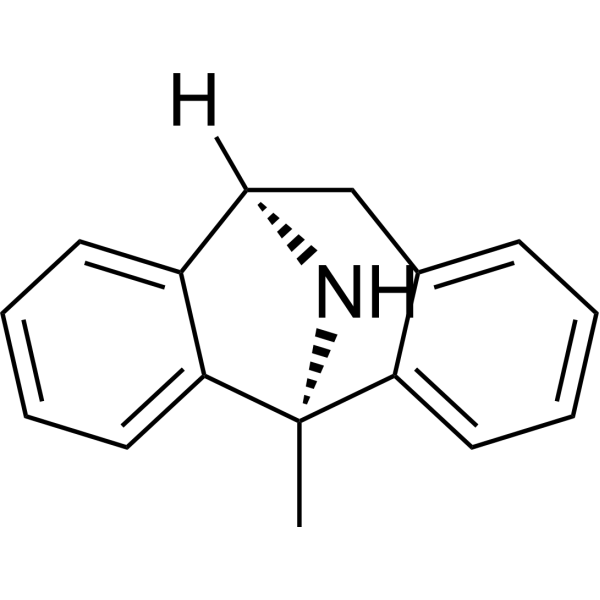
  • HY-15084B
    Dizocilpine
    Maximum Cited Publications
    44 Publications Verification

    MK-801

    iGluR Neurological Disease
    Dizocilpine (MK-801), a potent anticonvulsant, is a selective and non-competitive NMDA receptor antagonist, with a Kd of 37.2 nM in rat brain membranes. Dizocilpine acts by binding to a site located within the NMDA associated ion channel and thus prevents Ca 2+ flux .
    Dizocilpine
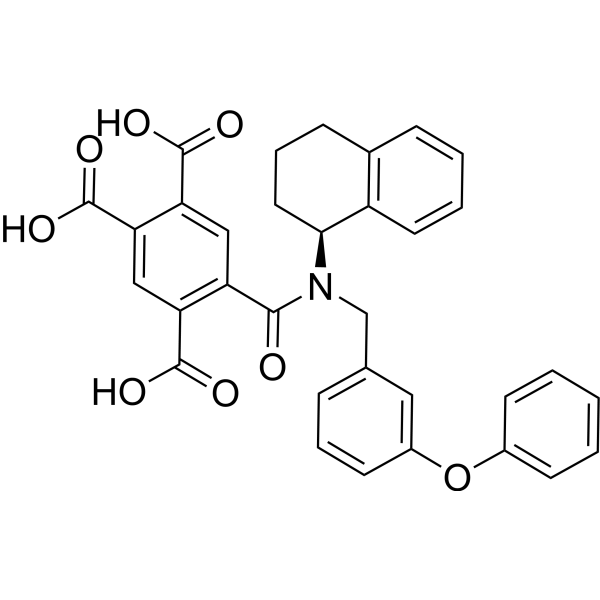
  • HY-15568
    A-317491
    5 Publications Verification

    P2X Receptor Neurological Disease Inflammation/Immunology
    A-317491 is a potent, selective and non-nucleotide antagonist of P2X3 and P2X2/3 receptors, with Kis of 22, 22, 9, and 92 nM for hP2X3, rP2X3, hP2X2/3, and rP2X2/3, respectively. A-317491 is highly selective (IC50>10 μM) over other P2 receptors and other neurotransmitter receptors, ion channels, and enzymes. A-317491 reduces inflammatory and neuropathic pain by blocking P2X3 and P2X2/3 receptor-mediated calcium flux .
    A-317491
  • HY-148129

    TRPC6-IN-3

    TRP Channel Cardiovascular Disease
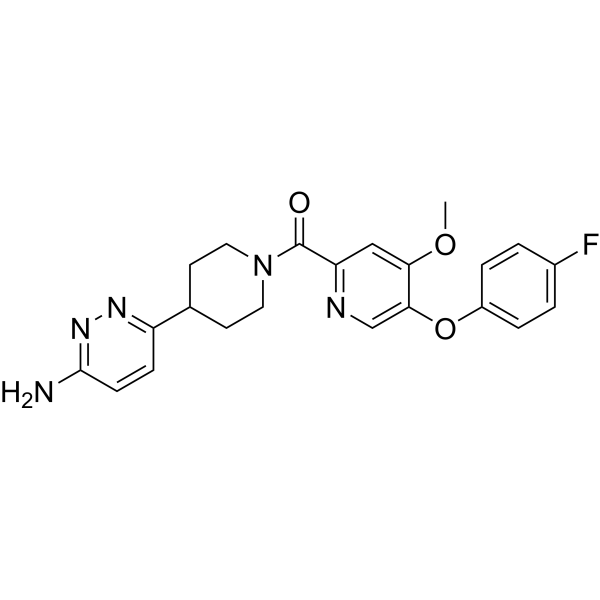
    Apecotrep (TRPC6-IN-3) (compound 17) is a potent, orally active transient receptor potential C6 ion channel (TRPC6) inhibitor. Apecotrep modulates not only intracellular calcium concentration, but also membrane potential by modulating the flux of cations including calcium and sodium ions. Apecotrep can be used in research of respiratory system .
    Apecotrep
  • HY-158741

    APG-2 Acetoxymethyl ester

    Fluorescent Dye Potassium Channel Others
    IPG-2 AM (APG-2 Acetoxymethyl ester) is a membrane-permeant acetoxymethyl ester derivative and selective fluorescent potassium ion indicator. IPG-2 AM exhibits fluorescence increases proportional to extracellular potassium ion concentrations. IPG-2 AM enables real-time monitoring of cytosolic free potassium ion fluxes in human platelets and macrophages. IPG-2 AM can be used for the research of intracellular potassium concentration dynamics .
    IPG-2 AM
  • HY-118830

    DK-PGD2; 15-Oxo-13,14-dihydro-PGD2; 13,14-Dihydro-15-keto-PGD2

    Prostaglandin Receptor Endocrinology
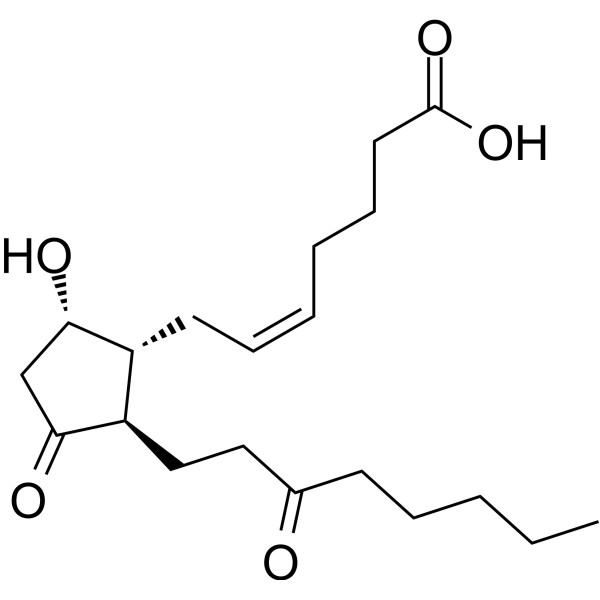
    13, 14-Dihydro-15-keto prostaglandin D2 (DK-PGD2) is a PGD2 metabolite formed by the 15-hydroxyl PGDH pathway. 13, 14-Dihydro-15-keto prostaglandin D2 is a selective agonist for the DP2 receptor. 13, 14-Dihydro-15-keto prostaglandin D2 can inhibit ion flux in canine colonic mucosa preparation .
    13,14-Dihydro-15-keto prostaglandin D2
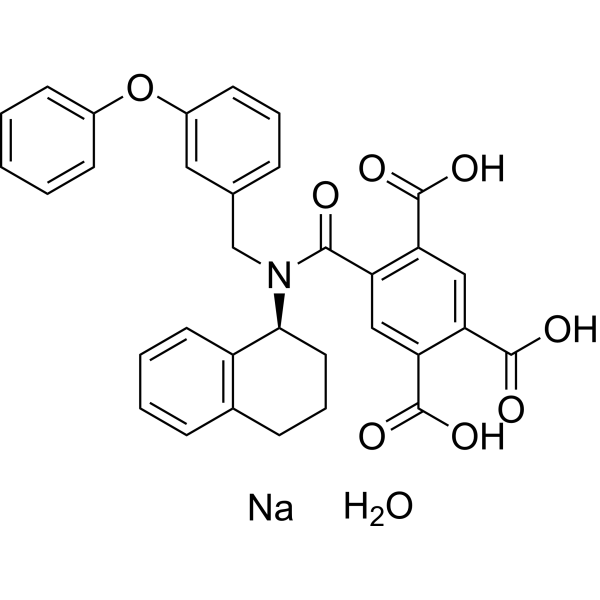
  • HY-15568A
    A-317491 sodium salt hydrate
    5 Publications Verification

    P2X Receptor Neurological Disease Inflammation/Immunology
    A-317491 sodium salt hydrate is a potent, selective and non-nucleotide antagonist of P2X3 and P2X2/3 receptors, with Kis of 22, 22, 9, and 92 nM for hP2X3, rP2X3, hP2X2/3, and rP2X2/3, respectively. A-317491 sodium salt hydrate is highly selective (IC50>10 μM) over other P2 receptors and other neurotransmitter receptors, ion channels, and enzymes. A-317491 sodium salt hydrate reduces inflammatory and neuropathic pain by blocking P2X3 and P2X2/3 receptor-mediated calcium flux .
    A-317491 sodium salt hydrate
  • HY-121366

    RU-15525

    Calcium Channel Others
    Kadethrin is a synthetic pyrethroid that acts as an insecticide. Kadethrin can affect the binding of [3H] full-histamine toxin ([3H]H12-HTX) to the nicotinic acetylcholine (Ach) receptor/channel binding sites, and it inhibits the Ca 2+ flux through the receptor ion channels .
    Kadethrin
  • HY-P3710

    Calcium Channel Others
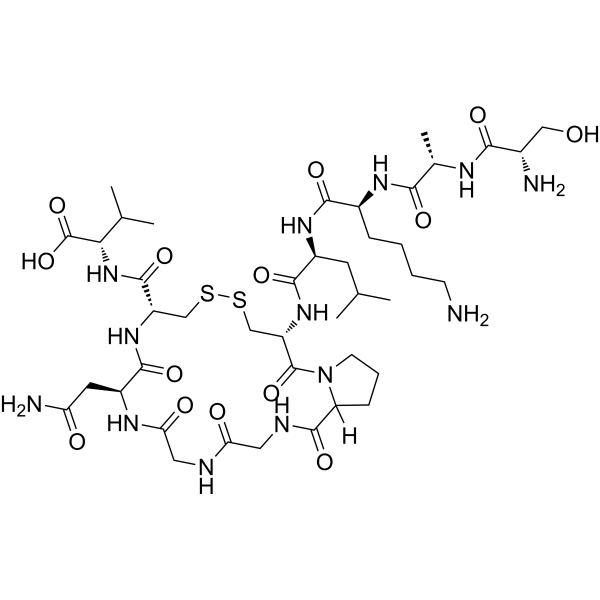
    Ser-Ala-alloresact is a sperm activating peptide (SAP). The peptides released from eggs of marine invertebrates play a central role in fertilization .
    Ser-Ala-alloresact
  • HY-118830S1

    DK-PGD2-d9; 15-Oxo-13,14-dihydro-PGD2-d9; 13,14-Dihydro-15-keto-PGD2-d9

    Isotope-Labeled Compounds Prostaglandin Receptor Endocrinology
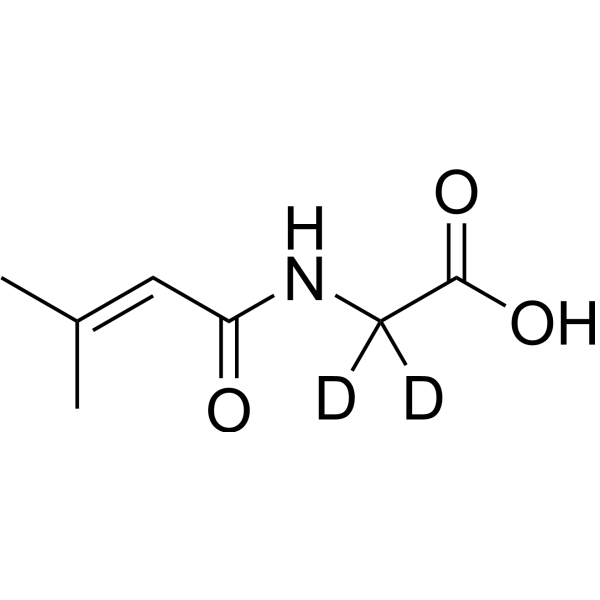
    13,14-Dihydro-15-keto prostaglandin D2-d9 (DK-PGD2-d9) is deuterium labeled 13,14-Dihydro-15-keto prostaglandin D2. 13, 14-Dihydro-15-keto prostaglandin D2 (DK-PGD2) is a PGD2 metabolite formed by the 15-hydroxyl PGDH pathway. 13, 14-Dihydro-15-keto prostaglandin D2 is a selective agonist for the DP2 receptor. 13, 14-Dihydro-15-keto prostaglandin D2 can inhibit ion flux in canine colonic mucosa preparation .
    13,14-Dihydro-15-keto prostaglandin D2-d9
  • HY-181007

    iGluR Sigma Receptor Neurological Disease
    NMDA receptor antagonist 9 is a selective GluN2B subunit-containing NMDA receptor antagonist with a Ki of 5.2 nM. NMDA receptor antagonist 9 exhibits 9-fold selectivity over σ1 receptors, shows poor selectivity towards σ2 receptors. NMDA receptor antagonist 9 inhibits ion flux through GluN2B subunit-containing NMDA receptors. NMDA receptor antagonist 9 can be used for the research of neurological disease, such as alzheimer’s disease and parkinson’s disease .
    NMDA receptor antagonist 9
  • HY-118830S

    DK-PGD2-d4; 15-Oxo-13,14-dihydro-PGD2-d4; 13,14-Dihydro-15-keto-PGD2-d4

    Isotope-Labeled Compounds Endocrinology
    13,14-Dihydro-15-keto prostaglandin D2-d4 (DK-PGD2-d4) is deuterium labeled 13,14-Dihydro-15-keto prostaglandin D2. 13, 14-Dihydro-15-keto prostaglandin D2 (DK-PGD2) is a PGD2 metabolite formed by the 15-hydroxyl PGDH pathway. 13, 14-Dihydro-15-keto prostaglandin D2 is a selective agonist for the DP2 receptor. 13, 14-Dihydro-15-keto prostaglandin D2 can inhibit ion flux in canine colonic mucosa preparation .
    13,14-Dihydro-15-keto prostaglandin D2-d4

Inquiry Online

Your information is safe with us. * Required Fields.

Salutation


Country or Region *

Applicant Name *


Organization Name *

Department *


Email Address *


Product Name *

Cat. No.


Requested quantity *

Phone Number *


Remarks

Inquiry Online

Inquiry Information

Product Name:
Cat. No.:
Quantity:
MCE Japan Authorized Agent:

