

43 Results for "

microbes

" in MedChemExpress (MCE) Product Catalog:
Products (43)

43 Results for "microbes" in MCE Product Catalog:

12
12 Publications Verification
Cat. No.: HY-116084
CAS No.: 1184-78-7
Purity:  ≥98.0%
Trimethylamine N-oxide is a gut microbe-dependent metabolite of dietary choline and other trimethylamine-containing nutrients. Trimethylamine N-oxide induces inflammation by activating the ROS/NLRP3 inflammasome. Trimethylamine N-oxide also accelerates fibroblast-myofibroblast differentiation and induces cardiac fibrosis by activating the TGF-β/smad2 signaling pathway .
12
12 Publications Verification
Cat. No.: HY-108915
CAS No.: 62637-93-8
Purity:  ≥98.0%
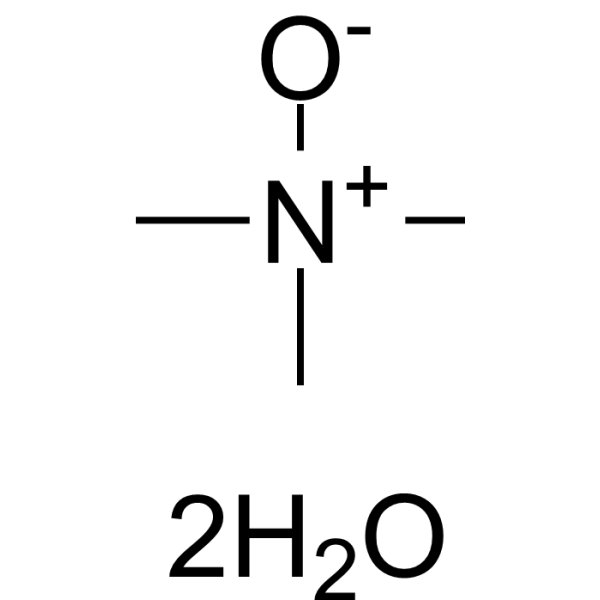
Trimethylamine N-oxide dihydrate is a gut microbe-dependent metabolite of dietary choline and other trimethylamine-containing nutrients. Trimethylamine N-oxide dihydrate induces inflammation by activating the ROS/NLRP3 inflammasome. Trimethylamine N-oxide dihydrate also accelerates fibroblast-myofibroblast differentiation and induces cardiac fibrosis by activating the TGF-β/smad2 signaling pathway .
5
5 Cited Publications
Cat. No.: HY-B0710
CAS No.: 107-43-7
Synonyms: Trimethylglycine; carboxy-N,N,N-trimethylmethanaminium
Betaine (Trimethylglycine) is a natural compound found in many foods and also an active methyl-donor which can maintain normal DNA methylation patterns [1,2]. Betaine is found ubiquitously in plants, animals, microorganisms, and rich dietary sources including seafood, spinach, and wheat bran. Betaine also acts as an osmolyte, to maintain the avian’s cellular water and ion balance to improve the avian’s capacity against heat stress via preventing dehydration and osmotic inactivation. It helps in maintaining the protective osmolytic activity, especially in heat-stressed birds. Betaine may promote various intestinal microbes against osmotic variations and thus improve microbial fermentation activity .
5
5 Cited Publications
Cat. No.: HY-100597
CAS No.: 8047-15-2
Purity:  98.36%
Synonyms: Saponin
Saponins (Saponin) is a class of chemical compound of glycosides found in particular abundance in various plant species. In plants, Saponins may serve as anti-feedants, and to protect the plant against microbes and fungi .
3
3 Cited Publications
Cat. No.: HY-N0130
CAS No.: 138-59-0
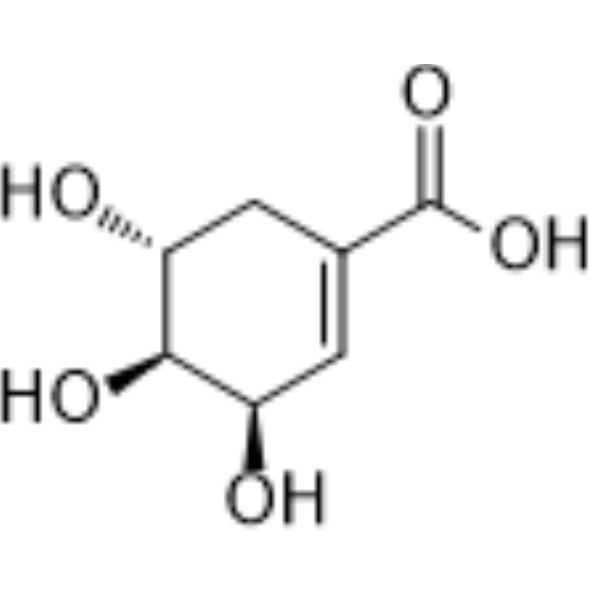
Shikimic acid is a key metabolic intermediate of the aromatic amino acid biosynthesis pathway, found in microbes and plants.
1
1 Cited Publications
Cat. No.: HY-116084S
CAS No.: 1161070-49-0
Purity:  99.76%
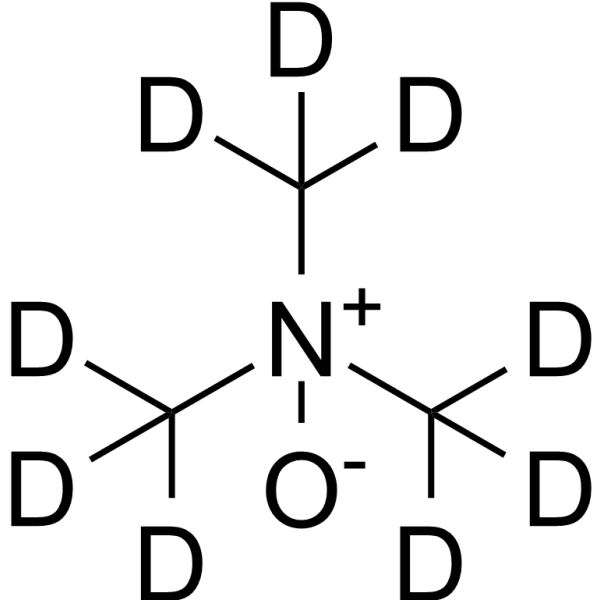
Trimethylamine N-oxide-d9 is the deuterium labeled Trimethylamine N-oxide. Trimethylamine N-oxide is a gut microbe-dependent metabolite of dietary choline and other trimethylamine-containing nutrients. Trimethylamine N-oxide induces inflammation by activating the ROS/NLRP3 inflammasome. Trimethylamine N-oxide also accelerates fibroblast-myofibroblast differentiation and induces cardiac fibrosis by activating the TGF-β/smad2 signaling pathway .
1
1 Cited Publications
Cat. No.: HY-P1116
CAS No.: 794466-43-6
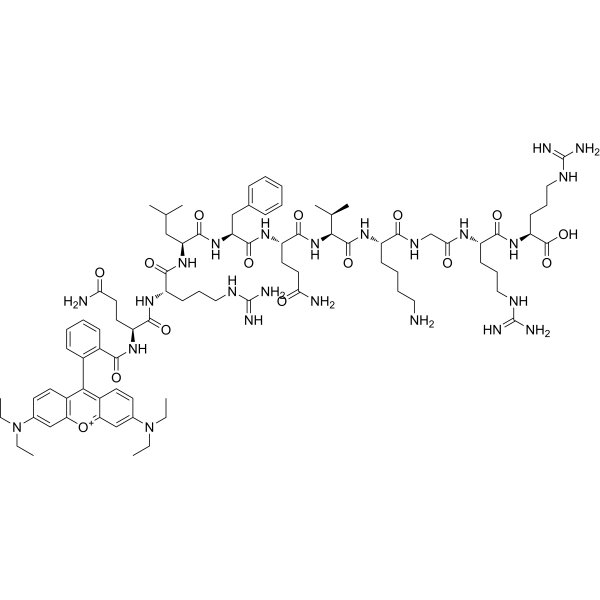
PBP10 is a decapeptide. PBP10 selectively binds to lipoteichoic acid (LTA), lipopolysaccharide (LPS) and phosphatidylinositol-4,5-bisphosphate (PIP2). PBP10 penetrates cell membranes and possesses bactericidal, anti-inflammatory, cell motility-inhibiting and actin assembly-regulating activities. PBP10 is applicable to relevant research on bacterial infections, microbe-induced inflammation, skin and soft tissue infections, as well as sepsis .
1
1 Cited Publications
Cat. No.: HY-P1116A
Target:  

Bacterial

Research Areas:  

Infection Inflammation/Immunology

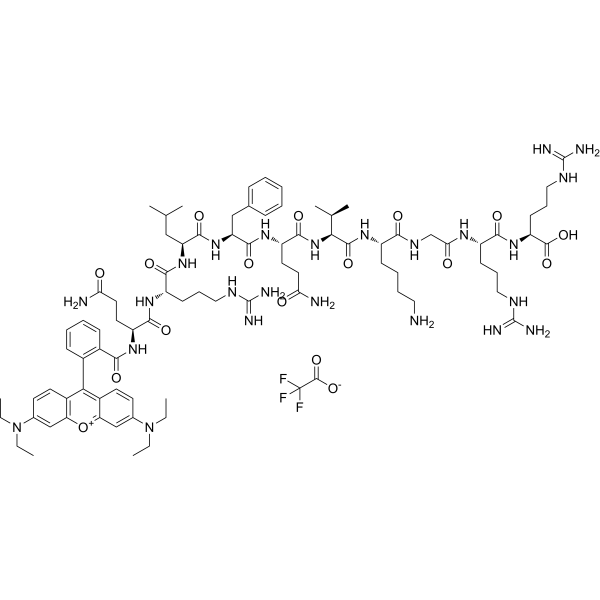
PBP10 TFA is a decapeptide. PBP10 TFA selectively binds to lipoteichoic acid (LTA), lipopolysaccharide (LPS) and phosphatidylinositol-4,5-bisphosphate (PIP2). PBP10 TFA penetrates cell membranes and possesses bactericidal, anti-inflammatory, cell motility-inhibiting and actin assembly-regulating activities. PBP10 TFA is applicable to relevant research on bacterial infections, microbe-induced inflammation, skin and soft tissue infections, as well as sepsis .
Cat. No.: HY-N1480
CAS No.: 2438-80-4
Synonyms: 6-Desoxygalactose; L-(-)-Fucose; L-Galactomethylose
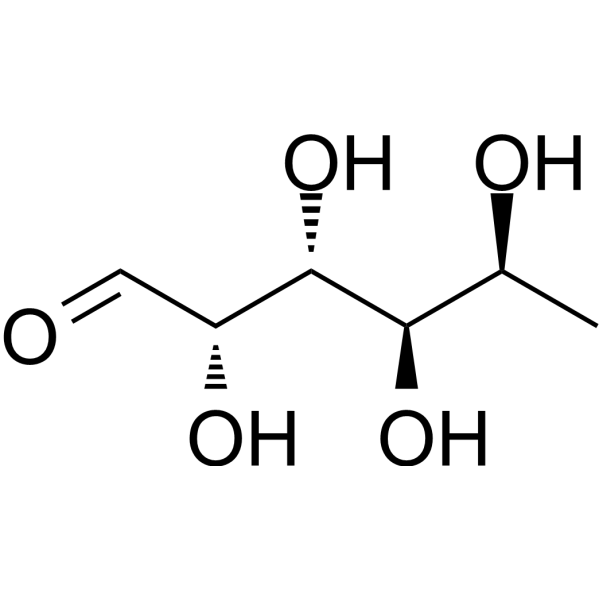
(-)-Fucose is classified as a member of the hexoses, plays a role in A and B blood group antigen substructure determination, selectin-mediated leukocyte-endothelial adhesion, and host-microbe interactions. (-)-Fucose is orally active, inhibits CL11-induced inflammatory response in kidney and tumor growth .
Cat. No.: HY-113270
CAS No.: 407-64-7
Synonyms: γ-Butyrobetaine; Deoxycarnitine
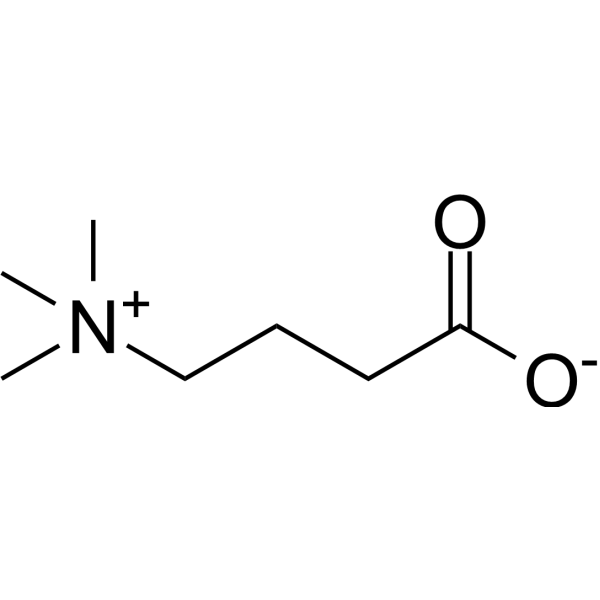
Actinine is a metabolic and pro-atherogenic intermediate with oral activity. Actinine acts as a substrate for the yeaW/X microbial enzyme complex to generate trimethylamine (TMA). Actinine accelerates atherosclerosis development in a gut microbe-dependent manner. Actinine can be used for the research of atherosclerosis .
Cat. No.: HY-N7404
CAS No.: 55528-53-5
Synonyms: Ne-(Trimethyl)-L-lysine chloride; H-Lys(Me)3-OH chloride
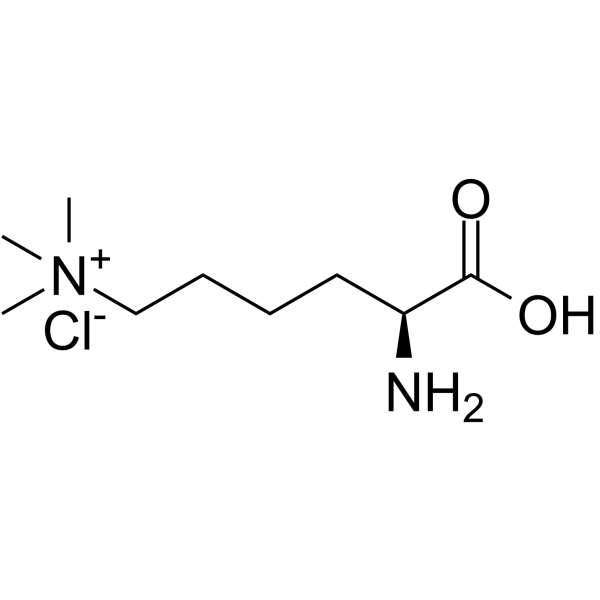
Nε,Nε,Nε-Trimethyllysine chloride serves as a precursor for gut flora-dependent formation of N,N,N-trimethyl-5-aminovaleric acid (TMAVA) .
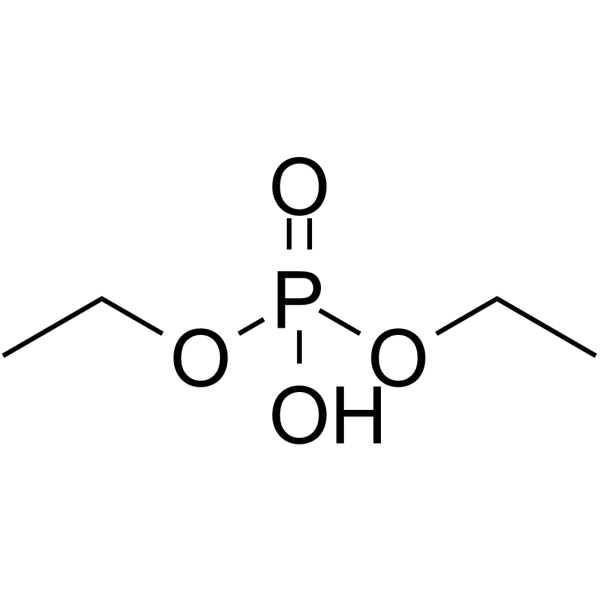
Cat. No.: HY-101417
CAS No.: 598-02-7
Purity:  ≥98.0%
Synonyms: Diethyl phosphoric acid
Diethylphosphate (Diethyl phosphoric acid) is an orally active organophosphorus pesticides metabolite. Diethylphosphate can interfere with thyroid hormone-related mechanisms and affect intestinal microbes in rats .
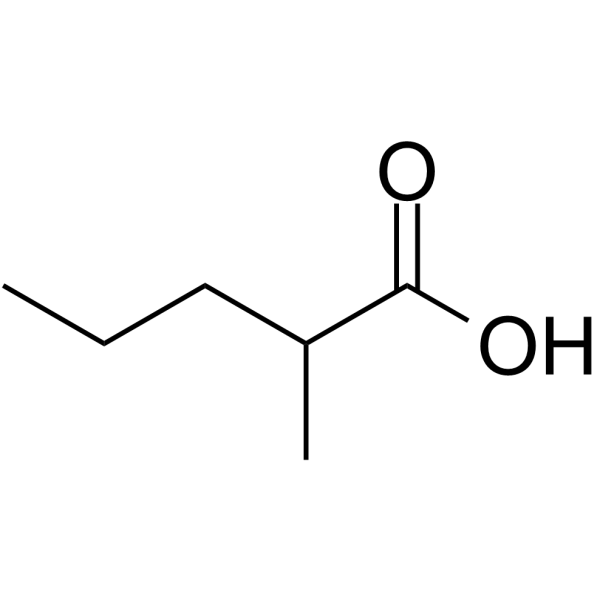
Cat. No.: HY-W010516
CAS No.: 97-61-0
Synonyms: 2-Methylpentanoic acid
2-Methylvaleric acid is a branched short-chain fatty acid (SCFA) produced by the metabolism of branched-chain amino acids by gut microbes. 2-Methylvaleric acid can be used as a potential biomarker for metabolic diseases such as type 2 diabetes, and its content is significantly reduced in the feces of diabetic mice. 2-Methylvaleric acid may regulate host energy metabolism and inflammatory response through G protein-coupled receptors (GPCRs) or histone deacetylase (HDAC) inhibition. 2-Methylvaleric acid can be used to study gut microbe-host interactions and metabolic diseases as a fecal biomarker[1][2].
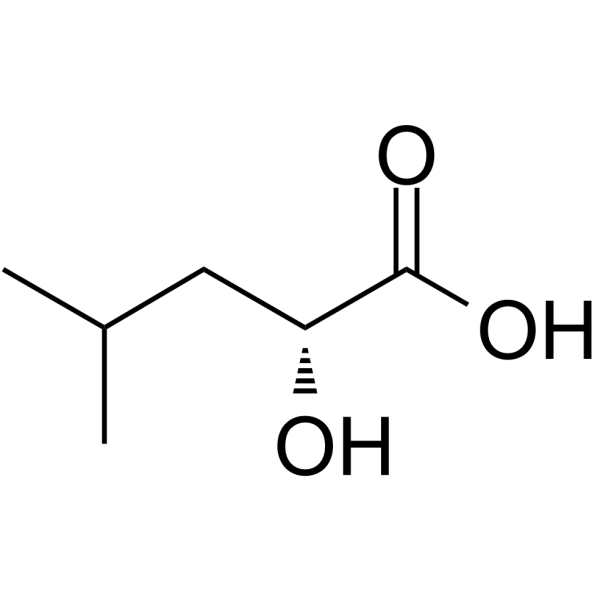
Cat. No.: HY-30216
CAS No.: 20312-37-2
Synonyms: D-α-Hydroxyisocaproic acid
(R)-Leucic acid (D-α-Hydroxyisocaproic acid) is an orally active D-isomer of the α-hydroxy analogue of Leucine (HY-N0486). (R)-Leucic acid is a metabolite of Lactobacillus and can promote intestinal fatty acid absorption by upregulating CD36 expression. (R)-Leucic acid can be used to study microbe-host interactions and the regulation of lipid metabolism by probiotics .
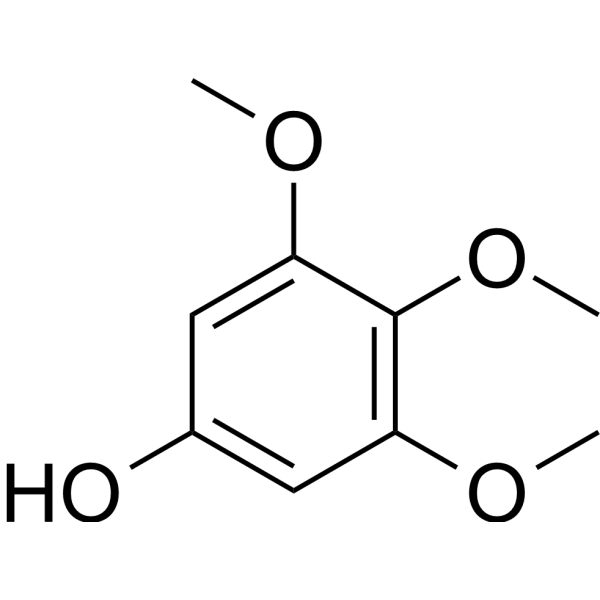
Cat. No.: HY-W016289
CAS No.: 642-71-7
Synonyms: 3,4,5-Trimethoxyphenol
Antiarol (3,4,5-Trimethoxyphenol) is a phenolic compound present in the trunk of Coffea canephora. Antiarol is a metabolite produced by chicken cecal microbes, whose cecal content changes dynamically with the severity of wooden breast (WB; a muscle disease prevalent in broilers) and enters the plasma through circulation .
Cat. No.: HY-N0130R
CAS No.: 138-59-0
Shikimic acid (Standard) is the analytical standard of Shikimic acid. This product is intended for research and analytical applications. Shikimic acid is a key metabolic intermediate of the aromatic amino acid biosynthesis pathway, found in microbes and plants.
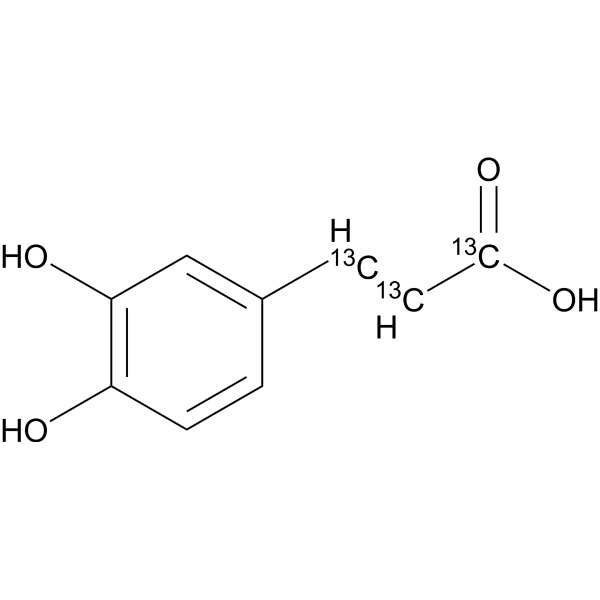
Cat. No.: HY-N0172S
CAS No.: 1185245-82-2
Synonyms: 3,4-Dihydroxycinnamic acid-13C3
Caffeic acid- 13C3 is an 13C labeled caffeic acid. Caffeic acid is a phytonutrient belonging to the flavonoids. Caffeic acid and its derivatives, are potential antimicrobial agents, chronic infection induced by microbes such as bacteria, fungi, and viruses .
Cat. No.: HY-B0710R
CAS No.: 107-43-7
Synonyms: Trimethylglycine (Standard); carboxy-N,N,N-trimethylmethanaminium (Standard)
Betaine (Standard) is the analytical standard of Betaine. This product is intended for research and analytical applications. Betaine (Trimethylglycine) is a natural compound found in many foods and also an active methyl-donor which can maintain normal DNA methylation patterns [1,2]. Betaine is found ubiquitously in plants, animals, microorganisms, and rich dietary sources including seafood, spinach, and wheat bran. Betaine also acts as an osmolyte, to maintain the avian’s cellular water and ion balance to improve the avian’s capacity against heat stress via preventing dehydration and osmotic inactivation. It helps in maintaining the protective osmolytic activity, especially in heat-stressed birds. Betaine may promote various intestinal microbes against osmotic variations and thus improve microbial fermentation activity .
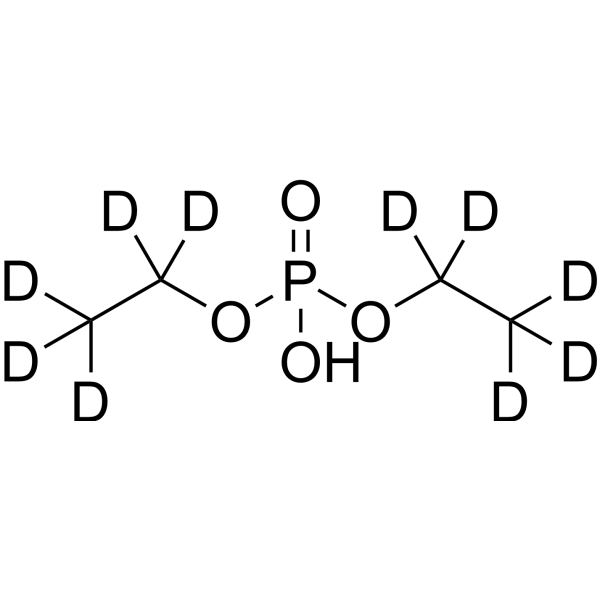
Cat. No.: HY-101417S1
CAS No.: 2483831-48-5
Purity:  99.70%
Synonyms: Diethyl phosphoric acid-d10
Diethyl phosphate-d10-1 is the deuterium labeled Diethyl phosphate. Diethylphosphate (Diethyl phosphoric acid) is an orally active organophosphorus pesticides metabolite. Diethylphosphate can interfere with thyroid hormone-related mechanisms and affect intestinal microbes in rats .
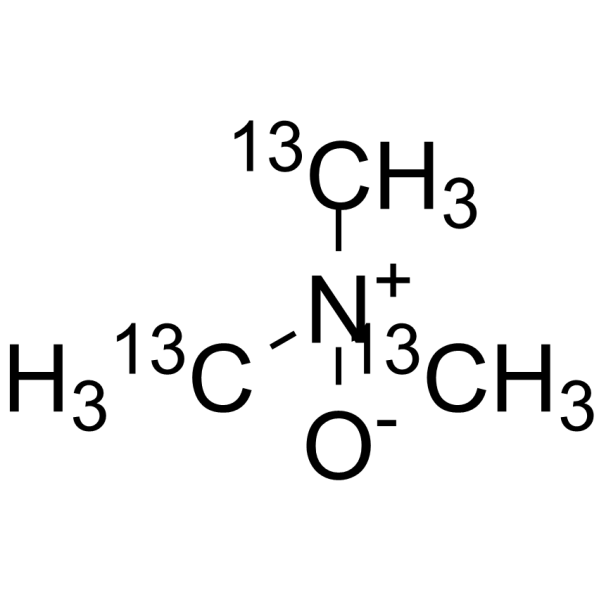
Cat. No.: HY-116084S1
CAS No.: 2413127-00-9
Trimethylamine-N-oxide- 13C3 is the 13C-labeled Trimethylamine N-oxide. Trimethylamine N-oxide is a gut microbe-dependent metabolite of dietary choline and other trimethylamine-containing nutrients. Trimethylamine N-oxide induces inflammation by activating the ROS/NLRP3 inflammasome. Trimethylamine N-oxide also accelerates fibroblast-myofibroblast differentiation and induces cardiac fibrosis by activating the TGF-β/smad2 signaling pathway .

