10 Results for "

mitochondrial complex IV

" in MedChemExpress (MCE) Product Catalog:
Products (10)

10 Results for "mitochondrial complex IV" in MCE Product Catalog:

1
1 Cited Publications
Cat. No.: HY-129430
CAS No.: 79236-56-9
Purity:  ≥99.0%
Target:  

Ferrochelatase

연구분야:  

Metabolic Disease

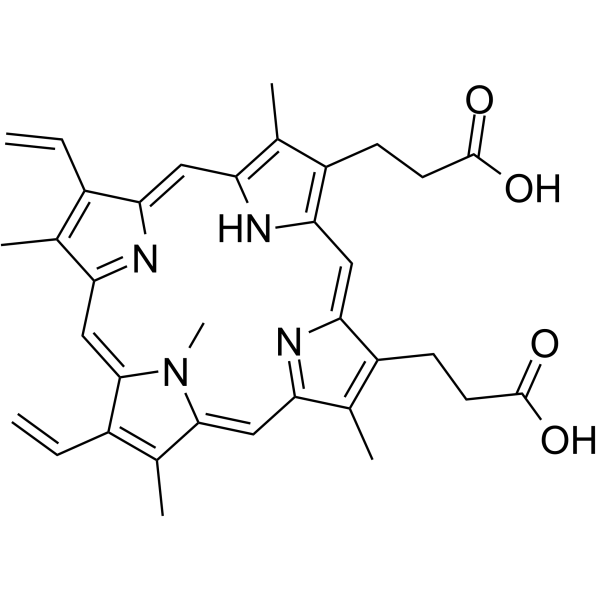
N-Methylprotoporphyrin IX is a Ferrochelatase inhibitor with a Ki app value of 3 nM. N-methylprotoporphyrin IX dimethyl ester potently inhibits the synthesis of phycocyanin and chlorophyll a. N-Methylprotoporphyrin IX can be used for the research of haem deficiency-associated disorders .
loading...
    loading...
Cat. No.: HY-Y1366
CAS No.: 116-09-6
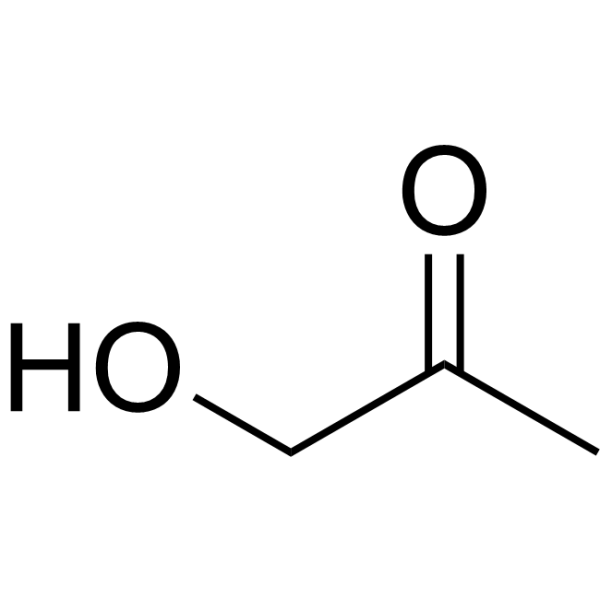
Hydroxyacetone is a toxic compound. Hydroxyacetone can be isolated from e-cigarette aerosols. Hydroxyacetone reduces the activity of cellular Mitochondrial reductase (with an IC50 of 5.53 mg/mL for mitochondrial reductase in BEAS-2B cells) and increases ROS levels. Hydroxyacetone induces mitochondrial stress and oxidative damage. Hydroxyacetone induces destabilization of F-actin. At high concentrations, Hydroxyacetone promotes cell rounding and Apoptotic body formation. Hydroxyacetone exerts toxic effects on cells including airway epithelial cells and possesses respiratory toxicity potential .\n


loading...
    loading...
Cat. No.: HY-125857B
CAS No.: 9007-43-6
Cytochrome C (Saccharomyces cerevisiae) is a type C cytochrome located in the intermembrane space of the mitochondria. As an electron carrier, Cytochrome C (Saccharomyces cerevisiae) transfers electrons between complex III (cytochrome c reductase) and complex IV (cytochrome c oxidase, CIV) of the respiratory chain. Cytochrome C (Saccharomyces cerevisiae) can play a crucial role in triggering apoptosis by being released from the mitochondria into the cytosol .
loading...
    loading...
Cat. No.: HY-132178B
연구분야:  

Metabolic Disease

Cytochrome C oxidase (complex IV) (EC 7.1.1.9) is the unique terminal oxidase of the mitochondrial respiratory chain (RC) in mammals. Cytochrome C oxidase is made up of thirteen subunits that catalyze the transfer of electrons from ferro-cytochrome c to molecular oxygen .
loading...
    loading...
Cat. No.: HY-N8693
CAS No.: 362472-81-9
Withanoside IV is an orally active, blood-brain barrier-permeable withanolide derivative. Withanoside IV specifically binds to the Sudlow I site of HSA, induces secondary structural changes in HSA, and forms stable HSA complexes. Withanoside IV inhibits the enzymatic activity of COX-2. Withanoside IV induces axonal regeneration, peripheral nervous system myelination and increased axonal density in spinal cord tissue, reduces reactive gliosis-related changes, and improves hindlimb motor function. Withanoside IV binds to amyloid-β 1-42 to inhibit its aggregation, induces neurite outgrowth and synapse reconstruction, repairs damaged axons and dendrites, enhances mitochondrial biogenesis, exerts neuroprotective effects via the BDNF and SIRT1 signaling pathways, reduces ROS production and neuronal apoptosis, and ameliorates memory deficits. Withanoside IV inhibits the activity of the SARS-CoV-2 main protease. Withanoside IV can be used in research related to spinal cord injury, Alzheimer's disease, and coronavirus disease 2019 (COVID-19) .
loading...
    loading...
Cat. No.: HY-158152
Target:  

Ligands for E3 Ligase

연구분야:  

Cancer

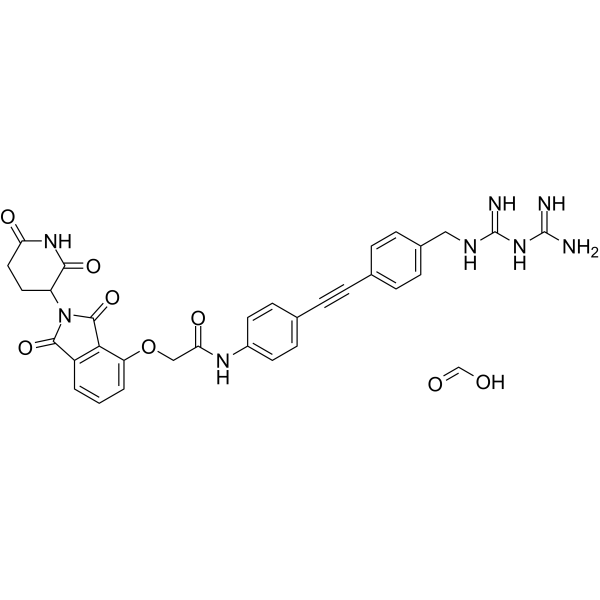
PROTAC CRBN ligand-2 (12) is a Biguanide-PROTAC derivative, with an EC50 of 0.15 mM in KP4 cells. PROTAC CRBN ligand-2 (12) demonstrates the ability to alter levels of mitochondrial proteins, notably complexes I and IV .
loading...
    loading...
Cat. No.: HY-158156
Target:  

NF-κB Apoptosis

연구분야:  

Cancer

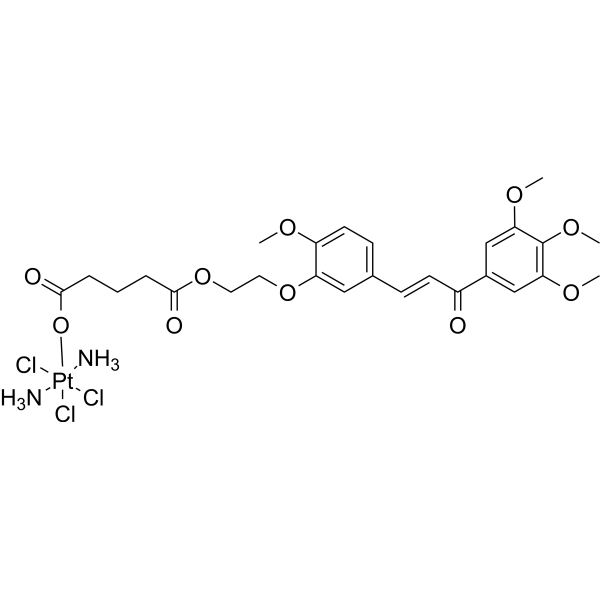
NF-κB-IN-16 (compound 9) is a complex (Pt(IV) complex) of NF-κB inhibitor and Cisplatin (HY-17394), which has high efficacy and low toxicity in anti-tumor activity. active. NF-κB-IN-16 can cause DNA damage, induce mitochondrial dysfunction, produce reactive oxygen species, and induce apoptosis through the mitochondrial pathway and endoplasmic reticulum stress. NF-κB-IN-16 potently inhibits the NF-κB/MAPK signaling pathway and disrupts PI3K/AKT signaling. NF-κB-IN-16 also exhibits excellent in vivo antitumor efficiency and low toxicity in A549 or A549/CDDP xenograft models .
loading...
    loading...
Cat. No.: HY-131453
CAS No.: 1352002-58-4
Mitochondrial respiration-IN-1 is a mitochondrial respiratory inhibitor. Mitochondrial respiration-IN-1 reduces platelet aggregation, adhesion, and platelet-induced coagulation responses. Mitochondrial respiration-IN-1 induces adaptive glycolysis, decreases mitochondrial membrane potential, selectively reduces ATP production derived from oxidative phosphorylation, and exerts bidirectional regulatory effects on cell proliferation. Mitochondrial respiration-IN-1 activates UPRmt and upregulates the expression of SDHA-1 and MT-CO1. Mitochondrial respiration-IN-1 restores metabolic homeostasis in type 2 diabetic mice. Mitochondrial respiration-IN-1 can be used to investigate diseases mediated by inappropriate platelet activation/aggregation and type 2 diabetes .
loading...
    loading...
Cat. No.: HY-183448
CAS No.: 117666-86-1
ETMTC is an orally active anti-inflammatory and antioxidant agent. ETMTC inhibits IKK-mediated phosphorylation and degradation of IkBα, blocks nuclear translocation and activation of NF-κB, and reduces the expression of ICAM-1, VCAM-1, E-selectin, Th2 cytokines and eosinophil chemokines. ETMTC abrogates neutrophil adhesion to endothelial monolayers and inhibits TNF-α-induced ROS production. ETMTC activates Nrf2, and enhances the activities of mitochondrial complex I and IV. ETMTC reduces lipid peroxidation levels, oxidative DNA damage, cytochrome c and caspase 9 activity, and decreases goblet cell metaplasia and subepithelial fibrosis. ETMTC can be used for the research of inflammatory diseases and asthma .
loading...
    loading...
Cat. No.: HY-182067
anti-TNBC agent-15 is a platinum (IV) complex with anti-triple-negative breast cancer activity. anti-TNBC agent-15 inhibits cancer cell viability. anti-TNBC agent-15 reverses the resistance of triple-negative breast cancer cells to Cisplatin (HY-17394), increases intracellular uptake, and effectively triggers apoptosis by inducing DNA damage, enhancing intracellular ROS accumulation and activating the mitochondrial pathway. anti-TNBC agent-15 enhances lipid peroxidation, interferes with the signal transduction of the cystine/glutamate transporter-glutathione peroxidase axis, and induces ferroptosis. anti-TNBC agent-15 significantly inhibits tumor growth in triple-negative breast cancer/Cisplatin xenograft models. anti-TNBC agent-15 can be used for the research of triple-negative breast cancer .
loading...
    loading...

