1. Search Result
Search Result
Results for "

mitochondrion

" in MedChemExpress (MCE) Product Catalog:

11

Inhibitors & Agonists

2

Fluorescent Dye

2

Peptides

1

Natural
Products

1

Antibodies

Cat. No. Product Name Target Research Areas Chemical Structure
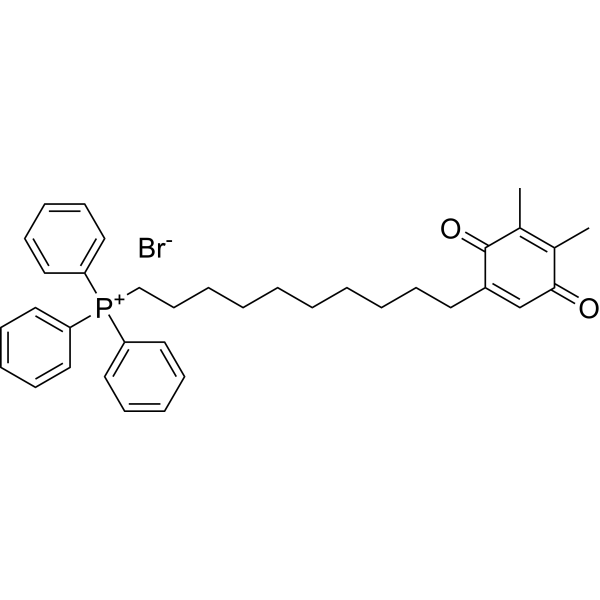
  • HY-100474
    SKQ1
    15+ Cited Publications

    Reactive Oxygen Species (ROS) Inflammation/Immunology Cancer
    SKQ1 is a mitochondrial-targeted antioxidant with the high mitochondrion membrane penetrating ability and potent antioxidant capability .
    SKQ1
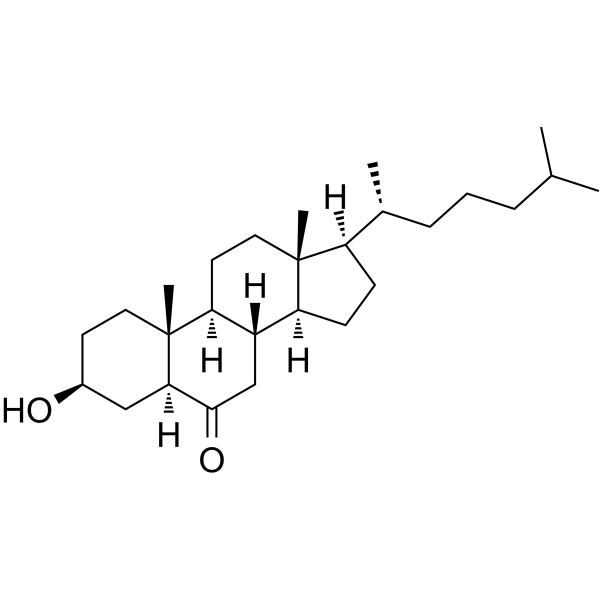
  • HY-N9608

    3β-Hydroxy-5α-cholestan-6-one

    Cytochrome P450 Others
    6-Ketocholestanol is a recoupler for mitochondria, chromatophores and cytochrome oxidase proteoliposomes. 6-Ketocholestanol increases the membrane dipole potential .
    6-Ketocholestanol
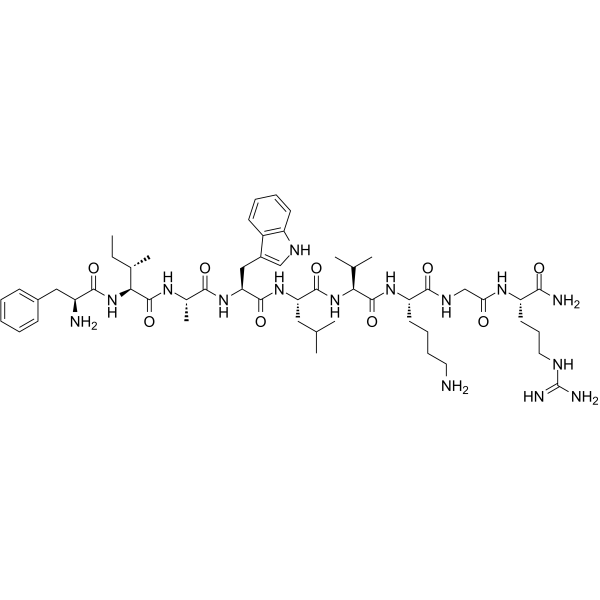
  • HY-P3101

    GCGR Cardiovascular Disease Metabolic Disease
    GLP-1(28-36)amide, a C-terminal nonapeptide of GLP-1, is a major product derived from the cleavage of GLP-1 by the neutral endopeptidase (NEP). GLP-1(28-36)amide is an antioxidant and targets to mitochondrion, inhibits mitochondrial permeability transition (MPT). GLP-1(28-36)amide has anti-diabetic and cardioprotection effects .
    GLP-1(28-36)amide
  • HY-157036

    Fluorescent Dye Others
    INSA is a a pH-sensitive fluorescent probe. INSA can simultaneously light up mitochondria (red emission) and lysosomes (green emission) for their internal pH differences .
    INSA
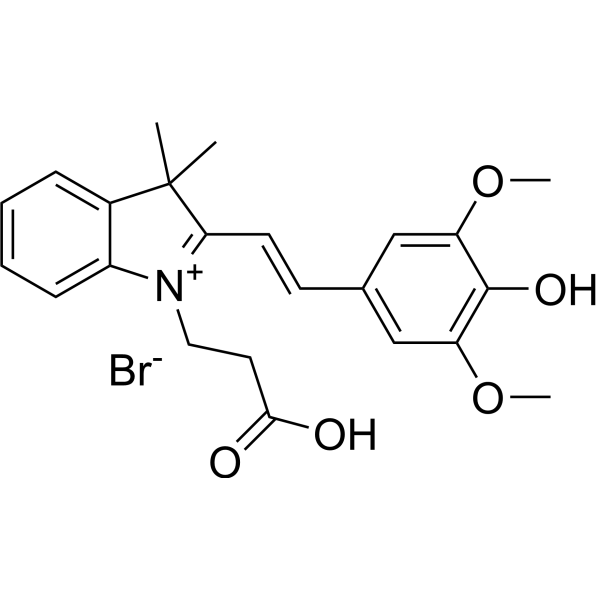
  • HY-155062

    Mitochondrial Metabolism Reactive Oxygen Species (ROS) β-catenin Fluorescent Dye PPAR Cancer
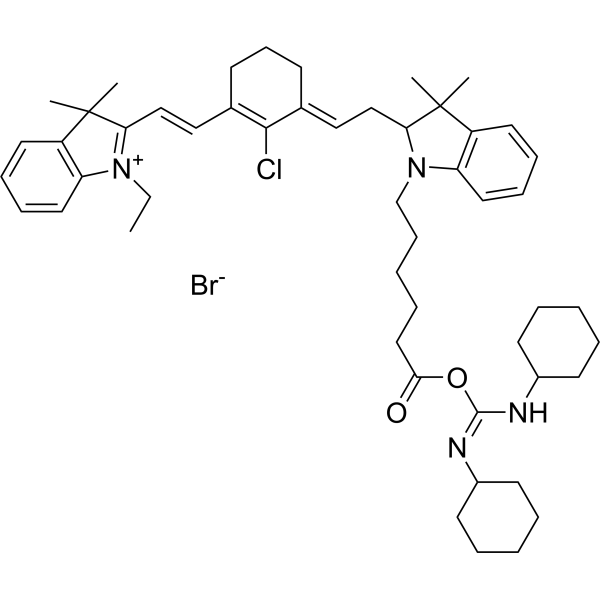
    IR-251 is a mitochondrion-targeting NIR fluorescent probe. IR-251 targets mitochondria via OATPs and causes mitochondrial damage in tumor cells. IR-251 IR-251 induced ROS overproduction by inhibiting PPARγ, and then inhibiting the β-catenin signaling pathway and downstream protein molecules related to the cell cycle and metastasis. IR-251 inhibits tumor proliferation and metastasis .
    IR-251
  • HY-146080

    Apoptosis Cancer
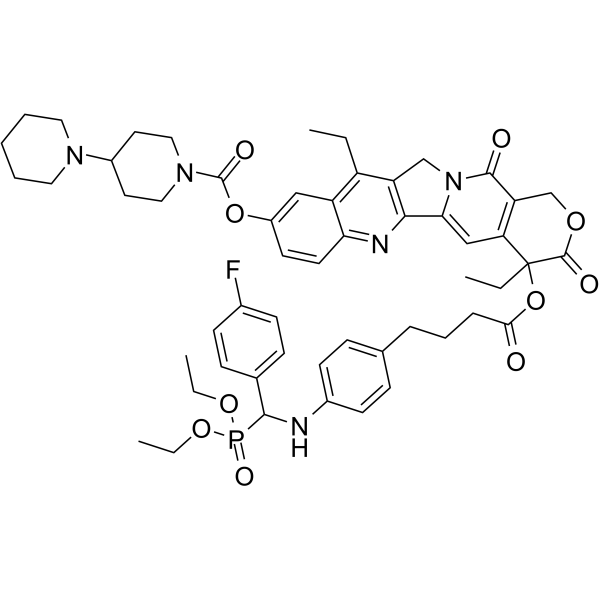
    Antitumor agent-61 (Compound 9b), Irinotecan (Ir) derivative, is a potential antitumor agent. Antitumor agent-61 displays potent activity with IC50s of 0.92, 1.39, 1.75, 2.20, 3.05 and 3.23 μM against five human cancer cells SK-OV-3, SK-OV-3/CDDP, U2OS, MCF-7, A549 and MG-63, respectively. Antitumor agent-61 induces SK-OV-3 cells apoptosis through mitochondrion pathways .
    Antitumor agent-61
  • HY-149918

    Microtubule/Tubulin Apoptosis Cancer
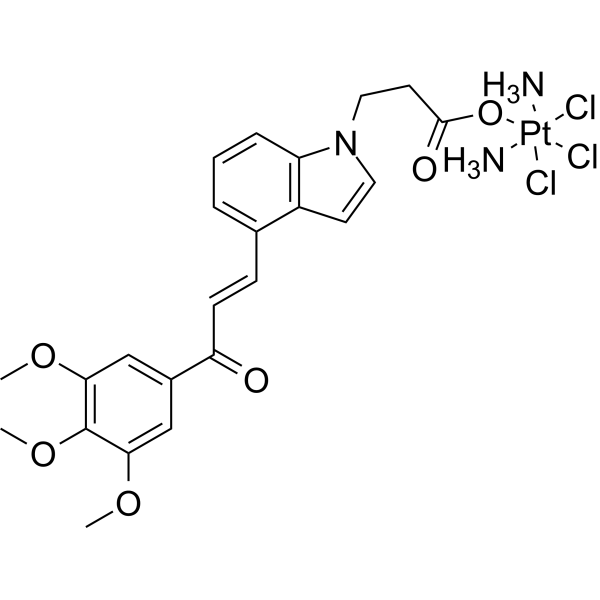
    Antiproliferative agent-23 is a microtubule-destabilizing agent (MDA) and efficiently disturbes the tubulin-microtubule system. Antiproliferative agent-23 induces apoptosis via a mitochondrion-dependent pathway by downregulating the Bcl-2 protein, upregulating Bax and Cyt c proteins, and activating the caspase cascade. Antiproliferative agent-23 initiates reactive oxygen species (ROS)-mediated endoplasmic reticulum stress in A549/CDDP cells (cisplatin resistant cancer cell line) via the PERK/ATF4/CHOP signaling pathway. Antiproliferative agent-23 has anti-tumor activity .
    Antiproliferative agent-23
  • HY-106492

    CGP 6140

    Parasite Mitochondrial Metabolism Infection
    Amocarzine (CGP 6140) is an orally active antifilarial agent. Amocarzine can result in the swelling of mitochondrion and inhibit respiration and other associated metabolic functions. Amocarzine can be used for the research of infection .
    Amocarzine
  • HY-157222

    Apoptosis Ferroptosis Cancer
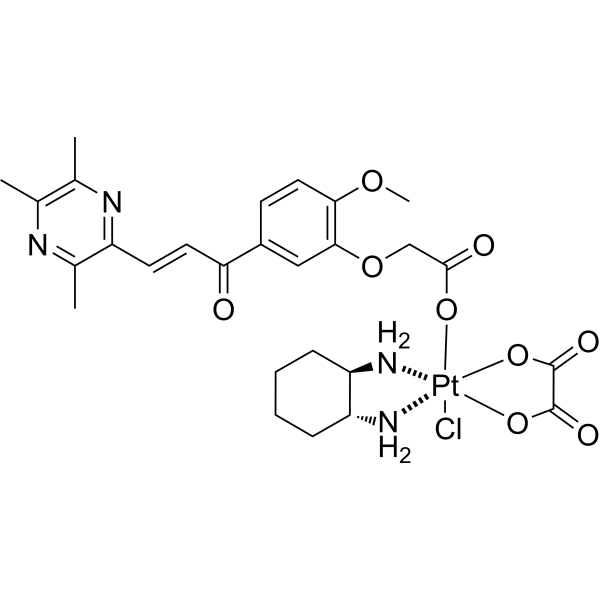
    Antitumor agent-125 (compound 17A) is a novel platinum(IV) prodrug. Antitumor agent-125 can activate the mitochondrion-dependent apoptosis pathway. Antitumor agent-125 induces ferroptosis in HCT-116/OXA .
    Antitumor agent-125
  • HY-P3101A

    GCGR Cardiovascular Disease Metabolic Disease
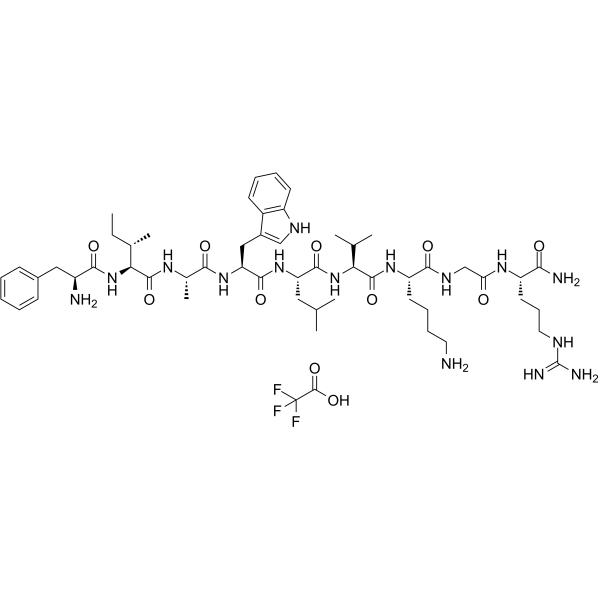
    GLP-1(28-36)amide TFA, a C-terminal nonapeptide of GLP-1, is a major product derived from the cleavage of GLP-1 by the neutral endopeptidase (NEP). GLP-1(28-36)amide TFA is an antioxidant and targets to mitochondrion, inhibits mitochondrial permeability transition (MPT). GLP-1(28-36)amide TFA has anti-diabetic and cardioprotection effects .
    GLP-1(28-36)amide TFA
  • HY-D3269

    Fluorescent Dye Others
    Mito-Cu (II) is a mitochondria-targeted fluorescent probe (Ex/Em = 370/450 nM). Mito-Cu (II) specifically accumulates in mitochondria of living cells and enables real-time detection of exogenous Cu 2+ within mitochondria of living cells. Mito-Cu (II) achieves "on-off-on" fluorescence switching through sequential exposure to Cu 2+ and ethylenediaminetetraacetic acid (EDTA) (HY-Y0682). Its fluorescence is quenched after forming a 1:1 complex with Cu 2+, and the fluorescence recovers when Cu 2+ is chelated by EDTA .
    Mito-Cu(II)

Inquiry Online

Your information is safe with us. * Required Fields.

Salutation


Country or Region *

Applicant Name *


Organization Name *

Department *


Email Address *


Product Name *

Cat. No.


Requested quantity *

Phone Number *


Remarks

Inquiry Online

Inquiry Information

Product Name:
Cat. No.:
Quantity:
MCE Japan Authorized Agent:

