
1. Search Result
Search Result
Pathways Recommended: Stem Cell/Wnt Cell Cycle/DNA Damage
Results for "

mononuclear cell leukemia

" in MedChemExpress (MCE) Product Catalog:

13

Inhibitors & Agonists

2

Biochemical Assay Reagents

1

Peptides

1

Inhibitory Antibodies

1

Natural
Products

1

Click Chemistry

1

Oligonucleotides

Cat. No. Product Name Target Research Areas Chemical Structure
  • HY-P3160C

    Biochemical Assay Reagents Infection
    Fibronectin, bovine plasma is a fibronectin derived from bovine plasma. Fibronectin is an extracellular matrix protein that is upregulated and essential in many developmental processes, and also exists in the pathological progression of tissues and wound healing. Fibronectin specifically binds to a large number of molecules, including other components of the extracellular matrix, signaling molecules and cell adhesion molecules. The interaction between cells and fibronectin leads to bidirectional crosstalk, which regulates cell functions and induces cell-dependent changes in the extracellular matrix. Fibronectin, bovine plasma inhibits the production of bovine leukemia virus (BLV) p24 core protein in naturally infected bovine peripheral blood mononuclear cells .
    Fibronectin, bovine plasma
  • HY-155175

    Tim3 IFNAR Cancer
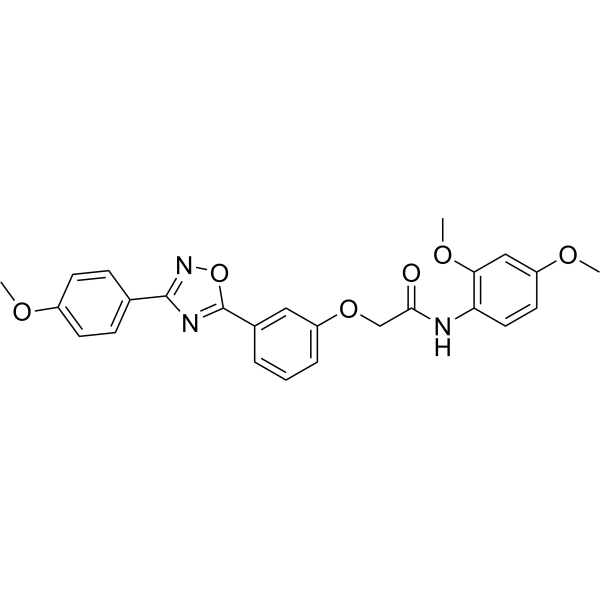
    TIM-3-IN-2 is a TIM-3 inhibitor. TIM-3-IN-2 blocks the interactions of TIM-3 with PtdSer, CEACAM1 and Gal-9, and inhibits the immunosuppressive function of TIM-3. TIM-3-IN-2 restores IFNγ release from peripheral blood mononuclear cells. TIM-3-IN-2 inhibits the proliferation of acute myeloid leukemia cells. TIM-3-IN-2 can be used for the research of acute myeloid leukemia .
    TIM-3-IN-2
  • HY-116439

    DINP

    Environmental Pollutants Biochemical Assay Reagents Angiotensin Receptor NO Synthase Cardiovascular Disease Cancer
    Diisononyl phthalate (DINP) is an orally active polyvinyl chloride plasticizer and indirect food additive. Diisononyl phthalate activates the ACE/AT1R axis and inhibits the production of NO. Diisononyl phthalate reduces the expression of eNOS. Diisononyl phthalate induces increased blood pressure in mice. Diisononyl phthalate induces monocytic leukemia in rats. Diisononyl phthalate can be used in hypertension-related research .
    Diisononyl phthalate
  • HY-142989

    Liposome HIV HCV HBV Infection Cancer
    1,2-Didocosahexaenoyl-sn-glycero-3-phosphocholine is a polyunsaturated phospholipid that serves as a component of lipid monolayers and small unilamellar vesicles. 1,2-Didocosahexaenoyl-sn-glycero-3-phosphocholine can be used to prepare endoplasmic reticulum-targeted liposomes (PERLs), which are composed of 1,2-didocosahexaenoyl-sn-glycero-3-phosphoethanolamine, l-α-phosphatidylinositol and l-α-phosphatidylserine at a molar ratio of 1.5:1.5:1:1. PERLs reduce cholesterol levels in human peripheral blood mononuclear cells (PBMCs) and decrease HIV-1 particle secretion from HIV-1-infected PBMCs. Liposomes formed from 1,2-Didocosahexaenoyl-sn-glycero-3-phosphocholine exhibit cytotoxicity against leukemia cells. 1,2-Didocosahexaenoyl-sn-glycero-3-phosphocholine is applicable to studies related to hepatitis C virus infection, HIV infection, hepatitis B virus infection and leukemia .
    1,2-Didocosahexaenoyl-sn-glycero-3-phosphocholine
  • HY-159884

    Tim3 TNF Receptor IFNAR Cancer
    MG-T-19 is an effective TIM-3 inhibitor that can suppress the interaction of TIM-3 with PtdSer, CEACAM1, and Gal-9. MG-T-19 can increase the production of tumor necrosis factor-α (TNF-α) and interferon-γ (IFN-γ) in peripheral blood mononuclear cells (PBMCs) from healthy donors, and enhance the ability of PBMCs to inhibit the proliferation of Kasumi-1 cells (an acute myelogenous leukemia cell line) .
    MG-T-19
  • HY-12344A
    UNC2025 hydrochloride
    5+ Cited Publications

    FLT3 Cancer
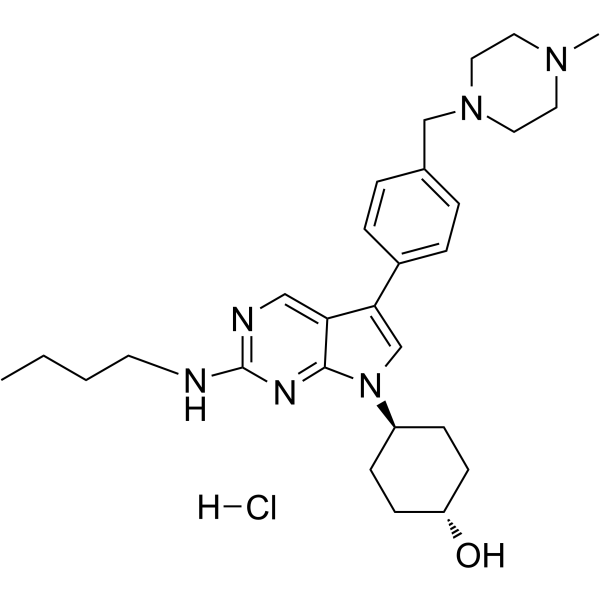
    UNC2025 hydrochloride is a potent, ATP-competitive, highly orally active and BBB-permeable Mer/Flt3 inhibitor with IC50 values of 0.74 nM and 0.8 nM, respectively. UNC2025 hydrochloride is >45-fold selectivity for MERTK relative to Axl (IC50= 122 nM; Ki = 13.3 nM). UNC2025 hydrochloride exhibits an excellent PK properties, and can be used for the investigation of acute leukemia .
    UNC2025 hydrochloride
  • HY-P5640

    Bacterial Parasite Infection
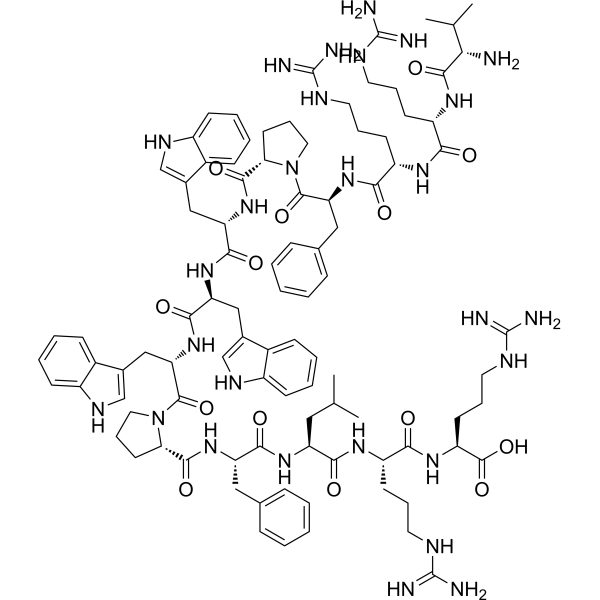
    Tritrpticin is a porcine-derived antimicrobial peptide with properties such as membrane disruption and hemolysis. Tritrpticin disrupts the cell membranes of bacteria, fungi and Jurkat T cell leukemia cells and induces their death. Tritrpticin also enhances the efficacy of Metronidazole (HY-B0318) against *Trichomonas vaginalis*, reduces plasma endotoxin and inflammatory cytokine levels, restricts bacterial growth in blood and visceral tissues, decreases the mortality rate of septic shock in rats and enhances the therapeutic effect of ertapenem. Tritrpticin exhibits selective cytotoxicity against Jurkat T cell leukemia cells, while showing low toxicity to normal peripheral blood mononuclear cells and red blood cells, and can serve as a template for antimicrobial peptide design. Tritrpticin can be applied to research related to bacterial infections, fungal infections, trichomoniasis, septic shock and leukemia .
    Tritrpticin
  • HY-111640

    HIV Reverse Transcriptase Infection
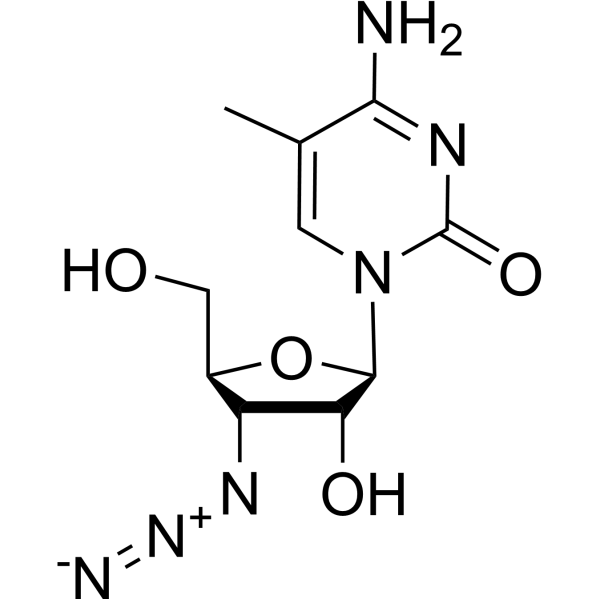
    3'-Azido-3'-deoxy-5-methylcytidine (CS-92) is a potent xenotropic murine leukemia-related retrovirus (XMRV) inhibitor with a CC50 of 43.5 μM in MCF-7 cells. 3'-Azido-3'-deoxy-5-methylcytidine also inhibits HIV-1 reverse transcriptase with an EC50 of 0.06 μM in peripheral blood mononuclear (PBM) cells . 3'-Azido-3'-deoxy-5-methylcytidine is a click chemistry reagent, it contains an Azide group and can undergo copper-catalyzed azide-alkyne cycloaddition reaction (CuAAc) with molecules containing Alkyne groups. It can also undergo strain-promoted alkyne-azide cycloaddition (SPAAC) reactions with molecules containing DBCO or BCN groups.
    3'-Azido-3'-deoxy-5-methylcytidine
  • HY-B1899AR

    Taurodeoxycholate sodium hydrate (Standard)

    Reference Standards G protein-coupled Bile Acid Receptor 1 Endogenous Metabolite Metabolic Disease
    (E)-Methyl 4-coumarate (Standard) is the analytical standard of (E)-Methyl 4-coumarate. This product is intended for research and analytical applications. (E)-Methyl 4-coumarate (Methyl 4-hydroxycinnamate), found in several plants, such as Allium cepa or Morinda citrifolia L. leaves. (E)-Methyl 4-coumarate cooperates with Carnosic Acid in inducing apoptosis and killing acute myeloid leukemia cells, but not normal peripheral blood mononuclear cells. Antioxidant and antimicrobial activity.
    Taurodeoxycholic acid sodium hydrate (Standard)
  • HY-P992058

    ART-140; DNP-001; EGX-040

    Transmembrane Glycoprotein Cancer
    Leukotuximab (ART-140; EGX-040) is an anti-JL1 mAb and an anti-leukemic agent. Leukotuximab targets the JL1 epitope of CD43 and exerts cytotoxic effects on JL1-positive leukemia cells. Except for thymocytes and some bone marrow mononuclear cells, Leukotuximab causes no damage to most normal tissues. Leukotuximab can be used in the research of acute myeloid leukemia, acute lymphoblastic leukemia, and myelodysplastic syndrome .
    Leukotuximab
  • HY-181710

    mTOR PI3K Cancer
    LASSBio-2337 is a dual pan-PI3K/mTOR inhibitor with an mTOR IC50 of 5.8 μM.LASSBio-2337 functionally modulates mTOR and all PI3K isoforms.LASSBio-2337 acts as a cytotoxic agent in leukemia cells, including multidrug-resistant populations.LASSBio-2337 spares nontumor human peripheral blood mononuclear cells.LASSBio-2337 displays moderate PAMPA-GIT permeability.LASSBio-2337 shows low metabolic stability in rat liver microsomes.LASSBio-2337 is aqueous insoluble.LASSBio-2337 can be used for the research of acute lymphoblastic leukemia, chronic myelogenous leukemia, breast cancer .
    LASSBio-2337
  • HY-183925

    HIV Dihydroorotate Dehydrogenase Infection
    Redoxal is a dihydroorotate dehydrogenase (DHODH) inhibitor and anti-HIV-1 agent. Redoxal induces intracellular pyrimidine depletion by inhibiting the de novo pyrimidine biosynthesis pathway, enhances the protein stability of APOBEC3G (A3G), upregulates the abundance of A3G protein in cells and progeny viral particles, thereby strengthening the host endogenous antiviral restriction mediated by A3G . Redoxal selectively targets DHOdehase at the mitochondrial level, with an IC50 of 430 nM for inhibiting DHO oxidation in human mitochondria and an IC50 of 910 nM in rat mitochondria . Redoxal can be used in studies related to HIV-1 infection .
    Redoxal
  • HY-182374

    Dipeptidyl Peptidase Apoptosis Cancer
    AX8819 is a selective dipeptidyl peptidase II (DPP II) inhibitor with an IC50 of 0.88 nM. AX8819 induces caspase-dependent apoptosis. AX8819 exhibits low non-specific toxicity toward proliferating T cells. AX8819 can be used for the research of B cell chronic lymphocytic leukemia .
    AX8819

Inquiry Online

Your information is safe with us. * Required Fields.

Salutation


Country or Region *

Applicant Name *


Organization Name *

Department *


Email Address *


Product Name *

Cat. No.


Requested quantity *

Phone Number *


Remarks

Inquiry Online

Inquiry Information

Product Name:
Cat. No.:
Quantity:
MCE Japan Authorized Agent:

