



Diisononyl phthalate

Based on 1 Customer Validation
Diisononyl phthalate (DINP) is an orally active polyvinyl chloride plasticizer and indirect food additive. Diisononyl phthalate activates the ACE/AT1R axis and inhibits the production of NO. Diisononyl phthalate reduces the expression of eNOS. Diisononyl phthalate induces increased blood pressure in mice. Diisononyl phthalate induces monocytic leukemia in rats. Diisononyl phthalate can be used in hypertension-related research.
For research use only. We do not sell to patients.
- Purity : 98.0%
- CAS No.: 28553-12-0
- Formula: C26H42O4
- Molecular Weight:418.61
-
Storage:
Store at room temperature 3 years.
In solvent -80°C, 2 years , -20°C, 1 year


To place orders, for customer services and technical support, please contact: MedChemExpress USA
Tel: 609-228-6898 E-mail: [email protected] [email protected]


-
 Biological Activity
-
Chemical Information
-
Solvent & Solubility
- Protocols
- Purity & Documentation
- References
-
 Help & FAQs


-
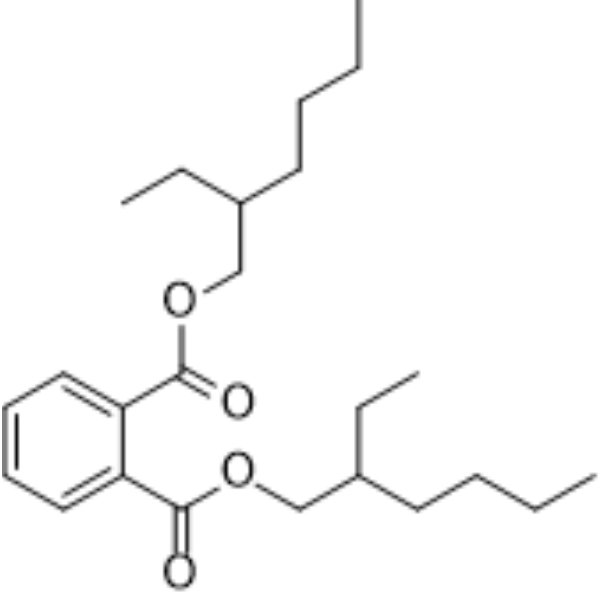
HY-B1945
DEHPEndogenous Metabolite -
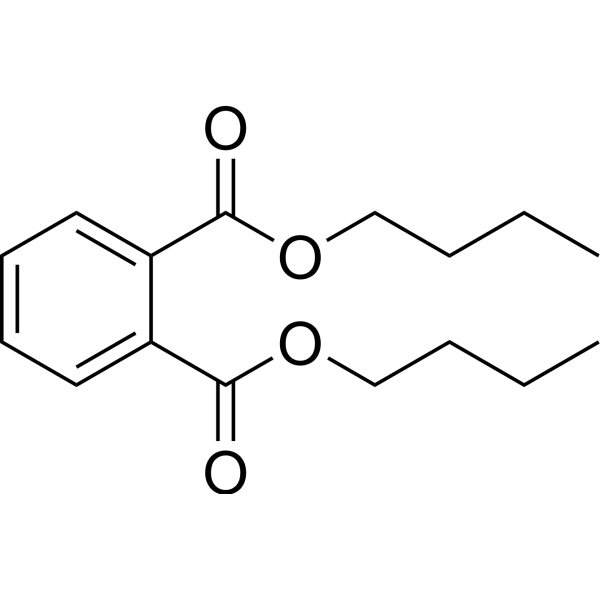
HY-Y0304
Dibutyl phthalatePlasticizer -

HY-W009142
Dicyclohexyl phthalatePlasticizer -
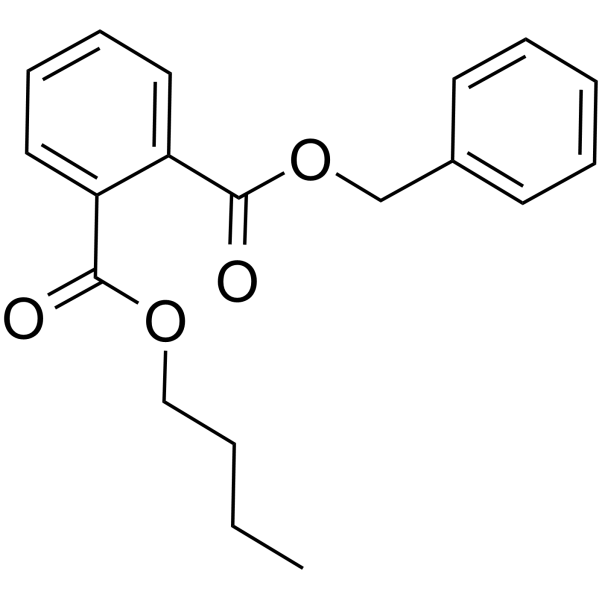
HY-W011338
Benzyl butyl phthalateAhR Activator -
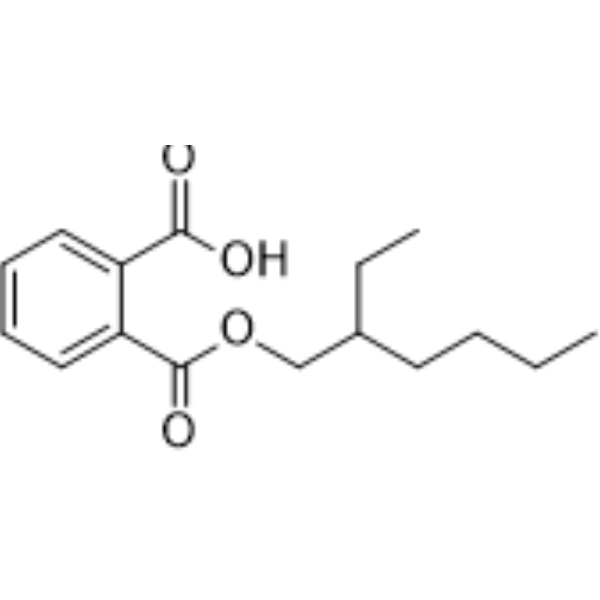
HY-W018392
Mono-(2-ethylhexyl) phthalateEndogenous Metabolite -
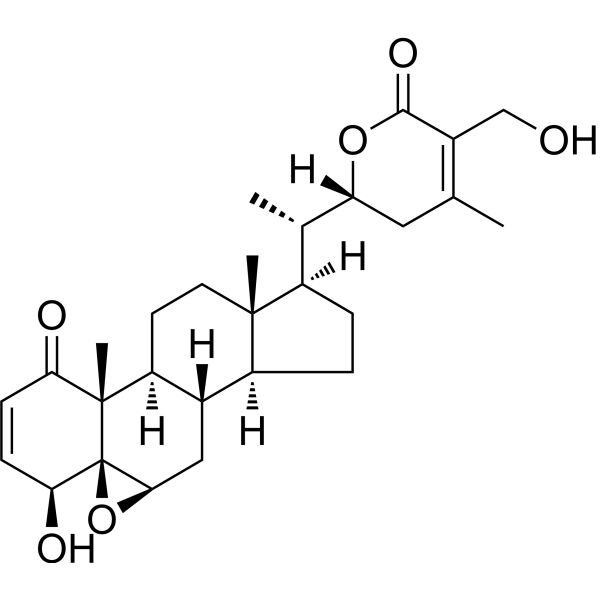
HY-N2065
Withaferin ANF-κB Inhibitor -

HY-Y0284
Diethyl phthalatePlasticizer -
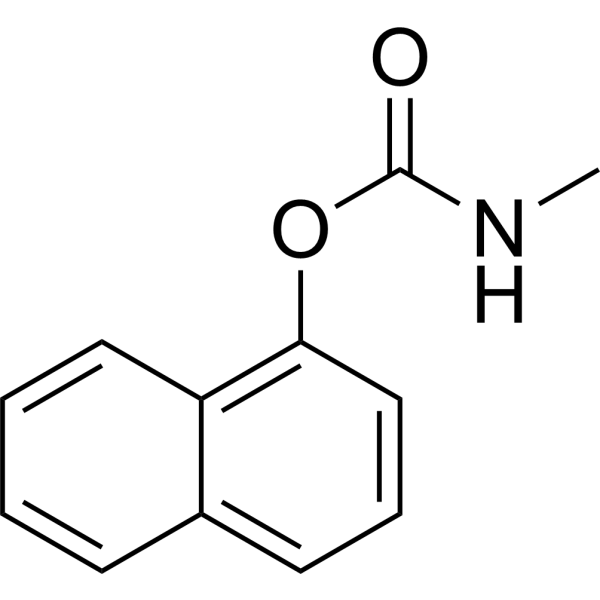
HY-B1315
CarbarylInsecticide -

HY-W140401
Dimethyl nonanedioateEster Product -
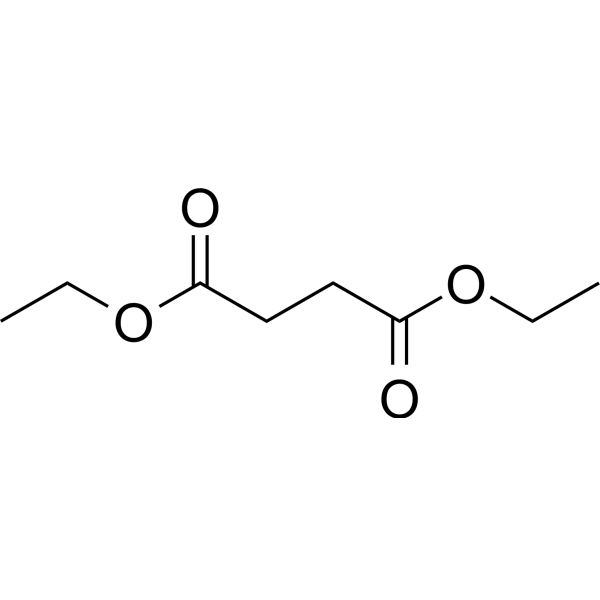
HY-Y0836
Diethyl succinateInflammation Protectant -

HY-W140401R
Dimethyl nonanedioate (Standard)Ester Product
All Angiotensin Receptor Isoforms
More

Biological Activity
Description
IC50 & Target
[1]|
AT1 Receptor |
eNOS |
In Vitro
In Vivo
Exposure to diisononyl phthalate (0.15-15 mg/kg/day; oral gavage; daily; 42 days; with simultaneous daily subcutaneous administration of 1 mg/kg/day dexamethasone for 42 days) dose-dependently exacerbates dexamethasone-induced hypertension, cardiovascular/renal tissue damage, and dysregulation of the ACE/AT1R and eNOS/NO pathways in C57/BL6 mice, and this effect is reversible by treatment with an ACE inhibitor[1].
Dietary intake of diisononyl phthalate (DINP) at doses of 0.03-0.6 wt% daily for 2 years induces a dose-dependent increase in liver, kidney and spleen weights in Fischer 344 rats. Male rats in the high-dose group show a slight decrease in body weight, and rats in the middle- and high-dose groups exhibit a statistically significant increase in the incidence of monocytic leukemia over the 2-year experimental period[2].
MedChemExpress (MCE) has not independently confirmed the accuracy of these methods. They are for reference only.
-
Animal Model:C57/BL6 (male, 5-6 weeks old, ~20 g, specific pathogen free)[1]
-
Dosage:0.15 mg/kg/day; 1.5 mg/kg/day; 15 mg/kg/day
-
Administration:p.o.; daily; 42 days
-
Result:Increased systolic blood pressure to 133 mmHg (~17.7% rise vs. saline group) at 15 mg/kg/day dose.
Raised systolic, diastolic, and mean blood pressure in a dose-dependent, statistically significant manner (P < 0.01 vs. saline group).
Increased heart rate in a statistically significant manner only at 15 mg/kg/day dose (P < 0.01 vs. saline group).
Thickened interventricular septum, ventricular wall, and aortic wall, and induced cardiomyocyte hypertrophy in a dose-dependent, statistically significant manner (P < 0.01 vs. saline group).
Induced glomerular vacuoles, hyaline degeneration, reduced glomerular size, and thickened glomerular basement membranes.
Increased aortic ACE and AT1R expression in a dose-dependent, statistically significant manner (P < 0.01 vs. saline group).
Decreased aortic eNOS expression in a dose-dependent, statistically significant manner (P < 0.01 vs. saline group at 15 mg/kg/day dose).
Sharply decreased serum NO concentration (P < 0.01 vs. saline group).
-
Animal Model:C57/BL6 (male, 5-6 weeks old, ~20 g, specific pathogen free, hypertension induced by 1 mg/kg/day dexamethasone s.c. daily for 42 days)[1]
-
Dosage:0.15 mg/kg/day; 1.5 mg/kg/day; 15 mg/kg/day
-
Administration:p.o.; daily; 42 days; co-administered with 1 mg/kg/day dexamethasone s.c.; daily; 42 days
-
Result:Aggravated dexamethasone-induced increases in systolic, diastolic, and mean blood pressure in a dose-dependent, significant manner (P < 0.01 vs. dexamethasone-only group for higher doses).
Increased heart rate significantly at 15 mg/kg/day dose vs. dexamethasone-only group.
Exacerbated dexamethasone-induced aortic wall thickening significantly (P < 0.01 vs. dexamethasone-only group) and glomerular damage.
Increased aortic ACE and AT1R expression significantly compared to dexamethasone-only group.
Decreased aortic eNOS expression in a dose-dependent, significant manner (P < 0.01 vs. dexamethasone-only group).
Slightly further reduced serum NO concentration (not statistically significant vs. dexamethasone-only group).
Saw alleviation of increases in blood pressure, heart rate, and tissue damage, and normalization of ACE, AT1R, and eNOS expression with ACE inhibitor treatment.


Chemical Information
-
CAS No. 28553-12-0
-
Appearance Liquid (Density: 0.972 g/cm3)
-
Molecular Weight 418.61
-
Formula C26H42O4
-
Color Colorless to light yellow
-
SMILES
O=C(OCCCCCCC(C)C)C1=CC=CC=C1C(OCCCCCCC(C)C)=O
-
Synonyms
DINP
-
Shipping
Room temperature in continental US; may vary elsewhere.
-
Storage
Store at room temperature 3 years
In solvent -80°C 2 years -20°C 1 year


Solvent & Solubility
In Vitro:
DMSO : 100 mg/mL (238.89 mM; Need ultrasonic; Hygroscopic DMSO has a significant impact on the solubility of product, please use newly opened DMSO)
Please refer to the solubility information to select the appropriate solvent. Once prepared, please aliquot and store the solution to prevent product inactivation from repeated freeze-thaw cycles.
Storage method and period of stock solution: -80°C, 2 years; -20°C, 1 year. When stored at -80°C, please use it within 2 years. When stored at -20°C, please use it within 1 year.
Please refer to the solubility information to select the appropriate solvent. Once prepared, please aliquot and store the solution to prevent product inactivation from repeated freeze-thaw cycles.
Storage method and period of stock solution: -80°C, 2 years; -20°C, 1 year. When stored at -80°C, please use it within 2 years. When stored at -20°C, please use it within 1 year.
Concentration (start) × Volume (start) = Concentration (final) × Volume (final)
In Vivo:
Select the appropriate dissolution method based on your experimental animal and administration route.
- For the following dissolution methods, please ensure to first prepare a clear stock solution using an In Vitro approach and then sequentially add co-solvents:
- To ensure reliable experimental results, the clarified stock solution can be appropriately stored based on storage conditions. As for the working solution for In Vivo experiments, it is recommended to prepare freshly and use it on the same day.
- The percentages shown for the solvents indicate their volumetric ratio in the final prepared solution. If precipitation or phase separation occurs during preparation, heat and/or sonication can be used to aid dissolution.
In Vivo Dissolution Calculator
Please enter the basic information of animal experiments:
-
-
-
-
Recommended: Prepare an additional quantity of animals to account for potential losses during experiments.
Please enter your animal formula composition:
-
%DMSO +
Recommended: Keep the proportion of DMSO in working solution below 2% if your animal is weak.
-
%+
-
+%Tween-80 + +
-
%Saline +
The co-solvents required include: DMSO, . All of co-solvents are available by MedChemExpress (MCE). , Tween 80. All of co-solvents are available by MedChemExpress (MCE).
Working solution concentration: 0.22 mg/mL
Method for preparing stock solution: mg drug dissolved in μL DMSO. Stock solution concentration: mg/mL.
1. Take μL DMSO stock solution;
2. Add μL .
μL , mix evenly;
3. Then add μL Tween 80, mix evenly;
4. Then add μL
Please ensure that the stock solution in the first step is dissolved to a clear state, and add co-solvents in sequence. You can use ultrasonic heating (ultrasonic cleaner, recommended frequency 20-40 kHz), vortexing, etc. to assist dissolution.

Protocols
-
RNA extraction experimental
By lysing cells, releasing RNA, and removing impurities such as proteins and DNA, high-purity RNA products are finally obtained. The commonly used traditional method is the guanidine isothiocyanate/phenol/chloroform method (Trizol), which is suitable for a variety of animal materials including animal tissues, microorganisms, cultured cells, etc., and most plant materials.
-
Research Protocol for Cardiovascular Diseases
Cardiovascular disease can be modeled as maladaptive cardiac remodeling, where ischemic injury or pressure overload activates inflammatory signaling, fibroblast activation, extracellular-matrix deposition, cardiomyocyte hypertrophy, vascular remodeling, and progressive ventricular dysfunction. The TGF-β/SMAD axis is a central profibrotic pathway after myocardial injury and pressure overload, while innate immune and cytokine pathways regulate leukocyte recruitment, scar formation, and adverse remodeling. Key unresolved questions include which inflammatory signals are reparative versus harmful, when fibrosis is protective versus maladaptive, and whether pathway inhibition improves function without weakening necessary infarct healing or compensatory remodeling.


Purity & Documentation
-
Data Sheet (276 KB)
-
SDS (418 KB)
- English - EN (418 KB)
- Français - FR (418 KB)
- Deutsch - DE (418 KB)
- Norwegian - NO (418 KB)
- Español - ES (418 KB)
- Swedish - SV (418 KB)
- Italian - IT (418 KB)
- Korean - KR (418 KB)
- Portuguese - PT (418 KB)
-
Handling Instructions (2659 KB)
References


Complete Stock Solution Preparation Table
Please refer to the solubility information to select the appropriate solvent. Once prepared, please aliquot and store the solution to prevent product inactivation from repeated freeze-thaw cycles.
Storage method and period of stock solution: -80°C, 2 years; -20°C, 1 year. When stored at -80°C, please use it within 2 years. When stored at -20°C, please use it within 1 year.
| Optional Solvent | Concentration Solvent Mass | 1 mg | 5 mg | 10 mg | 25 mg |
|---|---|---|---|---|---|
| DMSO | 1 mM | 2.3889 mL | 11.9443 mL | 23.8886 mL | 59.7215 mL |
| 5 mM | 0.4778 mL | 2.3889 mL | 4.7777 mL | 11.9443 mL | |
| 10 mM | 0.2389 mL | 1.1944 mL | 2.3889 mL | 5.9721 mL | |
| 15 mM | 0.1593 mL | 0.7963 mL | 1.5926 mL | 3.9814 mL | |
| 20 mM | 0.1194 mL | 0.5972 mL | 1.1944 mL | 2.9861 mL | |
| 25 mM | 0.0956 mL | 0.4778 mL | 0.9555 mL | 2.3889 mL | |
| 30 mM | 0.0796 mL | 0.3981 mL | 0.7963 mL | 1.9907 mL | |
| 40 mM | 0.0597 mL | 0.2986 mL | 0.5972 mL | 1.4930 mL | |
| 50 mM | 0.0478 mL | 0.2389 mL | 0.4778 mL | 1.1944 mL | |
| 60 mM | 0.0398 mL | 0.1991 mL | 0.3981 mL | 0.9954 mL | |
| 80 mM | 0.0299 mL | 0.1493 mL | 0.2986 mL | 0.7465 mL | |
| 100 mM | 0.0239 mL | 0.1194 mL | 0.2389 mL | 0.5972 mL |


Diisononyl phthalate Related Classifications
HY-116439 Related Classifications
 Powered by Bioz