1. Search Result
Search Result
Results for "

mortality of larvae

" in MedChemExpress (MCE) Product Catalog:

12

Inhibitors & Agonists

7

Natural
Products

2

Isotope-Labeled Compounds

Cat. No. Product Name Target Research Areas Chemical Structure
  • HY-W017423

    Environmental Pollutants Cholinesterase (ChE) Neurological Disease
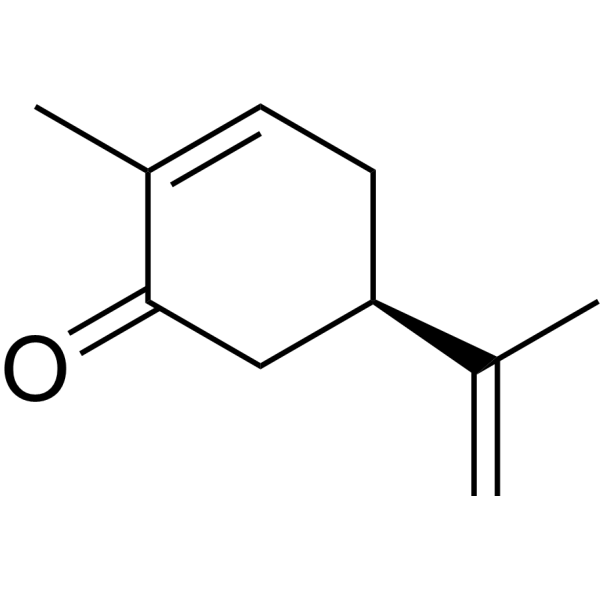
    (-)-Carvone is an insect neurotoxin and a irreversible acetylcholinesterase (AChE) inhibitor. (-)-Carvone can be used as a bird repellent, inhibits larval growth, decreases pupatation rate, and increases mortality of larvae .
    (-)-Carvone
  • HY-N7916

    L-Menthone

    Environmental Pollutants Others
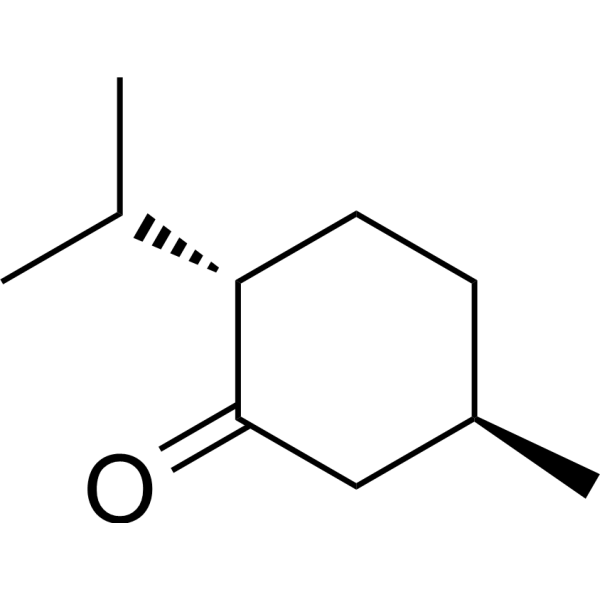
    (-)-Menthone is a monoterpene component of the essential oil of maturing peppermint. (+)-Neomenthyl-β-d-glucoside is a metabolite of (-)-Menthone [1].Mortality of two biological forms of Anopheles stephensi(larvae) exposed to about 45 ppm (-)-Menthone is 27.67% and 94.92%.
    (-)-Menthone
  • HY-114899

    Environmental Pollutants Cholinesterase (ChE) Insecticide Infection Neurological Disease
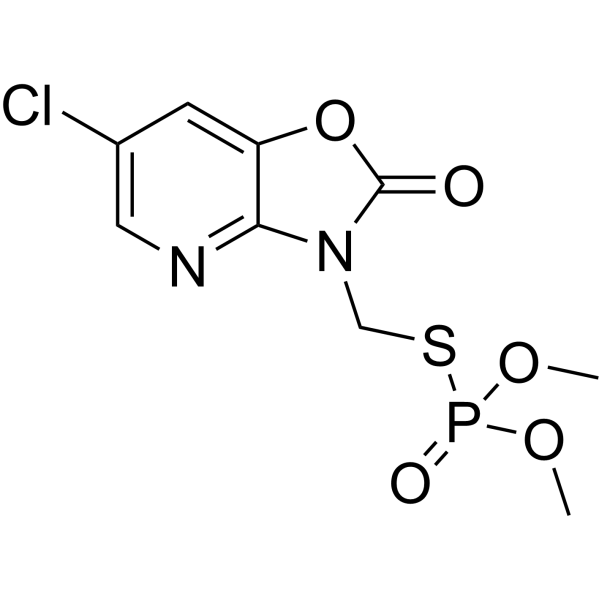
    Azamethiphos is an acetylcholinesterase inhibitor and insecticide. Azamethiphos covalently binds to acetylcholinesterase via phosphorylation, inhibits its activity, causes acetylcholine to accumulate in cholinergic synapses, triggers uncontrolled excitation of cholinergic sites, induces paralysis and leads to death. Azamethiphos can be used as a bath insecticide in salmonid aquaculture to control sea lice infestations, and it exerts acute toxicity to European lobster larvae, including mortality and movement disorders .
    Azamethiphos
  • HY-W017423R

    Reference Standards Cholinesterase (ChE) Neurological Disease
    (-)-Carvone (Standard) is the analytical standard of (-)-Carvone. This product is intended for research and analytical applications. (-)-Carvone is an insect neurotoxin and a irreversible acetylcholinesterase (AChE) inhibitor. (-)-Carvone can be used as a bird repellent, inhibits larval growth, decreases pupatation rate, and increases mortality of larvae .
    (-)-Carvone (Standard)
  • HY-N7916R

    L-Menthone (Standard)

    Reference Standards Others Others
    (-)-Menthone (Standard) is the analytical standard of (-)-Menthone. This product is intended for research and analytical applications. (-)-Menthone is a monoterpene component of the essential oil of maturing peppermint. (+)-Neomenthyl-β-d-glucoside is a metabolite of (-)-Menthone [1].Mortality of two biological forms of Anopheles stephensi(larvae) exposed to about 45 ppm (-)-Menthone is 27.67% and 94.92%.
    (-)-Menthone (Standard)
  • HY-117901

    Insecticide Others
    Sandoricin is a limonoid compound that can be extracted from the seeds of Sandoricum koetjape. Sandoricin exhibits strong antifeedant properties in larvae of Fall Armyworm (Spodoptera frugiperda) and European Corn Borer (Ostrinia nubilalis) fed on artificial diets. Sandoricin induces reduced growth rate and delayed pupation at lower doses, while higher doses cause massive mortality of larvae. Sandoricin is a potential field insecticide .
    Sandoricin
  • HY-W750404

    Isotope-Labeled Compounds Cholinesterase (ChE) Neurological Disease
    (-)-Carvone-d4 is the deuterium labeled (-)-Carvone (HY-W017423). (-)-Carvone is an insect neurotoxin and a irreversible acetylcholinesterase (AChE) inhibitor. (-)-Carvone can be used as a bird repellent, inhibits larval growth, decreases pupatation rate, and increases mortality of larvae .
    (-)-Carvone-d4
  • HY-N16479

    Insecticide Infection
    Azadirachtin I is an insecticide targeting insect growth and development-related pathways (e.g., ecdysone signaling pathway, chitin synthesis pathway). Azadirachtin I inhibits chitin synthesis and disrupting intestinal function by interfering with the growth and development processes of insect larvae such as molting and pupation, increasing insect mortality and reducing adult fecundity. Azadirachtin I is promising for research of agricultural pests, such as Lepidoptera, Coleoptera .
    Azadirachtin I
  • HY-114899S

    Isotope-Labeled Compounds Cholinesterase (ChE) Insecticide Infection Neurological Disease
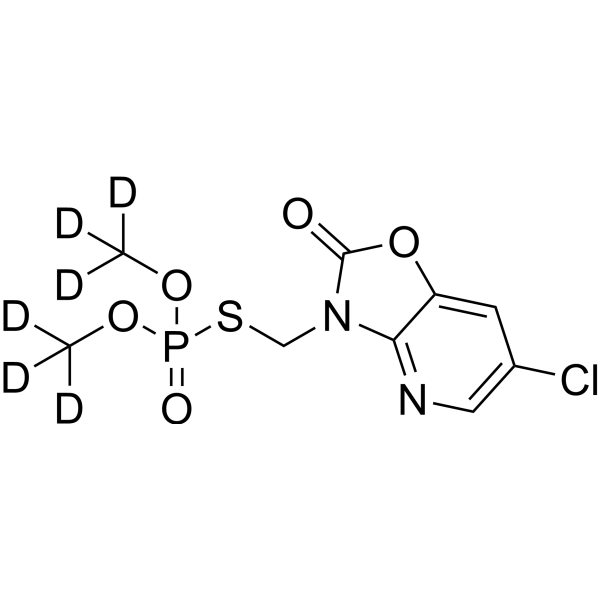
    Azamethiphos-d6 is deuterated labeled Azamethiphos (HY-114899). Azamethiphos is an acetylcholinesterase inhibitor and insecticide. Azamethiphos covalently binds to acetylcholinesterase via phosphorylation, inhibits its activity, causes acetylcholine to accumulate in cholinergic synapses, triggers uncontrolled excitation of cholinergic sites, induces paralysis and leads to death. Azamethiphos can be used as a bath insecticide in salmonid aquaculture to control sea lice infestations, and it exerts acute toxicity to European lobster larvae, including mortality and movement disorders .
    Azamethiphos-d6
  • HY-114899R

    Reference Standards Cholinesterase (ChE) Insecticide Infection Neurological Disease
    Azamethiphos (Standard) is the analytical standard of Azamethiphos (HY-114899). This product is intended for research and analytical applications. Azamethiphos is an acetylcholinesterase inhibitor and insecticide. Azamethiphos covalently binds to acetylcholinesterase via phosphorylation, inhibits its activity, causes acetylcholine to accumulate in cholinergic synapses, triggers uncontrolled excitation of cholinergic sites, induces paralysis and leads to death. Azamethiphos can be used as a bath insecticide in salmonid aquaculture to control sea lice infestations, and it exerts acute toxicity to European lobster larvae, including mortality and movement disorders .
    Azamethiphos (Standard)
  • HY-130349

    L-656,748

    GABA Receptor Infection
    Emamectin B1a (L-656,748) is a semisynthetic derivative of avermectin B1a that binds to GABA receptors (Ki=17.6 nM in rat brain membranes) and enhances GABA responses. Emamectin B1a acitivates GABAA receptors α1β1γ2, α1β2γ2, and α1β3γ2 with IC50s of 57, 210, and 49.8 nM, respectively. Emamectin B1a also binds to glycine receptors, inhibiting glycine receptors with an IC50=218 nM in rat spinal cord. Emamectin B1a (1.067 ng/mL) caused 90% mortality of S. exigua larvae in foliar spray bioassays and topical application, making it more toxic than avermectin B1.
    Emamectin B1a
  • HY-118989

    Insecticide Endogenous Metabolite Infection
    Ajugalactone is a phytoecdysteroid found in plants of the Ajuga genus. Ajugalactone shows both ecdysone (HY-N0179) agonist activity and anti‑ponasterone A (HY-N1534) antagonist activity. Ajugalactone significantly disrupts insect molting and developmental processes. Ajugalactone acts as an insect growth regulator that interferes with insect molting. Ajugalactone induces complete mortality in first‑instar larvae of the greenhouse whitefly. Ajugalactone can be used for research on insect‑plant interactions and insect growth regulation .
    Ajugalactone

Inquiry Online

Your information is safe with us. * Required Fields.

Salutation


Country or Region *

Applicant Name *


Organization Name *

Department *


Email Address *


Product Name *

Cat. No.


Requested quantity *

Phone Number *


Remarks

Inquiry Online

Inquiry Information

Product Name:
Cat. No.:
Quantity:
MCE Japan Authorized Agent:

