1. Search Result
Search Result
Results for "

movement disorders

" in MedChemExpress (MCE) Product Catalog:

27

Inhibitors & Agonists

1

Peptides

1

Natural
Products

3

Isotope-Labeled Compounds

Cat. No. Product Name Target Research Areas Chemical Structure
  • HY-109139
    Taminadenant
    1 Publications Verification

    NIR178; PBF509

    Adenosine Receptor Neurological Disease Cancer
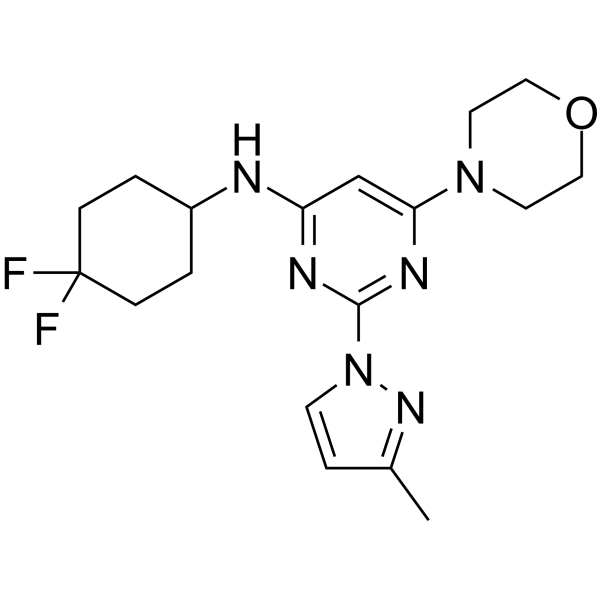
    Taminadenant (NIR178; PBF509) is a highly potent and orally active adenosine A2A receptor (A2AR) antagonist. Taminadenant can antagonize A2AR agonist-mediated cAMP accumulation and impedance responses with KB values of 72.8 nM and 8.2 nM, respectively. Taminadenant reverses motor impairments in several rat models of movement disorders, including catalepsy, tremor, and hemiparkinsonism. Taminadenant can also inhibit tumor growth when combined with Spartalizumab (HY-P9972). Taminadenant reactivate the antitumor immune response .
    Taminadenant
  • HY-B1277
    Trihexyphenidyl hydrochloride
    3 Publications Verification

    mAChR Cholinesterase (ChE) Neurological Disease
    Trihexyphenidyl hydrochloride is a selective and orally active M1 muscarinic receptor antagonist with an IC50 of 3.7 nM for rat cerebral cortex M1 muscarinic receptors. Trihexyphenidyl hydrochloride modulates cholinergic activity, countering acetylcholine supersensitivity in neural pathways. Trihexyphenidyl hydrochloride improves movement disorder, inhibits McN-A-343 (HY-107648)-induced pressor responses, vagally-induced bradycardia and vasodilatation. Trihexyphenidyl hydrochloride can be used for the research of Parkinson's disease. .
    Trihexyphenidyl hydrochloride
  • HY-109160
    Rimtuzalcap
    2 Publications Verification

    CAD-1883

    Potassium Channel Neurological Disease
    Rimtuzalcap (CAD-1883) is a first-in-class selective positive allosteric modulator of small-conductance calcium-activated potassium channels (SK channels). Rimtuzalcap can be used for the research of movement disorders including essential tremor (ET) and spinocerebellar ataxia (SCA) .
    Rimtuzalcap
  • HY-15446
    Basimglurant
    1 Publications Verification

    RG7090; RO4917523

    mGluR Neurological Disease
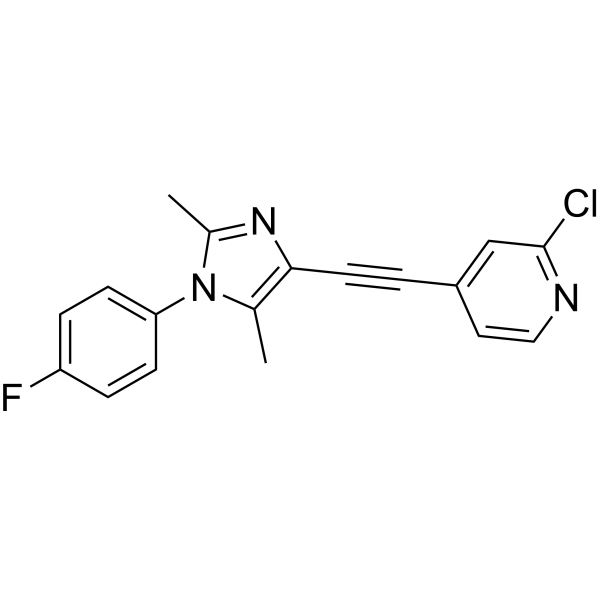
    Basimglurant (RG7090; RO4917523) is a selective, orally active, blood-brain barrier permeable negative allosteric modulator of metabotropic glutamate receptor 5 (mGluR5), with a Ki of 1.4 nM (against [ 3H]-ABP688 (HY-110141)) and 35.6 nM (against [ 3H]-MPEP (HY-14609A)). Basimglurant inhibits mGlu5-mediated signaling pathways and receptor constitutive activity, regulates dopamine levels in the nucleus accumbens, exerts anxiolytic, antidepressant-like, analgesic and arousal-promoting effects, and alters δ-wave power during non-rapid eye movement sleep. Basimglurant can be used in research on depression, fragile X syndrome, anxiety disorders, etc .
    Basimglurant
  • HY-141554

    DHTBZ

    Monoamine Transporter Neurological Disease
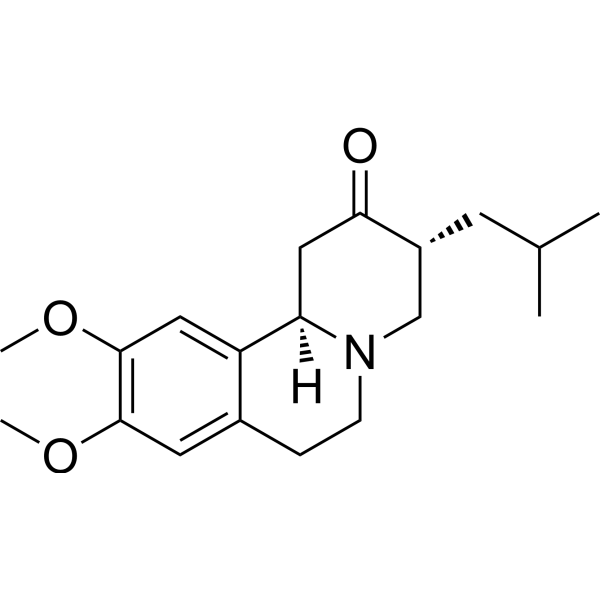
    Dihydrotetrabenazine (DHTBZ) is the active metabolite of Tetrabenazine (HY-B0590). Dihydrotetrabenazine is the inhibitor for human vesicular monoamine transporter 2 (VMAT2), that reduces monoamine content in presynaptic neurons, and can be used in movement disorder research .
    Dihydrotetrabenazine
  • HY-114901

    Adenosine Kinase Neurological Disease
    A-134974 is a novel, high-selectivity adenosine kinase (IC50 = 60 pM) inhibitor. A-134974 enhances endogenous adenosine signaling in the spinal cord, effectively alleviates neuropathic pain, and does not cause movement disorders. A-134974 can be used for the study of neuropathic pain .
    A-134974
  • HY-114899

    Environmental Pollutants Cholinesterase (ChE) Insecticide Infection Neurological Disease
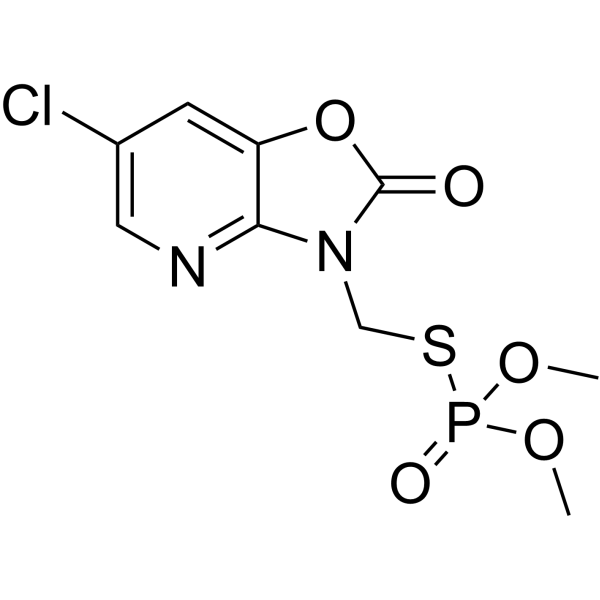
    Azamethiphos is an acetylcholinesterase inhibitor and insecticide. Azamethiphos covalently binds to acetylcholinesterase via phosphorylation, inhibits its activity, causes acetylcholine to accumulate in cholinergic synapses, triggers uncontrolled excitation of cholinergic sites, induces paralysis and leads to death. Azamethiphos can be used as a bath insecticide in salmonid aquaculture to control sea lice infestations, and it exerts acute toxicity to European lobster larvae, including mortality and movement disorders .
    Azamethiphos
  • HY-P10360

    α-synuclein Neurological Disease
    Tat-βsyn-degron is an α-synuclein knockdown peptide that effectively degrades α-synuclein protein via the proteasome pathway. Tat-βsyn-degron effectively reduces α-synuclein protein levels in primary rat cortical neuron cultures. In a Parkinson's mouse toxicity model, Tat-βsyn-degron can alleviate parkinsonian toxin-induced neuronal damage and movement disorders .
    Tat-βsyn-degron
  • HY-B1277A

    mAChR Cholinesterase (ChE) Cardiovascular Disease Neurological Disease
    Trihexyphenidyl is a selective and orally active M1 muscarinic receptor antagonist with an IC50 of 3.7 nM for rat cerebral cortex M1 muscarinic receptors. Trihexyphenidyl modulates cholinergic activity, countering acetylcholine supersensitivity in neural pathways. Trihexyphenidyl improves movement disorder, inhibits McN-A-343 (HY-107648)-induced pressor responses, vagally-induced bradycardia and vasodilatation. Trihexyphenidyl can be used for the research of Parkinson's disease. .
    Trihexyphenidyl
  • HY-W017933

    Octahydro-1H-isoindole; Perhydroisoindole; Hexahydroisoindoline

    Neurokinin Receptor Neurological Disease
    Octahydroisoindole (Perhydroisoindole) is a substance P antagonist that can cross the blood-brain barrier and is useful for the study of movement disorders associated with central nervous system diseases .
    Octahydroisoindole
  • HY-176248

    Histamine Receptor Serotonin Transporter Neurological Disease Inflammation/Immunology
    Dimephosphon is an anti-inflammatory agent with antihistamine and antiserotonin activities. Dimephosphon helps maintain the conduction function of the spinal cord and reduces the excitability of spinal motor neurons in the area surrounding the lesion. Dimephosphon directly activates lymphatic vessel movement and improves lymphatic circulation. Dimephosphon can be used for the study of inflammatory edema, acute spinal cord injury and lymphatic circulation disorders .
    Dimephosphon
  • HY-W362839

    5-HT Receptor Neurological Disease
    Binospirone is a 5-HT1A Receptor agonist. Binospirone has anxiolytic activity. Binospirone can be used in the study of movement disorders .
    Binospirone
  • HY-105545C

    (+)-Benzetimide hydrochloride; (S)-(+)-Dexetimide hydrochloride; Dexbenzetimide hydrochloride

    mAChR Neurological Disease
    Dexetimide hydrochloride ((+)-Benzetimide hydrochloride) is an antimuscarinic drug with the activity of suppressing neuroleptic-induced Parkinson's syndrome. Dexetimide hydrochloride is used to improve the symptoms of movement disorders caused by the use of neuroleptics. Dexetimide hydrochloride, as the (-)-enantiomer of (-)-Benzetimide, shows the ability to selectively inhibit cholinergic receptors .
    Dexetimide hydrochloride
  • HY-109139A

    NIR178 mesylate; PBF509 mesylate

    Adenosine Receptor Cancer
    Taminadenant mesylate (NIR178 mesylate) is a potent adenosine A2A receptor antagonist with potential anti-tumor activity. Taminadenant mesylate can selectively bind and inhibit A2AR on T lymphocytes, thereby releasing adenosine/A2AR-mediated inhibition of T lymphocytes and activating T cell-mediated immune responses against tumor cells. Taminadenant mesylate works by reducing the proliferation of susceptible tumor cells. Taminadenant mesylate also showed effectiveness in reversing dyskinesias in Parkinson's disease models and was able to inhibit dyskinesias caused by L-DOPA .
    Taminadenant mesylate
  • HY-16771B

    NBI-98854 dihydrochloride

    Dopamine Receptor Neurological Disease
    Valbenazine (NBI-98854) dihydrochloride is a VMAT2 inhibitor, used to treat tardive dyskinesia. Valbenazine dihydrochloride demonstrates potential benefit in alleviating symptoms associated with movement disorders resulting from chronic dopamine receptor blocking medications. Valbenazine dihydrochloride has been supported by evidence from preclinical models examining its role in the genetic factors linked to tardive dyskinesia.
    Valbenazine dihydrochloride
  • HY-114899S

    Isotope-Labeled Compounds Cholinesterase (ChE) Insecticide Infection Neurological Disease
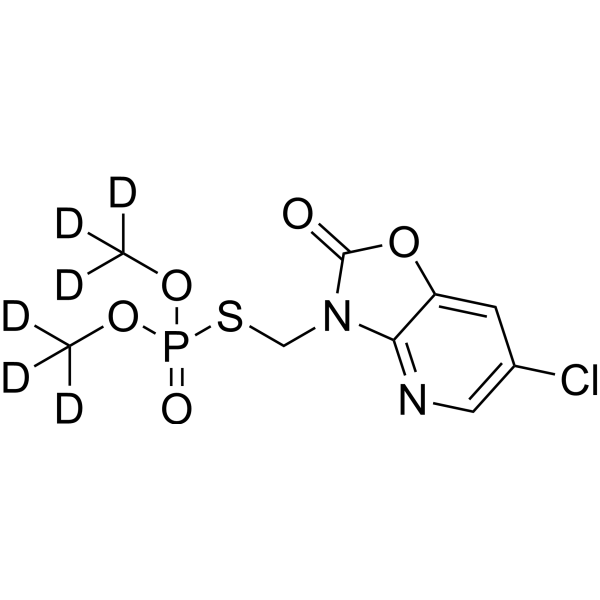
    Azamethiphos-d6 is deuterated labeled Azamethiphos (HY-114899). Azamethiphos is an acetylcholinesterase inhibitor and insecticide. Azamethiphos covalently binds to acetylcholinesterase via phosphorylation, inhibits its activity, causes acetylcholine to accumulate in cholinergic synapses, triggers uncontrolled excitation of cholinergic sites, induces paralysis and leads to death. Azamethiphos can be used as a bath insecticide in salmonid aquaculture to control sea lice infestations, and it exerts acute toxicity to European lobster larvae, including mortality and movement disorders .
    Azamethiphos-d6
  • HY-114899R

    Reference Standards Cholinesterase (ChE) Insecticide Infection Neurological Disease
    Azamethiphos (Standard) is the analytical standard of Azamethiphos (HY-114899). This product is intended for research and analytical applications. Azamethiphos is an acetylcholinesterase inhibitor and insecticide. Azamethiphos covalently binds to acetylcholinesterase via phosphorylation, inhibits its activity, causes acetylcholine to accumulate in cholinergic synapses, triggers uncontrolled excitation of cholinergic sites, induces paralysis and leads to death. Azamethiphos can be used as a bath insecticide in salmonid aquaculture to control sea lice infestations, and it exerts acute toxicity to European lobster larvae, including mortality and movement disorders .
    Azamethiphos (Standard)
  • HY-B1277AS

    Isotope-Labeled Compounds mAChR Cholinesterase (ChE) Neurological Disease
    Trihexyphenidyl-d5 is deuterium labeled Trihexyphenidyl (HY-B1277A). Trihexyphenidyl is a selective and orally active M1 muscarinic receptor antagonist with an IC50 of 3.7 nM for rat cerebral cortex M1 muscarinic receptors. Trihexyphenidyl modulates cholinergic activity, countering acetylcholine supersensitivity in neural pathways. Trihexyphenidyl improves movement disorder, inhibits McN-A-343 (HY-107648)-induced pressor responses, vagally-induced bradycardia and vasodilatation. Trihexyphenidyl can be used for the research of Parkinson's disease. .
    Trihexyphenidyl-d5
  • HY-B1277S

    Isotope-Labeled Compounds mAChR Cholinesterase (ChE) Neurological Disease
    Trihexyphenidyl-d5 hydrochloride is deuterium labeled Trihexyphenidyl hydrochloride (HY-B1277). Trihexyphenidyl hydrochloride is a selective and orally active M1 muscarinic receptor antagonist with an IC50 of 3.7 nM for rat cerebral cortex M1 muscarinic receptors. Trihexyphenidyl hydrochloride modulates cholinergic activity, countering acetylcholine supersensitivity in neural pathways. Trihexyphenidyl hydrochloride improves movement disorder, inhibits McN-A-343 (HY-107648)-induced pressor responses, vagally-induced bradycardia and vasodilatation. Trihexyphenidyl hydrochloride can be used for the research of Parkinson's disease. .
    Trihexyphenidyl-d5 hydrochloride
  • HY-B1277R

    Reference Standards mAChR Cholinesterase (ChE) Neurological Disease
    Trihexyphenidyl hydrochloride (Standard) is the analytical standard of Trihexyphenidyl hydrochloride (HY-B1277). This product is intended for research and analytical applications. Trihexyphenidyl is a selective and orally active M1 muscarinic receptor antagonist with an IC50 of 3.7 nM for rat cerebral cortex M1 muscarinic receptors. Trihexyphenidyl modulates cholinergic activity, countering acetylcholine supersensitivity in neural pathways. Trihexyphenidyl improves movement disorder, inhibits McN-A-343 (HY-107648)-induced pressor responses, vagally-induced bradycardia and vasodilatation. Trihexyphenidyl can be used for the research of Parkinson's disease. .
    Trihexyphenidyl hydrochloride (Standard)
  • HY-104044A

    BGB-290 maleate

    Apoptosis Neurological Disease
    Pamiparib maleate (BGB-290 maleate) is a highly potent and selective PARP inhibitor with neurotoxicity-inducing activity. Pamiparib maleate can effectively penetrate the blood-brain barrier and cause cerebral hemorrhage, brain atrophy, and movement disorders in zebrafish embryos exposed. Pamiparib maleate exposure downregulates the activities of acetylcholinesterase (AChE) and adenosine triphosphatase (ATPase) and leads to upregulation of oxidative stress, which triggers apoptosis and interferes with the expression of neurodevelopment-related genes. The use of pamiparib maleate is also accompanied by downregulation of the Notch signaling pathway, while activation of the Notch signaling pathway can partially rescue neurodevelopmental toxicity. Therefore, pamiparib maleate provides a reference for evaluating its potential neurotoxicity during embryonic development .
    Pamiparib maleate
  • HY-182384

    mAChR Neurological Disease
    VU6015241 is a selective, blood-brain barrier-permeable M4 mAChR Antagonist with a Ki value of 43.3 nM. VU6015241 is used for the research of dystonia and related movement disorders .
    VU6015241
  • HY-182587

    mAChR Neurological Disease
    VU0415248 is a selective muscarinic acetylcholine receptor 1 (M1) inhibitor. VU0415248 inhibits acetylcholine-induced calcium mobilization in cells expressing human and rat M1 muscarinic acetylcholine receptors, with an IC50 of 0.4 and 0.18 μM, respectively. VU0415248 is applicable to the research of Parkinson's disease, movement disorders and fragile X syndrome .
    VU0415248
  • HY-114515

    RG7090 sulfate; RO4917523 sulfate

    mGluR Neurological Disease
    Basimglurant (RG7090; RO4917523) sulfate is a selective, orally active, blood-brain barrier permeable negative allosteric modulator of metabotropic glutamate receptor 5 (mGluR5), with a Ki of 1.4 nM (against [ 3H]-ABP688 (HY-110141)) and 35.6 nM (against [ 3H]-MPEP (HY-14609A)). Basimglurant sulfate inhibits mGlu5-mediated signaling pathways and receptor constitutive activity, regulates dopamine levels in the nucleus accumbens, exerts anxiolytic, antidepressant-like, analgesic and arousal-promoting effects, and alters δ-wave power during non-rapid eye movement sleep. Basimglurant sulfate can be used in research on depression, fragile X syndrome, anxiety disorders, etc .
    Basimglurant sulfate
  • HY-182011

    GPR6 Neurological Disease
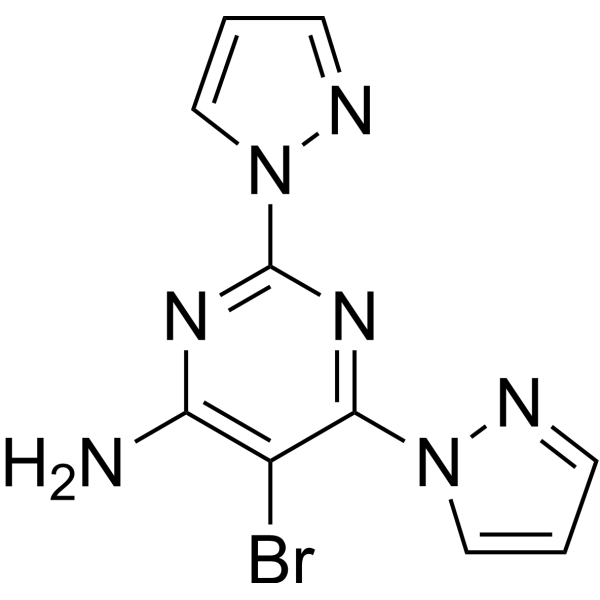
    GPR6 inverse agonist 2 (Compound 575) is a selective GPR6 inverse agonist, with IC50 values of < 0.1 μM and 1~30 μM against GPR6 and GPR3, respectively. GPR6 inverse agonist 2 exhibits preliminary cardiac safety, with an IC50 of 21.71 μM for hERG. GPR6 inverse agonist 2 can be used in the research of movement disorders such as Parkinson's disease .
    GPR6 inverse agonist 2
  • HY-111241

    Dopamine Receptor Neurological Disease
    SV 293 is a selective antagonist with neutral antagonist activity. SV 293 binds to human D2 receptors with 100-fold higher affinity and has lower affinity for human D3 and D4 dopamine receptor subtypes. SV 293 was found to block the effects of the full agonist quinpirole in forskolin-dependent adenylate acylase inhibition assays and electrophysiological assays. SV 293 can be used as a useful pharmacological tool to study the role of dopamine D2-like receptor subtypes in dopamine pathways associated with neurological, neuropsychiatric and movement disorders .
    SV 293
  • HY-15446R

    RG7090 (Standard); RO4917523 (Standard)

    Reference Standards mGluR Neurological Disease
    Basimglurant (RG7090; RO4917523) (Standard) is the analytical standard of Basimglurant. This product is intended for research and analytical applications. Basimglurant is a selective, orally active, blood-brain barrier permeable negative allosteric modulator of metabotropic glutamate receptor 5 (mGluR5), with a Ki of 1.4 nM (against [ 3H]-ABP688 (HY-110141)) and 35.6 nM (against [ 3H]-MPEP (HY-14609A)). Basimglurant inhibits mGlu5-mediated signaling pathways and receptor constitutive activity, regulates dopamine levels in the nucleus accumbens, exerts anxiolytic, antidepressant-like, analgesic and arousal-promoting effects, and alters δ-wave power during non-rapid eye movement sleep. Basimglurant can be used in research on depression, fragile X syndrome, anxiety disorders, etc.
    Basimglurant (Standard)

Inquiry Online

Your information is safe with us. * Required Fields.

Salutation


Country or Region *

Applicant Name *


Organization Name *

Department *


Email Address *


Product Name *

Cat. No.


Requested quantity *

Phone Number *


Remarks

Inquiry Online

Inquiry Information

Product Name:
Cat. No.:
Quantity:
MCE Japan Authorized Agent:

