1. Search Result
Search Result
Results for "

neddylation

" in MedChemExpress (MCE) Product Catalog:

19

Inhibitors & Agonists

1

Recombinant Proteins

Cat. No. Product Name Target Research Areas Chemical Structure
  • HY-169179

    PROTACs STAT Cancer
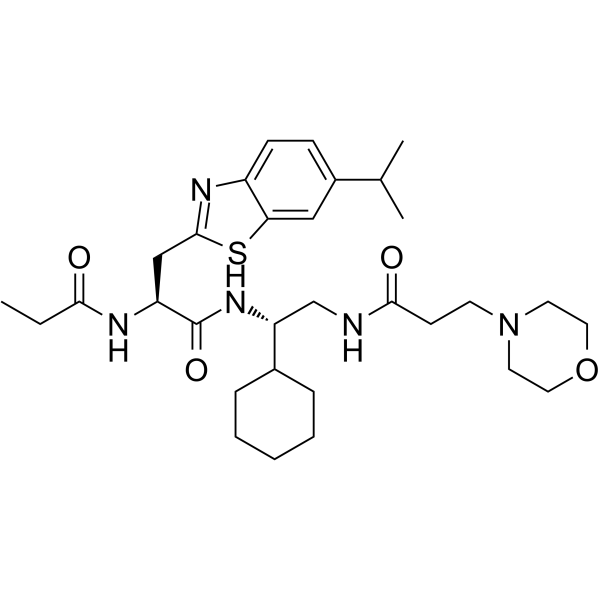
    AK-1690 is a selective PROTAC degrader targeting STAT6 (DC50=1 nM) with a Ki of 6 nM against human STAT6. AK-1690 degrades STAT6 via the interaction of STAT6 with cereblon and a ubiquitin-like process. AK-1690 effectively depletes STAT6 protein in mouse liver and lung tissues, and is applicable to research related to leukemia, Hodgkin's lymphoma, follicular lymphoma, etc. .
    AK-1690
  • HY-128586
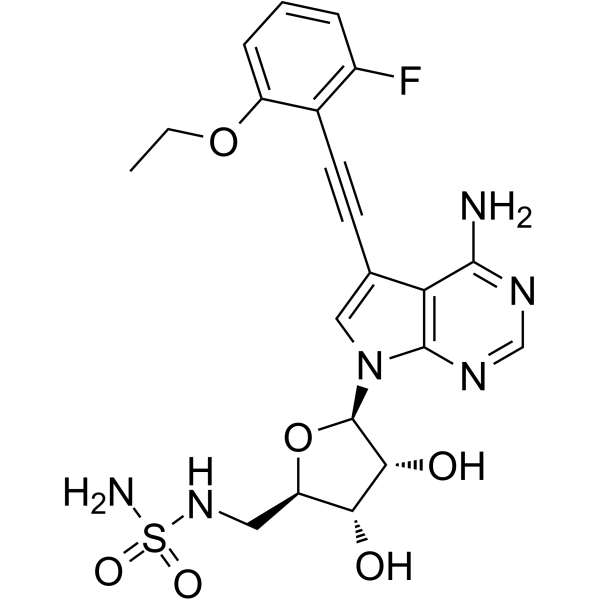
    TAS4464
    Maximum Cited Publications
    9 Publications Verification

    Apoptosis Carbonic Anhydrase NEDD8-activating Enzyme Cancer
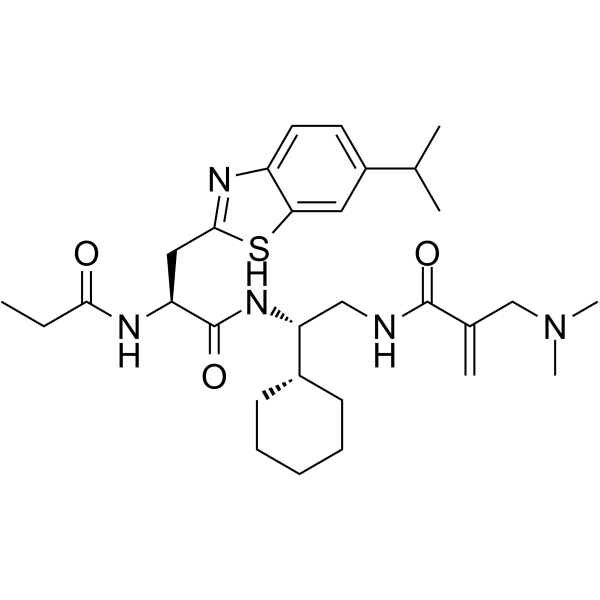
    TAS4464 is a long-acting, highly selective covalent inhibitor targeting NEDD8-activating enzyme (NAE) (IC50=0.955 nM), and also inhibits CAII with an IC50 of 0.73 μM, which is less potent than MLN4924 (HY-70062). The IC50 values of TAS4464 against other E1 enzymes UAE and SAE are 449 nM and 1280 nM, respectively. TAS4464 targets NEDD8 in an ATP-dependent manner to inhibit NAE, blocks the neddylation pathway, causes accumulation of CRL ubiquitin ligase substrates (such as CDT1, p27, phosphorylated IκBα), and further induces tumor cell apoptosis. TAS4464 exhibits antiproliferative and cytotoxic effects, and has broad-spectrum antitumor activity against various hematologic and solid tumor cell lines as well as patient-derived tumor cells. TAS4464 has a wide selcetive window, without obvious toxicity. TAS4464 can be used in the research of hematologic malignancies (leukemia, lymphoma, multiple myeloma, etc.) and solid tumors (small cell lung cancer, colorectal cancer, sarcoma, endometrial cancer, ovarian cancer, etc.) .
    TAS4464
  • HY-160799
    HA-9104
    1 Publications Verification

    E1/E2/E3 Enzyme Apoptosis Cancer
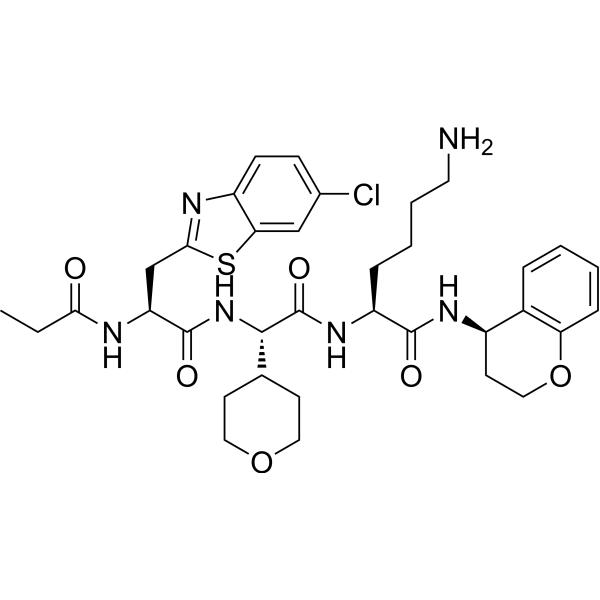
    HA-9104 is a potent and selective inhibitor of cullin-5 neddylation via virtually targeting the V30 pocket of UBE2F. HA-9104 binds to UBE2F, reduces its protein levels, and consequently inhibits cullin-5 neddylation. HA-9104 has potent growth suppression and radiosensitizing activities via targeting the UBE2F-CRL5 axis and causing DNA damage, leading to induction of apoptosis and G2/M arrest in lung and pancreatic cancer cells .
    HA-9104
  • HY-124602

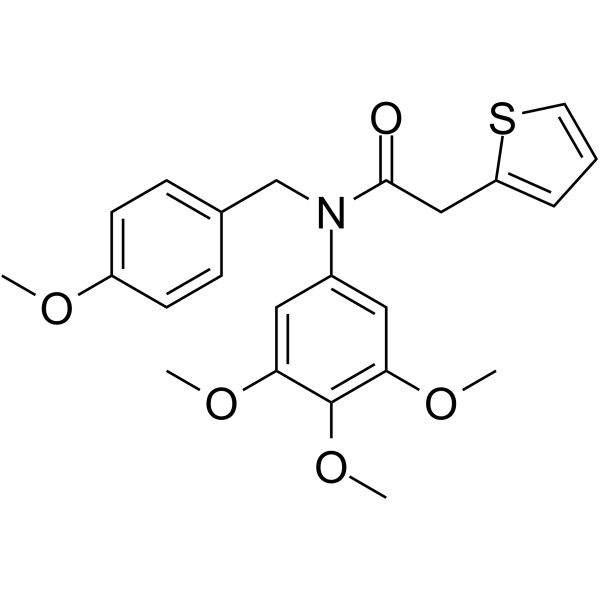
    E1/E2/E3 Enzyme Cancer
    DI-591 is a potent, high-affinity and cell-permeable inhibitor of the DCN1-UBC12 interaction. DI-591 binds to DCN1 and DCN2 with Ki values of 12 nM and 10.4 nM, respectively and has no appreciable binding to DCN3, DCN4, and DCN5 proteins. DI-591 selectively inhibits neddylation of cullin 3 but has no or minimal effect on neddylation of other cullin family members .
    DI-591
  • HY-111505
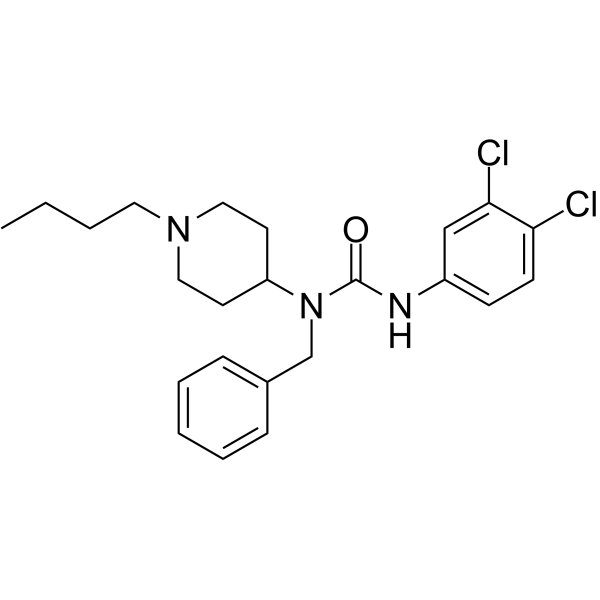
    NAcM-OPT
    2 Publications Verification

    E1/E2/E3 Enzyme NEDD8-activating Enzyme Cancer
    NAcM-OPT is an orally bioavailable cullin neddylation 1 (DCN1) inhibitor, which potently inhibits the DCN1-UBE2M interaction .
    NAcM-OPT
  • HY-128586A
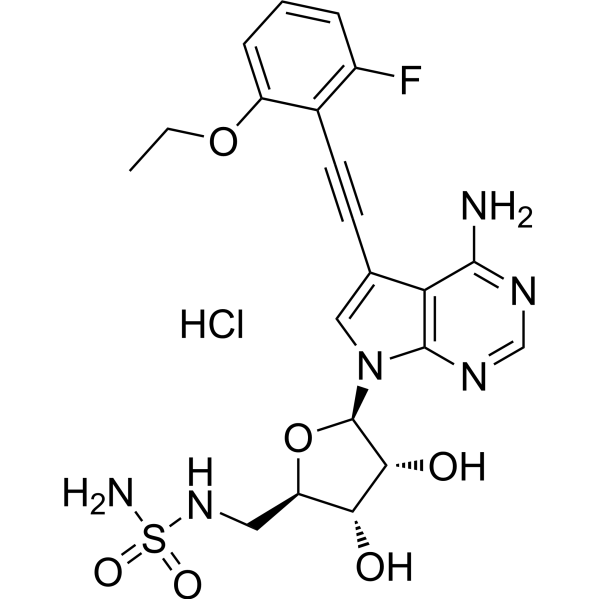
    TAS4464 hydrochloride
    Maximum Cited Publications
    9 Publications Verification

    NEDD8-activating Enzyme Carbonic Anhydrase Apoptosis Cancer
    TAS4464 hydrochloride is a long-acting, highly selective covalent inhibitor targeting NEDD8-activating enzyme (NAE) (IC50=0.955 nM), and also inhibits CAII with an IC50 of 0.73 μM, which is less potent than MLN4924 (HY-70062). The IC50 values of TAS4464 hydrochloride against other E1 enzymes UAE and SAE are 449 nM and 1280 nM, respectively. TAS4464 hydrochloride targets NEDD8 in an ATP-dependent manner to inhibit NAE, blocks the neddylation pathway, causes accumulation of CRL ubiquitin ligase substrates (such as CDT1, p27, phosphorylated IκBα), and further induces tumor cell apoptosis. TAS4464 hydrochloride exhibits antiproliferative and cytotoxic effects, and has broad-spectrum antitumor activity against various hematologic and solid tumor cell lines as well as patient-derived tumor cells. TAS4464 hydrochloride has a wide therapeutic window, without obvious toxicity. TAS4464 hydrochloride can be used in the research of hematologic malignancies (leukemia, lymphoma, multiple myeloma, etc.) and solid tumors (small cell lung cancer, colorectal cancer, sarcoma, endometrial cancer, ovarian cancer, etc.) .
    TAS4464 hydrochloride
  • HY-145162
    SHP2-D26
    1 Publications Verification

    PROTACs SHP2 Phosphatase Cancer
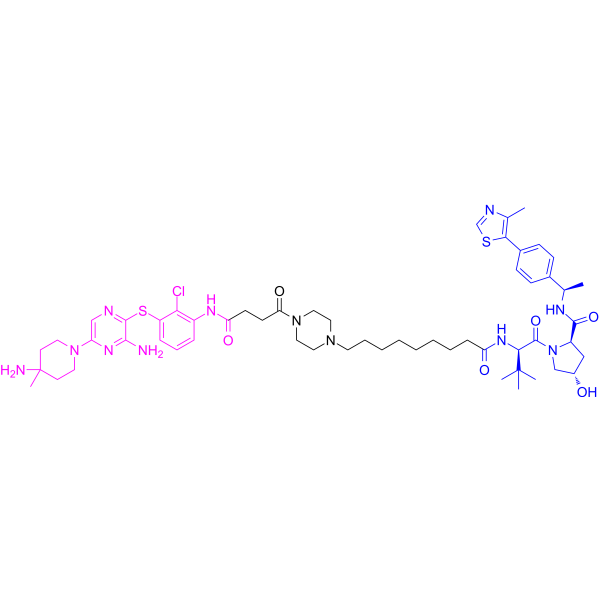
    SHP2-D26 is a first, potent and effective SHP2 PROTAC degrader. SHP2-D26 induces SHP2 degradation requires binding to VHL-1 and SHP2 proteins. SHP2-D26 is also neddylation- and proteasome-dependent. SHP2-D26 can be used for the study of esophageal cancer and acute myeloid leukemia (Pink: SHP2 ligand (HY-176797); Blue: VHL ligand (HY-150803); Black: linker) .
    SHP2-D26
  • HY-133558
    VII-31
    2 Publications Verification

    E1/E2/E3 Enzyme Apoptosis Cancer
    VII-31 is a potent NEDDylation pathway activator to inhibit the tumor progression in vitro and in vivo. VII-31 induces apoptosis via intrinsic and extrinsic pathways .
    VII-31
  • HY-126075A

    E1/E2/E3 Enzyme Cancer
    WS-383 is a potent, selective and reversible inhibitor of DCN1-UBC12 interaction, with an IC50 of 11 nM. WS-383 inhibits Cul3/1 neddylation, induces accumulation of p21, p27 and NRF2 .
    WS-383
  • HY-145733

    E1/E2/E3 Enzyme Cardiovascular Disease
    DI-1859 is a potent, selective and covalent inhibitor of DCN1. DI-1859 inhibits neddylation of cullin 3 in cells at low nanomolar concentrations. DI-1859 induces a robust increase of NRF2 protein, a CRL3 substrate, in mouse liver and effectively protects mice from acetaminophen-induced liver damage .
    DI-1859
  • HY-159728

    PROTACs Histone Methyltransferase Apoptosis Early 2 Factor (E2F) c-Myc Cancer
    PROTAC PRMT3 degrader 1 is a selective PRMT3 PROTAC degrader with a DC50 of 2.566 μM. PROTAC PRMT3 degrader 1 forms a ternary complex with MDM2 E3 ubiquitin ligase to induce proteasomal and neddylation-dependent degradation of PRMT3. PROTAC PRMT3 degrader 1 activates intrinsic apoptosis, endoplasmic reticulum stress signaling pathways. PROTAC PRMT3 degrader 1 downregulates E2F, MYC, oxidative phosphorylation pathways. PROTAC PRMT3 degrader 1 reduces cellular asymmetric dimethylarginine (ADMA) levels. PROTAC PRMT3 degrader 1 inhibits acute leukemia cell growth. PROTAC PRMT3 degrader 1 acts with glycolysis inhibitor 2-DG to reduce ATP production, induce intrinsic apoptosis, drive synergistic antiproliferative effects. PROTAC PRMT3 degrader 1 can be used for the research of acute leukemia .
    PROTAC PRMT3 degrader 1
  • HY-156240

    E1/E2/E3 Enzyme Keap1-Nrf2 Metabolic Disease
    DI-1548 is a potent, selective, and irreversible covalent inhibitor of DCN1 (IC50 = 4.6 nM). DI-1548 potently and selectively inhibits cullin 3 neddylation at nanomolar concentrations, and exhibits no obvious effect on the neddylation of other cullin members (including cullin 1, 2, 4A, 4B, and 5). DI-1548 exhibits no cytotoxicity. DI-1548 covalently binds to DCN1, disrupting the DCN1-UBC12 interaction, causing the collapse of the neddylation complex, inactivating CRL3, leading to NRF2 accumulation and upregulation of its target genes, and ultimately protecting mice from liver damage. DI-1548 can be used in liver injury research .
    DI-1548
  • HY-180907

    PROTACs Cancer
    PROTAC USP39 Degrader-1 (compound USP39_PROTAC_V1) is a potent and selective PROTAC USP39 degrader. PROTAC USP39 Degrader-1 induces degradation of USP39 by recruiting the VHL E3 ligase via a hydroxyl-proline-containing ligand, forming a ternary complex with a Kd of 232 nM. PROTAC USP39 Degrader-1 degrades USP39 in a VHL-, proteasome-, and the neddylation pathway-dependent manner .
    PROTAC USP39 Degrader-1
  • HY-163105

    Microtubule/Tubulin Cancer
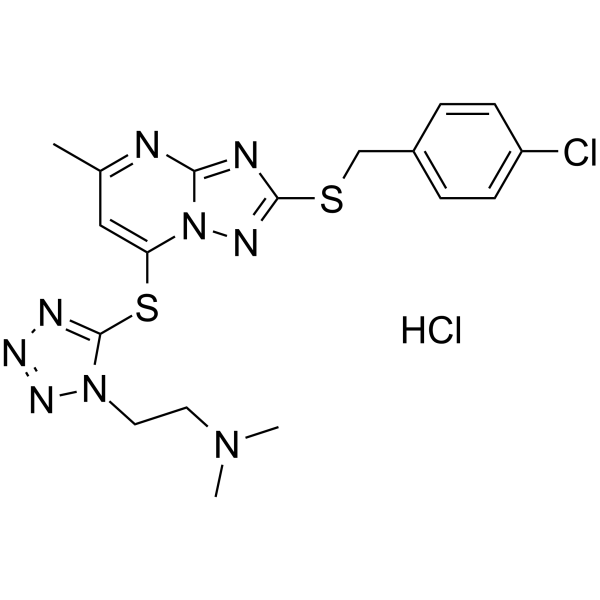
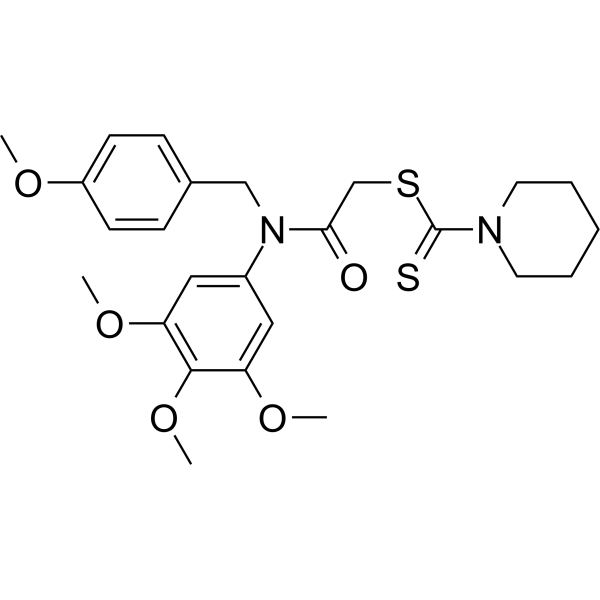
    Tubulin/NEDDylation-IN-1 (compound C11) is a dual inhibitor of tubulin (Microtubule/Tubulin)-NEDDylation (IC50 for tubulin=2.40 μM), which has strong anti-proliferative activity. Neddylation is a protein post-translational modification that covalently tags the ubiquitin-like protein NEDD8 to target proteins. Tubulin/NEDDylation-IN-1 forms hydrogen bonds with residues of tubulin and E1 NEDD8 activating enzyme (NAE) through methoxy and dithiocarbamate groups and inhibits NEDDylation and microtubulin in an ATP-dependent manner. tube polymerization .
    Tubulin/NEDDylation-IN-1
  • HY-175273

    PROTACs FLT3 HSP ERK STAT Akt Apoptosis Cancer
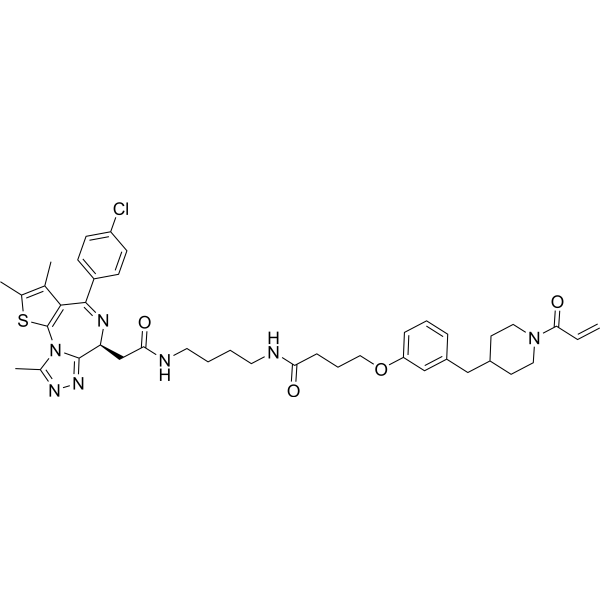
    MA191 is a FLT3 PROTAC degrader. MA191 abrogates FLT3 inhibitor resistance from rebound activation of mitogen-activated kinases. MA191 mediates rapid FLT3-ITD degradation through a mechanism requiring VHL, neddylation, and BIM. MA191 reduces FLT3-ITD levels before inducing apoptosis. MA191 halts AML cell proliferation in Danio rerio. MA191 can be used for the study of acute myeloid leukemia (AML) (Pink: FLT3 ligand: (HY-175311), Blue: E3 ligase CRBN Ligand (HY-112078), Black: Linker, E3 ligase ligand-linker conjugate (HY-175312)) .
    MA191
  • HY-122874

    E1/E2/E3 Enzyme Cardiovascular Disease
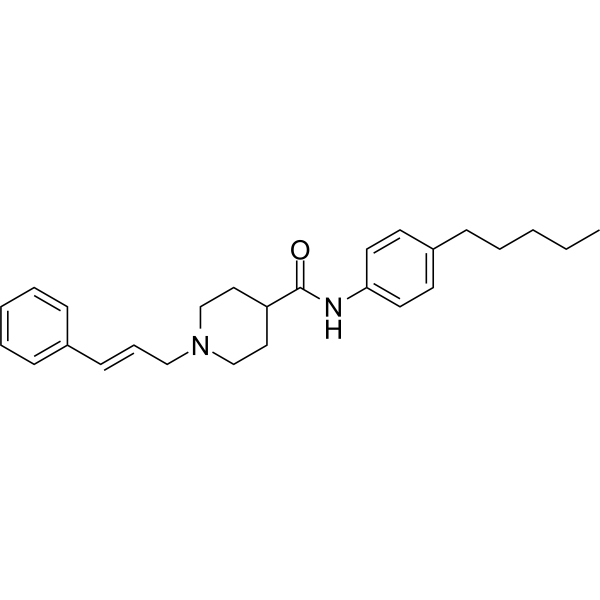
    DI-404 is a potent inhibitor of DCN1 with a KKd value of 6.7 nM. DI-404 selectively inhibits neddylation of cullin 3 in a dose-dependent manner .
    DI-404
  • HY-126075

    E1/E2/E3 Enzyme Cancer
    WS-383 free base is a potent, selective and reversible inhibitor of DCN1-UBC12 interaction, with an IC50 of 11 nM. WS-383 free base inhibits Cul3/1 neddylation, induces accumulation of p21, p27 and NRF2 .
    WS-383 free base
  • HY-172252

    PD-1/PD-L1 RAD51 Cancer
    CSN5-IN-2 (Compound 31) is a CSN5 inhibitor with an IC50 of 0.36 μM. CSN5-IN-2 can increase the level of Cullin 1 neddylation, and downregulate the expression of RAD51 and PD-L1 in cancer cells. CSN5-IN-2 has anti-tumor activity, and its effect is better when combined with Talazoparib (HY-16106) .
    CSN5-IN-2
  • HY-144099

    E1/E2/E3 Enzyme Apoptosis Cancer
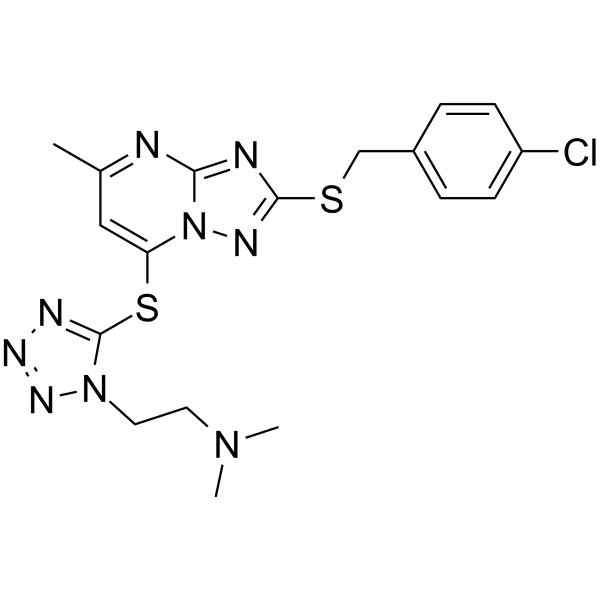
    Keap1-Nrf2-IN-4 is a potent neddylation inhibitor. Keap1-Nrf2-IN-4 exhibits potent anti-proliferation activity against MGC-803 cells (IC50=2.55 µM). Keap1-Nrf2-IN-4 blocks the migration ability and induces apoptosis of gastric cancer cells. Keap1-Nrf2-IN-4 inhibits tumor growth without obvious toxicity .
    Keap1-Nrf2-IN-4

Inquiry Online

Your information is safe with us. * Required Fields.

Salutation


Country or Region *

Applicant Name *


Organization Name *

Department *


Email Address *


Product Name *

Cat. No.


Requested quantity *

Phone Number *


Remarks

Inquiry Online

Inquiry Information

Product Name:
Cat. No.:
Quantity:
MCE Japan Authorized Agent:

