



DI-591
Based on 1 publication(s) in Google Scholar
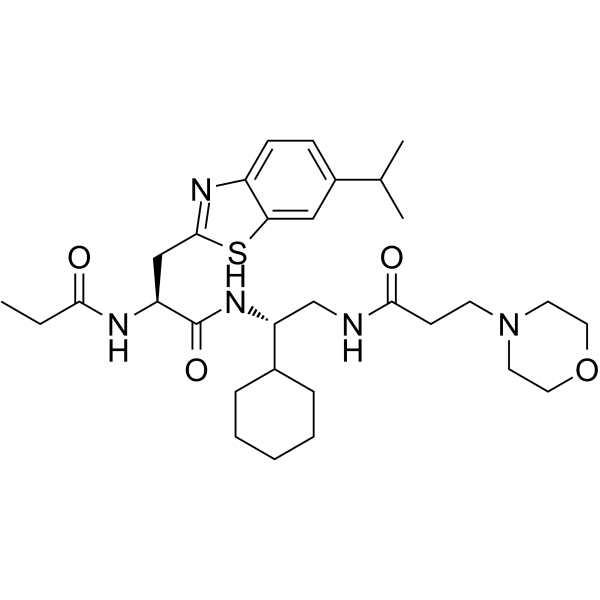
DI-591 is a potent, high-affinity and cell-permeable inhibitor of the DCN1-UBC12 interaction. DI-591 binds to DCN1 and DCN2 with Ki values of 12 nM and 10.4 nM, respectively and has no appreciable binding to DCN3, DCN4, and DCN5 proteins. DI-591 selectively inhibits neddylation of cullin 3 but has no or minimal effect on neddylation of other cullin family members.
Para uso exclusivo en investigación. No vendemos a pacientes.
- Pureza : 98.06%
- No. CAS: 2245887-38-9
- Fòrmula: C31H47N5O4S
- Peso molecular:585.80
-
Almacenamiento:Powder -20°C, 3 years ; In solvent -80°C, 6 months , -20°C, 1 month

To place orders, for customer services and technical support, please contact: MedChemExpress USA
Tel: 609-228-6898 E-mail: [email protected] [email protected]


-
 Actividad biológica
-
Chemical Information
-
Solvente y solubilidad
- Pureza y Documentación
- Referencias
-
 Help & FAQs


-
HY-145733
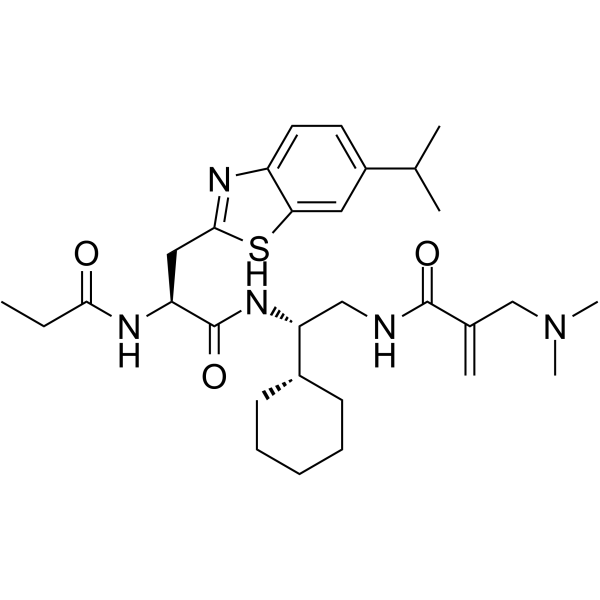
DI-1859DCN1/Cullin 3 Inhibitor -
HY-111505
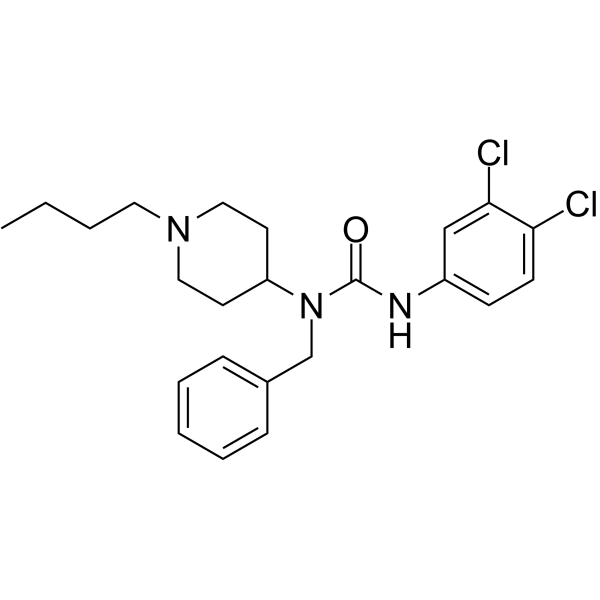
NAcM-OPTDCN1-UBE2M Inhibitor -
HY-15301
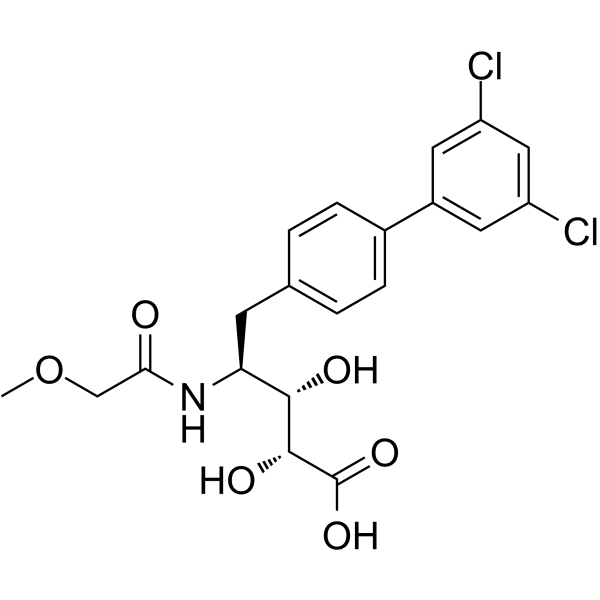
CC0651Cdc34 Inhibitor -
HY-153178
HECT E3-IN-1HECT E3 Inhibitor -
HY-15371
ForskolinAdenylate Cyclase Activator -
HY-15531
VenetoclaxBCL-2 Inhibitor -
HY-111789
SubasumstatSUMOylation Inhibitor -
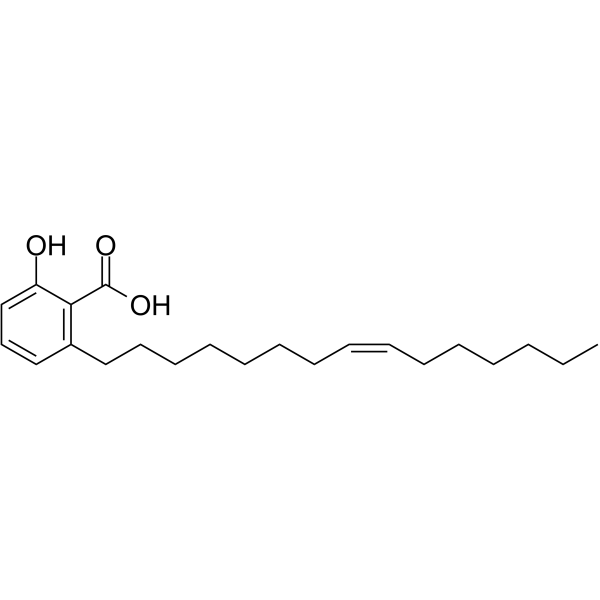
HY-N0077
Ginkgolic acidE1/E2/E3 Enzyme Inhibitor -
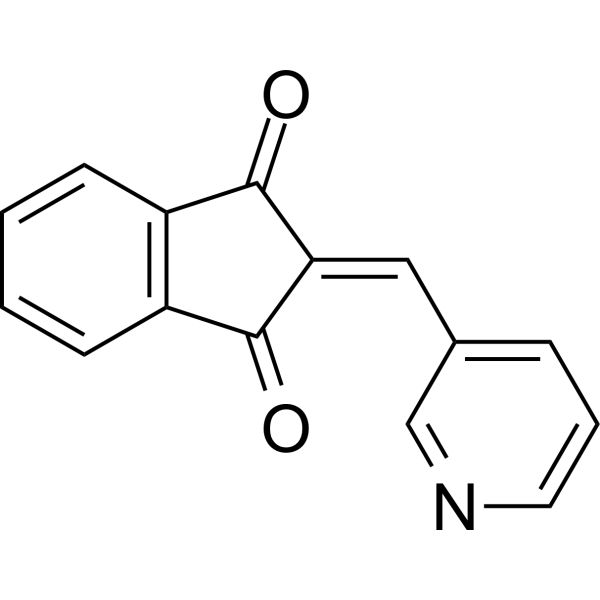
HY-19817
PRT4165E1/E2/E3 Enzyme Inhibitor -
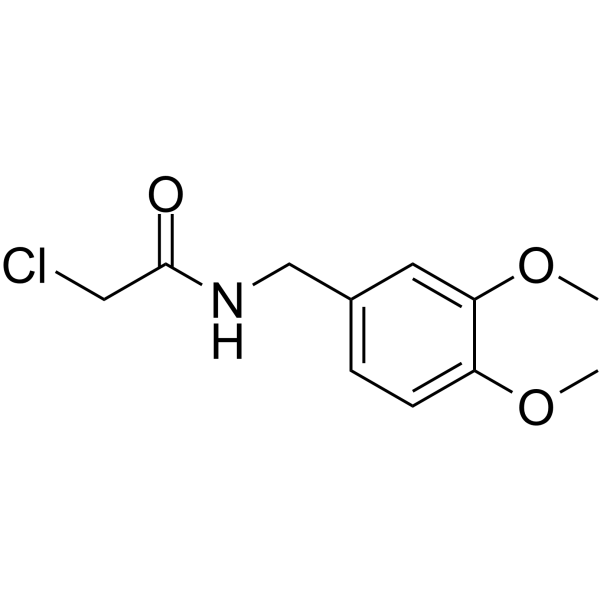
HY-101836
DKM 2-93UBA5 Inhibitor -
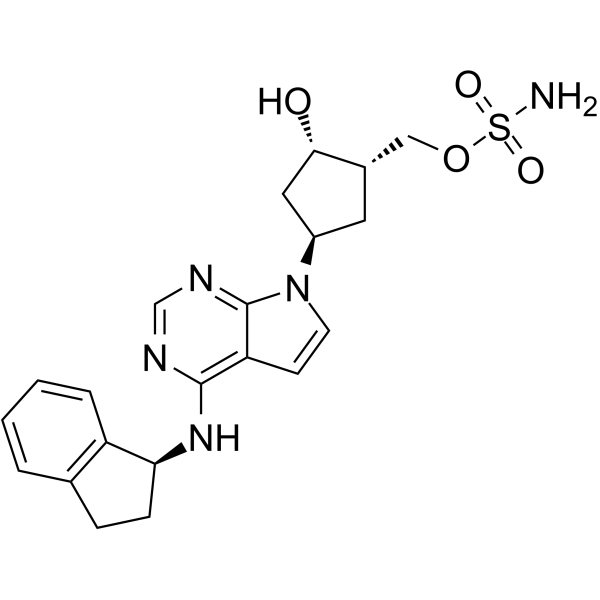
HY-70062
PevonedistatNAE Inhibitor -
HY-141432
NX-1607Cbl-b Inhibitor
Publications Citing Use of MedChemExpress (MCE) DI-591
More

Actividad biológica
Descripciòn
IC50 & Target
DCN1-UBC12[1]
In Vitro
DI-591 (Compound 44) binds to DCN1 and DCN2 with Ki values of 12?nM and 10.4 nM, respectively and has no appreciable binding to DCN3, DCN4, and DCN5 proteins. Hence, DI-591 displays a very-high binding affinity to recombinant human DCN1 and DCN2 proteins and >1000-fold selectivity over recombinant human DCN3-5 proteins[1].
?
DI-591 (Compound 44; 0-10 μM; 1 hour; KYSE70 cells) binds to both cellular DCN1 and DCN2 proteins and disrupts the association of cellular DCN1 and UBC12 proteins[1].
?
DI-591 (Compound 44; 10 μM; 24 hours; THLE2 cells) treatment robustly increases the mRNA levels of NQO1 and HO1, leading to upregulation of HO1 protein in the cells. Significantly, DI-591 has no effect on the mRNA level of NRF2[1].
?
The selective inhibition of neddylation of cullin 3 by DI-591 leads to accumulation NRF2 protein and its transcriptional activation. Knockdown experiments indicate that DCN1, but not DCN2, plays a key role in regulation of neddylation of cullin 3 but not of other cullins. DI-591 is an excellent probe compound to investigate the role of the cullin 3 CRL (Cullin-RING E3 ubiquitin ligase) in biological processes and human diseases[1].
MedChemExpress (MCE) has not independently confirmed the accuracy of these methods. They are for reference only.
-
Cell Line:KYSE70 cells
-
Concentration:0 μM, 1 μM, 3 Μm or 10 μM
-
Incubation Time:1 hour
-
Result:Potently bound to cellular DCN1 and DCN2 proteins. Enhanced the stability of DCN1 and DCN2 protein in a dose-dependent manner.
-
Cell Line:THLE2 cells
-
Concentration:10 μM
-
Incubation Time:24 hours
-
Result:Robustly increases the mRNA levels of NQO1 and HO1.


Chemical Information
-
No. CAS 2245887-38-9
-
Appearance Solid
-
Peso molecular 585.80
-
Fòrmula C31H47N5O4S
-
Color White to off-white
-
SMILES
O=C(N[C@@H](C1CCCCC1)CNC(CCN2CCOCC2)=O)[C@@H](NC(CC)=O)CC3=NC4=CC=C(C(C)C)C=C4S3
-
Envío
Room temperature in continental US; may vary elsewhere.
-
Almacenamiento
Powder -20°C 3 years In solvent -80°C 6 months -20°C 1 month


Publications (1)
-
Journal Impact Factor
-
Most Recent
-
Nat Commun
2026 Apr 29. PMID: 42056084


Solvente y solubilidad
In Vitro:
DMSO : 12.5 mg/mL (21.34 mM; ultrasonic and warming and heat to 60°C; Hygroscopic DMSO has a significant impact on the solubility of product, please use newly opened DMSO)
Please refer to the solubility information to select the appropriate solvent. Once prepared, please aliquot and store the solution to prevent product inactivation from repeated freeze-thaw cycles.
Storage method and period of stock solution: -80°C, 6 months; -20°C, 1 month. When stored at -80°C, please use it within 6 months. When stored at -20°C, please use it within 1 month.
Please refer to the solubility information to select the appropriate solvent. Once prepared, please aliquot and store the solution to prevent product inactivation from repeated freeze-thaw cycles.
Storage method and period of stock solution: -80°C, 6 months; -20°C, 1 month. When stored at -80°C, please use it within 6 months. When stored at -20°C, please use it within 1 month.
Concentration (start) × Volume (start) = Concentration (final) × Volume (final)
In Vivo:
Select the appropriate dissolution method based on your experimental animal and administration route.
- For the following dissolution methods, please ensure to first prepare a clear stock solution using an In Vitro approach and then sequentially add co-solvents:
- To ensure reliable experimental results, the clarified stock solution can be appropriately stored based on storage conditions. As for the working solution for In Vivo experiments, it is recommended to prepare freshly and use it on the same day.
- The percentages shown for the solvents indicate their volumetric ratio in the final prepared solution. If precipitation or phase separation occurs during preparation, heat and/or sonication can be used to aid dissolution.
Add each solvent one by one: 10% DMSO 40% PEG300 5% Tween-80 45% Saline
Solubility: ≥ 1.25 mg/mL (2.13 mM); Clear solution
This protocol yields a clear solution of ≥ 1.25 mg/mL (saturation unknown).
Taking 1 mL working solution as an example, add 100 μL DMSO stock solution (12.5 mg/mL) to 400 μL PEG300, and mix evenly; then add 50 μL Tween-80 and mix evenly; then add 450 μL Saline to adjust the volume to 1 mL.
Preparation of Saline: Dissolve 0.9 g sodium chloride in ddH₂O and dilute to 100 mL to obtain a clear Saline solution.
Add each solvent one by one: 10% DMSO 90% (20% SBE-β-CD in Saline)
Solubility: ≥ 1.25 mg/mL (2.13 mM); Clear solution
This protocol yields a clear solution of ≥ 1.25 mg/mL (saturation unknown).
Taking 1 mL working solution as an example, add 100 μL DMSO stock solution (12.5 mg/mL) to 900 μL 20% SBE-β-CD in Saline, and mix evenly.
Preparation of 20% SBE-β-CD in Saline (4°C, storage for one week): 2 g SBE-β-CD powder is dissolved in 10 mL Saline, completely dissolve until clear.
In Vivo Dissolution Calculator
Please enter the basic information of animal experiments:
-
-
-
-
Recommended: Prepare an additional quantity of animals to account for potential losses during experiments.
Please enter your animal formula composition:
-
%DMSO +
Recommended: Keep the proportion of DMSO in working solution below 2% if your animal is weak.
-
%+
-
+%Tween-80 + +
-
%Saline +
The co-solvents required include: DMSO, . All of co-solvents are available by MedChemExpress (MCE). , Tween 80. All of co-solvents are available by MedChemExpress (MCE).
Working solution concentration: 0.22 mg/mL
Method for preparing stock solution: mg drug dissolved in μL DMSO. Stock solution concentration: mg/mL.
1. Take μL DMSO stock solution;
2. Add μL .
μL , mix evenly;
3. Then add μL Tween 80, mix evenly;
4. Then add μL
Please ensure that the stock solution in the first step is dissolved to a clear state, and add co-solvents in sequence. You can use ultrasonic heating (ultrasonic cleaner, recommended frequency 20-40 kHz), vortexing, etc. to assist dissolution.


Pureza y Documentación
-
Ficha de datos (274 KB)
-
SDS (251 KB)
- English - EN (251 KB)
- Français - FR (251 KB)
- Deutsch - DE (251 KB)
- Norwegian - NO (251 KB)
- Español - ES (251 KB)
- Swedish - SV (251 KB)
- Italian - IT (251 KB)
- Korean - KR (251 KB)
- Portuguese - PT (251 KB)
-
Instrucciones de manejo (2659 KB)
Referencias


Complete Stock Solution Preparation Table
Please refer to the solubility information to select the appropriate solvent. Once prepared, please aliquot and store the solution to prevent product inactivation from repeated freeze-thaw cycles.
Storage method and period of stock solution: -80°C, 6 months; -20°C, 1 month. When stored at -80°C, please use it within 6 months. When stored at -20°C, please use it within 1 month.
| Optional Solvent | Concentration Solvent Mass | 1 mg | 5 mg | 10 mg | 25 mg |
|---|---|---|---|---|---|
| DMSO | 1 mM | 1.7071 mL | 8.5353 mL | 17.0707 mL | 42.6767 mL |
| 5 mM | 0.3414 mL | 1.7071 mL | 3.4141 mL | 8.5353 mL | |
| 10 mM | 0.1707 mL | 0.8535 mL | 1.7071 mL | 4.2677 mL | |
| 15 mM | 0.1138 mL | 0.5690 mL | 1.1380 mL | 2.8451 mL | |
| 20 mM | 0.0854 mL | 0.4268 mL | 0.8535 mL | 2.1338 mL |


DI-591 Related Classifications
HY-124602 Related Classifications
 Powered by Bioz