17 Results for "

oscillation

" in MedChemExpress (MCE) Product Catalog:
Products (17)

17 Results for "oscillation" in MCE Product Catalog:

3
3 Cited Publications
Cat. No.: HY-I0626
CAS No.: 71-30-7
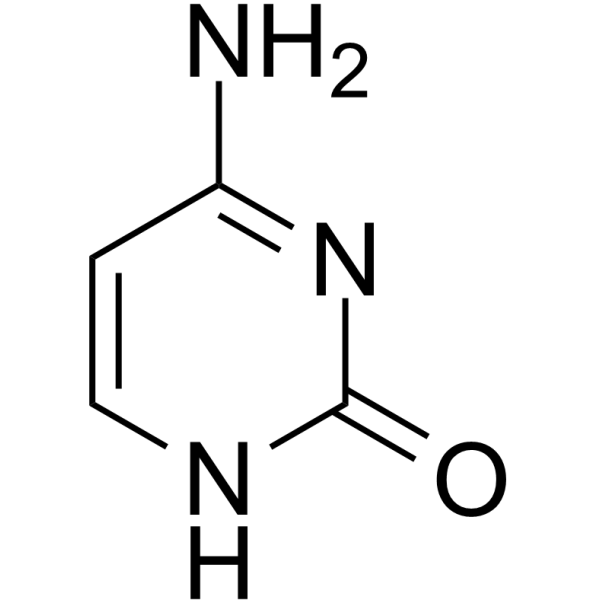
Cytosine is one of the four main bases found in DNA and RNA. Cytosine modifications exhibit circadian oscillations that are involved in epigenetic diversity and aging. Cytosine can be used in cancer research .
loading...
    loading...
Cat. No.: HY-121447
CAS No.: 2363-71-5
Purity:  ≥98.0%
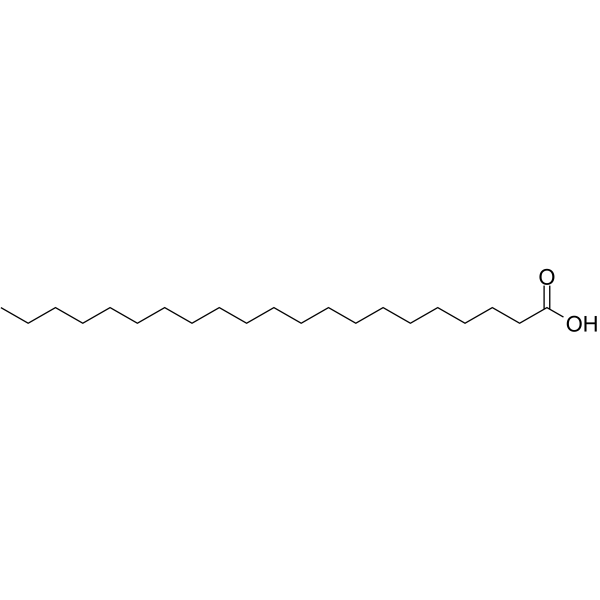
Heneicosanoic acid is an odd-chain saturated fatty acid widely present in human milk, fish, seeds, and cerebrosides in the cell membranes of the nervous system. Heneicosanoic acid can form Langmuir monolayers and is often used as a model to study lipid self-assembly and disassembly processes in biological membranes and drug delivery systems. In the low-temperature L'2 and CS crystalline phases, Heneicosanoic acid undergoes local oscillations, which in turn drive the spontaneous formation and expulsion of micelles and vesicles .
loading...
    loading...
Cat. No.: HY-I0626R
CAS No.: 71-30-7
Cytosine (Standard) is the analytical standard of Cytosine. This product is intended for research and analytical applications. Cytosine is one of the four main bases found in DNA and RNA. Cytosine modifications exhibit circadian oscillations that are involved in epigenetic diversity and aging .
loading...
    loading...
Cat. No.: HY-175668
CAS No.: 2756581-81-2
Target:  

Potassium Channel

Research Areas:  

Neurological Disease

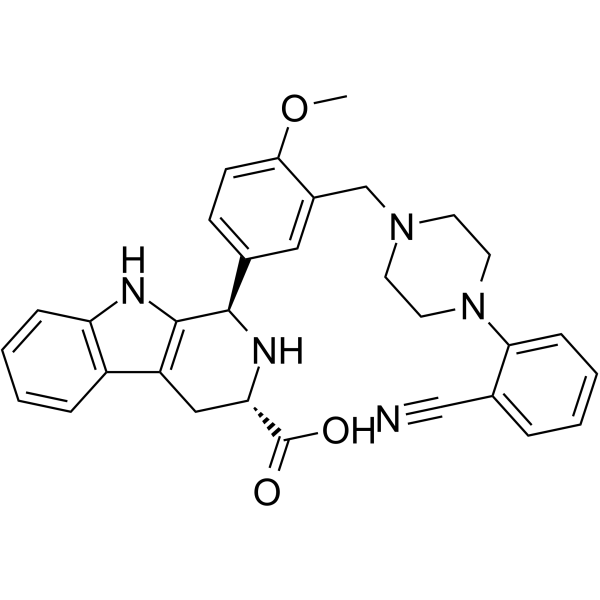
IDOR-1104-0086 is an orally active Kv7 potassium channel opener with an EC50 of 210 nM that can cross blood-brain barrier. IDOR-1104-0086 displays strong selectivity against the hERG channel with an IC20 of 25 μM. IDOR-1104-0086 exhibits efficacy in two rodent models of epilepsy and a favorable tolerability profile. IDOR-1104-0086 can used for the study of epilepsy .
loading...
    loading...
Cat. No.: HY-178963
CAS No.: 7469-49-0
Research Areas:  

Neurological Disease

Nav1.2-IN-2 is a Nav1.2 inhibitor with a human IC50 of 0.18 μM. Nav1.2-IN-2 preferentially binds to the inactivated state of Nav1.2, reduces window current, suppresses neuronal depolarization and action potential generation. Nav1.2-IN-2 suppresses Veratridine (HY-N6691)-induced Ca 2+ influx. Nav1.2-IN-2 can be used for the research of epilepsy .
loading...
    loading...
Cat. No.: HY-N16525
CAS No.: 2292-20-8
Muramine is an alkaloid. Muramine can be isolated from the bulbs of Corydalis decumbens. Muramine inhibits spontaneous Ca 2+ oscillations. Muramine inhibits neuronal excitability with an IC50 value of 13.5  μM .
loading...
    loading...
Cat. No.: HY-I0626S2
CAS No.: 106391-24-6
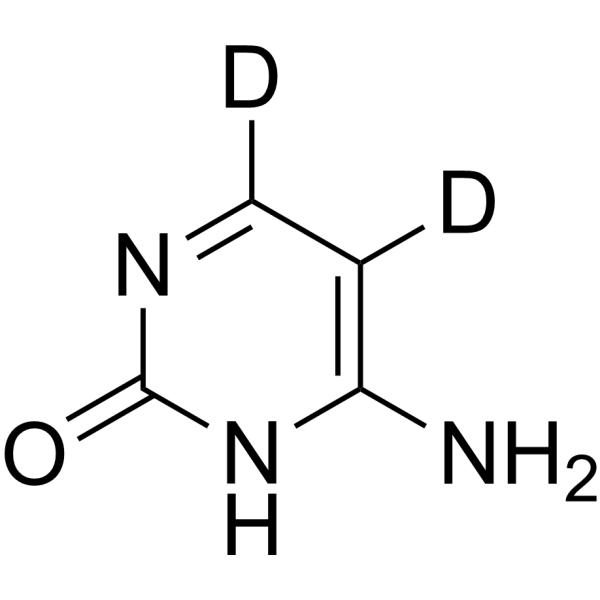
Cytosine-d2 is the deuterium labeled Cytosine . Cytosine is one of the four main bases found in DNA and RNA. Cytosine modifications exhibit circadian oscillations that are involved in epigenetic diversity and aging .
loading...
    loading...
Cat. No.: HY-P1427A
Target:  

Potassium Channel

Research Areas:  

Neurological Disease

Guangxitoxin 1E TFA is the TFA salt form of Guangxitoxin 1E (HY-P1427). Guangxitoxin 1E TFA is a peptide toxin and a selective inhibitor for voltage-gated potassium channel KV2.1 and KV2.2 with IC50 of 1-3 nM. Guangxitoxin 1E TFA enhances glucose-stimulated intracellular calcium ion oscillations and increases insulin secretion in a glucose-dependent manner .
loading...
    loading...
Cat. No.: HY-123434
CAS No.: 181941-32-2
Research Areas:  

Metabolic Disease Endocrinology

PD-149164 is a potent agonist of cholecystokinin B (CCK-B) receptor, with IC50 values of 0.083 nM and 75 nM in binding assay to CCK-B and CCK-A .
loading...
    loading...
Cat. No.: HY-I0626S1
CAS No.: 181517-10-2
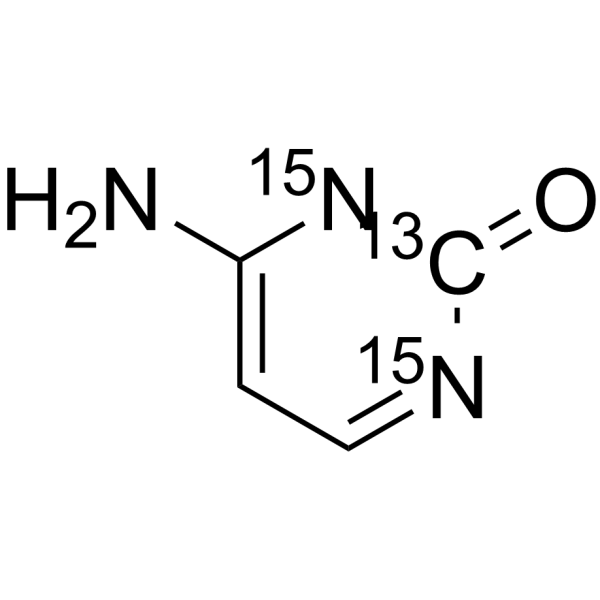
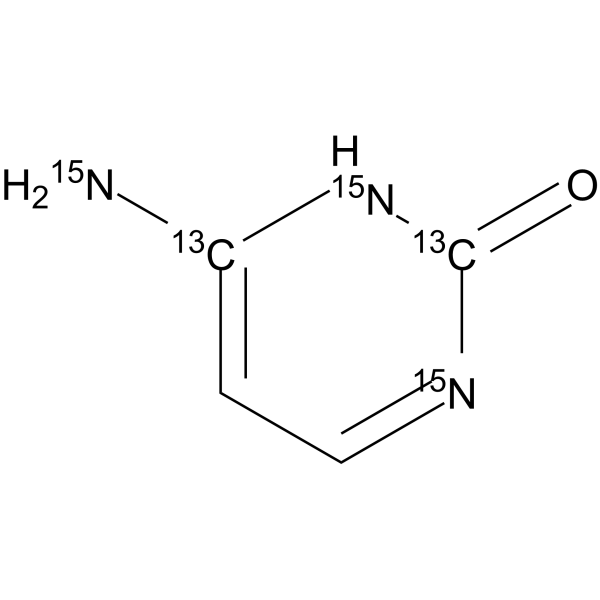
Cytosine- 13C, 15N2 is the 13C and 15N labeled Cytosine . Cytosine is one of the four main bases found in DNA and RNA. Cytosine modifications exhibit circadian oscillations that are involved in epigenetic diversity and aging .
loading...
    loading...
Cat. No.: HY-I0626S
CAS No.: 285978-06-5
Cytosine- 13C2, 15N3 is the 13C-labeled and 15N-labeled Cytosine. Cytosine is one of the four main bases found in DNA and RNA. Cytosine modifications exhibit circadian oscillations that are involved in epigenetic diversity and aging .
loading...
    loading...
Cat. No.: HY-131041
CAS No.: 2250019-90-8
Target:  

Calcium Channel

Research Areas:  

Cardiovascular Disease

Ned-K is a nicotinic acid adenine dinucleotide phosphate (NAADP) antagonist. Ned-K is effective at dampening simulated ischaemia and reperfusion (sIR)-induced Ca 2+ oscillations in cardiomyocytes .
loading...
    loading...
Cat. No.: HY-161567
CAS No.: 2791360-37-5
Research Areas:  

Neurological Disease

OX2R-IN-3 (Compound 53) is an orally active type 2 orexin receptor (OX2R) agonist (EC50<100 nM.) .
loading...
    loading...
Cat. No.: HY-P2135
CAS No.: 130092-56-7
Target:  

Peptides

Research Areas:  

Neurological Disease

Neuropeptide AF1 is a FMRFamide-like neuropeptide. Neuropeptide AF1 can be isolated from head extracts of the nematode Ascaris suum. Neuropeptide AF1 rapidly and reversibly abolishs slow membrane potential oscillations of identified ventral and dorsal inhibitory motoneurons and selectively reduces their input resistances. Neuropeptide AF1 inhibits locomotory movements in intact Ascaris .
loading...
    loading...
Cat. No.: HY-N19749
CAS No.: 6883-44-9
Synonyms: (+)-Decumbensine; (+)-Egenine
Decumbensine ((+)-Egenine) is a phthalideisoquinoline hemiacetal alkaloid present in Corydalis decumbens . Decumbensine significantly inhibits spontaneous calcium oscillations in primary cultured neocortical neurons, reducing oscillation frequency and amplitude . Decumbensine can be used in studies related to central nervous system diseases, epilepsy and pain .
loading...
    loading...
Cat. No.: HY-105415
CAS No.: 142223-92-5
Research Areas:  

Neurological Disease

U 92032 is a T-type Ca 2+ channel antagonist. U 92032 inhibits Na + channels. U-92032 inhibits thalamic oscillations. U 92032 can be used in the research of neurological diseases .
loading...
    loading...
Cat. No.: HY-153164
CAS No.: 879054-55-4
Research Areas:  

Neurological Disease

VU0606170 is a selective Slack channel inhibitor with low micromolar potency. VU0606170 can reduce the frequency of neuronal Calcium oscillations in a concentration dependent manner. VU0606170 can be used for research on diseases such as epilepsy .
loading...
    loading...
  • 1

