Search Result
Results for "
paracetamol
" in MedChemExpress (MCE) Product Catalog:
8
Isotope-Labeled Compounds
| Cat. No. |
Product Name |
Target |
Research Areas |
Chemical Structure |
-
- HY-66005
-
-
-
- HY-66005S
-
|
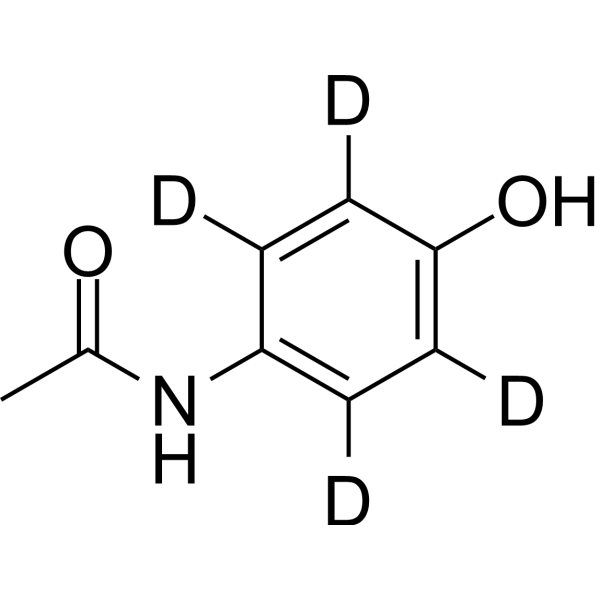
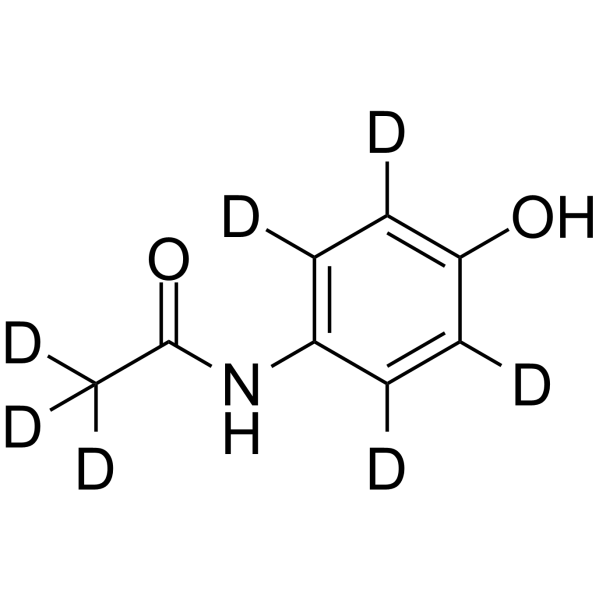
paracetamol-d4; 4-Acetamidophenol-d4; 4'-Hydroxyacetanilide-d4
|
COX
Histone Acetyltransferase
Endogenous Metabolite
|
Inflammation/Immunology
|
|
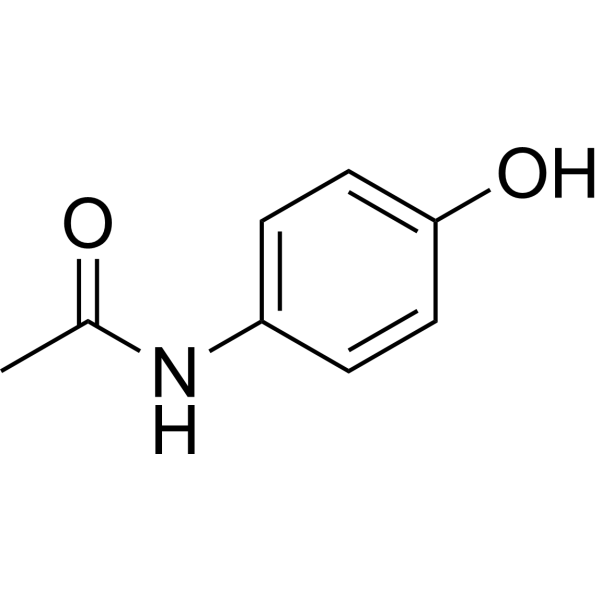
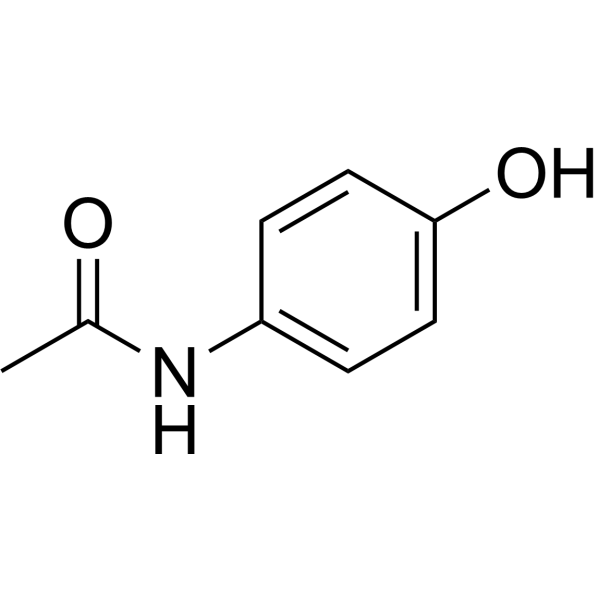
Acetaminophen-d4 is the deuterium labeled Acetaminophen. Acetaminophen (Paracetamol) is a selective cyclooxygenase-2 (COX-2) inhibitor with an IC50 of 25.8 μM; is a widely used antipyretic and analgesic agent . Acetaminophen is a potent hepatic N-acetyltransferase 2 (NAT2) inhibitor .
|
-
-
- HY-66005R
-
|
paracetamol (Standard); 4-Acetamidophenol (Standard); 4'-Hydroxyacetanilide (Standard)
|
Reference Standards
COX
Histone Acetyltransferase
Endogenous Metabolite
Bacterial
Parasite
|
Inflammation/Immunology
Cancer
|
|
Acetaminophen (Standard) is the analytical standard of Acetaminophen. This product is intended for research and analytical applications. Acetaminophen (Paracetamol) is a selective cyclooxygenase-2 (COX-2) inhibitor with an IC50 of 25.8 μM; is a widely used antipyretic and analgesic agent . Acetaminophen is a potent hepatic N-acetyltransferase 2 (NAT2) inhibitor .
|
-
-
- HY-W015600
-
|
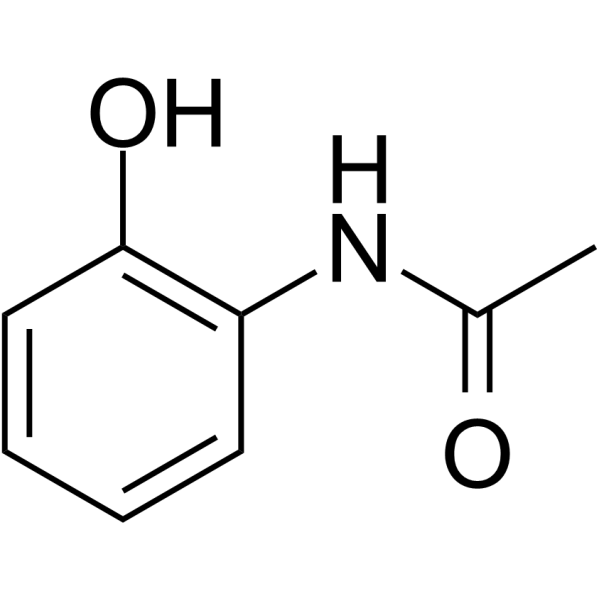
Orthocetamol
|
Ferroptosis
Glutathione Peroxidase
Reactive Oxygen Species (ROS)
LDLR
|
Cardiovascular Disease
Inflammation/Immunology
|
|
2-Acetamidophenol (Orthocetamol) is a regulator that targets ferroptosis and glutathione metabolic pathways, is the ortho-regioisomer of Paracetamol (HY-66005). 2-Acetamidophenol has anti-atherosclerotic activity, and inhibiting total cholesterol (TC) and triglyceride (TG) in a zebrafish hyperlipidemia model with IC50s for 30 μM and 40 μM, respectively. 2-Acetamidophenol upregulates the expression of glutathione synthesis-related genes (such as GCLC, GCLM, GSS) and iron ion transport genes (such as FPN1, FTH), reduces the accumulation of intracellular reactive oxygen species (ROS) and ferrous ions (Fe 2+), and enhances the activity of glutathione peroxidase GPX4, thereby inhibiting macrophage phagocytosis of oxidized low-density lipoprotein (ox-LDL) and foam cell formation .
|
-
-
- HY-108292
-
|
|
NF-κB
|
Neurological Disease
Cancer
|
|
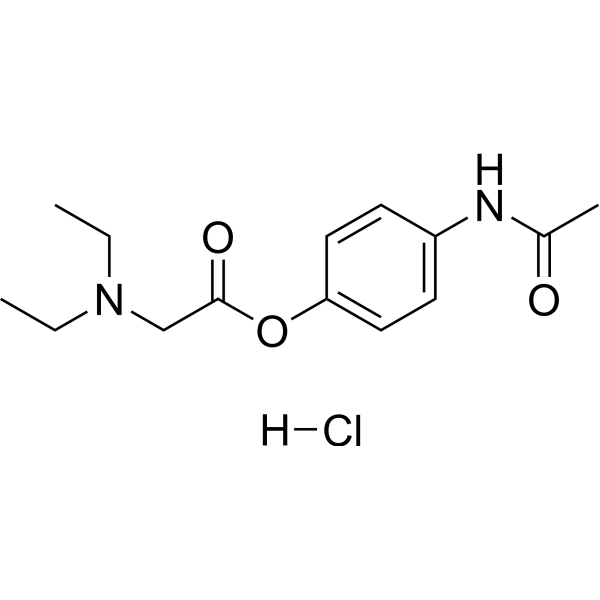
Propacetamol hydrochloride is an orally active prodrug of paracetamol and an inducer of acute liver injury models, with multiple properties including antinociception, antioxidation and gastroprotection. Propacetamol hydrochloride potentiates Tramadol and attenuates Aspirin (HY-14654)-induced gastric mucosal damage and lipid peroxidation. Under specific conditions, Propacetamol hydrochloride also acts as a hepatotoxic inducer, triggering acute liver injury, oxidative stress and apoptosis, with strain differences in toxicity sensitivity. Propacetamol hydrochloride can be used in the research of acute liver injury, drug-induced hepatotoxicity and gastric mucosal damage .
|
-
-
- HY-139093A
-
|
APAP-Cys TFA
|
Drug Derivative
|
Others
|
|
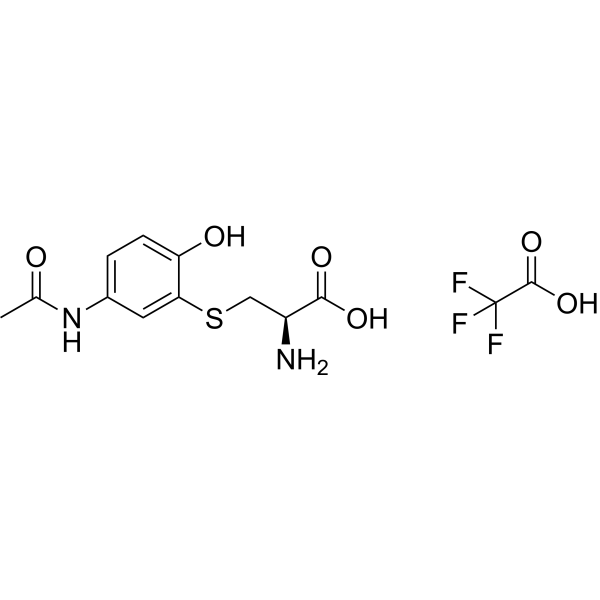
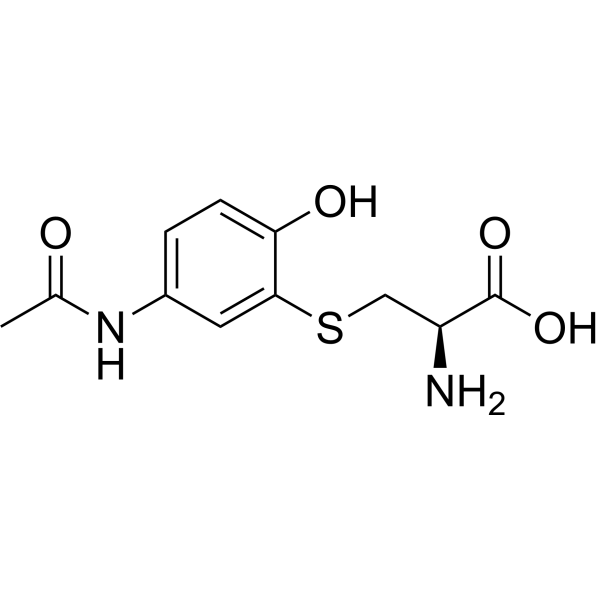
Paracetamol-cysteine (TFA) is an acetaminophen-protein adduct formed during the metabolism of acetaminophen (HY-66005) .
|
-
-
- HY-66005S1
-
|
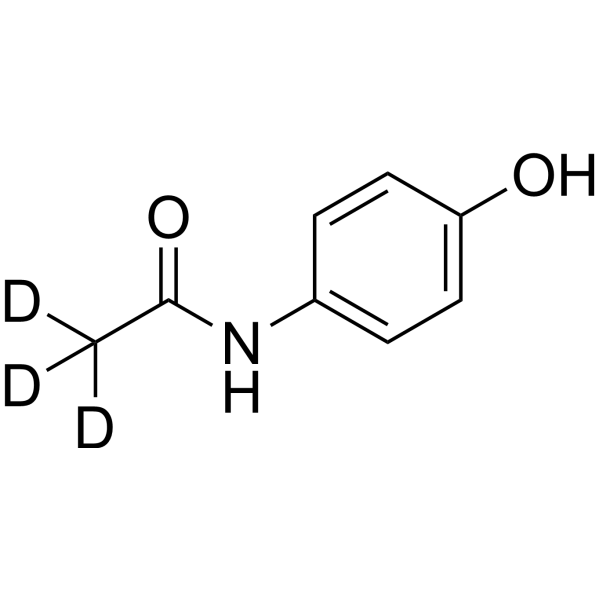
paracetamol-d3; 4-Acetamidophenol-d3; 4'-Hydroxyacetanilide-d3
|
COX
Histone Acetyltransferase
Endogenous Metabolite
|
Inflammation/Immunology
Cancer
|
|
Acetaminophen-d3 is the deuterium labeled Acetaminophen. Acetaminophen (Paracetamol) is a selective cyclooxygenase-2 (COX-2) inhibitor with an IC50 of 25.8 μM; is a widely used antipyretic and analgesic agent . Acetaminophen is a potent hepatic N-acetyltransferase 2 (NAT2) inhibitor .
|
-
-
- HY-107795
-
|
Salipran
|
Prostaglandin Receptor
|
Inflammation/Immunology
Endocrinology
|
|
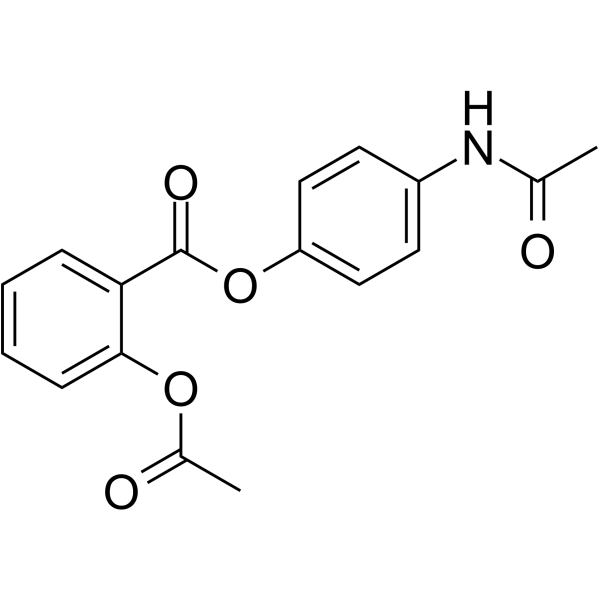
Benorylate (Salipran) is the esterification product of paracetamol and acetylsalicylic acid. Benorylate has anti-inflammatory, analgesic and antipyretic properties. Benorylate could also inhibit prostaglandin (PG) synthesis .
|
-
-
- HY-145453
-
|
|
Interleukin Related
|
Inflammation/Immunology
|
|
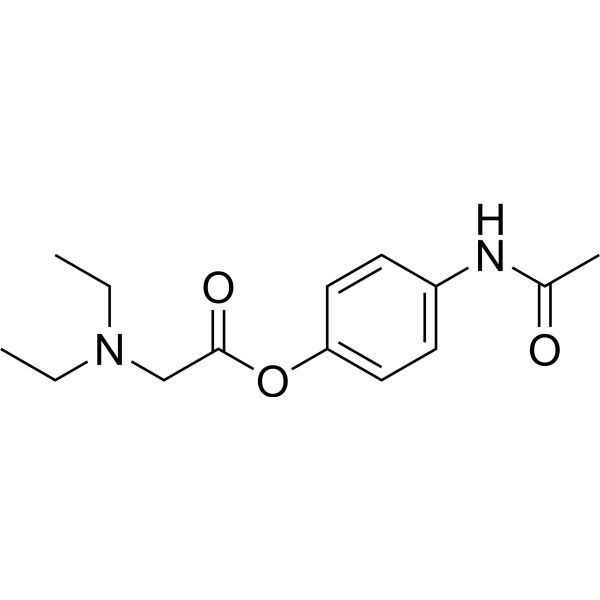
Propacetamol is an orally active prodrug of Acetaminophen (HY-66005), which exerts antipyretic and analgesic effects after metabolism. Propacetamol reduces Aspirin (ASA) (HY-14654)-induced elevation of malondialdehyde (MDA) in gastric mucosa and plasma, regulates the levels of gastric mucosal glutathione (GSH and GSSG) to maintain cellular antioxidant defense, and increases gastric mucosal uric acid (UA) levels. Propacetamol exerts a dose-dependent protective effect against ASA-induced gastric mucosal damage in rats. Propacetamol can be used for the study of gastric mucosal injury by interfering with oxidative stress .
|
-
-
- HY-66005S2
-
|
paracetamol-d7; 4-Acetamidophenol-d7; 4'-Hydroxyacetanilide-d7
|
COX
Endogenous Metabolite
Histone Acetyltransferase
|
Inflammation/Immunology
|
|
Acetaminophen-d7 is the deuterium labeled Acetaminophen. Acetaminophen (Paracetamol) is a selective cyclooxygenase-2 (COX-2) inhibitor with an IC50 of 25.8 μM; is a widely used antipyretic and analgesic agent. Acetaminophen is a potent hepatic N-acetyltransferase 2 (NAT2) inhibitor.
|
-
-
- HY-W015600R
-
|
Orthocetamol (Standard)
|
Reference Standards
Ferroptosis
Glutathione Peroxidase
Reactive Oxygen Species (ROS)
LDLR
|
Cardiovascular Disease
Inflammation/Immunology
|
|
2-Acetamidophenol (Standard) is the analytical standard of 2-Acetamidophenol. This product is intended for research and analytical applications. 2-Acetamidophenol (Orthocetamol) is a regulator that targets ferroptosis and glutathione metabolic pathways, is the ortho-regioisomer of Paracetamol (HY-66005). 2-Acetamidophenol has anti-atherosclerotic activity, and inhibiting total cholesterol (TC) and triglyceride (TG) in a zebrafish hyperlipidemia model with IC50s for 30 μM and 40 μM, respectively. 2-Acetamidophenol upregulates the expression of glutathione synthesis-related genes (such as GCLC, GCLM, GSS) and iron ion transport genes (such as FPN1, FTH), reduces the accumulation of intracellular reactive oxygen species (ROS) and ferrous ions (Fe 2+), and enhances the activity of glutathione peroxidase GPX4, thereby inhibiting macrophage phagocytosis of oxidized low-density lipoprotein (ox-LDL) and foam cell formation .
|
-
-
- HY-139093
-
|
APAP-Cys
|
Drug Derivative
|
Others
|
|
Paracetamol-cysteine is a Paracetamol (HY-66005)-cysteine Paracetamol protein (HY-139093A) adduct (PPA), which is formed when Paracetamol is oxidized to the reactive metabolite N-acetyl-p-benzoquinoneimine (NAPQI) .
|
-
-
- HY-66005S4
-
|
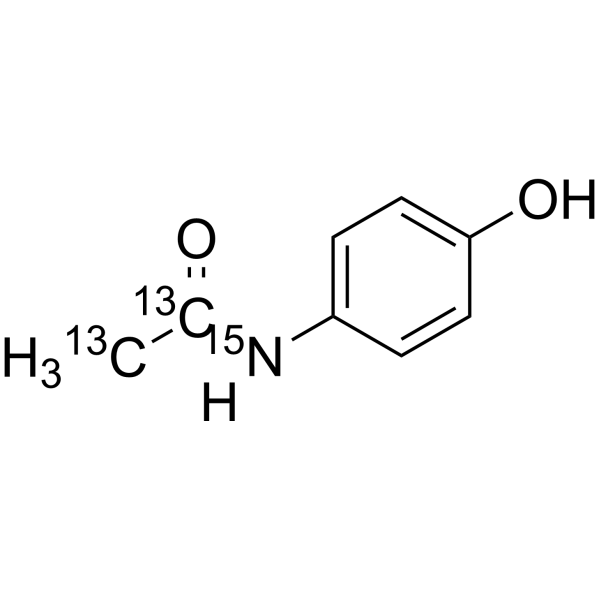
paracetamol-13C2,15N; 4-Acetamidophenol-13C2,15N; 4'-Hydroxyacetanilide-13C2,15N
|
COX
Bacterial
Histone Acetyltransferase
Parasite
Endogenous Metabolite
|
Inflammation/Immunology
|
|
Acetaminophen- 13C2, 15N is the 13C and 15N labeled Acetaminophen . Acetaminophen (Paracetamol) is a selective cyclooxygenase-2 (COX-2) inhibitor with an IC50 of 25.8 μM;is a widely used antipyretic and analgesic agent . Acetaminophen is a potent hepatic N-acetyltransferase 2 (NAT2) inhibitor .
|
-
-
- HY-107795R
-
|
Salipran (Standard)
|
Reference Standards
Prostaglandin Receptor
|
Inflammation/Immunology
Endocrinology
|
|
Benorilate (Standard) is the analytical standard of Benorilate. This product is intended for research and analytical applications. Benorylate (Salipran) is the esterification product of paracetamol and acetylsalicylic acid. Benorylate has anti-inflammatory, analgesic and antipyretic properties. Benorylate could also inhibit prostaglandin (PG) synthesis .
|
-
-
- HY-W015600S
-
|
Orthocetamol-d3
|
Isotope-Labeled Compounds
Ferroptosis
Glutathione Peroxidase
Reactive Oxygen Species (ROS)
LDLR
|
Cardiovascular Disease
Inflammation/Immunology
|
|
2-Acetamidophenol-d3 (Orthocetamol-d3) is the deuterium labeled 2-Acetamidophenol (HY-W015600). 2-Acetamidophenol (Orthocetamol) is a regulator that targets ferroptosis and glutathione metabolic pathways, is the ortho-regioisomer of Paracetamol (HY-66005). 2-Acetamidophenol has anti-atherosclerotic activity, and inhibiting total cholesterol (TC) and triglyceride (TG) in a zebrafish hyperlipidemia model with IC50s for 30 μM and 40 μM, respectively. 2-Acetamidophenol upregulates the expression of glutathione synthesis-related genes (such as GCLC, GCLM, GSS) and iron ion transport genes (such as FPN1, FTH), reduces the accumulation of intracellular reactive oxygen species (ROS) and ferrous ions (Fe2+), and enhances the activity of glutathione peroxidase GPX4, thereby inhibiting macrophage phagocytosis of oxidized low-density lipoprotein (ox-LDL) and foam cell formation .
|
-
-
- HY-W042159
-
-
-
- HY-W016034
-
|
p-Acetamidophenyl β-D-glucuronide sodium salt; p-AAPG sodium salt
|
Drug Metabolite
|
Infection
|
|
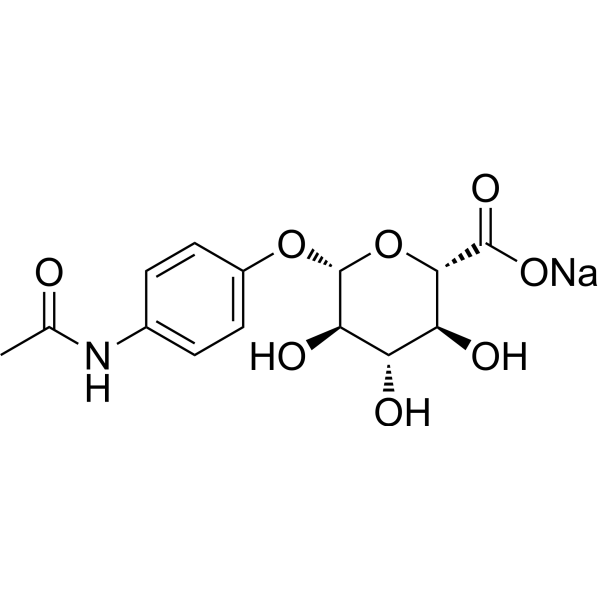
Acetaminophen glucuronide is a safe and effective
antipyretic analgesic. Acetaminophen glucuronide is potentially toxic to liver
and kidney .
|
-
-
- HY-66005S3
-
-
-
- HY-135325
-
|
|
Drug Metabolite
|
Inflammation/Immunology
|
|
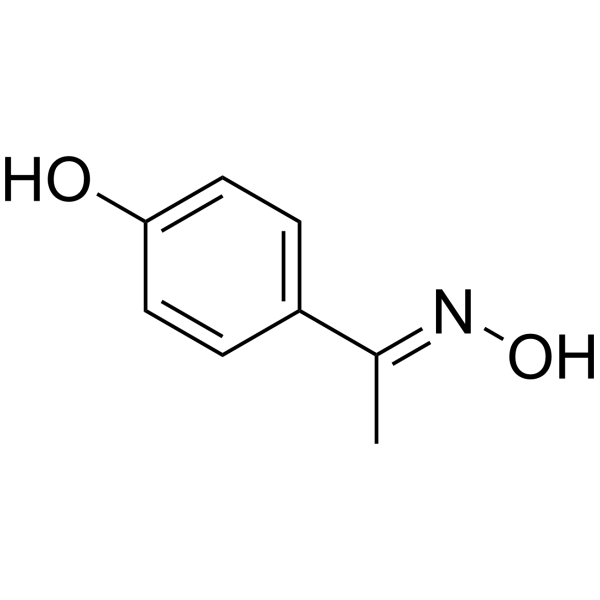
4-Hydroxyacetophenone oxime is an impurity of Acetaminophen (Paracetamol). Acetaminophen is a potent cyclooxygenase-2 (COX-2) and hepatic N-acetyltransferase 2 (NAT2) inhibitor, and used antipyretic and analgesic agent .
|
-
-
- HY-W739619
-
|
|
Isotope-Labeled Compounds
Drug Derivative
|
Others
|
|
Paracetamol-cysteine-d5 TFA is the deuterium labeled Paracetamol-cysteine TFA (HY-139093A). Paracetamol-cysteine TFA is an acetaminophen-protein adduct formed during the metabolism of acetaminophen (HY-66005) .
|
-
-
- HY-66005S5
-
-
-
- HY-145453R
-
|
|
Reference Standards
Interleukin Related
|
Inflammation/Immunology
|
|
Propacetamol (Standard) is the analytical standard of Propacetamol (HY-145453). This product is intended for research and analytical applications. Propacetamol is an orally active prodrug of Acetaminophen (HY-66005), which exerts antipyretic and analgesic effects after metabolism. Propacetamol reduces Aspirin (ASA) (HY-14654)-induced elevation of malondialdehyde (MDA) in gastric mucosa and plasma, regulates the levels of gastric mucosal glutathione (GSH and GSSG) to maintain cellular antioxidant defense, and increases gastric mucosal uric acid (UA) levels. Propacetamol exerts a dose-dependent protective effect against ASA-induced gastric mucosal damage in rats. Propacetamol can be used for the study of gastric mucosal injury by interfering with oxidative stress .
|
-
-
- HY-108292R
-
|
|
Reference Standards
PAI-1
Thrombin
|
Cancer
|
|
Propacetamol (hydrochloride) (Standard) is the analytical standard of Propacetamol (hydrochloride). This product is intended for research and analytical applications. Propacetamol hydrochloride is a potent, peptidic inhibitor targeting thrombin and granzyme GZMK. Propacetamol hydrochloride specifically blocks the activities of thrombin and GZMK, thereby inhibiting thrombin-mediated PAR-1 cleavage, as well as downstream inflammatory and procoagulant signaling pathways. Through stabilizing IκB proteins, blocking NF-κB activation and reducing systemic levels of proinflammatory/procoagulant biomarkers, Propacetamol hydrochloride exerts multiple effects including anti-inflammatory, antithrombotic, barrier repair, and inhibition of atherosclerotic plaque progression. Propacetamol hydrochloride binds to platelets without interference from kininogen, effectively limiting acute thrombus growth and reducing eosinophil infiltration and goblet cell hyperplasia in asthma models. Propacetamol hydrochloride is an important tool molecule for investigating the mechanisms of atherosclerosis, asthma and related thromboinflammatory diseases .
|
-
-
- HY-W016034R
-
|
p-Acetamidophenyl β-D-glucuronide sodium salt (Standard); p-AAPG sodium salt (Standard)
|
Drug Metabolite
Reference Standards
|
Infection
|
|
Acetaminophen glucuronide (sodium salt) (Standard) is the analytical standard of Acetaminophen glucuronide (sodium salt). This product is intended for research and analytical applications. Acetaminophen glucuronide is a safe and effective
antipyretic analgesic. Acetaminophen glucuronide is potentially toxic to liver
and kidney .
|
-
-
- HY-W010070
-
|
p-Chloroacetanilide
|
Drug Intermediate
|
Others
|
|
Paracetamol impurity 3 (p-Chloroacetanilide) is an impurity of Paracetamol.
|
-
-
- HY-W017785
-
|
Diisopropylidene acetone
|
Glutathione S-transferase
|
Metabolic Disease
Cancer
|
|
Phorone (Diisopropylidene acetone) is a glutathione (GSH) depletor. Phorone specifically and reversibly depletes free GSH through enzymatic binding (Glutathione S-transferase) (Km = 0.9 mM). Phorone reversibly reduces the binding and nuclear uptake of glucocorticoid receptors in rat liver, and this effect is related to the temporal changes in GSH levels. Phorone can be used for studying liver toxicity.
|
-
-
- HY-105885
-
|
SUR 2647
|
Drug Derivative
|
Inflammation/Immunology
|
|
Sumacetamol (SUR 2647) is the N-acetyl-DL-methionine ester of Paracetamol (HY-66005). Sumacetamol is orally active. Sumacetamol enhances the hepatic GSH synthesizing capacity in Bom:NMRI mice after experimental overdosage and offers protection of hepatic cell integrity, when combined with Paracetamol .
|
-
-
- HY-135323R
-
|
|
Reference Standards
|
|
|
Paracetamol EP Impurity N (Standard) is the analytical standard of Paracetamol EP Impurity N. This product is intended for research and analytical applications.
|
-
-
- HY-Z6448R
-
-
-
- HY-119348
-
|
NCX-701
|
Interleukin Related
TNF Receptor
COX
NO Synthase
|
Neurological Disease
Inflammation/Immunology
|
|
Nitroparacetamol (NCX-701) is a nitric oxide (NO) donor-non-steroidal anti-inflammatory agent (NO-NSAID). Nitroparacetamol is formed by the ester linkage of Acetaminophen (HY-66005) and Nitrooxybutyroyl, aiming to combine the analgesic advantage of Acetaminophen with the organ-protective effect of nitric oxide, while expanding its anti-inflammatory activity. The analgesic spectrum of Nitroparacetamol is broader, and it is effective for painful pathological pain, and significantly reduces hepatotoxicity. Nitroparacetamol can reduce the expressions of IL-1β, TNF-α, COX-2, and iNOS.
|
-
-
- HY-N19083
-
|
|
Bacterial
|
Inflammation/Immunology
|
|
Tecomella undulata Extract, also known as Rohida extract, is a valuable botanical extract derived from the bark and leaves of the Tecomella undulata plant native to the Indian Thar Desert and is rich in bioactive compounds such as flavonoids, quinones, triterpenoids, and other phytochemicals that contribute to its diverse therapeutic properties. This extract is widely recognized for its hepatoprotective effects demonstrated through its ability to protect against liver damage induced by toxins such as paracetamol and carbon tetrachloride by normalizing elevated liver enzyme levels reducing oxidative stress and improving liver function. Additionally, it exhibits significant anti-inflammatory activity comparable to standard drugs like indomethacin and has been used to treat conditions like ascites and hepatosplenomegaly while also showing immunomodulatory effects by enhancing both humoral and cell-mediated immune responses and possessing antimicrobial properties that make it effective against various pathogens. Recent research suggests that Tecomella undulata may have potential in managing nonalcoholic steatohepatitis (NASH) by reducing body weight insulin resistance and improving liver function markers making it a versatile natural remedy with significant applications in hepatoprotection anti-inflammation and immune support.
|
-
| Cat. No. |
Product Name |
Target |
Research Area |
-
- HY-139093
-
|
APAP-Cys
|
Drug Derivative
|
Others
|
|
Paracetamol-cysteine is a Paracetamol (HY-66005)-cysteine Paracetamol protein (HY-139093A) adduct (PPA), which is formed when Paracetamol is oxidized to the reactive metabolite N-acetyl-p-benzoquinoneimine (NAPQI) .
|
| Cat. No. |
Product Name |
Category |
Target |
Chemical Structure |
-
- HY-66005
-
-
-
- HY-W017785
-
-
-
- HY-N19083
-
|
|
Structural Classification
Extract
|
Bacterial
|
|
Tecomella undulata Extract, also known as Rohida extract, is a valuable botanical extract derived from the bark and leaves of the Tecomella undulata plant native to the Indian Thar Desert and is rich in bioactive compounds such as flavonoids, quinones, triterpenoids, and other phytochemicals that contribute to its diverse therapeutic properties. This extract is widely recognized for its hepatoprotective effects demonstrated through its ability to protect against liver damage induced by toxins such as paracetamol and carbon tetrachloride by normalizing elevated liver enzyme levels reducing oxidative stress and improving liver function. Additionally, it exhibits significant anti-inflammatory activity comparable to standard drugs like indomethacin and has been used to treat conditions like ascites and hepatosplenomegaly while also showing immunomodulatory effects by enhancing both humoral and cell-mediated immune responses and possessing antimicrobial properties that make it effective against various pathogens. Recent research suggests that Tecomella undulata may have potential in managing nonalcoholic steatohepatitis (NASH) by reducing body weight insulin resistance and improving liver function markers making it a versatile natural remedy with significant applications in hepatoprotection anti-inflammation and immune support.
|
-
| Cat. No. |
Product Name |
Chemical Structure |
-
- HY-66005S
-
|
|
|
Acetaminophen-d4 is the deuterium labeled Acetaminophen. Acetaminophen (Paracetamol) is a selective cyclooxygenase-2 (COX-2) inhibitor with an IC50 of 25.8 μM; is a widely used antipyretic and analgesic agent . Acetaminophen is a potent hepatic N-acetyltransferase 2 (NAT2) inhibitor .
|
-
-
- HY-66005S1
-
|
|
|
Acetaminophen-d3 is the deuterium labeled Acetaminophen. Acetaminophen (Paracetamol) is a selective cyclooxygenase-2 (COX-2) inhibitor with an IC50 of 25.8 μM; is a widely used antipyretic and analgesic agent . Acetaminophen is a potent hepatic N-acetyltransferase 2 (NAT2) inhibitor .
|
-
-
- HY-66005S2
-
|
|
|
Acetaminophen-d7 is the deuterium labeled Acetaminophen. Acetaminophen (Paracetamol) is a selective cyclooxygenase-2 (COX-2) inhibitor with an IC50 of 25.8 μM; is a widely used antipyretic and analgesic agent. Acetaminophen is a potent hepatic N-acetyltransferase 2 (NAT2) inhibitor.
|
-
-
- HY-66005S4
-
|
|
|
Acetaminophen- 13C2, 15N is the 13C and 15N labeled Acetaminophen . Acetaminophen (Paracetamol) is a selective cyclooxygenase-2 (COX-2) inhibitor with an IC50 of 25.8 μM;is a widely used antipyretic and analgesic agent . Acetaminophen is a potent hepatic N-acetyltransferase 2 (NAT2) inhibitor .
|
-
-
- HY-W015600S
-
|
|
|
2-Acetamidophenol-d3 (Orthocetamol-d3) is the deuterium labeled 2-Acetamidophenol (HY-W015600). 2-Acetamidophenol (Orthocetamol) is a regulator that targets ferroptosis and glutathione metabolic pathways, is the ortho-regioisomer of Paracetamol (HY-66005). 2-Acetamidophenol has anti-atherosclerotic activity, and inhibiting total cholesterol (TC) and triglyceride (TG) in a zebrafish hyperlipidemia model with IC50s for 30 μM and 40 μM, respectively. 2-Acetamidophenol upregulates the expression of glutathione synthesis-related genes (such as GCLC, GCLM, GSS) and iron ion transport genes (such as FPN1, FTH), reduces the accumulation of intracellular reactive oxygen species (ROS) and ferrous ions (Fe2+), and enhances the activity of glutathione peroxidase GPX4, thereby inhibiting macrophage phagocytosis of oxidized low-density lipoprotein (ox-LDL) and foam cell formation .
|
-
-
- HY-66005S3
-
|
|
|
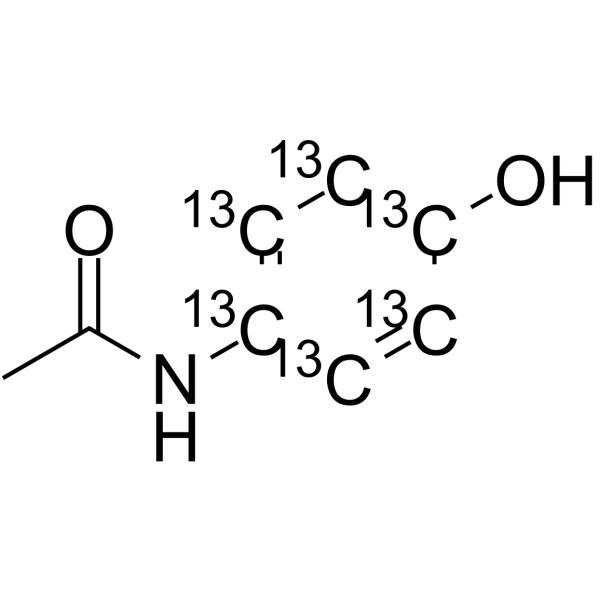
Acetaminophen-13C6 (Paracetamol-13C6) is the 13C-labeled Acetaminophen. Acetaminophen (Paracetamol) is a selective cyclooxygenase-2 (COX-2) inhibitor with an IC50 of 25.8 μM; is a widely used antipyretic and analgesic agent . Acetaminophen is a potent hepatic N-acetyltransferase 2 (NAT2) inhibitor .
|
-
-
- HY-W739619
-
|
|
|
Paracetamol-cysteine-d5 TFA is the deuterium labeled Paracetamol-cysteine TFA (HY-139093A). Paracetamol-cysteine TFA is an acetaminophen-protein adduct formed during the metabolism of acetaminophen (HY-66005) .
|
-
-
- HY-66005S5
-
|
|
|
Acetaminophen-d5 is deuterated-labeled Acetaminophen (HY-66005). Acetaminophen (Paracetamol) is a selective cyclooxygenase-2 (COX-2) inhibitor with an IC50 of 25.8 μM; is a widely used antipyretic and analgesic agent . Acetaminophen is a potent hepatic N-acetyltransferase 2 (NAT2) inhibitor .
|
-
Your information is safe with us. * Required Fields.
Inquiry Information
- Product Name:
- Cat. No.:
- Quantity:
- MCE Japan Authorized Agent:

