



Paracetamol-cysteine
Based on 2 publication(s) in Google Scholar
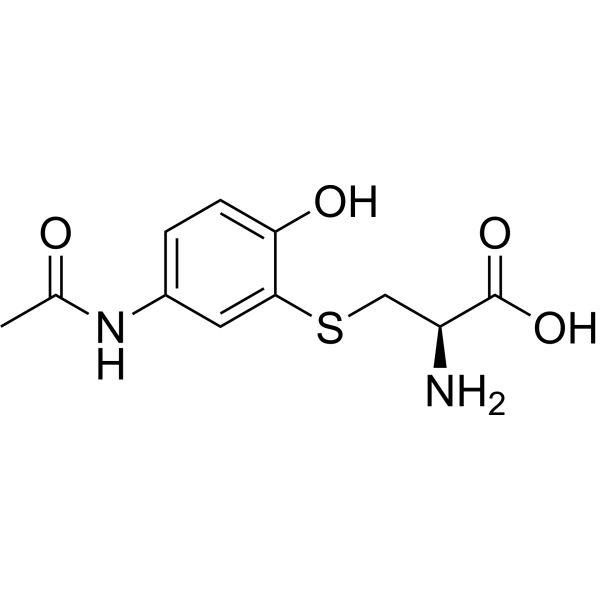
Paracetamol-cysteine (APAP-Cys) is a cysteine adduct of Acetaminophen (HY-66005). It forms when Acetaminophen is oxidized to the reactive metabolite N-acetyl-p-benzoquinone imine (NAPQI).
For research use only. We do not sell to patients.
- CAS No.: 53446-10-9
- Formula: C11H14N2O4S
- Molecular Weight:270.30
-
Storage:
Please store the product under the recommended conditions in the Certificate of Analysis.

To place orders, for customer services and technical support, please contact: MedChemExpress USA
Tel: 609-228-6898 E-mail: [email protected] [email protected]


-
 Biological Activity
-
Chemical Information
- Purity & Documentation
- References
-
 Help & FAQs


Publications Citing Use of MedChemExpress (MCE) Paracetamol-cysteine
More

Biological Activity
Description
In Vitro
Paracetamol-cysteine is an exogenous-endogenous conjugate metabolite formed after drug exposure.
MedChemExpress (MCE) has not independently confirmed the accuracy of these methods. They are for reference only. .


Chemical Information
-
CAS No. 53446-10-9
-
Molecular Weight 270.30
-
Formula C11H14N2O4S
-
Synonyms
APAP-Cys
-
Shipping
Room temperature in continental US; may vary elsewhere.
-
Storage
Please store the product under the recommended conditions in the Certificate of Analysis.


Publications (2)
-
Journal Impact Factor
-
Most Recent
-
Bioorg Chem
4-Methyl-5-Acetylthiazole (Q11), a novel CYP2E1 inhibitor, has a protective effect on the hepatotoxicity induced by acetaminophen. [Abstract]2026 Mar:170:109492. PMID: 41547040 -
Drug Metab Dispos
Synergistic hepatotoxicity of azithromycin and acetaminophen involves liver X receptor α-mediated metabolic dysregulation and endoplasmic reticulum stress. [Abstract]2026 May 13. PMID: 42263432


Purity & Documentation
References

Calculators
Concentration (start) × Volume (start) = Concentration (final) × Volume (final)


Paracetamol-cysteine Related Classifications
HY-139093 Related Classifications
 Powered by Bioz
Keywords
- Paracetamol-cysteine
- 53446-10-9
- APAP-Cys
- Drug Derivative
- paracetamol-induced hepatotoxicity
- alanine aminotransferase
- acetaminophen overdose
- healthy human volunteers
- acute liver failure
- acetaminophen exposure
- hepatic protein cysteine residues
- acetaminophen toxicity
- NAPQI
- acetaminophen metabolism
- Inhibitor
- inhibitor
- inhibit