
1. Search Result
Search Result
Results for "

periphery

" in MedChemExpress (MCE) Product Catalog:

17

Inhibitors & Agonists

2

Fluorescent Dye

1

Peptides

1

Inhibitory Antibodies

2

Natural
Products

2

Isotope-Labeled Compounds

1

Click Chemistry

Cat. No. Product Name Target Research Areas Chemical Structure
  • HY-N0313

    MAGL Endogenous Metabolite Inflammation/Immunology
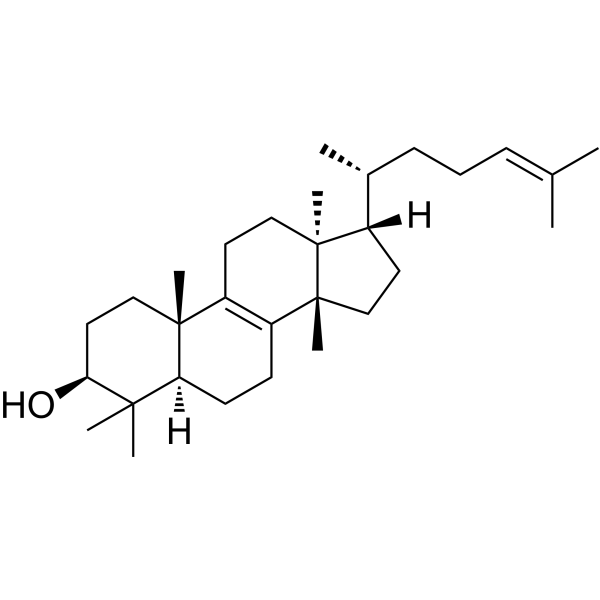
    Euphol is a tetracyclic triterpene alcohol isolated from the sap of Euphorbia tirucalli with anti-mutagenic, anti-inflammatory and immunomodulatory effects, orally active. Euphol inhibits the monoacylglycerol lipase (MGL) activity via a reversible mechanism (IC50=315 nM). MGL inhibition in the periphery modulates the endocannabinoid system to block the development of inflammatory pain .
    Euphol
  • HY-48999A
    FSK hydrochloride
    1 Publications Verification

    EGFR Cancer
    FSK hydrochloride is fluorosulfonyloxybenzoyl-L-lysine, which features a long, flexible aryl fluorosulfate-containing side chain that can reach protein sites inaccessible to covalent conjugation. FSK hydrochloride modifies nanomolecules to target epidermal growth factor receptor (EGFR), resulting in irreversibly bound covalent interactions. Through genetically encoded chemical crosslinking, FSK hydrochloride captures unknown enzyme-substrate interactions in living cells, targets residues other than Cys, and mediates crosslinking at the binding periphery. FSK hydrochloride enables the construction of a bioreactive SuFEx system for generating covalent bonds in various proteins both in vitro and in vivo .
    FSK hydrochloride
  • HY-P1248

    NPFF

    Neuropeptide FF Receptor Cardiovascular Disease Neurological Disease
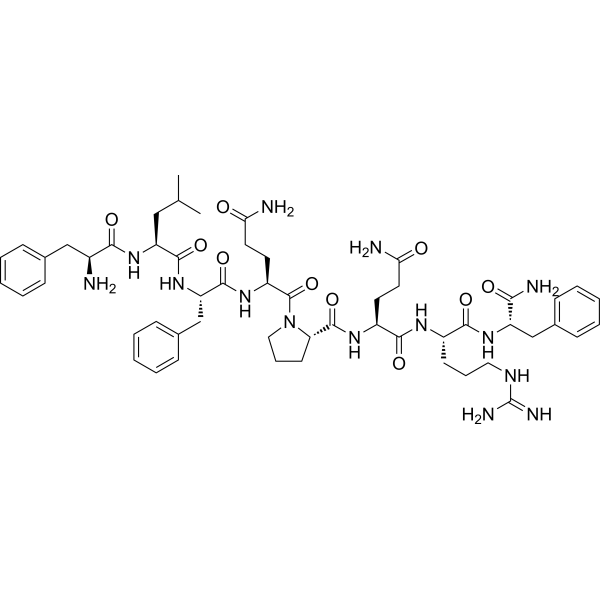
    Neuropeptide FF (NPFF), an octapeptide belonging to the RF-amide family of peptides, is a NPFF1 and NPFF2 receptors agonist with Ki values of 2.82 nM and 0.21 nM, respectively. Neuropeptide FF induces abstinence syndrome, exerts antiopioid and analgesic effects, releases via calcium-dependent mechanisms from rat spinal cord, regulates memory, autonomic function, and neuroendocrine function, modulates pain and opioid antinociception, reduces food intake, stimulates water intake, alters cardiovascular parameters, and shows differential activity in hypothalamic paraventricular nucleus neurons. Neuropeptide FF is present in mammalian central nervous system and periphery, with NPFF-immunoreactivity increases in rat cerebrospinal fluid during opiate tolerance, and its NPFF gene and NPFF-R2 gene are up-regulated in rat spinal cord and dorsal root ganglia during peripheral inflammation. Neuropeptide FF can be used for the research of opioid tolerance, morphine-induced analgesia, abstinence syndrome, pain, hypertension, nociception, inflammatory pain, and neuropathic pain .
    Neuropeptide FF
  • HY-116578
    Metopimazine
    3 Publications Verification

    EXP999; RP9965

    Dopamine Receptor Neurological Disease
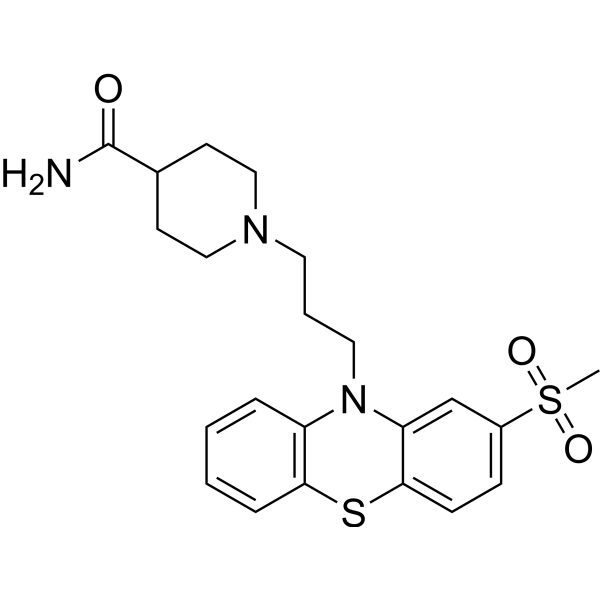
    Metopimazine (EXP999; RP9965) is a phenothiazine, orally available, selective dopamine D2 receptor antagonist that does not penetrate the blood-brain barrier. Metopimazine blocks dopamine D2 receptors in the chemoreceptor trigger zone and the periphery, thereby inhibiting nausea and vomiting. Metopimazine is indicated for chemotherapy-induced nausea and vomiting, and has low central side effects due to its poor brain penetration. The use of metopimazine in acute gastroenteritis may have potential risks .
    Metopimazine
  • HY-P9932

    ETI 204

    Bacterial Infection Cardiovascular Disease
    Obiltoxaximab (ETI 204) is the second and potent anti-protective antigen (PA) monoclonal antibody with immunogenicity. Obiltoxaximab plays a central role in anthrax toxin assembly and target cell intoxication, promoting survival, and inhibiting bacterial spread to the periphery in animal models. Obiltoxaximab can be used in the research of inhalational anthrax, bacteremia and toxemia .
    Obiltoxaximab
  • HY-120317

    Histone Acetyltransferase Others
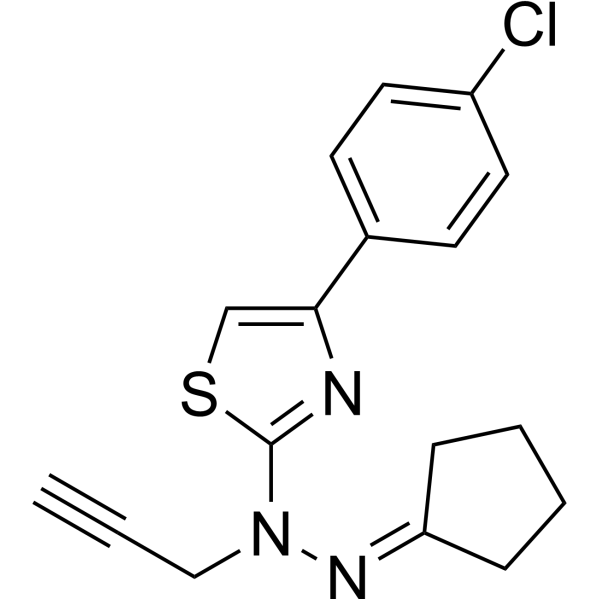
    CPTH2-Alkyne is a cell active analog of CPTH2 (HY-W013274). CPTH2-Alkyne specifically accumulates in nucleoli and locates in nuclear periphery and in cytoplasma. CPTH2-Alkyne inhibits N-acetyltransferase 10 (NAT10). CPTH2-Alkyne is used in study of nuclear architecture and application in laminopathy .
    CPTH2-Alkyne
  • HY-108973A

    CGP-15210G

    5-HT Receptor Neurological Disease
    Ifoxetine (CGP 15210G) is an inhibitor of 5-HT reuptake. Ifoxetine specifically and selectively blocks the 5-HT reuptake in the brain without affecting the 5-HT uptake processes in the periphery (blood platelets). Ifoxetine inhibits the uptake of radiolabelled 5-HT into rat brain synaptosomes in vitro or ex vivo. Ifoxetine has antidepressant properties .
    Ifoxetine
  • HY-N0313R

    MAGL Endogenous Metabolite Reference Standards Inflammation/Immunology
    Euphol (Standard) is the analytical standard of Euphol. This product is intended for research and analytical applications. Euphol is a tetracyclic triterpene alcohol isolated from the sap of Euphorbia tirucalli with anti-mutagenic, anti-inflammatory and immunomodulatory effects, orally active. Euphol inhibits the monoacylglycerol lipase (MGL) activity via a reversible mechanism (IC50=315 nM). MGL inhibition in the periphery modulates the endocannabinoid system to block the development of inflammatory pain .
    Euphol (Standard)
  • HY-111170

    Microtubule/Tubulin Cancer
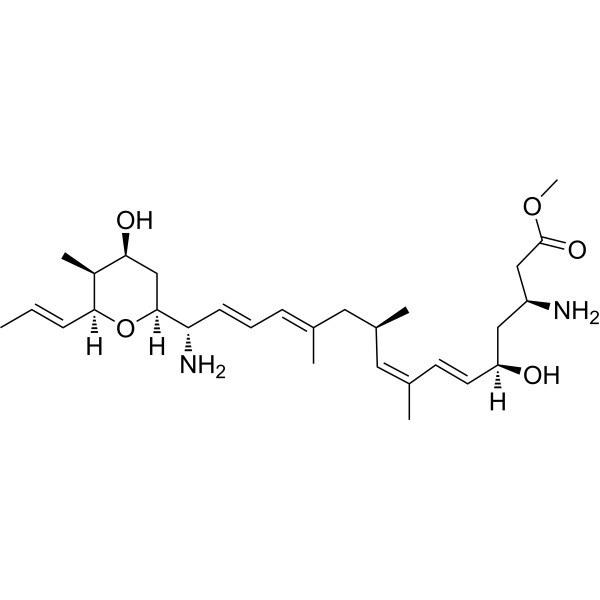
    STA-9584 is a potent vascular disrupting agent (VDA) that targets tubulin. STA-9584 exhibits potent antitumor activity in mouse xenograft model by selectively targeting microvasculature at both the center and periphery of tumors. STA-9584 can be used for research in prostate and breast cancer .
    STA-9584
  • HY-155972A

    CRM1 Apoptosis Cancer
    CRM1-IN-2 (Compound KL2) is a noncovalent CRM1 inhibitor. CRM1-IN-2 localizes CRM1 in the nuclear periphery, depletes nuclear CRM1, and inhibits CRM1-mediated nuclear export. CRM1-IN-2 inhibits growth of colorectal cancer cells, and induces apoptosis .
    CRM1-IN-2
  • HY-108973

    CGP 15210G hemisulfate

    5-HT Receptor Neurological Disease
    Ifoxetine (CGP 15210G) hemisulfate is an inhibitor of 5-HT reuptake. Ifoxetine hemisulfate specifically and selectively blocks the 5-HT reuptake in the brain without affecting the 5-HT uptake processes in the periphery (blood platelets). Ifoxetine hemisulfate inhibits the uptake of radiolabelled 5-HT into rat brain synaptosomes in vitro or ex vivo. Ifoxetine hemisulfate has antidepressant properties .
    Ifoxetine hemisulfate
  • HY-W263279

    (E)-Wy-8678

    Adrenergic Receptor Cardiovascular Disease Neurological Disease
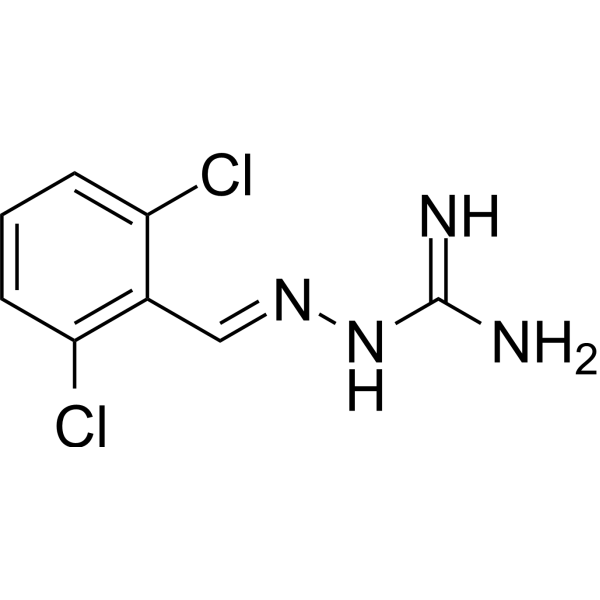
    (E)-Guanabenz ((E)-Wy-8678) is an orally active central α2-adrenoceptor agonist. (E)-Guanabenz has antihypertensive activity, acts via stimulating central α2-adrenoceptors, and reducing net sympathetic outflow into the periphery. (E)-Guanabenz also directly binds to and inhibits GADD34, and has neuroprotective activity. (E)-Guanabenz can be used for researching hypertension and Parkinson disease .
    (E)-Guanabenz
  • HY-143994S

    Isotope-Labeled Compounds Dopamine Receptor Neurological Disease
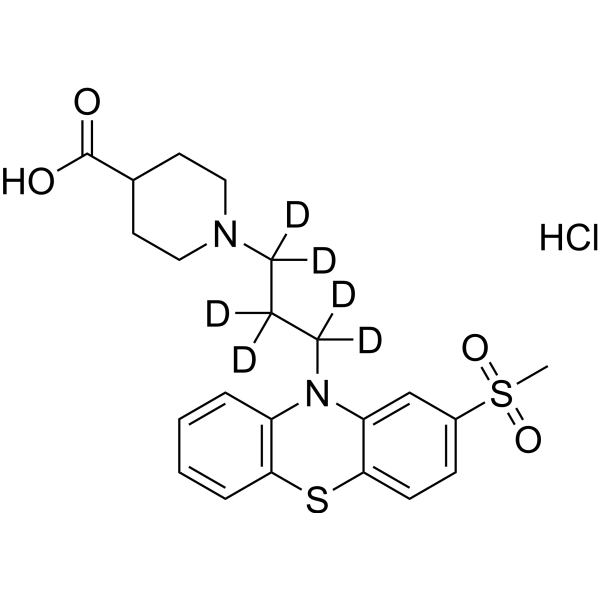
    Metopimazine-d6 hydrochloride is the deuterium labeled Metopimazine (HY-116578). Metopimazine (EXP999; RP9965) is a phenothiazine, orally available, selective dopamine D2 receptor antagonist that does not penetrate the blood-brain barrier. Metopimazine blocks dopamine D2 receptors in the chemoreceptor trigger zone and the periphery, thereby inhibiting nausea and vomiting. Metopimazine is indicated for chemotherapy-induced nausea and vomiting, and has low central side effects due to its poor brain penetration. The use of metopimazine in acute gastroenteritis may have potential risks .
    Metopimazine acid-d6 hydrochloride
  • HY-116578S

    EXP999-d6; RP9965-d6

    Isotope-Labeled Compounds Dopamine Receptor Neurological Disease
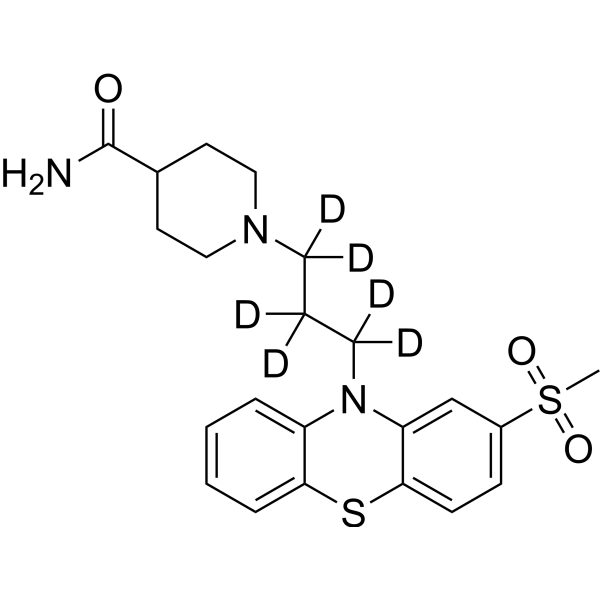
    Metopimazine-d6 (EXP999-d6; RP9965-d6) is the deuterium labeled Metopimazine (HY-116578). Metopimazine (EXP999; RP9965) is a phenothiazine, orally available, selective dopamine D2 receptor antagonist that does not penetrate the blood-brain barrier. Metopimazine blocks dopamine D2 receptors in the chemoreceptor trigger zone and the periphery, thereby inhibiting nausea and vomiting. Metopimazine is indicated for chemotherapy-induced nausea and vomiting, and has low central side effects due to its poor brain penetration. The use of metopimazine in acute gastroenteritis may have potential risks .
    Metopimazine-d6
  • HY-181135

    GABA Receptor Neurological Disease
    Bicyclo-GABA is a selective betaine/GABA transporter 1 (BGT1) competitive, non-transported inhibitor with an IC50 of 590 nM. Bicyclo-GABA exhibits low micromolar agonistic activity at α1β2γ2 GABAA receptors with an EC50 of 5.1 μM. Bicyclo-GABA displays 129 times higher activity for BGT1 than GAT3. Bicyclo-GABA serves as a valuable tool compound for deciphering its elusive pharmacological role in the brain and periphery .
    Bicyclo-GABA
  • HY-D3384

    Fluorescent Dye Others
    AM4-65 is a red fluorescing styryl dye. AM4-65 can incorporate int plasma membranes to outline cell periphery and nascent cell plates .
    AM4-65
  • HY-164504

    MMP Neurological Disease
    NRMA-10, an amide prodrug, is a brain-penetrant nuclear receptor modulator. NRMA-10 increases brain expression of Adam10. NRMA-10 preferres distribution to the CNS compared to the periphery. NRMA-10 can be used for the study of central nervous system (CNS) disorders .
    NRMA-10

Inquiry Online

Your information is safe with us. * Required Fields.

Salutation


Country or Region *

Applicant Name *


Organization Name *

Department *


Email Address *


Product Name *

Cat. No.


Requested quantity *

Phone Number *


Remarks

Inquiry Online

Inquiry Information

Product Name:
Cat. No.:
Quantity:
MCE Japan Authorized Agent:

