1. Search Result
Search Result
Results for "

permeation enhancer

" in MedChemExpress (MCE) Product Catalog:

14

Inhibitors & Agonists

2

Fluorescent Dyes

2

Biochemical Assay Reagents

1

Peptides

3

Natural
Products

1

Isotope-Labeled Compounds

Cat. No. Product Name Target Research Areas Chemical Structure
  • HY-D0150
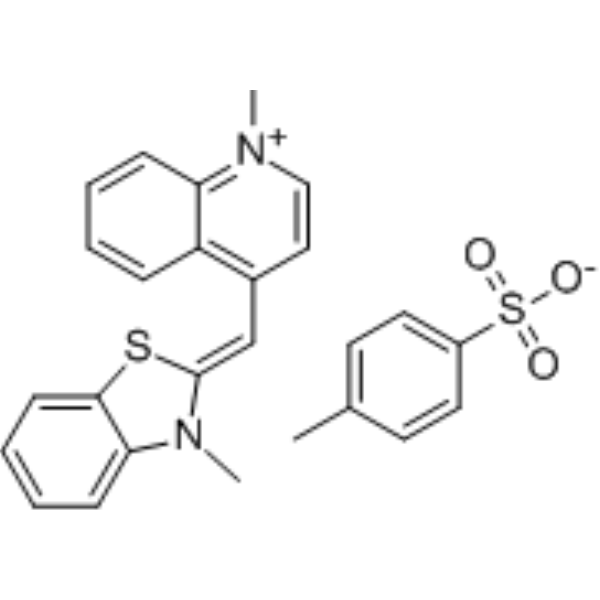
    Thiazole Orange
    1 Publications Verification

    Fluorescent Dye Others
    Thiazole Orange is an asymmetric anthocyanin dye that can be coupled with oligonucleotides (ONs) to prepare fluorescent hybridization probes. Thiazole Orange has been widely used in biomolecular detection and staining of DNA/ RNA in gels and can be used for reticulocyte analysis. Thiazole orange generates a significant fluorescence enhancement and high quantum yield when it binds with nucleic acids, especially RNA. Thiazole orange can permeate living cell membranes. Thiazole orange can use UV light for detection, but can also be detected with blue light. The excitation and emission of Thiazole orange are λex = 510 nm (488 nm and 470 nm also show strong excitation) and λem = 527 nm, respectively .
    Thiazole Orange
  • HY-W012382

    Endogenous Metabolite Metabolic Disease Cancer
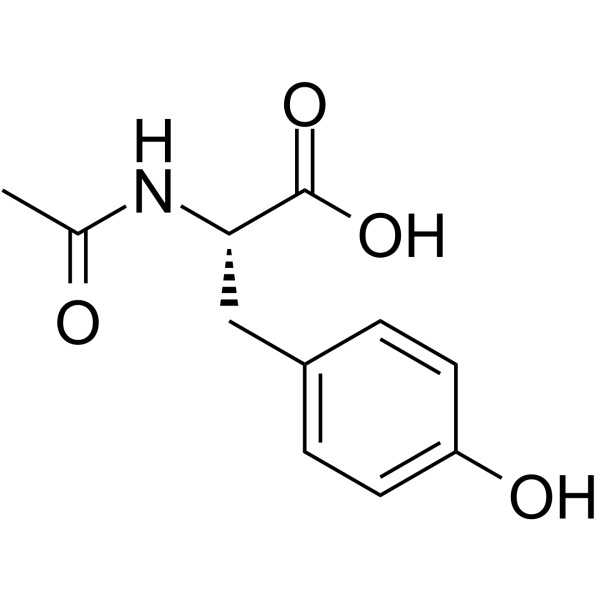
    N-Acetyl-L-tyrosine is an orally active endogenous mitochondrial stress response regulator that can permeate the cell membrane by passive diffusion. N-Acetyl-L-tyrosine induces low-level reactive oxygen species (ROS) generation by transiently perturbing mitochondrial membrane potential, triggering reverse signaling to activate FoxO and Keap1 pathways. As a result, N-Acetyl-L-tyrosine enhances the expression of antioxidant enzyme genes, exerting anti-stress and cytoprotective effects. N-Acetyl-L-tyrosine can improve heat stress tolerance, inhibit tumor growth, and regulate energy metabolism. N-Acetyl-L-tyrosine can be used in the research of aging, metabolic diseases (such as diabetes), and cancer .
    N-Acetyl-L-tyrosine
  • HY-W141881

    Environmental Pollutants Biochemical Assay Reagents HSV Infection
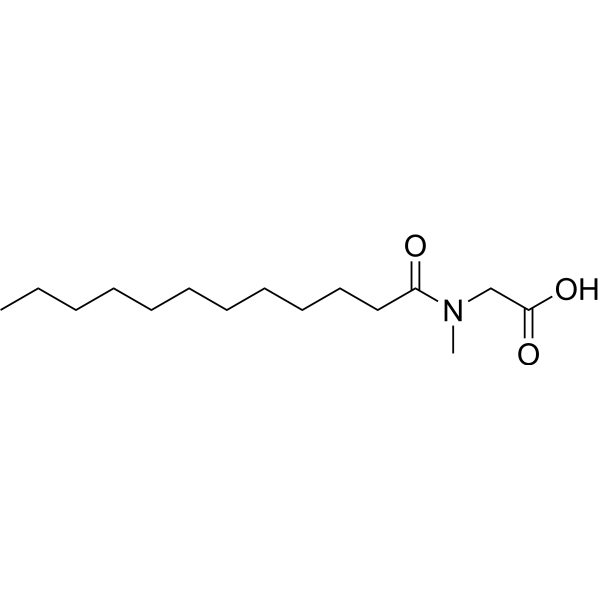
    N-lauroylsarcosine is an anionic surfactant. N-lauroylsarcosine has antiviral activity against HSV-2 strain 333 and HSV-1 strain F. N-lauroylsarcosine synergistically increases skin permeability with 25-50% ethanol. N-lauroylsarcosine can be used to study HSV-2 infection .
    N-Lauroylsarcosine
  • HY-W040996R

    Biochemical Assay Reagents Reference Standards Others
    2-Octyldodecanol (Standard) is the analytical standard of 2-Octyldodecanol. This product is intended for research and analytical applications. 2-Octyldodecanol can enhance the skin permeation of formoterol fumarate (HY-B0010) .
    2-Octyldodecanol (Standard)
  • HY-W145493

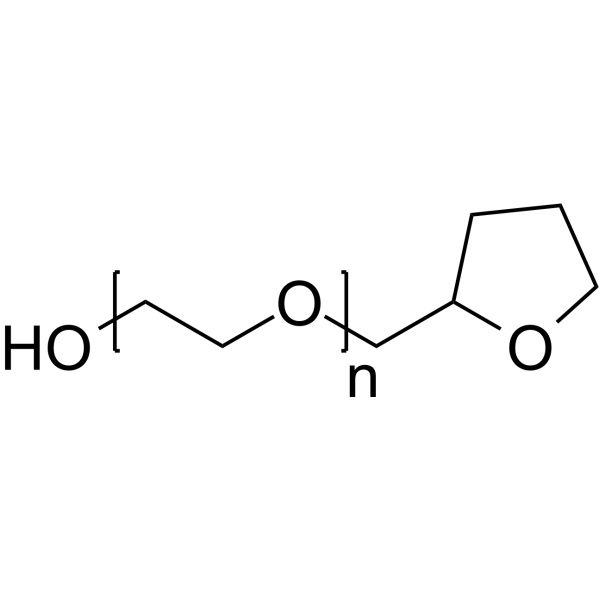
    Tetraglycol; Poly(ethylene glycol) tetrahydrofurfuryl ether

    Biochemical Assay Reagents Others
    Glycofurol (Tetraglycol) is a hydrophilic, water-miscible cosolvent and absorption enhancer with skin tolerance. Glycofurol can be used as a carrier-based gel for the topical delivery of drugs, including water-insoluble drugs. Glycofurol can form gels with bioadhesiveness, spreadability and suitable viscosity for topical administration .
    Glycofurol
  • HY-W040996

    Environmental Pollutants Others
    2-Octyldodecanol can enhance the skin permeation of formoterol fumarate (HY-B0010) .
    2-Octyldodecanol
  • HY-W250316

    Sucrose Stearate, Type II, USP

    Biochemical Assay Reagents Others
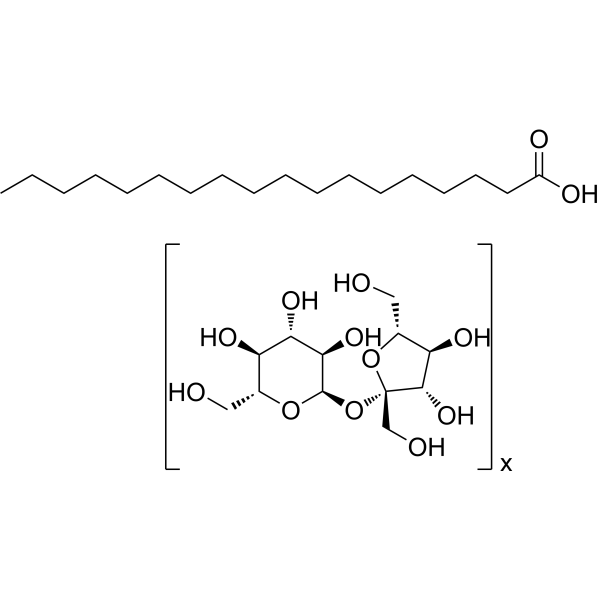
    Alpha-d-Glucopyranoside, beta-d-fructofuranosyl, octadecanoate (Sucrose Stearate, Type II, USP) is a non-ionic surfactant. Alpha-d-Glucopyranoside, beta-d-fructofuranosyl, octadecanoate enhances the skin permeability of formulations .
    Alpha-d-Glucopyranoside, beta-d-fructofuranosyl, octadecanoate
  • HY-W012382S

    Isotope-Labeled Compounds Endogenous Metabolite Metabolic Disease Cancer
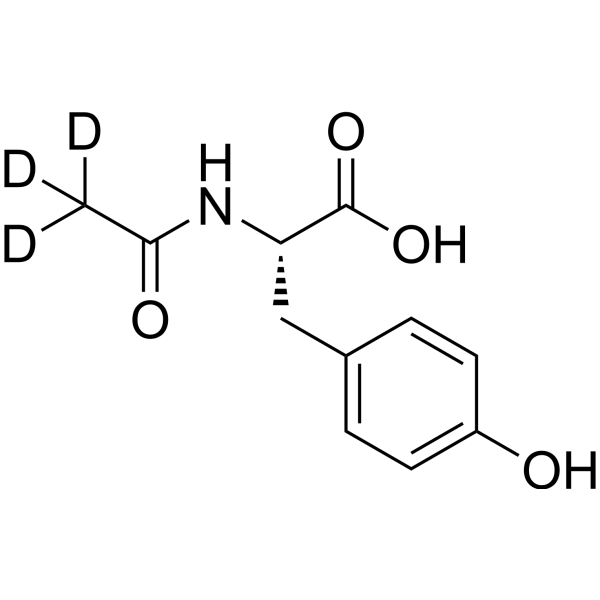
    N-Acetyl-L-tyrosine-d3 is the deuterated form of N-Acetyl-L-tyrosine (HY-W012382). N-Acetyl-L-tyrosine is an orally active endogenous mitochondrial stress response regulator that can permeate the cell membrane by passive diffusion. N-Acetyl-L-tyrosine induces low-level reactive oxygen species (ROS) generation by transiently perturbing mitochondrial membrane potential, triggering reverse signaling to activate FoxO and Keap1 pathways. As a result, N-Acetyl-L-tyrosine enhances the expression of antioxidant enzyme genes, exerting anti-stress and cytoprotective effects. N-Acetyl-L-tyrosine can improve heat stress tolerance, inhibit tumor growth, and regulate energy metabolism. N-Acetyl-L-tyrosine can be used in the research of aging, metabolic diseases (such as diabetes), and cancer .
    N-Acetyl-L-tyrosine-d3
  • HY-117843

    Mitochondrial Metabolism Interleukin Related Bacterial Infection Metabolic Disease Inflammation/Immunology
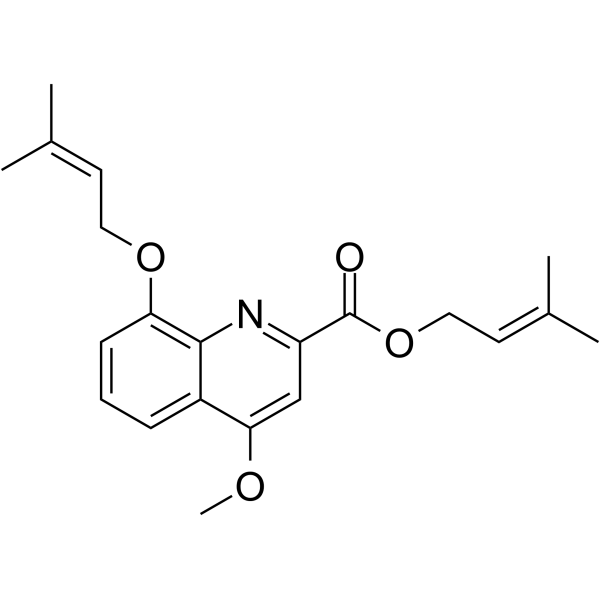
    Ppc-1 is a mitochondrial uncoupler. Ppc-1 enhances mitochondrial oxygen consumption without adverse effects on ATP production. Ppc-1 is a cell-permeate interleukin-2 (IL-2) inhibitor. Ppc-1 inhibits the Gram-negative periodontopathogen Porphyromonas gingivalis. Ppc-1 has anti-obesity, antibacterial and anti-inflammatory activities .
    Ppc-1
  • HY-W012382R

    Reference Standards Endogenous Metabolite Metabolic Disease Cancer
    N-Acetyl-L-tyrosine (Standard) is the analytical standard of N-Acetyl-L-tyrosine (HY-W012382). This product is intended for research and analytical applications. N-Acetyl-L-tyrosine is an orally active endogenous mitochondrial stress response regulator that can permeate the cell membrane by passive diffusion. N-Acetyl-L-tyrosine induces low-level reactive oxygen species (ROS) generation by transiently perturbing mitochondrial membrane potential, triggering reverse signaling to activate FoxO and Keap1 pathways. As a result, N-Acetyl-L-tyrosine enhances the expression of antioxidant enzyme genes, exerting anti-stress and cytoprotective effects. N-Acetyl-L-tyrosine can improve heat stress tolerance, inhibit tumor growth, and regulate energy metabolism. N-Acetyl-L-tyrosine can be used in the research of aging, metabolic diseases (such as diabetes), and cancer .
    N-Acetyl-L-tyrosine (Standard)
  • HY-N7132R

    L-Menthyl acetate (Standard)

    Reference Standards Others Others
    (-)-Menthyl acetate (Standard) is the analytical standard of Menthyl acetate. This product is intended for research and analytical applications. (-)-Menthyl acetate (L-Menthyl acetate) is a derivative of L-menthol. (-)-Menthyl acetate is effective to enhance 5-aminolevulinic acid (ALA) skin permeation .
    (-)-Menthyl acetate (Standard)
  • HY-182512

    Biochemical Assay Reagents Metabolic Disease
    Albumin binder-1 (Page 21, Example 2) is an albumin binder. Albumin binder-1 is applicable to growth hormone delivery research .
    Albumin binder-1
  • HY-160713

    NSSL-BMS

    TNF Receptor Interleukin Related Infection Inflammation/Immunology
    Betamethasone succinate (NSSL-BMS) is a nano-formulation that can cross the blood-brain barrier. Betamethasone succinate is prepared by encapsulating the Betamethasone (HY-13570) semi-succinate in PEG-liposomes. Betamethasone succinate utilizes the enhanced permeation and retention effects of liposomes to target and deliver the potent glucocorticoid to the inflammatory sites. Betamethasone succinate inhibits the secretion of pro-inflammatory cytokines (such as TNF-α and IL-6) while maintaining the level of anti-inflammatory cytokine TGF-β. Betamethasone succinate can be used in the research of arthritis and cerebral malaria .
    Betamethasone succinate
  • HY-DY1097

    Fluorescent Dye Others
    Thiazole Orange (solution) is an asymmetric anthocyanin dye that can be coupled with oligonucleotides (ONs) to prepare fluorescent hybridization probes. Thiazole Orange has been widely used in biomolecular detection and staining of DNA/ RNA in gels and can be used for reticulocyte analysis. Thiazole orange generates a significant fluorescence enhancement and high quantum yield when it binds with nucleic acids, especially RNA. Thiazole orange can permeate living cell membranes. Thiazole orange can use UV light for detection, but can also be detected with blue light. The excitation and emission of Thiazole orange are λex = 510 nm (488 nm and 470 nm also show strong excitation) and λem = 527 nm, respectively .
    Solvent and concentration: DMSO: 10 mM
    The 1 mL volume is defined as the base specification. All larger sizes correspond to incremental volumes of this base.
    Thiazole Orange (solution)

Inquiry Online

Your information is safe with us. * Required Fields.

Salutation


Country or Region *

Applicant Name *


Organization Name *

Department *


Email Address *


Product Name *

Cat. No.


Requested quantity *

Phone Number *


Remarks

Inquiry Online

Inquiry Information

Product Name:
Cat. No.:
Quantity:
MCE Japan Authorized Agent:

