24 Results for "

photostable probe

" in MedChemExpress (MCE) Product Catalog:
Products (24)

24 Results for "photostable probe" in MCE Product Catalog:

81
81 Publications Verification
Cat. No.: HY-116215
CAS No.: 186689-07-6
Purity:  99.74%
Target:  

Fluorescent Dye

Research Areas:  

Others

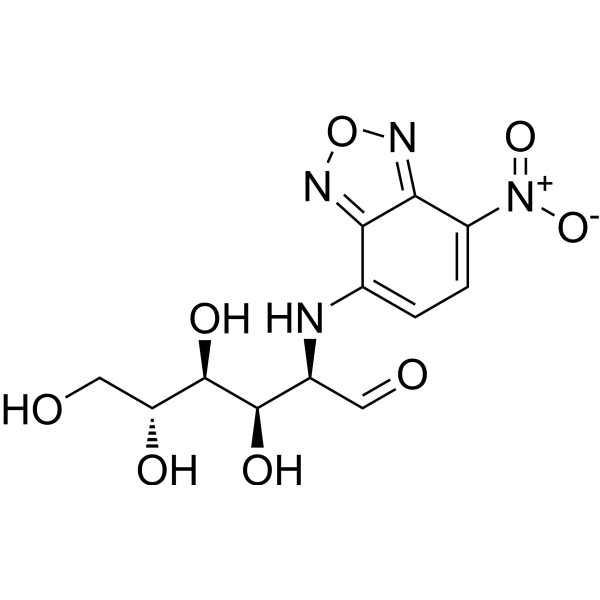
2-NBDG is a fluorescently-labeled deoxyglucose analog that is used primarily to directly monitor glucose uptake by living cells and tissues. It is also used as a topical contrast reagent for the detection of neoplasia. 2-NBDG can be used in real-time confocal, high-resolution, or wide-field fluorescence microscopy as well as in flow cytometry. The probe can be excited by the Argon laser at 488 nm to give the environment-sensitive fluorescence. It has lower photostability than the rhodamine-based fluorescent probes.
loading...
    loading...
3
3 Cited Publications
Cat. No.: HY-15942
CAS No.: 91809-66-4
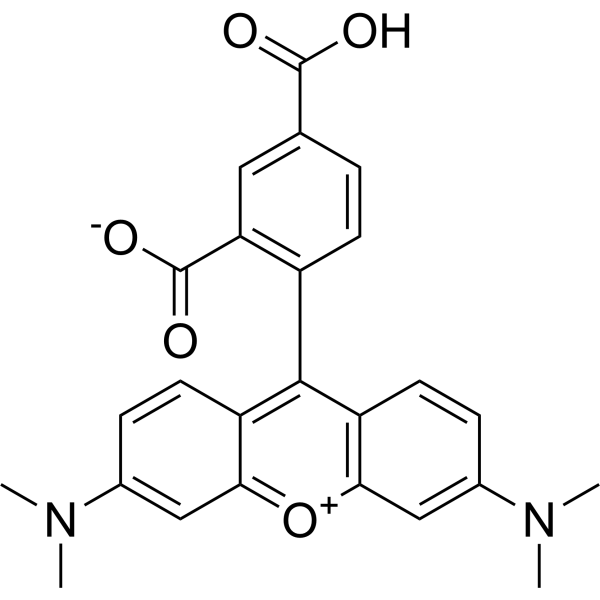
5-TAMRA can produce bright, pH-insensitive orange-red fluorescence (excitation and emission extremes of 546/579) and has good photostability. 5-TAMRA is mainly used as a fluorescent marker for the synthesis and study of specific oligonucleotide probes .
loading...
    loading...
3
3 Cited Publications
Cat. No.: HY-D2346
HBmito Crimson is a deep red fluorescent probe (λex: 658 nm, λem: 678 nm) for the inner mitochondrial membrane. HBmito Crimson is a cell membrane-permeable probe with high selectivity for the mitochondrial inner membrane, suitable for specific fluorescence staining of the inner mitochondrial membrane in living cells. HBmito Crimson has high photostability and brightness, suitable for long-term dynamic fluorescence imaging.
loading...
    loading...
1
1 Cited Publications
Cat. No.: HY-D1719A
Target:  

Fluorescent Dye

Research Areas:  

Cancer

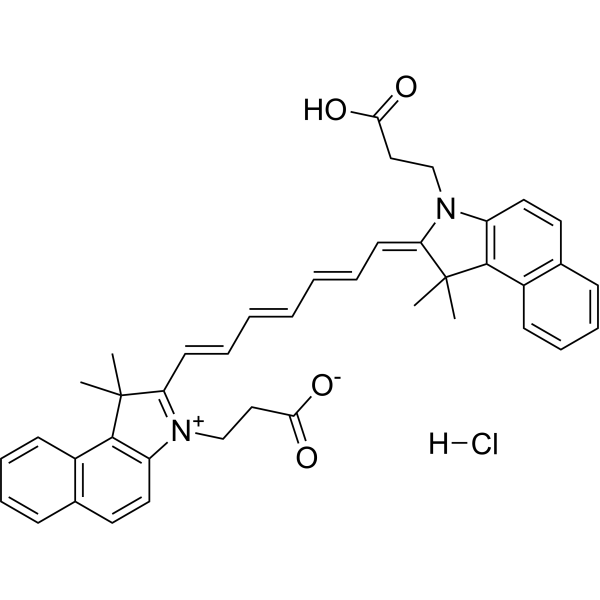
Cypate is a near-infrared fluorescent dye that belongs to the family of photosensitizers. Cypate has high photostability and optical properties, and is often used in near-infrared optical imaging, as well as optical imaging, tumor marking, and drug delivery. In addition, Cypate is also used as a molecular probe and combined with targeting molecules (such as CBT or small interfering RNA) to achieve efficient detection and imaging of specific cells or tissues .
loading...
    loading...
Cat. No.: HY-D1429
CAS No.: 287715-95-1
ER-Tracker dye is a derivative of BODIPY series dyes coupled with Glibenclamide (HY-15206), highly selective binding to the endoplasmic reticulum, non-toxic to cells at low concentrations, this type of dye is an environmentally sensitive probe, and formaldehyde treatment can still retain part of the fluorescence, with high fluorescence life, good extinction coefficient and other characteristics. Glibenclamide is an atp-dependent K + channel blocker (Kir6, KATP) and CFTR Cl-channel blocker that binds in the endoplasmic reticulum. ER-Tracker is not suitable for staining fixed cells. Staining followed by fixation is possible, but cells fixed with aldehydes will only retain partial fluorescence (Ex/Em = 374/ 430-640 nm) .
loading...
    loading...
Cat. No.: HY-DY1019
CAS No.: 186689-07-6
2-NBDG (solution) is a fluorescently-labeled deoxyglucose analog that is used primarily to directly monitor glucose uptake by living cells and tissues. It is also used as a topical contrast reagent for the detection of neoplasia. 2-NBDG can be used in real-time confocal, high-resolution, or wide-field fluorescence microscopy as well as in flow cytometry. The probe can be excited by the Argon laser at 488 nm to give the environment-sensitive fluorescence. It has lower photostability than the rhodamine-based fluorescent probes.
Solvent and Concentration: Sterile PBS: 5 mM
loading...
    loading...
Cat. No.: HY-W248115
CAS No.: 137829-79-9
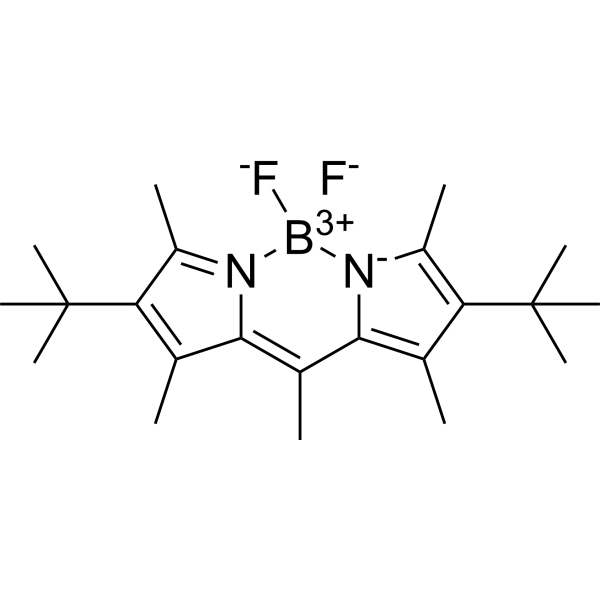
Pyrromethene 597 is a BODIPY laser dye. Pyrromethene 597 displays wide tuning range of lasing wavelengths and high photostability. Pyrromethene 597 can be used as a thermal probe .
loading...
    loading...
Cat. No.: HY-DY1074
CAS No.: 287715-95-1
ER-Tracker dye is a derivative of BODIPY series dyes coupled with Glibenclamide (HY-15206) , highly selective binding to the endoplasmic reticulum, non-toxic to cells at low concentrations, this type of dye is an environmentally sensitive probe, and formaldehyde treatment can still retain part of the fluorescence, with high fluorescence life, good extinction coefficient and other characteristics. Glibenclamide is an atp-dependent K + channel blocker (Kir6, KATP) and CFTR Cl-channel blocker that binds in the endoplasmic reticulum. ER-Tracker is not suitable for staining fixed cells. Staining followed by fixation is possible, but cells fixed with aldehydes will only retain partial fluorescence .
Solvent and concentration: DMSO: 1 mM
loading...
    loading...
Cat. No.: HY-W110898
CAS No.: 2381-85-3
Target:  

Fluorescent Dye

Research Areas:  

Others

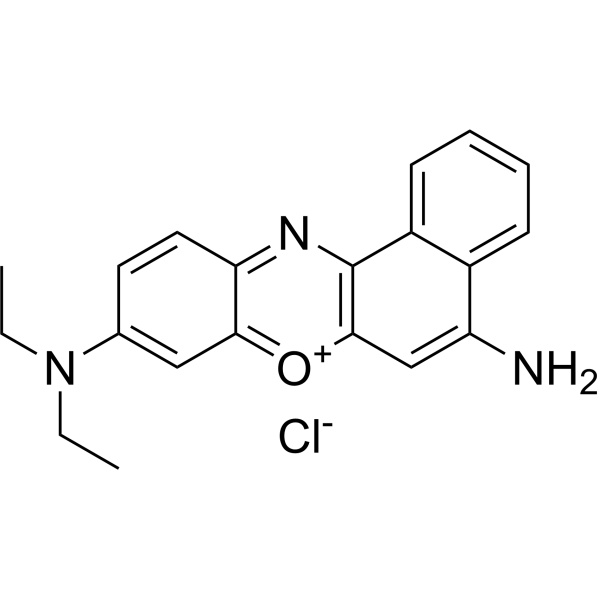
Nile blue chloride is a highly fluorescent and photostable organic dye. Nile blue chloride and fluorescein isothiocyanate (FITC) can be used to construct a ratiometric pH sensitive probe for tracking the pH of the extracellular fluid between cancer cells in realtime. Nile Blue chloride has the potential for the research of nonlinear optics .
loading...
    loading...
Cat. No.: HY-D1991
CAS No.: 906664-68-4
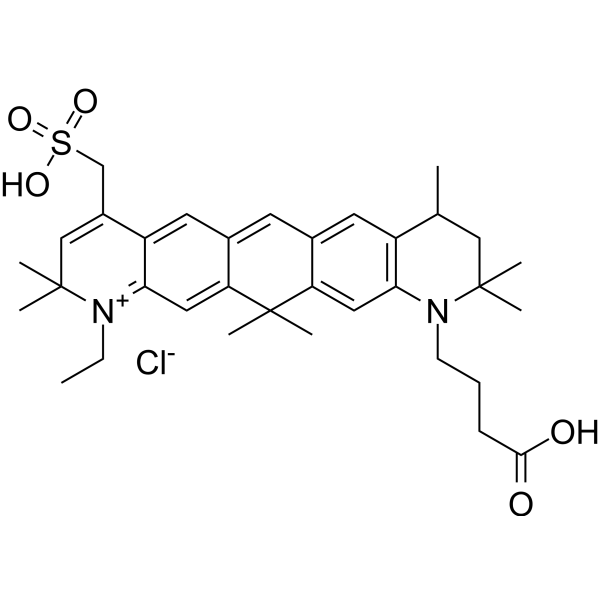
ATTO 647 is a carborhodamine fluorophore and imaging tracer with photostable properties. ATTO 647 serves as a fluorescent probe to investigate cell membrane structure and diffusion characteristics. When conjugated with wheat germ agglutinin, ATTO 647 specifically binds to N-acetyl-β-D-glucosamine and sialic acid residues on membrane glycoproteins, enabling single-molecule tracing of glycoprotein diffusion. ATTO 647 exhibits highly stable fluorescence properties with significantly reduced blinking in mounting media such as ROXS (AA/MV) and ROXS (TX/TQ), whereas its brightness properties vary in Ibidi-MM and Vectashield. ATTO 647 can also be used to label histone H2B-GFP in fixed cells for confocal microscopy photobleaching experiments .
loading...
    loading...
Cat. No.: HY-D2299
CAS No.: 2653341-17-2
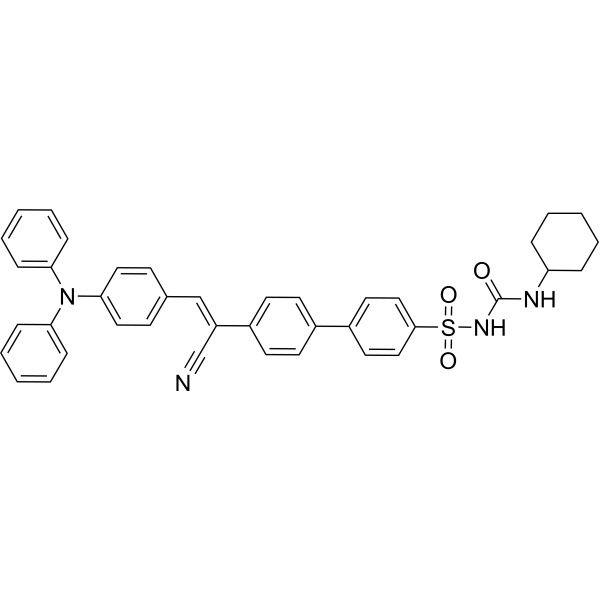
AIE-ER is a specific endoplasmic reticulum (ER) fluorescent probe (green channel: λex=405 nm, λem=450~650 nm) that exhibits remarkable photostability, high brightness, and low working concentration. AIE-ER may provide an avenue for studying diseases related to the endoplasmic reticulum .
loading...
    loading...
Cat. No.: HY-D1591
CAS No.: 150173-71-0
BODIPY R6G methyl ester (compound 5′-1) is a BODIPY-like fluorescent dye with good light stability and insensitive to pH value. BODIPY R6G methyl ester shows good photostability, high sensitivity and insensitive to pH value. BODIPY R6G methyl ester can be used in research areas such as photodynamic research, PH probes, ion recognition, photocatalysis, protein labeling, cell imaging, and proteomic analysis .
loading...
    loading...
Cat. No.: HY-W112090
CAS No.: 72076-09-6
Synonyms: PdTFPP; 5,10,15,20-Tetrakis(pentafluorophenyl)-21H,23H-porphine palladium(II)
Target:  

Fluorescent Dye

Research Areas:  

Others

Palladium meso-tetra(pentafluorophenyl)porphyrin (PdTFPP) derives from palladium(II), acting as a fluorescence-quenched optical probe and high-performance oxygen concentration sensor with outstanding photostability and antioxidant capacity. Palladium meso-tetra(pentafluorophenyl)porphyrin exhibits reduced luminescence intensity as dissolved oxygen concentration rises. Palladium meso-tetra(pentafluorophenyl)porphyrin can be applied for real-time monitoring of live-cell respiration, hypoxic tissue imaging, and nanofibrous organic semiconductors in photodetectors for ambient oxygen detection .
loading...
    loading...
Cat. No.: HY-W800692
CAS No.: 2644752-84-9
BP Fluor 350 Azide is a blue-fluorescent, azide-activated probe that reacts with terminal alkynes via a copper-catalyzed click reaction (CuAAC). It also reacts with strained cyclooctyne via a copper-free click chemistry reaction to form a stable triazole and does not require Cu-catalyst or elevated temperatures. BP Fluor 350 is a water-soluble, moderately photostable, blue-fluorescent probe optimally excited by the 350 nm laser line. It is routinely used for generation of stable signal in imaging and flow cytometry. The brightness and photostability of blue dyes are best suited to direct imaging of high-abundance targets.
loading...
    loading...
Cat. No.: HY-172508
CAS No.: 908117-78-2
Research Areas:  

Others

Perylene dU phosphoramidite is a bright and extremely photostable fluorescent polycyclic aromatic hydrocarbon (PAH) label with a quantum yield approaching quantitative. Due to the low lifetime of fluorescence, this probe does not form excimers.With this phosphoramidite, perylene can be introduced into DNA by automated oligonucleotide synthesis.
loading...
    loading...
Cat. No.: HY-W800698
CAS No.: 2006309-79-9
BP Fluor 430 Alkyne is a green-fluorescent alkyne-activated probe routinely used for imaging of moderate to high abundance azide-containing biomolecules. BP Fluor 430 Alkyne reacts with azides via a copper-catalyzed click reaction (CuAAC) to form a stable triazole linker. BP Fluor 430 is a bright, photostable, green-fluorescent probe optimally excited near 430 nm. This probe is water-soluble and its fluorescence is pH independent over a wide pH range.
loading...
    loading...
Cat. No.: HY-D1756
CAS No.: 117491-83-5
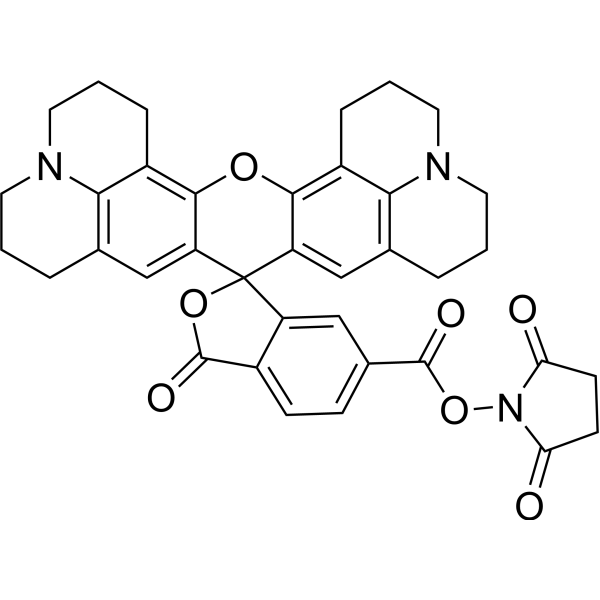
ROX NHS ester, 6-isomer is a highly fluorescent, and photostable rhodamine dye for various applications. ROX labeled oligonucleotide probes are often used in qPCR, and qPCR instruments have ROX channel. This is reactive dye for the labeling of amino-groups in peptides, proteins, and amino-oligonucleotides. Pure single isomer.
loading...
    loading...
Cat. No.: HY-W800696
CAS No.: 2644752-86-1
BP Fluor 430 Azide is a water-soluble, green-fluorescent, azide-activated probe that reacts with terminal alkynes via a copper-catalyzed click reaction (CuAAC). It also reacts with strained cyclooctyne via a copper-free click chemistry reaction to form a stable triazole and does not require a Cu-catalyst or elevated temperatures. BP Fluor 430 is a bright, photostable, green-fluorescent probe with excitation near its absorption maximum at 432 nm and emission maximum at 539 nm. This probe is water soluble and pH-insensitive from pH 4 to pH 10. A next generation probe, BP Fluor 430 Picolyl Azide, is also available for detection of low abundance alkyne-tagged biomolecules.
loading...
    loading...
Cat. No.: HY-W800831
CAS No.: 2714419-16-4
Tetra-sulfo-Cy7 DBCO is a bright and photostable near-IR probe. The Cy7 DBCO is water-soluble, hydrophilic dye often a reagent of choice for assay where minimal non-specific binding and exceptional brightness is required. The fluorescence of Cy7 DBCO is pH insensitive from pH 4 to pH 10 and produces minimal autofluorescence of biological specimens in this region of the spectrum. Fluorescence of this long-wavelength Cyanine dye is not visible to the human eye but is readily detected by most imaging systems.
loading...
    loading...
Cat. No.: HY-D3267
CAS No.: 1314527-28-0
ACu1 is a copper (I)-selective two-photon fluorescent probe that enables the visual imaging of Cu + distribution in living cells and tissues .
loading...
    loading...

