1. Search Result
Search Result
Results for "

pro-cognitive effects

" in MedChemExpress (MCE) Product Catalog:
Cat. No. Product Name Target Research Areas Chemical Structure
  • HY-107111

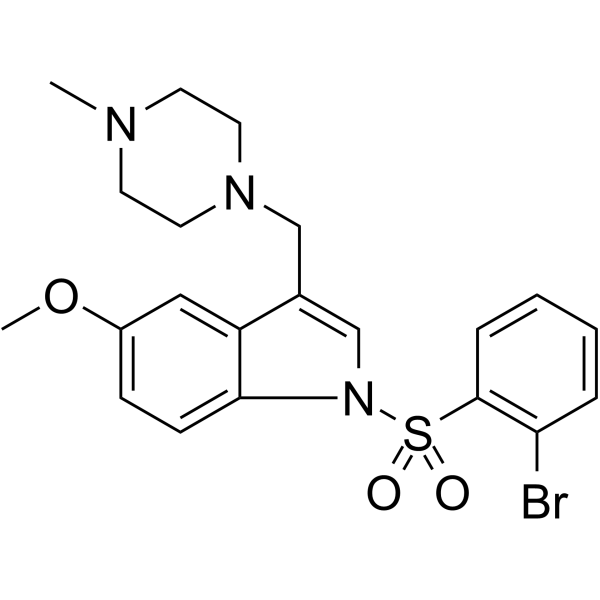
    mAChR Neurological Disease
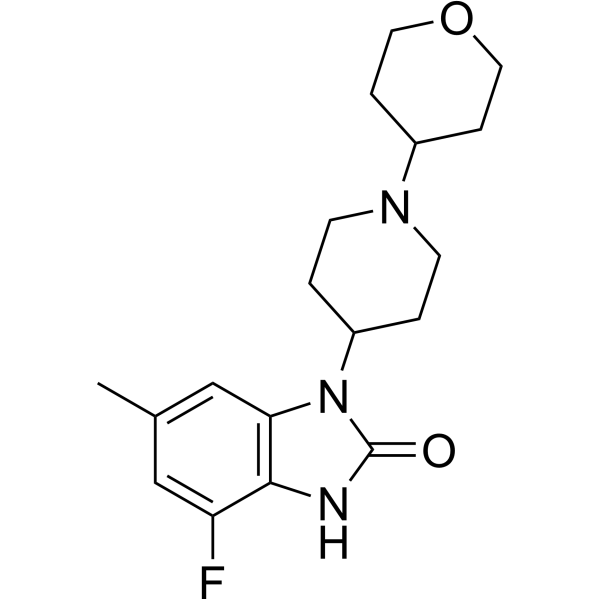
    GSK1034702 is an orally active and allosteric agonist of M1 mAChR (pEC50=8.1) that can cross the blood-brain barrier. GSK1034702 activates the Gq/11 protein-mediated signaling pathway, enhancing neuronal firing and long-term potentiation (LTP) in the CA1 region of the hippocampus. GSK1034702 can modulate hippocampal function, improve memory encoding in the nicotine withdrawal cognitive dysfunction model, and show pro-cognitive effects in rodents. GSK1034702 can be used for the study of the mechanisms of cognitive impairment diseases such as Alzheimer's disease, and has certain peripheral M receptor activation-related side effects (such as gastrointestinal reactions) .
    GSK1034702
  • HY-171844

    iGluR Neurological Disease Inflammation/Immunology
    CX1739 is an orally active, blood-brain barrier permeable, low-efficacy AMPA-glutamate receptor (AMPAR) potentiator. CX1739 enhances excitatory neurotransmission by potentiating glutamate-induced excitatory currents and promoting in vivo long-term potentiation. CX1739 eliminates amphetamine-induced locomotor activity, reverses opioid-, pentobarbital- and ethanol-induced respiratory depression, and exerts pro-cognitive effects in animals. CX1739 impairs motor function recovery and increases the risk of post-injury complications. CX1739 can be used in research related to attention-deficit/hyperactivity disorder, dementia, respiratory depression and spinal cord injury .
    CX1739
  • HY-109118A

    SUVN-502 mesylate

    5-HT Receptor Neurological Disease
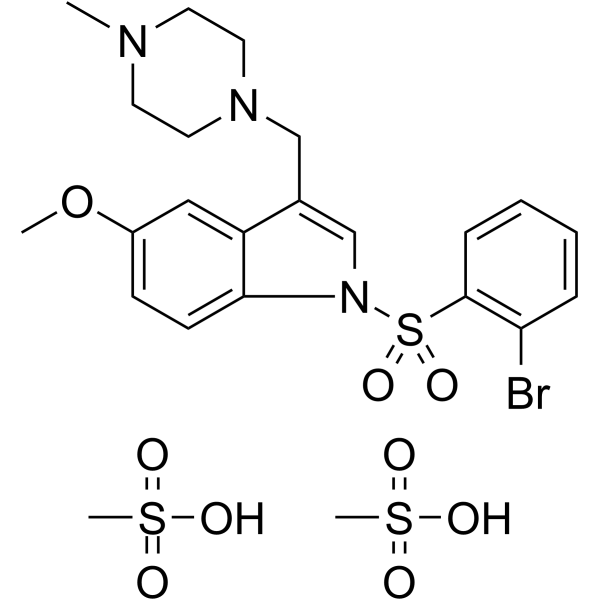
    Masupirdine mesylate (SUVN-502 mesylate) is a potent, selective, orally active, and brain-penetrating 5-HT6 receptor antagonist (Ki of 2.04 nM for human 5-HT6 receptor). Masupirdine mesylate has pro-cognitive effects on all stages of cognition (acquisition, consolidation, and retention), and can reverse Scopolamine (HY-N0296), MK-801 (HY-15084B)-induced and aging-related memory deficits. Masupirdine mesylate can be used in the research of Alzheimer's disease .
    Masupirdine mesylate
  • HY-14826

    AVE8112

    Phosphodiesterase (PDE) Neurological Disease
    Tilivapram (AVE8112) is an orally active PDE4 inhibitor with procognitive effects. Tilivapram exhibits in vivo efficacy and improves processing speed and psychomotor speed. Oral administration of tilivapram may induce dose-related adverse reactions such as nausea and dizziness, but transdermal delivery enables slow, controlled elevation of plasma concentrations, thereby significantly reducing gastrointestinal discomfort and dizziness. Tilivapram is applicable to research related to neuropsychiatric disorders .
    Tilivapram
  • HY-118363

    mAChR Neurological Disease
    Lu AE51090 is selective muscarinic M1 receptor agonist with blood-brain barrier penetration. Lu AE51090 activates human M1 receptor with EC50 of 61 nM, while showing no significant agonism at M2-M5 receptors. Lu AE51090 exerts procognitive effects in mice. Lu AE51090 can be used for the study of Alzheimer’s disease (AD) and cognitive impairment associated with schizophrenia (CIAS) .
    Lu AE51090
  • HY-14827

    Lu 31-130

    Dopamine Receptor 5-HT Receptor Neurological Disease
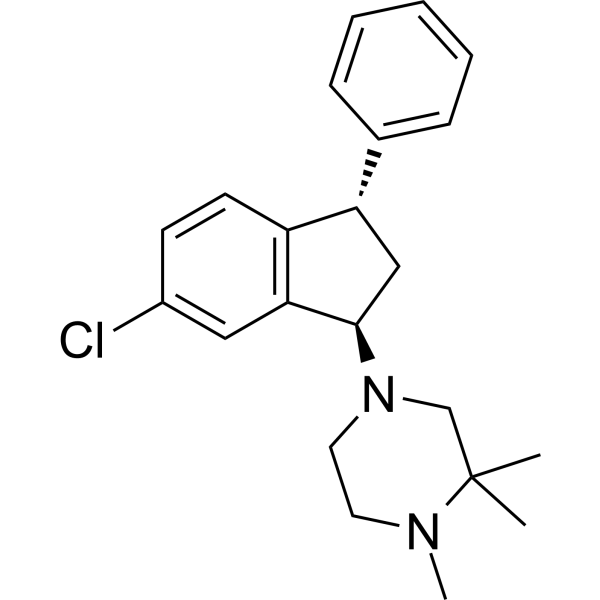
    Zicronapine is an antipsychotic agent with a strong pro-cognitive effect in animal models and the potential to treat a number of neurological and psychiatric diseases. Zicronapine has potent antagonistic effects at dopamine D1/D2, and serotonin 5-HT2A receptors .
    Zicronapine
  • HY-14827A

    Lu 31-130 fumarate

    Dopamine Receptor 5-HT Receptor Neurological Disease
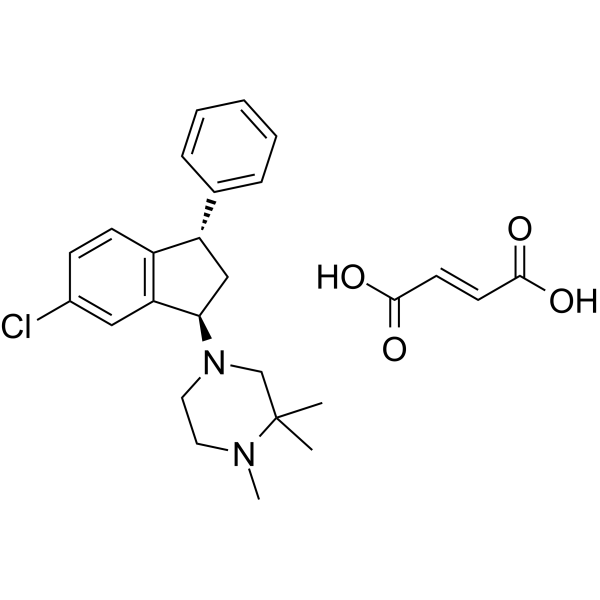
    Zicronapine (Lu 31-130) fumarate is an antipsychotic agent with a strong pro-cognitive effect in animal models and the potential to treat a number of neurological and psychiatric diseases. Zicronapine (Lu 31-130) fumarate has potent antagonistic effects at dopamine D1/D2, and serotonin 5-HT2A receptors .
    Zicronapine fumarate
  • HY-109118

    SUVN-502 free base

    5-HT Receptor Neurological Disease
    Masupirdine free base (SUVN-502 free base) is a potent, selective, orally active, and brain-penetrating 5-HT6 receptor antagonist (Ki of 2.04 nM for human 5-HT6 receptor). Masupirdine free base has pro-cognitive effects on all stages of cognition (acquisition, consolidation, and retention), and can reverse Scopolamine (HY-N0296), MK-801 (HY-15084B)-induced and aging-related memory deficits. Masupirdine free base can be used in the research of Alzheimer's disease .
    Masupirdine free base
  • HY-174381

    Cholinesterase (ChE) Amyloid-β Tau Protein Neurological Disease
    BChE-IN-41 is a highly selective Butyrylcholinesterase (BChE) inhibitor (IC50 =12 nM, Ki = 6.6 nM). BChE-IN-41 has high brain penetration with a brain-to-plasma ratio of 9.0. BChE-IN-41 has pro-cognitive effects on mice with AD-like symptoms induced by Scopolamine (HY-N0296) and Aβ1-42 .
    BChE-IN-41
  • HY-107111A

    Cholinesterase (ChE) mAChR Neurological Disease
    GSK1034702 hydrochloride is an orally active and allosteric agonist of M1 mAChR (pEC50=8.1) that can cross the blood-brain barrier. GSK1034702 hydrochloride activates the Gq/11 protein-mediated signaling pathway, enhancing neuronal firing and long-term potentiation (LTP) in the CA1 region of the hippocampus. GSK1034702 hydrochloride can modulate hippocampal function, improve memory encoding in the nicotine withdrawal cognitive dysfunction model, and show pro-cognitive effects in rodents. GSK1034702 hydrochloride can be used for the study of the mechanisms of cognitive impairment diseases such as Alzheimer's disease, and has certain peripheral M receptor activation-related side effects (such as gastrointestinal reactions) .
    GSK1034702 hydrochloride
  • HY-134937

    Phosphodiesterase (PDE) Neurological Disease Inflammation/Immunology
    BC8-15 is a PDE inhibitor with IC50 values of 0.28, 0.22, and 6.46 µM for inhibiting PDE8A, PDE4A, and PDE7A, respectively. BC8-15 can enhance steroidogenesis in mouse Leydig cells .
    BC8-15
  • HY-169163

    Carbonic Anhydrase Cholinesterase (ChE) Neurological Disease
    hBChE-IN-4 (compound 40) is a potent hCA activator and BChE inhibitor with KA values of 266, 76.9, 918, 893, 98.0 nM for hCA I, hCA II, hCA IV, hCA VB, hCA VII, IC50 values of 72.1, 4.2 nM for eeAChE, eqBChE, respectively. hBChE-IN-4 shows no cytotoxicity. hBChE-IN-4 shows potent procognitive effects. hBChE-IN-4 has the potential for the research of neurodegenerative diseases and other neuropsychiatric disorders .
    BChE-IN-36
  • HY-163150

    5-HT Receptor Neurological Disease
    5-HT6R antagonist 3 (compound 15) is a potent, selective and brain-penetrant 5-HT6R antagonist with Ki values of 14 nM, 3533 nM, 35 nM, 1449 nM for 5-HT6, 5-HT1A, 5-HT2A, 5-HT7, respectively. 5-HT6R antagonist 3 shows anxiolytic-like and properties neuroprotective and procognitive-like effects. 5-HT6R antagonist 3 has the potential for the research of Alzheimer’s Disease .
    5-HT6R antagonist 3
  • HY-124057

    nAChR Neurological Disease
    RO5126946 is a selective, orally active α7 nAChR allosteric potentiator with EC50 values of 0.06 μM (hα7 nAChR) and 770 nM (α7 nAChR), and it crosses the blood-brain barrier. RO5126946 enhances synaptic transmission and positively modulates GABA-ergic responses by increasing peak current, slowing current decay, and elevating the frequency of spontaneous inhibitory postsynaptic currents, without affecting the recovery of receptors from the desensitized state. RO5126946 not only enhances subthreshold nicotine effects and improves associative learning, but also does not interfere with the original pro-cognitive effects of nicotine. RO5126946 can be used to study cognitive impairments associated with diseases such as Alzheimer's disease and schizophrenia .
    RO5126946
  • HY-107111R

    Reference Standards mAChR Neurological Disease
    GSK1034702 (Standard) is the analytical standard of GSK1034702 (HY-107111). This product is intended for research and analytical applications. GSK1034702 is an orally active and allosteric agonist of M1 mAChR (pEC50=8.1) that can cross the blood-brain barrier. GSK1034702 activates the Gq/11 protein-mediated signaling pathway, enhancing neuronal firing and long-term potentiation (LTP) in the CA1 region of the hippocampus. GSK1034702 can modulate hippocampal function, improve memory encoding in the nicotine withdrawal cognitive dysfunction model, and show pro-cognitive effects in rodents. GSK1034702 can be used for the study of the mechanisms of cognitive impairment diseases such as Alzheimer's disease, and has certain peripheral M receptor activation-related side effects (such as gastrointestinal reactions) .
    GSK1034702 (Standard)

Inquiry Online

Your information is safe with us. * Required Fields.

Salutation


Country or Region *

Applicant Name *


Organization Name *

Department *


Email Address *


Product Name *

Cat. No.


Requested quantity *

Phone Number *


Remarks

Inquiry Online

Inquiry Information

Product Name:
Cat. No.:
Quantity:
MCE Japan Authorized Agent:

