19 Results for "

proteomics research

" in MedChemExpress (MCE) Product Catalog:
Products (19)

19 Results for "proteomics research" in MCE Product Catalog:

1
1 Cited Publications
Cat. No.: HY-129047C
CAS No.: 9002-07-7
Research Areas:  

Infection

TPCK-treated Trypsin is a trypsin whose activity is inhibited by tosyl phenylalanyl chloromethyl ketone. TPCK-treated Trypsin reduces autolysis and nonspecific proteolysis during experiments, exhibits stability in storage and handling. TPCK-treated trypsin can be used in proteomics research . TPCK-treated Trypsin renders the virus hemagglutinin active, which allows multicycle replication of the virus. TPCK-treated Trypsin can be used for the study of influenza virus .
loading...
    loading...
1
1 Cited Publications
Cat. No.: HY-156562A
CAS No.: 2906227-87-8
Purity:  99.91%
Synonyms: 5-Propargyltryptamide formic
Target:  

Drug Derivative

Research Areas:  

Inflammation/Immunology

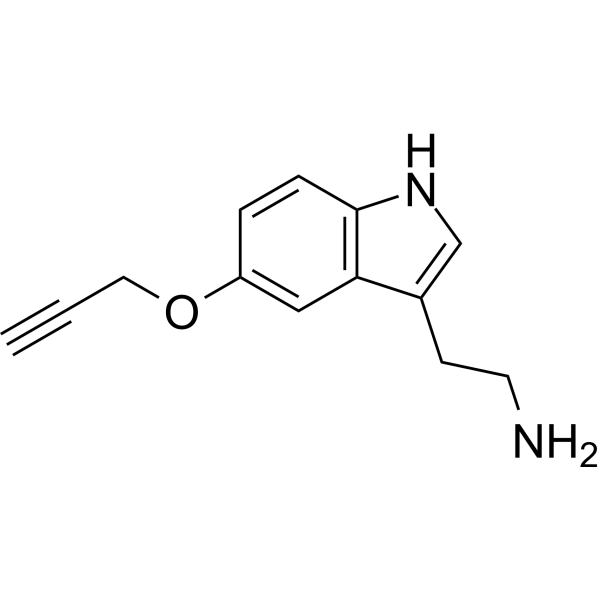
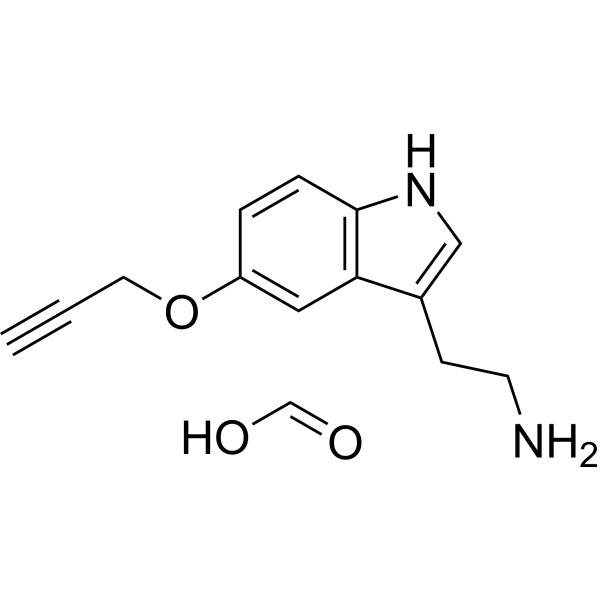
5-PT (5-Propargyltryptamide) formic is an alkyne-functionalized 5-HT (HY-B1473A) derivative and serotonylation substrate, taken up by living cells. 5-PT formic conjugated to a biotin enables identification of serotonylated proteins via copper-click chemistry and mass spectrometry. 5-PT formic labels and isolates serotonylated cells in alveolar epithelial cells for proteomic analysis. 5-PT formic can be used for the research of bronchopulmonary dysplasia .
loading...
    loading...
Cat. No.: HY-D0168
CAS No.: 504-15-4
Synonyms: 3,5-Dihydroxytoluene
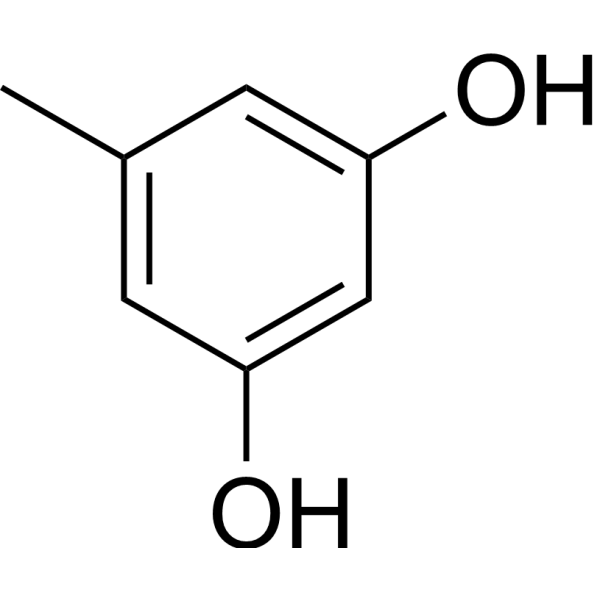
Orcinol (3,5-Dihydroxytoluene) is an organic compound used in biological dyeing and proteomics research. Orcinol inhibits melanogenesis in B16F10 cells by upregulating the MAPK/ERK signaling pathway, and suppresses the expression of MITF, tyrosinase (TYR), TRP1, and DCT. Orcinol exhibits certain DPPH radical scavenging activity. In addition, Orcinol can alter nitrogen balance in animals. Orcinol holds promise for research in cancer and metabolic diseases .
loading...
    loading...
Cat. No.: HY-P3062
CAS No.: 59481-27-5
Target:  

Somatostatin Receptor

Research Areas:  

Neurological Disease

[Tyr11]-Somatostatin is a neuroavtive peptide for proteomics research. Somatostatin is one of many neuroactive substances that influence retinal physiology .
loading...
    loading...
Cat. No.: HY-134654
CAS No.: 2490716-96-4
Purity:  99.60%
Target:  

Ras

Research Areas:  

Cancer

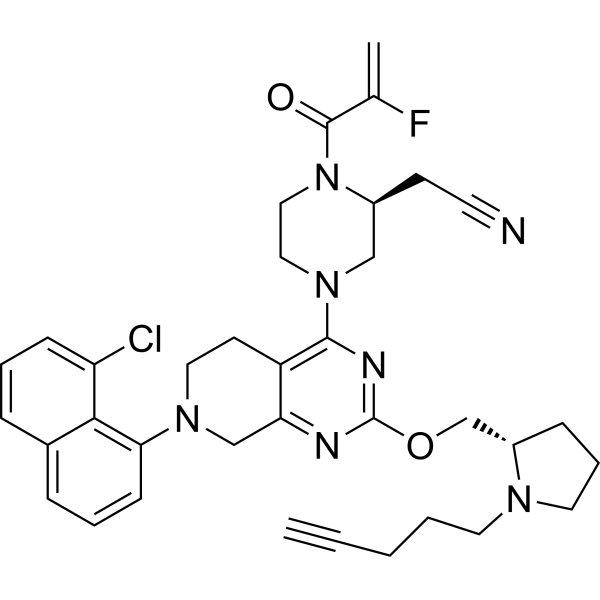
MRTX849 analog 24 is a KRAS G12C inhibitor with a human IC50 of 140 nM. MRTX849 analog 24 binds to KRAS G12C, forms a covalent interaction, and acts as a click probe to bait the protein target in proteomic studies. MRTX849 analog 24 exhibits cellular activity in cancer cells. MRTX849 analog 24 can be used for the research of kras G12C-mutant cancer .
loading...
    loading...
Cat. No.: HY-156562
CAS No.: 92085-05-7
Synonyms: 5-Propargyltryptamide
Target:  

Drug Derivative

Research Areas:  

Inflammation/Immunology

5-PT (5-Propargyltryptamide) is an alkyne-functionalized 5-HT (HY-B1473A) derivative and serotonylation substrate, taken up by living cells. 5-PT conjugated to a biotin enables identification of serotonylated proteins via copper-click chemistry and mass spectrometry. 5-PT labels and isolates serotonylated cells in alveolar epithelial cells for proteomic analysis. 5-PT can be used for the research of bronchopulmonary dysplasia .
loading...
    loading...
Cat. No.: HY-34477R
CAS No.: 144-48-9
Synonyms: Iodoacetamide (Standard)
Research Areas:  

Others

2-Iodoacetamide (Standard) is the analytical standard of 2-Iodoacetamide. This product is intended for research and analytical applications. 2-Iodoacetamide (Iodoacetamide), an alkylating agent, is a commonly used agent for alkylation of cysteine during sample preparation for proteomics .
loading...
    loading...
Cat. No.: HY-W012887
CAS No.: 996-98-5
Oxalyldihydrazide is a crosslinking agent in proteomics research. Oxalyldihydrazide can capture carbonylated proteins on the surface of a microchip .
loading...
    loading...
Cat. No.: HY-33338
CAS No.: 487-48-9
Synonyms: N-Acetylsalicylamide
Target:  

Drug Isomer

Research Areas:  

Others

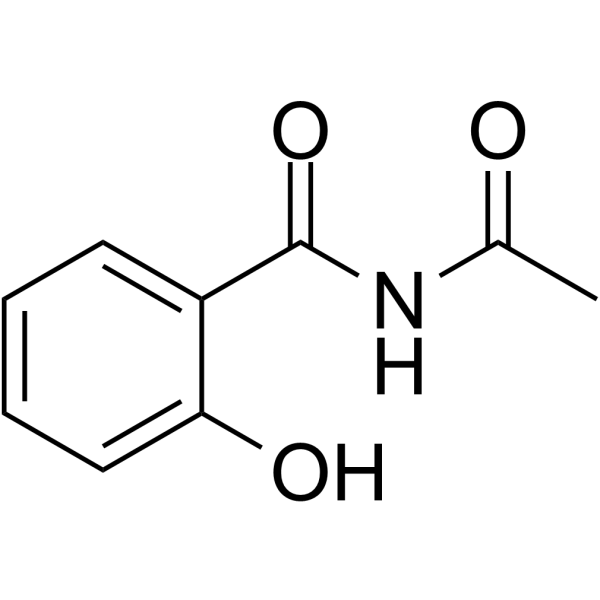
Salacetamide (N-Acetylsalicylamide) is the stable isomer of O-Acetylsalicylamide, is a product for proteomics research .
loading...
    loading...
Cat. No.: HY-20912
CAS No.: 7126-57-0
Ethyl 4-formyl-1H-pyrrole-2-carboxylate is a pyrrole used in proteomics research .
loading...
    loading...
Cat. No.: HY-W127628
CAS No.: 58846-77-8
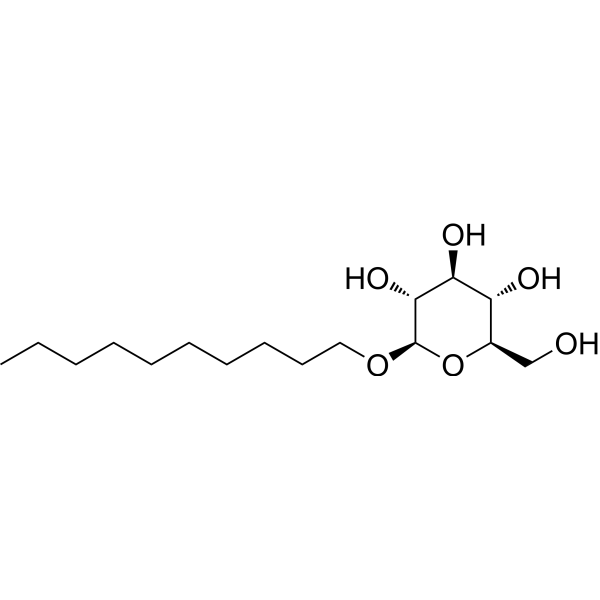
Decyl β-D-glucopyranoside is a nonionic surfactant commonly used in biochemical and molecular biology research. It can be used for the extraction, purification and structural analysis of cell membranes, and is widely used in the fields of proteomics and genetic engineering. In addition, this compound is also used as an auxiliary reagent and dehydrating agent in some biochemical experiments.
loading...
    loading...
Cat. No.: HY-D1591
CAS No.: 150173-71-0
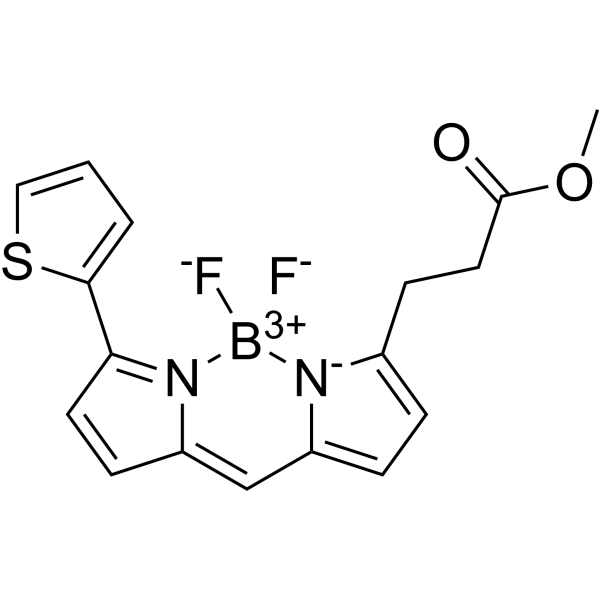
BODIPY R6G methyl ester (compound 5′-1) is a BODIPY-like fluorescent dye with good light stability and insensitive to pH value. BODIPY R6G methyl ester shows good photostability, high sensitivity and insensitive to pH value. BODIPY R6G methyl ester can be used in research areas such as photodynamic research, PH probes, ion recognition, photocatalysis, protein labeling, cell imaging, and proteomic analysis .
loading...
    loading...
Cat. No.: HY-120892
CAS No.: 1176658-85-7
Synonyms: Flu-SA
Research Areas:  

Others

Fluprostenol serinol amide (Flu-SA) is used for proteomics research.
loading...
    loading...
Cat. No.: HY-W540889
CAS No.: 6921-27-3
Propargyl Ether is a useful ether for proteomics research. Propargyl Ether can be used for the preparation of polyferrocenes .
loading...
    loading...
Cat. No.: HY-W127719
CAS No.: 96087-38-6
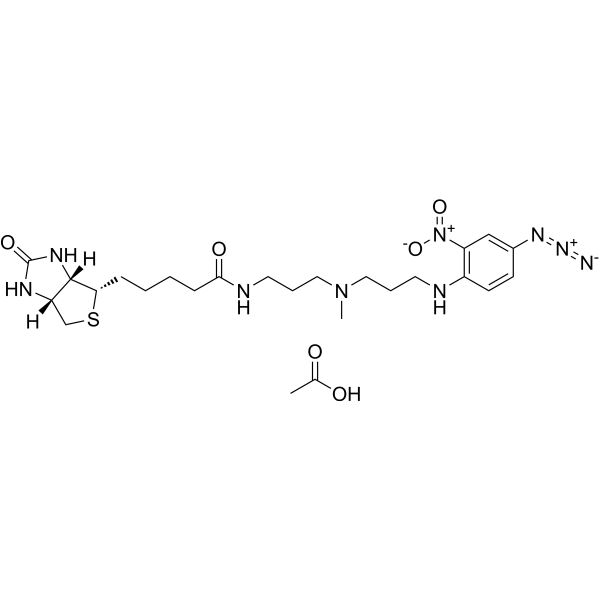
Photobiotin (acetate)It is a biological probe used to study biochemical processes such as protein interactions and enzymatic reactions. It is a molecule containing a photosensitive group, which can be combined with specific target molecules (such as proteins, nucleic acids, etc.) through photochemical cross-linking technology, so as to realize the labeling and detection of these molecules. During the photosensitive crosslinking process, Photobiotin (acetate)Can participate in the formation of covalent bonds and form stable compounds. In addition, the compound also has high biocompatibility and biological activity, so it is widely used in the field of biomedical research, such as enzymatic research, proteomics, western blotting and other aspects. Photobiotin (acetate) is a click chemistry reagent, it contains an Azide group and can undergo copper-catalyzed azide-alkyne cycloaddition reaction (CuAAc) with molecules containing Alkyne groups. It can also undergo strain-promoted alkyne-azide cycloaddition (SPAAC) reactions with molecules containing DBCO or BCN groups.
loading...
    loading...
Cat. No.: HY-E71359
Research Areas:  

Others

Trypsin-N B65 is a mass spectrometry-grade protease specifically designed for mass spectrometry-based enzymatic digestion of denatured proteins, suitable for LC-MS/MS analysis. It is a key tool enzyme for proteomics research.
loading...
    loading...
Cat. No.: HY-180519
CAS No.: 2943080-26-8
Research Areas:  

Others

Ac-N-m-(CF3)2-Ph-C-Py (Compound F31) is an electrophilic fragment. Ac-N-m-(CF₃)₂-(phenyl)-C-(pyridyl) can be used in proteomics research .
loading...
    loading...
Cat. No.: HY-156562B
CAS No.: 3117303-22-4
Synonyms: 5-Propargyltryptamide TFA
Target:  

Drug Derivative

Research Areas:  

Inflammation/Immunology

5-PT (5-Propargyltryptamide) TFA is an alkyne-functionalized derivative of 5-HT (HY-B1473A) and serotonylation substrate that can be taken up by living cells. After conjugation with biotin, 5-PT TFA enables the identification of serotonylated proteins via copper click chemistry and mass spectrometry. 5-PT TFA can label and isolate serotonylated cells in alveolar epithelial cells for proteomic analysis. 5-PT TFA is applicable to research related to bronchopulmonary dysplasia .
loading...
    loading...
Cat. No.: HY-L215
6,043 compounds

Metabolomics, positioned as the systemic characterization of small-molecule metabolites within biological systems, has emerged as an indispensable analytical platform in both fundamental research and translational applications across plant sciences, microbial biotechnology, and biomedical investigations. Functioning as a critical component in multi-omics integration, this discipline deciphers the intricate molecular networks operating downstream of genomic, transcriptomic, and proteomic regulation, thereby capturing the dynamic biochemical phenotype closest to organismal functionality. The metabolome, comprising endogenous compounds with molecular weights typically below 1500 Da, serves as the functional readout of cellular processes and environmental interactions, where perturbations in metabolic networks are frequently implicated in disease pathogenesis. Such unique attributes have propelled metabolomics into a pivotal role in pharmacological research, particularly in target deconvolution, pharmacodynamic assessment, and mechanistic elucidation of pathological processes.

MCE can provide 6,043 mass spectrometry human metabolites that can be used for metabolite identification and quantification, functional cell detection and phenotypic screening of mass spectrometry.

  • 1