


Search Result
Results for "
samples
" in MedChemExpress (MCE) Product Catalog:
54
Biochemical Assay Reagents
16
Isotope-Labeled Compounds
| Cat. No. |
Product Name |
Target |
Research Areas |
Chemical Structure |
-
- HY-34477
-
|
Iodoacetamide
|
DNA Alkylator/Crosslinker
|
Others
|
|
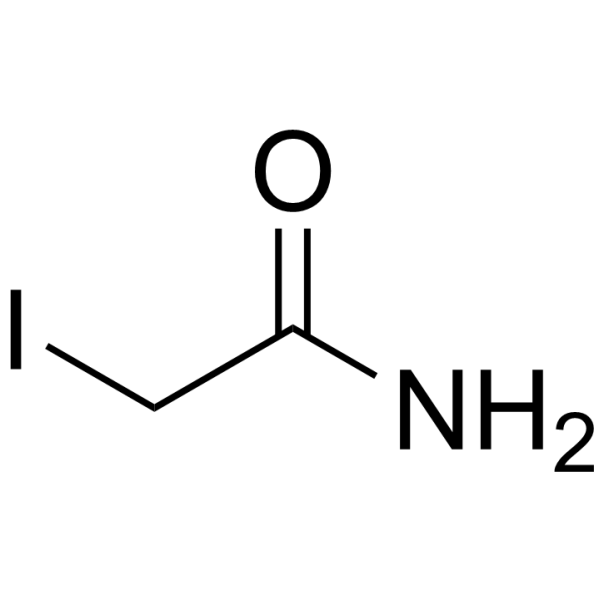
2-Iodoacetamide (Iodoacetamide), an alkylating agent, is a commonly used agent for alkylation of cysteine during sample preparation for proteomics .
|
-
-
- HY-B1659
-
-
-
- HY-D0875
-
-
-
- HY-D1730
-
|
|
Fluorescent Dye
|
Others
|
|
AF488 NHS ester is an amine specific fluorescence probe (Em=525 nm). AF488 NHS ester reacts with sulfhydryl groups and amines in aqueous and biological samples then change their chemical structure and fluorescence properties after derivatization .
|
-
-
- HY-121238
-
|
|
FXR
G protein-coupled Bile Acid Receptor 1
|
Metabolic Disease
|
|
Hyocholic Acid is a bile acid found in pig. Hyocholic Acid can also be found in urine samples from patients with cholestasis. Hyocholic Acid promotes GLP-1 secretion via activating TGR5 and inhibiting FXR in enteroendocrine cells. Hyocholic Acid is known for its exceptional resistance to type 2 diabetes .
|
-
-
- HY-B1306
-
|
p-Aminohippuric acid
|
Others
|
Neurological Disease
Metabolic Disease
|
|
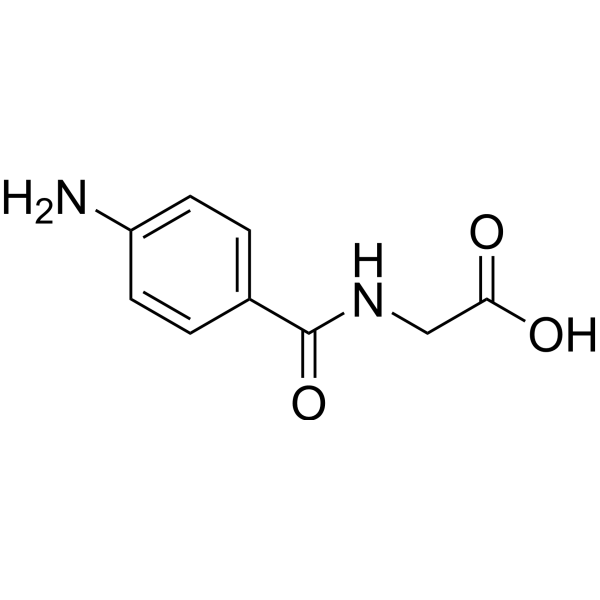
4-Aminohippuric acid (p-Aminohippuric acid) is a coordination ligand for metal ions (such as Cu 2+, Fe 3+, Hg 2+) and a functionalization reagent for nanomaterials. 4-Aminohippuric acid can coordinate with metal ions or modify the surface of materials such as carbon nanotubes and gold nanoparticles through amino and carboxyl groups. 4-Aminohippuric acid can form stable complexes with metal ions or participate in the synthesis of nanomaterials as a reducing agent/stabilizer, enriching metal ions or giving nanoparticles peroxidase-mimicking activity. 4-Aminohippuric acid can be used to construct highly sensitive electrochemical sensors or colorimetric sensors to detect and quantitatively analyze heavy metal ions such as copper, iron, and mercury in environmental water samples and biological samples. 4-Aminohippuric acid may also be a biomarker for attention-deficit/hyperactivity disorder (ADHD) .
|
-
-
- HY-N0335
-
Indigo
1 Publications Verification
|
Fluorescent Dye
|
Others
|
|
Indigo is a blue dye. Indigo stains cellulose fibers such as cotton. Indigo stains food or biological samples to visualize and quantify the uptake or distribution of substances by organisms .
|
-
-
- HY-B1659S5
-
|
Trihydroxypropane-13C3
|
Endogenous Metabolite
|
Cancer
|
|
Glycerol- 13C3 is the 13C labeled Glycerol . Glycerol is used in sample preparation and gel formation for polyacrylamide gel electrophoresis .
|
-
-
- HY-113151
-
-
-
- HY-D1730A
-
|
|
Fluorescent Dye
|
Others
|
|
AF488 NHS ester TEA is an amine specific fluorescence probe (λem=525 nm=525 nm). AF488 NHS ester reacts with sulfhydryl groups and amines in aqueous and biological samples then change their chemical structure and fluorescence properties after derivatization. AF488 exhibits the λem and λex wavelength of 520 nm and 470 nm, respectively .
|
-
-
- HY-D0801
-
|
|
Fluorescent Dye
|
Others
|
|
Calmagite is a chromomeric reagent which can be used to detect calcium and magnesium in various samples .
|
-
-
- HY-113139
-
|
N1-Methylinosine
|
Nucleoside Antimetabolite/Analog
Endogenous Metabolite
|
Cancer
|
|
1-Methylinosine (N1-MetHYlinosine) is a modified nucleotide located at position 37 of eukaryotic tRNA, 3' to the tRNA anticodon. 1-Methylinosine is a minor metabolite of 1-methyladenosine (HY-113081). The level of 1-Methylinosine is significantly elevated in urine samples from breast cancer models .
|
-
-
- HY-Y1219H
-
|
|
Biochemical Assay Reagents
|
Others
|
|
Silica gel, high-purity grade, 200-400 mesh is a low-density, high-surface-area, high-purity inert additive that can be used to prepare chromatographic column sieve plates based on the sol-gel method. Silica gel, high-purity grade prevents DNA degradation by absorbing water from plant leaves, and is suitable for the preservation of field-collected samples for subsequent DNA extraction, restriction endonuclease digestion, PCR amplification and gene sequencing. It can also be reused after being saturated with water. Silica gel, high-purity grade can provide a non-toxic, inert aquatic environment for embedded cells, allowing nutrients, oxygen and metabolic waste to diffuse freely and blocking external pollution, thereby maintaining the activity of fibroblasts and epithelial cells .
|
-
-
- HY-135396
-
|
|
Drug Isomer
|
Others
|
|
(1S,2S)-Bortezomib (Compound Imp-D (1S,2S)) is a diastereomeric impurity of Bortezomib (HY-10227) .
|
-
-
- HY-N6618
-
|
|
Others
|
Others
|
|
DL-Mannitol is obtained by combining D-mannitol with a sample of Lmannitol obtained by reduction of L-mannono-1, Clactone .
|
-
-
- HY-112038A
-
|
|
RIP kinase
|
Inflammation/Immunology
|
|
GSK2983559 is an orally active and potent receptor interacting protein 2 (RIP2) kinase inhibitor. GSK2983559 blocks many proinflammatory cytokine responses in vivo and in human inflammatory bowel disease explant samples .
|
-
-
- HY-112038
-
|
|
RIP kinase
|
Inflammation/Immunology
|
|
GSK2983559 free acid (compound 3) is an orally active and potent receptor interacting protein 2 (RIP2) kinase inhibitor. GSK2983559 free acid can block many proinflammatory cytokine responses in vivo and in human inflammatory bowel disease explant samples .
|
-
-
- HY-W014075
-
|
|
Aryl Hydrocarbon Receptor
Cytochrome P450
Collagen
|
Inflammation/Immunology
|
|
1-Hydroxypyrene, a biomarker of exposure to polycyclic aromatic hydrocarbons (PAHs), is analyzed in urine samples. 1-Hydroxypyrene is the major biomarker of exposure to pyrenes. 1-Hydroxypyrene is the orally active agonist for aryl hydrocarbon receptor (AhR) and can lead to renal fibrosis .
|
-
-
- HY-D2186
-
|
|
Biochemical Assay Reagents
|
Others
|
|
BTD probe-1 is a benzothiazine-based chemoproteomic probe and selective protein S-sulfenic acid (Cys-SOH) labeling agent. BTD probe-1 labels protein S-sulfenic acids in vitro in cell and tissue samples, and in situ in intact cells, enabling detection or enrichment of modified proteins/peptides. BTD probe-1 exhibits no cytotoxicity in cells at concentrations ≤1 mM. BTD probe-1 enables global, site-specific mapping and quantification of cysteine S-sulfenylation in complex proteomes with lower input material .
|
-
-
- HY-W016798
-
|
|
Endogenous Metabolite
|
Metabolic Disease
|
|
(S)-2-acetamido-4-amino-4-oxobutanoic acid is a metabolite. (S)-2-acetamido-4-amino-4-oxobutanoic acid can be used in the research of decompensated liver cirrhosis .
|
-
-
- HY-135357
-
|
|
Biochemical Assay Reagents
|
Others
|
|
Diisohexyl phthalate is a type of dialkyl phthalate plasticizer. Diisohexyl phthalate may pose potential interference to the chromatographic analysis of polyvinyl chloride (PVC) samples .
|
-
-
- HY-B1659R
-
-
-
- HY-B1659S6
-
|
Trihydroxypropane-d5
|
Endogenous Metabolite
|
Cancer
|
|
Glycerol-d5 is the deuterium labeled Glycerol . Glycerol is used in sample preparation and gel formation for polyacrylamide gel electrophoresis .
|
-
-
- HY-P2920
-
-
-
- HY-P4463
-
|
|
GnRH Receptor
|
Others
|
|
(Des-Pyr1)-LHRH is a Polypeptide Internal Standard, identical to (Des-Pyr1)-GnRH, which can be identified through peptide screening. Peptide screening is a research tool that mainly collects active polypeptides via immunoassays. It can be applied to protein interaction, functional analysis, epitope screening, especially in the field of active molecule research and development. (Des-Pyr1)-LHRH can serve as an internal standard (ISTD) for mass spectrometry analysis .
|
-
-
- HY-34477S1
-
|
Iodoacetamide-d4
|
DNA Alkylator/Crosslinker
|
Others
|
|
2-Iodoacetamide-d4 is the deuterium labeled 2-Iodoacetamide . 2-Iodoacetamide (Iodoacetamide), an alkylating agent, is a commonly used agent for alkylation of cysteine during sample preparation for proteomics .
|
-
-
- HY-D1682
-
|
|
Fluorescent Dye
|
Others
|
|
NFQ1 is a non-fluorescent quencher (absorption wavelength: 474 nm), and is used for a new type of One Sample Fluorescence Resonance Energy Transfer (OS-FRET) method. OS-FRET enable measurement of unquenched donor emission in the same sample. NFQ1 shows broad absorption spectrum ensuring its utility as a dark acceptor for many donors .
|
-
-
- HY-W101367
-
|
N-Acetyl-S-benzyl-L-cysteine; Benzylmercapturic acid
|
Drug Metabolite
|
Others
|
|
Ac-Cys(Bzl)-OH (N-Acetyl-S-benzyl-L-cysteine) is a toluene metabolite. Ac-Cys(Bzl)-OH in urine samples is a good marker of occupational toluene exposure.
|
-
-
- HY-D1319A
-
|
Cy5 acid bromide
|
Fluorescent Dye
|
Others
|
|
Cyanine5 carboxylic acid (bromide) is a fluorescent dye containing a non-activated carboxylic acid (Ex=646 nm, Em=662 nm). Cyanine5 carboxylic acid chloride is an non-reactive dye that can be used in control samples .
|
-
-
- HY-W040147
-
-
-
- HY-34477R
-
|
Iodoacetamide (Standard)
|
DNA Alkylator/Crosslinker
Reference Standards
|
Others
|
|
2-Iodoacetamide (Standard) is the analytical standard of 2-Iodoacetamide. This product is intended for research and analytical applications. 2-Iodoacetamide (Iodoacetamide), an alkylating agent, is a commonly used agent for alkylation of cysteine during sample preparation for proteomics .
|
-
-
- HY-131490
-
|
Violet tetrazolium
|
Biochemical Assay Reagents
|
Others
|
|
Tetrazolium violet is a redox indicator commonly used in various biochemical assays to measure cell viability and metabolic activity. Tetrazolium Violet has unique chemical properties that allow it to be reduced by cellular enzymes such as dehydrogenases to form a purple formazan product that can be detected spectrophotometrically. This makes it a useful tool for assessing cell health and growth in culture or tissue samples.
|
-
-
- HY-76981
-
|
|
Others
|
Others
|
|
5-hydroxy-1-tetralone can be used as a fluorescent labeling reagent for the determination of glycosphingolipid from biological samples .
|
-
-
- HY-168761
-
-
-
- HY-B1659S1
-
-
-
- HY-NP142
-
|
MA-BSA
|
Biochemical Assay Reagents
|
Neurological Disease
|
|
Methamphetamine-BSA is a protein consists of Methamphetamine and Bovine Serum Albumin (BSA). Methamphetamine-BSA is an antigen to generate specific antibodies for the detection of Methamphetamine in biological samples .
|
-
-
- HY-B1659S4
-
|
Trihydroxypropane-13C2
|
Endogenous Metabolite
|
Cancer
|
|
Glycerol- 13C2 is the 13C labeled Glycerol . Glycerol is used in sample preparation and gel formation for polyacrylamide gel electrophoresis .
|
-
-
- HY-136868
-
|
3-Phenoxazone 7-(β-D-glucopyranoside),98%
|
Biochemical Assay Reagents
|
Others
|
|
Resorufin-β-D-glucopyranoside, 98% (3-Phenoxazone 7-(β-D-glucopyranoside), 98%) can be used to detect and quantify β-glucosidase activity in various biological samples.
|
-
-
- HY-W040173
-
-
-
- HY-W717548
-
|
|
Drug Metabolite
|
Others
|
|
Safinamide acid (Compound Imp-E) is the metabolite of Safinamide (HY-70057). Safinamide acid can be formed by hydrolysis of Safinamide intermediate under alkaline or acidic conditions. Safinamide acid is utilized to monitor process-related impurities and degradation products in safinamide samples .
|
-
-
- HY-116992
-
|
Demosan; TERSAN SP(R)
|
Environmental Pollutants
Bacterial
|
Infection
|
|
Chloroneb (Demosan) is a pesticide with fungicidal and plant-protective activities. Chloroneb can be used to detect organochlorine pesticide residues, showing good selectivity, stability and reproducibility. Chloroneb has been applied to the detection of licorice, cucumber, river water and soil samples with satisfactory results .
|
-
-
- HY-N10510
-
|
A-Tetrasaccharide
|
Others
|
Others
|
|
Blood group A antigen tetraose type 5 (A-Tetrasaccharide) is a tetrasaccharide and a blood group specific oligosaccharide, inhibits the binding of anti-A antibody to blood group A substance. Blood group A antigen tetraose type 5 can be isolated from polar bear milk samples .
|
-
-
- HY-128429R
-
|
(E)-2-Hexenal (Standard)
|
Fungal
Biochemical Assay Reagents
Reference Standards
|
Infection
|
|
Trans-2-Hexenal (Standard) is the analytical standard of Trans-2-Hexenal. This product is intended for research and analytical applications. Trans-2-Hexenal can be used for the determination of low-molecular-weight carbonyl compounds which are reactive with biological nucleophiles in biological samples .
|
-
-
- HY-B1659S3
-
-
-
- HY-W011757
-
|
|
Biochemical Assay Reagents
|
Others
|
|
Neocuproine hydrochloride monohydrate, 99% can be used to prepare complex solutions for studying antioxidant capacity determination in biological samples based on copper reduction complexes.
|
-
-
- HY-W110917
-
|
|
Biochemical Assay Reagents
|
Others
|
|
Dimethylsulfonazo III is a potent sulfate indicator. Dimethylsulfonazo III can be used as indicator to test those samples contaminated with potassium or phosphate ions .
|
-
-
- HY-W707056
-
|
|
Biochemical Assay Reagents
|
Others
|
|
Latanoprost acid-d4 is used as the internal standard in the HPLC-MS/MS analysis to determine the level of Latanoprost acid (HY-113756A) in aqueous humor samples of eyes .
|
-
-
- HY-W998687
-
|
|
Fluorescent Dye
|
Others
|
|
Cy5 dimethyl is a free non-activated dye. This dye has limited water solubility, but can be dissolved in mixtures of water with organic phase (DMF, DMSO, alcohols) to obtain useful concentrations of the material in solution. This molecule can be considered non-reactive dye for the use in control samples, and for instrument calibration.
|
-
-
- HY-NP179B
-
-
-
- HY-112636
-
|
|
Amyloid-β
|
Others
|
|
Astrophloxine is a fluorescent imaging probe capable of targeting antiparallel dimers. Astrophloxine can be used to detect aggregated Aβ in brain tissue and cerebrospinal fluid samples of Alzheimer's disease (AD) mice .
|
-
- HY-B1659S2
-
-
- HY-N7868R
-
|
|
Biochemical Assay Reagents
Reference Standards
|
Others
|
|
Methyl tricosanoate (Standard) is the analytical standard of Methyl tricosanoate. This product is intended for research and analytical applications. Methyl tricosanoate is an ester form of eicosanoic acid. It has been found in samples of peanut butter and potential fingerprint residue.
|
-
- HY-121854A
-
|
|
Opioid Receptor
|
Inflammation/Immunology
|
|
Bromadoline maleate is an opioid analgesic selective for the μ-opioid receptor, exhibiting analgesic activity in various biological fluids. Bromadoline maleate has been successfully quantified alongside its N-demethylated metabolites in human and canine samples.
|
-
- HY-D2987
-
|
|
Fluorescent Dye
Bacterial
|
Others
|
|
BacGO is a highly selective, wash free fluorescent probe for Gram positive bacteria. BacGO binds to the carbohydrate structure in peptidoglycan through boric acid and exhibits depolymerization induced luminescence (DIE) properties. BacGO can be used for imaging complex environmental samples (such as activated sludge) and flat plate bacteria without affecting bacterial activity .
|
-
- HY-163010
-
|
|
Biochemical Assay Reagents
|
Others
|
|
Dicamba-propionic acid (DCa3) is a heterologous hapten that can be used to develop high-affinity monoclonal antibodies (mAb) against Dicamba. The Dicamba-propionic acid- developed mAb can be used to determine the residual amount of Dicamba in environmental water samples .
|
-
- HY-158296
-
|
|
Antibiotic
Biochemical Assay Reagents
|
Others
|
|
Tetracycline/OVA is an tetracycline-carrier protein conjugate of Tetracycline (HY-A0107) and ovalbumin (OVA). Tetracycline/OVA can be used to determine the titer of tetracycline polyclonal antibodies in serum samples .
|
-
- HY-157883
-
|
Dimethyl-2-hydroxyethylampropanepropanesulfonate
|
Bacterial
|
Others
|
|
C7BzO (Dimethyl-2-hydroxyethylampropanepropanesulfonate) is a potent solubilizing detergent that can be used for samples such as bacteria, mammals, and plants. C7BzO can be used for the extraction of proteins and the preparation of two-dimensional gel electrophoresis samples .
|
-
- HY-W106785
-
|
|
Drug Derivative
|
Others
|
|
N-Benzylcyclohexylamine hydrochloride, an arylcyclohexylamine, is a cutting agent in 3,4-MDMA samples.
|
-
- HY-19602
-
|
|
Endogenous Metabolite
|
Cancer
|
|
Cedefingol is an antitumor compound with α-glucosidase inhibitory activity. Cedefingol was identified together with other compounds in fermented dark tea samples. The biotransformation of cedefingol is related to enzymatic hydrolysis, hydrolysis and biosynthesis. Cedefingol exhibited different bioactivities in samples with different fermentation times. The antioxidant properties of cedefingol showed certain activity in the DPPH model .
|
-
- HY-D1534
-
-
- HY-W725954
-
|
|
Biochemical Assay Reagents
|
Others
|
|
Triheneicosanoin is a triacylglycerol containing heneicosanoic acid groups. Triheneicosanoin can be used as internal standard for the quantification of fatty acids in the milk samples .
|
-
- HY-179672
-
|
|
Biochemical Assay Reagents
|
Others
|
|
7.5M LiCl,RNase-free is a sterile, RNase- and DNase-free lithium chloride solution, commonly used for RNA precipitation. 7.5M LiCl,RNase-free can specifically precipitate RNA, effectively removing sugar, protein, and DNA contamination from RNA samples to obtain high-purity RNA samples. The pH of this solution is 5.5-6.0.
|
-
- HY-172327
-
|
iso-HHCP; Dihydro-iso-THCP
|
Biochemical Assay Reagents
|
Others
|
|
iso-Hexahydrocannabiphorol (iso-HHCP) can be found in illicit samples of 9(R)-hexahhydrocannabiphorol (9(R)-HHCP) as an impurity .
|
-
- HY-B1659S8
-
|
Trihydroxypropane-d3
|
Endogenous Metabolite
|
Cancer
|
|
Glycerol-d3 is the deuterium labeled Glycerol . Glycerol is used in sample preparation and gel formation for polyacrylamide gel electrophoresis .
|
-
- HY-135245
-
|
SCH 488128; Ezetimibe hydroxy β-D-Glucuronide
|
Drug Metabolite
|
Cardiovascular Disease
|
|
Ezetimibe hydroxy glucuronide (SCH 488128) is a trace metabolite detected in dog and human plasma samples after oral administration of Ezetimibe (HY-17376) .
|
-
- HY-N16131
-
|
|
Drug Derivative
|
Others
|
|
Sydonic acid is a bisabolane-type sesquiterpenoid that can be isolated from the fungus Aspergillus sydowii BTBU20213012, which was obtained from a marine sediment sample in the Western Pacific .
|
-
- HY-119516
-
|
|
Biochemical Assay Reagents
|
Others
|
|
Naftalofos is a phosphate compound that can be used to prepare glassy carbon electrodes modified with modified reduced graphene oxide/chitosan composites. Naftalofos sensors can be used in the detection of food and environmental samples .
|
-
- HY-160240
-
|
|
Fluorescent Dye
|
Others
Cancer
|
|
HPI is a HS - fluorescent probe (Ex/Em=280/410 nm). HPI can be used to detect the HS - form of hydrogen sulfide (H2S) gas in environmental water samples .
|
-
- HY-N6618S
-
|
|
Isotope-Labeled Compounds
|
Others
|
|
DL-Mannitol- 13C is the 13C-labeled DL-Mannitol. DL-Mannitol is obtained by combining D-mannitol with a sample of Lmannitol obtained by reduction of L-mannono-1, Clactone .
|
-
- HY-P10139
-
|
|
MMP
|
Others
|
|
Dnp-PLGLWAr-NH2 is a synthetic collagenase/gelatinase substrate. Dnp-PLGLWAR-NH2 can be used to quantify total MMP activity in APMA-activated conditioned medium samples .
|
-
- HY-N7835
-
|
C32:0 FAME; Lacceric acid methyl ester; Methyl Dotriacontanoate
|
Endogenous Metabolite
|
Metabolic Disease
|
|
Dotriacontanoic acid methyl ester is a naturally occurring fatty acid methyl ester that has been found in the cuticular wax of P. abies needles. It has also been found in sediment samples from the Harney River in Florida and Lake Kivu in the East African rift valley.
|
-
- HY-D0038
-
|
|
Fluorescent Dye
|
Inflammation/Immunology
|
|
BTBCT is mainly used as a label in time-resolved fluorescence immunoassays (TRFIA). The lower limit of detection for TSH TR-IFMA is 0.011 mIU/L in a 10 μl sample volume. The high fluorescence intensity and stability of BTBCT improves the sensitivity of the assay .
|
-
- HY-116615
-
|
Methyl cerebronate
|
Biochemical Assay Reagents
|
Others
|
|
Methyl (+/-)-2-hydroxytetracosanoate, a hydroxylated fatty acid methyl ester, has been found in mature and immature strawberry homogenates, Pseudosuberites and S. massa sponges, sediment samples from Hani River and Lake Kivu, and aerial parts of Escherichia coli found in. sun mirror.
|
-
- HY-W440934
-
|
|
Liposome
|
Others
|
|
Stearic acid-PEG2000-Rhodamine is an amphiphilic PEG polymer which can form micelles in water. The rhodamine can be used for staining sample and easily traced by fluorescence microscopy. Rhodamine has maximum absorption at 570 nm and emission around 595 nm.
|
-
- HY-149751
-
|
|
Biochemical Assay Reagents
|
Others
|
|
Methylthiomcresol-C5-COOH (Compound F4) is a hapten that can be conjugated to carrier proteins for antigen design. Methylthiomcresol-C5-COOH designed antigen can be applied in ELISA to detect the residual amount of fenthion in white wine samples .
|
-
- HY-149749
-
|
|
Biochemical Assay Reagents
|
Others
|
|
Methylthiomcresol-C3-COOH (Compound F2) is a hapten that can be conjugated to carrier proteins for antigen design. Methylthiomcresol-C3-COOH designed antigen can be applied in ELISA to detect the residual amount of fenthion in white wine samples .
|
-
- HY-W751932
-
|
|
Biochemical Assay Reagents
|
Others
|
|
Carboxy-EG6-undecanethiol is an alkanethiol that suitable for self-assembly a gold thin-film substrate. Carboxy-EG6-undecanethiol can selectively capture HbA1c in sample by covalent coupling of 3-aminophenyl boronic acid (3-APBA) .
|
-
- HY-122792
-
|
|
Endogenous Metabolite
|
Cardiovascular Disease
|
|
Phenyramidol hydrochloride is an anticoagulant and analgesic with activity that increases detection sensitivity in biological samples. Phenyramidol hydrochloride can be oxidized in aqueous media by electrochemical methods to achieve its quantitative analysis. The detection of Phenyramidol hydrochloride using an amino-functionalized multi-walled carbon nanotube-modified glassy carbon electrode showed significant enhancement of the current peak .
|
-
- HY-D2730
-
|
|
Bacterial
|
Infection
|
|
N14G-Fe, the Fe 3+-chelated form of N14G, identifies Mtb in sputum samples with tuberculosis, exhibiting exceptional fluorescence. N14G-Fe can effectively traverse the cell wall and inner membrane region where IrtAB is located .
|
-
- HY-W440938
-
|
|
Liposome
|
Others
|
|
Stearic acid-PEG2000-FITC is an amphiphatic polyPEG which can self assemble to form micelles in water. The polymer can be used to encapsulate therapeutic agent. FITC is a green dye with peak absorption at 494 nm and maximum emission at 520 nm and can be used for staining biological samples or nanoparticles. FITC can be easily traced by fluorescence microscopy.
|
-
- HY-116992R
-
|
Demosan (Standard); TERSAN SP(R) (Standard)
|
Bacterial
Reference Standards
|
Infection
|
|
Chloroneb (Standard) is the analytical standard of Chloroneb. This product is intended for research and analytical applications. Chloroneb (Demosan) is a pesticide with fungicidal and plant-protective activities. Chloroneb can be used to detect organochlorine pesticide residues, showing good selectivity, stability and reproducibility. Chloroneb has been applied to the detection of licorice, cucumber, river water and soil samples with satisfactory results .
|
-
- HY-167806
-
|
|
Biochemical Assay Reagents
|
|
|
N-C16-desoxymethylsphingosine is an atypical sphingoid base with quantitative activity in biological samples. N-C16-desoxymethylsphingosine can be used as a standard to help analyze relevant biological samples. N-C16-desoxymethylsphingosine has important application value in biochemical research.
|
-
- HY-182668
-
|
|
Biochemical Assay Reagents
|
Others
|
|
EDTA Antigen Retrieval Solution, 50× is a commonly used antigen retrieval solution that can effectively remove cross-links between proteins caused by aldehyde fixation reagents, fully exposing antigenic epitopes in samples such as paraffin sections. It can be used for antigen retrieval in samples such as paraffin sections and frozen sections after fixation with paraformaldehyde, formaldehyde, or other aldehyde reagents.
|
-
- HY-D3347
-
|
|
Fluorescent Dye
|
Cancer
|
|
DUPA-FITC is a fluorescent reagent targeting PSMA, which specifically binds to prostate cancer cells expressing PSMA without non-specific binding to normal blood cells. DUPA-FITC can label PSMA-expressing prostate cancer cells in whole blood, followed by internalization and trafficking to acidic intracellular endosomes, during which the fluorescence is quenched. When combined with flow cytometry and density gradient centrifugation enrichment, DUPA-FITC enables quantitative analysis of circulating tumor cells in peripheral blood samples from prostate cancer patients .
|
-
- HY-W011757A
-
|
|
Biochemical Assay Reagents
|
Others
|
|
Neocuproine hydrochloride monohydrate, 95% can be used to prepare complex solutions for studying antioxidant capacity determination in biological samples based on copper reduction complexes.
|
-
- HY-182698
-
|
|
Biochemical Assay Reagents
|
Others
|
|
Tris Antigen Retrieval Solution, 10×, pH 9.0, is composed of Tris, trace amounts of Tween20, etc. It can effectively remove cross-links between proteins caused by aldehyde fixation reagents, fully expose antigenic epitopes in paraffin sections and other samples, and can be used for antigen retrieval after paraffin sections, frozen sections and other samples are fixed with paraformaldehyde, formaldehyde or other aldehyde reagents.
|
-
- HY-N17385
-
|
|
Bacterial
Fungal
|
Infection
|
|
Chrysophanol dimethyl ether is an anthraquinone-type natural product. Chrysophanol dimethyl ether acts as a bioavailability enhancer for antibacterial and antifungal antibiotics. Chrysophanol dimethyl ether serves as a chemical marker for differentiating raw and processed medicinal Rheum palmatum, with lower signal intensity detected in raw samples and higher signal intensity in processed samples. Chrysophanol dimethyl ether is applicable to research related to bacterial and fungal infections .
|
-
- HY-116234
-
-
- HY-D3009
-
|
|
Fluorescent Dye
|
Others
|
|
LCE1 is an azacrown ether-based NIR fluorescence probe. LCT can be used for the detection of Pb 2+ in food, environmental water, plant and animal samples .
|
-
- HY-W075283
-
|
1-(4-Aminophenyl)-1,2,2-triphenylethene
|
|
Others
|
|
4-(1,2,2-Triphenylvinyl)aniline (1-(4-Aminophenyl)-1,2,2-triphenylethene) is a tetraphenylethene-based aggregation-induced luminescent molecule. 4-(1,2,2-Triphenylvinyl)aniline exhibits weak or no fluorescence in dilute solution/dispersed state, and strong fluorescence with increased quantum yield when aggregated into nanoparticles .
|
-
- HY-115371
-
|
|
Endogenous Metabolite
|
Neurological Disease
|
|
Butaperazine dimaleate is an antipsychotic compound with activity for the detection of vanadium (V). Butaperazine dimaleate can react with vanadium (V) in a phosphoric acid medium to form a red radical cation. The absorption spectrum of butaperazine dimaleate reaches a maximum at 513 nm, which conforms to Beer's law and corresponds to a concentration range of 0.25-5.0 μg/ml. Butaperazine dimaleate has a sensitivity value of 6.1 ng/cm2 and is suitable for the analysis of vanadium steel, minerals, biological samples, and soil samples .
|
-
- HY-W142283
-
|
|
Drug Derivative
|
Others
|
|
2,3-Dimethylfuran is a furan derivative. 2,3-Dimethylfuran can be formed by the cyclization of (Z)-3-methylpent-2-en-4-yn-1-ol by various methods .
|
-
- HY-179369
-
|
4-HTP
|
Drug Metabolite
|
Others
|
|
4-Hydroxytryptophol is an in vitro metabolite of psilocin, can be found in human liver microsomes and recombinant monoamine oxidase A systems. 4-Hydroxytryptophol is not detected in in vivo samples from mice or humans .
|
-
- HY-182667
-
|
|
Biochemical Assay Reagents
|
Others
|
|
Citrate Antigen Retrieval Solution, 50× is a commonly used antigen retrieval solution that can be used for antigen retrieval in paraffin sections, frozen sections, and other samples fixed with paraformaldehyde, formaldehyde, or other aldehyde reagents.
|
-
- HY-182607
-
|
|
Biochemical Assay Reagents
|
Others
|
|
SA buffer, 1×, pH 7.4, is mainly composed of sodium chloride, calcium chloride, magnesium chloride, sodium bicarbonate, etc. It is the most commonly used reagent for diluting serum and other samples in immunotoxicology experiments, and is used for complement determination experiments, etc.
|
-
- HY-W728163
-
-
- HY-N6618R
-
|
|
Others
Reference Standards
|
Others
|
|
DL-Mannitol (Standard) is the analytical standard of DL-Mannitol (HY-N6618). This product is intended for research and analytical applications. DL-Mannitol is obtained by combining D-mannitol with a sample of Lmannitol obtained by reduction of L-mannono-1, Clactone .
|
-
- HY-E71031
-
|
|
Biochemical Assay Reagents
|
Others
|
|
Allene oxide synthase, Parthenium argentatum (EC 4.2.1.92) is a potent anti-oxidant enzyme to remove lipid hydroperoxides in biological samples. Allene oxide synthase, Parthenium argentatum (EC 4.2.1.92) converts lipoxygenase derived fatty acid hydroperoxides to unstable allene epoxides.
|
-
- HY-D3354
-
|
|
Fluorescent Dye
|
Others
|
|
BP Fluor 350 alkyne is a blue fluorescent dye probe (Ex/Em = 346 nm/455 nm) that contains a terminal acetylene group (-C≡CH). BP Fluor 350 is specifically used for copper-catalyzed azide-alkyne cycloaddition and is employed to label azide groups in biological samples.
|
-
- HY-D3411
-
|
|
Fluorescent Dye
|
Others
|
|
Rhobo6 is a cell-impermeable glycan-binding, fluorescence turn-on imaging agent with a Kd of 53 µM for glycans. Rhobo6 reversibly binds target glycans and enables wash-free live ECM visualization. Rhobo6 can be used for fluorescent labeling of ECM in living samples or decellularized tissues (Ex/Em = 488/561 nm) .
|
-
- HY-W088069
-
|
|
Biochemical Assay Reagents
|
Others
|
|
Dipotassium hydrogen phosphate trihydrate, which is commonly used as a buffer and source of phosphorus and potassium in various applications, such as fertilizers, food processing, and pharmaceuticals, in biochemistry and molecular biology, Dipotassium hydrogen phosphate trihydrate is used in the preparation of cell culture media And reagent buffer system, in addition, it has been used in analytical chemistry as a reagent for the determination of calcium and magnesium ions in water samples.
|
-
- HY-W142795
-
|
4-sec-BP
|
Androgen Receptor
Estrogen Receptor/ERR
|
Metabolic Disease
|
|
4-sec-Butylphenol (4-sec-BP) is an androgen receptor ligand that binds to the androgen receptor with a pIC50 of 4.07 . 4-sec-Butylphenol is an estrogen receptor agonist. 4-sec-Butylphenol can be found in industrial effluents, in production water of oil and gas platforms, as well as in river water samples .
|
-
- HY-W440939
-
|
|
Liposome
|
Others
|
|
Stearic acid-PEG3400-FITC is a PEG lipid which forms micelles in water and can be used for drug delivery applications. The FITC fluorescent can be easily traced by miscroscopy. FITC is a green dye with peak absorption at 494 nm and maximum emission at 520 nm and can be used for staining biological samples or nanoparticles. FITC can be easily traced by fluorescence microscopy.
|
-
- HY-128144
-
|
|
Lipase
|
Metabolic Disease
|
|
Lalistat 2 is an inhibitor of many lipases especially Lysosomal acid lipase (LAL, IC50 = 152 nM), which is a key enzyme that degrades neutral lipids at an acidic pH in lysosomes. Lalistat 2 is commonly used to investigate the cell-specific functions of LAL and LAL deficiency in vitro, as well as specifically measure LAL activity in human blood samples or cells .
|
-
- HY-W440940
-
|
|
Liposome
|
Others
|
|
Stearic acid-PEG5000-FITC is a PEG lipid which forms micelles in water and can be used for drug delivery applications. The FITC fluorescent can be easily traced by miscroscopy. FITC is a green dye with peak absorption at 494 nm and maximum emission at 520 nm and can be used for staining biological samples or nanoparticles. FITC can be easily traced by fluorescence microscopy.
|
-
- HY-19281
-
|
|
HIV Protease
HIV
|
Infection
|
|
DMP-851 is a cyclic urea HIV protease inhibitor, with a Ki of 0.021 nM. DMP-851 shows antiviral activity against laboratory strains of HIV-l and HIV-2 as well as against primary clinical isolates derived from Zidovudine (HY-17413)-resistant samples (A018C, E, WR 10983) .
|
-
- HY-130767
-
|
|
Biochemical Assay Reagents
|
Others
|
|
Naphthol AS-TR Phosphate is a water-soluble dye commonly used as an enzyme substrate in various biochemical assays to detect alkaline phosphatase activity. Naphthol AS-TR Phosphate has unique chemical properties that allow it to be hydrolyzed by alkaline phosphatase to form a colored product that can be detected spectrophotometrically. This makes it a useful tool for monitoring enzyme activity in biological samples such as serum or urine.
|
-
- HY-W011664
-
|
DPBF
|
Fluorescent Dye
Reactive Oxygen Species (ROS)
|
Others
|
|
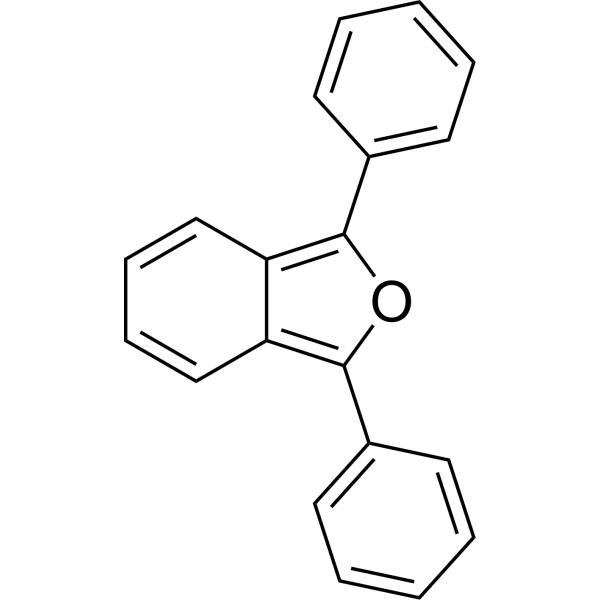
1,3-Diphenylisobenzofuran (DPBF) has been developed as a selective probe for the detection and quantitative determination of hydrogen peroxide in samples containing different reactive nitrogen and oxygen species (RNOS). DPBF is a fluorescent probe which, for almost 20 years, was believed to react in a highly specific manner toward some reactive oxygen species such as singlet oxygen and hydroxy, alkyloxy or alkylperoxy radicals .
|
-
- HY-E70287
-
|
ST6GALNAC5
|
Glycosyltransferase
|
Metabolic Disease
|
|
ST6 Sialyltransferase 5 (EC:2.4.3.3, ST6GALNAC5, SIAT7E, ST6 N-acetylgalactosaminide alpha-2,6-sialyltransferase 5) transfers a sialic acid to N-acetylgalactosamine (GalNAc) residues. ST6 Sialyltransferase 5 is a bio-marker in cervical screening samples .
|
-
- HY-D0227F
-
|
Tris HCl (≥99%, reagent grade); Tris hydrochloride (≥99%, reagent grade)
|
Biochemical Assay Reagents
|
Others
|
|
THAM hydrochloride (≥99%, reagent grade), also known as Tris-HCl, is a buffer commonly used in various biochemical and molecular biology applications to maintain a stable pH environment. Tris-HCl has unique chemical properties that allow it to resist changes in pH when acidic or basic substances are added, which makes it useful for stabilizing biological samples or reagents. It is commonly used in electrophoresis and protein purification procedures.
|
-
- HY-W440915
-
|
|
Liposome
|
Inflammation/Immunology
|
|
DSPE-PEG2000-FITC is a PEG lipid conjugated with fluorescein. FITC is a green dye with a peak absorption at 494 nm and a maximum emission at 520 nm, which is used for staining biological samples or nanoparticles. DSPE-PEG2000-FITC spontaneously forms lipid bilayers or micelles in water and can be used to prepare liposomes for delivering substances such as mRNA vaccines .
|
-
- HY-130767A
-
|
|
Biochemical Assay Reagents
|
Cancer
|
|
Naphthol AS-TR Phosphate disodium is a water-soluble dye commonly used as an enzymatic substrate in various biochemical assays to detect alkaline phosphatase activity. Naphthol AS-TR Phosphate disodium has unique chemical properties that allow it to be hydrolyzed by alkaline phosphatase, forming a colored product that can be detected spectrophotometrically. This makes it a useful tool for monitoring enzyme activity in biological samples such as serum or urine.
|
-
- HY-N16571
-
|
|
Fluorescent Dye
Endogenous Metabolite
|
Others
|
|
Marionol is a type of flavonol compound and belongs to the secondary metabolites of plants. Marionol exhibits significant specificity towards Cu²⁺ and possesses the characteristic of intramolecular proton transfer in excited state (ESIPT), enabling it to generate strong fluorescence upon excitation by ultraviolet light. The maximum excitation/emission wavelengths are 350 nm and 510 nm (depending on the solvent), respectively. Marionol can be used as a fluorescence probe for Cu²⁺ .
|
-
- HY-121238R
-
|
|
G protein-coupled Bile Acid Receptor 1
FXR
Reference Standards
Others
|
Metabolic Disease
|
|
Hyocholic Acid (Standard) is the analytical standard of Hyocholic Acid. This product is intended for research and analytical applications. Hyocholic Acid is a bile acid found in pig. Hyocholic Acid can also be found in urine samples from patients with cholestasis. Hyocholic Acid promotes GLP-1 secretion via activating TGR5 and inhibiting FXR in enteroendocrine cells. Hyocholic Acid is known for its exceptional resistance to type 2 diabetes [1][2][3].
|
-
- HY-122792R
-
|
|
Endogenous Metabolite
Reference Standards
|
Cardiovascular Disease
|
|
Phenyramidol (Hydrochloride) (Standard) is the analytical standard of Phenyramidol (Hydrochloride). This product is intended for research and analytical applications. Phenyramidol hydrochloride is an anticoagulant and analgesic with activity that increases detection sensitivity in biological samples. Phenyramidol hydrochloride can be oxidized in aqueous media by electrochemical methods to achieve its quantitative analysis. The detection of Phenyramidol hydrochloride using an amino-functionalized multi-walled carbon nanotube-modified glassy carbon electrode showed significant enhancement of the current peak .
|
-
- HY-B0887
-
|
NRDC-143
|
Environmental Pollutants
Parasite
Mitochondrial Metabolism
Sodium Channel
|
Infection
Neurological Disease
|
|
Permethrin (NRDC-143) is an insecticide, acaricide and a high selectively inhibitor of the Mitochondrial complex I, found in sediment and water samples. Permethrin shows estrogenic in vivo and anti-estrogenic activity in vitro. Permethrin also acts as a neurotoxin affecting neuron membranes by prolonging Sodium channel activation. Permethrin decreases resistance to bacterial infections in medaka (Oryzias latipes) .
|
-
- HY-N8248A
-
|
|
Topoisomerase
|
Cancer
|
|
(-)-Eleutherin is a pyranonaphthoquinone derivative that exhibits cytotoxic activity by inhibiting DNA topoisomerase II. (-)-Eleutherin has been shown to have promising potential as a medicinal compound due to its association with naphthoquinones. (-)-Eleutherin demonstrates significant DNA fragmentation rates, indicating its strong cytotoxic effects on cells. Additionally, (-)-Eleutherin possesses higher antioxidant potential compared to control samples, contributing to its therapeutic efficacy.
|
-
- HY-137872
-
|
|
Biochemical Assay Reagents
|
Others
|
|
L-Leucyl-4-nitroanilide hydrochloride is a commonly used substrate in various biochemical assays to measure the activity of enzymes that cleave peptide bonds, such as proteases. L-Leucine p-nitroanilide hydrochloride has unique chemical properties that allow it to be cleaved by these enzymes to form a yellow product called p-nitroaniline. This makes it a useful tool for detecting and quantifying protease activity in biological samples such as blood or tissue extracts.
|
-
- HY-103382R
-
|
|
Reference Standards
Fungal
|
Infection
|
|
Phenyramidol (Hydrochloride) (Standard) is the analytical standard of Phenyramidol (Hydrochloride). This product is intended for research and analytical applications. Phenyramidol hydrochloride is an anticoagulant and analgesic with activity that increases detection sensitivity in biological samples. Phenyramidol hydrochloride can be oxidized in aqueous media by electrochemical methods to achieve its quantitative analysis. The detection of Phenyramidol hydrochloride using an amino-functionalized multi-walled carbon nanotube-modified glassy carbon electrode showed significant enhancement of the current peak .
|
-
- HY-B1306R
-
|
p-Aminohippuric acid (Standard)
|
Reference Standards
Biochemical Assay Reagents
|
Neurological Disease
Metabolic Disease
|
|
4-Aminohippuric acid (p-Aminohippuric acid) (Standard) is the analytical standard of 4-Aminohippuric acid (HY-B1306). This product is intended for research and analytical applications. 4-Aminohippuric acid (p-Aminohippuric acid) is a coordination ligand for metal ions (such as Cu 2+, Fe 3+, Hg 2+) and a functionalization reagent for nanomaterials. 4-Aminohippuric acid can coordinate with metal ions or modify the surface of materials such as carbon nanotubes and gold nanoparticles through amino and carboxyl groups. 4-Aminohippuric acid can form stable complexes with metal ions or participate in the synthesis of nanomaterials as a reducing agent/stabilizer, enriching metal ions or giving nanoparticles peroxidase-mimicking activity. 4-Aminohippuric acid can be used to construct highly sensitive electrochemical sensors or colorimetric sensors to detect and quantitatively analyze heavy metal ions such as copper, iron, and mercury in environmental water samples and biological samples. 4-Aminohippuric acid may also be a biomarker for attention-deficit/hyperactivity disorder (ADHD) .
|
-
- HY-W776853
-
|
|
Biochemical Assay Reagents
|
|
|
4-Methylumbelliferyl β-DN,N',N'',N'''-tetraacetylchitotetraoside is a fluorogenic substrate with activity for lysozyme assays. 4-Methylumbelliferyl β-DN,N',N'',N'''-tetraacetylchitotetraoside can be used to study enzyme activity and its applications in biomedicine. 4-Methylumbelliferyl β-DN,N',N'',N'''-tetraacetylchitotetraoside exhibits high sensitivity in analyzing enzyme reactions in biological samples.
|
-
- HY-32833
-
|
|
Biochemical Assay Reagents
Drug Intermediate
|
Others
|
|
2-Chloro-3-pyridinol is a biochemical reagent that can be used as a biological material or organic compound for life science related research. 2-Chloro-3-pyridinol can also be used in the synthesis of other active compounds. In addition, 2-Chloro-3-pyridinol is a halopyridinol disinfection by-product in drinking water samples .
|
-
- HY-D2242
-
|
|
Fluorescent Dye
|
Others
|
|
Sulfo-Cy7.5 DBCO is a dye derivative of Cyanine 7.5 (Cy7.5) (HY-D0926) bearing a DBCO group. The sulfonate ion increases the water solubility of the compound, making it suitable for use in aqueous solutions. Sulfo-Cy7.5 DBCO can bind to biomolecules such as proteins and antibodies to track their location and dynamic changes in biological samples .
|
-
- HY-D0856
-
|
|
Biochemical Assay Reagents
|
Others
|
|
Bis-Tris is an amine buffer suitable for protein and nucleic acid systems with a pH buffer range of 5.8-7.2. Bis-Tris can also be mixed with HEPES and cacodylic acid buffer to create a pH 8 environment and monitor fluorescence emission intensity at 305 nm. Gels formulated with Bis-Tris also avoid protein degradation in samples prepared at higher pH (pH 8.5) .
|
-
- HY-137815
-
|
|
Biochemical Assay Reagents
|
Metabolic Disease
|
|
4-Nitrophenyl α-L-rhamnopyranoside is a commonly used substrate in various biochemical assays to measure the activity of enzymes that hydrolyze rhamnose, such as α-L-rhamnosidase. 4-Nitrophenyl α-L-rhamnopyranoside has unique chemical properties that allow it to be hydrolyzed by these enzymes to form a yellow product called p-nitrophenol. This makes it a useful tool for detecting and quantifying rhamnohydrolase activity in biological samples or microbial cultures.
|
-
- HY-W014075S
-
-
- HY-W105681
-
|
|
Biochemical Assay Reagents
|
Others
|
|
Bis-Tris hydrochloride is an amine buffer suitable for protein and nucleic acid systems with a pH buffer range of 5.8-7.2. Bis-Tris hydrochloride can also be mixed with HEPES and cacodylic acid buffer to create a pH 8 environment and monitor fluorescence emission intensity at 305 nm. Gels formulated with Bis-Tris also avoid protein degradation in samples prepared at higher pH (pH 8.5) .
|
-
- HY-W927376
-
|
|
Fluorescent Dye
|
Others
|
|
Boc-Val-Arg-AMC is a synthetic peptide compound. As a specific fluorescent substrate, Boc-Val-Arg-AMC can be specifically cleaved by specific enzymes, especially thrombin, to release a fluorescent molecule AMC (7-amino-4-methylcoumarin), which can be used to monitor thrombin activity. Boc-Val-Arg-AMC can be used to detect thrombin activity in plasma samples .
|
-
- HY-P2149A
-
|
|
Mitosis
|
Others
Metabolic Disease
|
|
Concanavalin A (agarose) is composed of Concanavalin A (HY-P2149) conjugated with agarose. Concanavalin A (ConA) is a selective competitive binder targeting the specific carbohydrate structures of glucose and mannose, inducing mitosis, and exhibiting certain cytotoxicity, hepatotoxicity, and teratogenicity. Concanav in A (agarose) can be used for in vivo blood glucose monitoring in diabetes, and for "fishing out" specific glycoproteins or removing sugar impurities from complex samples .
|
-
- HY-W014075R
-
|
|
Reference Standards
Aryl Hydrocarbon Receptor
Cytochrome P450
Collagen
|
Inflammation/Immunology
|
|
1-Hydroxypyrene (Standard) is the analytical standard of 1-Hydroxypyrene (HY-W014075). This product is intended for research and analytical applications. 1-Hydroxypyrene, a biomarker of exposure to polycyclic aromatic hydrocarbons (PAHs), is analyzed in urine samples. 1-Hydroxypyrene is the major biomarker of exposure to pyrenes. 1-Hydroxypyrene is the orally active agonist for aryl hydrocarbon receptor (AhR) and can lead to renal fibrosis.
|
-
- HY-D0836
-
|
Ethylenediaminetetraacetic acid dipotassium dihydrate
|
DNA/RNA Synthesis
|
Others
|
|
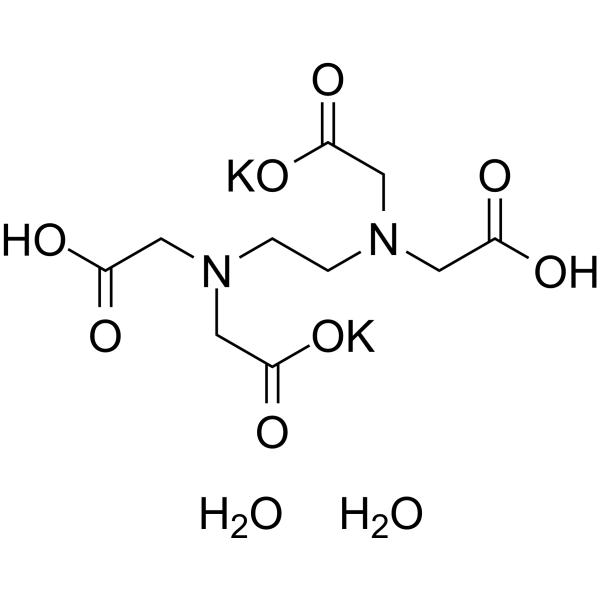
EDTA dipotassium dihydrate is a metal ion chelator that forms stable and water-soluble chelates with a variety of metal ions. EDTA dipotassium is commonly used as a blood anticoagulant, which can effectively prevent blood coagulation and maintain the morphology and function of cells in blood samples. In the industrial field, EDTA dipotassium can be used to remove the adverse effects of metal ions and prevent oxidation and deterioration caused by metal ions .
|
-
- HY-179216
-
|
|
HDAC
|
Neurological Disease
Inflammation/Immunology
|
|
KTT-1 is a kinetically selective and orally active HDAC2 inhibitor. KTT-1 exhibits high HDAC2-selectivity over HDAC1. KTT-1 inhibits osteoclast differentiation at an early stage by downregulating c-Fos expression. KTT-1 effectively suppresses arthritis symptoms in the collagen-induced arthritis (CIA) mouse model. KTT-1 can be used for the research of rheumatoid arthritis and neurodegenerative diseases .
|
-
- HY-P3186A
-
|
GDH-NAD
|
Endogenous Metabolite
|
Metabolic Disease
|
|
NAD-dependent glucose dehydrogenase (GDH-NAD) is an oxidoreductase that uses NAD + as a coenzyme, specifically catalyzes the dehydrogenation of glucose to gluconolactone, and reduces NAD + to NADH. NAD-dependent glucose dehydrogenase exhibits favorable substrate selectivity and stability, and is not affected by oxygen .
|
-
- HY-P2602
-
|
|
GABA Receptor
|
Neurological Disease
|
|
α-Casozepine is an orally effective anxiolytic that binds to the benzodiazepine site of the GABAA receptor in bovine samples with an IC50 of 88 μM. α-Casozepine exerts anxiolytic and anti-stress effects on cats exposed to unfamiliar environments and dogs undergoing road transport . α-Casozepine exhibits significant anxiolytic activity in rats. α-Casozepine can be used in studies related to fear, anxiety and stress .
|
-
- HY-W344380
-
|
|
Biochemical Assay Reagents
|
|
|
Tetrahydro-2,5-dioxo-3-furansulfonic acid, sodium is a chemical reagent with excellent water determination activity. Tetrahydro-2,5-dioxo-3-furansulfonic acid, sodium is widely used as a titrant in Karl Fischer titration to determine the water content in various samples. Tetrahydro-2,5-dioxo-3-furansulfonic acid, sodium has important application value in chemical analysis.
|
-
- HY-B1306S
-
|
p-Aminohippuric acid-d4
|
Biochemical Assay Reagents
|
Neurological Disease
Metabolic Disease
|
|
4-Aminohippuric acid-d4 (p-Aminohippuric acid-d4) is the deuterium labeled 4-Aminohippuric acid (HY-B1306). 4-Aminohippuric acid (p-Aminohippuric acid) is a coordination ligand for metal ions (such as Cu 2+, Fe 3+, Hg 2+) and a functionalization reagent for nanomaterials. 4-Aminohippuric acid can coordinate with metal ions or modify the surface of materials such as carbon nanotubes and gold nanoparticles through amino and carboxyl groups. 4-Aminohippuric acid can form stable complexes with metal ions or participate in the synthesis of nanomaterials as a reducing agent/stabilizer, enriching metal ions or giving nanoparticles peroxidase-mimicking activity. 4-Aminohippuric acid can be used to construct highly sensitive electrochemical sensors or colorimetric sensors to detect and quantitatively analyze heavy metal ions such as copper, iron, and mercury in environmental water samples and biological samples. 4-Aminohippuric acid may also be a biomarker for attention-deficit/hyperactivity disorder (ADHD) .
|
-
- HY-165093
-
|
1-Arachidin-2-olein-3-palmitin; TG(20:0/18:1/16:0)
|
Others
|
Others
|
|
1-Arachidoyl-2-oleoyl-3-palmitoyl-rac-glycerol (1-Arachidin-2-olein-3-palmitin) is a triglyceride characterized by regioisomerism by silver ion HPLC/MS. The method can be applied to the analysis of complex samples of vegetable oils and animal fats, and the results show that plant and animal fats have different preferences for fatty acid occupancy at the sn-2 position.
|
-
- HY-D1865
-
|
|
Fluorescent Dye
|
Others
|
|
Cy3 dimethyl iodide is a dye derivative of Cyanine 3 (Cy3) (HY-D0822) with a dimethyl group in the iodide salt form. The iodide salt form increases the water solubility of the compound, making it suitable for use in aqueous solutions. Cy3 is a near-infrared fluorescent dye commonly used in biolabeling and cell imaging. Cy3 dimethyl iodide binds to biomolecules such as proteins and antibodies to track their location and dynamic changes in biological samples.
|
-
- HY-113139S
-
|
N1-Methylinosine-d3
|
Isotope-Labeled Compounds
Endogenous Metabolite
Nucleoside Antimetabolite/Analog
|
Cancer
|
|
1-Methylinosine-d3 (N1-MetHYlinosine-d3) is the deuterium labeled 1-Methylinosine. 1-Methylinosine is a modified nucleotide located at position 37 of eukaryotic tRNA, 3' to the tRNA anticodon. 1-Methylinosine is a minor metabolite of 1-methyladenosine (HY-113081). The level of 1-Methylinosine is significantly elevated in urine samples from breast cancer models.
|
-
- HY-141511
-
Coppersensor 1
Maximum Cited Publications
29 Publications Verification
|
Fluorescent Dye
|
Neurological Disease
Cancer
|
|
Coppersensor-1 (CS1) is a membrane-permeable fluorescent dye. Coppersensor-1 has a picomolar affinity for Cu + with high selectivity over competing cellular metalions. Coppersensor-1 as a probe, can selective and sensitive detection of copper(I) ions (Cu +) in biological samples, including live cells. Coppersensor-1 can be used for the research of imaging of severe diseases such as cancer, cardiovascular disorders and neurogenerative diseases .
|
-
- HY-151759
-
|
|
Fluorescent Dye
|
Cancer
|
|
Sulfo-Cy5-TCO is a water-soluble sulfonated Cy5 fluorescent reagent containing trans-cyclooctene (TCO). Sulfo-Cy5-TCO undergoes an inverse electron demand Diels‑Alder reaction with tetrazine-labeled fixed breast cancer cells to achieve cell labeling. Sulfo-Cy5-TCO is used for fluorescent labeling and imaging of biological samples such as proteins and cells .
|
-
- HY-W585926
-
|
|
Reactive Oxygen Species (ROS)
|
Others
|
|
Disperse Polyester Dark Blue is a chemical compound extensively employed in scientific research. It serves as a redox-active agent and functions as a probe for identifying reactive oxygen species (ROS) in cells and tissues. By accepting electrons from ROS and undergoing oxidation, Disperse Polyester Dark Blue demonstrates its redox activity. Consequently, a chemiluminescent signal is generated, which can be measured using a luminometer. The intensity of the signal directly correlates with the quantity of ROS detected within the sample.
|
-
- HY-W415108
-
|
|
Fluorescent Dye
|
Others
|
|
10-Methyl-9-(phenoxycarbonyl) acridinium trifluoromethanesulfonate is an acridinium ester that produces fluorescent 10-methyl-9-acridone upon oxidation with hydrogen peroxide, persulfate, and other oxidants under alkaline conditions. 10-Methyl-9-(phenoxycarbonyl) acridinium trifluoromethanesulfonate can be used in chemiluminescent assays, enzyme, antigen, antibody, and hormone immunoassays, and for the detection of oxidants in environmental, biological, and pharmaceutical samples .
|
-
- HY-W090065
-
|
1-Pyrenemethylamine hydrochloride
|
Biochemical Assay Reagents
|
Others
|
|
Pyren-1-ylmethanamine hydrochloride, Pyren-1-ylmethanamine hydrochloride is commonly used as a fluorescent probe in biochemistry and molecular biology to detect and study nucleic acids, proteins and other biomolecules, moreover, it has been used in analytical chemistry Among them, for the detection of heavy metals and other pollutants in environmental samples, the pyrene group in the molecule exhibits strong fluorescence properties, which makes it useful as a sensitive and selective detector in various applications.
|
-
- HY-P10943
-
|
|
Fluorescent Dye
|
Inflammation/Immunology
Cancer
|
|
APO-15 is a phosphatidylserine-binding fluorescent probe and apoptosis imaging reagent. APO-15 exhibits high chemical stability under proteolytic and oxidative conditions, enables quantification and imaging of drug-induced apoptosis in preclinical mouse models, and is applicable to fixed tissue samples and multiple in vivo administration routes (Ex = 488 nm; Em = 525 nm). APO-15 can be used in studies related to acute lung injury and breast cancer .
|
-
- HY-D1317A
-
|
|
Fluorescent Dye
|
Others
|
|
Cyanine7.5 carboxylic is a dye derivative of Cyanine 7.5 (Cy7.5) (HY-D0926) with carboxylic acid functional groups. Cy7.5 is a near-infrared fluorescent dye commonly used in biomedical research areas such as biomarkers and cell imaging. Cyanine7.5 carboxylic can be covalently bound to some biological molecules (especially antibodies, proteins, etc.) to track their location and dynamic changes in biological samples.
|
-
- HY-133823
-
|
C16:1 (cis-11/trans-11) Fatty acid
|
Endogenous Metabolite
|
Metabolic Disease
|
|
11-Hexadecenoic acid is a monounsaturated fatty acid. 11-cis-Hexadecenoic acid and 11-trans-hexadecenoic acid have been found in ewe milk fat, and levels of each increase with dietary lipid supplementation of linseed, sunflower, olive, or fish oils. 11-trans-Hexadecenoic acid has also been found in intramuscular fat samples isolated from male and female foals. This product is a mixture of 11-cis- and 11-trans-hexadecenoic acids.
|
-
- HY-P3185
-
|
|
Biochemical Assay Reagents
|
Metabolic Disease
|
|
Beta-galactose dehydrogenase is a selective catalyst for β-galactose. Under pH 8.6 conditions, beta-galactose dehydrogenase catalyzes the oxidation of β-galactose, produced by the hydrolysis of lactose by β-galactosidase, with nicotinamide adenine dinucleotide (NAD) to produce reduced nicotinamide adenine dinucleotide (NADH). Beta-galactose dehydrogenase specifically mediates this oxidation reaction for the quantitative detection of the substrate, used in the analysis of lactose concentration in samples such as breast milk .
|
-
- HY-DY1087
-
|
|
Fluorescent Dye
|
Cancer
|
Coppersensor 1 (solution) is a membrane-permeable fluorescent dye. Coppersensor-1 has a picomolar affinity for Cu + with high selectivity over competing cellular metalions. Coppersensor-1 as a probe, can selective and sensitive detection of copper(I) ions (Cu +) in biological samples, including live cells. Coppersensor-1 can be used for the research of imaging of severe diseases such as cancer, cardiovascular disorders and neurogenerative diseases . Solvent and concentration: DMSO: 2 mM
|
-
- HY-P9983
-
|
SGN-33; HuM-195; GLK-33 Antibody
|
Transmembrane Glycoprotein
Radionuclide-Drug Conjugates (RDCs)
|
Inflammation/Immunology
|
|
Lintuzumab (HUM-195) is an anti-CD33 humanized monoclonal antibody. Lintuzumab reduces the production of TNFα-induced pro-inflammatory cytokines and chemokines by AML cells. Lintuzumab promotes tumor cell killing through antibody-dependent cellular cytotoxicity (ADCC) and phagocytosis (ADCP) activities against MDR and MDR+ AML cell lines and primary AML patient samples. Lintuzumab enhances survival and reduces tumor burden in mice .
|
-
- HY-D1317
-
|
|
Fluorescent Dye
|
Others
|
|
Cyanine7.5 carboxylic acid chloride is a dye derivative of Cyanine 7.5 (Cy7.5) (HY-D0926) with carboxylic acid functional groups. Cy7.5 is a near-infrared fluorescent dye commonly used in biomedical research areas such as biomarkers and cell imaging. Cyanine7.5 carboxylic acid chloride can be covalently bound to some biological molecules (especially antibodies, proteins, etc.) to track their location and dynamic changes in biological samples.
|
-
- HY-137249
-
|
|
Biochemical Assay Reagents
|
Others
|
|
Resorufin-β-D-galactopyranoside is a commonly used substrate in various biochemical assays to measure the activity of β-galactosidase, an important enzyme involved in lactose metabolism and regulation of gene expression. Resorufin-β-D-galactopyranoside has unique chemical properties and can be hydrolyzed by β-galactosidase to form a red fluorescent product called resorufin. This makes it a useful tool for detecting and quantifying β-galactosidase activity in biological samples such as bacteria or mammalian cells.
|
-
- HY-137855
-
|
|
Biochemical Assay Reagents
|
Others
|
|
4-Methylumbelliferyl sulfate (potassium), a fluorescent substrate, is commonly used to detect sulfatase activity in biochemical and biomedical research. It consists of a sulfate group attached to a fluorescent molecule, which can be cleaved by sulfatase enzymes. Upon cleavage, 4-Methylumbelliferyl sulfate releases a highly fluorescent product that can be detected using fluorescence microscopy or spectroscopy. The use of 4-Methylumbelliferyl sulfate as a substrate for sulfatase enzymes allows accurate detection and quantification of these enzymes in a variety of biological samples.
|
-
- HY-D1852
-
|
|
Fluorescent Dye
|
Others
|
|
Cy3B amine chloride is a dye derivative of Cyanine 3 (Cy3) (HY-D0822) bearing an amine group. Cy3 is a fluorescent dye with a fluorescence spectrum typically in the green to orange wavelength range. The amine functionality of Sulfo-Cy3 amine can react with carboxyl groups to form covalent bonds. Sulfo-Cy3 amine can bind to biological molecules such as proteins and antibodies to track their location and dynamic changes in biological samples.
|
-
- HY-D0151
-
|
|
Fluorescent Dye
|
Others
|
|
Tetramethylrhodamine-5-maleimide is a fluorescent probe with high specificity for cysteine thiol (SH) groups. Tetramethylrhodamine-5-maleimide has high sensitivity, responds rapidly to negatively charged nanoparticles, and shows a concentration-dependent decrease in fluorescence intensity, but it is susceptible to interference from humic acids .
|
-
- HY-D1860
-
|
|
Fluorescent Dye
|
Others
|
|
Cy3 alkyne chloride is a dye derivative of Cyanine 3 (Cy3) (HY-D0822) containing a sulfonate ion and an alkyne functional group. Cy3 is a fluorescent dye with a fluorescence spectrum typically in the green to orange wavelength range. The alkyne functional group of Cy3 alkyne chloride can react with molecules containing the azide functional group to form covalent bonds. Cy3 alkyne chloride can bind to biological molecules such as proteins and antibodies to track their location and dynamic changes in biological samples.
|
-
- HY-D0856R
-
|
|
Biochemical Assay Reagents
Reference Standards
|
Others
|
|
Bis-Tris (Standard) is the analytical standard of Bis-Tris. This product is intended for research and analytical applications. Bis-Tris is an amine buffer suitable for protein and nucleic acid systems with a pH buffer range of 5.8-7.2. Bis-Tris can also be mixed with HEPES and cacodylic acid buffer to create a pH 8 environment and monitor fluorescence emission intensity at 305 nm. Gels formulated with Bis-Tris also avoid protein degradation in samples prepared at higher pH (pH 8.5) .
|
-
- HY-W774926
-
|
NRDC-143-d6
|
Isotope-Labeled Compounds
Na+/K+ ATPase
Parasite
Sodium Channel
Mitochondrial Metabolism
|
Infection
Neurological Disease
|
|
Permethrin-d6 (NRDC-143-d6) is deuterium labeled Permethrin. Permethrin (NRDC-143) is an insecticide, acaricide and a high selectively inhibitor of the Mitochondrial complex I, found in sediment and water samples. Permethrin shows estrogenic in vivo and anti-estrogenic activity in vitro. Permethrin also acts as a neurotoxin affecting neuron membranes by prolonging Sodium channel activation. Permethrin decreases resistance to bacterial infections in medaka (Oryzias latipes) .
|
-
- HY-D1871
-
|
|
Fluorescent Dye
|
Others
|
|
Cy3 maleimide chloride is a dye derivative of Cyanine 3 (Cy3) (HY-D0822) containing maleimide functional groups. Cy3 is a fluorescent dye with a fluorescence spectrum typically in the green to orange wavelength range. The alkyne functional group of Cy3 maleimide chloride can undergo a "thiol-acrylamide" reaction with molecules containing sulfur-oxygen functional groups to form covalent bonds. Cy3 maleimide chloride can bind to biological molecules such as proteins and antibodies to track their location and dynamic changes in biological samples.
|
-
- HY-128429
-
|
(E)-2-Hexenal
|
Environmental Pollutants
Biochemical Assay Reagents
Fungal
|
Infection
|
|
trans-2-Hexenal ((E)-2-Hexenal) is a volatile compound widely present in fresh plants, vegetables, and fruits, with a unique leafy aroma. trans-2-Hexenal has antifungal activity and can also inhibit the germination of soybean seeds and the growth of seedlings. In addition, trans-2-Hexenal can be used to determine low-molecular-weight carbonyl compounds that are reactive with biological nucleophiles in biological samples .
|
-
- HY-D0856S1
-
|
|
Isotope-Labeled Compounds
Biochemical Assay Reagents
|
Others
|
|
Bis-Tris-d14 is the deuterium labeled Bis-Tris (HY-D0856). Bis-Tris is an amine buffer suitable for protein and nucleic acid systems with a pH buffer range of 5.8-7.2. Bis-Tris can also be mixed with HEPES and cacodylic acid buffer to create a pH 8 environment and monitor fluorescence emission intensity at 305 nm. Gels formulated with Bis-Tris also avoid protein degradation in samples prepared at higher pH (pH 8.5) .
|
-
- HY-D1846
-
|
|
Fluorescent Dye
|
Others
|
|
Sulfo-Cy7.5 dimethyl is a dye derivative of Cyanine 7.5 (Cy7.5) (HY-D0926) with a dimethyl group. The sulfonate ion increases the water solubility of the compound, making it suitable for use in aqueous solutions. Cy7.5 is a near-infrared fluorescent dye commonly used for biolabeling and cell imaging. Sulfo-Cy7.5 dimethyl binds to biomolecules such as proteins and antibodies to track their location and dynamic changes in biological samples.
|
-
- HY-D1868
-
|
|
Fluorescent Dye
|
Others
|
|
Cy3 azide plus is a Cyanine 3 (Cy3) (HY-D0822) dye derivative with an azide functional group. Cy3 is a fluorescent dye with a fluorescence spectrum typically in the green to orange wavelength range. The azide group of Cy3 azide plus can react chemically with molecules containing alkyne functionality, such as alkyne or cyclooctyne, to form covalent bonds. Therefore, Cy3 azide plus can bind to biomolecules such as proteins and antibodies to track their location and dynamic changes in biological samples.
|
-
- HY-D1851
-
|
|
Fluorescent Dye
|
Others
|
|
Cy3B amine chloride is a dye derivative of Cyanine 3 (Cy3) (HY-D0822) bearing an amine group in the disodium salt form. Cy3 is a fluorescent dye with a fluorescence spectrum typically in the green to orange wavelength range. The amine functionality of Sulfo-Cy3 amine can react with carboxyl groups to form covalent bonds. Sulfo-Cy3 amine can bind to biological molecules such as proteins and antibodies to track their location and dynamic changes in biological samples.
|
-
- HY-131937
-
-
- HY-DY1053
-
|
|
Fluorescent Dye
Reactive Oxygen Species (ROS)
|
Others
|
1,3-Diphenylisobenzofuran (DPBF) (solution) has been developed as a selective probe for the detection and quantitative determination of hydrogen peroxide in samples containing different reactive nitrogen and oxygen species (RNOS). DPBF is a fluorescent probe which, for almost 20 years, was believed to react in a highly specific manner toward some reactive oxygen species such as singlet oxygen and hydroxy, alkyloxy or alkylperoxy radicals . Solvent and concentration: DMSO: 10 mM The 1 mL volume is defined as the base specification. All larger sizes correspond to incremental volumes of this base.
|
-
- HY-112697
-
|
|
Biochemical Assay Reagents
|
Others
|
|
Rhodamine B isothiocyanate (RBITC) is a fluorescent dye commonly used in biological imaging and labeling applications. It has an isothiocyanate functional group that can be covalently attached to amino groups on proteins and other biomolecules, making it useful for fluorescent labeling of cells and tissues. RBITC fluoresces bright orange-red under green light excitation, which makes it easy to detect and track labeled molecules in complex samples. Due to its stability and sensitivity, RBITC has been widely used in various research fields, including cell biology, immunology, and neurobiology.
|
-
- HY-D1847
-
|
|
Fluorescent Dye
|
Others
|
|
Cy7.5 tetrazine tetrafluoroborate is a dye derivative of Cyanine 7.5 (Cy7.5) (HY-D0926) bearing a tetrazine group. Cy7.5 is a near-infrared fluorescent dye commonly used for biolabeling and cell imaging. Cy7.5 tetrazine tetrafluoroborate can perform efficient click reactions with molecules containing alkyne functional groups (such as alkyne) to form covalent bonds. It can be combined with biological molecules such as proteins and antibodies to track their location and dynamic changes in biological samples.
|
-
- HY-W755033
-
-
- HY-D1375
-
|
|
Fluorescent Dye
|
Others
|
|
Sulfo-Cy5 amine is a dye derivative of Cyanine 5 (Cy5) (HY-D0821) bearing an amine group. The sulfonate ion increases the water solubility of the compound, making it suitable for use in aqueous solutions. Cy5 is a near-infrared fluorescent dye commonly used in biolabeling and cell imaging. The amine functionality of Sulfo-Cy5 amine can react with carboxyl groups to form covalent bonds. Sulfo-Cy5 amine can bind to biomolecules such as proteins and antibodies to track their location and dynamic changes in biological samples.
|
-
- HY-117204
-
|
|
Antibiotic
|
Infection
|
|
AA-57 is an acidic lipophilic antibiotic isolated from the fermentation broth of Actinomycetes strain AA-57. The AA-57 strain can be isolated from a soil sample collected in Koriyama City, Fukushima Prefecture, Japan. AA-57 has antibacterial properties against Gram-positive bacteria, Gram-negative bacteria, and acid-fast bacteria. AA-57 was discovered by screening actinomycete cultures for antibacterial properties. AA-57 exhibits significant antibacterial activity and has inhibitory effects against a variety of bacteria.
|
-
- HY-131146
-
AMOZ
1 Publications Verification
3-Amino-5-morpholinomethyl-2-oxazolidone
|
Drug Metabolite
|
Infection
|
|
AMOZ is a carcinogenic metabolite of Furaltadone (HY-B1148A), which forms stable tissue residues by covalently binding to proteins as a hapten. AMOZ can be coupled with carrier proteins (such as BSA/OVA) to induce immune response and is released after acid hydrolysis. AMOZ residues can be detected by competitive ELISA method, and the detection limit in the monoclonal antibody 2E5.1 test is as low as 0.16 μg/kg (shrimp sample). AMOZ can be used as a typical marker to monitor drug residues in animal-derived foods in the field of food safety[1][2].
|
-
- HY-123000
-
|
|
Biochemical Assay Reagents
|
|
|
4-Methylumbelliferyl 2-acetamido-2-deoxy-α-D-galactopyranoside is a fluorogenic substrate for studying the enzymatic activity of α-galactosidase. 4-Methylumbelliferyl 2-acetamido-2-deoxy-α-D-galactopyranoside is used to analyze enzyme activity in various biological samples, helping scientists gain insight into the function of the enzyme in vivo. 4-Methylumbelliferyl 2-acetamido-2-deoxy-α-D-galactopyranoside can also be used to screen potential compounds to inhibit or activate this enzyme.
|
-
- HY-D1864
-
|
|
Fluorescent Dye
|
Others
|
|
Sulfo-Cy7.5 dicarboxylic acid is a dye derivative of Cyanine 7.5 (Cy7.5) (HY-D0926) with carboxylic acid and sulfonate functional groups. The sulfonate ion increases the water solubility of the compound, making it suitable for use in aqueous solutions. Cy7.5 is a near-infrared fluorescent dye commonly used in biomedical research areas such as biomarkers and cell imaging. Sulfo-Cy7.5 dicarboxylic acid can be covalently bound to some biomolecules (especially antibodies, proteins, etc.) to track their location and dynamic changes in biological samples.
|
-
- HY-D1272
-
|
Sulfo-Cyanine3 amine
|
Fluorescent Dye
|
Others
|
|
Sulfo-Cy3 amine is a dye derivative of Cyanine 3 (Cy3) (HY-D0822) bearing an amine group. The sulfonate ion increases the water solubility of the compound, making it suitable for use in aqueous solutions. Cy3 is a fluorescent dye with a fluorescence spectrum typically in the green to orange wavelength range. The amine functionality of Sulfo-Cy3 amine can react with carboxyl groups to form covalent bonds. Sulfo-Cy3 amine can bind to biological molecules such as proteins and antibodies to track their location and dynamic changes in biological samples.
|
-
- HY-P991224
-
|
|
CCR
|
Inflammation/Immunology
Cancer
|
|
CAP-100 is a monoclonal antibody that targets CCR7. CAP-100 neutralizes the ligand-binding site and signaling of CCR7. CAP-100 strongly inhibits CCR7-induced migration, extravasation, homing, and survival in chronic lymphocytic leukemia (CLL) samples. CAP-100 triggers potent tumor cell killing, mediated by host immune mechanism. CAP-100 shows a favorable toxicity profile on relevant hematopoietic subsets. CAP-100 is involved in research on anti-tumor and disease such as CLL .
|
-
- HY-D1318
-
|
|
Fluorescent Dye
|
Others
|
|
Cyanine7.5 azide chloride is a dye derivative of Cyanine 7.5 (Cy7.5) (HY-D0926) with an azide functional group. Cy7.5 is a near-infrared fluorescent dye commonly used for biolabeling and cell imaging. The azide group of Cyanine7.5 azide chloride can react chemically with molecules containing alkyne functionality, such as alkyne or cyclooctyne, to form covalent bonds. Therefore, Cyanine7.5 azide chloride can bind to biomolecules such as proteins and antibodies to track their location and dynamic changes in biological samples.
|
-
- HY-D1862
-
|
|
Fluorescent Dye
|
Others
|
|
Cy7.5 alkyne chloride is a dye derivative of Cyanine 7.5 (Cy7.5) (HY-D0926) containing a sulfonate ion and an alkyne functional group. Cy7.5 is a near-infrared fluorescent dye commonly used for biolabeling and cell imaging. The alkyne functional group of Cy7.5 alkyne chloride can react with molecules containing the azide functional group to form covalent bonds. Cy7.5 alkyne chloride can bind to biological molecules such as proteins and antibodies to track their location and dynamic changes in biological samples.
|
-
- HY-D1866
-
|
|
Fluorescent Dye
|
Others
|
|
Sulfo-Cy7.5 carboxylic acid is a dye derivative of Cyanine 7.5 (Cy7.5) (HY-D0926) with carboxylic acid and sulfonate ion (sulfonate) functional groups. The sulfonate ion increases the water solubility of the compound, making it suitable for use in aqueous solutions. Cy7.5 is a near-infrared fluorescent dye commonly used in biomedical research areas such as biomarkers and cell imaging. Sulfo-Cy7.5 carboxylic acid can be covalently bound to some biomolecules (especially antibodies, proteins, etc.) to track their location and dynamic changes in biological samples.
|
-
- HY-D1861
-
|
|
Fluorescent Dye
|
Others
|
|
Sulfo-Cy3 hydrazide is a Cyanine 3 (Cy3) (HY-D0822) dye derivative with hydrazine functionality. The sulfonate ion increases the water solubility of the compound, making it suitable for use in aqueous solutions. Cy3 is a fluorescent dye with a fluorescence spectrum typically in the green to orange wavelength range. The hydrazide group of Sulfo-Cy3 hydrazide can form hydrazinone coupling with molecules containing aldehydes or ketones to form covalent bonds. Therefore, Cy3 azide plus can bind to biomolecules such as proteins and antibodies to track their location and dynamic changes in biological samples.
|
-
- HY-W009311
-
|
4,4'-Bis(dimethylamino)thiobenzophenone
|
Biochemical Assay Reagents
|
Others
|
|
Thiomichler's ketone (4,4'-Bis (dimethylamino) thiobenzophenone) is a heavy metal complexing agent and a colorimetric/spectrophotometric reagent. Thiomichler's ketone shows selectivity for Hg 2+ at pH 3, and exhibits activity towards Pd 2+ and Ag + at pH 3.5. Thiomichler's ketone enables accurate detection of trace Pd 2+ by forming an extractable Hg 2+ complex via micelle-mediated cloud point extraction, or generating a red coordination complex including Pd (TMK)4. Thiomichler's ketone is applicable for the determination of trace Pd 2+ in antibiotics and catalysts of automobile exhaust purifiers .
|
-
- HY-128429S
-
|
(E)-2-Hexenal-d2-1
|
Isotope-Labeled Compounds
Fungal
Biochemical Assay Reagents
|
Infection
|
|
trans-2-Hexenal-d2-1 is the deuterium labeled trans-2-Hexenal (HY-128429). trans-2-Hexenal ((E)-2-Hexenal) is a volatile compound widely present in fresh plants, vegetables, and fruits, with a unique leafy aroma. trans-2-Hexenal has antifungal activity and can also inhibit the germination of soybean seeds and the growth of seedlings. In addition, trans-2-Hexenal can be used to determine low-molecular-weight carbonyl compounds that are reactive with biological nucleophiles in biological samples .
|
-
- HY-172166B
-
|
|
Fluorescent Dye
|
Neurological Disease
|
|
TRITC-lysine-dextran (MW 70kDa) is a fluorescent label prepared by the conjugation of TRITC (HY-D0791), lysine and dextran. TRITC-lysine-dextran (MW 70kDa) serves multiple functions as an axonal tracer, non-viral nanocarrier and fixable fluorescent clonal marker. TRITC-lysine-dextran (MW 70kDa) undergoes anterograde and retrograde transport within axons of sensory neurons, and acts as a non-viral delivery system to precisely deliver biomolecules to neurons. TRITC-lysine-dextran (MW 70kDa) remains stably retained during histological preparation, thereby supporting continuous observation in live or fixed samples .
|
-
- HY-D1867
-
|
|
Fluorescent Dye
|
Others
|
|
Sulfo-Cy3-PEG2-TCO disodium is a derivative of Cy3 (Cyanine3) (HY-D0822) dye containing sulfonate and TCO groups. The TCO groups of Sulfo-Cy3-PEG2-TCO disodium react with tetrazine functional groups in highly specific click chemistry to form covalent bonds. Thus, Sulfo-Cy3-PEG2-TCO disodium can be covalently bound to some biomolecules (especially antibodies, proteins, etc.) to track their location and dynamic changes in biological samples.
|
-
- HY-W688732
-
|
|
Biochemical Assay Reagents
|
Others
|
|
2-Chloro-4,4,5,5-tetramethyl-1,3,2-dioxaphospholane is a biochemical reagent. 2-Chloro-4,4,5,5-tetramethyl-1,3,2-dioxaphospholane serves as a phosphorylation reagent for alcohols and heteroatoms, which is used in the synthesis of glycosyl donors and ligands, and also applied in the analytical research of derivatized lignin samples. 2-Chloro-4,4,5,5-tetramethyl-1,3,2-dioxaphospholane acts as a catalyst in copper oxide/titanium dioxide-catalyzed lignin oxidation studies .
|
-
- HY-D1863
-
|
|
Fluorescent Dye
|
Others
|
|
sulfo-Cy7.5 amine is a dye derivative of Cyanine 7.5 (Cy7.5) (HY-D0926) bearing an amine group. The sulfonate ion increases the water solubility of the compound, making it suitable for use in aqueous solutions. Cy7.5 is a near-infrared fluorescent dye commonly used for biolabeling and cell imaging. The amine functionality of sulfo-Cy7.5 amine can react with carboxyl groups to form covalent bonds. Sulfo-Cy7.5 amine can bind to biomolecules such as proteins and antibodies to track their location and dynamic changes in biological samples.
|
-
- HY-183648
-
|
|
Endogenous Metabolite
|
Others
|
|
N-Acetyl-S-(3-hydroxy-1-methylpropyl)-L-cysteine (3HMPMA) is a mercapturic acid and biomarker for crotonaldehyde exposure. N-Acetyl-S-(3-hydroxy-1-methylpropyl)-L-cysteine helps distinguish smokers from non-smokers .
|
-
- HY-153924
-
-
- HY-160698
-
|
|
MALT1
Apoptosis
|
Cancer
|
|
SGR-1505 is an oral small molecule MALT1 inhibitor with anti-proliferative and antitumor activity.SGR-1505 inhibits MALT1 enzymatic activity to modulate NF-κB pathway gene expression.SGR-1505 induces modulation of cell cycle, DNA damage, and apoptosis-related genes in in vivo tumor samples.SGR-1505 exerts tumorostatic and regressive activity in ABC-DLBCL xenograft models.SGR-1505 can be used for the research of activated B cell-like diffuse large B cell lymphoma, non-Hodgkin B-cell lymphomas, chronic lymphocytic leukemia, and mature B cell neoplasms .
|
-
- HY-W250147
-
|
Victoria blue B
|
Biochemical Assay Reagents
|
Others
|
|
Basic blue 26 (Victoria blue B) is a synthetic cationic dye belonging to the class of triarylmethane dyes. It has a bright blue color and is commonly used as a colorant for a variety of applications, including textiles, paper and leather. Basic Blue 26 is also used as a biological stain for DNA and protein detection in laboratories. Due to its ability to bind negatively charged materials, it can be used as an indicator of the presence of specific molecules in biological samples. However, Basic blue 26 has been reported to have potentially harmful effects on human health and the environment and its use is regulated in some countries. Proper handling and disposal procedures are necessary to minimize its impact on the environment.
|
-
- HY-D1870
-
|
|
Fluorescent Dye
|
Others
|
|
Sulfo-Cy3-PEG3-biotin potassium is a biotin-modified derivative of Cy3 (Cyanine3) (HY-D0822) dye containing a TCO group. The TCO group of Sulfo-Cy3-PEG3-biotin potassium reacts with the tetrazine functional group in highly specific click chemistry to form a covalent bond. Thus, Sulfo-Cy3-PEG3-biotin potassium can be covalently bound to some biomolecules (especially antibodies, proteins, etc.) to track their location and dynamic changes in biological samples. And because it is labeled with biotin, it is often used in affinity chromatography experiments, such as immunoprecipitation.
|
-
- HY-D1859
-
|
|
Fluorescent Dye
|
Others
|
|
Sulfo-Cy7.5 alkyne is a dye derivative of Cyanine 7.5 (Cy7.5) (HY-D0926) containing a sulfonate ion and an alkyne functional group. The sulfonate ion increases the water solubility of the compound, making it suitable for use in aqueous solutions. Cy7.5 is a near-infrared fluorescent dye commonly used for biolabeling and cell imaging. The alkyne functionality of Sulfo-Cy7.5 alkyne can react with molecules containing the azide functionality to form covalent bonds. Sulfo-Cy7.5 alkyne can bind to biomolecules such as proteins and antibodies to track their location and dynamic changes in biological samples.
|
-
- HY-125913
-
|
|
Ser/Thr Protease
|
Inflammation/Immunology
|
Benzamidine is a competitive protease inhibitor that blocks the hydrolytic cleavage of glucagon by plasmin, trypsin and thrombin. Benzamidine effectively inhibits the degradation of glucagon by relevant proteases during the collection, storage and analysis of human plasma and blood samples. During in vivo metabolism, Benzamidine undergoes N-hydroxylation and produces multiple metabolites, exhibiting characteristics of delayed excretion or biphasic elimination. Benzamidine only induces slight single-strand DNA breaks at high concentrations and shows no significant genotoxic potential overall. Benzamidine may interfere with the detection of some glucagon antisera, but does not affect key antigen-antibody affinity at specific concentrations. Benzamidine can be used as a stabilizer in glucagon radioimmunoassays to ensure the accuracy and recovery rate of detection results .
|
-
- HY-W018781
-
|
|
Ser/Thr Protease
|
Cancer
|
Benzamidine hydrochloride is a competitive protease inhibitor that blocks the hydrolytic cleavage of glucagon by plasmin, trypsin and thrombin. Benzamidine hydrochloride effectively inhibits the degradation of glucagon by relevant proteases during the collection, storage and analysis of human plasma and blood samples. During in vivo metabolism, Benzamidine hydrochloride undergoes N-hydroxylation and produces multiple metabolites, exhibiting characteristics of delayed excretion or biphasic elimination. Benzamidine hydrochloride only induces slight single-strand DNA breaks at high concentrations and shows no significant genotoxic potential overall. Benzamidine hydrochloride may interfere with the detection of some glucagon antisera, but does not affect key antigen-antibody affinity at specific concentrations. Benzamidine hydrochloride can be used as a stabilizer in glucagon radioimmunoassays to ensure the accuracy and recovery rate of detection results .
|
-
- HY-NP002
-
|
|
Biochemical Assay Reagents
|
Others
|
|
BSA Standard Solution (5 mg/mL) is a bovine serum albumin solution commonly used as a standard for total serum protein detection. BSA Standard Solution (5 mg/mL) can be used for drawing standard curves and calibrating experiments in total protein assays. BSA Standard Solution (5 mg/mL) is also suitable for various biological experiments, including PCR detection inhibition, antibody desalting, chromatography control, SDS-PAGE electrophoresis, and calibration of UV spectrophotometers .
|
-
- HY-Y1219C
-
|
|
Biochemical Assay Reagents
|
Others
|
|
Silica gel, high-purity grade, 220-440 mesh is a low-density, high-surface-area, high-purity inert additive that can be used to prepare chromatographic column sieve plates based on the sol-gel method. Silica gel, high-purity grade prevents DNA degradation by absorbing water from plant leaves, and is suitable for the preservation of field-collected samples for subsequent DNA extraction, restriction endonuclease digestion, PCR amplification and gene sequencing. It can also be reused after being saturated with water. Silica gel, high-purity grade can provide a non-toxic, inert aquatic environment for embedded cells, allowing nutrients, oxygen and metabolic waste to diffuse freely and blocking external pollution, thereby maintaining the activity of fibroblasts and epithelial cells .
|
-
- HY-E70574
-
|
|
Biochemical Assay Reagents
|
Others
|
|
Trypsin/Lys-C complex protease (MS grade) combines Trypsin and Lys-C, two recombinant proteases, to achieve efficient peptide bond hydrolysis. Trypsin specifically cleaves the C-terminal peptide bonds of arginine (R) and lysine (K), while Lys-C specifically cleaves the C-terminal peptide bonds of lysine (K). This combination overcomes issues such as the slower digestion rate of lysine and arginine by rTrypsin, PTM changes on lysine, or hydrophobic C-termini (such as proline) that can lead to missed cleavage. Trypsin/Lys-C complex protease (MS grade) can be used to process complex protein samples that are difficult to enzymatically digest. Trypsin/Lys-C complex protease (MS grade) can be used for protein characterization, single-cell proteomics and large cohort proteomics studies.
|
-
- HY-Y1219I
-
|
|
Biochemical Assay Reagents
|
Others
|
|
Silica gel, high-purity grade, 70-230 mesh is a low-density, high-surface-area, high-purity inert additive that can be used to prepare chromatographic column sieve plates based on the sol-gel method. Silica gel, high-purity grade prevents DNA degradation by absorbing water from plant leaves, and is suitable for the preservation of field-collected samples for subsequent DNA extraction, restriction endonuclease digestion, PCR amplification and gene sequencing. It can also be reused after being saturated with water. Silica gel, high-purity grade can provide a non-toxic, inert aquatic environment for embedded cells, allowing nutrients, oxygen and metabolic waste to diffuse freely and blocking external pollution, thereby maintaining the activity of fibroblasts and epithelial cells .
|
-
- HY-179094
-
|
|
PROTACs
IRAK
NF-κB
Enolase
|
Inflammation/Immunology
Cancer
|
|
PSP-0119 is a highly efficient and effective PROTAC degrader targeting IRAK4 (IC50 = 2.83 nM). PSP-0119 can inhibit IRAK4 kinase activity, NF-κβ activity, and IL-1β-induced IRAK4 phosphorylation. PSP-0119 degrades IRAK4 in FLT3-mutant AML cell lines, sparing FLT3-wild-type AML cells, FLT3-wild-type samples, and normal bone marrow. PSP-0119 downregulates alpha-enolase (eNOS) of MOLM-13 cells. PSP-0119 can be used for the study of Acute Myeloid Leukemia (AML) .
|
-
- HY-175281
-
|
|
PROTACs
Src
Discoidin Domain Receptor
Bcr-Abl
Apoptosis
|
Cancer
|
|
SJ11646 is a Dasatinib (HY-10181)-based LCK PROTAC degrader with a DC50 of 0.00838 pM. SJ11646 has potent cytotoxicity against LCK-activated T-cell acute lymphoblastic leukemia (T-ALL) cells and primary leukemia samples with drastically prolonged suppression of LCK signaling, and induces T-ALL apoptosis. SJ11646 binds to 51 human kinases with a high affinity (particularly ABL1, KIT, and DDR1). SJ11646 has superior antileukemic efficacy in T-ALL mice model. . Pink: LCK ligand (HY-107447); Blue: CRBN ligase ligand (HY-163169); Black: linker (HY-76667)
|
-
- HY-D3191
-
|
|
Fluorescent Dye
Aminopeptidase
Monoamine Oxidase
|
Infection
Metabolic Disease
|
|
L&M-D-MR is a highly specific fluorescent "AND" logic probe with response moieties for leucine aminopeptidase (LAP) and monoamine oxidase (MAO). The coexistence of both LAP and MAO is required for L&M-D-MR to trigger intramolecular cyclization, release fluorophores and activate fluorescence. In the presence of only a single enzyme, L&M-D-MR generates only an extremely weak signal. L&M-D-MR enables bioimaging in living cells and mouse models, and can effectively distinguish different subtypes of liver diseases via blood samples or test strips. L&M-D-MR is widely used in studies related to liver cirrhosis, hepatitis B and drug-induced liver injury .
|
-
- HY-Y1219D
-
|
|
Biochemical Assay Reagents
|
Others
|
|
Silica gel, high-purity grade, 35-70 mesh is a low-density, high-surface-area, high-purity inert additive that can be used to prepare chromatographic column sieve plates based on the sol-gel method. Silica gel, high-purity grade prevents DNA degradation by absorbing water from plant leaves, and is suitable for the preservation of field-collected samples for subsequent DNA extraction, restriction endonuclease digestion, PCR amplification and gene sequencing. It can also be reused after being saturated with water. Silica gel, high-purity grade can provide a non-toxic, inert aquatic environment for embedded cells, allowing nutrients, oxygen and metabolic waste to diffuse freely and blocking external pollution, thereby maintaining the activity of fibroblasts and epithelial cells .
|
-
- HY-137873
-
|
4-Methylumbelliferyl-α-D-Glucose; 4-Methylumbelliferyl-α-D-Glucoside; 4-MU-α-D-Glucopyranoside
|
Fluorescent Dye
Glycosidase
|
Others
|
|
4-Methylumbelliferyl-α-D-Glucopyranoside (4-Methylumbelliferyl-α-D-Glucose) is a fluorescent substrate for α-glucosidase, which releases the fluorescent moiety 4-methylumbelliferyl (4-MU) upon cleavage. 4-MU has pH-dependent fluorescence excitation activity, with excitation wavelengths of 320 nm at low pH (1.97-6.72) and 360 nm at high pH (7.12-10.3), respectively. The emission wavelength of 4-Methylumbelliferyl-α-D-Glucopyranoside increases with decreasing pH, ranging from 445-455 nm. 4-Methylumbelliferyl-α-D-Glucopyranoside can be used as a biomarker for Fabry and Pompe diseases to quantify α-glucosidase activity in infant blood spot samples.
|
-
- HY-Y1219E
-
|
|
Biochemical Assay Reagents
|
Others
|
|
Silica gel, high-purity grade, 130-270 mesh is a low-density, high-surface-area, high-purity inert additive that can be used to prepare chromatographic column sieve plates based on the sol-gel method. Silica gel, high-purity grade prevents DNA degradation by absorbing water from plant leaves, and is suitable for the preservation of field-collected samples for subsequent DNA extraction, restriction endonuclease digestion, PCR amplification and gene sequencing. It can also be reused after being saturated with water. Silica gel, high-purity grade can provide a non-toxic, inert aquatic environment for embedded cells, allowing nutrients, oxygen and metabolic waste to diffuse freely and blocking external pollution, thereby maintaining the activity of fibroblasts and epithelial cells .
|
-
- HY-W087937
-
|
Benzenecarboximidamide hydrochloride hydrate
|
Ser/Thr Protease
|
Cancer
|
Benzamidine (Benzenecarboximidamide) hydrochloride hydrate is a competitive protease inhibitor that blocks the hydrolytic cleavage of glucagon by plasmin, trypsin and thrombin. Benzamidine hydrochloride hydrate effectively inhibits the degradation of glucagon by relevant proteases during the collection, storage and analysis of human plasma and blood samples. During in vivo metabolism, Benzamidine hydrochloride hydrate undergoes N-hydroxylation and produces multiple metabolites, exhibiting characteristics of delayed excretion or biphasic elimination. Benzamidine hydrochloride hydrate only induces slight single-strand DNA breaks at high concentrations and shows no significant genotoxic potential overall. Benzamidine hydrochloride hydrate may interfere with the detection of some glucagon antisera, but does not affect key antigen-antibody affinity at specific concentrations. Benzamidine hydrochloride hydrate can be used as a stabilizer in glucagon radioimmunoassays to ensure the accuracy and recovery rate of detection results .
|
-
- HY-W714238
-
|
|
Drug Metabolite
|
Others
|
|
Spirotetramat-mono-hydroxy is a metabolite of Spirotetramat (HY-120253). Spirotetramat is an insecticide .
|
-
- HY-N6678
-
|
|
Drug Metabolite
|
Metabolic Disease
|
|
Zearalanone is a reductive metabolite of Zearalenone (HY-103447). Zearalanone binds to serum albumin across multiple species. Zearalanone enhances the binding affinity of Warfarin (HY-B0687) to serum albumin .
|
-
- HY-W018781R
-
|
|
Reference Standards
Ser/Thr Protease
|
Cancer
|
|
Benzamidine hydrochloride (Standard) is the analytical standard of Benzamidine (hydrochloride). This product is intended for research and analytical applications. Benzamidine hydrochloride is a competitive protease inhibitor that blocks the hydrolytic cleavage of glucagon by plasmin, trypsin and thrombin. Benzamidine hydrochloride effectively inhibits the degradation of glucagon by relevant proteases during the collection, storage and analysis of human plasma and blood samples. During in vivo metabolism, Benzamidine hydrochloride undergoes N-hydroxylation and produces multiple metabolites, exhibiting characteristics of delayed excretion or biphasic elimination. Benzamidine hydrochloride only induces slight single-strand DNA breaks at high concentrations and shows no significant genotoxic potential overall. Benzamidine hydrochloride may interfere with the detection of some glucagon antisera, but does not affect key antigen-antibody affinity at specific concentrations. Benzamidine hydrochloride can be used as a stabilizer in glucagon radioimmunoassays to ensure the accuracy and recovery rate of detection results .
|
-
- HY-157355
-
-
- HY-P991641
-
|
LY3012218
|
FLT3
p38 MAPK
STAT
PI3K
Akt
|
Cancer
|
|
IMC-EB10 (LY3012218) is an anti-FLT3 monoclonal antibody. IMC-EB10 binds to FLT3 with high affinity (Kd = 158 pM) and blocks the binding of FLT3 ligand to FLT3 (IC50 ≈ 10 nM), thereby inhibiting MAPK, STAT5, and PI3K/Akt signaling in leukemia cells. IMC-EB10 can enhance the anti-leukemic effect of Methotrexate (HY-14519) and inhibit leukemias expressing wild-type or ITD-mutated FLT3 receptors. IMC-EB10 prolongs the survival of acute lymphoblastic leukemia (ALL) cells and primary leukemia samples and reduces engraftment in non-obese diabetic/severe combined immunodeficiency patients. IMC-EB10 is indicated for leukemia research .
|
-
- HY-W587839
-
|
|
Pregnane X Receptor (PXR)
|
Endocrinology
|
|
4,8-Dioxa-3H-perfluorononanoic acid is an ether-substituted polyfluoroalkyl compound and also a ligand of human pregnane X receptor (hPXR), which binds to the ligand-binding domain of hPXR. 4,8-Dioxa-3H-perfluorononanoic acid targets Arg-410, Lys-210, Lys-226, Met-323 and His-327 residues. Its binding process relies on long-range electrostatic interactions, and no significant hydrogen bonds form with hPXR residues. 4,8-Dioxa-3H-perfluorononanoic acid is used as a substitute for PFOA in Germany. 4,8-Dioxa-3H-perfluorononanoic acid is detectable in environmental matrices such as river water near fluoride production plants, accumulates in organisms including grass, deer liver and locusts, and is present in plasma samples of populations in southern Germany .
|
-
- HY-D1850
-
|
|
Fluorescent Dye
|
Others
|
|
Sulfo-Cy7.5 azide is a Cyanine 7.5 (Cy7.5) (HY-D0926) dye derivative with azide and sulfonate functional groups. The sulfonate ion increases the water solubility of the compound, making it suitable for use in aqueous solutions. Cy7.5 is a near-infrared fluorescent dye commonly used for biolabeling and cell imaging. The azide group of Sulfo-Cy7.5 azide can react chemically with molecules containing alkyne functionality, such as alkyne or cyclooctyne, to form covalent bonds. Therefore, Sulfo-Cy7.5 azide can bind to biomolecules such as proteins and antibodies to track their location and dynamic changes in biological samples. It contains an azide group and can undergo copper-catalyzed azide-alkyne cycloaddition (CuAAc) with molecules containing alkyne groups. It can also undergo ring strain-promoted alkyne-azide cycloaddition (SPAAC) with molecules containing DBCO or BCN groups.
|
-
- HY-P991424
-
|
|
Interleukin Related
STAT
|
Inflammation/Immunology
|
|
GSK2618960 is a human monoclonal antibody (mAb) targeting IL-7Ra/CD127. GSK2618960 inhibits IL-7-induced STAT5 phosphorylation. GSK2618960 enhances CD4 T cell proliferation response and increases CD83, CD86, and CD209 expression in PBMCs. GSK2618960 can be used for the research of autoimmune and allergic inflammatory diseases. Recommended isotype control: Human IgG1 kappa, Isotype Control (HY-P99001) .
|
-
-
-
HY-E0077
-
|
|
0 compounds
|
|
MCE adhesive aluminium foil plate seals are of strong adhesive that can reduce chance of well-to-well contamination and sample evaporation when applied to microplates. This aluminium foil seal is suitable for long-term storage of samples at -80°C. The high integrity sealing materials give the best protection against evaporation and contamination. The aluminium foil seal features excellent chemical resistance to DMSO and DNase- & RNase- free. MCE adhesive foil seal is pierceable, peelable and easy-to-use.
|
-
-
HY-E0076
-
|
|
0 compounds
|
|
MCE 96-well storage plates are the ideal storage plate for compound library. Conical bottom (V) improves sample recovery and decreases dead volume. MCE 96-well storage plates are completely designed according to ANSI/SBS standards and can be adapted to various testing equipment and automatic workstations.
|
-
-
HY-L0094V
-
|
|
1,398,968 compounds
|
|
The Chinese National Compound Library (CNCL) composes 1.4 million compounds possessing diversified structures. Coupled with this library will be advanced sample handling, information management and quality control systems. Most compounds in the library are drug-like, conforming to “Lipinski’s Rule of Five”, such as MW < 500, logP < 5, Hydrogen Bond Donors < 5.
|
-
-
HY-L022M
-
|
|
3,220 compounds
|
|
New drug development is a time-consuming and high-cost process. Drug repurposing (also called drug repositioning, reprofiling or re‑tasking) offers various advantages over developing an entirely new drug for a given indication. First, the risk of failure is lower. Second, the time frame for drug development can be reduced. Third, less investment is needed. Approved drugs have identified bioactivities, good pharmacokinetic characteristics and safety which are suitable for drug repurposing.
MCE owns a unique collection of 3,220 approved compounds which have been completed extensive preclinical and clinical studies and have well-characterized bioactivities, safety and bioavailability properties. The package of this library is 96-well microplate with peelable foil seal, which makes the screening process easier and faster.
|
| Cat. No. |
Product Name |
Type |
-
- HY-W011664
-
|
DPBF
|
Fluorescent Dyes
|
|
1,3-Diphenylisobenzofuran (DPBF) has been developed as a selective probe for the detection and quantitative determination of hydrogen peroxide in samples containing different reactive nitrogen and oxygen species (RNOS). DPBF is a fluorescent probe which, for almost 20 years, was believed to react in a highly specific manner toward some reactive oxygen species such as singlet oxygen and hydroxy, alkyloxy or alkylperoxy radicals .
|
-
- HY-141511
-
Coppersensor 1
Maximum Cited Publications
29 Publications Verification
|
Fluorescent Dyes
|
|
Coppersensor-1 (CS1) is a membrane-permeable fluorescent dye. Coppersensor-1 has a picomolar affinity for Cu + with high selectivity over competing cellular metalions. Coppersensor-1 as a probe, can selective and sensitive detection of copper(I) ions (Cu +) in biological samples, including live cells. Coppersensor-1 can be used for the research of imaging of severe diseases such as cancer, cardiovascular disorders and neurogenerative diseases .
|
-
- HY-112697
-
|
|
Fluorescent Dyes
|
|
Rhodamine B isothiocyanate (RBITC) is a fluorescent dye commonly used in biological imaging and labeling applications. It has an isothiocyanate functional group that can be covalently attached to amino groups on proteins and other biomolecules, making it useful for fluorescent labeling of cells and tissues. RBITC fluoresces bright orange-red under green light excitation, which makes it easy to detect and track labeled molecules in complex samples. Due to its stability and sensitivity, RBITC has been widely used in various research fields, including cell biology, immunology, and neurobiology.
|
-
- HY-N0335
-
Indigo
1 Publications Verification
|
Fluorescent Dyes
|
|
Indigo is a blue dye. Indigo stains cellulose fibers such as cotton. Indigo stains food or biological samples to visualize and quantify the uptake or distribution of substances by organisms .
|
-
- HY-D1730A
-
|
|
Fluorescent Dyes
|
|
AF488 NHS ester TEA is an amine specific fluorescence probe (λem=525 nm=525 nm). AF488 NHS ester reacts with sulfhydryl groups and amines in aqueous and biological samples then change their chemical structure and fluorescence properties after derivatization. AF488 exhibits the λem and λex wavelength of 520 nm and 470 nm, respectively .
|
-
- HY-D1375
-
|
|
Fluorescent Dyes
|
|
Sulfo-Cy5 amine is a dye derivative of Cyanine 5 (Cy5) (HY-D0821) bearing an amine group. The sulfonate ion increases the water solubility of the compound, making it suitable for use in aqueous solutions. Cy5 is a near-infrared fluorescent dye commonly used in biolabeling and cell imaging. The amine functionality of Sulfo-Cy5 amine can react with carboxyl groups to form covalent bonds. Sulfo-Cy5 amine can bind to biomolecules such as proteins and antibodies to track their location and dynamic changes in biological samples.
|
-
- HY-D2186
-
|
|
Fluorescent Dyes
|
|
BTD probe-1 is a benzothiazine-based chemoproteomic probe and selective protein S-sulfenic acid (Cys-SOH) labeling agent. BTD probe-1 labels protein S-sulfenic acids in vitro in cell and tissue samples, and in situ in intact cells, enabling detection or enrichment of modified proteins/peptides. BTD probe-1 exhibits no cytotoxicity in cells at concentrations ≤1 mM. BTD probe-1 enables global, site-specific mapping and quantification of cysteine S-sulfenylation in complex proteomes with lower input material .
|
-
- HY-D1871
-
|
|
Fluorescent Dyes
|
|
Cy3 maleimide chloride is a dye derivative of Cyanine 3 (Cy3) (HY-D0822) containing maleimide functional groups. Cy3 is a fluorescent dye with a fluorescence spectrum typically in the green to orange wavelength range. The alkyne functional group of Cy3 maleimide chloride can undergo a "thiol-acrylamide" reaction with molecules containing sulfur-oxygen functional groups to form covalent bonds. Cy3 maleimide chloride can bind to biological molecules such as proteins and antibodies to track their location and dynamic changes in biological samples.
|
-
- HY-W250147
-
|
Victoria blue B
|
Fluorescent Dyes
|
|
Basic blue 26 (Victoria blue B) is a synthetic cationic dye belonging to the class of triarylmethane dyes. It has a bright blue color and is commonly used as a colorant for a variety of applications, including textiles, paper and leather. Basic Blue 26 is also used as a biological stain for DNA and protein detection in laboratories. Due to its ability to bind negatively charged materials, it can be used as an indicator of the presence of specific molecules in biological samples. However, Basic blue 26 has been reported to have potentially harmful effects on human health and the environment and its use is regulated in some countries. Proper handling and disposal procedures are necessary to minimize its impact on the environment.
|
-
- HY-D3014
-
|
|
Fluorescent Dyes
|
|
The Labeling Kits Centrifugation-Based Rapid Desalting Column (5KD) is a laboratory tool for rapid desalting, particularly suitable for the purification and concentration of proteins and other biological molecules. This product utilizes centrifugal force and passes through a specific filter membrane (with a molecular weight cut-off of 5KD) to effectively remove salts and other small molecule impurities from the sample.
|
-
- HY-D1682
-
|
|
Fluorescent Dyes
|
|
NFQ1 is a non-fluorescent quencher (absorption wavelength: 474 nm), and is used for a new type of One Sample Fluorescence Resonance Energy Transfer (OS-FRET) method. OS-FRET enable measurement of unquenched donor emission in the same sample. NFQ1 shows broad absorption spectrum ensuring its utility as a dark acceptor for many donors .
|
-
- HY-D1319A
-
|
Cy5 acid bromide
|
Fluorescent Dyes
|
|
Cyanine5 carboxylic acid (bromide) is a fluorescent dye containing a non-activated carboxylic acid (Ex=646 nm, Em=662 nm). Cyanine5 carboxylic acid chloride is an non-reactive dye that can be used in control samples .
|
-
- HY-D1865
-
|
|
Fluorescent Dyes
|
|
Cy3 dimethyl iodide is a dye derivative of Cyanine 3 (Cy3) (HY-D0822) with a dimethyl group in the iodide salt form. The iodide salt form increases the water solubility of the compound, making it suitable for use in aqueous solutions. Cy3 is a near-infrared fluorescent dye commonly used in biolabeling and cell imaging. Cy3 dimethyl iodide binds to biomolecules such as proteins and antibodies to track their location and dynamic changes in biological samples.
|
-
- HY-151759
-
|
|
Fluorescent Dyes
|
|
Sulfo-Cy5-TCO is a water-soluble sulfonated Cy5 fluorescent reagent containing trans-cyclooctene (TCO). Sulfo-Cy5-TCO undergoes an inverse electron demand Diels‑Alder reaction with tetrazine-labeled fixed breast cancer cells to achieve cell labeling. Sulfo-Cy5-TCO is used for fluorescent labeling and imaging of biological samples such as proteins and cells .
|
-
- HY-D1272
-
|
Sulfo-Cyanine3 amine
|
Fluorescent Dyes
|
|
Sulfo-Cy3 amine is a dye derivative of Cyanine 3 (Cy3) (HY-D0822) bearing an amine group. The sulfonate ion increases the water solubility of the compound, making it suitable for use in aqueous solutions. Cy3 is a fluorescent dye with a fluorescence spectrum typically in the green to orange wavelength range. The amine functionality of Sulfo-Cy3 amine can react with carboxyl groups to form covalent bonds. Sulfo-Cy3 amine can bind to biological molecules such as proteins and antibodies to track their location and dynamic changes in biological samples.
|
-
- HY-W415108
-
|
|
Fluorescent Dyes
|
|
10-Methyl-9-(phenoxycarbonyl) acridinium trifluoromethanesulfonate is an acridinium ester that produces fluorescent 10-methyl-9-acridone upon oxidation with hydrogen peroxide, persulfate, and other oxidants under alkaline conditions. 10-Methyl-9-(phenoxycarbonyl) acridinium trifluoromethanesulfonate can be used in chemiluminescent assays, enzyme, antigen, antibody, and hormone immunoassays, and for the detection of oxidants in environmental, biological, and pharmaceutical samples .
|
-
- HY-W998687
-
|
|
Fluorescent Dyes
|
|
Cy5 dimethyl is a free non-activated dye. This dye has limited water solubility, but can be dissolved in mixtures of water with organic phase (DMF, DMSO, alcohols) to obtain useful concentrations of the material in solution. This molecule can be considered non-reactive dye for the use in control samples, and for instrument calibration.
|
-
- HY-DY1053
-
|
|
Fluorescent Dyes
|
1,3-Diphenylisobenzofuran (DPBF) (solution) has been developed as a selective probe for the detection and quantitative determination of hydrogen peroxide in samples containing different reactive nitrogen and oxygen species (RNOS). DPBF is a fluorescent probe which, for almost 20 years, was believed to react in a highly specific manner toward some reactive oxygen species such as singlet oxygen and hydroxy, alkyloxy or alkylperoxy radicals . Solvent and concentration: DMSO: 10 mM The 1 mL volume is defined as the base specification. All larger sizes correspond to incremental volumes of this base.
|
-
- HY-D2987
-
|
|
Fluorescent Dyes
|
|
BacGO is a highly selective, wash free fluorescent probe for Gram positive bacteria. BacGO binds to the carbohydrate structure in peptidoglycan through boric acid and exhibits depolymerization induced luminescence (DIE) properties. BacGO can be used for imaging complex environmental samples (such as activated sludge) and flat plate bacteria without affecting bacterial activity .
|
-
- HY-D2242
-
|
|
Fluorescent Dyes
|
|
Sulfo-Cy7.5 DBCO is a dye derivative of Cyanine 7.5 (Cy7.5) (HY-D0926) bearing a DBCO group. The sulfonate ion increases the water solubility of the compound, making it suitable for use in aqueous solutions. Sulfo-Cy7.5 DBCO can bind to biomolecules such as proteins and antibodies to track their location and dynamic changes in biological samples .
|
-
- HY-D1860
-
|
|
Fluorescent Dyes
|
|
Cy3 alkyne chloride is a dye derivative of Cyanine 3 (Cy3) (HY-D0822) containing a sulfonate ion and an alkyne functional group. Cy3 is a fluorescent dye with a fluorescence spectrum typically in the green to orange wavelength range. The alkyne functional group of Cy3 alkyne chloride can react with molecules containing the azide functional group to form covalent bonds. Cy3 alkyne chloride can bind to biological molecules such as proteins and antibodies to track their location and dynamic changes in biological samples.
|
-
- HY-D0038
-
|
|
Fluorescent Dyes
|
|
BTBCT is mainly used as a label in time-resolved fluorescence immunoassays (TRFIA). The lower limit of detection for TSH TR-IFMA is 0.011 mIU/L in a 10 μl sample volume. The high fluorescence intensity and stability of BTBCT improves the sensitivity of the assay .
|
-
- HY-D2730
-
|
|
Fluorescent Dyes
|
|
N14G-Fe, the Fe 3+-chelated form of N14G, identifies Mtb in sputum samples with tuberculosis, exhibiting exceptional fluorescence. N14G-Fe can effectively traverse the cell wall and inner membrane region where IrtAB is located .
|
-
- HY-D1317A
-
|
|
Fluorescent Dyes
|
|
Cyanine7.5 carboxylic is a dye derivative of Cyanine 7.5 (Cy7.5) (HY-D0926) with carboxylic acid functional groups. Cy7.5 is a near-infrared fluorescent dye commonly used in biomedical research areas such as biomarkers and cell imaging. Cyanine7.5 carboxylic can be covalently bound to some biological molecules (especially antibodies, proteins, etc.) to track their location and dynamic changes in biological samples.
|
-
- HY-D1852
-
|
|
Fluorescent Dyes
|
|
Cy3B amine chloride is a dye derivative of Cyanine 3 (Cy3) (HY-D0822) bearing an amine group. Cy3 is a fluorescent dye with a fluorescence spectrum typically in the green to orange wavelength range. The amine functionality of Sulfo-Cy3 amine can react with carboxyl groups to form covalent bonds. Sulfo-Cy3 amine can bind to biological molecules such as proteins and antibodies to track their location and dynamic changes in biological samples.
|
-
- HY-D0151
-
|
|
Fluorescent Dyes
|
|
Tetramethylrhodamine-5-maleimide is a fluorescent probe with high specificity for cysteine thiol (SH) groups. Tetramethylrhodamine-5-maleimide has high sensitivity, responds rapidly to negatively charged nanoparticles, and shows a concentration-dependent decrease in fluorescence intensity, but it is susceptible to interference from humic acids .
|
-
- HY-D1868
-
|
|
Fluorescent Dyes
|
|
Cy3 azide plus is a Cyanine 3 (Cy3) (HY-D0822) dye derivative with an azide functional group. Cy3 is a fluorescent dye with a fluorescence spectrum typically in the green to orange wavelength range. The azide group of Cy3 azide plus can react chemically with molecules containing alkyne functionality, such as alkyne or cyclooctyne, to form covalent bonds. Therefore, Cy3 azide plus can bind to biomolecules such as proteins and antibodies to track their location and dynamic changes in biological samples.
|
-
- HY-D1846
-
|
|
Fluorescent Dyes
|
|
Sulfo-Cy7.5 dimethyl is a dye derivative of Cyanine 7.5 (Cy7.5) (HY-D0926) with a dimethyl group. The sulfonate ion increases the water solubility of the compound, making it suitable for use in aqueous solutions. Cy7.5 is a near-infrared fluorescent dye commonly used for biolabeling and cell imaging. Sulfo-Cy7.5 dimethyl binds to biomolecules such as proteins and antibodies to track their location and dynamic changes in biological samples.
|
-
- HY-D1851
-
|
|
Fluorescent Dyes
|
|
Cy3B amine chloride is a dye derivative of Cyanine 3 (Cy3) (HY-D0822) bearing an amine group in the disodium salt form. Cy3 is a fluorescent dye with a fluorescence spectrum typically in the green to orange wavelength range. The amine functionality of Sulfo-Cy3 amine can react with carboxyl groups to form covalent bonds. Sulfo-Cy3 amine can bind to biological molecules such as proteins and antibodies to track their location and dynamic changes in biological samples.
|
-
- HY-D1847
-
|
|
Fluorescent Dyes
|
|
Cy7.5 tetrazine tetrafluoroborate is a dye derivative of Cyanine 7.5 (Cy7.5) (HY-D0926) bearing a tetrazine group. Cy7.5 is a near-infrared fluorescent dye commonly used for biolabeling and cell imaging. Cy7.5 tetrazine tetrafluoroborate can perform efficient click reactions with molecules containing alkyne functional groups (such as alkyne) to form covalent bonds. It can be combined with biological molecules such as proteins and antibodies to track their location and dynamic changes in biological samples.
|
-
- HY-D1864
-
|
|
Fluorescent Dyes
|
|
Sulfo-Cy7.5 dicarboxylic acid is a dye derivative of Cyanine 7.5 (Cy7.5) (HY-D0926) with carboxylic acid and sulfonate functional groups. The sulfonate ion increases the water solubility of the compound, making it suitable for use in aqueous solutions. Cy7.5 is a near-infrared fluorescent dye commonly used in biomedical research areas such as biomarkers and cell imaging. Sulfo-Cy7.5 dicarboxylic acid can be covalently bound to some biomolecules (especially antibodies, proteins, etc.) to track their location and dynamic changes in biological samples.
|
-
- HY-D1318
-
|
|
Fluorescent Dyes
|
|
Cyanine7.5 azide chloride is a dye derivative of Cyanine 7.5 (Cy7.5) (HY-D0926) with an azide functional group. Cy7.5 is a near-infrared fluorescent dye commonly used for biolabeling and cell imaging. The azide group of Cyanine7.5 azide chloride can react chemically with molecules containing alkyne functionality, such as alkyne or cyclooctyne, to form covalent bonds. Therefore, Cyanine7.5 azide chloride can bind to biomolecules such as proteins and antibodies to track their location and dynamic changes in biological samples.
|
-
- HY-D1862
-
|
|
Fluorescent Dyes
|
|
Cy7.5 alkyne chloride is a dye derivative of Cyanine 7.5 (Cy7.5) (HY-D0926) containing a sulfonate ion and an alkyne functional group. Cy7.5 is a near-infrared fluorescent dye commonly used for biolabeling and cell imaging. The alkyne functional group of Cy7.5 alkyne chloride can react with molecules containing the azide functional group to form covalent bonds. Cy7.5 alkyne chloride can bind to biological molecules such as proteins and antibodies to track their location and dynamic changes in biological samples.
|
-
- HY-D1866
-
|
|
Fluorescent Dyes
|
|
Sulfo-Cy7.5 carboxylic acid is a dye derivative of Cyanine 7.5 (Cy7.5) (HY-D0926) with carboxylic acid and sulfonate ion (sulfonate) functional groups. The sulfonate ion increases the water solubility of the compound, making it suitable for use in aqueous solutions. Cy7.5 is a near-infrared fluorescent dye commonly used in biomedical research areas such as biomarkers and cell imaging. Sulfo-Cy7.5 carboxylic acid can be covalently bound to some biomolecules (especially antibodies, proteins, etc.) to track their location and dynamic changes in biological samples.
|
-
- HY-D1861
-
|
|
Fluorescent Dyes
|
|
Sulfo-Cy3 hydrazide is a Cyanine 3 (Cy3) (HY-D0822) dye derivative with hydrazine functionality. The sulfonate ion increases the water solubility of the compound, making it suitable for use in aqueous solutions. Cy3 is a fluorescent dye with a fluorescence spectrum typically in the green to orange wavelength range. The hydrazide group of Sulfo-Cy3 hydrazide can form hydrazinone coupling with molecules containing aldehydes or ketones to form covalent bonds. Therefore, Cy3 azide plus can bind to biomolecules such as proteins and antibodies to track their location and dynamic changes in biological samples.
|
-
- HY-D1867
-
|
|
Fluorescent Dyes
|
|
Sulfo-Cy3-PEG2-TCO disodium is a derivative of Cy3 (Cyanine3) (HY-D0822) dye containing sulfonate and TCO groups. The TCO groups of Sulfo-Cy3-PEG2-TCO disodium react with tetrazine functional groups in highly specific click chemistry to form covalent bonds. Thus, Sulfo-Cy3-PEG2-TCO disodium can be covalently bound to some biomolecules (especially antibodies, proteins, etc.) to track their location and dynamic changes in biological samples.
|
-
- HY-D1863
-
|
|
Fluorescent Dyes
|
|
sulfo-Cy7.5 amine is a dye derivative of Cyanine 7.5 (Cy7.5) (HY-D0926) bearing an amine group. The sulfonate ion increases the water solubility of the compound, making it suitable for use in aqueous solutions. Cy7.5 is a near-infrared fluorescent dye commonly used for biolabeling and cell imaging. The amine functionality of sulfo-Cy7.5 amine can react with carboxyl groups to form covalent bonds. Sulfo-Cy7.5 amine can bind to biomolecules such as proteins and antibodies to track their location and dynamic changes in biological samples.
|
-
- HY-D1870
-
|
|
Fluorescent Dyes
|
|
Sulfo-Cy3-PEG3-biotin potassium is a biotin-modified derivative of Cy3 (Cyanine3) (HY-D0822) dye containing a TCO group. The TCO group of Sulfo-Cy3-PEG3-biotin potassium reacts with the tetrazine functional group in highly specific click chemistry to form a covalent bond. Thus, Sulfo-Cy3-PEG3-biotin potassium can be covalently bound to some biomolecules (especially antibodies, proteins, etc.) to track their location and dynamic changes in biological samples. And because it is labeled with biotin, it is often used in affinity chromatography experiments, such as immunoprecipitation.
|
-
- HY-D1859
-
|
|
Fluorescent Dyes
|
|
Sulfo-Cy7.5 alkyne is a dye derivative of Cyanine 7.5 (Cy7.5) (HY-D0926) containing a sulfonate ion and an alkyne functional group. The sulfonate ion increases the water solubility of the compound, making it suitable for use in aqueous solutions. Cy7.5 is a near-infrared fluorescent dye commonly used for biolabeling and cell imaging. The alkyne functionality of Sulfo-Cy7.5 alkyne can react with molecules containing the azide functionality to form covalent bonds. Sulfo-Cy7.5 alkyne can bind to biomolecules such as proteins and antibodies to track their location and dynamic changes in biological samples.
|
-
- HY-D1850
-
|
|
Fluorescent Dyes
|
|
Sulfo-Cy7.5 azide is a Cyanine 7.5 (Cy7.5) (HY-D0926) dye derivative with azide and sulfonate functional groups. The sulfonate ion increases the water solubility of the compound, making it suitable for use in aqueous solutions. Cy7.5 is a near-infrared fluorescent dye commonly used for biolabeling and cell imaging. The azide group of Sulfo-Cy7.5 azide can react chemically with molecules containing alkyne functionality, such as alkyne or cyclooctyne, to form covalent bonds. Therefore, Sulfo-Cy7.5 azide can bind to biomolecules such as proteins and antibodies to track their location and dynamic changes in biological samples. It contains an azide group and can undergo copper-catalyzed azide-alkyne cycloaddition (CuAAc) with molecules containing alkyne groups. It can also undergo ring strain-promoted alkyne-azide cycloaddition (SPAAC) with molecules containing DBCO or BCN groups.
|
-
- HY-D3347
-
|
|
Fluorescent Dyes
|
|
DUPA-FITC is a fluorescent reagent targeting PSMA, which specifically binds to prostate cancer cells expressing PSMA without non-specific binding to normal blood cells. DUPA-FITC can label PSMA-expressing prostate cancer cells in whole blood, followed by internalization and trafficking to acidic intracellular endosomes, during which the fluorescence is quenched. When combined with flow cytometry and density gradient centrifugation enrichment, DUPA-FITC enables quantitative analysis of circulating tumor cells in peripheral blood samples from prostate cancer patients .
|
-
- HY-116234
-
|
|
Fluorescent Dyes
|
|
Solvent Green 3 is an anthraquinone-based fluorescent dye. Solvent Green 3 can be used for staining of cell, bacterial and tissue samples .
|
-
- HY-D3009
-
|
|
Fluorescent Dyes
|
|
LCE1 is an azacrown ether-based NIR fluorescence probe. LCT can be used for the detection of Pb 2+ in food, environmental water, plant and animal samples .
|
-
- HY-D3354
-
|
|
Fluorescent Dyes
|
|
BP Fluor 350 alkyne is a blue fluorescent dye probe (Ex/Em = 346 nm/455 nm) that contains a terminal acetylene group (-C≡CH). BP Fluor 350 is specifically used for copper-catalyzed azide-alkyne cycloaddition and is employed to label azide groups in biological samples.
|
-
- HY-D3411
-
|
|
Fluorescent Dyes
|
|
Rhobo6 is a cell-impermeable glycan-binding, fluorescence turn-on imaging agent with a Kd of 53 µM for glycans. Rhobo6 reversibly binds target glycans and enables wash-free live ECM visualization. Rhobo6 can be used for fluorescent labeling of ECM in living samples or decellularized tissues (Ex/Em = 488/561 nm) .
|
-
- HY-W585926
-
|
|
Fluorescent Dyes
|
|
Disperse Polyester Dark Blue is a chemical compound extensively employed in scientific research. It serves as a redox-active agent and functions as a probe for identifying reactive oxygen species (ROS) in cells and tissues. By accepting electrons from ROS and undergoing oxidation, Disperse Polyester Dark Blue demonstrates its redox activity. Consequently, a chemiluminescent signal is generated, which can be measured using a luminometer. The intensity of the signal directly correlates with the quantity of ROS detected within the sample.
|
-
- HY-DY1087
-
|
|
Fluorescent Dyes
|
Coppersensor 1 (solution) is a membrane-permeable fluorescent dye. Coppersensor-1 has a picomolar affinity for Cu + with high selectivity over competing cellular metalions. Coppersensor-1 as a probe, can selective and sensitive detection of copper(I) ions (Cu +) in biological samples, including live cells. Coppersensor-1 can be used for the research of imaging of severe diseases such as cancer, cardiovascular disorders and neurogenerative diseases . Solvent and concentration: DMSO: 2 mM
|
-
- HY-D3191
-
|
|
Fluorescent Dyes
|
|
L&M-D-MR is a highly specific fluorescent "AND" logic probe with response moieties for leucine aminopeptidase (LAP) and monoamine oxidase (MAO). The coexistence of both LAP and MAO is required for L&M-D-MR to trigger intramolecular cyclization, release fluorophores and activate fluorescence. In the presence of only a single enzyme, L&M-D-MR generates only an extremely weak signal. L&M-D-MR enables bioimaging in living cells and mouse models, and can effectively distinguish different subtypes of liver diseases via blood samples or test strips. L&M-D-MR is widely used in studies related to liver cirrhosis, hepatitis B and drug-induced liver injury .
|
| Cat. No. |
Product Name |
Type |
-
- HY-B1659
-
|
Trihydroxypropane
|
Biochemical Assay Reagents
|
|
Glycerol is used in sample preparation and gel formation for polyacrylamide gel electrophoresis.
|
-
- HY-D0875
-
|
1,4-Piperazinediethanesulfonic acid
|
Biochemical Assay Reagents
|
|
PIPES (1,4-Piperazinediethanesulfonic acid) is an important component of PIPES buffer agent used in biochemistry .
|
-
- HY-D0856
-
|
|
Biochemical Assay Reagents
|
|
Bis-Tris is an amine buffer suitable for protein and nucleic acid systems with a pH buffer range of 5.8-7.2. Bis-Tris can also be mixed with HEPES and cacodylic acid buffer to create a pH 8 environment and monitor fluorescence emission intensity at 305 nm. Gels formulated with Bis-Tris also avoid protein degradation in samples prepared at higher pH (pH 8.5) .
|
-
- HY-D0227F
-
|
Tris HCl (≥99%, reagent grade); Tris hydrochloride (≥99%, reagent grade)
|
Biochemical Assay Reagents
|
|
THAM hydrochloride (≥99%, reagent grade), also known as Tris-HCl, is a buffer commonly used in various biochemical and molecular biology applications to maintain a stable pH environment. Tris-HCl has unique chemical properties that allow it to resist changes in pH when acidic or basic substances are added, which makes it useful for stabilizing biological samples or reagents. It is commonly used in electrophoresis and protein purification procedures.
|
-
- HY-P2149A
-
|
|
Biochemical Assay Reagents
|
|
Concanavalin A (agarose) is composed of Concanavalin A (HY-P2149) conjugated with agarose. Concanavalin A (ConA) is a selective competitive binder targeting the specific carbohydrate structures of glucose and mannose, inducing mitosis, and exhibiting certain cytotoxicity, hepatotoxicity, and teratogenicity. Concanav in A (agarose) can be used for in vivo blood glucose monitoring in diabetes, and for "fishing out" specific glycoproteins or removing sugar impurities from complex samples .
|
-
- HY-D0836
-
|
Ethylenediaminetetraacetic acid dipotassium dihydrate
|
Biochemical Assay Reagents
|
|
EDTA dipotassium dihydrate is a metal ion chelator that forms stable and water-soluble chelates with a variety of metal ions. EDTA dipotassium is commonly used as a blood anticoagulant, which can effectively prevent blood coagulation and maintain the morphology and function of cells in blood samples. In the industrial field, EDTA dipotassium can be used to remove the adverse effects of metal ions and prevent oxidation and deterioration caused by metal ions .
|
-
- HY-157355
-
|
BHI
|
Biochemical Assay Reagents
|
|
Brain Heart Infusion Broth (BHI) is a bacterial culture medium that can be used for microbial culture .
|
-
- HY-Y1219H
-
|
|
Biochemical Assay Reagents
|
|
Silica gel, high-purity grade, 200-400 mesh is a low-density, high-surface-area, high-purity inert additive that can be used to prepare chromatographic column sieve plates based on the sol-gel method. Silica gel, high-purity grade prevents DNA degradation by absorbing water from plant leaves, and is suitable for the preservation of field-collected samples for subsequent DNA extraction, restriction endonuclease digestion, PCR amplification and gene sequencing. It can also be reused after being saturated with water. Silica gel, high-purity grade can provide a non-toxic, inert aquatic environment for embedded cells, allowing nutrients, oxygen and metabolic waste to diffuse freely and blocking external pollution, thereby maintaining the activity of fibroblasts and epithelial cells .
|
-
- HY-W105681
-
|
|
Biochemical Assay Reagents
|
|
Bis-Tris hydrochloride is an amine buffer suitable for protein and nucleic acid systems with a pH buffer range of 5.8-7.2. Bis-Tris hydrochloride can also be mixed with HEPES and cacodylic acid buffer to create a pH 8 environment and monitor fluorescence emission intensity at 305 nm. Gels formulated with Bis-Tris also avoid protein degradation in samples prepared at higher pH (pH 8.5) .
|
-
- HY-NP002
-
|
|
Biochemical Assay Reagents
|
|
BSA Standard Solution (5 mg/mL) is a bovine serum albumin solution commonly used as a standard for total serum protein detection. BSA Standard Solution (5 mg/mL) can be used for drawing standard curves and calibrating experiments in total protein assays. BSA Standard Solution (5 mg/mL) is also suitable for various biological experiments, including PCR detection inhibition, antibody desalting, chromatography control, SDS-PAGE electrophoresis, and calibration of UV spectrophotometers .
|
-
- HY-137855
-
|
|
Biochemical Assay Reagents
|
|
4-Methylumbelliferyl sulfate (potassium), a fluorescent substrate, is commonly used to detect sulfatase activity in biochemical and biomedical research. It consists of a sulfate group attached to a fluorescent molecule, which can be cleaved by sulfatase enzymes. Upon cleavage, 4-Methylumbelliferyl sulfate releases a highly fluorescent product that can be detected using fluorescence microscopy or spectroscopy. The use of 4-Methylumbelliferyl sulfate as a substrate for sulfatase enzymes allows accurate detection and quantification of these enzymes in a variety of biological samples.
|
-
- HY-B1659R
-
|
Trihydroxypropane (Standard)
|
Biochemical Assay Reagents
|
|
Glycerol (Standard) is the analytical standard of Glycerol. This product is intended for research and analytical applications. Glycerol is used in sample preparation and gel formation for polyacrylamide gel electrophoresis.
|
-
- HY-P2920
-
|
|
Biochemical Assay Reagents
|
|
Protamine from salmon is a biochemical agent with antioxidant, antiheparin and antimicrobial activities. Protamine from salmon neutralizes the anticoagulant effect of heparin, thereby preventing the formation of antithrombin complexes in canine samples pretreated with heparin in vitro .
|
-
- HY-W440915
-
|
|
Biochemical Assay Reagents
|
|
DSPE-PEG2000-FITC is a PEG lipid conjugated with fluorescein. FITC is a green dye with a peak absorption at 494 nm and a maximum emission at 520 nm, which is used for staining biological samples or nanoparticles. DSPE-PEG2000-FITC spontaneously forms lipid bilayers or micelles in water and can be used to prepare liposomes for delivering substances such as mRNA vaccines .
|
-
- HY-137249
-
|
|
Biochemical Assay Reagents
|
|
Resorufin-β-D-galactopyranoside is a commonly used substrate in various biochemical assays to measure the activity of β-galactosidase, an important enzyme involved in lactose metabolism and regulation of gene expression. Resorufin-β-D-galactopyranoside has unique chemical properties and can be hydrolyzed by β-galactosidase to form a red fluorescent product called resorufin. This makes it a useful tool for detecting and quantifying β-galactosidase activity in biological samples such as bacteria or mammalian cells.
|
-
- HY-W040147
-
|
1,4-Piperazinediethanesulfonic acid disodium
|
Biochemical Assay Reagents
|
|
PIPES (1,4-Piperazinediethanesulfonic acid) disodium is an important component of PIPES buffer agent used in biochemistry .
|
-
- HY-131490
-
|
Violet tetrazolium
|
Biochemical Assay Reagents
|
|
Tetrazolium violet is a redox indicator commonly used in various biochemical assays to measure cell viability and metabolic activity. Tetrazolium Violet has unique chemical properties that allow it to be reduced by cellular enzymes such as dehydrogenases to form a purple formazan product that can be detected spectrophotometrically. This makes it a useful tool for assessing cell health and growth in culture or tissue samples.
|
-
- HY-W087937
-
|
Benzenecarboximidamide hydrochloride hydrate
|
Biochemical Assay Reagents
|
Benzamidine (Benzenecarboximidamide) hydrochloride hydrate is a competitive protease inhibitor that blocks the hydrolytic cleavage of glucagon by plasmin, trypsin and thrombin. Benzamidine hydrochloride hydrate effectively inhibits the degradation of glucagon by relevant proteases during the collection, storage and analysis of human plasma and blood samples. During in vivo metabolism, Benzamidine hydrochloride hydrate undergoes N-hydroxylation and produces multiple metabolites, exhibiting characteristics of delayed excretion or biphasic elimination. Benzamidine hydrochloride hydrate only induces slight single-strand DNA breaks at high concentrations and shows no significant genotoxic potential overall. Benzamidine hydrochloride hydrate may interfere with the detection of some glucagon antisera, but does not affect key antigen-antibody affinity at specific concentrations. Benzamidine hydrochloride hydrate can be used as a stabilizer in glucagon radioimmunoassays to ensure the accuracy and recovery rate of detection results .
|
-
- HY-Y1219E
-
|
|
Biochemical Assay Reagents
|
|
Silica gel, high-purity grade, 130-270 mesh is a low-density, high-surface-area, high-purity inert additive that can be used to prepare chromatographic column sieve plates based on the sol-gel method. Silica gel, high-purity grade prevents DNA degradation by absorbing water from plant leaves, and is suitable for the preservation of field-collected samples for subsequent DNA extraction, restriction endonuclease digestion, PCR amplification and gene sequencing. It can also be reused after being saturated with water. Silica gel, high-purity grade can provide a non-toxic, inert aquatic environment for embedded cells, allowing nutrients, oxygen and metabolic waste to diffuse freely and blocking external pollution, thereby maintaining the activity of fibroblasts and epithelial cells .
|
-
- HY-NP142
-
|
MA-BSA
|
Biochemical Assay Reagents
|
|
Methamphetamine-BSA is a protein consists of Methamphetamine and Bovine Serum Albumin (BSA). Methamphetamine-BSA is an antigen to generate specific antibodies for the detection of Methamphetamine in biological samples .
|
-
- HY-136868
-
|
3-Phenoxazone 7-(β-D-glucopyranoside),98%
|
Biochemical Assay Reagents
|
|
Resorufin-β-D-glucopyranoside, 98% (3-Phenoxazone 7-(β-D-glucopyranoside), 98%) can be used to detect and quantify β-glucosidase activity in various biological samples.
|
-
- HY-W040173
-
|
|
Biochemical Assay Reagents
|
|
MOPSO sodium can be used for the preparation of buffer solution. MOPSO sodium is used as a biochemical reagent .
|
-
- HY-W440939
-
|
|
Biochemical Assay Reagents
|
|
Stearic acid-PEG3400-FITC is a PEG lipid which forms micelles in water and can be used for drug delivery applications. The FITC fluorescent can be easily traced by miscroscopy. FITC is a green dye with peak absorption at 494 nm and maximum emission at 520 nm and can be used for staining biological samples or nanoparticles. FITC can be easily traced by fluorescence microscopy.
|
-
- HY-137872
-
|
|
Biochemical Assay Reagents
|
|
L-Leucyl-4-nitroanilide hydrochloride is a commonly used substrate in various biochemical assays to measure the activity of enzymes that cleave peptide bonds, such as proteases. L-Leucine p-nitroanilide hydrochloride has unique chemical properties that allow it to be cleaved by these enzymes to form a yellow product called p-nitroaniline. This makes it a useful tool for detecting and quantifying protease activity in biological samples such as blood or tissue extracts.
|
-
- HY-137815
-
|
|
Biochemical Assay Reagents
|
|
4-Nitrophenyl α-L-rhamnopyranoside is a commonly used substrate in various biochemical assays to measure the activity of enzymes that hydrolyze rhamnose, such as α-L-rhamnosidase. 4-Nitrophenyl α-L-rhamnopyranoside has unique chemical properties that allow it to be hydrolyzed by these enzymes to form a yellow product called p-nitrophenol. This makes it a useful tool for detecting and quantifying rhamnohydrolase activity in biological samples or microbial cultures.
|
-
- HY-W090065
-
|
1-Pyrenemethylamine hydrochloride
|
Biochemical Assay Reagents
|
|
Pyren-1-ylmethanamine hydrochloride, Pyren-1-ylmethanamine hydrochloride is commonly used as a fluorescent probe in biochemistry and molecular biology to detect and study nucleic acids, proteins and other biomolecules, moreover, it has been used in analytical chemistry Among them, for the detection of heavy metals and other pollutants in environmental samples, the pyrene group in the molecule exhibits strong fluorescence properties, which makes it useful as a sensitive and selective detector in various applications.
|
-
- HY-W009311
-
|
4,4'-Bis(dimethylamino)thiobenzophenone
|
Biochemical Assay Reagents
|
|
Thiomichler's ketone (4,4'-Bis (dimethylamino) thiobenzophenone) is a heavy metal complexing agent and a colorimetric/spectrophotometric reagent. Thiomichler's ketone shows selectivity for Hg 2+ at pH 3, and exhibits activity towards Pd 2+ and Ag + at pH 3.5. Thiomichler's ketone enables accurate detection of trace Pd 2+ by forming an extractable Hg 2+ complex via micelle-mediated cloud point extraction, or generating a red coordination complex including Pd (TMK)4. Thiomichler's ketone is applicable for the determination of trace Pd 2+ in antibiotics and catalysts of automobile exhaust purifiers .
|
-
- HY-W688732
-
|
|
Biochemical Assay Reagents
|
|
2-Chloro-4,4,5,5-tetramethyl-1,3,2-dioxaphospholane is a biochemical reagent. 2-Chloro-4,4,5,5-tetramethyl-1,3,2-dioxaphospholane serves as a phosphorylation reagent for alcohols and heteroatoms, which is used in the synthesis of glycosyl donors and ligands, and also applied in the analytical research of derivatized lignin samples. 2-Chloro-4,4,5,5-tetramethyl-1,3,2-dioxaphospholane acts as a catalyst in copper oxide/titanium dioxide-catalyzed lignin oxidation studies .
|
-
- HY-Y1219C
-
|
|
Biochemical Assay Reagents
|
|
Silica gel, high-purity grade, 220-440 mesh is a low-density, high-surface-area, high-purity inert additive that can be used to prepare chromatographic column sieve plates based on the sol-gel method. Silica gel, high-purity grade prevents DNA degradation by absorbing water from plant leaves, and is suitable for the preservation of field-collected samples for subsequent DNA extraction, restriction endonuclease digestion, PCR amplification and gene sequencing. It can also be reused after being saturated with water. Silica gel, high-purity grade can provide a non-toxic, inert aquatic environment for embedded cells, allowing nutrients, oxygen and metabolic waste to diffuse freely and blocking external pollution, thereby maintaining the activity of fibroblasts and epithelial cells .
|
-
- HY-Y1219I
-
|
|
Biochemical Assay Reagents
|
|
Silica gel, high-purity grade, 70-230 mesh is a low-density, high-surface-area, high-purity inert additive that can be used to prepare chromatographic column sieve plates based on the sol-gel method. Silica gel, high-purity grade prevents DNA degradation by absorbing water from plant leaves, and is suitable for the preservation of field-collected samples for subsequent DNA extraction, restriction endonuclease digestion, PCR amplification and gene sequencing. It can also be reused after being saturated with water. Silica gel, high-purity grade can provide a non-toxic, inert aquatic environment for embedded cells, allowing nutrients, oxygen and metabolic waste to diffuse freely and blocking external pollution, thereby maintaining the activity of fibroblasts and epithelial cells .
|
-
- HY-Y1219D
-
|
|
Biochemical Assay Reagents
|
|
Silica gel, high-purity grade, 35-70 mesh is a low-density, high-surface-area, high-purity inert additive that can be used to prepare chromatographic column sieve plates based on the sol-gel method. Silica gel, high-purity grade prevents DNA degradation by absorbing water from plant leaves, and is suitable for the preservation of field-collected samples for subsequent DNA extraction, restriction endonuclease digestion, PCR amplification and gene sequencing. It can also be reused after being saturated with water. Silica gel, high-purity grade can provide a non-toxic, inert aquatic environment for embedded cells, allowing nutrients, oxygen and metabolic waste to diffuse freely and blocking external pollution, thereby maintaining the activity of fibroblasts and epithelial cells .
|
-
- HY-123000
-
|
|
Biochemical Assay Reagents
|
|
4-Methylumbelliferyl 2-acetamido-2-deoxy-α-D-galactopyranoside is a fluorogenic substrate for studying the enzymatic activity of α-galactosidase. 4-Methylumbelliferyl 2-acetamido-2-deoxy-α-D-galactopyranoside is used to analyze enzyme activity in various biological samples, helping scientists gain insight into the function of the enzyme in vivo. 4-Methylumbelliferyl 2-acetamido-2-deoxy-α-D-galactopyranoside can also be used to screen potential compounds to inhibit or activate this enzyme.
|
-
- HY-NP179B
-
|
|
Biochemical Assay Reagents
|
|
Pollen extract,ragweed is an allergen extracted from ragweed samples and can be used as an allergen in allergy research .
|
-
- HY-N7868R
-
|
|
Biochemical Assay Reagents
|
|
Methyl tricosanoate (Standard) is the analytical standard of Methyl tricosanoate. This product is intended for research and analytical applications. Methyl tricosanoate is an ester form of eicosanoic acid. It has been found in samples of peanut butter and potential fingerprint residue.
|
-
- HY-32833
-
|
|
Biochemical Assay Reagents
|
|
2-Chloro-3-pyridinol is a biochemical reagent that can be used as a biological material or organic compound for life science related research. 2-Chloro-3-pyridinol can also be used in the synthesis of other active compounds. In addition, 2-Chloro-3-pyridinol is a halopyridinol disinfection by-product in drinking water samples .
|
-
- HY-158296
-
|
|
Biochemical Assay Reagents
|
|
Tetracycline/OVA is an tetracycline-carrier protein conjugate of Tetracycline (HY-A0107) and ovalbumin (OVA). Tetracycline/OVA can be used to determine the titer of tetracycline polyclonal antibodies in serum samples .
|
-
- HY-157883
-
|
Dimethyl-2-hydroxyethylampropanepropanesulfonate
|
Biochemical Assay Reagents
|
|
C7BzO (Dimethyl-2-hydroxyethylampropanepropanesulfonate) is a potent solubilizing detergent that can be used for samples such as bacteria, mammals, and plants. C7BzO can be used for the extraction of proteins and the preparation of two-dimensional gel electrophoresis samples .
|
-
- HY-179672
-
|
|
Biochemical Assay Reagents
|
|
7.5M LiCl,RNase-free is a sterile, RNase- and DNase-free lithium chloride solution, commonly used for RNA precipitation. 7.5M LiCl,RNase-free can specifically precipitate RNA, effectively removing sugar, protein, and DNA contamination from RNA samples to obtain high-purity RNA samples. The pH of this solution is 5.5-6.0.
|
-
- HY-116615
-
|
Methyl cerebronate
|
Biochemical Assay Reagents
|
|
Methyl (+/-)-2-hydroxytetracosanoate, a hydroxylated fatty acid methyl ester, has been found in mature and immature strawberry homogenates, Pseudosuberites and S. massa sponges, sediment samples from Hani River and Lake Kivu, and aerial parts of Escherichia coli found in. sun mirror.
|
-
- HY-W440934
-
|
|
Biochemical Assay Reagents
|
|
Stearic acid-PEG2000-Rhodamine is an amphiphilic PEG polymer which can form micelles in water. The rhodamine can be used for staining sample and easily traced by fluorescence microscopy. Rhodamine has maximum absorption at 570 nm and emission around 595 nm.
|
-
- HY-W751932
-
|
|
Biochemical Assay Reagents
|
|
Carboxy-EG6-undecanethiol is an alkanethiol that suitable for self-assembly a gold thin-film substrate. Carboxy-EG6-undecanethiol can selectively capture HbA1c in sample by covalent coupling of 3-aminophenyl boronic acid (3-APBA) .
|
-
- HY-W440938
-
|
|
Biochemical Assay Reagents
|
|
Stearic acid-PEG2000-FITC is an amphiphatic polyPEG which can self assemble to form micelles in water. The polymer can be used to encapsulate therapeutic agent. FITC is a green dye with peak absorption at 494 nm and maximum emission at 520 nm and can be used for staining biological samples or nanoparticles. FITC can be easily traced by fluorescence microscopy.
|
-
- HY-W440940
-
|
|
Biochemical Assay Reagents
|
|
Stearic acid-PEG5000-FITC is a PEG lipid which forms micelles in water and can be used for drug delivery applications. The FITC fluorescent can be easily traced by miscroscopy. FITC is a green dye with peak absorption at 494 nm and maximum emission at 520 nm and can be used for staining biological samples or nanoparticles. FITC can be easily traced by fluorescence microscopy.
|
-
- HY-130767
-
|
|
Biochemical Assay Reagents
|
|
Naphthol AS-TR Phosphate is a water-soluble dye commonly used as an enzyme substrate in various biochemical assays to detect alkaline phosphatase activity. Naphthol AS-TR Phosphate has unique chemical properties that allow it to be hydrolyzed by alkaline phosphatase to form a colored product that can be detected spectrophotometrically. This makes it a useful tool for monitoring enzyme activity in biological samples such as serum or urine.
|
-
- HY-W776853
-
|
|
Biochemical Assay Reagents
|
|
4-Methylumbelliferyl β-DN,N',N'',N'''-tetraacetylchitotetraoside is a fluorogenic substrate with activity for lysozyme assays. 4-Methylumbelliferyl β-DN,N',N'',N'''-tetraacetylchitotetraoside can be used to study enzyme activity and its applications in biomedicine. 4-Methylumbelliferyl β-DN,N',N'',N'''-tetraacetylchitotetraoside exhibits high sensitivity in analyzing enzyme reactions in biological samples.
|
-
- HY-W344380
-
|
|
Biochemical Assay Reagents
|
|
Tetrahydro-2,5-dioxo-3-furansulfonic acid, sodium is a chemical reagent with excellent water determination activity. Tetrahydro-2,5-dioxo-3-furansulfonic acid, sodium is widely used as a titrant in Karl Fischer titration to determine the water content in various samples. Tetrahydro-2,5-dioxo-3-furansulfonic acid, sodium has important application value in chemical analysis.
|
-
- HY-D0856R
-
|
|
Biochemical Assay Reagents
|
|
Bis-Tris (Standard) is the analytical standard of Bis-Tris. This product is intended for research and analytical applications. Bis-Tris is an amine buffer suitable for protein and nucleic acid systems with a pH buffer range of 5.8-7.2. Bis-Tris can also be mixed with HEPES and cacodylic acid buffer to create a pH 8 environment and monitor fluorescence emission intensity at 305 nm. Gels formulated with Bis-Tris also avoid protein degradation in samples prepared at higher pH (pH 8.5) .
|
-
- HY-172166B
-
|
|
Biochemical Assay Reagents
|
|
TRITC-lysine-dextran (MW 70kDa) is a fluorescent label prepared by the conjugation of TRITC (HY-D0791), lysine and dextran. TRITC-lysine-dextran (MW 70kDa) serves multiple functions as an axonal tracer, non-viral nanocarrier and fixable fluorescent clonal marker. TRITC-lysine-dextran (MW 70kDa) undergoes anterograde and retrograde transport within axons of sensory neurons, and acts as a non-viral delivery system to precisely deliver biomolecules to neurons. TRITC-lysine-dextran (MW 70kDa) remains stably retained during histological preparation, thereby supporting continuous observation in live or fixed samples .
|
-
- HY-167806
-
|
|
Biochemical Assay Reagents
|
|
N-C16-desoxymethylsphingosine is an atypical sphingoid base with quantitative activity in biological samples. N-C16-desoxymethylsphingosine can be used as a standard to help analyze relevant biological samples. N-C16-desoxymethylsphingosine has important application value in biochemical research.
|
-
- HY-182668
-
|
|
Biochemical Assay Reagents
|
|
EDTA Antigen Retrieval Solution, 50× is a commonly used antigen retrieval solution that can effectively remove cross-links between proteins caused by aldehyde fixation reagents, fully exposing antigenic epitopes in samples such as paraffin sections. It can be used for antigen retrieval in samples such as paraffin sections and frozen sections after fixation with paraformaldehyde, formaldehyde, or other aldehyde reagents.
|
- HY-W011757A
-
|
|
Biochemical Assay Reagents
|
|
Neocuproine hydrochloride monohydrate, 95% can be used to prepare complex solutions for studying antioxidant capacity determination in biological samples based on copper reduction complexes.
|
- HY-182698
-
|
|
Biochemical Assay Reagents
|
|
Tris Antigen Retrieval Solution, 10×, pH 9.0, is composed of Tris, trace amounts of Tween20, etc. It can effectively remove cross-links between proteins caused by aldehyde fixation reagents, fully expose antigenic epitopes in paraffin sections and other samples, and can be used for antigen retrieval after paraffin sections, frozen sections and other samples are fixed with paraformaldehyde, formaldehyde or other aldehyde reagents.
|
- HY-182667
-
|
|
Biochemical Assay Reagents
|
|
Citrate Antigen Retrieval Solution, 50× is a commonly used antigen retrieval solution that can be used for antigen retrieval in paraffin sections, frozen sections, and other samples fixed with paraformaldehyde, formaldehyde, or other aldehyde reagents.
|
- HY-182607
-
|
|
Biochemical Assay Reagents
|
|
SA buffer, 1×, pH 7.4, is mainly composed of sodium chloride, calcium chloride, magnesium chloride, sodium bicarbonate, etc. It is the most commonly used reagent for diluting serum and other samples in immunotoxicology experiments, and is used for complement determination experiments, etc.
|
| Cat. No. |
Product Name |
Target |
Research Area |
-
- HY-P2602
-
|
|
GABA Receptor
|
Neurological Disease
|
|
α-Casozepine is an orally effective anxiolytic that binds to the benzodiazepine site of the GABAA receptor in bovine samples with an IC50 of 88 μM. α-Casozepine exerts anxiolytic and anti-stress effects on cats exposed to unfamiliar environments and dogs undergoing road transport . α-Casozepine exhibits significant anxiolytic activity in rats. α-Casozepine can be used in studies related to fear, anxiety and stress .
|
-
- HY-P10943
-
|
|
Fluorescent Dye
|
Inflammation/Immunology
Cancer
|
|
APO-15 is a phosphatidylserine-binding fluorescent probe and apoptosis imaging reagent. APO-15 exhibits high chemical stability under proteolytic and oxidative conditions, enables quantification and imaging of drug-induced apoptosis in preclinical mouse models, and is applicable to fixed tissue samples and multiple in vivo administration routes (Ex = 488 nm; Em = 525 nm). APO-15 can be used in studies related to acute lung injury and breast cancer .
|
-
- HY-P4463
-
|
|
GnRH Receptor
|
Others
|
|
(Des-Pyr1)-LHRH is a Polypeptide Internal Standard, identical to (Des-Pyr1)-GnRH, which can be identified through peptide screening. Peptide screening is a research tool that mainly collects active polypeptides via immunoassays. It can be applied to protein interaction, functional analysis, epitope screening, especially in the field of active molecule research and development. (Des-Pyr1)-LHRH can serve as an internal standard (ISTD) for mass spectrometry analysis .
|
-
- HY-P10139
-
|
|
MMP
|
Others
|
|
Dnp-PLGLWAr-NH2 is a synthetic collagenase/gelatinase substrate. Dnp-PLGLWAR-NH2 can be used to quantify total MMP activity in APMA-activated conditioned medium samples .
|
-
- HY-E0001
-
|
|
|
MCE® Cooling Rack can be used to prevent enzymes from becoming inactive as well as for PCR sample preparation, sample transport, and to slow thawing of frozen samples throughout your entire lab workflow.
|
-
- HY-K1000
-
4 Publications Verification
|
|
MCE WB/IP Lysis Buffer is a lysis buffer used to lyse cell or tissue samples under non-denaturing conditions to prepare protein samples. The lysed cell or tissue samples can be used for PAGE, Western Blot, Immunoprecipitation (IP), Co-Immunoprecipitation (Co-IP), ELISA, and other assays.
|
-
- HY-K1100
-
3 Publications Verification
|
|
SDS-PAGE Sample Loading Buffer (4×) is appropriate for loading protein samples on SDS-PAGE. The 1 mL is defined as the base specification. All larger sizes correspond to incremental volumes of this base.
|
-
- HY-K0318
-
|
|
|
MCE Nitric Oxide Detection Kit employs a modified Griess method to detect the content of Nitric Oxide in various samples.
|
-
- HY-K0001
-
2 Publications Verification
|
|
MCE Exosome Protein Lysis Buffer is a lysis buffer specifically designed for exosome samples, capable of efficiently lysing exosome proteins.
|
-
- HY-K2001
-
1 Publications Verification
|
|
MCE Bradford Protein Assay Kit is suitable for detecting the total protein content in samples such as serum, plasma, animal tissues, and cells.
|
-
- HY-K0321
-
|
|
|
MCE Fumarase Activity Assay Kit (WST-8) can be used to measure the amount of fumarase present in biological samples.
|
-
- HY-K0551
-
1 Publications Verification
|
|
MCE Mycoplasma Detection Kit (Luminescence) utilizes chemiluminescence technology to detect the activity of specific enzymes in the sample, determining the presence of mycoplasma contamination.
|
-
- HY-K3119
-
|
|
|
MCE Exosome Preservation Solution (Chemically Defined) is a buffer specifically formulated for the storage of exosome samples, designed to maintain their morphological integrity and biological activity.
|
-
- HY-K0314
-
|
|
|
MCE ATP Assay Kit provides a rapid method to measure intracellular ATP. The kit is suitable for ATP determination in cells, tissue, and other biological samples.
|
-
- HY-K0319
-
|
|
|
MCE Lipid Peroxidation (MDA) Assay Kit is suitable for measuring MDA levels in a variety of samples including plasma, serum, urine, tissues or cell lysates.
|
-
- HY-K0350
-
1 Publications Verification
|
|
MCE Mouse Neutrophil Negative Selection Kit can isolate neutrophils from single-cell suspensions of mouse bone marrow or other tissue samples.
|
-
- HY-K0324
-
|
|
|
MCE MCE Total Superoxide Dismutase (SOD) Activity Colorimetric Assay Kit (Xanthine Oxidase-NBT Method) is based on the xanthine oxidase–NBT chromogenic system and quantitatively determines total SOD activity in various biological samples by measuring the inhibition of NBT reduction to formazan in the xanthine/xanthine oxidase–generated superoxide system at 560 nm. It is suitable for the determination of SOD activity in cell or tissue homogenate supernatants, whole blood, erythrocyte extracts, serum, and other biological samples.
|
-
- HY-K0242
-
1 Publications Verification
|
|
MCE Protein A Plus Magnetic Agarose Beads can be used for the detection and purification of IgG from serum, ascites fluid, cell culture supernatant and other antibody samples.
|
-
- HY-K6012
-
|
|
|
MCE Tissue Dissociation Solution is able to gently and efficiently dissociate tissue samples into cell suspensions or cell aggregates, which can then be used for the subsequent construction of tumor organoids.
|
-
- HY-K0243
-
3 Publications Verification
|
|
MCE Protein G Plus Magnetic Agarose Beads can be used for the detection and purification of IgG from serum, ascites fluid, cell culture supernatant and other antibody samples.
|
-
- HY-K1013
-
|
|
|
MCE Renilla-Firefly Luciferase Dual Assay Kit is designed to be used for high-throughput, rapid quantitation of both Firefly and Renilla luciferases from a single sample in mammalian cell culture.
|
-
- HY-K0223
-
|
|
|
MCE Hydroxyl Magnetic beads (200 nm, 10 mg/mL) can rapidly isolate nucleic acids from biological samples, which is conducive to the automation and high throughput extraction of nucleic acids.
|
-
- HY-K6011
-
|
|
|
MCE Tumor Tissue Dissociation Solution is able to gently and efficiently dissociate tumor tissue samples into cell suspensions or cell aggregates, which can then be used for the subsequent construction of tumor organoids.
|
-
- HY-K1501
-
2 Publications Verification
|
|
MCE NADP+/NADPH Assay Kit (WST-8) is a colorimetric assay that conveniently detects the oxidized (NADP+) and reduced (NADPH) forms of coenzyme II within cells, tissues, and other samples.
|
-
- HY-K0313
-
2 Publications Verification
|
|
MCE NAD+/NADH Assay Kit (WST-8) is a colorimetric assay that conveniently detects the oxidized (NAD+) and reduced (NADH) forms of coenzyme Ⅰ within cells, tissues, and other samples.
|
-
- HY-K0251
-
|
|
|
MCE Protein A Agarose (Alkali-Tolerant) 4FF can efficiently binds IgG from serum, ascites, culture supernatants, and other antibody-containing samples, enabling high-performance antibody purification.
|
-
- HY-K1108
-
|
|
|
MCE SDS-PAGE Protein Loading Buffer (non-Reducing, 5×) is appropriate for loading protein samples on SDS-PAGE. The 1 mL is defined as the base specification. All larger sizes correspond to incremental volumes of this base.
|
-
- HY-K2111
-
1 Publications Verification
|
|
MCE HOLO Mouse Interferon-γ (IFN-γ) Detection Kit is a homogeneous luminescence-based assay used for the quantitative detection of mouse IFN-γ concentrations in biological samples such as buffer solutions, cell culture supernatants, or serum.
|
-
- HY-K2110
-
|
|
|
MCE HOLO Human Interferon-γ (IFN-γ) Detection Kit is a homogeneous luminescence-based assay used for the quantitative detection of human IFN-γ concentrations in biological samples such as buffer solutions, cell culture supernatants, or serum.
|
-
- HY-K6010
-
1 Publications Verification
|
|
MCE Tissue Storage Solution is designed for the short-term storage or transportation of primary tissue samples. It effectively prevents cell apoptosis, necrosis, and other detrimental processes during storage or transport, thereby preserving the functionality and vitality of stem cells.
|
-
- HY-K2114
-
|
|
|
MCE HOLO Mouse Tumor Necrosis Factor-α (TNF-α) Detection Kit is a homogeneous luminescence-based assay used for the quantitative detection of mouse TNF-α concentrations in biological samples such as buffer solutions, cell culture supernatants, or serum.
|
-
- HY-K2112
-
|
|
|
MCE HOLO Human Tumor Necrosis Factor-α (TNF-α) Detection Kit is a homogeneous luminescence-based assay used for the quantitative detection of human TNF-α concentrations in biological samples such as buffer solutions, cell culture supernatants, or serum.
|
-
- HY-K2113
-
|
|
|
MCE HOLO Human Tumor Necrosis Factor-β (TNF-β) Detection Kit is a homogeneous luminescence-based assay used for the quantitative detection of human TNF-β concentrations in biological samples such as buffer solutions, cell culture supernatants, or serum.
|
-
- HY-K0501
-
Maximum Cited Publications
285 Publications Verification
|
|
MCE qPCR Master Mix is provided as a simple-to-use, stabilized 2× formulation that includes all components for qPCR except sample DNA, primers and water. The 100 rxns is defined as the base specification. All larger sizes correspond to incremental volumes of this base.
|
-
- HY-K2101
-
|
|
|
MCE HOLO Human Interleukin-2 (IL-2) Detection Kit is a homogeneous luminescence-based assay used for the quantitative detection of human IL-2 concentrations in biological samples such as buffer solutions, cell culture supernatants, or serum.
|
-
- HY-K2103
-
|
|
|
MCE HOLO Human Interleukin-6 (IL-6) Detection Kit is a homogeneous luminescence-based assay used for the quantitative detection of human IL-6 concentrations in biological samples such as buffer solutions, cell culture supernatants, or serum.
|
-
- HY-K2104
-
|
|
|
MCE HOLO Human Interleukin-8 (IL-8) Detection Kit is a homogeneous luminescence-based assay used for the quantitative detection of human IL-8 concentrations in biological samples such as buffer solutions, cell culture supernatants, or serum.
|
-
- HY-K2105
-
|
|
|
MCE HOLO Human Interleukin-10 (IL-10) Detection Kit is a homogeneous luminescence-based assay used for the quantitative detection of human IL-10 concentrations in biological samples such as buffer solutions, cell culture supernatants, or serum.
|
-
- HY-K2117
-
|
|
|
MCE HOLO Mouse Interleukin-6 (IL-6) Detection Kit is a homogeneous luminescence-based assay used for the quantitative detection of Mouse IL-6 concentrations in biological samples such as buffer solutions, cell culture supernatants, or serum.
|
-
- HY-K2102
-
|
|
|
MCE HOLO Human Interleukin-5 (IL-5) Detection Kit is a homogeneous luminescence-based assay used for the quantitative detection of human IL-5 concentrations in biological samples such as buffer solutions, cell culture supernatants, or serum.
|
-
- HY-K2109
-
|
|
|
MCE HOLO Human Interleukin-22 (IL-22) Detection Kit is a homogeneous luminescence-based assay used for the quantitative detection of human IL-22 concentrations in biological samples such as buffer solutions, cell culture supernatants, or serum.
|
-
- HY-K2118
-
|
|
|
MCE HOLO Mouse Interleukin-2 (IL-2) Detection Kit is a homogeneous luminescence-based assay used for the quantitative detection of Mouse IL-2 concentrations in biological samples such as buffer solutions, cell culture supernatants, or serum.
|
-
- HY-K0533
-
5 Publications Verification
|
|
MCE 2× High-Fidelity PCR Master Mix is provided as a simple-to-use, stabilized 2× formulation that includes all components for PCR except sample DNA, primers and water. The 1 mL is defined as the base specification. All larger sizes correspond to incremental volumes of this base.
|
-
- HY-K2107
-
|
|
|
MCE HOLO Human Interleukin-17A (IL-17A) Detection Kit is a homogeneous luminescence-based assay used for the quantitative detection of human IL-17A concentrations in biological samples such as buffer solutions, cell culture supernatants, or serum.
|
-
- HY-K0537
-
|
|
|
MCE Blood Direct PCR Kit (with Dye) is specifically designed for direct amplification from blood samples. It enables PCR amplification directly from whole blood without the need for conventional DNA extraction and purification steps, thereby significantly simplifying the workflow and improving detection efficiency.
|
-
- HY-K2115
-
|
|
|
MCE HOLO Human Interleukin-2 Receptor (IL-2R) Detection Kit is a homogeneous luminescence-based assay used for the quantitative detection of human IL-2R concentrations in biological samples such as buffer solutions, cell culture supernatants, or serum.
|
-
- HY-K0531
-
2 Publications Verification
|
|
MCE 2× PCR Master Mix (with Dye) is provided as a simple-to-use, stabilized 2× formulation that includes all components for PCR except sample DNA, primers and water, in which bromophenol blue dye is included. The 1 mL is defined as the base specification. All larger sizes correspond to incremental volumes of this base.
|
-
- HY-K3010
-
1 Publications Verification
|
|
MCE Red Blood Cell Lysis Buffer (10×) primarily contains ammonium chloride and is a ready-to-use solution designed for rapid and effective lysis and removal of anucleated red blood cells from human or mouse blood and tissue samples without affecting white blood cells, normal tissues, or tumor cells.
|
-
- HY-K2116
-
|
|
|
MCE HOLO Human Interleukin-1β (IL-1β) Detection Kit is a homogeneous luminescence-based assay used for the quantitative detection of human IL-1β concentrations in biological samples such as buffer solutions, cell culture supernatants, or serum.
|
-
- HY-K2108
-
|
|
|
MCE HOLO Human Interleukin-17F (IL-17F) Detection Kit is a homogeneous luminescence-based assay used for the quantitative detection of human IL-17F concentrations in biological samples such as buffer solutions, cell culture supernatants, or serum.
|
-
- HY-K0523
-
|
|
|
MCE SYBR Green qPCR Master Mix (No ROX) is provided as a simple-to-use, stabilized 2× formulation that includes all components for qPCR except sample DNA, primers and water, in which no ROX Reference Dye is included. The 100 rxns is defined as the base specification. All larger sizes correspond to incremental volumes of this base.
|
-
- HY-K0532
-
2 Publications Verification
|
|
MCE 2× Fast PCR Master Mix (with Dye) is provided as a simple-to-use, stabilized 2× formulation that includes all components for fast PCR except sample DNA, primers and water, in which bromophenol blue dye is included. The 1 mL is defined as the base specification. All larger sizes correspond to incremental volumes of this base.
|
-
- HY-K0522
-
|
|
|
MCE SYBR Green qPCR Master Mix (Low ROX) is provided as a simple-to-use, stabilized 2× formulation that includes all components for qPCR except sample DNA, primers and water, in which Low ROX Reference Dye is included. The 100 rxns is defined as the base specification. All larger sizes correspond to incremental volumes of this base.
|
-
- HY-K0521
-
4 Publications Verification
|
|
MCE SYBR Green qPCR Master Mix (High ROX) is provided as a simple-to-use, stabilized 2× formulation that includes all components for qPCR except sample DNA, primers and water, in which High ROX Reference Dye is included. The 100 rxns is defined as the base specification. All larger sizes correspond to incremental volumes of this base.
|
- HY-K0200A
-
|
|
|
MCE Magnetic Stand Plus features an upgraded design that is compatible with multiple centrifuge tube formats, including 200 μL, 1.5 mL, 2 mL, 5 mL, 10 mL, and 15 mL tubes. It adopts a detachable strong magnetic block design, allowing flexible operation for samples of different volumes and improving both convenience and separation efficiency during experiments.
|
- HY-K0511A
-
|
|
|
MCE RT Master Mix for qPCR II is a convenient, ready-to-use formulation for reverse transcription and can eliminate genomic DNA (gDNA) contaminations in RNA samples. With updated reverse transcriptase, this kit can synthesize cDNA more rapidly, more specifically. The 100 rxns is defined as the base specification. All larger sizes correspond to incremental volumes of this base.
|
- HY-K2106
-
|
|
|
MCE HOLO Human Interleukin-12p70 (IL-12p70) Detection Kit is a homogeneous luminescence-based assay used for the quantitative detection of human IL-12p70 concentrations in biological samples such as buffer solutions, cell culture supernatants, or serum.
|
- HY-K1047
-
|
|
|
Anti-Fade Mounting Medium (with DAPI) is a mounting reagent designed to retard fluorescence photobleaching and preserve signal intensity during long-term imaging. For immediate observation of samples, please select HY-K1048, a non-solidifying anti-fade mounting medium with DAPI. The 5 mL is defined as the base specification. All larger sizes correspond to incremental volumes of this base.
|
- HY-K0325
-
|
|
|
MCE Total Superoxide Dismutase (SOD) Activity Colorimetric Assay Kit (WST-8 Method) employs a water-soluble tetrazolium salt (WST-8)–based colorimetric system and quantifies total SOD activity in various biological samples by measuring the inhibition of WST-8 reduction to water-soluble formazan in the xanthine/xanthine oxidase system at 450 nm.
|
- HY-K0005
-
|
|
|
MCE Mouse Tissue Lysis Buffer formulated with a highly efficient lysis buffer system, enabling rapid disruption of various mouse tissue samples (e.g., tail, ear, toe, muscle) and efficient release of genomic DNA. The lysate can be directly used as a template in PCR reactions without the need for additional extraction or purification steps, ensuring a simple and streamlined workflow.
|
- HY-E0209
-
|
|
|
MCE 384-well storage plate can be used for the storage of compound, and the V-shaped bottom design can improve the sample recovery rate and reduce the dead volume. This plate is made of polypropylene material with high heat resistance and free of detectable DNase, RNase, human DNA. ANSI/SBS compliant and suitable for automated pipette workstations and high-throughput screening platforms.
|
- HY-K0511
-
|
|
|
MCE RT Master Mix for qPCR (gDNA digester plus) is a convenient, ready-to-use formulation for reverse transcription and can eliminate genomic DNA (gDNA) contaminations in RNA samples. The cDNA product can be directly applied as a template in a standard PCR and real time quantitative PCR (qPCR). The 100 rxns is defined as the base specification. All larger sizes correspond to incremental volumes of this base.
|
- HY-K0536
-
|
|
|
MCE Mouse Tissue Direct PCR Kit – Pro (with Dye) is specifically designed for direct PCR amplification from tissue samples. It enables rapid, one-step release of genomic DNA from various mouse tissues (such as tail, ear, toe, and muscle), which can be directly used for downstream PCR amplification and analysis without the need for conventional DNA extraction and purification steps, thereby significantly simplifying the experimental workflow.
|
- HY-K3033
-
|
|
|
Hanks’ Balanced Salt Solution (HBSS) is widely used in various cell culture applications, including washing cells prior to dissociation, transporting cells or tissue samples, diluting cells for cell counting, and preparing a variety of reagent solutions. Formulations without calcium and magnesium are suitable for washing chelating agents prior to cell dissociation procedures. The 500 mL is defined as the base specification. All larger sizes correspond to incremental volumes of this base.
|
- HY-K0534
-
|
|
|
MCE Mouse Tissue Direct PCR Kit (with Dye) is specifically designed for direct PCR amplification from tissue samples. It enables rapid, one-step release of genomic DNA from various mouse tissues (such as tail, ear, toe, and muscle), which can be directly used for downstream PCR amplification and analysis without the need for conventional DNA extraction and purification steps, thereby significantly simplifying the experimental workflow.
|
- HY-K0535
-
|
|
|
MCE Mouse Tissue Direct PCR Plus Kit is specifically designed for direct PCR amplification from tissue samples. It enables rapid, one-step release of genomic DNA from various mouse tissues (such as tail, ear, toe, and muscle), which can be directly used for downstream PCR amplification and analysis without the need for conventional DNA extraction and purification steps, thereby significantly simplifying the experimental workflow.
|
- HY-K0539
-
|
|
|
MCE Plant Tissue Direct PCR Kit (with Dye) is specifically designed for direct amplification from various plant leaf samples. The kit enables rapid release of genomic DNA from plant tissues (such as rice, maize, tobacco, rapeseed, etc.) in a single step. The resulting lysate can be directly used for downstream PCR amplification without the need for conventional DNA extraction and purification, thereby significantly simplifying the experimental workflow.
|
- HY-K3031
-
|
|
|
Hanks’ Balanced Salt Solution (HBSS) is widely used in various cell culture applications, including washing cells prior to dissociation, transporting cells or tissue samples, diluting cells for cell counting, and preparing a variety of reagent solutions. Formulations without calcium and magnesium are suitable for washing chelating agents prior to cell dissociation procedures. The 500 mL is defined as the base specification. All larger sizes correspond to incremental volumes of this base.
|
- HY-K3032
-
|
|
|
Hanks’ Balanced Salt Solution (HBSS) is widely used in various cell culture applications, including washing cells prior to dissociation, transporting cells or tissue samples, diluting cells for cell counting, and preparing a variety of reagent solutions. Formulations without calcium and magnesium are suitable for washing chelating agents prior to cell dissociation procedures. The 500 mL is defined as the base specification. All larger sizes correspond to incremental volumes of this base.
|
- HY-K3034
-
|
|
|
Hanks’ Balanced Salt Solution (HBSS) is widely used in various cell culture applications, including washing cells prior to dissociation, transporting cells or tissue samples, diluting cells for cell counting, and preparing a variety of reagent solutions. Formulations without calcium and magnesium are suitable for washing chelating agents prior to cell dissociation procedures. The 500 mL is defined as the base specification. All larger sizes correspond to incremental volumes of this base.
|
- HY-K0552A
-
|
|
|
MCE Mycoplasma Detection Plus Kit (PCR) employs polymerase chain reaction (PCR) technology for rapid and sensitive detection of mycoplasma contamination in cultured cells and related biological samples. The kit contains a PCR premix and mycoplasma-specific primers designed against conserved regions of the 16S rRNA gene. Cell culture supernatant or cell lysates can be used directly as templates for specific amplification of mycoplasma DNA, enabling rapid identification of mycoplasma contamination.
|
- HY-K0538
-
|
|
|
MCE Animal Tissue Direct PCR Kit (with Dye) is specifically designed for direct amplification from a variety of animal tissue samples. It enables rapid release of genomic DNA from animal tissues (such as insect legs/wings, mouse tails, ears, toes, skin, and internal organs) in a single step, allowing the lysate to be used directly for downstream PCR amplification without the need for conventional DNA extraction and purification procedures, thereby significantly simplifying the workflow.
|
- HY-KD1004A
-
|
|
|
Multiplex immunohistochemistry is also known as Tyramide Signal Amplification (TSA, Tyramide dignal amplification). It has been used for more than 20 years as an enzymatic assay for high-density in situ labelling of target proteins or nucleic acids by horseradish peroxidase (HRP). The method is based on multiple cis-immunostaining with tyramide signal amplification, which allows the detection of multiple target sites in cell or tissue samples in situ, and elucidation of their interaction mechanism through the study of the combination and positional relationship of these target sites.
|
- HY-K0613
-
|
|
|
MCE Oil Red O Staining Kit for Cultured Cells consists of Oil Red O staining solution and hematoxylin. It is used to demonstrate fat degeneration and abnormal lipid deposition in cultured cells, particularly when multiple neutral fat droplets are present within the cells. This kit helps in identifying lipid changes and their nature in cultured cells. It is important to note that samples should not be fixed with ethanol-containing fixatives, as ethanol may interfere with lipid staining. The positive staining result for fat typically appears orange-yellow to red, with the exact color depending on the lipid concentration.
|
- HY-K0614
-
|
|
|
MCE Oil Red O Staining Kit for Cell Smears effectively stains lipid droplets of various sizes, including smaller lipid droplets, and preferentially adsorbs dye from the solvent. It is suitable for staining oil red O in cell smears, bone marrow smears, fluid smears, blood smears, and other samples. When using the kit, specimens should not be fixed with fixatives containing ethanol. If fixation is required, 10% formalin can be used. The positive staining result for fat typically appears orange-yellow to red, with the exact color varying depending on the lipid concentration.
|
| Cat. No. |
Product Name |
Target |
Research Area |
Image |
-
- HY-P9983
-
|
SGN-33; HuM-195; GLK-33 Antibody
|
Transmembrane Glycoprotein
Radionuclide-Drug Conjugates (RDCs)
|
Inflammation/Immunology
|
|
Lintuzumab (HUM-195) is an anti-CD33 humanized monoclonal antibody. Lintuzumab reduces the production of TNFα-induced pro-inflammatory cytokines and chemokines by AML cells. Lintuzumab promotes tumor cell killing through antibody-dependent cellular cytotoxicity (ADCC) and phagocytosis (ADCP) activities against MDR and MDR+ AML cell lines and primary AML patient samples. Lintuzumab enhances survival and reduces tumor burden in mice .
|
-
(5)
-
- HY-P991224
-
|
|
CCR
|
Inflammation/Immunology
Cancer
|
|
CAP-100 is a monoclonal antibody that targets CCR7. CAP-100 neutralizes the ligand-binding site and signaling of CCR7. CAP-100 strongly inhibits CCR7-induced migration, extravasation, homing, and survival in chronic lymphocytic leukemia (CLL) samples. CAP-100 triggers potent tumor cell killing, mediated by host immune mechanism. CAP-100 shows a favorable toxicity profile on relevant hematopoietic subsets. CAP-100 is involved in research on anti-tumor and disease such as CLL .
|
-
(5)
-
- HY-P991424
-
|
|
Interleukin Related
STAT
|
Inflammation/Immunology
|
|
GSK2618960 is a human monoclonal antibody (mAb) targeting IL-7Ra/CD127. GSK2618960 inhibits IL-7-induced STAT5 phosphorylation. GSK2618960 enhances CD4 T cell proliferation response and increases CD83, CD86, and CD209 expression in PBMCs. GSK2618960 can be used for the research of autoimmune and allergic inflammatory diseases. Recommended isotype control: Human IgG1 kappa, Isotype Control (HY-P99001) .
|
-
(5)
-
- HY-P990183
-
|
|
Inhibitory Antibodies
|
Others
|
|
Mouse IgG2a (D265A) kappa, isotype control is a mouse-derived IgG2a antibody inhibitor. Mouse IgG2a (D265A) kappa, isotype control reacts with hen egg lysozyme and has low or no specific binding to any mouse sample. Mouse IgG2a (D265A) kappa, isotype control is commonly used as an isotype control .
|
-
(5)
-
- HY-P991641
-
|
LY3012218
|
FLT3
p38 MAPK
STAT
PI3K
Akt
|
Cancer
|
|
IMC-EB10 (LY3012218) is an anti-FLT3 monoclonal antibody. IMC-EB10 binds to FLT3 with high affinity (Kd = 158 pM) and blocks the binding of FLT3 ligand to FLT3 (IC50 ≈ 10 nM), thereby inhibiting MAPK, STAT5, and PI3K/Akt signaling in leukemia cells. IMC-EB10 can enhance the anti-leukemic effect of Methotrexate (HY-14519) and inhibit leukemias expressing wild-type or ITD-mutated FLT3 receptors. IMC-EB10 prolongs the survival of acute lymphoblastic leukemia (ALL) cells and primary leukemia samples and reduces engraftment in non-obese diabetic/severe combined immunodeficiency patients. IMC-EB10 is indicated for leukemia research .
|
-
(5)
-
- HY-P990182
-
|
|
Inhibitory Antibodies
|
Others
|
|
Mouse IgG2b (LALA-PG) kappa, isotype control is a mouse-derived IgG2b, κ type antibody inhibitor. Mouse IgG2b (LALA-PG) kappa, isotype control reacts with hen egg lysozyme and has low or no specific binding to any mouse sample. Mouse IgG2b (LALA-PG) kappa, isotype control is commonly used as an isotype control .
|
-
(5)
| Cat. No. |
Product Name |
Category |
Target |
Chemical Structure |
-
- HY-B1306
-
|
p-Aminohippuric acid
|
Classification of Application Fields
Ketones, Aldehydes, Acids
Other Diseases
Endogenous metabolite
Disease Research Fields
Source Classification
|
Others
|
|
4-Aminohippuric acid (p-Aminohippuric acid) is a coordination ligand for metal ions (such as Cu 2+, Fe 3+, Hg 2+) and a functionalization reagent for nanomaterials. 4-Aminohippuric acid can coordinate with metal ions or modify the surface of materials such as carbon nanotubes and gold nanoparticles through amino and carboxyl groups. 4-Aminohippuric acid can form stable complexes with metal ions or participate in the synthesis of nanomaterials as a reducing agent/stabilizer, enriching metal ions or giving nanoparticles peroxidase-mimicking activity. 4-Aminohippuric acid can be used to construct highly sensitive electrochemical sensors or colorimetric sensors to detect and quantitatively analyze heavy metal ions such as copper, iron, and mercury in environmental water samples and biological samples. 4-Aminohippuric acid may also be a biomarker for attention-deficit/hyperactivity disorder (ADHD) .
|
-
-
- HY-N0335
-
-
-
- HY-113151
-
-
-
- HY-128429
-
-
-
- HY-113139
-
-
-
- HY-N6618
-
-
-
- HY-W014075
-
-
-
- HY-N6678
-
-
-
- HY-W016798
-
-
-
- HY-76981
-
-
-
- HY-N10510
-
-
-
- HY-128429R
-
-
-
- HY-B1306R
-
|
p-Aminohippuric acid (Standard)
|
Structural Classification
Ketones, Aldehydes, Acids
Endogenous metabolite
Source Classification
|
Reference Standards
Biochemical Assay Reagents
|
|
4-Aminohippuric acid (p-Aminohippuric acid) (Standard) is the analytical standard of 4-Aminohippuric acid (HY-B1306). This product is intended for research and analytical applications. 4-Aminohippuric acid (p-Aminohippuric acid) is a coordination ligand for metal ions (such as Cu 2+, Fe 3+, Hg 2+) and a functionalization reagent for nanomaterials. 4-Aminohippuric acid can coordinate with metal ions or modify the surface of materials such as carbon nanotubes and gold nanoparticles through amino and carboxyl groups. 4-Aminohippuric acid can form stable complexes with metal ions or participate in the synthesis of nanomaterials as a reducing agent/stabilizer, enriching metal ions or giving nanoparticles peroxidase-mimicking activity. 4-Aminohippuric acid can be used to construct highly sensitive electrochemical sensors or colorimetric sensors to detect and quantitatively analyze heavy metal ions such as copper, iron, and mercury in environmental water samples and biological samples. 4-Aminohippuric acid may also be a biomarker for attention-deficit/hyperactivity disorder (ADHD) .
|
-
-
- HY-133823
-
|
C16:1 (cis-11/trans-11) Fatty acid
|
Microorganisms
Source Classification
|
Endogenous Metabolite
|
|
11-Hexadecenoic acid is a monounsaturated fatty acid. 11-cis-Hexadecenoic acid and 11-trans-hexadecenoic acid have been found in ewe milk fat, and levels of each increase with dietary lipid supplementation of linseed, sunflower, olive, or fish oils. 11-trans-Hexadecenoic acid has also been found in intramuscular fat samples isolated from male and female foals. This product is a mixture of 11-cis- and 11-trans-hexadecenoic acids.
|
-
-
- HY-N16571
-
|
|
Structural Classification
Flavonols
Flavonoids
Amaranthaceae
Plants
Source Classification
|
Fluorescent Dye
Endogenous Metabolite
|
|
Marionol is a type of flavonol compound and belongs to the secondary metabolites of plants. Marionol exhibits significant specificity towards Cu²⁺ and possesses the characteristic of intramolecular proton transfer in excited state (ESIPT), enabling it to generate strong fluorescence upon excitation by ultraviolet light. The maximum excitation/emission wavelengths are 350 nm and 510 nm (depending on the solvent), respectively. Marionol can be used as a fluorescence probe for Cu²⁺ .
|
-
-
- HY-N16131
-
-
-
- HY-103382R
-
|
|
Alkaloids
Microorganisms
Indole Alkaloids
Source Classification
|
Reference Standards
Fungal
|
|
Phenyramidol (Hydrochloride) (Standard) is the analytical standard of Phenyramidol (Hydrochloride). This product is intended for research and analytical applications. Phenyramidol hydrochloride is an anticoagulant and analgesic with activity that increases detection sensitivity in biological samples. Phenyramidol hydrochloride can be oxidized in aqueous media by electrochemical methods to achieve its quantitative analysis. The detection of Phenyramidol hydrochloride using an amino-functionalized multi-walled carbon nanotube-modified glassy carbon electrode showed significant enhancement of the current peak .
|
-
-
- HY-W014075R
-
-
-
- HY-117204
-
|
|
Structural Classification
Natural Products
Microorganisms
Source Classification
|
Antibiotic
|
|
AA-57 is an acidic lipophilic antibiotic isolated from the fermentation broth of Actinomycetes strain AA-57. The AA-57 strain can be isolated from a soil sample collected in Koriyama City, Fukushima Prefecture, Japan. AA-57 has antibacterial properties against Gram-positive bacteria, Gram-negative bacteria, and acid-fast bacteria. AA-57 was discovered by screening actinomycete cultures for antibacterial properties. AA-57 exhibits significant antibacterial activity and has inhibitory effects against a variety of bacteria.
|
-
-
- HY-N17385
-
|
|
Quinones
Structural Classification
Anthraquinones
Senna occidentalis (L.) Link
Plants
Fabaceae
Source Classification
|
Bacterial
Fungal
|
|
Chrysophanol dimethyl ether is an anthraquinone-type natural product. Chrysophanol dimethyl ether acts as a bioavailability enhancer for antibacterial and antifungal antibiotics. Chrysophanol dimethyl ether serves as a chemical marker for differentiating raw and processed medicinal Rheum palmatum, with lower signal intensity detected in raw samples and higher signal intensity in processed samples. Chrysophanol dimethyl ether is applicable to research related to bacterial and fungal infections .
|
-
-
- HY-N6618R
-
-
| Cat. No. |
Product Name |
Chemical Structure |
-
- HY-B1659S5
-
|
|
|
Glycerol- 13C3 is the 13C labeled Glycerol . Glycerol is used in sample preparation and gel formation for polyacrylamide gel electrophoresis .
|
-
-
- HY-B1659S6
-
|
|
|
Glycerol-d5 is the deuterium labeled Glycerol . Glycerol is used in sample preparation and gel formation for polyacrylamide gel electrophoresis .
|
-
-
- HY-34477S1
-
|
|
|
2-Iodoacetamide-d4 is the deuterium labeled 2-Iodoacetamide . 2-Iodoacetamide (Iodoacetamide), an alkylating agent, is a commonly used agent for alkylation of cysteine during sample preparation for proteomics .
|
-
-
- HY-W014075S
-
|
|
|
1-Hydroxypyrene-d9 is the deuterium labeled 1-Hydroxypyrene (HY-W014075). 1-Hydroxypyrene, a biomarker of exposure to polycyclic aromatic hydrocarbons (PAHs), is analyzed in urine samples. 1-Hydroxypyrene is the major biomarker of exposure to pyrenes. 1-Hydroxypyrene is the orally active agonist for aryl hydrocarbon receptor (AhR) and can lead to renal fibrosis .
|
-
-
- HY-113139S
-
|
|
|
1-Methylinosine-d3 (N1-MetHYlinosine-d3) is the deuterium labeled 1-Methylinosine. 1-Methylinosine is a modified nucleotide located at position 37 of eukaryotic tRNA, 3' to the tRNA anticodon. 1-Methylinosine is a minor metabolite of 1-methyladenosine (HY-113081). The level of 1-Methylinosine is significantly elevated in urine samples from breast cancer models.
|
-
-
- HY-B1659S1
-
|
|
|
Glycerol- 13C is the 13C labeled Glycerol. Glycerol is used in sample preparation and gel formation for polyacrylamide gel electrophoresis .
|
-
-
- HY-B1659S4
-
|
|
|
Glycerol- 13C2 is the 13C labeled Glycerol . Glycerol is used in sample preparation and gel formation for polyacrylamide gel electrophoresis .
|
-
-
- HY-B1659S3
-
|
|
|
Glycerol-d is the deuterium labeled Glycerol. Glycerol is used in sample preparation and gel formation for polyacrylamide gel electrophoresis.
|
-
-
- HY-W707056
-
|
|
|
Latanoprost acid-d4 is used as the internal standard in the HPLC-MS/MS analysis to determine the level of Latanoprost acid (HY-113756A) in aqueous humor samples of eyes .
|
-
-
- HY-B1306S
-
|
|
|
4-Aminohippuric acid-d4 (p-Aminohippuric acid-d4) is the deuterium labeled 4-Aminohippuric acid (HY-B1306). 4-Aminohippuric acid (p-Aminohippuric acid) is a coordination ligand for metal ions (such as Cu 2+, Fe 3+, Hg 2+) and a functionalization reagent for nanomaterials. 4-Aminohippuric acid can coordinate with metal ions or modify the surface of materials such as carbon nanotubes and gold nanoparticles through amino and carboxyl groups. 4-Aminohippuric acid can form stable complexes with metal ions or participate in the synthesis of nanomaterials as a reducing agent/stabilizer, enriching metal ions or giving nanoparticles peroxidase-mimicking activity. 4-Aminohippuric acid can be used to construct highly sensitive electrochemical sensors or colorimetric sensors to detect and quantitatively analyze heavy metal ions such as copper, iron, and mercury in environmental water samples and biological samples. 4-Aminohippuric acid may also be a biomarker for attention-deficit/hyperactivity disorder (ADHD) .
|
-
-
- HY-B1659S2
-
|
|
|
Glycerol- 13C-1 (90% in water) is the 13C labeled Glycerol. Glycerol is used in sample preparation and gel formation for polyacrylamide gel electrophoresis .
|
-
-
- HY-B1659S8
-
|
|
|
Glycerol-d3 is the deuterium labeled Glycerol . Glycerol is used in sample preparation and gel formation for polyacrylamide gel electrophoresis .
|
-
-
- HY-N6618S
-
|
|
|
DL-Mannitol- 13C is the 13C-labeled DL-Mannitol. DL-Mannitol is obtained by combining D-mannitol with a sample of Lmannitol obtained by reduction of L-mannono-1, Clactone .
|
-
-
- HY-W774926
-
|
|
|
Permethrin-d6 (NRDC-143-d6) is deuterium labeled Permethrin. Permethrin (NRDC-143) is an insecticide, acaricide and a high selectively inhibitor of the Mitochondrial complex I, found in sediment and water samples. Permethrin shows estrogenic in vivo and anti-estrogenic activity in vitro. Permethrin also acts as a neurotoxin affecting neuron membranes by prolonging Sodium channel activation. Permethrin decreases resistance to bacterial infections in medaka (Oryzias latipes) .
|
-
-
- HY-D0856S1
-
|
|
|
Bis-Tris-d14 is the deuterium labeled Bis-Tris (HY-D0856). Bis-Tris is an amine buffer suitable for protein and nucleic acid systems with a pH buffer range of 5.8-7.2. Bis-Tris can also be mixed with HEPES and cacodylic acid buffer to create a pH 8 environment and monitor fluorescence emission intensity at 305 nm. Gels formulated with Bis-Tris also avoid protein degradation in samples prepared at higher pH (pH 8.5) .
|
-
-
- HY-128429S
-
|
|
|
trans-2-Hexenal-d2-1 is the deuterium labeled trans-2-Hexenal (HY-128429). trans-2-Hexenal ((E)-2-Hexenal) is a volatile compound widely present in fresh plants, vegetables, and fruits, with a unique leafy aroma. trans-2-Hexenal has antifungal activity and can also inhibit the germination of soybean seeds and the growth of seedlings. In addition, trans-2-Hexenal can be used to determine low-molecular-weight carbonyl compounds that are reactive with biological nucleophiles in biological samples .
|
-
| Cat. No. |
Product Name |
|
Classification |
-
- HY-151759
-
|
|
|
TCO
Labeling and Fluorescence Imaging
|
|
Sulfo-Cy5-TCO is a water-soluble sulfonated Cy5 fluorescent reagent containing trans-cyclooctene (TCO). Sulfo-Cy5-TCO undergoes an inverse electron demand Diels‑Alder reaction with tetrazine-labeled fixed breast cancer cells to achieve cell labeling. Sulfo-Cy5-TCO is used for fluorescent labeling and imaging of biological samples such as proteins and cells .
|
-
- HY-D2242
-
|
|
|
DBCO
|
|
Sulfo-Cy7.5 DBCO is a dye derivative of Cyanine 7.5 (Cy7.5) (HY-D0926) bearing a DBCO group. The sulfonate ion increases the water solubility of the compound, making it suitable for use in aqueous solutions. Sulfo-Cy7.5 DBCO can bind to biomolecules such as proteins and antibodies to track their location and dynamic changes in biological samples .
|
-
- HY-D1860
-
|
|
|
Alkynes
|
|
Cy3 alkyne chloride is a dye derivative of Cyanine 3 (Cy3) (HY-D0822) containing a sulfonate ion and an alkyne functional group. Cy3 is a fluorescent dye with a fluorescence spectrum typically in the green to orange wavelength range. The alkyne functional group of Cy3 alkyne chloride can react with molecules containing the azide functional group to form covalent bonds. Cy3 alkyne chloride can bind to biological molecules such as proteins and antibodies to track their location and dynamic changes in biological samples.
|
-
- HY-D1862
-
|
|
|
Alkynes
|
|
Cy7.5 alkyne chloride is a dye derivative of Cyanine 7.5 (Cy7.5) (HY-D0926) containing a sulfonate ion and an alkyne functional group. Cy7.5 is a near-infrared fluorescent dye commonly used for biolabeling and cell imaging. The alkyne functional group of Cy7.5 alkyne chloride can react with molecules containing the azide functional group to form covalent bonds. Cy7.5 alkyne chloride can bind to biological molecules such as proteins and antibodies to track their location and dynamic changes in biological samples.
|
-
- HY-D1859
-
|
|
|
Alkynes
|
|
Sulfo-Cy7.5 alkyne is a dye derivative of Cyanine 7.5 (Cy7.5) (HY-D0926) containing a sulfonate ion and an alkyne functional group. The sulfonate ion increases the water solubility of the compound, making it suitable for use in aqueous solutions. Cy7.5 is a near-infrared fluorescent dye commonly used for biolabeling and cell imaging. The alkyne functionality of Sulfo-Cy7.5 alkyne can react with molecules containing the azide functionality to form covalent bonds. Sulfo-Cy7.5 alkyne can bind to biomolecules such as proteins and antibodies to track their location and dynamic changes in biological samples.
|
-
- HY-D1850
-
|
|
|
Azide
|
|
Sulfo-Cy7.5 azide is a Cyanine 7.5 (Cy7.5) (HY-D0926) dye derivative with azide and sulfonate functional groups. The sulfonate ion increases the water solubility of the compound, making it suitable for use in aqueous solutions. Cy7.5 is a near-infrared fluorescent dye commonly used for biolabeling and cell imaging. The azide group of Sulfo-Cy7.5 azide can react chemically with molecules containing alkyne functionality, such as alkyne or cyclooctyne, to form covalent bonds. Therefore, Sulfo-Cy7.5 azide can bind to biomolecules such as proteins and antibodies to track their location and dynamic changes in biological samples. It contains an azide group and can undergo copper-catalyzed azide-alkyne cycloaddition (CuAAc) with molecules containing alkyne groups. It can also undergo ring strain-promoted alkyne-azide cycloaddition (SPAAC) with molecules containing DBCO or BCN groups.
|
| Cat. No. |
Product Name |
|
Classification |
-
- HY-B1659
-
-
- HY-W088069
-
|
|
|
pH Modifiers
|
|
Dipotassium hydrogen phosphate trihydrate, which is commonly used as a buffer and source of phosphorus and potassium in various applications, such as fertilizers, food processing, and pharmaceuticals, in biochemistry and molecular biology, Dipotassium hydrogen phosphate trihydrate is used in the preparation of cell culture media And reagent buffer system, in addition, it has been used in analytical chemistry as a reagent for the determination of calcium and magnesium ions in water samples.
|
-
- HY-W440915
-
|
|
|
Pegylated Lipids
Fluorescent Lipids
|
|
DSPE-PEG2000-FITC is a PEG lipid conjugated with fluorescein. FITC is a green dye with a peak absorption at 494 nm and a maximum emission at 520 nm, which is used for staining biological samples or nanoparticles. DSPE-PEG2000-FITC spontaneously forms lipid bilayers or micelles in water and can be used to prepare liposomes for delivering substances such as mRNA vaccines .
|
-
- HY-W440939
-
|
|
|
Pegylated Lipids
Fluorescent Lipids
|
|
Stearic acid-PEG3400-FITC is a PEG lipid which forms micelles in water and can be used for drug delivery applications. The FITC fluorescent can be easily traced by miscroscopy. FITC is a green dye with peak absorption at 494 nm and maximum emission at 520 nm and can be used for staining biological samples or nanoparticles. FITC can be easily traced by fluorescence microscopy.
|
-
- HY-W440934
-
|
|
|
Pegylated Lipids
Fluorescent Lipids
|
|
Stearic acid-PEG2000-Rhodamine is an amphiphilic PEG polymer which can form micelles in water. The rhodamine can be used for staining sample and easily traced by fluorescence microscopy. Rhodamine has maximum absorption at 570 nm and emission around 595 nm.
|
-
- HY-W440938
-
|
|
|
Pegylated Lipids
Fluorescent Lipids
|
|
Stearic acid-PEG2000-FITC is an amphiphatic polyPEG which can self assemble to form micelles in water. The polymer can be used to encapsulate therapeutic agent. FITC is a green dye with peak absorption at 494 nm and maximum emission at 520 nm and can be used for staining biological samples or nanoparticles. FITC can be easily traced by fluorescence microscopy.
|
-
- HY-W440940
-
|
|
|
Pegylated Lipids
Fluorescent Lipids
|
|
Stearic acid-PEG5000-FITC is a PEG lipid which forms micelles in water and can be used for drug delivery applications. The FITC fluorescent can be easily traced by miscroscopy. FITC is a green dye with peak absorption at 494 nm and maximum emission at 520 nm and can be used for staining biological samples or nanoparticles. FITC can be easily traced by fluorescence microscopy.
|
Your information is safe with us. * Required Fields.
Inquiry Information
- Product Name:
- Cat. No.:
- Quantity:
- MCE Japan Authorized Agent:

