1. Search Result
Search Result
Results for "

steroidogenesis

" in MedChemExpress (MCE) Product Catalog:

23

Inhibitors & Agonists

1

Biochemical Assay Reagents

4

Peptides

5

Natural
Products

2

Isotope-Labeled Compounds

Cat. No. Product Name Target Research Areas Chemical Structure
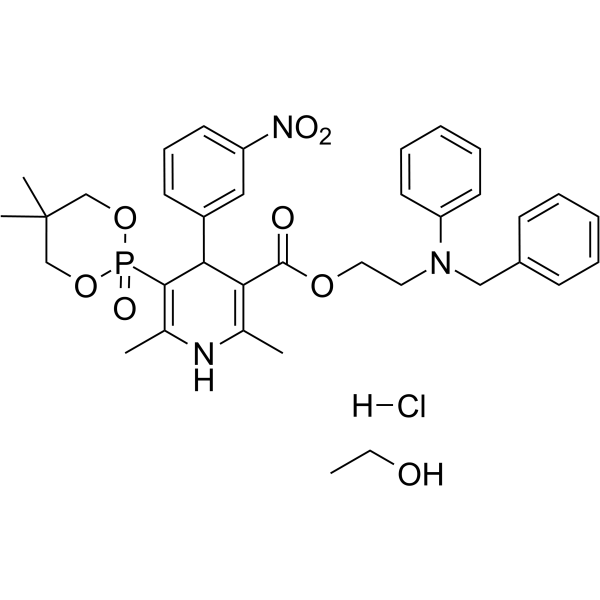
  • HY-12502A
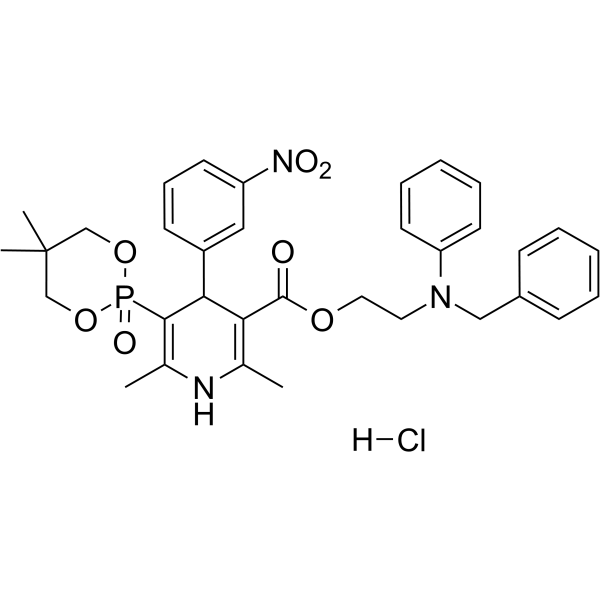
    Efonidipine hydrochloride monoethanolate
    1 Publications Verification

    NZ-105 hydrochloride monoethanolate; (±)-Efonidipine hydrochloride monoethanolate

    Calcium Channel SARS-CoV Cardiovascular Disease Neurological Disease Cancer
    Efonidipine (NZ-105) hydrochloride monoethanolate is an orally active dual L-type and T-type calcium channel blocker (CCB) with IC50 values of 1.8 and 350 nM, respectively. Efonidipine hydrochloride monoethanolate inhibits SARS-CoV-2 main protease. Efonidipine hydrochloride monoethanolate modulates adrenal steroidogenesis by increasing the expression of steroidogenic acute regulatory protein (StAR), dbcAMP-or angiotensin II-induced StAR mRNA expression and DHEA-S production, while suppressing the biosynthesis of aldosterone and cortisol. Efonidipine hydrochloride monoethanolate reduces plasma aldosterone levels in vivo. Efonidipine hydrochloride monoethanolate improves cardiac function in heart failure models by inhibiting T-type calcium channels (via both tonic and use-dependent blockade), independently of blood pressure reduction. Efonidipine hydrochloride monoethanolate can be used for research in hypertension, heart failure, and disorders involving dysregulated steroid hormone synthesis .
    Efonidipine hydrochloride monoethanolate
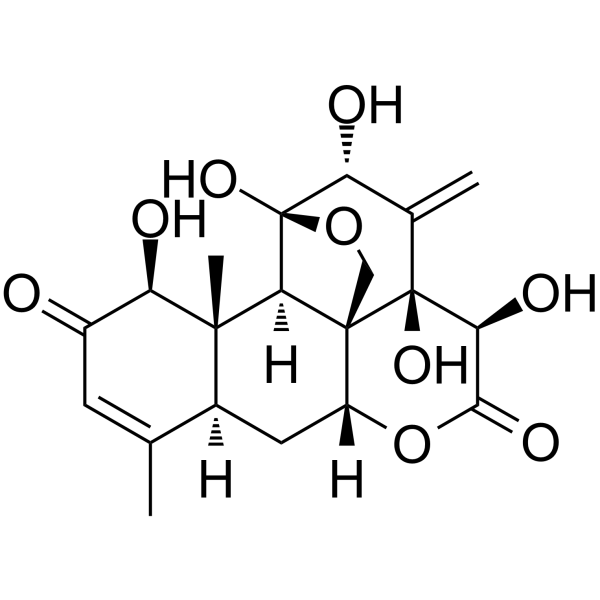
  • HY-N5012

    Pasakbumin A

    Phosphodiesterase (PDE) Endocrinology
    Eurycomanone could increases spermatogenesis by inhibiting the activity of phosphodiesterase and aromatase in steroidogenesis.
    Eurycomanone
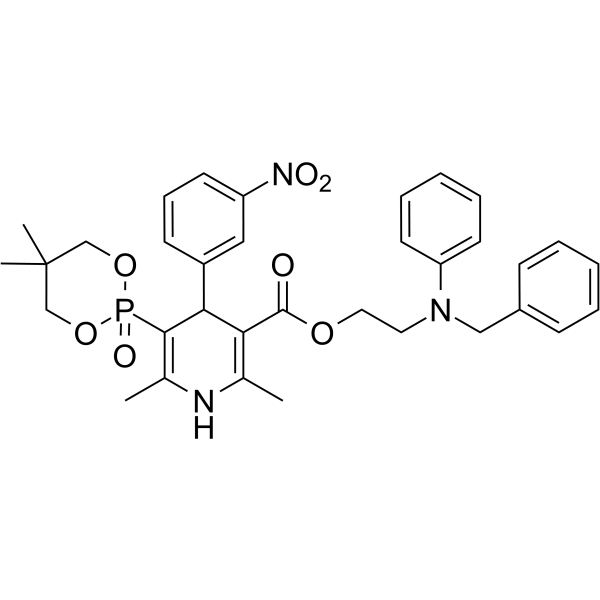
  • HY-12502
    Efonidipine
    1 Publications Verification

    NZ-105; (±)-Efonidipine

    Calcium Channel SARS-CoV Cardiovascular Disease Neurological Disease Cancer
    Efonidipine (NZ-105) is an orally active dual L-type and T-type calcium channel blocker (CCB) with IC50 values of 1.8 and 350 nM, respectively. Efonidipine inhibits SARS-CoV-2 main protease. Efonidipine modulates adrenal steroidogenesis by increasing the expression of steroidogenic acute regulatory protein (StAR), dbcAMP-or angiotensin II-induced StAR mRNA expression and DHEA-S production, while suppressing the biosynthesis of aldosterone and cortisol. Efonidipine reduces plasma aldosterone levels in vivo. Efonidipine improves cardiac function in heart failure models by inhibiting T-type calcium channels (via both tonic and use-dependent blockade), independently of blood pressure reduction. Efonidipine can be used for research in hypertension, heart failure, and disorders involving dysregulated steroid hormone synthesis .
    Efonidipine
  • HY-N2026S1

    Propyl parahydroxybenzoate-d4; Propyl 4-hydroxybenzoate-d4

    Apoptosis Bacterial Endogenous Metabolite Infection
    Propylparaben-d4 is the deuterium labeled Propylparaben . Propylparaben (Propyl parahydroxybenzoate) is an antimicrobial preservative which can be produced naturally by plants and bacteria. Propylparaben is prevalently used in cosmetics, pharmaceuticals, and foods. Propylparaben disrupts antral follicle growth and steroidogenic function by altering the cell-cycle, apoptosis, and steroidogenesis pathways. Propylparaben also decreases sperm number and motile activity in rats .
    Propylparaben-d4
  • HY-W679754

    PFTrDA

    Biochemical Assay Reagents Cytochrome P450 Metabolic Disease
    Pentacosafluorotridecanoic Acid (PFTrDA) is a long-chain perfluoroalkyl carboxylic acid with strong endocrine-disrupting activity. Pentacosafluorotridecanoic Acid exhibits estrogenic effects and disrupts vtg1 transcription as well as sex hormone homeostasis in male Danio rerio. Pentacosafluorotridecanoic Acid disturbs steroidogenesis and HPG axis function in a sex-dependent pattern. Pentacosafluorotridecanoic Acid inhibits CYP17A and CYP11A1 to reduce testosterone and increase E2/T ratio in H295R cells. Pentacosafluorotridecanoic Acid triggers gender-specific immunomodulation after prenatal exposure. Pentacosafluorotridecanoic Acid correlates with lower eczema risk in female infants. Pentacosafluorotridecanoic Acid can be used for the research of endocrine disruption and eczema .
    Pentacosafluorotridecanoic Acid
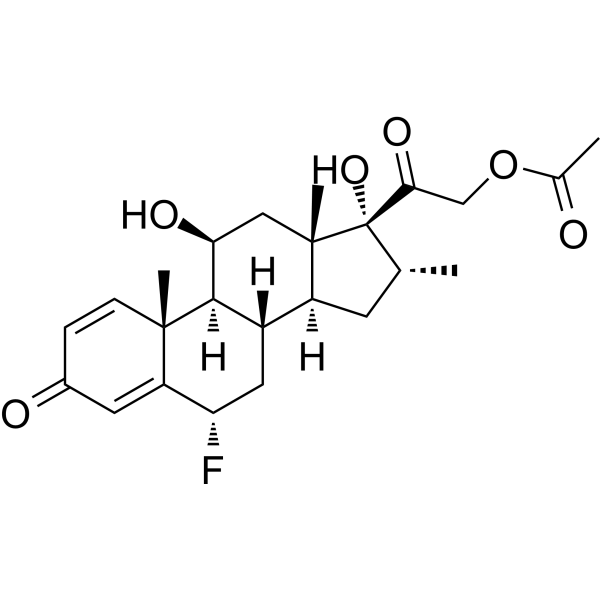
  • HY-107939

    Glucocorticoid Receptor Cytochrome P450 Neurological Disease Metabolic Disease Inflammation/Immunology
    Paramethasone Acetate is an orally active long-acting glucocorticoid. Paramethasone Acetate directly inhibits testicular aromatase, thereby reducing the synthesis of estradiol. Paramethasone Acetate suppresses the basal and midcycle luteinizing hormone surges in female animals and blocks estrogen synthesis. Paramethasone Acetate also decreases circulating levels of dihydrotestosterone, androstenedione and estradiol in male animals. Paramethasone Acetate inhibits cartilage degeneration and alleviates joint pathological damage in osteoarthritis models. Paramethasone Acetate can be used in research related to osteoarthritis and endocrinology .
    Paramethasone Acetate
  • HY-113155A

    Drug Intermediate Neurological Disease
    17-Hydroxypregnenolone sulfate sodium is a key intermediate in adrenal and gonadal steroidogenesis. 17-Hydroxypregnenolone sulfate sodium acts as a precursor in the biosynthesis of steroid hormones (e.g., glucocorticoids, sex hormones). 17-Hydroxypregnenolone sulfate sodium is promising for research of adrenal function development and neurosteroid-related diseases (e.g., cognitive impairment, neurodegenerative diseases) .
    17-Hydroxypregnenolone sulfate sodium
  • HY-P5950

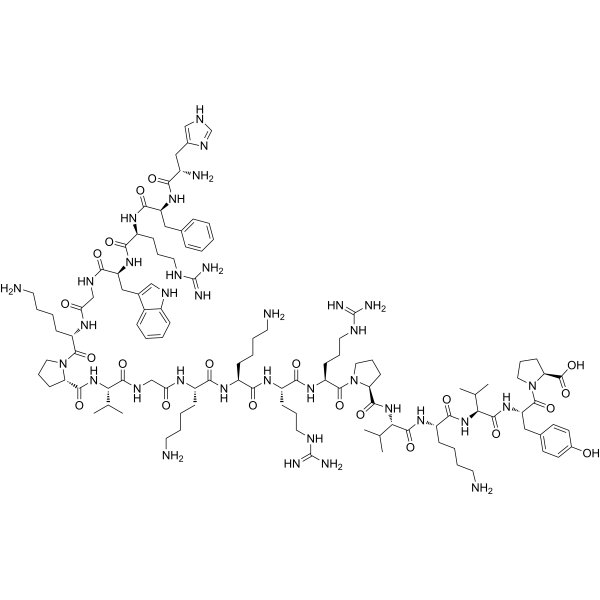
    Adrenocorticotropic hormone (6-24)

    Mineralocorticoid Receptor Cardiovascular Disease
    ACTH (6-24) (human) (Adrenocorticotropic hormone (6-24)) is an ACTH fragment. ACTH (6-24) (human) is a competitive inhibitor of steroidogenesis induced by ACTH (1-39) and ACTH (5-24) (Kd:13.4 and 3.4 nM). ACTH (6-24) (human) inhibits corticosterone production and cAMP accumulation induced by hPTH 1-34 .
    ACTH (6-24) (human)
  • HY-P10780

    Neuropeptide NPVF (mouse)

    Neuropeptide FF Receptor Apoptosis MDM-2/p53 PERK Endocrinology
    RFRP-3 (mouse) is a functional ortholog of avian gonadotropin inhibitory hormone (GnIH), binding to GPR147. RFRP-3 (mouse) reduces Progesterone synthesis by inhibiting FSHR and key enzymes involved in steroidogenesis (P450scc, 3β-HSD, StAR). RFRP-3 (mouse) induces Apoptosis (increase of p53). RFRP-3 (mouse) also suppresses the ERK signaling pathway. RFRP-3 (mouse) can be used for research of follicular development .
    RFRP-3 (mouse)
  • HY-12502B

    NZ-105 hydrochloride; (±)-Efonidipine hydrochloride

    Calcium Channel SARS-CoV Cardiovascular Disease Cancer
    Efonidipine (NZ-105) hydrochloride is an orally active dual L-type and T-type calcium channel blocker (CCB) with IC50 values of 1.8 and 350 nM, respectively. Efonidipine hydrochloride inhibits SARS-CoV-2 main protease. Efonidipine hydrochloride modulates adrenal steroidogenesis by increasing the expression of steroidogenic acute regulatory protein (StAR), dbcAMP-or angiotensin II-induced StAR mRNA expression and DHEA-S production, while suppressing the biosynthesis of aldosterone and cortisol. Efonidipine hydrochloride reduces plasma aldosterone levels in vivo. Efonidipine hydrochloride improves cardiac function in heart failure models by inhibiting T-type calcium channels (via both tonic and use-dependent blockade), independently of blood pressure reduction. Efonidipine hydrochloride can be used for research in hypertension, heart failure, and disorders involving dysregulated steroid hormone synthesis .
    Efonidipine hydrochloride
  • HY-157528

    Endogenous Metabolite Cancer
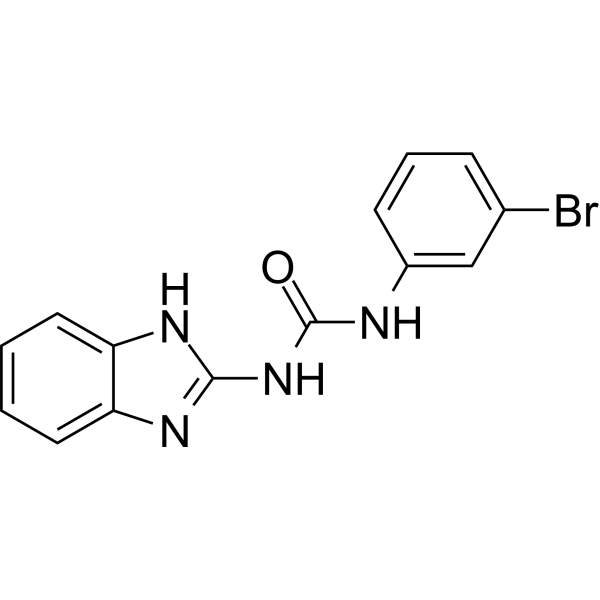
    CJ28 is a cortisol biosynthesis inhibitor that significantly inhibits basal and stimulated cortisol production in human adrenal carcinoma cell lines. CJ28 exhibits inhibitory effects by reducing steroidogenesis and de novo cholesterol biosynthesis .
    CJ28
  • HY-129639

    DL-204-IT

    Prostaglandin Receptor Others
    L11204 (DL-204-IT) is a potent inhibitor of prostaglandin metabolism. L11204 inhibits PMS-induced superovulation and reduced the number of recoverable ova in the oviducts of hamsters. L11204 also inhibits chorionic gonadotrophin-induced ovarian hypertrophy and steroidogenesi in rats. L11204 is promising for research of reproductive system disorders .
    L11204
  • HY-P10248

    Androgen Receptor Endocrinology
    Atriopeptin I rat, mouse is an atrial natriuretic peptide, which stimulates the testosterone production with half-maximum stimulation of 38 nM .
    Atriopeptin I (rat, mouse)
  • HY-N5012R

    Pasakbumin A (Standard)

    Reference Standards Phosphodiesterase (PDE) Endocrinology
    Eurycomanone (Standard) is the analytical standard of Eurycomanone. This product is intended for research and analytical applications. Eurycomanone could increases spermatogenesis by inhibiting the activity of phosphodiesterase and aromatase in steroidogenesis.
    Eurycomanone (Standard)
  • HY-134451

    DEUP

    Endogenous Metabolite Metabolic Disease
    Diethylumbelliferyl phosphate (DEUP), a selective and potent inhibitor of cholesterol esterase, does not inhibit protein kinase activity A in vitro, and it effectively disrupts steroidogenesis by blocking the transport of cholesterol into the mitochondria of steroidogenic cells, with an IC50 of 11.6 μM, potentially limiting dietary cholesterol absorption.
    Diethylumbelliferyl phosphate
  • HY-134937

    Phosphodiesterase (PDE) Neurological Disease Inflammation/Immunology
    BC8-15 is a PDE inhibitor with IC50 values of 0.28, 0.22, and 6.46 µM for inhibiting PDE8A, PDE4A, and PDE7A, respectively. BC8-15 can enhance steroidogenesis in mouse Leydig cells .
    BC8-15
  • HY-W699238

    Biochemical Assay Reagents
    S-(-)-Aminoglutethimide D-tartrate is an aromatase inhibitor with activity that blocks adrenal steroidogenesis. S-(-)-Aminoglutethimide D-tartrate can be used to inhibit steroid-related diseases. S-(-)-Aminoglutethimide D-tartrate is often used clinically to control certain types of cancer. S-(-)-Aminoglutethimide D-tartrate effectively reduces testosterone and estrogen levels through an enzyme inhibition mechanism.
    S-(-)-Aminoglutethimide D-tartrate
  • HY-N2026AR

    Propyl parahydroxybenzoate sodium (Standard); Propyl 4-hydroxybenzoate sodium (Standard)

    Reference Standards Endogenous Metabolite Bacterial Apoptosis Infection
    Propylparaben (sodium) (Standard) is the analytical standard of Propylparaben (sodium). This product is intended for research and analytical applications. Propylparaben sodium (Propyl parahydroxybenzoate) is an antimicrobial preservative which can be produced naturally by plants and bacteria. Propylparaben sodium is prevalently used in cosmetics, pharmaceuticals, and foods. Propylparaben sodium disrupts antral follicle growth and steroidogenic function by altering the cell-cycle, apoptosis, and steroidogenesis pathways. Propylparaben sodium also decreases sperm number and motile activity in rats .
    Propylparaben sodium (Standard)
  • HY-113451R

    Endogenous Metabolite Reference Standards Metabolic Disease
    Propylparaben (sodium) (Standard) is the analytical standard of Propylparaben (sodium). This product is intended for research and analytical applications. Propylparaben sodium (Propyl parahydroxybenzoate) is an antimicrobial preservative which can be produced naturally by plants and bacteria. Propylparaben sodium is prevalently used in cosmetics, pharmaceuticals, and foods. Propylparaben sodium disrupts antral follicle growth and steroidogenic function by altering the cell-cycle, apoptosis, and steroidogenesis pathways. Propylparaben sodium also decreases sperm number and motile activity in rats .
    3-Hydroxysebacic acid (Standard)
  • HY-N2026S

    Propyl parahydroxybenzoate-d7; Propyl 4-hydroxybenzoate-d7

    Isotope-Labeled Compounds Apoptosis Endogenous Metabolite Bacterial Others
    Propylparaben-d7 (Propyl parahydroxybenzoate-d7) is the deuterium labeled Propylparaben (HY-N2026) . Propylparaben (Propyl parahydroxybenzoate) is an antimicrobial preservative which can be produced naturally by plants and bacteria. Propylparaben is prevalently used in cosmetics, pharmaceuticals, and foods. Propylparaben disrupts antral follicle growth and steroidogenic function by altering the cell-cycle, apoptosis, and steroidogenesis pathways. Propylparaben also decreases sperm number and motile activity in rats .
    Propylparaben-d7
  • HY-W679754R

    PFTrDA (Standard)

    Reference Standards Biochemical Assay Reagents Cytochrome P450 Metabolic Disease
    Pentacosafluorotridecanoic Acid (Standard) is the analytical standard of Pentacosafluorotridecanoic Acid (PFTrDA) (HY-W679754). This product is intended for research and analytical applications.Pentacosafluorotridecanoic Acid is a long-chain perfluoroalkyl carboxylic acid with strong endocrine-disrupting activity. Pentacosafluorotridecanoic Acid exhibits estrogenic effects and disrupts vtg1 transcription as well as sex hormone homeostasis in male Danio rerio. Pentacosafluorotridecanoic Acid disturbs steroidogenesis and HPG axis function in a sex-dependent pattern. Pentacosafluorotridecanoic Acid inhibits CYP17A and CYP11A1 to reduce testosterone and increase E2/T ratio in H295R cells. Pentacosafluorotridecanoic Acid triggers gender-specific immunomodulation after prenatal exposure. Pentacosafluorotridecanoic Acid correlates with lower eczema risk in female infants. Pentacosafluorotridecanoic Acid can be used for the research of endocrine disruption and eczema .
    Pentacosafluorotridecanoic Acid (Standard)
  • HY-12502AR

    NZ-105 hydrochloride monoethanolate (Standard); (±)-Efonidipine hydrochloride monoethanolate (Standard)

    Reference Standards Calcium Channel SARS-CoV Cardiovascular Disease
    Efonidipine (NZ-105) hydrochloride monoethanolate (Standard) is the analytical standard of Efonidipine hydrochloride monoethanolate (HY-12502AR). This product is intended for research and analytical applications. Efonidipine (NZ-105) hydrochloride monoethanolate is an orally active dual L-type and T-type calcium channel blocker (CCB) with IC50 values of 1.8 and 350 nM, respectively. Efonidipine hydrochloride monoethanolate inhibits SARS-CoV-2 main protease. Efonidipine hydrochloride monoethanolate modulates adrenal steroidogenesis by increasing the expression of steroidogenic acute regulatory protein (StAR), dbcAMP-or angiotensin II-induced StAR mRNA expression and DHEA-S production, while suppressing the biosynthesis of aldosterone and cortisol. Efonidipine hydrochloride monoethanolate reduces plasma aldosterone levels in vivo. Efonidipine hydrochloride monoethanolate improves cardiac function in heart failure models by inhibiting T-type calcium channels (via both tonic and use-dependent blockade), independently of blood pressure reduction. Efonidipine hydrochloride monoethanolate can be used for research in hypertension, heart failure, and disorders involving dysregulated steroid hormone synthesis .
    Efonidipine hydrochloride monoethanolate (Standard)
  • HY-W714186

    Etaconazole

    Bacterial Fungal Infection
    Etaconazol (Etaconazole) is an azole fungicide. Etaconazol possesses endocrine-disrupting potential and inhibits placental steroidogenesis by suppressing 3β-hydroxysteroid dehydrogenase (3β-HSD1). Etaconazol binds to the NAD +/steroid-binding site of the target enzyme and acts on both the free enzyme and enzyme-substrate complex to inhibit their activity .
    Etaconazol

Inquiry Online

Your information is safe with us. * Required Fields.

Salutation


Country or Region *

Applicant Name *


Organization Name *

Department *


Email Address *


Product Name *

Cat. No.


Requested quantity *

Phone Number *


Remarks

Inquiry Online

Inquiry Information

Product Name:
Cat. No.:
Quantity:
MCE Japan Authorized Agent:

