Search Result
Results for "
sugar phosphate ester intermediate
" in MedChemExpress (MCE) Product Catalog:
7
Biochemical Assay Reagents
8
Isotope-Labeled Compounds
| Cat. No. |
Product Name |
Target |
Research Areas |
Chemical Structure |
-
- HY-113407A
-
|
|
Endogenous Metabolite
FBPase
|
Neurological Disease
Metabolic Disease
|
|
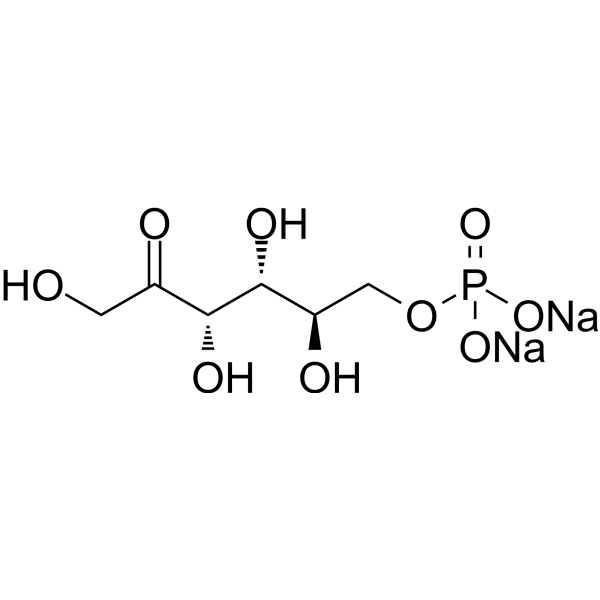
D-Fructose 6-phosphate disodium is an endogenous metabolite. D-Fructose 6-phosphate disodium can be obtained by hydrolysis of Fructose-1,6-bisphosphatase (FBPase). D-Fructose-6-phosphate disodium is a sugar intermediate in the glycolysis pathway and the pentose phosphate pathway. D-Fructose-6-phosphate disodium can be used to detect glucosamine-6-phosphate synthase and TAL activities. D-Fructose 6-phosphate disodium can be used to study Lewy body dementia .
|
-
-
- HY-128748
-
|
|
Endogenous Metabolite
|
Others
|
|
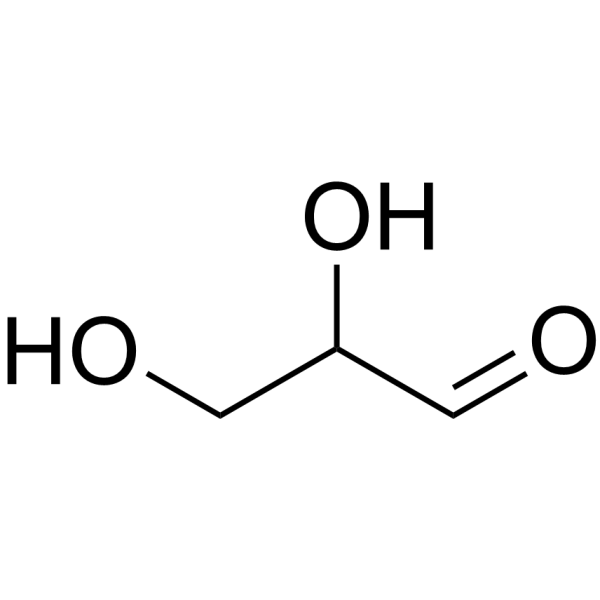
DL-Glyceraldehyde is a bioactive substance involved in cellular energy metabolism and a key intermediate in sugar metabolism pathways (such as glycolysis and gluconeogenesis). During glycolysis, DL-Glyceraldehyde is converted by enzymes into other metabolites to provide energy for cells; during gluconeogenesis, DL-Glyceraldehyde participates in the synthesis of glucose as a precursor. In the field of medical research, DL-Glyceraldehyde can be used to study diseases related to sugar metabolism, such as diabetes, tumors, etc[1][2].
|
-
-
- HY-151223
-
|
Triose phosphate
|
Endogenous Metabolite
Biochemical Assay Reagents
|
Metabolic Disease
|
|
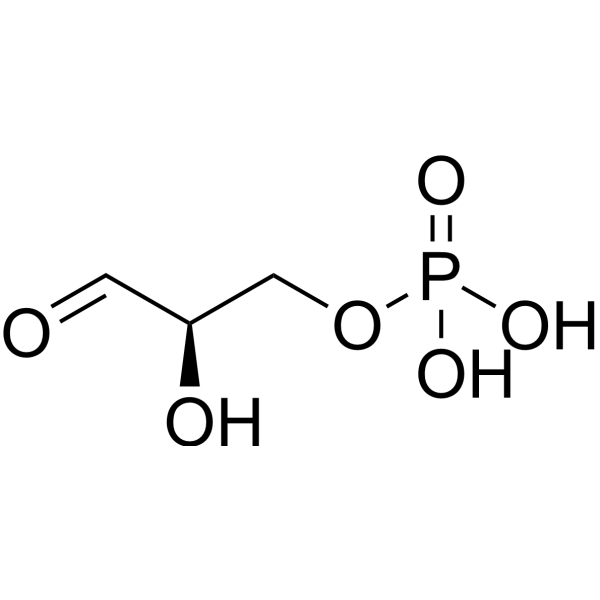
D-Glyceraldehyde 3-phosphate (Triose phosphate) is a common molecule in living organisms and is an important intermediate in glycolysis and gluconeogenesis, as well as a sugar product of the Calvin cycle. D-Glyceraldehyde 3-phosphate is involved in the biosynthesis of tryptophan and thiamin. D-Glyceraldehyde 3-phosphate is released as aldehyde by aldolase or triose phosphate isomerase. D-Glyceraldehyde 3-phosphate forms adducts with thiols .
|
-
-
- HY-116956
-
|
|
Biochemical Assay Reagents
|
Others
|
|
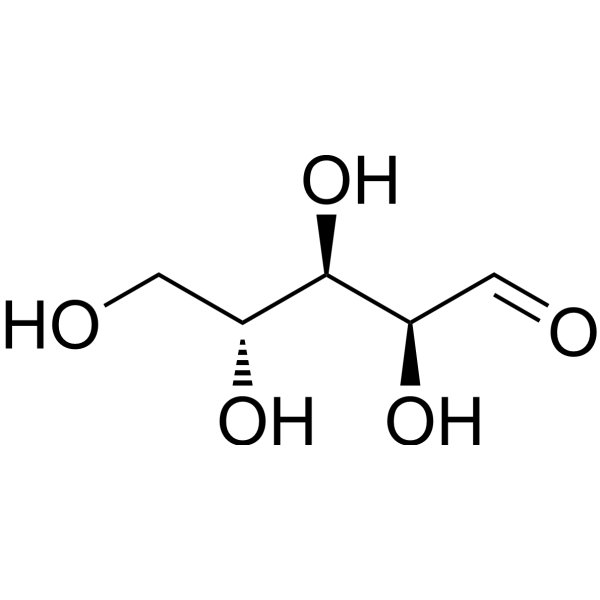
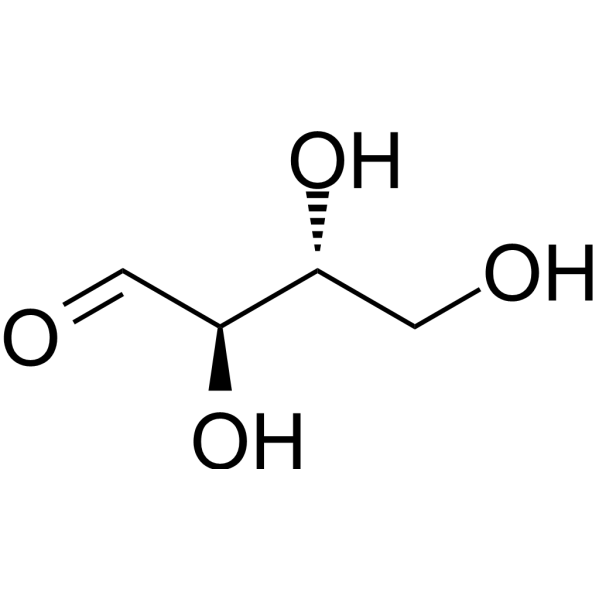
D-Erythrose is a four-carbon sugar classified as an aldose. D-Erythrose has unique chemical properties that make it an important intermediate in various metabolic pathways, especially in the biosynthesis of amino acids and nucleotides. It also plays a role in the pentose phosphate pathway, which generates reducing equivalents for biosynthetic reactions and cellular defense against oxidative damage.
|
-
-
- HY-147063
-
|
|
Endogenous Metabolite
|
Others
|
|
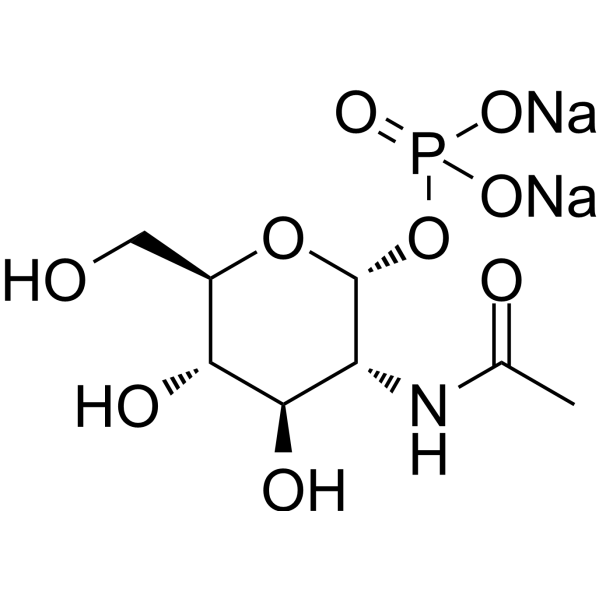
N-acetyl-α-d-glucosamine 1-phosphate disodium (GlcNAc-1-P) is an ectopic sugar phosphate and a key intermediate in N-glycoprotein biosynthesis. N-acetyl-α-d-glucosamine 1-phosphate disodium serves as a metabolic precursor of teichoic acid and muramic acid, which are components of bacterial cell walls .
|
-
-
- HY-W040188
-
|
|
Biochemical Assay Reagents
|
Others
|
|
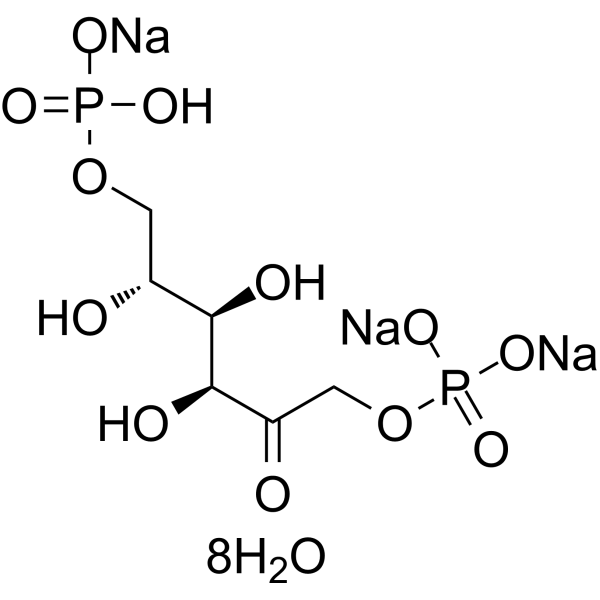
Fosfructose trisodium octahydrate is a phosphorylated sugar derivative used in biochemical research and is also an intermediate in carbohydrate metabolism.
|
-
-
- HY-N2353
-
|
(±)-Arabinose; DL-Arabinose; dl-Arabinose
|
Environmental Pollutants
Endogenous Metabolite
|
Neurological Disease
Inflammation/Immunology
Cancer
|
|
Arabinose is a pentose sugar commonly found in plants. Arabinose alleviates immune dysregulation and inflammation by promoting balanced immune responses and reducing inflammation. Arabinose induces cytotoxicity, autophagy (Autophagy), and cell cycle arrest in breast cancer cells through the p38-MAPK signaling pathway. Arabinose activates the ACSS2-PPARγ/TFEB-AMPK axis in neuroblastoma cells, thereby exerting neuromodulatory/antidepressant effects. Arabinose can also be used as an intermediate in compound synthesis. Arabinose may be applied in research related to immune inflammation, depression, breast cancer, and other diseases .
|
-
-
- HY-113407
-
|
|
Endogenous Metabolite
FBPase
|
Neurological Disease
Metabolic Disease
|
|
D-Fructose 6-phosphate is an endogenous metabolite. D-Fructose 6-phosphate can be obtained by hydrolysis of Fructose-1,6-bisphosphatase (FBPase). D-Fructose-6-phosphate is a sugar intermediate in the glycolysis pathway and the pentose phosphate pathway. D-Fructose-6-phosphate can be used to detect glucosamine-6-phosphate synthase and TAL activities. D-Fructose 6-phosphate can be used to study Lewy body dementia .
|
-
-
- HY-W005485
-
|
2,3,4,6-Tetra-O-benzyl-D-glucono-1,5-lactone
|
Biochemical Assay Reagents
|
Others
|
|
Tetra-O-benzyl-δ-D-Gluconolactone (2,3,4,6-Tetra-O-benzyl-D-glucono-1,5-lactone) is a 1,5-sugar lactone and protected D-glucono-1,5-lactone, which serves as a synthetic intermediate in the field of carbohydrate chemistry. Tetra-O-benzyl-δ-D-Gluconolactone acts as a model substrate for zinc-mediated Barbier allylation, crotylation and propargylation reactions .
|
-
-
- HY-128753
-
|
|
Endogenous Metabolite
Drug Intermediate
|
Metabolic Disease
|
|
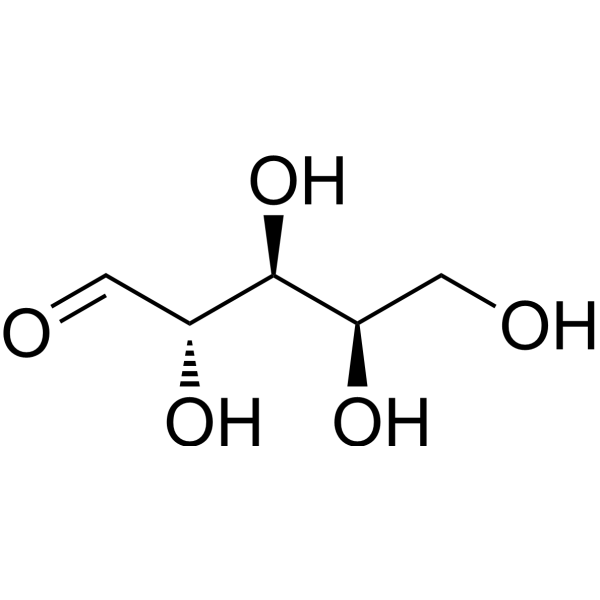
D-Lyxose is an endogenous metabolite. D-Lyxose is a rare pentose with significant potential for pharmaceutical synthesis. D-Lyxose serves as a starting material for antitumor agents (such as α-galactosylceramide-based immunostimulants). D-Lyxose acts as a precursor for L-nucleoside analogs used in the development of antiviral drugs. D-Lyxose can be used as a synthetic intermediate for other rare sugars (such as L-ribose) .
|
-
-
- HY-W587841
-
|
|
Drug Intermediate
|
Metabolic Disease
|
|
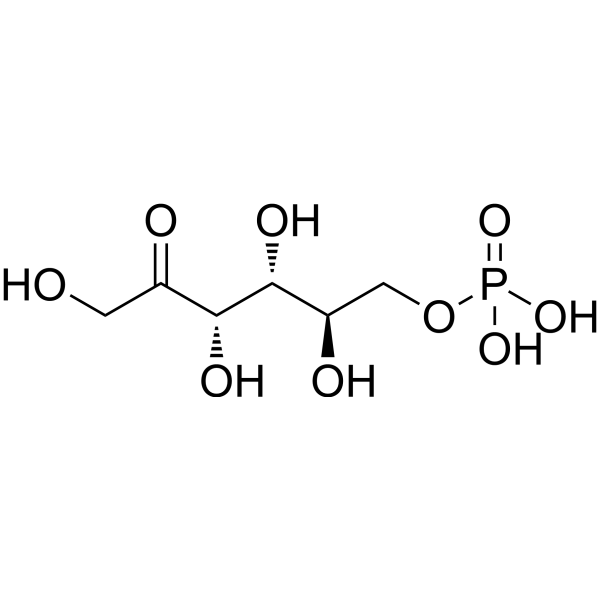
D-Xylulose 5-phosphate is a sugar phosphate ester intermediate and also a core metabolite of the pentose phosphate pathway. D-Xylulose 5-phosphate can be used in the research of metabolic diseases .
|
-
-
- HY-W012846A
-
|
L-1,2,3,4-Butanetetrol
|
Drug Intermediate
|
Others
|
|
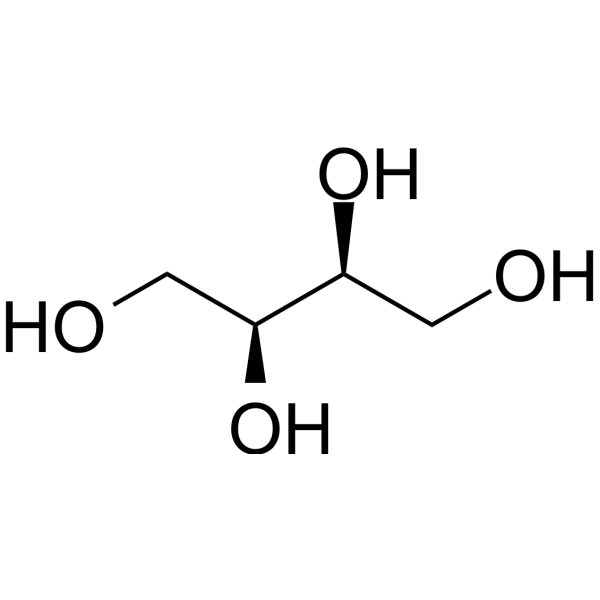
L-Threitol (L-1,2,3,4-Butanetetrol) is a four-carbon sugar alcohol. L-Threitol serves as an important pharmaceutical intermediate and can be used in the synthesis of other active compounds, such as anticancer agents and chiral compounds .
|
-
-
- HY-41984
-
|
D-Glucose diacetonide; 1,2:5,6-Diisopropylidene-D-glucose
|
Biochemical Assay Reagents
Drug Intermediate
|
Others
|
|
Diacetone-D-glucose (D-Glucose diacetonide) is a sugar-derived secondary alcohol that serves as an important pharmaceutical intermediate for the synthesis of other active compounds .
|
-
-
- HY-W145649
-
|
|
Biochemical Assay Reagents
|
Others
|
|
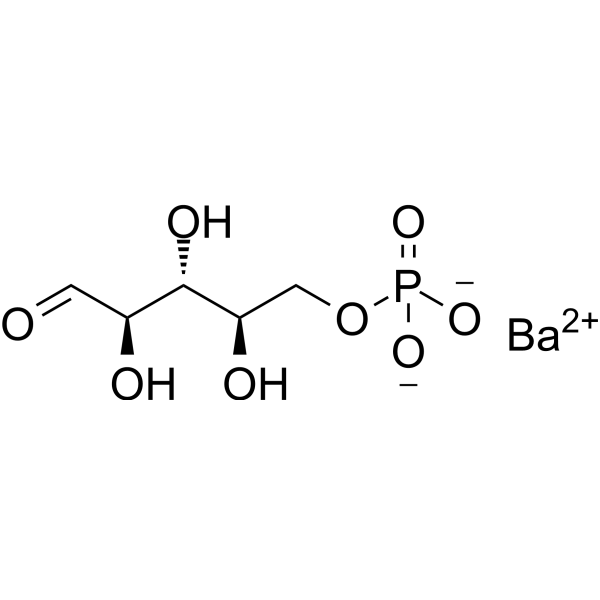
Ribose-5-phosphate Barium Salt is an organic compound that belongs to the monosaccharide phosphate family. It is commonly used as an intermediate in various biochemical pathways, especially in the biosynthesis of nucleotides and coenzymes. Ribose-5-phosphate Barium Salt has several applications in biochemical research, including as a precursor for the synthesis of other phosphorylated sugars and as a substrate for enzymes involved in the pentose phosphate pathway. In addition, it can be used as an energy source and dietary supplement for certain microorganisms.
|
-
-
- HY-W142618
-
|
|
Biochemical Assay Reagents
|
Others
|
|
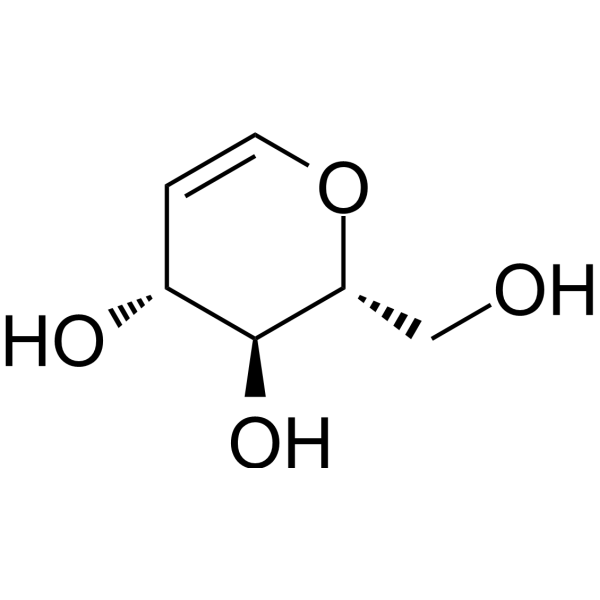
D-Glucal is an organic compound belonging to the family of aldoses, which are monosaccharides containing an aldehyde functional group. It has a six-carbon structure and is derived from glucose by oxidation of the primary alcohol group at carbon 1 to an aldehyde group. D-Glucal is a white crystalline solid that is soluble in water and has a sweet taste. It is an important intermediate in the chemical synthesis of a wide variety of compounds, including pharmaceuticals, agrochemicals, and natural products. D-Glucal can be converted into other carbohydrate derivatives such as glycosides, glycoconjugates and amino sugars. It also plays a role in the study of carbohydrate chemistry, where it is used as a chiral building block for the synthesis of complex structures.
|
-
-
- HY-113407CR
-
|
|
Reference Standards
Drug Intermediate
|
Metabolic Disease
|
|
D-Fructose-6-phosphate disodium monohydrate (Standard) is the analytical standard of D-Fructose-6-phosphate disodium monohydrate. D-Fructose-6-phosphate is an intermediate of Glycolysis. D-Fructose-6-phosphate is the precursor for the synthesis of amino sugars, such as galactosamine and glucosamine .
|
-
-
- HY-N13363
-
|
|
Fructose-1,6-bisphosphate aldolase
Endogenous Metabolite
|
Infection
|
|
2-keto-3-deoxy-6-phosphogluconate is an endogenous metabolite found in Escherichia coli, and a key intermediate in the Entner-Doudoroff (ED) pathway, as well as in the degradation pathways of sugar acids and sugar polymers in human and plant pathogens. It is produced by the catalytic action of KDPG aldolase.
|
-
-
- HY-W400427
-
|
|
Biochemical Assay Reagents
|
Others
|
|
α-D-Glucose-1-phosphate is an important intermediate in sugar metabolism, functioning as a glycosyl donor in glycosyl transfer reactions and participating in glycogen synthesis and degradation through the action of phosphorylases .
|
-
-
- HY-128753S6
-
|
|
Isotope-Labeled Compounds
Endogenous Metabolite
Drug Intermediate
|
Metabolic Disease
|
|
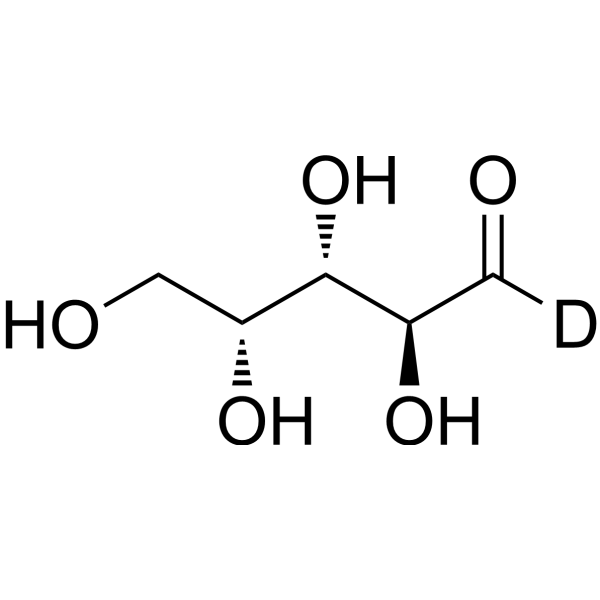
D-Lyxose-d is the deuterium labeled D-Lyxose. D-Lyxose is an endogenous metabolite. D-Lyxose is a rare pentose sugar with significant potential for drug synthesis. D-Lyxose can be used as a starting material for anti-tumor drugs such as alpha galactose ceramide immunostimulants. D-Lyxose can be used as a precursor for L-nucleoside analogs for the development of antiviral drugs. D-Lyxose can be used as a synthetic intermediate for other rare sugars such as L-ribose .
|
-
-
- HY-W768246
-
-
-
- HY-111095S2
-
|
(R)-2-Hydroxypropionic acid-13C-1; D-Lactic acid-13C-1
|
Endogenous Metabolite
|
Others
|
|
D-(-)-Lactic acid- 13C-1 is the 13C labeled D-(-)-Lactic acid. D-(-)-Lactic acid is a normal intermediate in the fermentation (oxidation, metabolism) of sugar. D-(-)-Lactic acid is identified to be a competitive inhibitor of ProDH (proline dehydrogenase) in plants .
|
-
-
- HY-128753S7
-
|
|
Isotope-Labeled Compounds
Endogenous Metabolite
Drug Intermediate
|
Metabolic Disease
|
|
D-Lyxose-d-1 is the deuterium labeled D-Lyxose. D-Lyxose is an endogenous metabolite. D-Lyxose is a rare pentose sugar with significant potential for drug synthesis. D-Lyxose can be used as a starting material for anti-tumor drugs such as alpha galactose ceramide immunostimulants. D-Lyxose can be used as a precursor for L-nucleoside analogs for the development of antiviral drugs. D-Lyxose can be used as a synthetic intermediate for other rare sugars such as L-ribose .
|
-
-
- HY-128748R
-
|
|
Endogenous Metabolite
Reference Standards
|
Others
|
|
DL-Glyceraldehyde (Standard) is the analytical standard of DL-Glyceraldehyde. This product is intended for research and analytical applications. DL-Glyceraldehyde is a bioactive substance involved in cellular energy metabolism and a key intermediate in sugar metabolism pathways (such as glycolysis and gluconeogenesis). During glycolysis, DL-Glyceraldehyde is converted by enzymes into other metabolites to provide energy for cells; during gluconeogenesis, DL-Glyceraldehyde participates in the synthesis of glucose as a precursor. In the field of medical research, DL-Glyceraldehyde can be used to study diseases related to sugar metabolism, such as diabetes, tumors, etc .
|
-
-
- HY-128753S5
-
|
|
Isotope-Labeled Compounds
Endogenous Metabolite
Drug Intermediate
|
Others
|
|
D-Lyxose- 13C-4 is the 13C labeled D-Lyxose. D-Lyxose is an endogenous metabolite. D-Lyxose is a rare pentose sugar with significant potential for drug synthesis. D-Lyxose can be used as a starting material for anti-tumor drugs such as alpha galactose ceramide immunostimulants. D-Lyxose can be used as a precursor for L-nucleoside analogs for the development of antiviral drugs. D-Lyxose can be used as a synthetic intermediate for other rare sugars such as L-ribose .
|
-
-
- HY-128753R
-
|
|
Reference Standards
Endogenous Metabolite
Drug Intermediate
|
Metabolic Disease
|
|
D-Lyxose (Standard) is the analytical standard of D-Lyxose. This product is intended for research and analytical applications. D-Lyxose is an endogenous metabolite. D-Lyxose is a rare pentose sugar with significant potential for drug synthesis. D-Lyxose can be used as a starting material for anti-tumor drugs such as alpha galactose ceramide immunostimulants. D-Lyxose can be used as a precursor for L-nucleoside analogs for the development of antiviral drugs. D-Lyxose can be used as a synthetic intermediate for other rare sugars such as L-ribose .
|
-
-
- HY-128753S3
-
|
|
Isotope-Labeled Compounds
Endogenous Metabolite
Drug Intermediate
|
Others
|
|
D-Lyxose- 13C-2 is the 13C labeled D-Lyxose. D-Lyxose is an endogenous metabolite. D-Lyxose is a rare pentose sugar with significant potential for drug synthesis. D-Lyxose can be used as a starting material for anti-tumor drugs such as alpha galactose ceramide immunostimulants. D-Lyxose can be used as a precursor for L-nucleoside analogs for the development of antiviral drugs. D-Lyxose can be used as a synthetic intermediate for other rare sugars such as L-ribose .
|
-
-
- HY-128753S4
-
|
|
Isotope-Labeled Compounds
Endogenous Metabolite
Drug Intermediate
|
Others
|
|
D-Lyxose- 13C-3 is the 13C labeled D-Lyxose. D-Lyxose is an endogenous metabolite. D-Lyxose is a rare pentose sugar with significant potential for drug synthesis. D-Lyxose can be used as a starting material for anti-tumor drugs such as alpha galactose ceramide immunostimulants. D-Lyxose can be used as a precursor for L-nucleoside analogs for the development of antiviral drugs. D-Lyxose can be used as a synthetic intermediate for other rare sugars such as L-ribose .
|
-
-
- HY-W725496
-
|
|
Endogenous Metabolite
|
Neurological Disease
Metabolic Disease
|
|
D-Fructose 6-phosphate dipotassium is an endogenous metabolite in saliva that affects cell growth and autophagy; it can be hydrolyzed by Fructose-1,6-bisphosphatase (FBPase). D-Fructose 6-phosphate dipotassium can be converted into D-glucose 6-phosphate (HY-112537) by the action of phosphoglucose isomerase. D-Fructose 6-phosphate dipotassium is a sugar intermediate in the glycolysis pathway and the pentose phosphate pathway. D-Fructose 6-phosphate dipotassium can be used to study Lewy body dementia .
|
-
-
- HY-113407C
-
|
|
Drug Intermediate
|
Metabolic Disease
|
|
D-Fructose-6-phosphate disodium monohydrate is an intermediate of Glycolysis. D-Fructose-6-phosphate disodium monohydrate is the precursor for the synthesis of amino sugars, such as galactosamine and glucosamine .
|
-
-
- HY-113272A
-
|
D-Ru5P
|
Biochemical Assay Reagents
|
Metabolic Disease
|
|
D-Ribulose 5-phosphate is an important sugar phosphate that participates in multiple metabolic pathways. D-Ribulose 5-phosphate serves as an intermediate in the pentose phosphate pathway and also acts as a substrate for D-Arabinose 5-phosphate isomerase (GutQ/KdsD) .
|
-
-
- HY-113407CS
-
|
|
Isotope-Labeled Compounds
Drug Intermediate
|
Metabolic Disease
|
|
D-Fructose-6-phosphate disodium monohydrate- 13C6 is the 13C-labeled D-Fructose-6-phosphate disodium monohydrate (HY-113407C). D-Fructose-6-phosphate disodium monohydrate is an intermediate of Glycolysis. D-Fructose-6-phosphate disodium monohydrate is the precursor for the synthesis of amino sugars, such as galactosamine and glucosamine .
|
-
-
- HY-113407B
-
|
|
Endogenous Metabolite
FBPase
|
Neurological Disease
Metabolic Disease
|
|
D-Fructose 6-phosphate disodium hydrate is an endogenous metabolite. D-Fructose 6-phosphate disodium hydrate can be obtained by hydrolysis of Fructose-1,6-bisphosphatase (FBPase). D-Fructose-6-phosphate disodium hydrate is a sugar intermediate in the glycolysis pathway and the pentose phosphate pathway. D-Fructose-6-phosphate disodium hydrate can be used to detect glucosamine-6-phosphate synthase and TAL activities. D-Fructose 6-phosphate disodium hydrate can be used to study Lewy body dementia .
|
-
| Cat. No. |
Product Name |
Type |
-
- HY-116956
-
|
|
Biochemical Assay Reagents
|
|
D-Erythrose is a four-carbon sugar classified as an aldose. D-Erythrose has unique chemical properties that make it an important intermediate in various metabolic pathways, especially in the biosynthesis of amino acids and nucleotides. It also plays a role in the pentose phosphate pathway, which generates reducing equivalents for biosynthetic reactions and cellular defense against oxidative damage.
|
-
- HY-W040188
-
|
|
Biochemical Assay Reagents
|
|
Fosfructose trisodium octahydrate is a phosphorylated sugar derivative used in biochemical research and is also an intermediate in carbohydrate metabolism.
|
-
- HY-W005485
-
|
2,3,4,6-Tetra-O-benzyl-D-glucono-1,5-lactone
|
Biochemical Assay Reagents
|
|
Tetra-O-benzyl-δ-D-Gluconolactone (2,3,4,6-Tetra-O-benzyl-D-glucono-1,5-lactone) is a 1,5-sugar lactone and protected D-glucono-1,5-lactone, which serves as a synthetic intermediate in the field of carbohydrate chemistry. Tetra-O-benzyl-δ-D-Gluconolactone acts as a model substrate for zinc-mediated Barbier allylation, crotylation and propargylation reactions .
|
-
- HY-W012846A
-
|
L-1,2,3,4-Butanetetrol
|
Biochemical Assay Reagents
|
|
L-Threitol (L-1,2,3,4-Butanetetrol) is a four-carbon sugar alcohol. L-Threitol serves as an important pharmaceutical intermediate and can be used in the synthesis of other active compounds, such as anticancer agents and chiral compounds .
|
-
- HY-41984
-
|
D-Glucose diacetonide; 1,2:5,6-Diisopropylidene-D-glucose
|
Biochemical Assay Reagents
|
|
Diacetone-D-glucose (D-Glucose diacetonide) is a sugar-derived secondary alcohol that serves as an important pharmaceutical intermediate for the synthesis of other active compounds .
|
-
- HY-W142618
-
|
|
Biochemical Assay Reagents
|
|
D-Glucal is an organic compound belonging to the family of aldoses, which are monosaccharides containing an aldehyde functional group. It has a six-carbon structure and is derived from glucose by oxidation of the primary alcohol group at carbon 1 to an aldehyde group. D-Glucal is a white crystalline solid that is soluble in water and has a sweet taste. It is an important intermediate in the chemical synthesis of a wide variety of compounds, including pharmaceuticals, agrochemicals, and natural products. D-Glucal can be converted into other carbohydrate derivatives such as glycosides, glycoconjugates and amino sugars. It also plays a role in the study of carbohydrate chemistry, where it is used as a chiral building block for the synthesis of complex structures.
|
-
- HY-W725496
-
|
|
Biochemical Assay Reagents
|
|
D-Fructose 6-phosphate dipotassium is an endogenous metabolite in saliva that affects cell growth and autophagy; it can be hydrolyzed by Fructose-1,6-bisphosphatase (FBPase). D-Fructose 6-phosphate dipotassium can be converted into D-glucose 6-phosphate (HY-112537) by the action of phosphoglucose isomerase. D-Fructose 6-phosphate dipotassium is a sugar intermediate in the glycolysis pathway and the pentose phosphate pathway. D-Fructose 6-phosphate dipotassium can be used to study Lewy body dementia .
|
| Cat. No. |
Product Name |
Category |
Target |
Chemical Structure |
| Cat. No. |
Product Name |
Chemical Structure |
-
- HY-128753S6
-
|
|
|
D-Lyxose-d is the deuterium labeled D-Lyxose. D-Lyxose is an endogenous metabolite. D-Lyxose is a rare pentose sugar with significant potential for drug synthesis. D-Lyxose can be used as a starting material for anti-tumor drugs such as alpha galactose ceramide immunostimulants. D-Lyxose can be used as a precursor for L-nucleoside analogs for the development of antiviral drugs. D-Lyxose can be used as a synthetic intermediate for other rare sugars such as L-ribose .
|
-
-
- HY-W768246
-
|
|
|
Galactose 1-phosphate- 13C6 potassium is the 13C-labeled Galactose 1-phosphate Potassium salt (HY-113143A). Galactose 1-phosphate Potassium salt is is an intermediate in the galactose metabolism and nucleotide sugars.
|
-
-
- HY-111095S2
-
|
|
|
D-(-)-Lactic acid- 13C-1 is the 13C labeled D-(-)-Lactic acid. D-(-)-Lactic acid is a normal intermediate in the fermentation (oxidation, metabolism) of sugar. D-(-)-Lactic acid is identified to be a competitive inhibitor of ProDH (proline dehydrogenase) in plants .
|
-
-
- HY-128753S7
-
|
|
|
D-Lyxose-d-1 is the deuterium labeled D-Lyxose. D-Lyxose is an endogenous metabolite. D-Lyxose is a rare pentose sugar with significant potential for drug synthesis. D-Lyxose can be used as a starting material for anti-tumor drugs such as alpha galactose ceramide immunostimulants. D-Lyxose can be used as a precursor for L-nucleoside analogs for the development of antiviral drugs. D-Lyxose can be used as a synthetic intermediate for other rare sugars such as L-ribose .
|
-
-
- HY-128753S5
-
|
|
|
D-Lyxose- 13C-4 is the 13C labeled D-Lyxose. D-Lyxose is an endogenous metabolite. D-Lyxose is a rare pentose sugar with significant potential for drug synthesis. D-Lyxose can be used as a starting material for anti-tumor drugs such as alpha galactose ceramide immunostimulants. D-Lyxose can be used as a precursor for L-nucleoside analogs for the development of antiviral drugs. D-Lyxose can be used as a synthetic intermediate for other rare sugars such as L-ribose .
|
-
-
- HY-128753S3
-
|
|
|
D-Lyxose- 13C-2 is the 13C labeled D-Lyxose. D-Lyxose is an endogenous metabolite. D-Lyxose is a rare pentose sugar with significant potential for drug synthesis. D-Lyxose can be used as a starting material for anti-tumor drugs such as alpha galactose ceramide immunostimulants. D-Lyxose can be used as a precursor for L-nucleoside analogs for the development of antiviral drugs. D-Lyxose can be used as a synthetic intermediate for other rare sugars such as L-ribose .
|
-
-
- HY-128753S4
-
|
|
|
D-Lyxose- 13C-3 is the 13C labeled D-Lyxose. D-Lyxose is an endogenous metabolite. D-Lyxose is a rare pentose sugar with significant potential for drug synthesis. D-Lyxose can be used as a starting material for anti-tumor drugs such as alpha galactose ceramide immunostimulants. D-Lyxose can be used as a precursor for L-nucleoside analogs for the development of antiviral drugs. D-Lyxose can be used as a synthetic intermediate for other rare sugars such as L-ribose .
|
-
-
- HY-113407CS
-
|
|
|
D-Fructose-6-phosphate disodium monohydrate- 13C6 is the 13C-labeled D-Fructose-6-phosphate disodium monohydrate (HY-113407C). D-Fructose-6-phosphate disodium monohydrate is an intermediate of Glycolysis. D-Fructose-6-phosphate disodium monohydrate is the precursor for the synthesis of amino sugars, such as galactosamine and glucosamine .
|
-
Your information is safe with us. * Required Fields.
Inquiry Information
- Product Name:
- Cat. No.:
- Quantity:
- MCE Japan Authorized Agent:

