



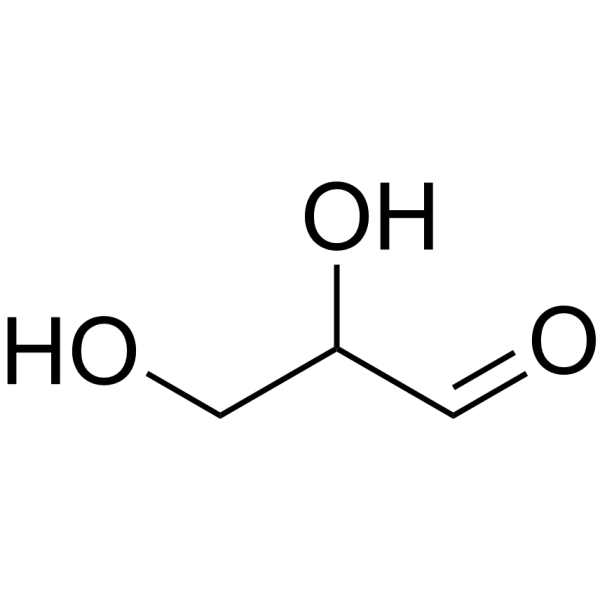
DL-Glyceraldehyde

Based on 1 Customer Validation
DL-Glyceraldehyde is a bioactive substance involved in cellular energy metabolism and a key intermediate in sugar metabolism pathways (such as glycolysis and gluconeogenesis). During glycolysis, DL-Glyceraldehyde is converted by enzymes into other metabolites to provide energy for cells; during gluconeogenesis, DL-Glyceraldehyde participates in the synthesis of glucose as a precursor. In the field of medical research, DL-Glyceraldehyde can be used to study diseases related to sugar metabolism, such as diabetes, tumors, etc
For research use only. We do not sell to patients.
- Purity : 90.0%
- CAS No.: 56-82-6
- Formula: C3H6O3
- Molecular Weight:90.08
-
Storage:
4°C, protect from light
* In solvent : -80°C, 6 months; -20°C, 1 month (protect from light)

To place orders, for customer services and technical support, please contact: MedChemExpress USA
Tel: 609-228-6898 E-mail: [email protected] [email protected]


-
 Biological Activity
-
Chemical Information
-
Solvent & Solubility
- Purity & Documentation
- References
-
 Help & FAQs



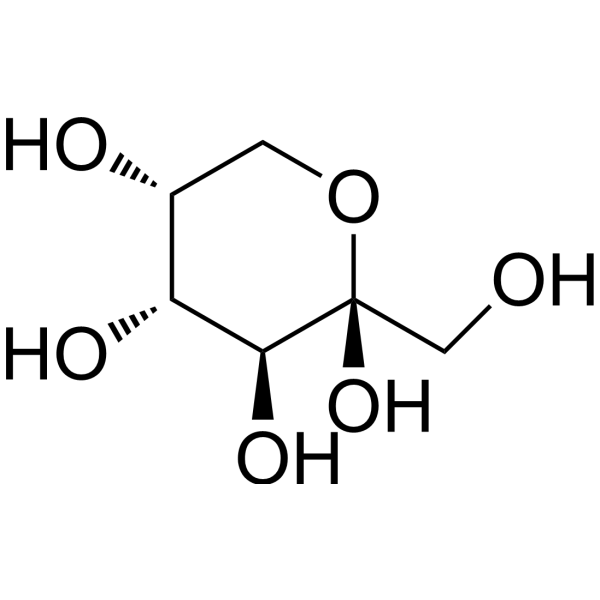
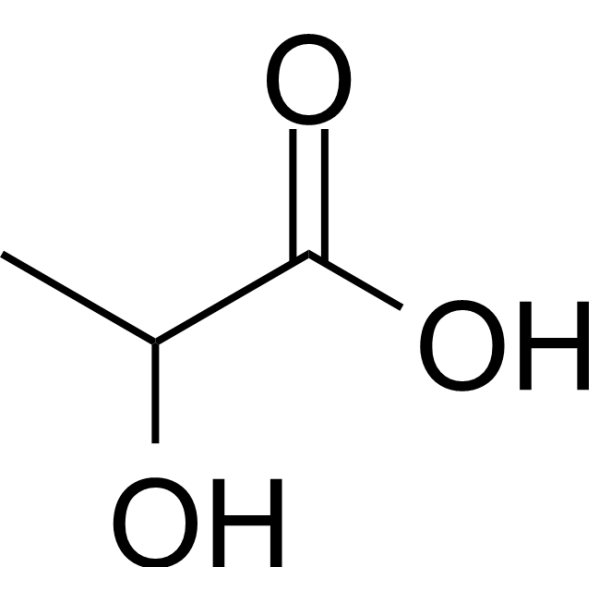
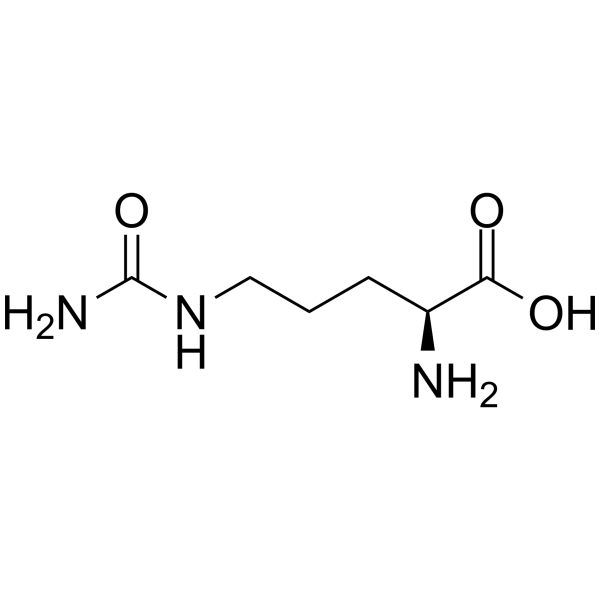

All Endogenous Metabolite Isoforms
More

Biological Activity
Description
In Vitro
DL-Glyceraldehyde (5 mM; 24 h) can inhibit cell migration and cell viability, arrest the cell cycle at the G0/G1 phase, and induce cell apoptosis[1].
DL-Glyceraldehyde (5 mM; 24 h) upregulates the expression of pro-apoptotic proteins and downregulates the expression of anti-apoptotic proteins in WB experiments[1].
DL-Glyceraldehyde can inhibit cell glycolysis and has a more significant inhibitory effect on the growth of neuroblastoma cells than on Chinese hamster ovary K1 cells[2].
MedChemExpress (MCE) has not independently confirmed the accuracy of these methods. They are for reference only.
-
Cell Line:SW480 cells
-
Concentration:5 mM
-
Incubation Time:24 h
-
Result:Significantly decreased cell valibility compared with the control group.
-
Cell Line:SW480 cells
-
Concentration:5 mM
-
Incubation Time:24 h
-
Result:Significantly increased the apoptosis rate compared with the control group[1].
-
Cell Line:SW480 cells
-
Concentration:5 mM
-
Incubation Time:24 h
-
Result:Arrested the cell cycle at the G0/G1 phase compared with the control group.
-
Cell Line:SW480 cells
-
Concentration:5 mM
-
Incubation Time:24 h
-
Result:Up-regulated the expression of pro-apoptotic proteins, and down-regulated the expression of anti-apoptotic proteins compared with the control group.


Chemical Information
-
CAS No. 56-82-6
-
Appearance Solid
-
Molecular Weight 90.08
-
Formula C3H6O3
-
Color White to off-white
-
SMILES
O=CC(O)CO
-
Structure Classification
-
Initial Source
-
Shipping
Room temperature in continental US; may vary elsewhere.
-
Storage
4°C, protect from light
* In solvent : -80°C, 6 months; -20°C, 1 month (protect from light)


Solvent & Solubility
In Vitro:
DMSO : 100 mg/mL (1110.12 mM; Need ultrasonic; Hygroscopic DMSO has a significant impact on the solubility of product, please use newly opened DMSO)
H2O : 8.75 mg/mL (97.14 mM; ultrasonic and warming and heat to 60°C)
Please refer to the solubility information to select the appropriate solvent. Once prepared, please aliquot and store the solution to prevent product inactivation from repeated freeze-thaw cycles.
Storage method and period of stock solution: -80°C, 6 months; -20°C, 1 month (protect from light). When stored at -80°C, please use it within 6 months. When stored at -20°C, please use it within 1 month.
* Note: If you choose water as the stock solution, please dilute it to the working solution, then filter and sterilize it with a 0.22 μm filter before use.
Please refer to the solubility information to select the appropriate solvent. Once prepared, please aliquot and store the solution to prevent product inactivation from repeated freeze-thaw cycles.
Storage method and period of stock solution: -80°C, 6 months; -20°C, 1 month (protect from light). When stored at -80°C, please use it within 6 months. When stored at -20°C, please use it within 1 month.
* Note: If you choose water as the stock solution, please dilute it to the working solution, then filter and sterilize it with a 0.22 μm filter before use.
Concentration (start) × Volume (start) = Concentration (final) × Volume (final)
In Vivo:
Select the appropriate dissolution method based on your experimental animal and administration route.
- For the following dissolution methods, please ensure to first prepare a clear stock solution using an In Vitro approach and then sequentially add co-solvents:
- To ensure reliable experimental results, the clarified stock solution can be appropriately stored based on storage conditions. As for the working solution for In Vivo experiments, it is recommended to prepare freshly and use it on the same day.
- The percentages shown for the solvents indicate their volumetric ratio in the final prepared solution. If precipitation or phase separation occurs during preparation, heat and/or sonication can be used to aid dissolution.
Add each solvent one by one: 10% DMSO 40% PEG300 5% Tween-80 45% Saline
Solubility: ≥ 2.5 mg/mL (27.75 mM); Clear solution
This protocol yields a clear solution of ≥ 2.5 mg/mL (saturation unknown).
Taking 1 mL working solution as an example, add 100 μL DMSO stock solution (25.0 mg/mL) to 400 μL PEG300, and mix evenly; then add 50 μL Tween-80 and mix evenly; then add 450 μL Saline to adjust the volume to 1 mL.
Preparation of Saline: Dissolve 0.9 g sodium chloride in ddH₂O and dilute to 100 mL to obtain a clear Saline solution.
In Vivo Dissolution Calculator
Please enter the basic information of animal experiments:
-
-
-
-
Recommended: Prepare an additional quantity of animals to account for potential losses during experiments.
Please enter your animal formula composition:
-
%DMSO +
Recommended: Keep the proportion of DMSO in working solution below 2% if your animal is weak.
-
%+
-
+%Tween-80 + +
-
%Saline +
The co-solvents required include: DMSO, . All of co-solvents are available by MedChemExpress (MCE). , Tween 80. All of co-solvents are available by MedChemExpress (MCE).
Working solution concentration: 0.22 mg/mL
Method for preparing stock solution: mg drug dissolved in μL DMSO. Stock solution concentration: mg/mL. * In solvent : -80°C, 6 months; -20°C, 1 month (protect from light)
1. Take μL DMSO stock solution;
2. Add μL .
μL , mix evenly;
3. Then add μL Tween 80, mix evenly;
4. Then add μL
Please ensure that the stock solution in the first step is dissolved to a clear state, and add co-solvents in sequence. You can use ultrasonic heating (ultrasonic cleaner, recommended frequency 20-40 kHz), vortexing, etc. to assist dissolution.


Purity & Documentation
-
Data Sheet (272 KB)
-
SDS (393 KB)
- English - EN (393 KB)
- Français - FR (393 KB)
- Deutsch - DE (393 KB)
- Norwegian - NO (393 KB)
- Español - ES (393 KB)
- Swedish - SV (393 KB)
- Italian - IT (393 KB)
- Korean - KR (393 KB)
- Portuguese - PT (393 KB)
-
Handling Instructions (2659 KB)
References
[1]. Yoshie T, et al. Regulation of the metabolite profile by an APC gene mutation in colorectal cancer. Cancer Sci. 2012;103 (6) :1010-1021. [Content Brief]
[2]. Sakamoto A, et al. Effect of DL-glyceraldehyde on mouse neuroblastoma cells in culture. Cancer Res. 1972 Mar;32 (3) :532-4. [Content Brief]


Complete Stock Solution Preparation Table
Please refer to the solubility information to select the appropriate solvent. Once prepared, please aliquot and store the solution to prevent product inactivation from repeated freeze-thaw cycles.
Storage method and period of stock solution: -80°C, 6 months; -20°C, 1 month (protect from light). When stored at -80°C, please use it within 6 months. When stored at -20°C, please use it within 1 month.
| Optional Solvent | Concentration Solvent Mass | 1 mg | 5 mg | 10 mg | 25 mg |
|---|---|---|---|---|---|
| H2O / DMSO | 1 mM | 11.1012 mL | 55.5062 mL | 111.0124 mL | 277.5311 mL |
| 5 mM | 2.2202 mL | 11.1012 mL | 22.2025 mL | 55.5062 mL | |
| 10 mM | 1.1101 mL | 5.5506 mL | 11.1012 mL | 27.7531 mL | |
| 15 mM | 0.7401 mL | 3.7004 mL | 7.4008 mL | 18.5021 mL | |
| 20 mM | 0.5551 mL | 2.7753 mL | 5.5506 mL | 13.8766 mL | |
| 25 mM | 0.4440 mL | 2.2202 mL | 4.4405 mL | 11.1012 mL | |
| 30 mM | 0.3700 mL | 1.8502 mL | 3.7004 mL | 9.2510 mL | |
| 40 mM | 0.2775 mL | 1.3877 mL | 2.7753 mL | 6.9383 mL | |
| 50 mM | 0.2220 mL | 1.1101 mL | 2.2202 mL | 5.5506 mL | |
| 60 mM | 0.1850 mL | 0.9251 mL | 1.8502 mL | 4.6255 mL | |
| 80 mM | 0.1388 mL | 0.6938 mL | 1.3877 mL | 3.4691 mL | |
| DMSO | 100 mM | 0.1110 mL | 0.5551 mL | 1.1101 mL | 2.7753 mL |
* Note: If you choose water as the stock solution, please dilute it to the working solution, then filter and sterilize it with a 0.22 μm filter before use.


DL-Glyceraldehyde Related Classifications
HY-128748 Related Classifications
 Powered by Bioz