Search Result
Results for "
thymidine analog
" in MedChemExpress (MCE) Product Catalog:
1
Biochemical Assay Reagents
4
Isotope-Labeled Compounds
| Cat. No. |
Product Name |
Target |
Research Areas |
Chemical Structure |
-
- HY-15910
-
-
-
- HY-B0017
-
|
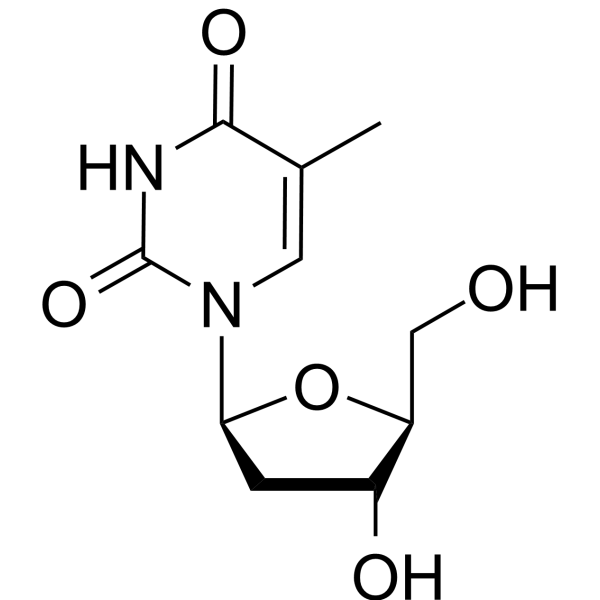
Epavudine; L-thymidine; NV 02B
|
HBV
|
Infection
|
|
Telbivudine (Epavudine), an orally active thymidine nucleoside analog, is a potent antiviral inhibitor of hepatitis B virus (HBV) replication .
|
-
-
- HY-B1011
-
|
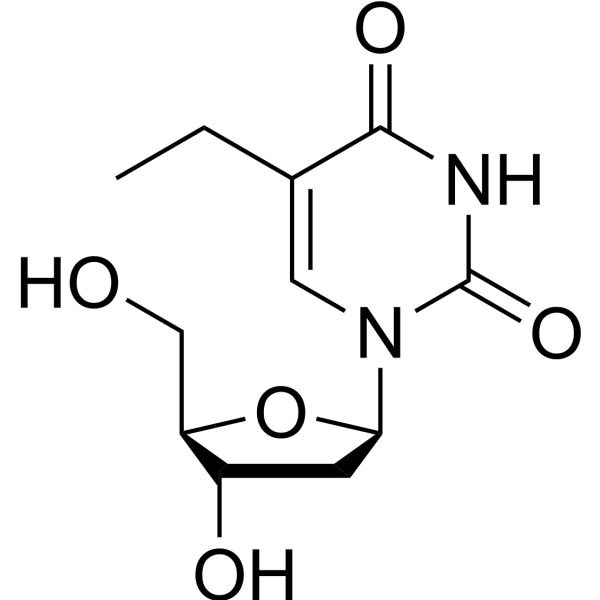
EUDR
|
Virus Protease
|
Infection
|
|
Edoxudine is an antiviral active molecule and thymidine analog. Edoxudine is effective against herpes simplex virus .
|
-
-
- HY-W009538
-
|
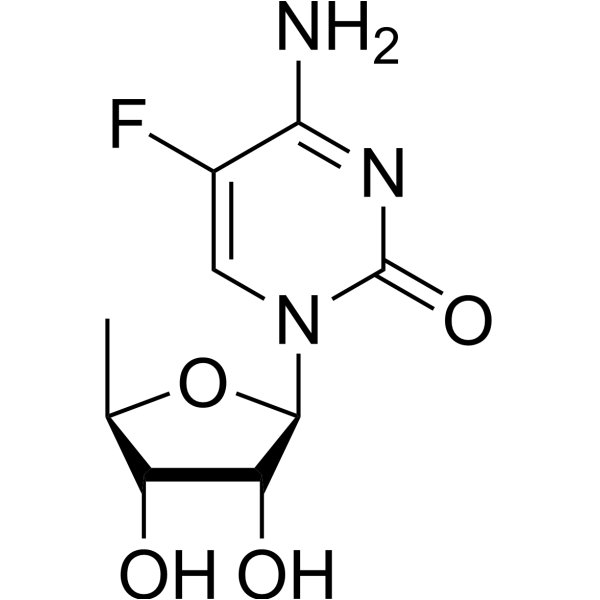
5-Fluoro-5'-deoxycytidine
|
Nucleoside Antimetabolite/Analog
DNA/RNA Synthesis
Drug Metabolite
|
Cancer
|
|
5'-Deoxy-5-fluorocytidine (5-Fluoro-5'-deoxycytidine) is a cytidine analog and metabolite of Capecitabine (HY-B0016). 5'-Deoxy-5-fluorocytidine is converted from Capecitabine by carboxylesterase in the liver. 5'-Deoxy-5-fluorocytidine is deaminated by cytidine deaminase to generate 5'-deoxy-5-fluorouridine, which is finally converted into 5-fluorouracil (HY-90006) by thymidine phosphorylase in tumor tissues to exert anti-tumor effects. 5'-Deoxy-5-fluorocytidine is used in the researches for solid tumors such as colorectal cancer, non-small cell lung cancer and breast cancer .
|
-
-
- HY-W113081
-
|
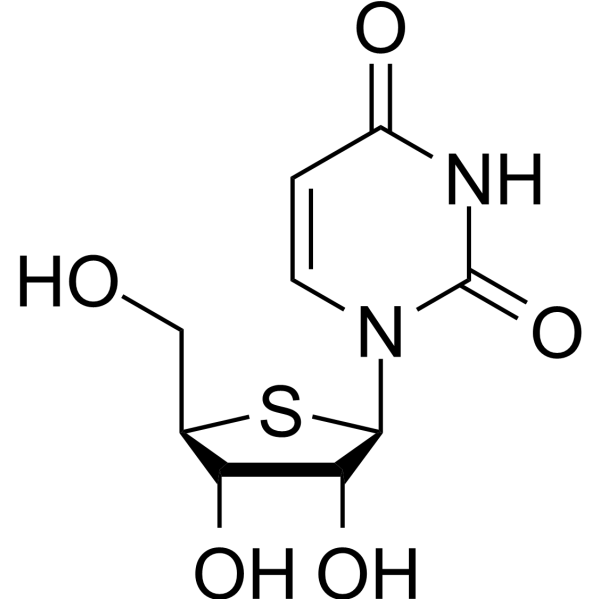
1-(4-Thio-beta-D-ribofuranosyl)uracil
|
Nucleoside Antimetabolite/Analog
|
Others
|
|
4′-Thiouridine (1-(4-Thio-beta-D-ribofuranosyl)uracil) is a thio analog of thymidine. 4′-Thiouridine can be used to synthesize 4'-thionucleosides with antiviral and anticancer activities. 4′-Thiouridine can be used for RNA-sequencing .
|
-
-
- HY-128710
-
|
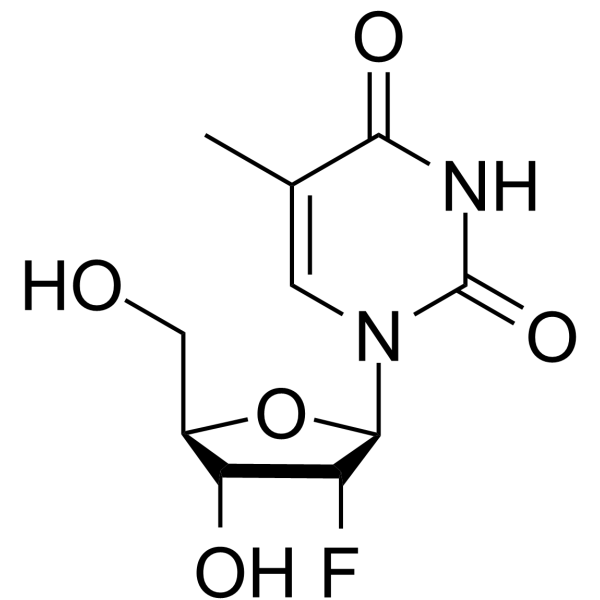
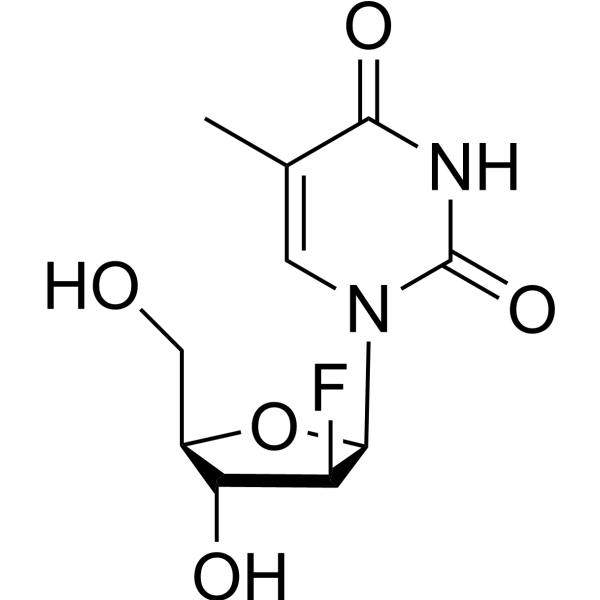
2'-Deoxy-2'-fluoro-5-Methyluridine
|
Nucleoside Antimetabolite/Analog
|
Cancer
|
|
2'-Fluorothymidine (2'-Fluoro-2'-deoxythymidine) is a nucleoside analog and hCNT inhibitor, with an IC50 of 1.1 μM against hCNT1 and an IC50 of 9.7 μM against hCNT3. 2'-Fluorothymidine undergoes phosphorylation by cytosolic thymidine kinase (TK1) and mitochondrial thymidine kinase (TK2). 2'-Fluorothymidine acts as a backbone stabilizer in oligonucleotide synthesis and can also form radiolabeled candidates. 2'-Fluorothymidine is applicable in tumor-related research .
|
-
-
- HY-W100234
-
|
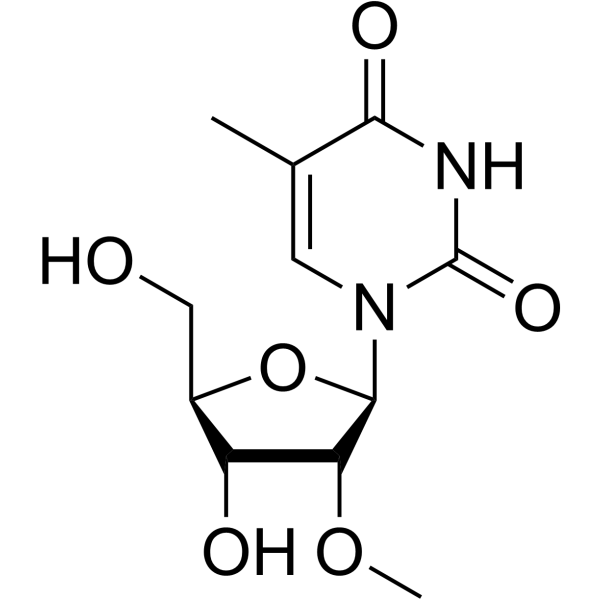
2'-O-Methyl-5-methyluridine
|
Nucleoside Antimetabolite/Analog
|
Cancer
|
|
5-Methyl-2’-O-methyl-uridine (2'-O-methyl-5-methyluridine) is a thymidine analog. Analogs of this series have insertional activity towards replicated DNA. They can be used to label cells and track DNA synthesis. 5-Methyl-2’-O-methyl-uridine is a modified nucleoside that can be found in tRNA isolated from rabbit liver .
|
-
-
- HY-W394106
-
|
|
Nucleoside Antimetabolite/Analog
|
Others
|
|
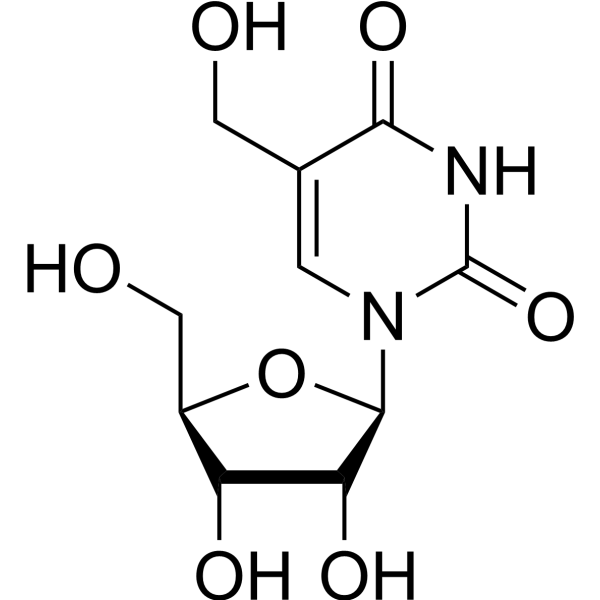
5-Hydroxymethyl uridine is a thymidine analogue. Analogs of this series have insertional activity towards replicated DNA. They can be used to label cells and track DNA synthesis .
|
-
-
- HY-114247
-
|
D-FMAU
|
Nucleoside Antimetabolite/Analog
|
Infection
Cancer
|
|
FMAU is a nucleoside analog and cell proliferation marker that can be phosphorylated by human thymidine kinase and subsequently incorporated into DNA. FMAU is applicable to research related to herpes simplex virus infection, various cancers, hepatitis B virus infection, and Epstein-Barr virus infection .
|
-
-
- HY-13742
-
|
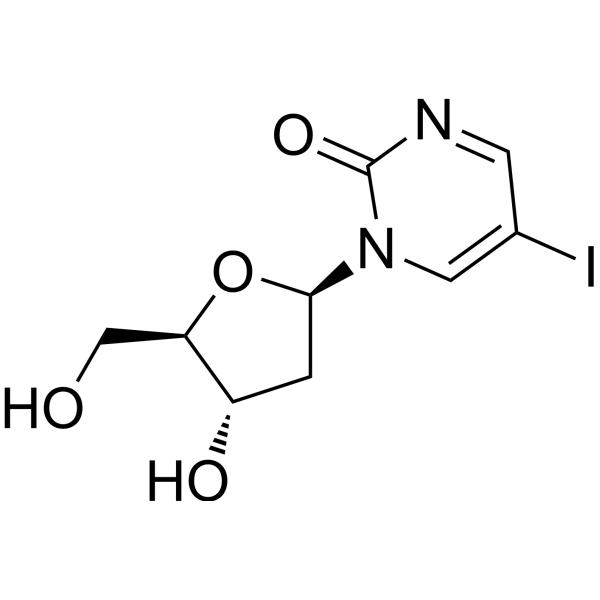
IPdR
|
HSV
|
Cancer
|
|
Ropidoxuridine (IPdR) is a novel orally available, halogenated thymidine analog and is a potential radiosensitizer for use in human tumors.
|
-
-
- HY-152557
-
|
|
Nucleoside Antimetabolite/Analog
|
Cancer
|
|
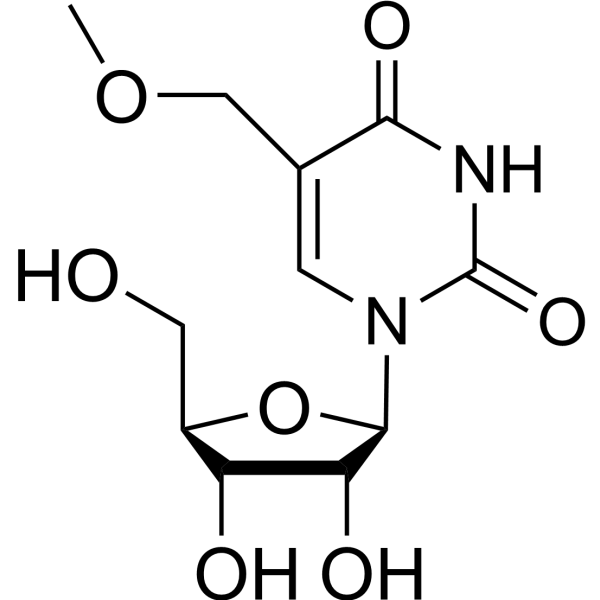
5-Methoxymethyluridine is a thymidine analog. Analogs of this series have insertional activity towards replicated DNA. They can be used to label cells and track DNA synthesis .
|
-
-
- HY-154719
-
|
|
Nucleoside Antimetabolite/Analog
|
Cancer
|
|
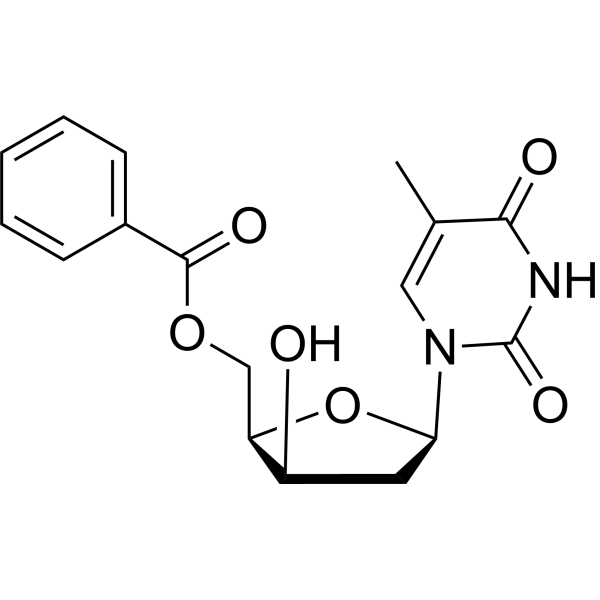
5’-O-Benzoylthymidine is a thymidine analog. Analogs of this series have insertional activity towards replicated DNA. They can be used to label cells and track DNA synthesis .
|
-
-
- HY-154434
-
|
|
Nucleoside Antimetabolite/Analog
|
Cancer
|
|
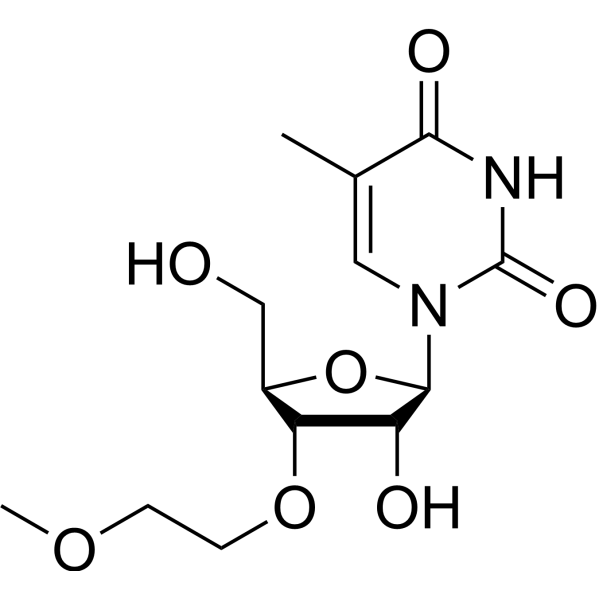
3’-O-(2-Methoxyethyl)-5-methyluridine is a thymidine analog. Analogs of this series have insertional activity towards replicated DNA. They can be used to label cells and track DNA synthesis .
|
-
-
- HY-154273
-
|
|
Nucleoside Antimetabolite/Analog
|
Cancer
|
|
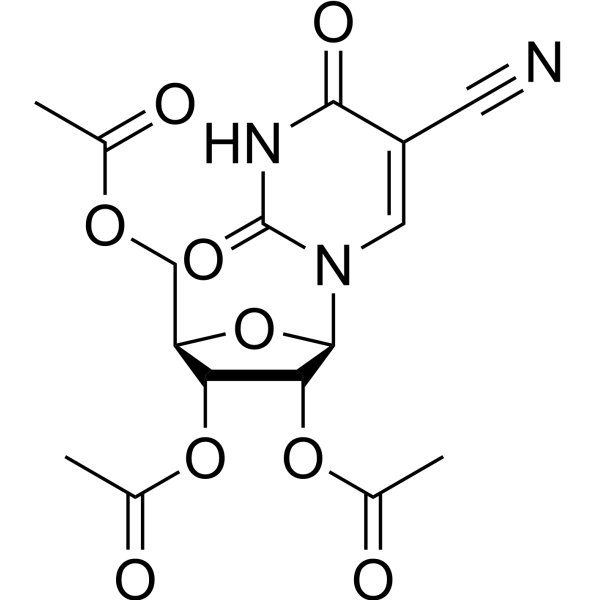
2’,3’,5’-Tri-O-acetyl-5-cyanouridine is a thymidine analog. Analogs of this series have insertional activity towards replicated DNA. They can be used to label cells and track DNA synthesis .
|
-
-
- HY-152434
-
|
|
Nucleoside Antimetabolite/Analog
|
Others
|
|
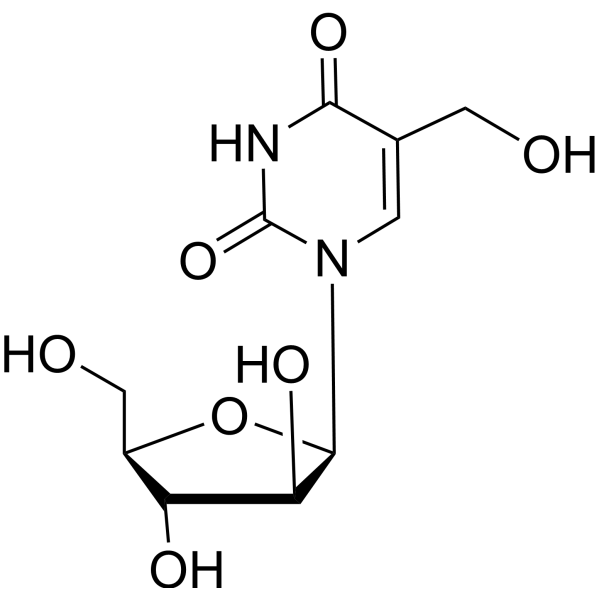
5-Hydroxymethyl-arauridine is a thymidine analogue. Analogs of this series have insertional activity towards replicated DNA. They can be used to label cells and track DNA synthesis .
|
-
-
- HY-154126
-
|
|
Nucleoside Antimetabolite/Analog
|
Cancer
|
|
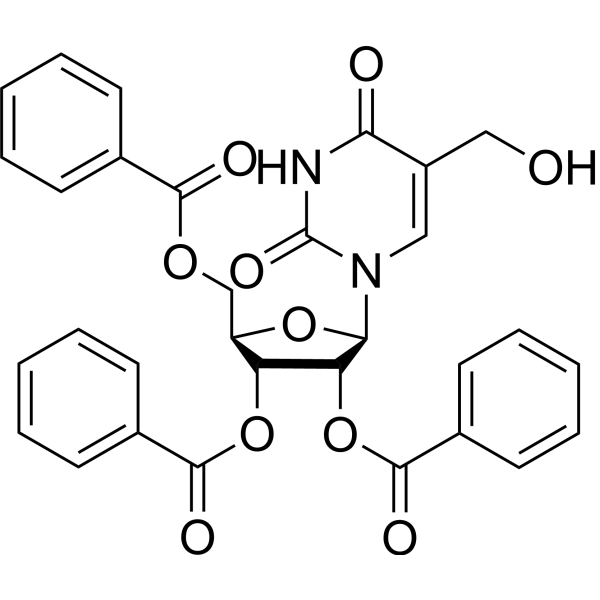
2’,3’,5’-Tri-O-benzoyl-5-hydroxy methyluridine (see GL100342) is a thymidine analog. Analogs of this series have insertional activity towards replicated DNA. They can be used to label cells and track DNA synthesis .
|
-
-
- HY-W357202
-
|
PMO thymidine Precusor
|
Nucleoside Antimetabolite/Analog
|
Cancer
|
|
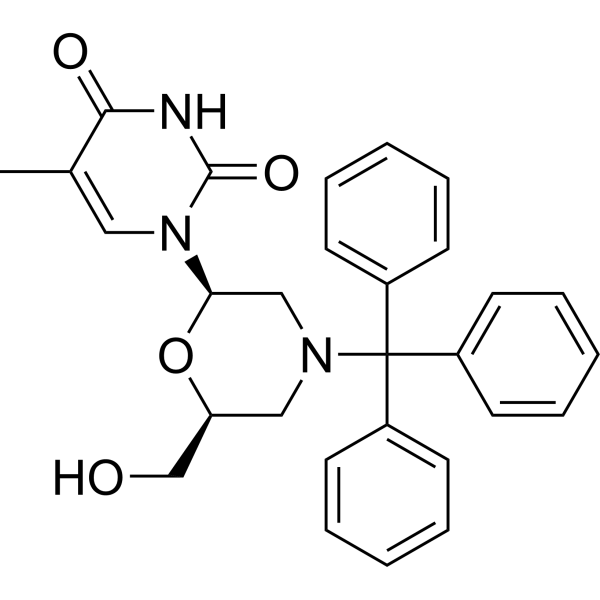
7’-OH-N-trityl morpholinothymine (PMO Thymidine Precusor) is a purine nucleoside analog. Purine nucleoside analogs have broad antitumor activity targeting indolent lymphoid malignancies. Anticancer mechanisms in this process rely on inhibition of DNA synthesis, induction of apoptosis, etc .
|
-
-
- HY-154566
-
|
|
Nucleoside Antimetabolite/Analog
|
Cancer
|
|
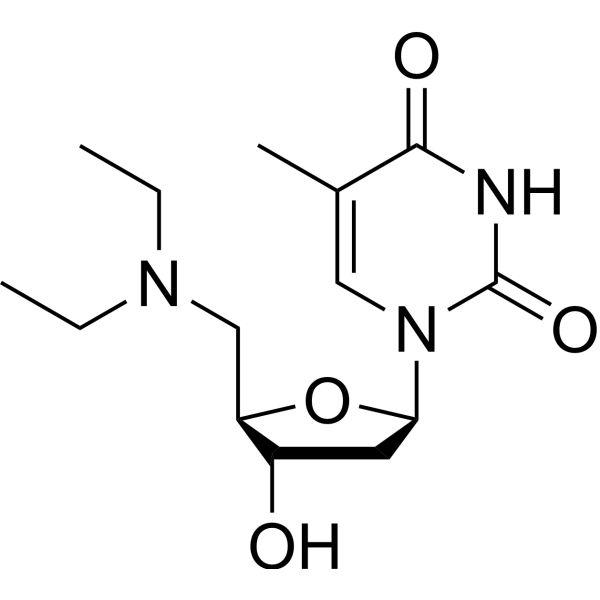
5’-Deoxy-5’-N,N-diethylamino thymidine is a purine nucleoside analog. Purine nucleoside analogs have broad antitumor activity targeting indolent lymphoid malignancies. Anticancer mechanisms in this process rely on inhibition of DNA synthesis, induction of apoptosis, etc .
|
-
-
- HY-W393317
-
|
|
Nucleoside Antimetabolite/Analog
|
Others
|
|
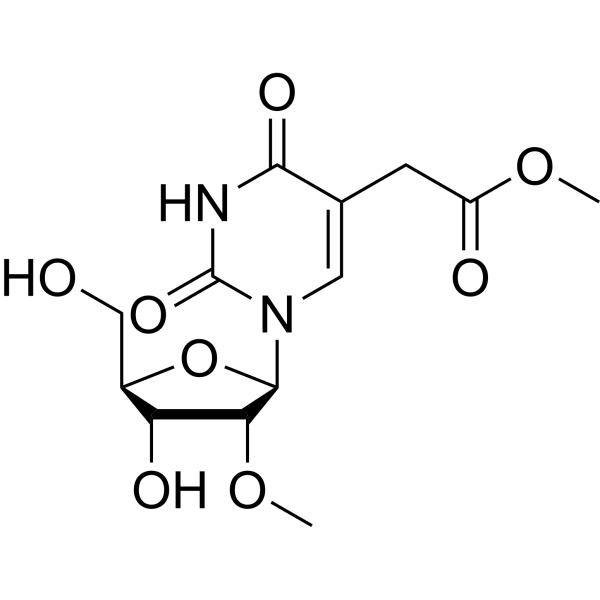
5-Methoxycarbonylmethyl-2'-O-methyluridine is a thymidine analogue. Analogs of this series have insertional activity towards replicated DNA. They can be used to label cells and track DNA synthesis .
|
-
-
- HY-152823
-
|
|
Nucleoside Antimetabolite/Analog
|
Others
|
|
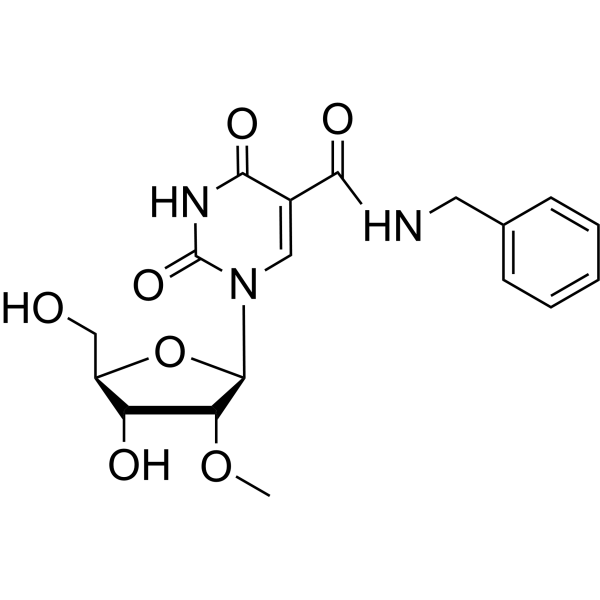
5-Benzylaminocarbonyl-2’-O-methyluridine is a thymidine analogue. Analogs of this series have insertional activity towards replicated DNA. They can be used to label cells and track DNA synthesis .
|
-
-
- HY-154567
-
|
|
Nucleoside Antimetabolite/Analog
|
Cancer
|
|
5’-Deoxy-5’-N-(2-chloroethyl)amino thymidine is a purine nucleoside analog. Purine nucleoside analogs have broad antitumor activity targeting indolent lymphoid malignancies. Anticancer mechanisms in this process rely on inhibition of DNA synthesis, induction of apoptosis, etc .
|
-
-
- HY-152781
-
|
|
Nucleoside Antimetabolite/Analog
|
Others
|
|
5’(R)-C-Methyl-5-methyluridine is a thymidine analogue. Analogs of this series have insertional activity towards replicated DNA. They can be used to label cells and track DNA synthesis .
|
-
-
- HY-152391
-
|
|
Nucleoside Antimetabolite/Analog
|
Others
|
|
3’-beta-C-Methyl-5-methyluridine is a thymidine analogue. Analogs of this series have insertional activity towards replicated DNA. They can be used to label cells and track DNA synthesis .
|
-
-
- HY-14920
-
|
Reverset; d-d4FC
|
Reverse Transcriptase
HIV
|
Infection
|
|
Dexelvucitabine (Reverset; d-d4FC), a Cytidine (HY-B0158) analog, is an orally active nucleoside reverse transcriptase inhibitor. Dexelvucitabine is a powerful agent against HIV-1-resistant viruses containing a thymidine analog and/or M184V mutation in the viral polymerase. Dexelvucitabine is a 2′-Deoxycytidine antiretroviral agent .
|
-
-
- HY-154255
-
|
|
Nucleoside Antimetabolite/Analog
|
Cancer
|
|
5-(3-Azidopropyl)uridine is a thymidine analog. Analogs of this series have insertional activity towards replicated DNA. They can be used to label cells and track DNA synthesis . 5-(3-Azidopropyl)uridine is a click chemistry reagent, it contains an Azide group and can undergo copper-catalyzed azide-alkyne cycloaddition reaction (CuAAc) with molecules containing Alkyne groups. It can also undergo strain-promoted alkyne-azide cycloaddition (SPAAC) reactions with molecules containing DBCO or BCN groups.
|
-
-
- HY-W009538R
-
|
5-Fluoro-5'-deoxycytidine (Standard)
|
Nucleoside Antimetabolite/Analog
Reference Standards
DNA/RNA Synthesis
Drug Metabolite
|
Cancer
|
|
5'-Deoxy-5-fluorocytidine (Standard) is the analytical standard of 5'-Deoxy-5-fluorocytidine (HY-W009538). This product is intended for research and analytical applications. 5'-Deoxy-5-fluorocytidine (5-Fluoro-5'-deoxycytidine) is a cytidine analog and metabolite of Capecitabine (HY-B0016). 5'-Deoxy-5-fluorocytidine is converted from Capecitabine by carboxylesterase in the liver. 5'-Deoxy-5-fluorocytidine is deaminated by cytidine deaminase to generate 5'-deoxy-5-fluorouridine, which is finally converted into 5-fluorouracil (HY-90006) by thymidine phosphorylase in tumor tissues to exert anti-tumor effects. 5'-Deoxy-5-fluorocytidine is used in the researches for solid tumors such as colorectal cancer, non-small cell lung cancer and breast cancer .
|
-
-
- HY-154524
-
|
|
Nucleoside Antimetabolite/Analog
|
Others
|
|
1-(2-Deoxy-β-D-threo-pentofuranosyl)thymine is a thymidine analog. Analogs of this series have insertional activity towards replicated DNA. They can be used to label cells and track DNA synthesis .
|
-
-
- HY-137611A
-
|
|
DNA/RNA Synthesis
|
Cancer
|
|
α,β-MTDP trisodium, a thymidylate analog, is a thymidine kinase inhibitor with a Ki of 23 µM .
|
-
-
- HY-125719
-
|
L-FMAU-TP
|
HBV
|
Infection
Cancer
|
|
Clevudine triphosphate is a thymidine analog. Clevudine triphosphate has anti-human hepatitis B virus (HBV) activity .
|
-
-
- HY-161436
-
|
|
Small Interfering RNA (siRNA)
|
Others
|
|
TPA-dT is a thymidine analog with a tris[(2-pyridyl)methyl]amine (TPA) group. TPA-dT can be used to modify siRNAs. The TPA-modified siRNAs remain functionally inactive and is incapable of silencing gene expression until the TPA moiety is removed upon exposure to Cu(I) .
|
-
-
- HY-101969
-
-
-
- HY-152559
-
|
|
Nucleoside Antimetabolite/Analog
|
Cancer
|
|
5-Ethoxymethyluridine is a thymidine analog. Analogs of this series have insertional activity towards replicated DNA. They can be used to label cells and track DNA synthesis .
|
-
-
- HY-154274
-
|
|
Nucleoside Antimetabolite/Analog
|
Cancer
|
|
5-Cyanouridine is a thymidine analog. Analogs of this series have insertional activity towards replicated DNA. They can be used to label cells and track DNA synthesis .
|
-
-
- HY-152496
-
|
|
Nucleoside Antimetabolite/Analog
|
Cancer
|
|
5-Hydroxymethyl xylouridine is a thymidine analog. Analogs of this series have insertional activity towards replicated DNA. They can be used to label cells and track DNA synthesis .
|
-
-
- HY-152502
-
|
|
Nucleoside Antimetabolite/Analog
|
Cancer
|
|
5-N-Boc-aminomethyluridine is a thymidine analog. Analogs of this series have insertional activity towards replicated DNA. They can be used to label cells and track DNA synthesis .
|
-
-
- HY-154115
-
|
|
Nucleoside Antimetabolite/Analog
|
Cancer
|
|
5’-O-Acetyl-5-acetyloxymethyluridine is a thymidine analog. Analogs of this series have insertional activity towards replicated DNA. They can be used to label cells and track DNA synthesis .
|
-
-
- HY-154551
-
|
|
Nucleoside Antimetabolite/Analog
|
Cancer
|
|
3’-O-Methyl-5-methyluridine is a thymidine analog. Analogs of this series have insertional activity towards replicated DNA. They can be used to label cells and track DNA synthesis .
|
-
-
- HY-154614
-
|
|
Nucleoside Antimetabolite/Analog
|
Cancer
|
|
5’-(4,4’-Dimethoxytrityl)-5-methyluridine is a thymidine analog. Analogs of this series have insertional activity towards replicated DNA. They can be used to label cells and track DNA synthesis .
|
-
-
- HY-154137
-
|
|
Nucleoside Antimetabolite/Analog
|
Cancer
|
|
3’-Beta-C-Methyl-5-trifluoromethyluridine is a thymidine analog. Analogs of this series have insertional activity towards replicated DNA. They can be used to label cells and track DNA synthesis .
|
-
-
- HY-152667
-
|
|
Nucleoside Antimetabolite/Analog
|
Cancer
|
|
1-(β-D-Xylofuranosyl)-5-methyluracil is a thymidine analog. Analogs of this series have insertional activity towards replicated DNA. They can be used to label cells and track DNA synthesis .
|
-
-
- HY-154139
-
|
|
Nucleoside Antimetabolite/Analog
|
Cancer
|
|
3’-Beta-C-Methyl-3-deazauridine is a thymidine analog. Analogs of this series have insertional activity towards replicated DNA. They can be used to label cells and track DNA synthesis .
|
-
-
- HY-154127
-
|
|
Nucleoside Antimetabolite/Analog
|
Cancer
|
|
2’,3’,5’-Tri-O-benzoyl-5-difluoromethyluridine is a thymidine analog. Analogs of this series have insertional activity towards replicated DNA. They can be used to label cells and track DNA synthesis .
|
-
-
- HY-154317
-
|
|
Nucleoside Antimetabolite/Analog
|
Cancer
|
|
2’-O-Methyl-5-methyluridine 5’-triphosphate (triethylammonium) is a thymidine analog. Analogs of this series have insertional activity towards replicated DNA. They can be used to label cells and track DNA synthesis .
|
-
-
- HY-154640
-
|
|
Nucleoside Antimetabolite/Analog
|
Cancer
|
|
2’,3’,5’-Tri-O-acetyl-5-(trifluoromethyl)uridine is a thymidine analog. Analogs of this series have insertional activity towards replicated DNA. They can be used to label cells and track DNA synthesis .
|
-
-
- HY-134795
-
|
|
Nucleoside Antimetabolite/Analog
|
Others
|
|
5-Carboxymethylaminomethyluridine is a thymidine analogue. Analogs of this series have insertional activity towards replicated DNA. They can be used to label cells and track DNA synthesis .
|
-
-
- HY-152639
-
|
|
Nucleoside Antimetabolite/Analog
|
Others
|
|
2’-Chlorothymidine is a thymidine analogue. Analogs of this series have insertional activity towards replicated DNA. They can be used to label cells and track DNA synthesis .
|
-
-
- HY-152875
-
|
|
Nucleoside Antimetabolite/Analog
|
Others
|
|
5-Carboxymethyluridine is a thymidine analogue. Analogs of this series have insertional activity towards replicated DNA. They can be used to label cells and track DNA synthesis .
|
-
-
- HY-20142
-
|
|
Nucleoside Antimetabolite/Analog
|
Cancer
|
|
3’-O-(t-Butyldiphenylsilyl) thymidine is a purine nucleoside analog. Purine nucleoside analogs have broad antitumor activity targeting indolent lymphoid malignancies. Anticancer mechanisms in this process rely on inhibition of DNA synthesis, induction of apoptosis, etc .
|
-
-
- HY-W552067
-
|
|
Nucleoside Antimetabolite/Analog
|
Cancer
|
|
5-(Hydroxymethyl)-2′,3′-O-(1-methylethylidene)uridine is a thymidine analog. Analogs of this series have insertional activity towards replicated DNA. They can be used to label cells and track DNA synthesis .
|
-
-
- HY-154554
-
|
|
Nucleoside Antimetabolite/Analog
|
Cancer
|
|
3’,5’-Di-O-benzoyl thymidine is a purine nucleoside analog. Purine nucleoside analogs have broad antitumor activity targeting indolent lymphoid malignancies. Anticancer mechanisms in this process rely on inhibition of DNA synthesis, induction of apoptosis, etc .
|
-
- HY-154569
-
|
|
Nucleoside Antimetabolite/Analog
|
Cancer
|
|
5’-Deoxy-5’-furfurylamino thymidine is a purine nucleoside analog. Purine nucleoside analogs have broad antitumor activity targeting indolent lymphoid malignancies. Anticancer mechanisms in this process rely on inhibition of DNA synthesis, induction of apoptosis, etc .
|
-
- HY-154563
-
|
|
Nucleoside Antimetabolite/Analog
|
Cancer
|
|
2’,3’,5’-Tri-O-acetyl-5,N3-dimethyluridine is a thymidine analog. Analogs of this series have insertional activity towards replicated DNA. They can be used to label cells and track DNA synthesis .
|
-
- HY-152790
-
|
|
Nucleoside Antimetabolite/Analog
|
Others
|
|
5-(2-Hydroxyethyl)uridine is a thymidine analogue. Analogs of this series have insertional activity towards replicated DNA. They can be used to label cells and track DNA synthesis .
|
-
- HY-B0017S
-
|
Epavudine-d4; L-thymidine-d4; NV 02B-d4
|
Isotope-Labeled Compounds
HBV
|
Infection
|
|
Telbivudine-d4 is deuterium labeled Telbivudine. Telbivudine (Epavudine), an orally active thymidine nucleoside analog, is a potent antiviral inhibitor of hepatitis B virus (HBV) replication .
|
-
- HY-154348
-
|
|
Nucleoside Antimetabolite/Analog
|
Cancer
|
|
4’,5’-Didehydro-5’-deoxy thymidine is a purine nucleoside analog. Purine nucleoside analogs have broad antitumor activity targeting indolent lymphoid malignancies. Anticancer mechanisms in this process rely on inhibition of DNA synthesis, induction of apoptosis, etc .
|
-
- HY-W010681A
-
|
|
Nucleoside Antimetabolite/Analog
Phosphoramidites
|
Cancer
|
|
3’-O-DMTr-thymidine 5’-CE phosphoramidite is a purine nucleoside analog. Purine nucleoside analogs have broad antitumor activity targeting indolent lymphoid malignancies. Anticancer mechanisms in this process rely on inhibition of DNA synthesis, induction of apoptosis, etc .
|
-
- HY-154568
-
|
|
Nucleoside Antimetabolite/Analog
|
Cancer
|
|
5’-Deoxy-5’-(4-morpholinyl)thymidine is a purine nucleoside analog. Purine nucleoside analogs have broad antitumor activity targeting indolent lymphoid malignancies. Anticancer mechanisms in this process rely on inhibition of DNA synthesis, induction of apoptosis, etc .
|
-
- HY-154252
-
|
|
Nucleoside Antimetabolite/Analog
|
Cancer
|
|
2’,3’,5’-Tri-O-benzoyl-5-hydroxymethyl-2’-β-C-methyluridine is a thymidine analog. Analogs of this series have insertional activity towards replicated DNA. They can be used to label cells and track DNA synthesis .
|
-
- HY-154565
-
|
|
Nucleoside Antimetabolite/Analog
|
Cancer
|
|
5’-Deoxy-5’-N,N-dimethylamino thymidine is a purine nucleoside analog. Purine nucleoside analogs have broad antitumor activity targeting indolent lymphoid malignancies. Anticancer mechanisms in this process rely on inhibition of DNA synthesis, induction of apoptosis, etc .
|
-
- HY-154144
-
|
|
Nucleoside Antimetabolite/Analog
|
Cancer
|
|
2’,3’,5’-Tri-O-benzoyl-2’-β-C-methyl-5-methyl uridine is a thymidine analog. Analogs of this series have insertional activity towards replicated DNA. They can be used to label cells and track DNA synthesis .
|
-
- HY-152543
-
|
|
Nucleoside Antimetabolite/Analog
|
Others
|
|
5-[3-[(Trifluoroacetyl)amino]propyl]uridine is a thymidine analogue. Analogs of this series have insertional activity towards replicated DNA. They can be used to label cells and track DNA synthesis .
|
-
- HY-154550
-
|
|
Nucleoside Antimetabolite/Analog
|
Cancer
|
|
2’-O-Acetyl-5’-O-benzoyl-3’-O-methyl-5-methyl uridine is a thymidine analog. Analogs of this series have insertional activity towards replicated DNA. They can be used to label cells and track DNA synthesis .
|
-
- HY-B0017R
-
|
Epavudine (Standard); L-thymidine (Standard); NV 02B (Standard)
|
Reference Standards
HBV
|
Infection
|
|
Telbivudine (Standard) is the analytical standard of Telbivudine. This product is intended for research and analytical applications. Telbivudine (Epavudine), an orally active thymidine nucleoside analog, is a potent antiviral inhibitor of hepatitis B virus (HBV) replication .
|
-
- HY-154050
-
|
|
Nucleoside Antimetabolite/Analog
|
Cancer
|
|
3′-Chloro-3′-deoxy-5′-O-(triphenylmethyl)thymidine is a purine nucleoside analog. Purine nucleoside analogs have broad antitumor activity targeting indolent lymphoid malignancies. Anticancer mechanisms in this process rely on inhibition of DNA synthesis, induction of apoptosis, etc .
|
-
- HY-154343
-
|
|
Nucleoside Antimetabolite/Analog
|
Cancer
|
|
3′-Azido-3′-deoxy-5′-O-(triphenylmethyl)thymidine is a purine nucleoside analog. Purine nucleoside analogs have broad antitumor activity targeting indolent lymphoid malignancies. Anticancer mechanisms in this process rely on inhibition of DNA synthesis, induction of apoptosis, etc .
|
-
- HY-154684
-
|
|
Nucleoside Antimetabolite/Analog
|
Cancer
|
|
5-Benzylamino carbonyl-3’-O-acetyl-2’-O-methyl-5’-O-DMTr-uridine is a thymidine analog. Analogs of this series have insertional activity towards replicated DNA. They can be used to label cells and track DNA synthesis .
|
-
- HY-152450
-
|
|
Nucleoside Antimetabolite/Analog
|
Others
|
|
5-Hydroxymethyl-2’-β-C-methyluridine is a thymidine analogue. Analogs of this series have insertional activity towards replicated DNA. They can be used to label cells and track DNA synthesis .
|
-
- HY-154604
-
|
|
Nucleoside Antimetabolite/Analog
Phosphoramidites
|
Cancer
|
|
1-(2'-Deoxy-5'-O-DMT-2'-fluoro-b-D-arabinofuranosyl)thymine 3'-CE phosphoramidite is a thymidine analog. Analogs of this series have insertional activity towards replicated DNA. They can be used to label cells and track DNA synthesis .
|
-
- HY-152799
-
|
|
Nucleoside Antimetabolite/Analog
|
Others
|
|
5-Naphthyl-beta-methylaminocarbony-2’-O-methyluridine is a thymidine analogue. Analogs of this series have insertional activity towards replicated DNA. They can be used to label cells and track DNA synthesis .
|
-
- HY-W705873
-
|
EUDR-d5
|
Isotope-Labeled Compounds
Virus Protease
|
Infection
|
|
Edoxudine-d5 (EUDR-d5) is the deuterium labeled Edoxudine (HY-B1011). Edoxudine is an antiviral active molecule and thymidine analog. Edoxudine is effective against herpes simplex virus .
|
-
- HY-152612
-
|
|
Nucleoside Antimetabolite/Analog
|
Others
|
|
2’-Deoxy-2’-fluoro-5-hydroxymethyl arabinouridine is a thymidine analogue. Analogs of this series have insertional activity towards replicated DNA. They can be used to label cells and track DNA synthesis .
|
-
- HY-152820
-
|
|
Nucleoside Antimetabolite/Analog
|
Others
|
|
2′-Deoxy-2′-fluoro-5-triflu oromethyl-arabinouridine is a thymidine analogue. Analogs of this series have insertional activity towards replicated DNA. They can be used to label cells and track DNA synthesis .
|
-
- HY-W048489
-
|
5'-O-(4,4'-Dimethoxytrityl)-2'-O-methoxyethyl-thymidine
|
Phosphoramidites
Nucleoside Antimetabolite/Analog
|
Others
|
|
DMT-2'-O-MOE-Tr (5'-O-(4,4'-Dimethoxytrityl)-2'-O-methoxyethyl-thymidine) is a nucleoside analog containing a dimethoxytrityl (DMT) group, commonly used in the synthesis of nucleic acids.
|
-
- HY-152879
-
|
|
Nucleoside Antimetabolite/Analog
|
Others
|
|
5-Benzylamino carbonyl-3’-O-acetyl-2’-O-methyluridine is a thymidine analogue. Analogs of this series have insertional activity towards replicated DNA. They can be used to label cells and track DNA synthesis .
|
-
- HY-152801
-
|
|
Nucleoside Antimetabolite/Analog
|
Others
|
|
5-Naphthyl-β-methylaminocarbony-3’-O-acetyl-2’-O-methyluridine is a thymidine analogue. Analogs of this series have insertional activity towards replicated DNA. They can be used to label cells and track DNA synthesis .
|
-
- HY-152429
-
|
|
Nucleoside Antimetabolite/Analog
|
Cancer
|
|
3’-Beta-C-ethynyl-5-trifluoromethyluridine is a thymidine analog. Analogs of this series have insertional activity towards replicated DNA. They can be used to label cells and track DNA synthesis . 3’-Beta-C-ethynyl-5-trifluoromethyluridine is a click chemistry reagent, it contains an Alkyne group and can undergo copper-catalyzed azide-alkyne cycloaddition (CuAAc) with molecules containing Azide groups.
|
-
- HY-14920R
-
|
Reverset (Standard); d-d4FC (Standard)
|
Reverse Transcriptase
HIV
Reference Standards
|
Infection
|
|
Dexelvucitabine (Standard) is the analytical standard of Dexelvucitabine. This product is intended for research and analytical applications. Dexelvucitabine (Reverset; d-d4FC), a Cytidine (HY-B0158) analog, is an orally active nucleoside reverse transcriptase inhibitor. Dexelvucitabine is a powerful agent against HIV-1-resistant viruses containing a thymidine analog and/or M184V mutation in the viral polymerase. Dexelvucitabine is a 2′-Deoxycytidine antiretroviral agent .
|
-
- HY-152488
-
|
|
Nucleoside Antimetabolite/Analog
|
Cancer
|
|
3’-β-C-Ethynyl-5-methyl uridine is a thymidine analog. Analogs of this series have insertional activity towards replicated DNA. They can be used to label cells and track DNA synthesis . 3’-β-C-Ethynyl-5-methyl uridine is a click chemistry reagent, it contains an Alkyne group and can undergo copper-catalyzed azide-alkyne cycloaddition (CuAAc) with molecules containing Azide groups.
|
-
- HY-128710R
-
|
2'-Deoxy-2'-fluoro-5-Methyluridine (Standard)
|
Reference Standards
Nucleoside Antimetabolite/Analog
|
Cancer
|
|
2'-Fluorothymidine (Standard) is the analytical standard of 2'-Fluorothymidine. This product is intended for research and analytical applications. 2'-Fluorothymidine (2'-Fluoro-2'-deoxythymidine) is a nucleoside analog and hCNT inhibitor, with an IC50 of 1.1 μM against hCNT1 and an IC50 of 9.7 μM against hCNT3. 2'-Fluorothymidine undergoes phosphorylation by cytosolic thymidine kinase (TK1) and mitochondrial thymidine kinase (TK2). 2'-Fluorothymidine acts as a backbone stabilizer in oligonucleotide synthesis and can also form radiolabeled candidates. 2'-Fluorothymidine is applicable in tumor-related research.
|
-
- HY-152676
-
|
|
Nucleoside Antimetabolite/Analog
|
Others
|
|
1-(2-Deoxy-2-fluoro-β-D-arabinofuranosyl)-5-ethyl-2,4(1H,3H)-pyrimidinedione is a thymidine analogue. Analogs of this series have insertional activity towards replicated DNA. They can be used to label cells and track DNA synthesis .
|
-
- HY-154461
-
|
|
Nucleoside Antimetabolite/Analog
|
Cancer
|
|
5-Azidomethyl-2’,3’,5’-tri-O-benzoyl uridine is a thymidine analog. Analogs of this series have insertional activity towards replicated DNA. They can be used to label cells and track DNA synthesis . 5-Azidomethyl-2’,3’,5’-tri-O-benzoyl uridine is a click chemistry reagent, it contains an Azide group and can undergo copper-catalyzed azide-alkyne cycloaddition reaction (CuAAc) with molecules containing Alkyne groups. It can also undergo strain-promoted alkyne-azide cycloaddition (SPAAC) reactions with molecules containing DBCO or BCN groups.
|
-
- HY-152523
-
|
|
Nucleoside Antimetabolite/Analog
|
Others
|
|
5-(Azidomethyl) arauridine is a thymidine analogue. Analogs of this series have insertional activity towards replicated DNA. They can be used to label cells and track DNA synthesis . 5-(Azidomethyl) arauridine is a click chemistry reagent, it contains an Azide group and can undergo copper-catalyzed azide-alkyne cycloaddition reaction (CuAAc) with molecules containing Alkyne groups. It can also undergo strain-promoted alkyne-azide cycloaddition (SPAAC) reactions with molecules containing DBCO or BCN groups.
|
-
- HY-131721
-
|
|
Drug Derivative
Mitosis
|
Others
|
|
14,15-EET-SI is a sulfonimide (SI) analog metabolized from 14,15-EET, which is also an effective mitogen. 14,15-EET-SI can stimulate the incorporation of [3H] thymidine, activate pp60c-src and initiate the tyrosine kinase cascade, mediating their mitotic effects. Additionally, 14,15-EET-SI can increase cell proliferation as well as the expression of c-fos and egr-1 mRNA .
|
-
- HY-154462
-
|
|
Nucleoside Antimetabolite/Analog
|
Cancer
|
|
5-Azidomethyl-2’-beta-methyl-2’,3’,5’-tri-O-benzoyluridine is a thymidine analog. Analogs of this series have insertional activity towards replicated DNA. They can be used to label cells and track DNA synthesis . 5-Azidomethyl-2’-beta-methyl-2’,3’,5’-tri-O-benzoyluridine is a click chemistry reagent, it contains an Azide group and can undergo copper-catalyzed azide-alkyne cycloaddition reaction (CuAAc) with molecules containing Alkyne groups. It can also undergo strain-promoted alkyne-azide cycloaddition (SPAAC) reactions with molecules containing DBCO or BCN groups.
|
-
- HY-152580
-
|
|
Nucleoside Antimetabolite/Analog
|
Others
|
|
5-[3-[(2,2,2-Trifluoroacetyl)amino]-1-propyn-1-yl]uridine is a thymidine analogue. Analogs of this series have insertional activity towards replicated DNA. They can be used to label cells and track DNA synthesis . 5-[3-[(2,2,2-Trifluoroacetyl)amino]-1-propyn-1-yl]uridine is a click chemistry reagent, it contains an Alkyne group and can undergo copper-catalyzed azide-alkyne cycloaddition (CuAAc) with molecules containing Azide groups.
|
-
- HY-152525
-
|
|
Nucleoside Antimetabolite/Analog
|
Others
|
|
5-(Azidomethyl)-2’-O-(2-methoxyethyl)uridine is a thymidine analogue. Analogs of this series have insertional activity towards replicated DNA. They can be used to label cells and track DNA synthesis . 5-(Azidomethyl)-2’-O-(2-methoxyethyl)uridine is a click chemistry reagent, it contains an Azide group and can undergo copper-catalyzed azide-alkyne cycloaddition reaction (CuAAc) with molecules containing Alkyne groups. It can also undergo strain-promoted alkyne-azide cycloaddition (SPAAC) reactions with molecules containing DBCO or BCN groups.
|
-
- HY-W009538S
-
|
5-Fluoro-5'-deoxycytidine-d3
|
Nucleoside Antimetabolite/Analog
Isotope-Labeled Compounds
DNA/RNA Synthesis
Drug Metabolite
|
Cancer
|
|
5'-Deoxy-5-fluorocytidine-d3 is deuterated labeled 5'-Deoxy-5-fluorocytidine (HY-W009538). 5'-Deoxy-5-fluorocytidine (5-Fluoro-5'-deoxycytidine) is a cytidine analog and metabolite of Capecitabine (HY-B0016). 5'-Deoxy-5-fluorocytidine is converted from Capecitabine by carboxylesterase in the liver. 5'-Deoxy-5-fluorocytidine is deaminated by cytidine deaminase to generate 5'-deoxy-5-fluorouridine, which is finally converted into 5-fluorouracil (HY-90006) by thymidine phosphorylase in tumor tissues to exert anti-tumor effects. 5'-Deoxy-5-fluorocytidine is used in the researches for solid tumors such as colorectal cancer, non-small cell lung cancer and breast cancer .
|
-
- HY-W009538S1
-
|
5-Fluoro-5'-deoxycytidine-13C5
|
Isotope-Labeled Compounds
DNA/RNA Synthesis
Drug Metabolite
|
Cancer
|
|
5'-Deoxy-5-fluorocytidine-13C5 is the 13C labeled isotope of 5'-Deoxy-5-fluorocytidine (HY-W009538). 5'-Deoxy-5-fluorocytidine (5-Fluoro-5'-deoxycytidine) is a cytidine analog and metabolite of Capecitabine (HY-B0016). 5'-Deoxy-5-fluorocytidine is converted from Capecitabine by carboxylesterase in the liver. 5'-Deoxy-5-fluorocytidine is deaminated by cytidine deaminase to generate 5'-deoxy-5-fluorouridine, which is finally converted into 5-fluorouracil (HY-90006) by thymidine phosphorylase in tumor tissues to exert anti-tumor effects. 5'-Deoxy-5-fluorocytidine is used in the researches for solid tumors such as colorectal cancer, non-small cell lung cancer and breast cancer .
|
-
- HY-101969R
-
|
5-Methyl-2'-Deoxypseudouridin (Standard)
|
Reference Standards
Nucleoside Antimetabolite/Analog
HIV
|
Infection
|
|
Pseudothymidine (Standard) is the analytical standard of Pseudothymidine (HY-101969). This product is intended for research and analytical applications. Pseudothymidine is a C-nucleoside analog of thymidine.
|
-
| Cat. No. |
Product Name |
Type |
-
- HY-W394106
-
|
|
Biochemical Assay Reagents
|
|
5-Hydroxymethyl uridine is a thymidine analogue. Analogs of this series have insertional activity towards replicated DNA. They can be used to label cells and track DNA synthesis .
|
| Cat. No. |
Product Name |
Chemical Structure |
-
- HY-B0017S
-
|
|
|
Telbivudine-d4 is deuterium labeled Telbivudine. Telbivudine (Epavudine), an orally active thymidine nucleoside analog, is a potent antiviral inhibitor of hepatitis B virus (HBV) replication .
|
-
-
- HY-W705873
-
|
|
|
Edoxudine-d5 (EUDR-d5) is the deuterium labeled Edoxudine (HY-B1011). Edoxudine is an antiviral active molecule and thymidine analog. Edoxudine is effective against herpes simplex virus .
|
-
-
- HY-W009538S
-
|
|
|
5'-Deoxy-5-fluorocytidine-d3 is deuterated labeled 5'-Deoxy-5-fluorocytidine (HY-W009538). 5'-Deoxy-5-fluorocytidine (5-Fluoro-5'-deoxycytidine) is a cytidine analog and metabolite of Capecitabine (HY-B0016). 5'-Deoxy-5-fluorocytidine is converted from Capecitabine by carboxylesterase in the liver. 5'-Deoxy-5-fluorocytidine is deaminated by cytidine deaminase to generate 5'-deoxy-5-fluorouridine, which is finally converted into 5-fluorouracil (HY-90006) by thymidine phosphorylase in tumor tissues to exert anti-tumor effects. 5'-Deoxy-5-fluorocytidine is used in the researches for solid tumors such as colorectal cancer, non-small cell lung cancer and breast cancer .
|
-
-
- HY-W009538S1
-
|
|
|
5'-Deoxy-5-fluorocytidine-13C5 is the 13C labeled isotope of 5'-Deoxy-5-fluorocytidine (HY-W009538). 5'-Deoxy-5-fluorocytidine (5-Fluoro-5'-deoxycytidine) is a cytidine analog and metabolite of Capecitabine (HY-B0016). 5'-Deoxy-5-fluorocytidine is converted from Capecitabine by carboxylesterase in the liver. 5'-Deoxy-5-fluorocytidine is deaminated by cytidine deaminase to generate 5'-deoxy-5-fluorouridine, which is finally converted into 5-fluorouracil (HY-90006) by thymidine phosphorylase in tumor tissues to exert anti-tumor effects. 5'-Deoxy-5-fluorocytidine is used in the researches for solid tumors such as colorectal cancer, non-small cell lung cancer and breast cancer .
|
-
| Cat. No. |
Product Name |
|
Classification |
-
- HY-154255
-
|
|
|
Azide
|
|
5-(3-Azidopropyl)uridine is a thymidine analog. Analogs of this series have insertional activity towards replicated DNA. They can be used to label cells and track DNA synthesis . 5-(3-Azidopropyl)uridine is a click chemistry reagent, it contains an Azide group and can undergo copper-catalyzed azide-alkyne cycloaddition reaction (CuAAc) with molecules containing Alkyne groups. It can also undergo strain-promoted alkyne-azide cycloaddition (SPAAC) reactions with molecules containing DBCO or BCN groups.
|
-
- HY-152429
-
|
|
|
Alkynes
|
|
3’-Beta-C-ethynyl-5-trifluoromethyluridine is a thymidine analog. Analogs of this series have insertional activity towards replicated DNA. They can be used to label cells and track DNA synthesis . 3’-Beta-C-ethynyl-5-trifluoromethyluridine is a click chemistry reagent, it contains an Alkyne group and can undergo copper-catalyzed azide-alkyne cycloaddition (CuAAc) with molecules containing Azide groups.
|
-
- HY-152488
-
|
|
|
Alkynes
|
|
3’-β-C-Ethynyl-5-methyl uridine is a thymidine analog. Analogs of this series have insertional activity towards replicated DNA. They can be used to label cells and track DNA synthesis . 3’-β-C-Ethynyl-5-methyl uridine is a click chemistry reagent, it contains an Alkyne group and can undergo copper-catalyzed azide-alkyne cycloaddition (CuAAc) with molecules containing Azide groups.
|
-
- HY-154461
-
|
|
|
Azide
|
|
5-Azidomethyl-2’,3’,5’-tri-O-benzoyl uridine is a thymidine analog. Analogs of this series have insertional activity towards replicated DNA. They can be used to label cells and track DNA synthesis . 5-Azidomethyl-2’,3’,5’-tri-O-benzoyl uridine is a click chemistry reagent, it contains an Azide group and can undergo copper-catalyzed azide-alkyne cycloaddition reaction (CuAAc) with molecules containing Alkyne groups. It can also undergo strain-promoted alkyne-azide cycloaddition (SPAAC) reactions with molecules containing DBCO or BCN groups.
|
-
- HY-152523
-
|
|
|
Azide
|
|
5-(Azidomethyl) arauridine is a thymidine analogue. Analogs of this series have insertional activity towards replicated DNA. They can be used to label cells and track DNA synthesis . 5-(Azidomethyl) arauridine is a click chemistry reagent, it contains an Azide group and can undergo copper-catalyzed azide-alkyne cycloaddition reaction (CuAAc) with molecules containing Alkyne groups. It can also undergo strain-promoted alkyne-azide cycloaddition (SPAAC) reactions with molecules containing DBCO or BCN groups.
|
-
- HY-154462
-
|
|
|
Azide
|
|
5-Azidomethyl-2’-beta-methyl-2’,3’,5’-tri-O-benzoyluridine is a thymidine analog. Analogs of this series have insertional activity towards replicated DNA. They can be used to label cells and track DNA synthesis . 5-Azidomethyl-2’-beta-methyl-2’,3’,5’-tri-O-benzoyluridine is a click chemistry reagent, it contains an Azide group and can undergo copper-catalyzed azide-alkyne cycloaddition reaction (CuAAc) with molecules containing Alkyne groups. It can also undergo strain-promoted alkyne-azide cycloaddition (SPAAC) reactions with molecules containing DBCO or BCN groups.
|
-
- HY-152525
-
|
|
|
Azide
|
|
5-(Azidomethyl)-2’-O-(2-methoxyethyl)uridine is a thymidine analogue. Analogs of this series have insertional activity towards replicated DNA. They can be used to label cells and track DNA synthesis . 5-(Azidomethyl)-2’-O-(2-methoxyethyl)uridine is a click chemistry reagent, it contains an Azide group and can undergo copper-catalyzed azide-alkyne cycloaddition reaction (CuAAc) with molecules containing Alkyne groups. It can also undergo strain-promoted alkyne-azide cycloaddition (SPAAC) reactions with molecules containing DBCO or BCN groups.
|
| Cat. No. |
Product Name |
|
Classification |
-
- HY-15910
-
|
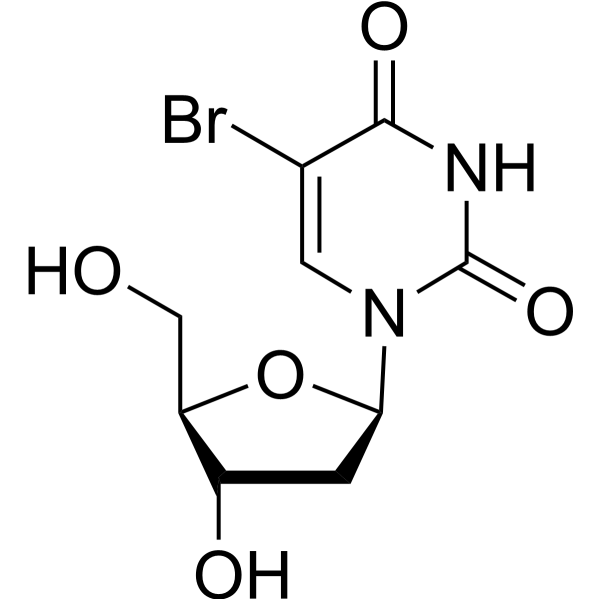
BrdU; 5-Bromo-2'-deoxyuridine; BUdR
|
|
Nucleoside Analogs
Uridine
|
|
5-BrdU (BrdU) is a nucleoside analog that competes with thymidine for incorporation into DNA. 5-BrdU is commonly used in the detection of proliferating cells.
|
-
- HY-W009538
-
|
5-Fluoro-5'-deoxycytidine
|
|
Nucleoside Analogs
Cytidine
|
|
5'-Deoxy-5-fluorocytidine (5-Fluoro-5'-deoxycytidine) is a cytidine analog and metabolite of Capecitabine (HY-B0016). 5'-Deoxy-5-fluorocytidine is converted from Capecitabine by carboxylesterase in the liver. 5'-Deoxy-5-fluorocytidine is deaminated by cytidine deaminase to generate 5'-deoxy-5-fluorouridine, which is finally converted into 5-fluorouracil (HY-90006) by thymidine phosphorylase in tumor tissues to exert anti-tumor effects. 5'-Deoxy-5-fluorocytidine is used in the researches for solid tumors such as colorectal cancer, non-small cell lung cancer and breast cancer .
|
-
- HY-W113081
-
|
1-(4-Thio-beta-D-ribofuranosyl)uracil
|
|
Nucleoside Analogs
Uridine
|
|
4′-Thiouridine (1-(4-Thio-beta-D-ribofuranosyl)uracil) is a thio analog of thymidine. 4′-Thiouridine can be used to synthesize 4'-thionucleosides with antiviral and anticancer activities. 4′-Thiouridine can be used for RNA-sequencing .
|
-
- HY-W100234
-
|
2'-O-Methyl-5-methyluridine
|
|
Nucleoside Analogs
Uridine
|
|
5-Methyl-2’-O-methyl-uridine (2'-O-methyl-5-methyluridine) is a thymidine analog. Analogs of this series have insertional activity towards replicated DNA. They can be used to label cells and track DNA synthesis. 5-Methyl-2’-O-methyl-uridine is a modified nucleoside that can be found in tRNA isolated from rabbit liver .
|
-
- HY-W394106
-
|
|
|
Nucleoside Analogs
Uridine
|
|
5-Hydroxymethyl uridine is a thymidine analogue. Analogs of this series have insertional activity towards replicated DNA. They can be used to label cells and track DNA synthesis .
|
-
- HY-152557
-
|
|
|
Nucleoside Analogs
Uridine
|
|
5-Methoxymethyluridine is a thymidine analog. Analogs of this series have insertional activity towards replicated DNA. They can be used to label cells and track DNA synthesis .
|
-
- HY-154719
-
|
|
|
Nucleoside Analogs
Thymidine
|
|
5’-O-Benzoylthymidine is a thymidine analog. Analogs of this series have insertional activity towards replicated DNA. They can be used to label cells and track DNA synthesis .
|
-
- HY-154434
-
|
|
|
Nucleoside Analogs
Uridine
|
|
3’-O-(2-Methoxyethyl)-5-methyluridine is a thymidine analog. Analogs of this series have insertional activity towards replicated DNA. They can be used to label cells and track DNA synthesis .
|
-
- HY-154273
-
|
|
|
Nucleoside Analogs
Uridine
|
|
2’,3’,5’-Tri-O-acetyl-5-cyanouridine is a thymidine analog. Analogs of this series have insertional activity towards replicated DNA. They can be used to label cells and track DNA synthesis .
|
-
- HY-152434
-
|
|
|
Nucleoside Analogs
Uridine
|
|
5-Hydroxymethyl-arauridine is a thymidine analogue. Analogs of this series have insertional activity towards replicated DNA. They can be used to label cells and track DNA synthesis .
|
-
- HY-154126
-
|
|
|
Nucleoside Analogs
Uridine
|
|
2’,3’,5’-Tri-O-benzoyl-5-hydroxy methyluridine (see GL100342) is a thymidine analog. Analogs of this series have insertional activity towards replicated DNA. They can be used to label cells and track DNA synthesis .
|
-
- HY-W357202
-
|
PMO thymidine Precusor
|
|
Nucleoside Analogs
Thymidine
|
|
7’-OH-N-trityl morpholinothymine (PMO Thymidine Precusor) is a purine nucleoside analog. Purine nucleoside analogs have broad antitumor activity targeting indolent lymphoid malignancies. Anticancer mechanisms in this process rely on inhibition of DNA synthesis, induction of apoptosis, etc .
|
-
- HY-154566
-
|
|
|
Nucleoside Analogs
Thymidine
|
|
5’-Deoxy-5’-N,N-diethylamino thymidine is a purine nucleoside analog. Purine nucleoside analogs have broad antitumor activity targeting indolent lymphoid malignancies. Anticancer mechanisms in this process rely on inhibition of DNA synthesis, induction of apoptosis, etc .
|
-
- HY-W393317
-
|
|
|
Nucleoside Analogs
Uridine
|
|
5-Methoxycarbonylmethyl-2'-O-methyluridine is a thymidine analogue. Analogs of this series have insertional activity towards replicated DNA. They can be used to label cells and track DNA synthesis .
|
-
- HY-152823
-
|
|
|
Nucleoside Analogs
Uridine
|
|
5-Benzylaminocarbonyl-2’-O-methyluridine is a thymidine analogue. Analogs of this series have insertional activity towards replicated DNA. They can be used to label cells and track DNA synthesis .
|
-
- HY-154567
-
|
|
|
Nucleoside Analogs
Thymidine
|
|
5’-Deoxy-5’-N-(2-chloroethyl)amino thymidine is a purine nucleoside analog. Purine nucleoside analogs have broad antitumor activity targeting indolent lymphoid malignancies. Anticancer mechanisms in this process rely on inhibition of DNA synthesis, induction of apoptosis, etc .
|
-
- HY-152781
-
|
|
|
Nucleoside Analogs
Uridine
|
|
5’(R)-C-Methyl-5-methyluridine is a thymidine analogue. Analogs of this series have insertional activity towards replicated DNA. They can be used to label cells and track DNA synthesis .
|
-
- HY-152391
-
|
|
|
Nucleoside Analogs
Uridine
|
|
3’-beta-C-Methyl-5-methyluridine is a thymidine analogue. Analogs of this series have insertional activity towards replicated DNA. They can be used to label cells and track DNA synthesis .
|
-
- HY-154255
-
|
|
|
Nucleoside Analogs
Uridine
|
|
5-(3-Azidopropyl)uridine is a thymidine analog. Analogs of this series have insertional activity towards replicated DNA. They can be used to label cells and track DNA synthesis . 5-(3-Azidopropyl)uridine is a click chemistry reagent, it contains an Azide group and can undergo copper-catalyzed azide-alkyne cycloaddition reaction (CuAAc) with molecules containing Alkyne groups. It can also undergo strain-promoted alkyne-azide cycloaddition (SPAAC) reactions with molecules containing DBCO or BCN groups.
|
-
- HY-154524
-
|
|
|
Nucleoside Analogs
Thymidine
|
|
1-(2-Deoxy-β-D-threo-pentofuranosyl)thymine is a thymidine analog. Analogs of this series have insertional activity towards replicated DNA. They can be used to label cells and track DNA synthesis .
|
-
- HY-101969
-
-
- HY-152559
-
|
|
|
Nucleoside Analogs
Uridine
|
|
5-Ethoxymethyluridine is a thymidine analog. Analogs of this series have insertional activity towards replicated DNA. They can be used to label cells and track DNA synthesis .
|
-
- HY-154274
-
|
|
|
Nucleoside Analogs
Uridine
|
|
5-Cyanouridine is a thymidine analog. Analogs of this series have insertional activity towards replicated DNA. They can be used to label cells and track DNA synthesis .
|
-
- HY-152496
-
|
|
|
Nucleoside Analogs
Uridine
|
|
5-Hydroxymethyl xylouridine is a thymidine analog. Analogs of this series have insertional activity towards replicated DNA. They can be used to label cells and track DNA synthesis .
|
-
- HY-152502
-
|
|
|
Nucleoside Analogs
Uridine
|
|
5-N-Boc-aminomethyluridine is a thymidine analog. Analogs of this series have insertional activity towards replicated DNA. They can be used to label cells and track DNA synthesis .
|
-
- HY-154115
-
|
|
|
Nucleoside Analogs
Uridine
|
|
5’-O-Acetyl-5-acetyloxymethyluridine is a thymidine analog. Analogs of this series have insertional activity towards replicated DNA. They can be used to label cells and track DNA synthesis .
|
-
- HY-154551
-
|
|
|
Nucleoside Analogs
Uridine
|
|
3’-O-Methyl-5-methyluridine is a thymidine analog. Analogs of this series have insertional activity towards replicated DNA. They can be used to label cells and track DNA synthesis .
|
-
- HY-154614
-
|
|
|
Nucleoside Analogs
Uridine
|
|
5’-(4,4’-Dimethoxytrityl)-5-methyluridine is a thymidine analog. Analogs of this series have insertional activity towards replicated DNA. They can be used to label cells and track DNA synthesis .
|
-
- HY-154137
-
|
|
|
Nucleoside Analogs
Uridine
|
|
3’-Beta-C-Methyl-5-trifluoromethyluridine is a thymidine analog. Analogs of this series have insertional activity towards replicated DNA. They can be used to label cells and track DNA synthesis .
|
-
- HY-152667
-
|
|
|
Nucleoside Analogs
Uridine
|
|
1-(β-D-Xylofuranosyl)-5-methyluracil is a thymidine analog. Analogs of this series have insertional activity towards replicated DNA. They can be used to label cells and track DNA synthesis .
|
-
- HY-154139
-
|
|
|
Nucleoside Analogs
Uridine
|
|
3’-Beta-C-Methyl-3-deazauridine is a thymidine analog. Analogs of this series have insertional activity towards replicated DNA. They can be used to label cells and track DNA synthesis .
|
-
- HY-154127
-
|
|
|
Nucleoside Analogs
Uridine
|
|
2’,3’,5’-Tri-O-benzoyl-5-difluoromethyluridine is a thymidine analog. Analogs of this series have insertional activity towards replicated DNA. They can be used to label cells and track DNA synthesis .
|
-
- HY-154317
-
|
|
|
Nucleoside Analogs
Uridine
|
|
2’-O-Methyl-5-methyluridine 5’-triphosphate (triethylammonium) is a thymidine analog. Analogs of this series have insertional activity towards replicated DNA. They can be used to label cells and track DNA synthesis .
|
-
- HY-154640
-
|
|
|
Nucleoside Analogs
Uridine
|
|
2’,3’,5’-Tri-O-acetyl-5-(trifluoromethyl)uridine is a thymidine analog. Analogs of this series have insertional activity towards replicated DNA. They can be used to label cells and track DNA synthesis .
|
-
- HY-152639
-
|
|
|
Nucleoside Analogs
Uridine
|
|
2’-Chlorothymidine is a thymidine analogue. Analogs of this series have insertional activity towards replicated DNA. They can be used to label cells and track DNA synthesis .
|
-
- HY-152875
-
|
|
|
Nucleoside Analogs
Uridine
|
|
5-Carboxymethyluridine is a thymidine analogue. Analogs of this series have insertional activity towards replicated DNA. They can be used to label cells and track DNA synthesis .
|
-
- HY-W552067
-
|
|
|
Nucleoside Analogs
Uridine
|
|
5-(Hydroxymethyl)-2′,3′-O-(1-methylethylidene)uridine is a thymidine analog. Analogs of this series have insertional activity towards replicated DNA. They can be used to label cells and track DNA synthesis .
|
-
- HY-154554
-
|
|
|
Nucleoside Analogs
Thymidine
|
|
3’,5’-Di-O-benzoyl thymidine is a purine nucleoside analog. Purine nucleoside analogs have broad antitumor activity targeting indolent lymphoid malignancies. Anticancer mechanisms in this process rely on inhibition of DNA synthesis, induction of apoptosis, etc .
|
-
- HY-154569
-
|
|
|
Nucleoside Analogs
Thymidine
|
|
5’-Deoxy-5’-furfurylamino thymidine is a purine nucleoside analog. Purine nucleoside analogs have broad antitumor activity targeting indolent lymphoid malignancies. Anticancer mechanisms in this process rely on inhibition of DNA synthesis, induction of apoptosis, etc .
|
-
- HY-154563
-
|
|
|
Nucleoside Analogs
Uridine
|
|
2’,3’,5’-Tri-O-acetyl-5,N3-dimethyluridine is a thymidine analog. Analogs of this series have insertional activity towards replicated DNA. They can be used to label cells and track DNA synthesis .
|
-
- HY-152790
-
|
|
|
Nucleoside Analogs
Uridine
|
|
5-(2-Hydroxyethyl)uridine is a thymidine analogue. Analogs of this series have insertional activity towards replicated DNA. They can be used to label cells and track DNA synthesis .
|
-
- HY-154348
-
|
|
|
Nucleoside Analogs
Thymidine
|
|
4’,5’-Didehydro-5’-deoxy thymidine is a purine nucleoside analog. Purine nucleoside analogs have broad antitumor activity targeting indolent lymphoid malignancies. Anticancer mechanisms in this process rely on inhibition of DNA synthesis, induction of apoptosis, etc .
|
-
- HY-W010681A
-
|
|
|
Phosphoramidites
Thymine
|
|
3’-O-DMTr-thymidine 5’-CE phosphoramidite is a purine nucleoside analog. Purine nucleoside analogs have broad antitumor activity targeting indolent lymphoid malignancies. Anticancer mechanisms in this process rely on inhibition of DNA synthesis, induction of apoptosis, etc .
|
-
- HY-154568
-
|
|
|
Nucleoside Analogs
Thymidine
|
|
5’-Deoxy-5’-(4-morpholinyl)thymidine is a purine nucleoside analog. Purine nucleoside analogs have broad antitumor activity targeting indolent lymphoid malignancies. Anticancer mechanisms in this process rely on inhibition of DNA synthesis, induction of apoptosis, etc .
|
-
- HY-154252
-
|
|
|
Nucleoside Analogs
Uridine
|
|
2’,3’,5’-Tri-O-benzoyl-5-hydroxymethyl-2’-β-C-methyluridine is a thymidine analog. Analogs of this series have insertional activity towards replicated DNA. They can be used to label cells and track DNA synthesis .
|
-
- HY-154565
-
|
|
|
Nucleoside Analogs
Thymidine
|
|
5’-Deoxy-5’-N,N-dimethylamino thymidine is a purine nucleoside analog. Purine nucleoside analogs have broad antitumor activity targeting indolent lymphoid malignancies. Anticancer mechanisms in this process rely on inhibition of DNA synthesis, induction of apoptosis, etc .
|
-
- HY-154144
-
|
|
|
Nucleoside Analogs
Uridine
|
|
2’,3’,5’-Tri-O-benzoyl-2’-β-C-methyl-5-methyl uridine is a thymidine analog. Analogs of this series have insertional activity towards replicated DNA. They can be used to label cells and track DNA synthesis .
|
-
- HY-152543
-
|
|
|
Nucleoside Analogs
Uridine
|
|
5-[3-[(Trifluoroacetyl)amino]propyl]uridine is a thymidine analogue. Analogs of this series have insertional activity towards replicated DNA. They can be used to label cells and track DNA synthesis .
|
-
- HY-154550
-
|
|
|
Nucleoside Analogs
Uridine
|
|
2’-O-Acetyl-5’-O-benzoyl-3’-O-methyl-5-methyl uridine is a thymidine analog. Analogs of this series have insertional activity towards replicated DNA. They can be used to label cells and track DNA synthesis .
|
-
- HY-154050
-
|
|
|
Nucleoside Analogs
Thymidine
|
|
3′-Chloro-3′-deoxy-5′-O-(triphenylmethyl)thymidine is a purine nucleoside analog. Purine nucleoside analogs have broad antitumor activity targeting indolent lymphoid malignancies. Anticancer mechanisms in this process rely on inhibition of DNA synthesis, induction of apoptosis, etc .
|
- HY-154343
-
|
|
|
Nucleoside Analogs
Thymidine
|
|
3′-Azido-3′-deoxy-5′-O-(triphenylmethyl)thymidine is a purine nucleoside analog. Purine nucleoside analogs have broad antitumor activity targeting indolent lymphoid malignancies. Anticancer mechanisms in this process rely on inhibition of DNA synthesis, induction of apoptosis, etc .
|
- HY-154684
-
|
|
|
Nucleoside Analogs
Uridine
|
|
5-Benzylamino carbonyl-3’-O-acetyl-2’-O-methyl-5’-O-DMTr-uridine is a thymidine analog. Analogs of this series have insertional activity towards replicated DNA. They can be used to label cells and track DNA synthesis .
|
- HY-152450
-
|
|
|
Nucleoside Analogs
Uridine
|
|
5-Hydroxymethyl-2’-β-C-methyluridine is a thymidine analogue. Analogs of this series have insertional activity towards replicated DNA. They can be used to label cells and track DNA synthesis .
|
- HY-154604
-
|
|
|
Phosphoramidites
Thymine
|
|
1-(2'-Deoxy-5'-O-DMT-2'-fluoro-b-D-arabinofuranosyl)thymine 3'-CE phosphoramidite is a thymidine analog. Analogs of this series have insertional activity towards replicated DNA. They can be used to label cells and track DNA synthesis .
|
- HY-152799
-
|
|
|
Nucleoside Analogs
Uridine
|
|
5-Naphthyl-beta-methylaminocarbony-2’-O-methyluridine is a thymidine analogue. Analogs of this series have insertional activity towards replicated DNA. They can be used to label cells and track DNA synthesis .
|
- HY-152612
-
|
|
|
Nucleoside Analogs
Uridine
|
|
2’-Deoxy-2’-fluoro-5-hydroxymethyl arabinouridine is a thymidine analogue. Analogs of this series have insertional activity towards replicated DNA. They can be used to label cells and track DNA synthesis .
|
- HY-152820
-
|
|
|
Nucleoside Analogs
Uridine
|
|
2′-Deoxy-2′-fluoro-5-triflu oromethyl-arabinouridine is a thymidine analogue. Analogs of this series have insertional activity towards replicated DNA. They can be used to label cells and track DNA synthesis .
|
- HY-W048489
-
|
5'-O-(4,4'-Dimethoxytrityl)-2'-O-methoxyethyl-thymidine
|
|
Phosphoramidites
Thymine
|
|
DMT-2'-O-MOE-Tr (5'-O-(4,4'-Dimethoxytrityl)-2'-O-methoxyethyl-thymidine) is a nucleoside analog containing a dimethoxytrityl (DMT) group, commonly used in the synthesis of nucleic acids.
|
- HY-152879
-
|
|
|
Nucleoside Analogs
Uridine
|
|
5-Benzylamino carbonyl-3’-O-acetyl-2’-O-methyluridine is a thymidine analogue. Analogs of this series have insertional activity towards replicated DNA. They can be used to label cells and track DNA synthesis .
|
- HY-152801
-
|
|
|
Nucleoside Analogs
Uridine
|
|
5-Naphthyl-β-methylaminocarbony-3’-O-acetyl-2’-O-methyluridine is a thymidine analogue. Analogs of this series have insertional activity towards replicated DNA. They can be used to label cells and track DNA synthesis .
|
- HY-152429
-
|
|
|
Nucleoside Analogs
Uridine
|
|
3’-Beta-C-ethynyl-5-trifluoromethyluridine is a thymidine analog. Analogs of this series have insertional activity towards replicated DNA. They can be used to label cells and track DNA synthesis . 3’-Beta-C-ethynyl-5-trifluoromethyluridine is a click chemistry reagent, it contains an Alkyne group and can undergo copper-catalyzed azide-alkyne cycloaddition (CuAAc) with molecules containing Azide groups.
|
- HY-152488
-
|
|
|
Nucleoside Analogs
Uridine
|
|
3’-β-C-Ethynyl-5-methyl uridine is a thymidine analog. Analogs of this series have insertional activity towards replicated DNA. They can be used to label cells and track DNA synthesis . 3’-β-C-Ethynyl-5-methyl uridine is a click chemistry reagent, it contains an Alkyne group and can undergo copper-catalyzed azide-alkyne cycloaddition (CuAAc) with molecules containing Azide groups.
|
- HY-152676
-
|
|
|
Nucleoside Analogs
|
|
1-(2-Deoxy-2-fluoro-β-D-arabinofuranosyl)-5-ethyl-2,4(1H,3H)-pyrimidinedione is a thymidine analogue. Analogs of this series have insertional activity towards replicated DNA. They can be used to label cells and track DNA synthesis .
|
- HY-154461
-
|
|
|
Nucleoside Analogs
Uridine
|
|
5-Azidomethyl-2’,3’,5’-tri-O-benzoyl uridine is a thymidine analog. Analogs of this series have insertional activity towards replicated DNA. They can be used to label cells and track DNA synthesis . 5-Azidomethyl-2’,3’,5’-tri-O-benzoyl uridine is a click chemistry reagent, it contains an Azide group and can undergo copper-catalyzed azide-alkyne cycloaddition reaction (CuAAc) with molecules containing Alkyne groups. It can also undergo strain-promoted alkyne-azide cycloaddition (SPAAC) reactions with molecules containing DBCO or BCN groups.
|
- HY-152523
-
|
|
|
Nucleoside Analogs
Uridine
|
|
5-(Azidomethyl) arauridine is a thymidine analogue. Analogs of this series have insertional activity towards replicated DNA. They can be used to label cells and track DNA synthesis . 5-(Azidomethyl) arauridine is a click chemistry reagent, it contains an Azide group and can undergo copper-catalyzed azide-alkyne cycloaddition reaction (CuAAc) with molecules containing Alkyne groups. It can also undergo strain-promoted alkyne-azide cycloaddition (SPAAC) reactions with molecules containing DBCO or BCN groups.
|
- HY-154462
-
|
|
|
Nucleoside Analogs
Uridine
|
|
5-Azidomethyl-2’-beta-methyl-2’,3’,5’-tri-O-benzoyluridine is a thymidine analog. Analogs of this series have insertional activity towards replicated DNA. They can be used to label cells and track DNA synthesis . 5-Azidomethyl-2’-beta-methyl-2’,3’,5’-tri-O-benzoyluridine is a click chemistry reagent, it contains an Azide group and can undergo copper-catalyzed azide-alkyne cycloaddition reaction (CuAAc) with molecules containing Alkyne groups. It can also undergo strain-promoted alkyne-azide cycloaddition (SPAAC) reactions with molecules containing DBCO or BCN groups.
|
- HY-152580
-
|
|
|
Nucleoside Analogs
Uridine
|
|
5-[3-[(2,2,2-Trifluoroacetyl)amino]-1-propyn-1-yl]uridine is a thymidine analogue. Analogs of this series have insertional activity towards replicated DNA. They can be used to label cells and track DNA synthesis . 5-[3-[(2,2,2-Trifluoroacetyl)amino]-1-propyn-1-yl]uridine is a click chemistry reagent, it contains an Alkyne group and can undergo copper-catalyzed azide-alkyne cycloaddition (CuAAc) with molecules containing Azide groups.
|
- HY-152525
-
|
|
|
Nucleoside Analogs
Uridine
|
|
5-(Azidomethyl)-2’-O-(2-methoxyethyl)uridine is a thymidine analogue. Analogs of this series have insertional activity towards replicated DNA. They can be used to label cells and track DNA synthesis . 5-(Azidomethyl)-2’-O-(2-methoxyethyl)uridine is a click chemistry reagent, it contains an Azide group and can undergo copper-catalyzed azide-alkyne cycloaddition reaction (CuAAc) with molecules containing Alkyne groups. It can also undergo strain-promoted alkyne-azide cycloaddition (SPAAC) reactions with molecules containing DBCO or BCN groups.
|
Your information is safe with us. * Required Fields.
Inquiry Information
- Product Name:
- Cat. No.:
- Quantity:
- MCE Japan Authorized Agent:

