1. Search Result
Search Result
Results for "

wheat plants

" in MedChemExpress (MCE) Product Catalog:

38

Inhibitors & Agonists

17

Biochemical Assay Reagents

5

Natural
Products

2

Isotope-Labeled Compounds

Cat. No. Product Name Target Research Areas Chemical Structure
  • HY-B0710
    Betaine
    5 Publications Verification

    Trimethylglycine; carboxy-N,N,N-trimethylmethanaminium

    Environmental Pollutants Endogenous Metabolite Metabolic Disease
    Betaine (Trimethylglycine) is a natural compound found in many foods and also an active methyl-donor which can maintain normal DNA methylation patterns [1,2]. Betaine is found ubiquitously in plants, animals, microorganisms, and rich dietary sources including seafood, spinach, and wheat bran. Betaine also acts as an osmolyte, to maintain the avian’s cellular water and ion balance to improve the avian’s capacity against heat stress via preventing dehydration and osmotic inactivation. It helps in maintaining the protective osmolytic activity, especially in heat-stressed birds. Betaine may promote various intestinal microbes against osmotic variations and thus improve microbial fermentation activity .
    Betaine
  • HY-NP091
    Wheat Germ Agglutinin
    1 Publications Verification

    WGA

    Fluorescent Dye Others
    Wheat Germ Agglutinin (WGA) is a plant lectin that can be used as a probe to specifically bind biomolecules (such as polysaccharides, peptides, etc.).Wheat Germ Agglutinin (WGA) is a biological material or organic compound that can be used in life science research .
    Wheat Germ Agglutinin
  • HY-N10455
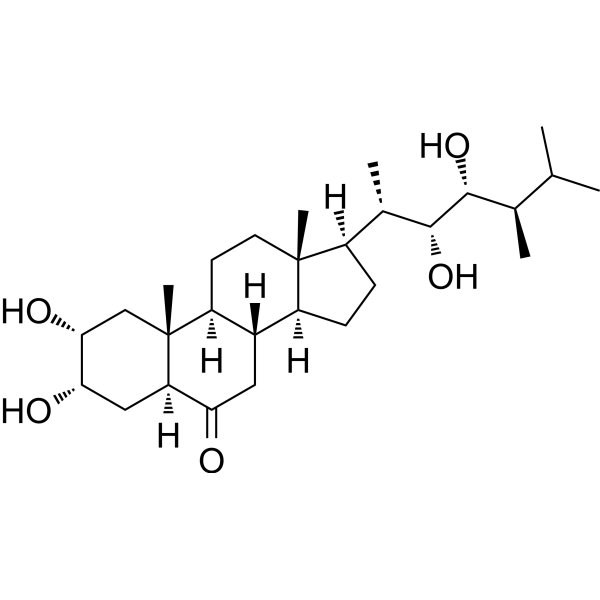
    24-Epicastasterone
    2 Publications Verification

    24-epi-Castasterone

    Drug Derivative Others
    24-Epicastasterone (24-epi-Castasterone) is a bioactive brassinosteroid and a ligand of ABCB1 and ABCB19 in Arabidopsis thaliana. 24-Epicastasterone stimulates the ATPase activity of ABCB19 and the ATP hydrolysis activity of ABCB1, which drive the efflux of substances from plant cells. 24-Epicastasterone increases the activities of catalase and guaiacol peroxidase in the roots of wheat seedlings. 24-Epicastasterone alleviates heat-induced lipid peroxidation through a ROS-dependent mechanism and enhances the heat tolerance of common wheat seedlings .
    24-Epicastasterone
  • HY-119435

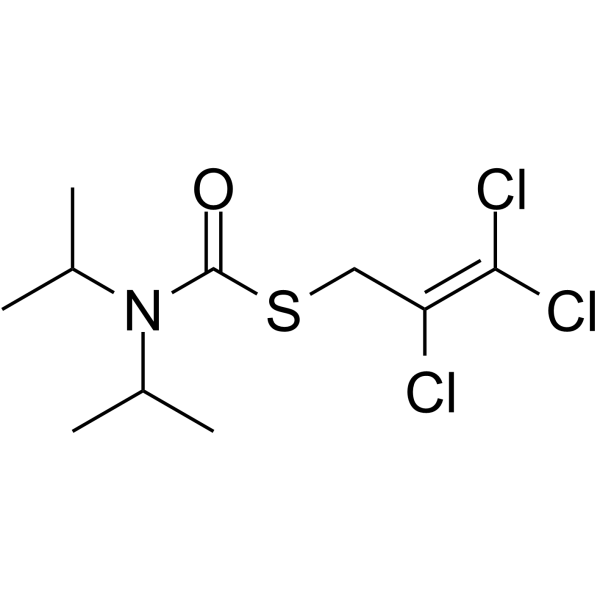
    Herbicide Environmental Pollutants Others
    Triallate is a selective thiocarbamate herbicide. Triallate regulates the biosynthesis of very-long-chain fatty acids and inhibits the elongation and division of plant cells. Triallate is used to control wild oats in barley, spring wheat, durum wheat, winter wheat and sugar beets .
    Triallate
  • HY-NP0147
    Wheat Germ Agglutinin (Fluorescein)
    1 Publications Verification

    WGA (Fluorescein)

    Fluorescent Dye Infection Neurological Disease
    Wheat Germ Agglutinin (WGA) Fluorescein is a classic fluorescent label that specifically binds to sugar residues such as N-acetylglucosamine, N-acetylneuraminic acid and sialic acid. Wheat Germ Agglutinin Fluorescein performs regionally differential fluorescent staining of the ocular surface epithelial glycocalyx to assess its integrity, and causes no damage to the eye at safe concentrations. Wheat Germ Agglutinin Fluorescein is also used for staining structures including red blood cells, cultured cells, bacteria and pine wood nematodes, and facilitates the isolation of wheat-associated plant-growth-promoting rhizobacterial strains. Wheat Germ Agglutinin Fluorescein can be applied to the detection of ocular glycocalyx integrity and the research of related diseases such as pine wilt disease .
    Wheat Germ Agglutinin (Fluorescein)
  • HY-NP163D

    WGA-AF594

    Fluorescent Dye Cancer
    Wheat germ agglutinin-AF594 (WGA-AF594) is a plant lectin that contains the fluorescent dye AF594, which can be used to identify carbohydrate chains. Wheat germ agglutinin-AF594 can be used to assess abnormal glycosylation levels in the body. The specific glycosylation detection sites of Wheat germ agglutinin is bis-GlcNAc, SA .
    Wheat germ agglutinin-AF594
  • HY-Y1058

    BHA

    Fungal Infection
    Benzohydroxamic acid (BHA) is a chitin deacetylase (CDA) inhibitor with significant antifungal activity. The Ki values of BHA against the CDAs of Verticillium dahliae and Puccinia striiformis f. sp. tritici are 8.31 μM and 9.83 μM, respectively. Benzohydroxamic acid can restore the defense responses of infected host plants, upregulate the expression of defense-related genes, and reduce the growth and reproduction of fungi in plants. Benzohydroxamic acid can be used in the research of the field of controlling agricultural fungal diseases, such as various plant fungal diseases caused by Verticillium dahliae, Puccinia striiformis and other fungi, like cotton wilt and wheat stripe rust .
    Benzohydroxamic acid
  • HY-117089

    Environmental Pollutants Fungal Infection
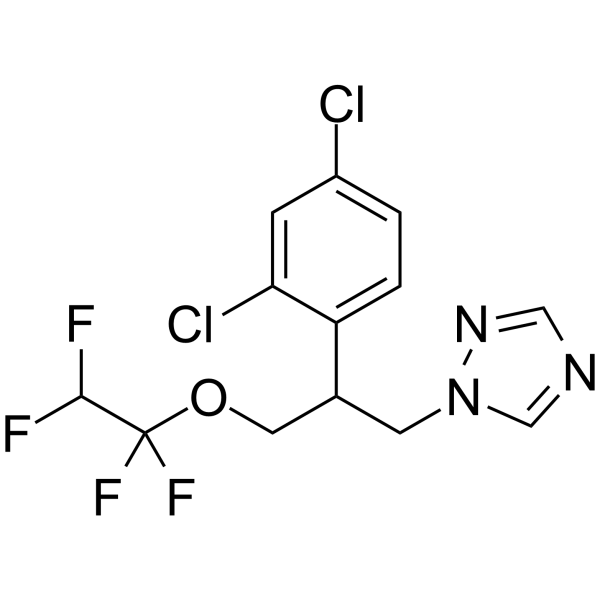
    Tetraconazole is a selective irreversible inhibitor of 14-α-sterol demethylase (CYP51) with antifungal activity. Tetraconazole competitively binds to the enzyme to block fungal ergosterol synthesis, resulting in cell membrane damage. The EC50 of tetraconazole against wheat pathogens is 0.382-0.802 mg/L, and the EC50 against onion root tip meristem cell growth is 6.7 mg/L, and (R)-(+)-Tetraconazole is 1.49-1.98 times more active than (S)-(-)-Tetraconazole. Tetraconazole can also induce oxidative stress and chromosomal aberrations in plant cells .
    Tetraconazole
  • HY-N9502

    Endogenous Metabolite Neurological Disease
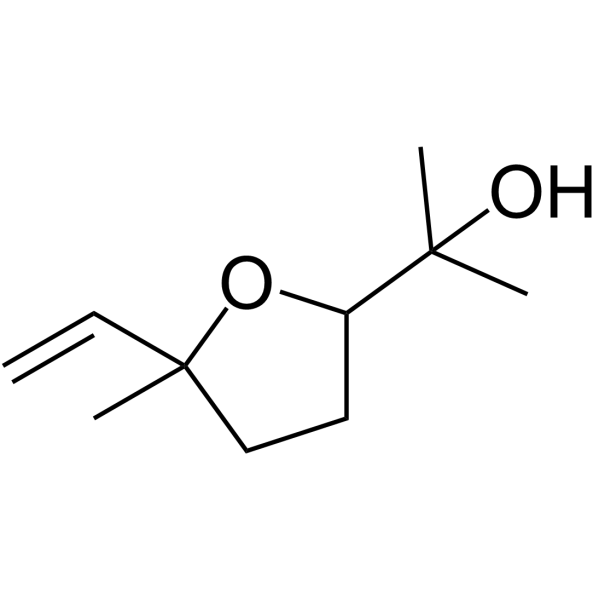
    Linalool oxide is a monoterpene and found in aromatic plant essential oils and is a secondary metabolite in elongating wheat plants. Linalool oxide has antinociceptive, anticonvulsant, and anxiolytic activity. Linalool oxide can be used for the research of pain, epilepsy, anxiety disorders .
    Linalool oxide
  • HY-NP0159

    WGA (Rhodamine)

    Fluorescent Dye Others
    Wheat Germ Agglutinin (WGA) Rhodamine is a plant lectin that can be used as a probe to specifically bind biomolecules (such as polysaccharides, peptides, etc.).Wheat Germ Agglutinin (WGA) Rhodamine is a biological material or organic compound that can be used in life science research .
    Wheat Germ Agglutinin (Rhodamine)
  • HY-NP163E

    WGA-AF647

    Fluorescent Dye Cancer
    Wheat germ agglutinin-AF647 (WGA-AF647) is a plant lectin that contains the fluorescent dye AF647, which can be used to identify carbohydrate chains. Wheat germ agglutinin-AF647 can be used to assess abnormal glycosylation levels in the body. The specific glycosylation detection sites of Wheat germ agglutinin is bis-GlcNAc, SA .
    Wheat germ agglutinin-AF647
  • HY-B0710R

    Trimethylglycine (Standard); carboxy-N,N,N-trimethylmethanaminium (Standard)

    Endogenous Metabolite Metabolic Disease
    Betaine (Standard) is the analytical standard of Betaine. This product is intended for research and analytical applications. Betaine (Trimethylglycine) is a natural compound found in many foods and also an active methyl-donor which can maintain normal DNA methylation patterns [1,2]. Betaine is found ubiquitously in plants, animals, microorganisms, and rich dietary sources including seafood, spinach, and wheat bran. Betaine also acts as an osmolyte, to maintain the avian’s cellular water and ion balance to improve the avian’s capacity against heat stress via preventing dehydration and osmotic inactivation. It helps in maintaining the protective osmolytic activity, especially in heat-stressed birds. Betaine may promote various intestinal microbes against osmotic variations and thus improve microbial fermentation activity .
    Betaine (Standard)
  • HY-B0710S

    Trimethylglycine-13C3; Carboxy-N,N,N-trimethylmethanaminium-13C3

    Isotope-Labeled Compounds Metabolic Disease
    Betaine- 13C3 (Trimethylglycine- 13C3) is the 13C labeled isotope of Betaine (HY-B0710). Betaine (Trimethylglycine) is a natural compound found in many foods and also an active methyl-donor which can maintain normal DNA methylation patterns [1,2]. Betaine is found ubiquitously in plants, animals, microorganisms, and rich dietary sources including seafood, spinach, and wheat bran. Betaine also acts as an osmolyte, to maintain the avian’s cellular water and ion balance to improve the avian’s capacity against heat stress via preventing dehydration and osmotic inactivation. It helps in maintaining the protective osmolytic activity, especially in heat-stressed birds. Betaine may promote various intestinal microbes against osmotic variations and thus improve microbial fermentation activity .
    Betaine-13C3
  • HY-NP0160

    WGA (Agarose)

    Fluorescent Dye Others
    Succinylated Wheat Germ Agglutinin (WGA) Agarose is a plant lectin that can serve as a probe to specifically bind biomolecules (such as polysaccharides, polypeptides, etc.). Succinylated Wheat Germ Agglutinin (WGA) Agarose is available as a biological material or organic compound for life science research .
    Succinylated Wheat Germ Agglutinin (Agarose)
  • HY-NP0152

    WGA (Peroxidase)

    Fluorescent Dye Others
    Wheat Germ Agglutinin (WGA) Peroxidase is a plant lectin that can be used as a probe to specifically bind biomolecules (such as polysaccharides, peptides, etc.).Wheat Germ Agglutinin (WGA) Peroxidase is a biological material or organic compound that can be used in life science research .
    Wheat Germ Agglutinin (Peroxidase)
  • HY-NP163

    WGA-AF350

    Fluorescent Dye Cancer
    Wheat germ agglutinin-AF350 (WGA-AF350) is a plant lectin that contains the fluorescent dye AF350, which can be used to identify carbohydrate chains. Wheat germ agglutinin-AF350 can be used to assess abnormal glycosylation levels in the body. The specific glycosylation detection sites of Wheat germ agglutinin is bis-GlcNAc, SA .
    Wheat germ agglutinin-AF350
  • HY-NP0189

    WGA (Biotinylated)

    Fluorescent Dye Others
    Succinylated Wheat Germ Agglutinin (WGA) Biotinylated is a plant lectin that can be used as a probe to specifically bind biomolecules (such as polysaccharides, peptides, etc.).Succinylated Wheat Germ Agglutinin (WGA) Biotinylated is a biological material or organic compound that can be used in life science research .
    Succinylated Wheat Germ Agglutinin (Biotinylated)
  • HY-W017611

    Environmental Pollutants Reactive Oxygen Species (ROS) Fungal DNA/RNA Synthesis Infection
    4-Propylphenol is a plant-derived phenolic compound. 4-Propylphenol causes an increase in ROS within the Fusarium graminearum cells, leading to damage to the DNA and cell membranes of the mycelia, effectively inhibiting the growth of the mycelia. 4-Propylphenol also has a growth inhibitory effect on walnut pathogenic fungi (C. gloeosporioides, C. siamense, A. alternata), with its EC50 ranging from 29.11 to 31.89 mg/L, and it also inhibits spore germination, with EC50 being 55.04-71.85 mg/L. 4-Propylphenol can be used in the research of fungal diseases in walnuts and wheat Fusarium head blight .
    4-Propylphenol
  • HY-NP163I

    WGA-AF 680

    Fluorescent Dye Cancer
    Wheat germ agglutinin-AF680 (WGA-AF 680) is a plant lectin that contains the fluorescent dye AF680, which can be used to identify carbohydrate chains. Wheat germ agglutinin-AF680 can be used to assess abnormal glycosylation levels in the body. The specific glycosylation detection sites of Wheat germ agglutinin is bis-GlcNAc, SA .
    Wheat germ agglutinin-AF680
  • HY-NP163J

    WGA-AF 405

    Fluorescent Dye Cancer
    Wheat germ agglutinin-AF405 (WGA-AF 405) is a plant lectin that contains the fluorescent dye AF405, which can be used to identify carbohydrate chains. Wheat germ agglutinin-AF405 can be used to assess abnormal glycosylation levels in the body. The specific glycosylation detection sites of Wheat germ agglutinin is bis-GlcNAc, SA .
    Wheat germ agglutinin-AF405
  • HY-179120

    Myosin Infection
    ZJS178 is a novel inhibitor of myosin I. ZJS178 is a fungicide that has inhibitory activity against Fusarium graminearum and can reduce DON toxin synthesis. ZJS178 can be used for research on plant diseases such as wheat scab .
    ZJS178
  • HY-149492

    Phosphatase Fungal Infection
    Phosphatase-IN-1 (compound II-8), a propranolol (HY-B0573B) derivative, is a phosphatidate phosphatase (Pah) inhibitor. Phosphatase-IN-1 can binds to MoPah1, with an affinity constant of 19.8 μM. Phosphatase-IN-1 inhibits growth of plant pathogens and shows anti-fungal ability. Phosphatase-IN-1 is not toxic to rice seedlings and wheat heads .
    Phosphatase-IN-1
  • HY-119435R

    Herbicide Reference Standards Environmental Pollutants Others
    Triallate (Standard) is the analytical standard of Triallate (HY-119435). This product is intended for research and analytical applications. Triallate is a selective thiocarbamate herbicide. Triallate regulates the biosynthesis of very-long-chain fatty acids and inhibits the elongation and division of plant cells. Triallate is used to control wild oats in barley, spring wheat, durum wheat, winter wheat and sugar beets
    Triallate (Standard)
  • HY-NP0192

    WGA (Biotinylated)

    Fluorescent Dye Others
    Wheat Germ Agglutinin (WGA) Biotinylated is a plant lectin that can be used as a probe to specifically bind biomolecules (such as polysaccharides, peptides, etc.).Wheat Germ Agglutinin (WGA) Biotinylated is a biological material or organic compound that can be used in life science research .
    Wheat Germ Agglutinin (Biotinylated)
  • HY-NP163H

    WGA-AF750

    Fluorescent Dye Cancer
    Wheat germ agglutinin-AF750 (WGA-AF750) is a plant lectin that contains the fluorescent dye AF750, which can be used to identify carbohydrate chains. Wheat germ agglutinin-AF750 can be used to assess abnormal glycosylation levels in the body. The specific glycosylation detection sites of Wheat germ agglutinin is bis-GlcNAc, SA .
    Wheat germ agglutinin-AF750
  • HY-W775061

    Biochemical Assay Reagents Others
    Dichlormate is an inhibitor of normal carotenogenesis in etiolated wheat. Dichlormate can lead to accumulation of carotenoid precursors in plants. Dichlormate exhibits phytotoxicity via inhibiting the synthesis of carotenoids and to the consequent photodestruction of cholorophyll and chloroplast disruption .
    Dichlormate
  • HY-176746

    Fungal Infection
    CMLD009688 is a cationic amphiphilic antifungal agent. CMLD009688 selectively inhibits plant pathogenic fungi such as Fusarium graminearum. CMLD009688 interacts with biological membranes, perturbing vacuolar and mitochondrial membrane structures to induce fungal cell death. CMLD009688 is promising for research of plant fungal diseases (e.g., wheat head blight, gray mold) .
    CMLD009688
  • HY-N9502R

    Reference Standards Endogenous Metabolite Neurological Disease
    Linalool oxide (Standard) is the analytical standard of Linalool oxide (HY-N9502). This product is intended for research and analytical applications. Linalool oxide is a monoterpene and found in aromatic plant essential oils and is a secondary metabolite in elongating wheat plants. Linalool oxide has antinociceptive, anticonvulsant, and anxiolytic activity. Linalool oxide can be used for the research of pain, epilepsy, anxiety disorders .
    Linalool oxide (Standard)
  • HY-117089R

    Reference Standards Fungal Infection
    Tetraconazole (Standard) is the analytical standard of Tetraconazole. This product is intended for research and analytical applications. Tetraconazole, a chiral triazole fungicide, is widely used for the prevention of plant disease in wheat fields . Tetraconazole alters the methionine and ergosterol biosynthesis pathways in Saccharomyces yeasts promoting changes on volatile derived compounds .
    Tetraconazole (Standard)
  • HY-W017611S

    Isotope-Labeled Compounds Fungal Reactive Oxygen Species (ROS) DNA/RNA Synthesis Infection
    4-Propylphenol-d12 is the deuterium labeled 4-Propylphenol. 4-Propylphenol is a plant-derived phenolic compound. 4-Propylphenol causes an increase in ROS within the Fusarium graminearum cells, leading to damage to the DNA and cell membranes of the mycelia, effectively inhibiting the growth of the mycelia. 4-Propylphenol also has a growth inhibitory effect on walnut pathogenic fungi (C. gloeosporioides, C. siamense, A. alternata), with its EC50 ranging from 29.11 to 31.89 mg/L, and it also inhibits spore germination, with EC50 being 55.04-71.85 mg/L. 4-Propylphenol can be used in the research of fungal diseases in walnuts and wheat Fusarium head blight.
    4-Propylphenol-d12
  • HY-167959

    Herbicide Infection
    MCPA-isooctyl is a selective conductive phenoxycarboxylate herbicide and an alternative to 2,4-D Butyl ester (HY-B0867). MCPA-isooctyl effectively controls broadleaf weeds in various crop fields via post-emergence foliar or soil treatment. MCPA-isooctyl is absorbed by the roots, stems and leaves of plants; it is easily metabolized and detoxified in gramineous crops, but difficult to metabolize in dicotyledonous weeds, causing stem and leaf distortion, root deformation, and eventually weed death. When formulated into chitosan nanoparticles, MCPA-isooctyl still significantly inhibits the growth of weeds in wheat fields, and reduces their chlorophyll content and biomass at low doses .
    MCPA-isooctyl
  • HY-NP163B

    WGA-AF532

    Fluorescent Dye Cancer
    Wheat germ agglutinin-AF532 (WGA-AF532) is a plant lectin that contains the fluorescent dye AF532, which can be used to identify carbohydrate chains. Wheat germ agglutinin-AF532 can be used to assess abnormal glycosylation levels in the body. The specific glycosylation detection sites of Wheat germ agglutinin is bis-GlcNAc, SA .
    Wheat germ agglutinin-AF532
  • HY-NP163K

    WGA-AF 430

    Fluorescent Dye Cancer
    Wheat germ agglutinin-AF430 (WGA-AF 430) is a plant lectin that contains the fluorescent dye AF430, which can be used to identify carbohydrate chains. Wheat germ agglutinin-AF430 can be used to assess abnormal glycosylation levels in the body. The specific glycosylation detection sites of Wheat germ agglutinin is bis-GlcNAc, SA .
    Wheat germ agglutinin-AF430
  • HY-179184

    Biochemical Assay Reagents Others
    N6 Medium (Agar-Free) is the international standard culture medium for cereal cell culture, especially suitable for anther culture of monocotyledonous plants (such as rice, wheat, barley, corn, etc.).
    N6 Medium (Agar-Free)
  • HY-179184A

    Biochemical Assay Reagents Others
    N6 Medium (Agar-Free, Sucrose-Free) is the international standard culture medium for cereal cell culture, especially suitable for anther culture of monocotyledonous plants (such as rice, wheat, barley, corn, etc.).
    N6 Medium (Agar-Free, Sucrose-Free)
  • HY-W753416

    Phytohormone Inflammation/Immunology
    14-Hydroxylated brassinosteroid is a plant growth regulator. 14-Hydroxylated brassinosteroid enhances winter wheat resistance to heat stress, delays heat-induced leaf senescence, maintains leaf water content, promotes grain filling, and mitigates yield loss. 14-Hydroxylated brassinosteroid shows antioxidant activity. 14-Hydroxylated brassinosteroid can be used for the research of plant growth .
    14-Hydroxylated brassinosteroid
  • HY-W713147

    Herbicide Others
    Thiencarbazone-methyl is a triazole herbicide and also a substrate for microbial degradation. Thiencarbazone-methyl can be degraded by specific fungi and strains. Thiencarbazone-methyl has intrinsic toxicity to the bladder and urinary function. Thiencarbazone-methyl possesses herbicidal activity and can be applied to corn, wheat, lawns and ornamental plants .
    Thiencarbazone-methyl
  • HY-176923

    Reactive Oxygen Species (ROS) Inflammation/Immunology
    1,3-Bis(isothiocyanatomethyl)benzene is a plant regulator. prevents the invasion of pathogens by inducing stomatal closure. 1,3-Bis(isothiocyanatomethyl)benzene significantly increases the levels of ROS and NO in guard cells. 1,3-Bis(isothiocyanatomethyl)benzene has shown significant control effects on grape downy mildew, cucumber downy mildew, and wheat leaf rust .
    1,3-Bis(isothiocyanatomethyl)benzene

Inquiry Online

Your information is safe with us. * Required Fields.

Salutation


Country or Region *

Applicant Name *


Organization Name *

Department *


Email Address *


Product Name *

Cat. No.


Requested quantity *

Phone Number *


Remarks

Inquiry Online

Inquiry Information

Product Name:
Cat. No.:
Quantity:
MCE Japan Authorized Agent:

