



Zoledronic Acid
Based on 27 publication(s) in Google Scholar
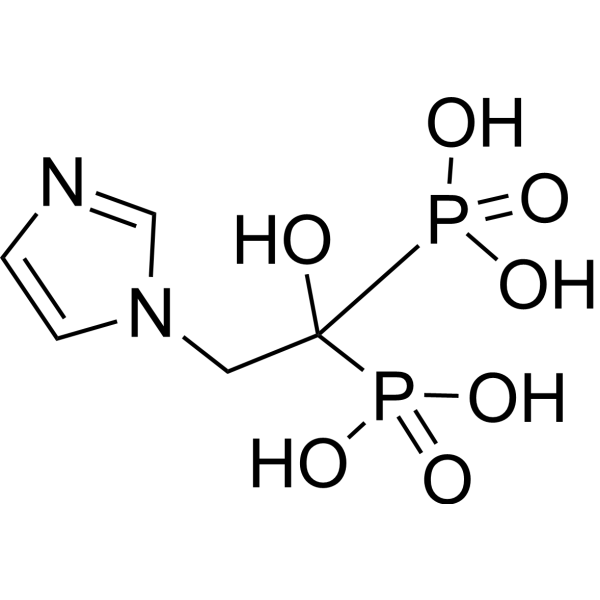
Zoledronic Acid (Zoledronate) is a third-generation bisphosphonate (BP), with potent anti-resorptive activity. Zoledronic Acid inhibits the differentiation and apoptosis of osteoclasts. Zoledronic Acid also has anti-cancer effects.
For research use only. We do not sell to patients.
- Purity : 99.94%
- CAS No.: 118072-93-8
- Formula: C5H10N2O7P2
- Molecular Weight:272.09
-
Storage:
4°C, stored under nitrogen
* In solvent : -80°C, 6 months; -20°C, 1 month (stored under nitrogen)

To place orders, for customer services and technical support, please contact: MedChemExpress USA
Tel: 609-228-6898 E-mail: [email protected] [email protected]


-
 Biological Activity
-
Chemical Information
-
Solvent & Solubility
- Protocols
- Purity & Documentation
- References
-
 Help & FAQs


-
HY-11101
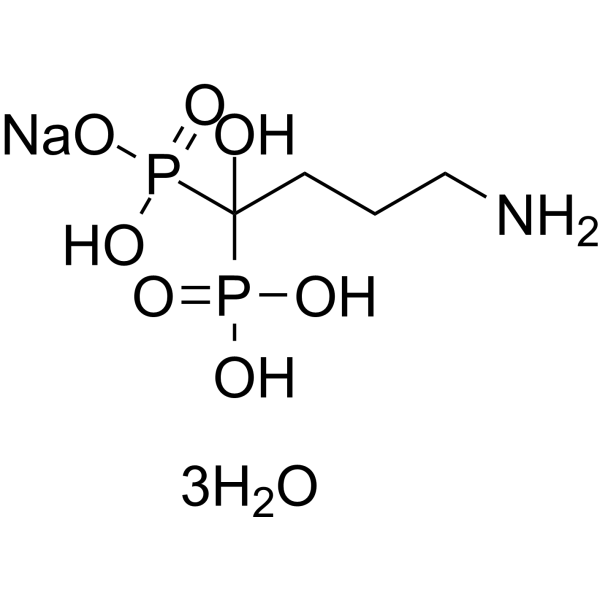
Alendronate sodium hydrateNitrogen-Containing Bisphosphonate -
HY-10071
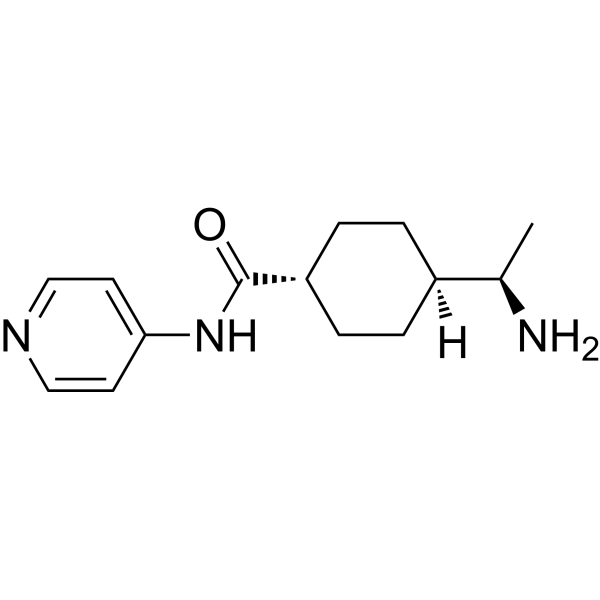
Y-27632ROCK Inhibitor -
HY-17565
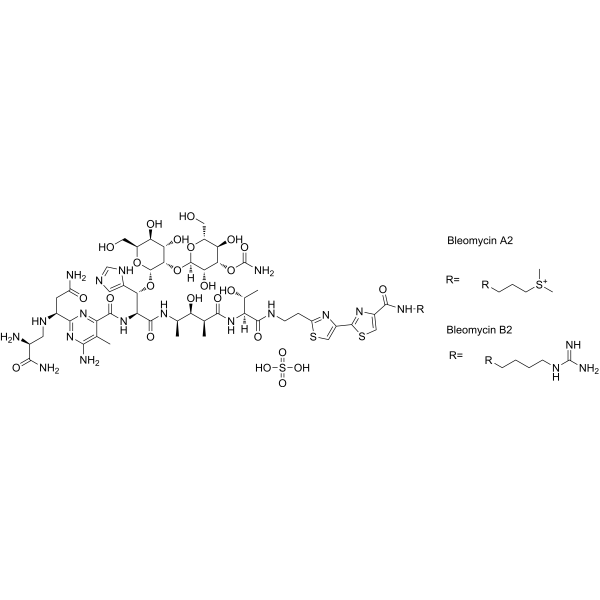
Bleomycin sulfateDNA Synthesis Inhibitor -
HY-18739
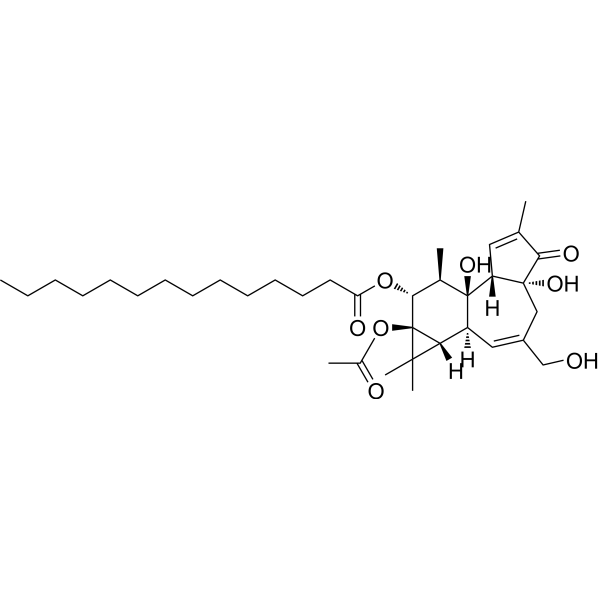
Phorbol 12-myristate 13-acetatePKC Activator -
HY-B0141
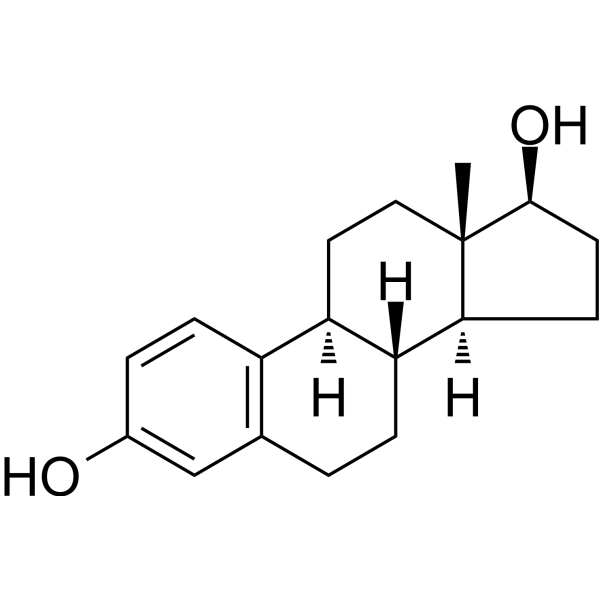
EstradiolHuman Endogenous Metabolite -
HY-10181
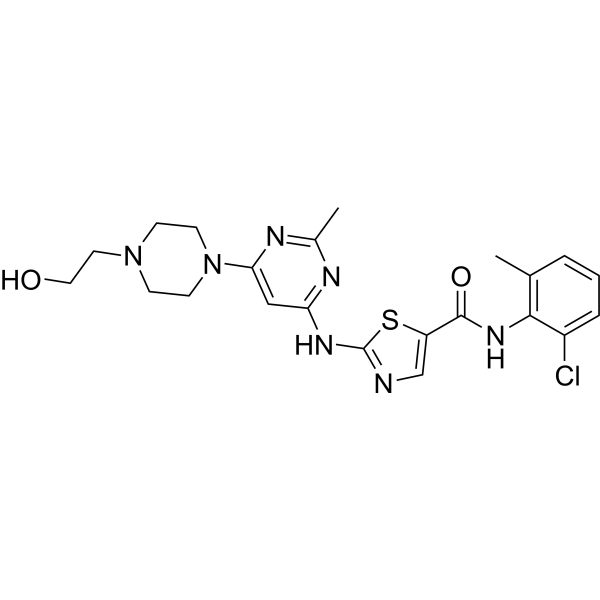
DasatinibSrc/Bcr-Abl Inhibitor -

HY-P0059
TeriparatideParathyroid Hormone Agonist -
HY-10432
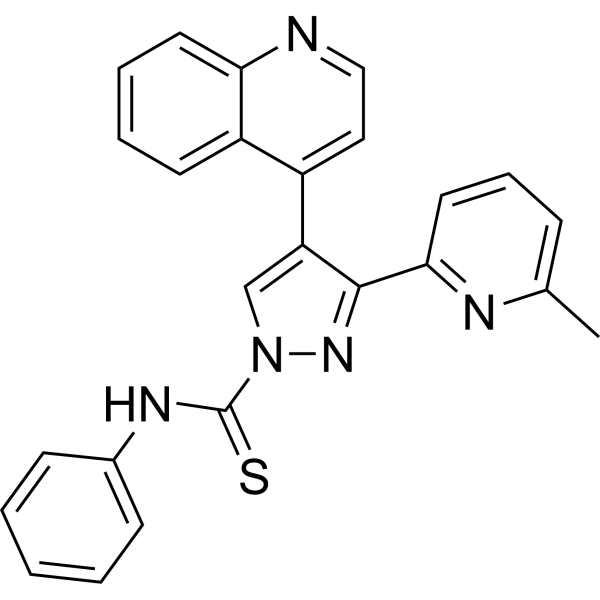
A 83-01ALK4/5/7 Inhibitor -
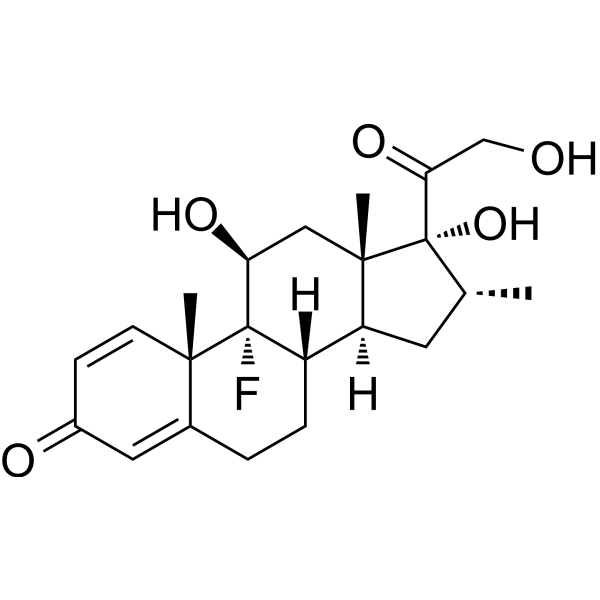
HY-14648
DexamethasoneGR Agonist -
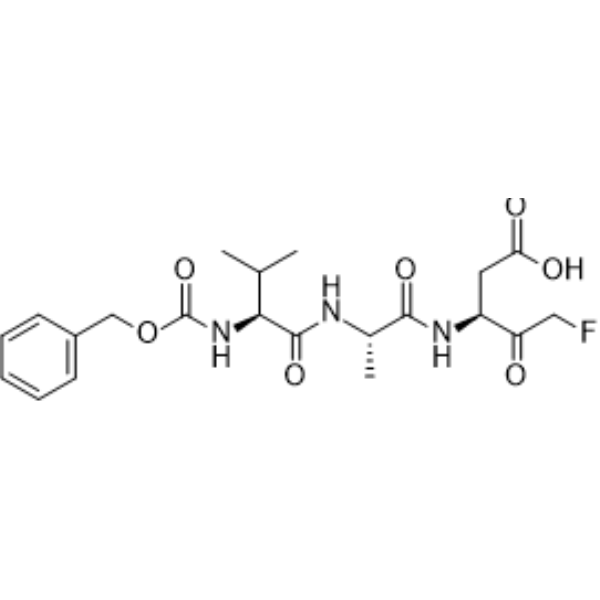
HY-16658B
Z-VAD-FMKPan-Caspase Inhibitor -
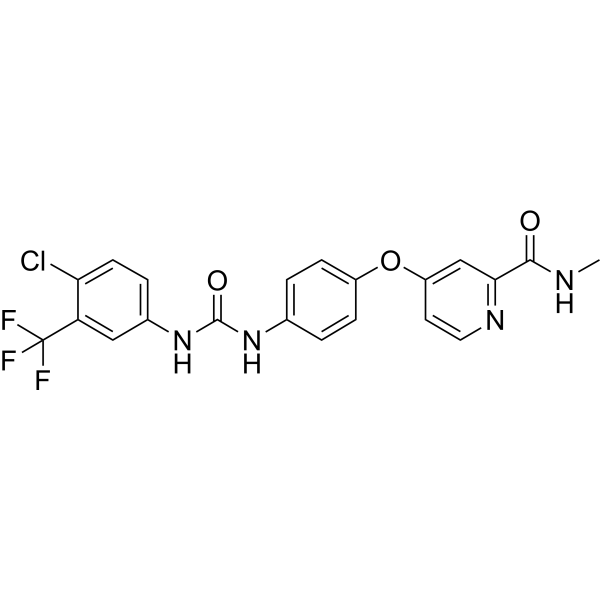
HY-10201
SorafenibMultikinase Inhibitor -
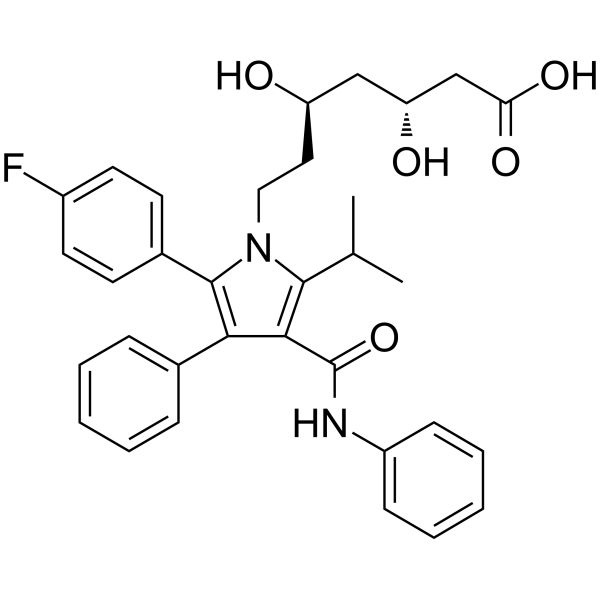
HY-B0589
AtorvastatinHMG-CoA Reductase Inhibitor
Publications Citing Use of MedChemExpress (MCE) Zoledronic Acid
More- Natl Sci Rev. 2025 Jun 27;12(8):nwaf256. [Abstract]
- Nat Commun. 2024 Mar 21;15(1):2529. [Abstract]
- ACS Nano. 2023 Jul 25;17(14):13917-13937. [Abstract]
- Gut Microbes. 2023 Dec;15(2):2249143. [Abstract]
- J Nanobiotechnology. 2026 Mar 6;24(1):345. [Abstract]
- Cell Commun Signal. 2026 Aug 1.
- Immun Ageing. 2026 Jan 16;23(1):7. [Abstract]
- ACS Appl Mater Interfaces. 2025 Jun 25;17(25):36315-36333. [Abstract]
- Chem Eng J Adv. 2026 Feb 16.
- JCI Insight. 2025 Jan 30;10(5):e184468. [Abstract]
- Eur J Med Chem. 2024 Dec 5:279:116842. [Abstract]
- Life Sci. 2026 Jun 15:395:124396. [Abstract]
- Commun Biol. 2024 Nov 9;7(1):1476. [Abstract]
- Cell Rep Methods. 2023 Oct 23;3(10):100599. [Abstract]
- Int Immunopharmacol. 2022 Sep:110:109030. [Abstract]
- Med Oncol. 2023 Apr 10;40(5):141. [Abstract]
- Bone. 2024 Nov:188:117222. [Abstract]
- J Orthop Surg Res. 2025 Dec 23;20(1):1079. [Abstract]
- J Dent Sci. 2026 Jan 20.
- J Dent Sci. 2025 Jan;20(1):539-552. [Abstract]
- Int J Parasitol Drugs Drug Resist. 2025 Aug 6:29:100607. [Abstract]
- Appl Biochem Biotechnol. 2024 Oct;196(10):7362-7374. [Abstract]
- bioRxiv. 2026 Mar 29.
- SSRN. 2025 Sep 23.
- bioRxiv. 2025 March 11.
- Dis Markers. 2021 Oct 15;2021:5838582. [Abstract]
- Oxid Med Cell Longev. 2021 Mar 30:2021:6661534. [Abstract]
 Customer Validation & Images

-
In Vivo Efficacy Study
-
Histological Imaging/Staining
-
Histological Imaging/Staining
-
Cell Migration/Invasion Assay
-
Cell Proliferation/Viability Assay


Biological Activity
Description
Cellular Effect
|
Cell Line

|
Type | Value | Description | References |
|---|---|---|---|---|
| PBMC | EC50 |
18500 nM
Compound: 2, Zol
|
Induction of Vgamma9Vdelta2 T cell activation in human PBMC cells assessed as CD69+ CD25+ cells incubated for 12 hrs by flow cytometric analysis
Induction of Vgamma9Vdelta2 T cell activation in human PBMC cells assessed as CD69+ CD25+ cells incubated for 12 hrs by flow cytometric analysis
|
[PMID: 39026632] |
In Vitro
Zoledronic Acid (0.1-1 μM; 48 hours) increases receptor activator of nuclear factor kB ligand (RANKL) and sclerostin mRNA expressions in osteocyte-like MLO-Y4 cells[2].
Zoledronic Acid increases the expression of osteoclastogenesis supporting factor from MLO-Y4 cells[2].
Zoledronic Acid enhances the RANKL expression via IL-6/ JAK2/STAT3 pathway in MLO-Y4 cells[2].
Zoledronic acid inhibits osteoclast differentiation and function through the regulation of NF-κB and JNK signalling pathways[3].
Zoledronic Acid (10-100 μM; 1-7 days) markedly reduces the viability of MC3T3-E1 cells[4].
Zoledronic Acid (10-100 μM; 1-7 days) induces apoptosis in MC3T3-E1 cells[4].
Zoledronic Acid (10-100 μM; 4 days) inhibits cell viability due to the induction of apoptosis[4].
Zoledronic Acid exerts inhibitory effects on the differentiation and maturation of MC3T3-E1 cells at concentrations <1 μM[4].
MedChemExpress (MCE) has not independently confirmed the accuracy of these methods. They are for reference only. Further protocols information, click here.
-
Cell Line:MC3T3-E1 cells
-
Concentration:0.01 µM , 0.1 µM, 1 µM, 10 µM, 100 µM
-
Incubation Time:1 day, 3 days, 5 days, 7 days
-
Result:Reduced cells viability at 10 µM and 100 µM.
-
Cell Line:MC3T3-E1 cells
-
Concentration:0.01 µM , 0.1 µM, 1 µM, 10 µM, 100 µM
-
Incubation Time:1 days, 4 days, 7 days
-
Result:Increased the number of early apoptotic cells and late apoptotic or necrotic cells at dose-dependent and time-dependent (high concentrations).
-
Cell Line:MC3T3-E1 cells
-
Concentration:0.01 µM , 0.1 µM, 1 µM, 10 µM, 100 µM
-
Incubation Time:4 days
-
Result:Down-regulated the protein level of inactive caspase-3 and up-regulated the protein level of active caspase-3 at the concentrations of 10 and 100 µM.
In Vivo
Zoledronic Acid (0.5-1 mg/kg; i.p.; weekly; for 3 weeks) inhibits both osteoclast and osteoblasts function and bone remodeling in vivo interfering with bone mechanical properties[5].
MedChemExpress (MCE) has not independently confirmed the accuracy of these methods. They are for reference only.
-
Animal Model:Five-week-old C57BL6 mice[5]
-
Dosage:0.05 mg/kg, 0.5 mg/kg, 1 mg/kg
-
Administration:Intraperitoneal injection, weekly, for 3 weeks
-
Result:Inhibited both osteoclast and osteoblasts function and bone remodeling at 0.5 mg/kg and 1 mg/kg.
Clinical Trial
| NCT Number | Sponsor | Condition | Start Date |
Phase
|
|---|---|---|---|---|
| NCT01329991 | Plexxikon| | 2011-05 | PHASE1 |


Chemical Information
-
CAS No. 118072-93-8
-
Appearance Solid
-
Molecular Weight 272.09
-
Formula C5H10N2O7P2
-
Color White to off-white
-
SMILES
OC(P(O)(O)=O)(P(O)(O)=O)CN1C=CN=C1
-
Synonyms
Zoledronate; CGP 42446; CGP42446A; ZOL 446
-
Shipping
Room temperature in continental US; may vary elsewhere.
-
Storage
4°C, stored under nitrogen
* In solvent : -80°C, 6 months; -20°C, 1 month (stored under nitrogen)


Publications (27)
-
Journal Impact Factor
-
Most Recent
-
Natl Sci Rev
Chemical engineering of γδ T cells with cancer cell-targeting antibodies for enhanced tumor immunotherapy. [Abstract]2025 Jun 27;12(8):nwaf256. PMID: 40842867 -
Nat Commun
2024 Mar 21;15(1):2529. PMID: 38514612
Zoledronic Acid purchased from MedChemExpress. Usage Cited in: Nat Commun. 2024 Mar 21;15(1):2529. [Abstract]
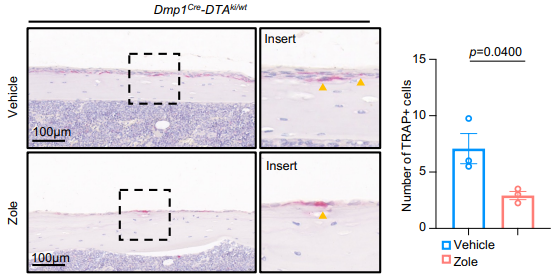
Representative TRAP staining images of femur cortical bone and quantification of TRAP positive cell number from PBS or zoledronic acid (100 µg/kg, intraperitoneal injection, once per week for 2 weeks) treated 4-week-old Dmp1Cre-DTAki/wt mice.
Zoledronic Acid purchased from MedChemExpress. Usage Cited in: Nat Commun. 2024 Mar 21;15(1):2529. [Abstract]
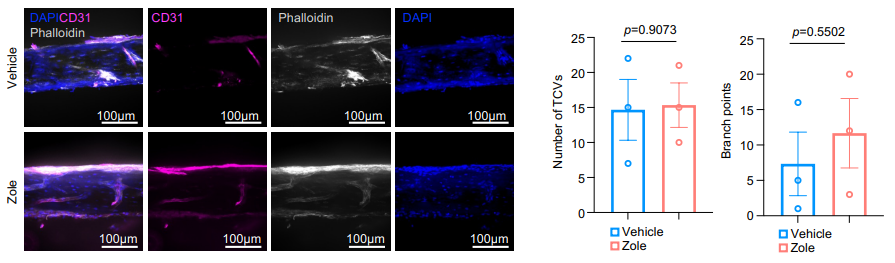
Representative confocal images of femur cortical bone and quantitative result of TCVs from PBS or zoledronic acid (100 µg/kg, intraperitoneal injection, once per week for 2 weeks) treated 4-week-old Dmp1Cre-DTAki/wt mice.
-
ACS Nano
A Dual-Targeted Metal-Organic Framework Based Nanoplatform for the Treatment of Rheumatoid Arthritis by Restoring the Macrophage Niche. [Abstract]2023 Jul 25;17(14):13917-13937. PMID: 37429012 -
Gut Microbes
Microbial metabolite butyrate promotes anti-PD-1 antitumor efficacy by modulating T cell receptor signaling of cytotoxic CD8 T cell. [Abstract]2023 Dec;15(2):2249143. PMID: 37635362 -
J Nanobiotechnology
Matrix micro/nano-topography drives oncogenic signaling and drug response in a 3D osteosarcoma model. [Abstract]2026 Mar 6;24(1):345. PMID: 41787498 -
-
Immun Ageing
2026 Jan 16;23(1):7. PMID: 41546035 -
ACS Appl Mater Interfaces
Biomaterial-Based Lymphangiogenesis-Enhanced Therapeutic Strategy for Robustly-Integrated Medication-Related Osteonecrosis of Jaw Prevention. [Abstract]2025 Jun 25;17(25):36315-36333. PMID: 40518597 -
-
JCI Insight
2025 Jan 30;10(5):e184468. PMID: 39883525
Zoledronic Acid purchased from MedChemExpress. Usage Cited in: JCI Insight. 2025 Jan 30;10(5):e184468. [Abstract]
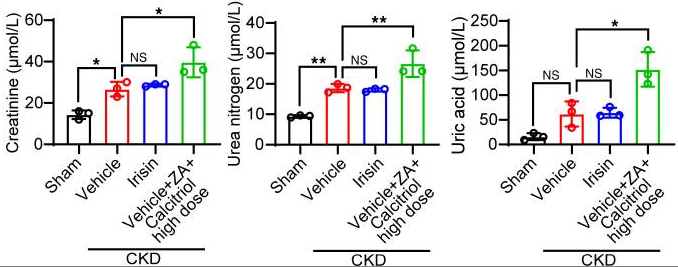
Serum creatinine, urea nitrogen, and uric acid levels in CKD mice or sham-operated mice (Zoledronic Acid: i.p., 20/100 μg/kg, once per day, 4 weeks).
-
Eur J Med Chem
2024 Dec 5:279:116842. PMID: 39260319 -
Life Sci
A three-dimensional dynamic in vitro bone remodeling model reveals multicellular effects of anti-osteoporotic agents. [Abstract]2026 Jun 15:395:124396. PMID: 41990913 -
Commun Biol
Mevalonate pathway inhibition reduces bladder cancer metastasis by modulating RhoB protein stability and integrin β1 localization. [Abstract]2024 Nov 9;7(1):1476. PMID: 39521858
Zoledronic Acid purchased from MedChemExpress. Usage Cited in: Commun Biol. 2024 Nov 9;7(1):1476. [Abstract]
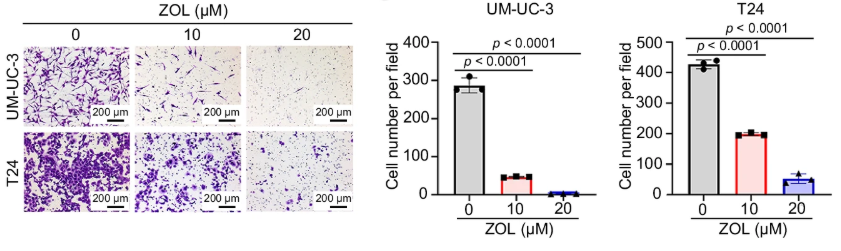
Representative images and statistical graph of transwell assays from the indicated groups after treatment with ZOL at different concentrations (0, 10 and 20 μM) in UM-UC-3 cells and T24 cells for 48 h.
Zoledronic Acid purchased from MedChemExpress. Usage Cited in: Commun Biol. 2024 Nov 9;7(1):1476. [Abstract]
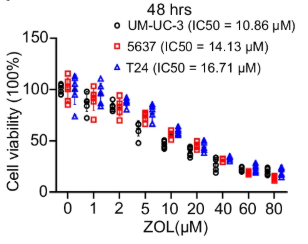
An MTT assay was performed to detect changes in the proliferation of BLCA cells (UM-UC-3, T24 and 5637) after treatment with different concentrations (0, 1, 2, 5, 10, 20, 40, 60 and 80 μM) of ZOL for 48 h.
Zoledronic Acid purchased from MedChemExpress. Usage Cited in: Commun Biol. 2024 Nov 9;7(1):1476. [Abstract]
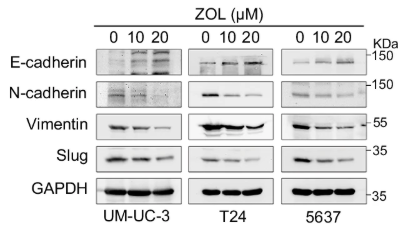
Western blot analyses of EMT-related proteins in ZOL-treated ((0, 10 and 20 μM, 48 h) UM-UC-3, T24 and 5637 cells. GAPDH was used as the loading control.
Zoledronic Acid purchased from MedChemExpress. Usage Cited in: Commun Biol. 2024 Nov 9;7(1):1476. [Abstract]
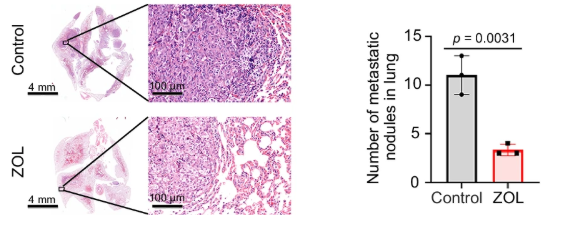
ZOL (100 μg/kg, intraperitoneally injection, three times a week for 4 weeks). Representative images of H&E-stained mouse lung tissue sections (n = 3)and statistical analysis of the number of metastatic nodules in H&E-stained mouse lung tissue sections.
-
Cell Rep Methods
RECOVER identifies synergistic drug combinations in vitro through sequential model optimization. [Abstract]2023 Oct 23;3(10):100599. PMID: 37797618 -
Int Immunopharmacol
2022 Sep:110:109030. PMID: 35978519 -
Med Oncol
2023 Apr 10;40(5):141. PMID: 37036615 -
Bone
Zoledronic acid relieves steroid-induced avascular necrosis of femoral head via inhibiting FOXD3 mediated ANXA2 transcriptional activation. [Abstract]2024 Nov:188:117222. PMID: 39102974 -
J Orthop Surg Res
Localized therapeutic strategy based on microRNA-21-loaded mesoporous silica nanoparticles hydrogel improves bone repair in medication-related osteonecrosis of the jaw. [Abstract]2025 Dec 23;20(1):1079. PMID: 41437101 -
-
J Dent Sci
Beta-adrenergic receptor antagonist propranolol prevents bisphosphonate-related osteonecrosis of the jaw by promoting osteogenesis. [Abstract]2025 Jan;20(1):539-552. PMID: 39873080 -
Int J Parasitol Drugs Drug Resist
Promising efficacy of nitrogen-containing bisphosphonates against the infection of Cryptosporidium spp. [Abstract]2025 Aug 6:29:100607. PMID: 40782657 -
Appl Biochem Biotechnol
Zoledronic Acid Accelerates ER Stress-Mediated Inflammation by Increasing PDE4B Expression in Bisphosphonate-Related Osteonecrosis of the Jaw. [Abstract]2024 Oct;196(10):7362-7374. PMID: 38523176 -
-
-
-
Dis Markers
Study on the Killing Effect of γδ T Cells Activated by Rukangyin on Breast Cancer MDA-MB-231 Cells. [Abstract]2021 Oct 15;2021:5838582. PMID: 34691287 -
Oxid Med Cell Longev
Zoledronic Acid Enhanced the Antitumor Effect of Cisplatin on Orthotopic Osteosarcoma by ROS-PI3K/AKT Signaling and Attenuated Osteolysis. [Abstract]2021 Mar 30:2021:6661534. PMID: 33859780


Solvent & Solubility
In Vitro:
H2O : 4.17 mg/mL (15.33 mM; ultrasonic and warming and heat to 60°C)
Please refer to the solubility information to select the appropriate solvent. Once prepared, please aliquot and store the solution to prevent product inactivation from repeated freeze-thaw cycles.
Storage method and period of stock solution: -80°C, 6 months; -20°C, 1 month (stored under nitrogen). When stored at -80°C, please use it within 6 months. When stored at -20°C, please use it within 1 month.
* Note: If you choose water as the stock solution, please dilute it to the working solution, then filter and sterilize it with a 0.22 μm filter before use.
Please refer to the solubility information to select the appropriate solvent. Once prepared, please aliquot and store the solution to prevent product inactivation from repeated freeze-thaw cycles.
Storage method and period of stock solution: -80°C, 6 months; -20°C, 1 month (stored under nitrogen). When stored at -80°C, please use it within 6 months. When stored at -20°C, please use it within 1 month.
* Note: If you choose water as the stock solution, please dilute it to the working solution, then filter and sterilize it with a 0.22 μm filter before use.
Concentration (start) × Volume (start) = Concentration (final) × Volume (final)
In Vivo:
For the following dissolution methods, please prepare the working solution directly:
It is recommended to prepare fresh solutions and use them promptly within a short period of time.
The percentages shown for the solvents indicate their volumetric ratio in the final prepared solution. If precipitation or phase separation occurs during preparation, heat and/or sonication can be used to aid dissolution.
Add each solvent one by one: PBS
Solubility: 8.7 mg/mL (31.97 mM); Clear solution; Need ultrasonic and adjust pH to 8 with 1M NaOH

Protocols
-
Apoptosis
Apoptosis, also called programmed cell death, is generally characterized by distinct morphological characteristics.
-
TUNEL staining for apoptotic DNA fragmentation
TUNEL staining detects DNA strand breaks by using terminal deoxynucleotidyl transferase to add labeled nucleotides to exposed 3′-OH DNA termini, generating either microscopic staining in fixed cells or tissue sections, or fluorescence/cytometric signal in cell suspensions. TUNEL positivity reflects DNA fragmentation but should not be interpreted alone as definitive apoptosis, because TUNEL can also label necrotic, autolytic, mechanically damaged, or DNA-repair-associated DNA breaks.
-
Annexin V plus membrane-impermeant dye apoptosis staining
Annexin V-based apoptosis assays rely on the detection of phosphatidylserine (PS) externalization from the inner leaflet of the plasma membrane to the outer leaflet, an early biochemical hallmark of apoptosis. Fluorescently labeled Annexin V binds PS in a calcium-dependent manner, enabling identification of early apoptotic cells by flow cytometry or fluorescence microscopy. When combined with a membrane-impermeant DNA-binding dye (e. g. , propidium iodide), this approach allows discrimination between viable (Annexin V−/dye−), early apoptotic (Annexin V+/dye−), and late apoptotic or necrotic (Annexin V+/dye+) cell populations by assessing membrane integrity and PS exposure.
-
Apoptosis Solutions
Apoptosis is a regulated, generally non-lytic cell-death pathway that removes unwanted, damaged, infected, or abnormal cells through coordinated morphological changes, caspase activation, DNA fragmentation, and membrane remodeling. The intrinsic apoptosis pathway is controlled mainly by mitochondrial outer membrane permeabilization, BCL-2 family proteins, cytochrome c release, apoptosome formation, caspase-9 activation, and downstream executioner caspase-3/7 activation. The extrinsic apoptosis pathway is initiated by death receptors such as Fas, TNFR, and TRAIL receptors, which recruit adaptor proteins and activate caspase-8 before engaging executioner caspases or mitochondrial amplification through BID cleavage. Apoptosis is linked to many phenotypes, including cancer cell killing, tissue homeostasis, immune regulation, neurodegeneration, infection response, and treatment-induced cytotoxicity; unresolved questions include how apoptosis interacts with necroptosis, pyroptosis, ferroptos


Purity & Documentation
-
Data Sheet (286 KB)
-
SDS (393 KB)
- English - EN (393 KB)
- Français - FR (393 KB)
- Deutsch - DE (393 KB)
- Norwegian - NO (393 KB)
- Español - ES (393 KB)
- Swedish - SV (393 KB)
- Italian - IT (393 KB)
- Korean - KR (393 KB)
- Portuguese - PT (393 KB)
-
Handling Instructions (2659 KB)
References
[1]. Lianwei Wang, et al. Various pathways of zoledronic acid against osteoclasts and bone cancer metastasis: a brief review. BMC Cancer. 2020; 20: 1059. [Content Brief]
[2]. Hyung Joon Kim, et al. Zoledronate Enhances Osteocyte-Mediated Osteoclast Differentiation by IL-6/RANKL Axis. Int J Mol Sci. 2019 Mar; 20(6): 1467. [Content Brief]
[3]. Xiao-Lin Huang, et al. Zoledronic acid inhibits osteoclast differentiation and function through the regulation of NF-κB and JNK signalling pathways. Int J Mol Med. 2019 Aug;44(2):582-592. [Content Brief]
[4]. XIN HUANG, et al. Dose-dependent inhibitory effects of zoledronic acid on osteoblast viability and function in vitro. Mol Med Rep. 2016 Jan; 13(1): 613-622. [Content Brief]
[5]. Samantha Pozzi, et al. High-dose zoledronic acid impacts bone remodeling with effects on osteoblastic lineage and bone mechanical properties. Clin Cancer Res. 2009 Sep 15;15(18):5829-39. [Content Brief]
[6]. Shea GKH, et al. Oral Zoledronic acid bisphosphonate for the treatment of chronic low back pain with associated Modic changes: A pilot randomized controlled trial. J Orthop Res. 2022 Feb 23. [Content Brief]


Complete Stock Solution Preparation Table
Please refer to the solubility information to select the appropriate solvent. Once prepared, please aliquot and store the solution to prevent product inactivation from repeated freeze-thaw cycles.
Storage method and period of stock solution: -80°C, 6 months; -20°C, 1 month (stored under nitrogen). When stored at -80°C, please use it within 6 months. When stored at -20°C, please use it within 1 month.
| Optional Solvent | Concentration Solvent Mass | 1 mg | 5 mg | 10 mg | 25 mg |
|---|---|---|---|---|---|
| H2O | 1 mM | 3.6753 mL | 18.3763 mL | 36.7525 mL | 91.8814 mL |
| 5 mM | 0.7351 mL | 3.6753 mL | 7.3505 mL | 18.3763 mL | |
| 10 mM | 0.3675 mL | 1.8376 mL | 3.6753 mL | 9.1881 mL | |
| 15 mM | 0.2450 mL | 1.2251 mL | 2.4502 mL | 6.1254 mL |
* Note: If you choose water as the stock solution, please dilute it to the working solution, then filter and sterilize it with a 0.22 μm filter before use.


Zoledronic Acid Related Classifications
HY-13777 Related Classifications
 Powered by Bioz