



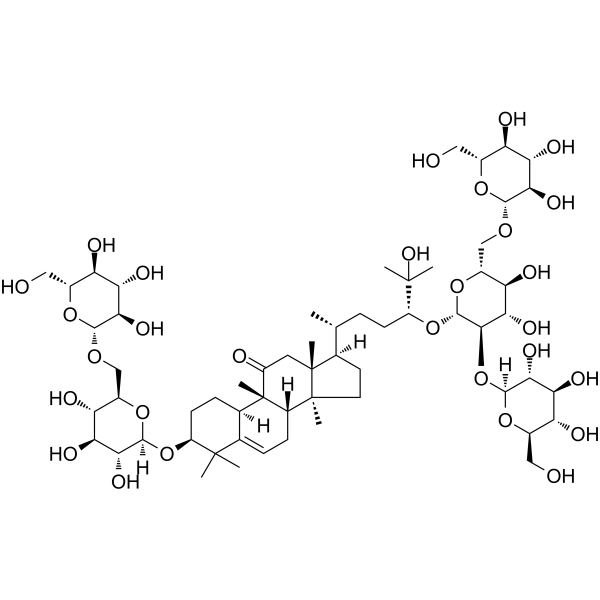
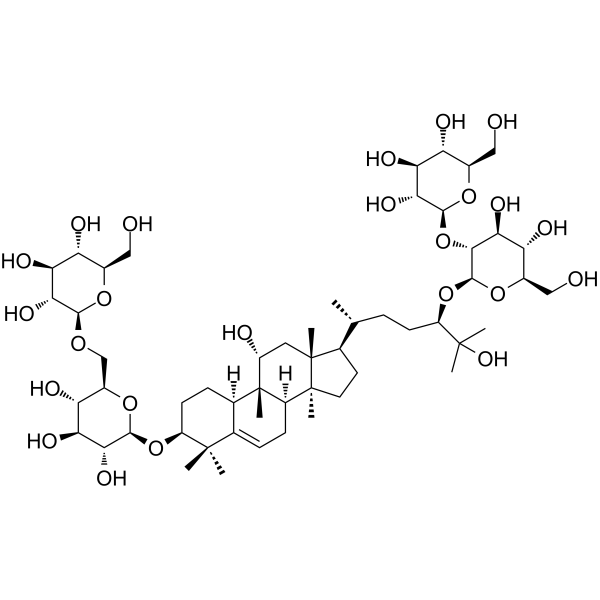
11-oxo-mogroside V
Based on 1 publication(s) in Google Scholar
11-oxo-mogroside V is a natural sweetener that exhibits strong antioxidant activity. It exhibits significant inhibitory effects on reactive oxygen species (O2-, H2O2 and *OH) with EC50 of 4.79, 16.52, and 146.17 μg/mL, respectively.
For research use only. We do not sell to patients.
- Purity : 99.89%
- CAS No.: 126105-11-1
- Formula: C60H100O29
- Molecular Weight:1285.42
-
Storage:
4°C, protect from light
* In solvent : -80°C, 6 months; -20°C, 1 month (protect from light)

To place orders, for customer services and technical support, please contact: MedChemExpress USA
Tel: 609-228-6898 E-mail: [email protected] [email protected]


-
 Biological Activity
-
Chemical Information
-
Solvent & Solubility
- Protocols
- Purity & Documentation
- References
-
 Help & FAQs


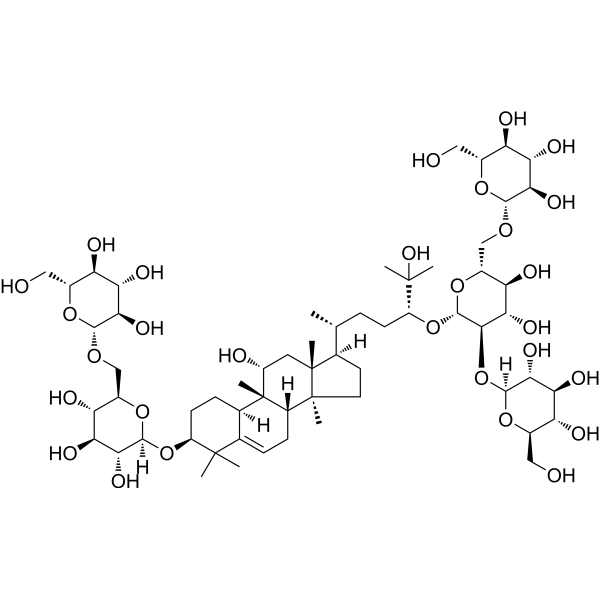
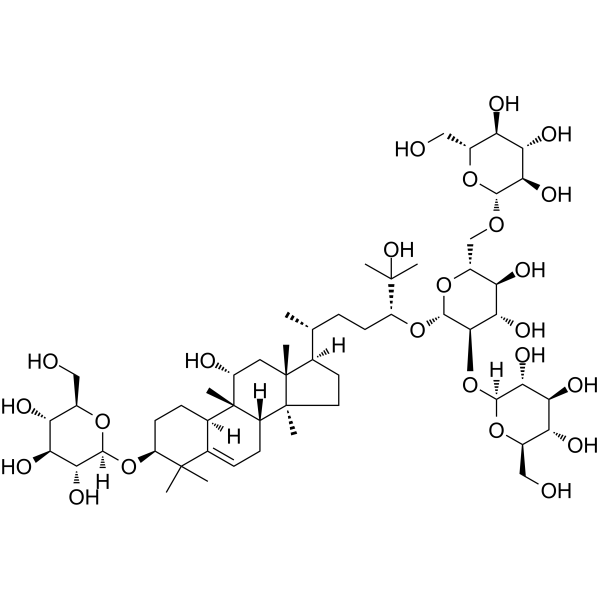
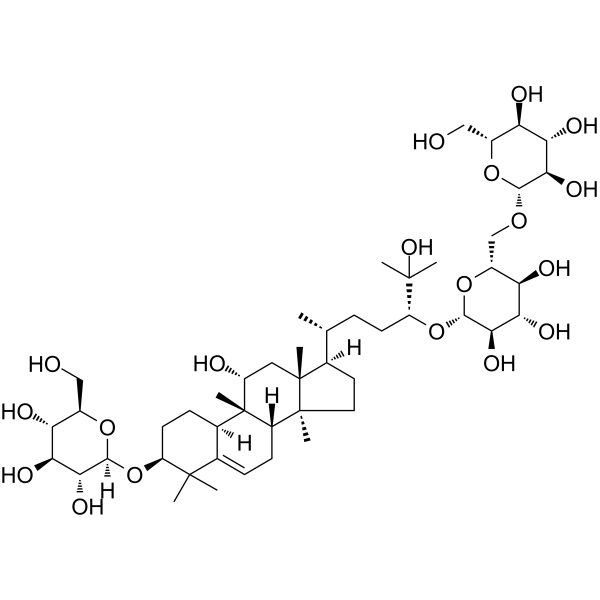

Publications Citing Use of MedChemExpress (MCE) 11-oxo-mogroside V
More

Biological Activity
Description
IC50 & Target
EC50: 4.79 μg/mL (O2-), 16.52 μg/mL (H2O2), 146.17 μg/mL (*OH)[1]
In Vitro
11-oxo-mogroside V shows a higher scavenging effect on O2- (concentration at which 50% of chemiluminescence intensity is inhibited [EC50]=4.79 μg/mL) and H2O2 (EC50=16.52 μg/mL) than those of mogroside V. 11-oxo-mogroside V exhibits a remarkable inhibitory effect on *OH-induced DNA damage with EC50=3.09 μg/mL[1].11-oxo-mogroside V, a natural sweetener, isolated from the fruits of Momordica grosvenori, exhibits strong inhibitory effect on the primary screening test indicated by the induction of Epstein-Barr virus early antigen (EBV-EA) by a tumor promoter, 12-O-tetradecanoylphorbol-13-acetate (TPA). 11-oxo-mogroside V exhibits strong inhibitory effect on EBV-EA induction (91.2, 50.9 and 21.3% inhibition at 1000, 500 and 100 mol ratio/TPA concentration, respectively)[2].
MedChemExpress (MCE) has not independently confirmed the accuracy of these methods. They are for reference only. Further protocols information, click here.
In Vivo
MedChemExpress (MCE) has not independently confirmed the accuracy of these methods. They are for reference only.


Chemical Information
-
CAS No. 126105-11-1
-
Appearance Solid
-
Molecular Weight 1285.42
-
Formula C60H100O29
-
Color White to off-white
-
SMILES
C[C@@]([C@@](CC[C@H](O[C@]([C@@H]([C@@H](O)[C@@H]1O)O)([H])O[C@@H]1CO[C@@H]([C@@H]([C@@H](O)[C@@H]2O)O)O[C@@H]2CO)C3(C)C)([H])C3=CC4)(C(C[C@@]56C)=O)[C@]4([H])[C@@]5(CC[C@]6([H])[C@H](C)CC[C@H](C(C)(O)C)O[C@H](O[C@H](CO[C@@H]([C@@H]([C@@H](O)[C@@H]7O)O)O[C@@H]7CO)[C@@H](O)[C@@H]8O)[C@@H]8O[C@]([C@@H]([C@@H](O)[C@@H]9O)O)([H])O[C@@H]9CO)C
-
Structure Classification
-
Shipping
Room temperature in continental US; may vary elsewhere.
-
Storage
4°C, protect from light
* In solvent : -80°C, 6 months; -20°C, 1 month (protect from light)


Publications (1)
-
Journal Impact Factor
-
Most Recent


Solvent & Solubility
In Vitro:
DMSO : 100 mg/mL (77.80 mM; Need ultrasonic; Hygroscopic DMSO has a significant impact on the solubility of product, please use newly opened DMSO)
Please refer to the solubility information to select the appropriate solvent. Once prepared, please aliquot and store the solution to prevent product inactivation from repeated freeze-thaw cycles.
Storage method and period of stock solution: -80°C, 6 months; -20°C, 1 month (protect from light). When stored at -80°C, please use it within 6 months. When stored at -20°C, please use it within 1 month.
Please refer to the solubility information to select the appropriate solvent. Once prepared, please aliquot and store the solution to prevent product inactivation from repeated freeze-thaw cycles.
Storage method and period of stock solution: -80°C, 6 months; -20°C, 1 month (protect from light). When stored at -80°C, please use it within 6 months. When stored at -20°C, please use it within 1 month.
Concentration (start) × Volume (start) = Concentration (final) × Volume (final)
In Vivo:
Select the appropriate dissolution method based on your experimental animal and administration route.
- For the following dissolution methods, please ensure to first prepare a clear stock solution using an In Vitro approach and then sequentially add co-solvents:
- To ensure reliable experimental results, the clarified stock solution can be appropriately stored based on storage conditions. As for the working solution for In Vivo experiments, it is recommended to prepare freshly and use it on the same day.
- The percentages shown for the solvents indicate their volumetric ratio in the final prepared solution. If precipitation or phase separation occurs during preparation, heat and/or sonication can be used to aid dissolution.
Add each solvent one by one: 10% DMSO 40% PEG300 5% Tween-80 45% Saline
Solubility: ≥ 2.5 mg/mL (1.94 mM); Clear solution
This protocol yields a clear solution of ≥ 2.5 mg/mL (saturation unknown).
Taking 1 mL working solution as an example, add 100 μL DMSO stock solution (25.0 mg/mL) to 400 μL PEG300, and mix evenly; then add 50 μL Tween-80 and mix evenly; then add 450 μL Saline to adjust the volume to 1 mL.
Preparation of Saline: Dissolve 0.9 g sodium chloride in ddH₂O and dilute to 100 mL to obtain a clear Saline solution.
Add each solvent one by one: 10% DMSO 90% (20% SBE-β-CD in Saline)
Solubility: ≥ 2.5 mg/mL (1.94 mM); Clear solution
This protocol yields a clear solution of ≥ 2.5 mg/mL (saturation unknown).
Taking 1 mL working solution as an example, add 100 μL DMSO stock solution (25.0 mg/mL) to 900 μL 20% SBE-β-CD in Saline, and mix evenly.
Preparation of 20% SBE-β-CD in Saline (4°C, storage for one week): 2 g SBE-β-CD powder is dissolved in 10 mL Saline, completely dissolve until clear.
In Vivo Dissolution Calculator
Please enter the basic information of animal experiments:
-
-
-
-
Recommended: Prepare an additional quantity of animals to account for potential losses during experiments.
Please enter your animal formula composition:
-
%DMSO +
Recommended: Keep the proportion of DMSO in working solution below 2% if your animal is weak.
-
%+
-
+%Tween-80 + +
-
%Saline +
The co-solvents required include: DMSO, . All of co-solvents are available by MedChemExpress (MCE). , Tween 80. All of co-solvents are available by MedChemExpress (MCE).
Working solution concentration: 0.22 mg/mL
Method for preparing stock solution: mg drug dissolved in μL DMSO. Stock solution concentration: mg/mL. * In solvent : -80°C, 6 months; -20°C, 1 month (protect from light)
1. Take μL DMSO stock solution;
2. Add μL .
μL , mix evenly;
3. Then add μL Tween 80, mix evenly;
4. Then add μL
Please ensure that the stock solution in the first step is dissolved to a clear state, and add co-solvents in sequence. You can use ultrasonic heating (ultrasonic cleaner, recommended frequency 20-40 kHz), vortexing, etc. to assist dissolution.

Protocols
-
ROS/oxidative-stress fluorescent staining
ROS/oxidative-stress fluorescent staining uses cell-permeant fluorogenic probes that become fluorescent after oxidation inside cells or tissues; commonly used examples include DCFH-DA/DCFDA for broad cellular oxidant detection, DHE for superoxide-related signal detection, MitoSOX for mitochondrial superoxide-related signal detection, and CellROX probes for oxidative-stress-associated fluorescence readouts. The assay detects probe oxidation rather than a single ROS species unless the probe and analysis method have been chemically validated for that species. DCFH-DA enters cells, is deacetylated by intracellular esterases to DCFH, and produces fluorescent DCF after oxidation, so the readout is used as an operational measure of total cellular oxidative stress rather than a species-specific ROS measurement. DHE and MitoSOX can report superoxide-related oxidation, but red fluorescence alone can include non-specific ethidium-like oxidation products; HPLC or optimized spectral approaches are


Purity & Documentation
-
Data Sheet (281 KB)
-
SDS (251 KB)
- English - EN (251 KB)
- Français - FR (251 KB)
- Deutsch - DE (251 KB)
- Norwegian - NO (251 KB)
- Español - ES (251 KB)
- Swedish - SV (251 KB)
- Italian - IT (251 KB)
- Korean - KR (251 KB)
- Portuguese - PT (251 KB)
-
Handling Instructions (2659 KB)
References
[1]. Chen WJ, et al. The antioxidant activities of natural sweeteners, mogrosides, from fruits of Siraitia grosvenori. Int J Food Sci Nutr. 2007 Nov;58(7):548-56. [Content Brief]
[2]. Takasaki M, et al. Anticarcinogenic activity of natural sweeteners, cucurbitane glycosides, from Momordica grosvenori. Cancer Lett. 2003 Jul 30;198(1):37-42. [Content Brief]


Complete Stock Solution Preparation Table
Please refer to the solubility information to select the appropriate solvent. Once prepared, please aliquot and store the solution to prevent product inactivation from repeated freeze-thaw cycles.
Storage method and period of stock solution: -80°C, 6 months; -20°C, 1 month (protect from light). When stored at -80°C, please use it within 6 months. When stored at -20°C, please use it within 1 month.
| Optional Solvent | Concentration Solvent Mass | 1 mg | 5 mg | 10 mg | 25 mg |
|---|---|---|---|---|---|
| DMSO | 1 mM | 0.7780 mL | 3.8898 mL | 7.7796 mL | 19.4489 mL |
| 5 mM | 0.1556 mL | 0.7780 mL | 1.5559 mL | 3.8898 mL | |
| 10 mM | 0.0778 mL | 0.3890 mL | 0.7780 mL | 1.9449 mL | |
| 15 mM | 0.0519 mL | 0.2593 mL | 0.5186 mL | 1.2966 mL | |
| 20 mM | 0.0389 mL | 0.1945 mL | 0.3890 mL | 0.9724 mL | |
| 25 mM | 0.0311 mL | 0.1556 mL | 0.3112 mL | 0.7780 mL | |
| 30 mM | 0.0259 mL | 0.1297 mL | 0.2593 mL | 0.6483 mL | |
| 40 mM | 0.0194 mL | 0.0972 mL | 0.1945 mL | 0.4862 mL | |
| 50 mM | 0.0156 mL | 0.0778 mL | 0.1556 mL | 0.3890 mL | |
| 60 mM | 0.0130 mL | 0.0648 mL | 0.1297 mL | 0.3241 mL |


11-oxo-mogroside V Related Classifications
HY-N0501 Related Classifications
 Powered by Bioz