24 Results for "

20-hete

" in MedChemExpress (MCE) Product Catalog:
Products (24)

24 Results for "20-hete" in MCE Product Catalog:

6
6 Publications Verification
Cat. No.: HY-124527
CAS No.: 339068-25-6
Purity:  99.69%
Target:  

Cytochrome P450

Research Areas:  

Cardiovascular Disease Cancer

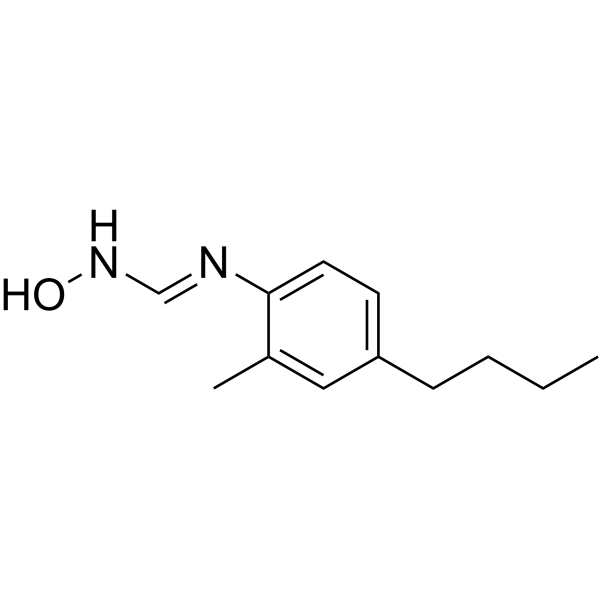
HET0016 is a potent and selective 20-hydroxyeicosatetraenoic acid (20-HETE) synthase inhibitor, with IC50 values of 17.7 nM, 12.1 nM and 20.6 nM for recombinant CYP4A1-, CYP4A2- and CYP4A3-catalyzed 20-HETE synthesis, respectively. HET0016 also is a selective CYP450 inhibitor, which has been shown to inhibit angiogenesis and tumor growth .
2
2 Cited Publications
Cat. No.: HY-101527
CAS No.: 240427-90-1
Purity:  97.11%
Synonyms: WIT 002
Target:  

Cytochrome P450

Research Areas:  

Cancer

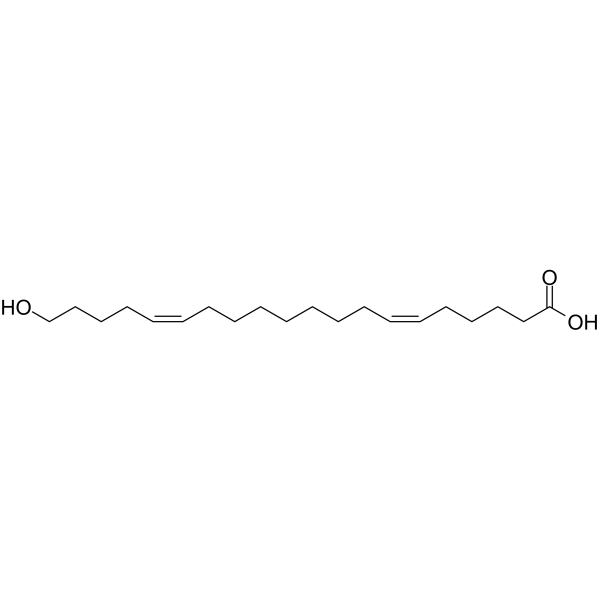
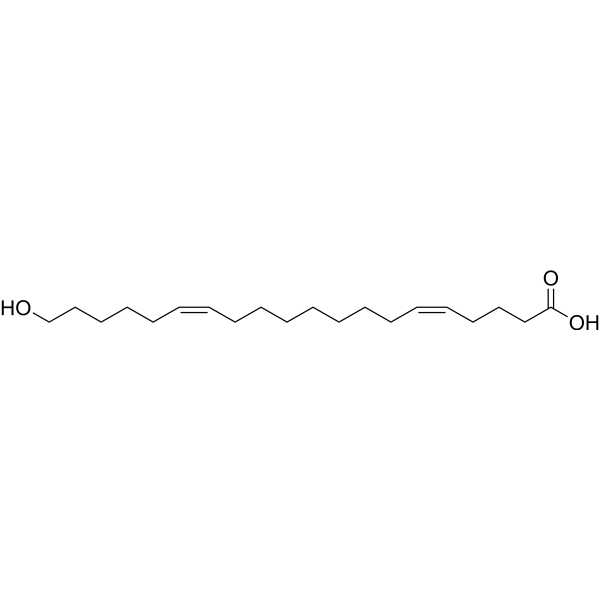
20-HEDE (WIT 002) is an antagonist of 20-hydroxyeicosatetraenoic acid (20-HETE).
1
1 Cited Publications
Cat. No.: HY-101016
CAS No.: 34450-18-5
Purity:  ≥98.0%
Research Areas:  

Cardiovascular Disease

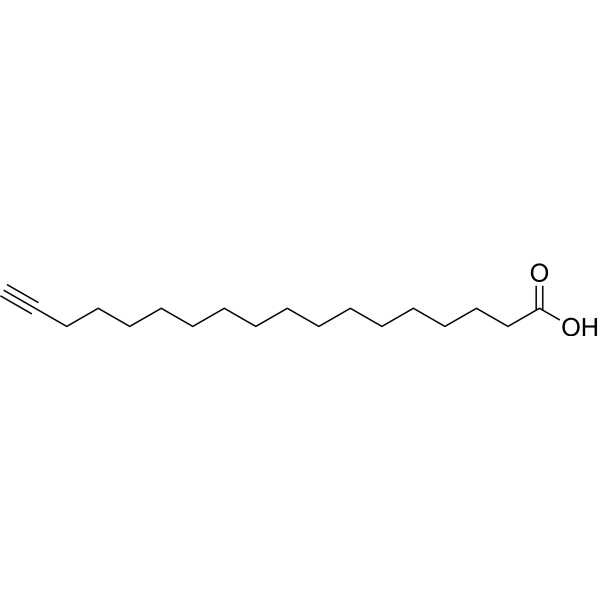
17-ODYA is a CYP450 ω-hydroxylase inhibitor. 17-ODYA is also a potent inhibitor (IC50<100 nM) of the formation of 20-hydroxyeicosatetraenoic acid (20-HETE), epoxyeicosatrienoic acids and dihydroxyeicosatrienoic acids by rat renal cortical microsomes incubated with arachidonic acid. 17-ODYA completely attenuates the isoproterenol (ISO)-induced apoptosis, and necrosis in cultured cardiomyocytes . 17-ODYA is a click chemistry reagent, it contains an Alkyne group and can undergo copper-catalyzed azide-alkyne cycloaddition (CuAAc) with molecules containing Azide groups.
1
1 Cited Publications
Cat. No.: HY-160186
CAS No.: 3084781-89-2
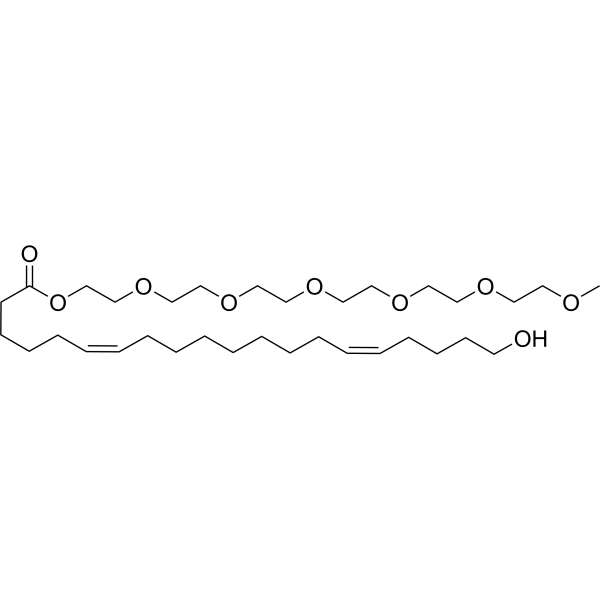
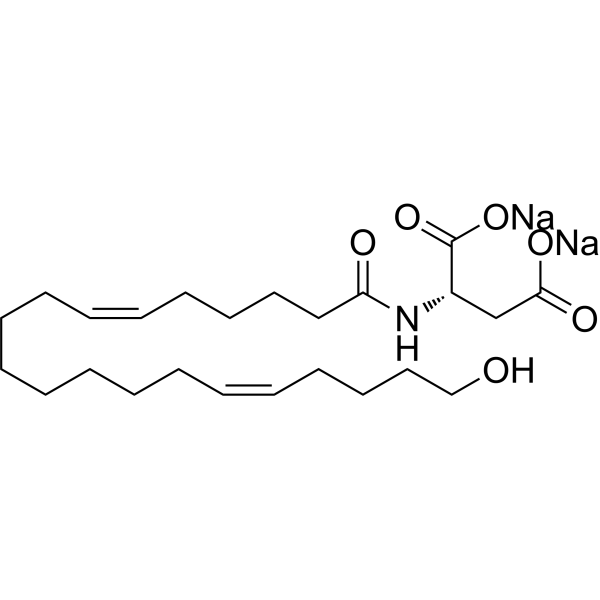
20-SOLA is an orally active 20-HETE antagonist. 20-SOLA greatly ameliorates changes in blood pressure and renal injury associated with a Streptozotocin (STZ) (HY-13753)-diabetic mouse model. 20-SOLA facilitates the restoration of coronary collateral growth (CCG) after ischemic injury. 20-SOLA can be studied for research in cardiovascular diseases and diabetes .
Cat. No.: HY-156876
CAS No.: 2992666-48-3
Purity:  98.12%
Target:  

Cytochrome P450

Research Areas:  

Metabolic Disease

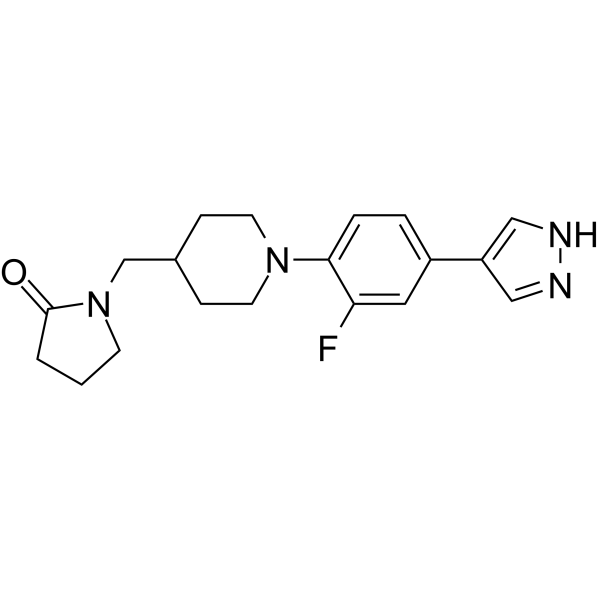
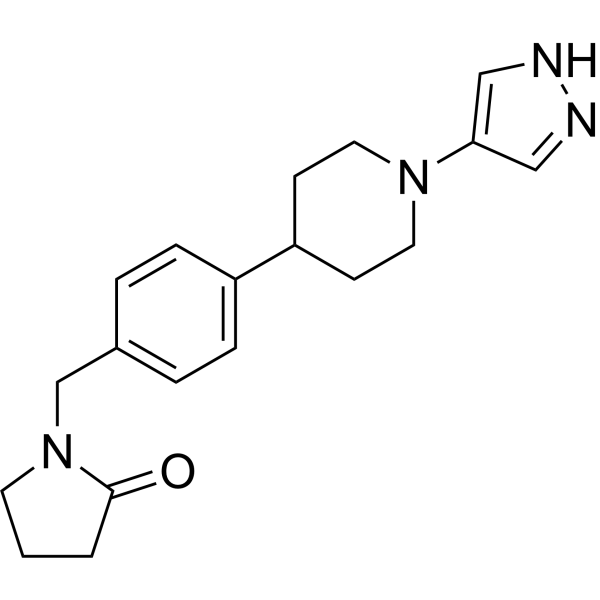
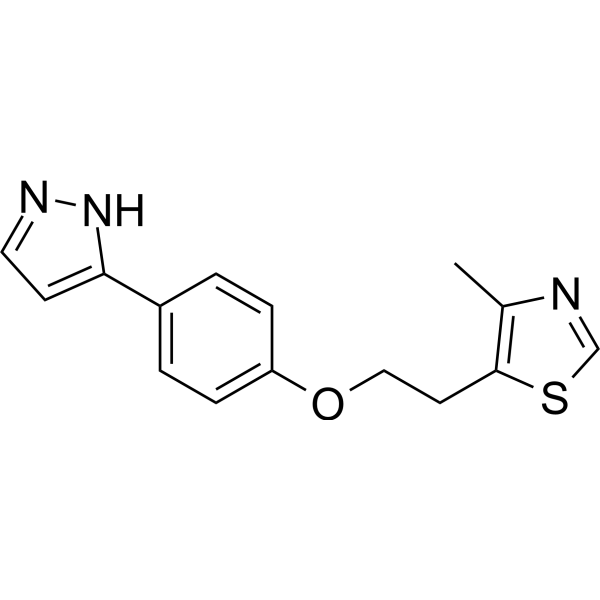
20-HETE inhibitor-2 is an orally active 20-HETE inhibitor. 20-HETE inhibitor-2 can inhibit the activities of CYP4F2 and CYP4A11, thereby suppressing the production of 20-HETE. 20-HETE inhibitor-2 has the effect of improving blood glucose and can be used for the research of various diseases related to 20-HETE such as obesity .
Cat. No.: HY-160187
Research Areas:  

Cardiovascular Disease

AAA is an orally active 20-HETE receptor antagonist. AAA exerts antihypertensive and organoprotective effects. AAA blocks 20-HETE prohypertensive actions, suppresses intrarenal and circulating angiotensin II levels, and interferes with renin-angiotensin system interactions. AAA attenuates development of, and reverses established, ANG II (HY-13948)-dependent malignant hypertension. AAA reduces albuminuria, glomerulosclerosis, and cardiac hypertrophy linked to malignant hypertension. AAA can be used for the research of malignant hypertension .
Cat. No.: HY-148226
CAS No.: 1092380-14-7
Purity:  99.28%
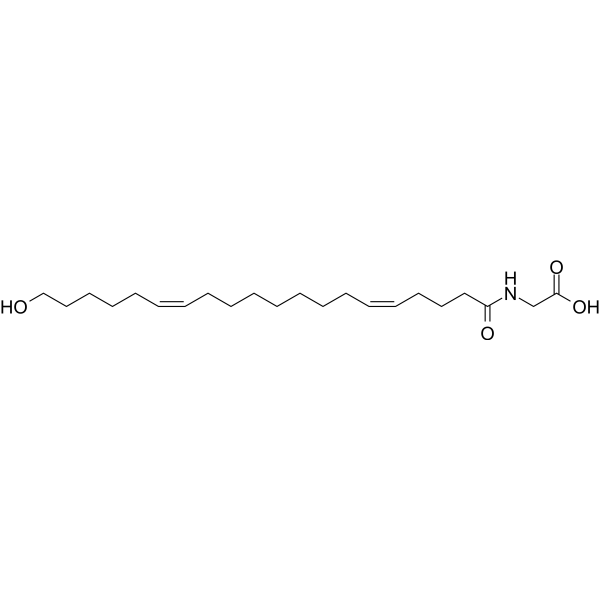
20-5,14-HEDGE is a 20-HETE analog. 20-5,14-HEDGE induces cell death in organotypic hippocampal slice cultures (OHSCs). 20-5,14-HEDGE enhances ROS production and reduces hypoxia-reoxygenation (HR)-induced apoptosis in ex vivo rat lung slices. 20-5,14-HEDGE protects against lung ischemic reperfusion injury in rats. 20-5,14-HEDGE can be used for the study of pulmonary vascular signaling and lung injury-related research .
Cat. No.: HY-15598S
CAS No.: 2548939-89-3
Purity:  ≥97.0%
Synonyms: 20-Hydroxyarachidonic acid-d6; 20-Hydroxyeicosatetraenoic acid-d6
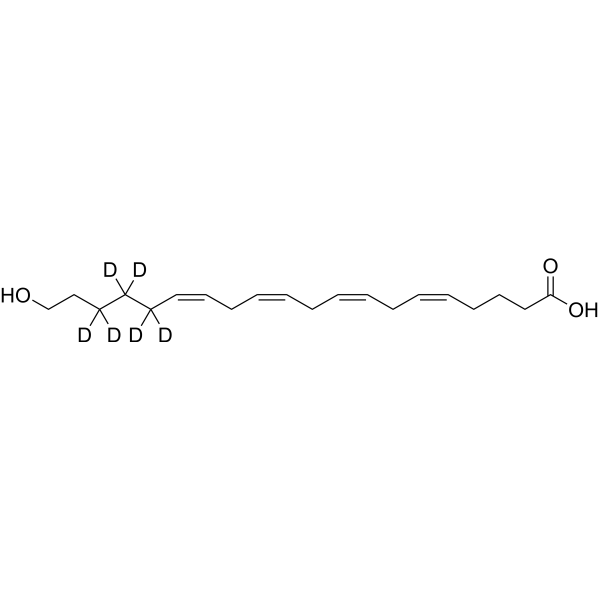
20-HETE-d6 is the deuterium labeled 20-HETE.
Cat. No.: HY-160099
CAS No.: 240427-86-5
Synonyms: WIT003
20-5,14-HEDE (WIT003) is an analog of 20-HETE. 20-5,14-HEDE activates PI3K/Akt signaling pathway, thereby exhibiting anti-apoptotic and cell survival promoting effects. 20-5,14-HEDE is the agonist for 20-HETE that increases intracellular Ca 2+ concentrations, thereby enhancing vasoconstriction .
Cat. No.: HY-160187A
CAS No.: 3055022-23-3
Target:  

Cadherin MMP Akt FAK ERK NF-κB

Research Areas:  

Cancer

(Rac)-AAA is a regulator and inhibitor targeting GPR75. By blocking the 20-HETE-induced downregulation of GPR75 expression, (Rac)-AAA effectively inhibits the activation of key downstream signaling pathways including EGFR, AKT, NF-κB and FAK. (Rac)-AAA reverses 20-HETE-mediated epithelial-mesenchymal transition, which is specifically characterized by downregulating vimentin (vimentin), upregulating E-Cadherin, as well as reducing MMP-2 activity and cancer cell migration ability. (Rac)-AAA also abolishes the 20-HETE-induced upregulation of HIC-5 expression and anchorage-independent growth, and modulates the subcellular localization of PKC-α and phosphorylated AKT. (Rac)-AAA is investigated in androgen-independent prostate cancer (castration-resistant prostate cancer) .
Cat. No.: HY-156875
CAS No.: 2472030-28-5
Target:  

Cytochrome P450

Research Areas:  

Others

20-HETE inhibitor-1 (comp 83) is a 20-HETE formation inhibitor
Cat. No.: HY-151810
CAS No.: 2126874-77-7
Purity:  98.22%
Target:  

Cytochrome P450

Research Areas:  

Metabolic Disease

CYP4A11/CYP4F2-IN-2 is a potent and orally active dual inhibitor of cytochrome P450 (CYP) 4A11 and CYP4F2, with IC50s of 140 nM and 40 nM, respectively. CYP4A11/CYP4F2-IN-2 has potential for the research of renal diseases .
Cat. No.: HY-113516
CAS No.: 942069-11-6
20-HETE Ethanolamide is a metabolite of endocannabinoid Anandamide. 20-HETE Ethanolamide binds to the rat brain cannabinoid CB1 receptor with a Ki of 985 nM .
Cat. No.: HY-139114
CAS No.: 79551-84-1
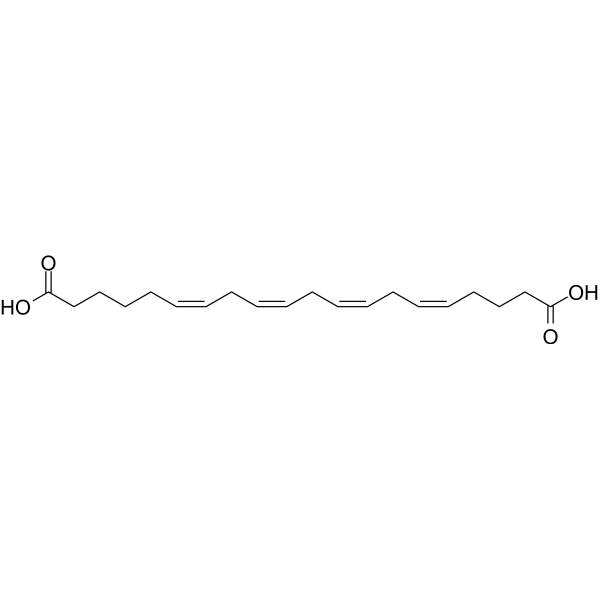
20-Carboxyarachidonic acid, a relatively stable metabolite of 20-HETE, is an endogenous dual activator of PPARalpha and PPARgamma .
Cat. No.: HY-121188
CAS No.: 206052-03-1
Purity:  99.19%
Synonyms: Dibromo-dodecenyl-methylsulfimide
Target:  

Cytochrome P450

Research Areas:  

Cardiovascular Disease

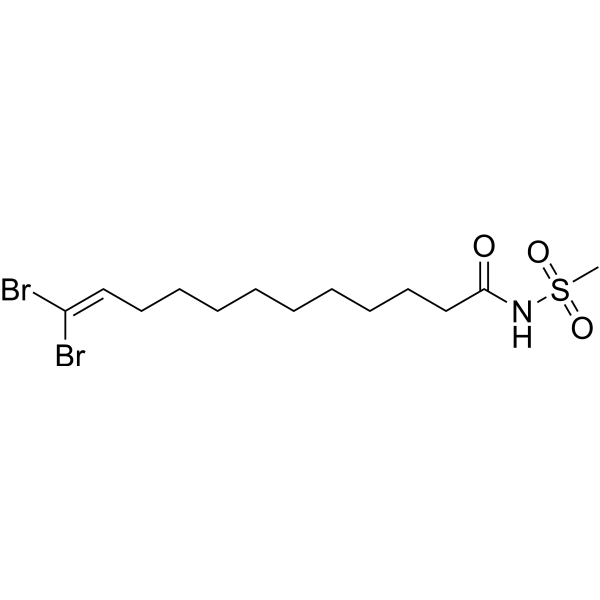
DDMS (Dibromo-dodecenyl-methylsulfimide) is a selective 20-HETE production inhibitor. DDMS attenuates the vasodilatory response to sodium nitroprusside (SNP) .
Cat. No.: HY-182771
CAS No.: 3119850-82-4
Target:  

Cytochrome P450

Research Areas:  

Metabolic Disease

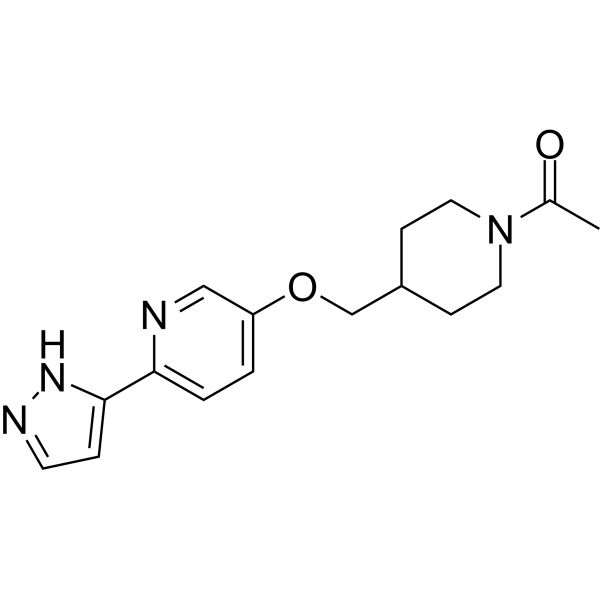
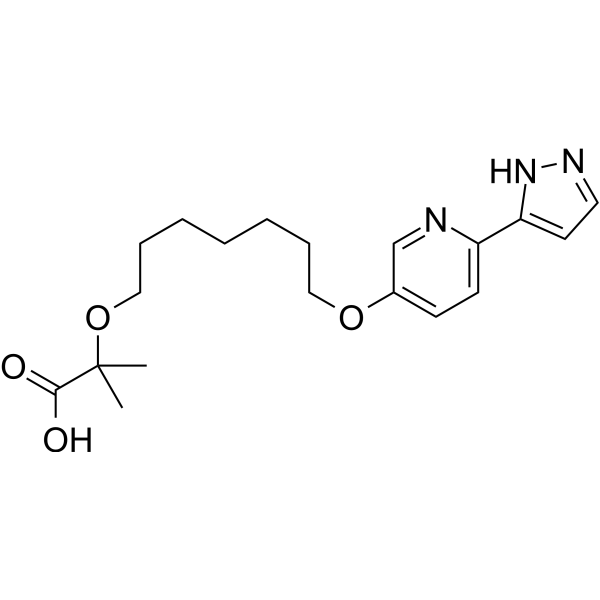
20-HETE IN-3 is an orally bioavailable 20-HETE synthesis inhibitor. 20-HETE IN-3 can be used in the research of obesity .
Cat. No.: HY-151809
CAS No.: 502654-40-2
Purity:  99.82%
Target:  

Cytochrome P450

Research Areas:  

Metabolic Disease

CYP4A11/CYP4F2-IN-1 is a potent dual inhibitor of cytochrome P450 (CYP) 4A11 and CYP4F2, with IC50s of 19 nM and 17 nM, respectively. CYP4A11/CYP4F2-IN-1 has potential for the research of renal diseases .
Cat. No.: HY-124527R
CAS No.: 339068-25-6
Target:  

Cytochrome P450

Research Areas:  

Cardiovascular Disease Cancer

HET0016 (Standard) is the analytical standard of HET0016. This product is intended for research and analytical applications. HET0016 is a potent and selective 20-hydroxyeicosatetraenoic acid (20-HETE) synthase inhibitor, with IC50 values of 17.7 nM, 12.1 nM and 20.6 nM for recombinant CYP4A1-, CYP4A2- and CYP4A3-catalyzed 20-HETE synthesis, respectively. HET0016 also is a selective CYP450 inhibitor, which has been shown to inhibit angiogenesis and tumor growth .
Cat. No.: HY-149770
CAS No.: 2280834-99-1
Target:  

Cytochrome P450

Research Areas:  

Metabolic Disease

CYP4A11/CYP4F2-IN-2 (compound 15) is an orally available inhibitor of CYP4A11/4F2 with IC50s of 120 nM and 220 nM, respectively. CYP4A11/CYP4F2-IN-2 inhibits 20-HETE production in rat kidney and has potential inhibitory effects on diabetic nephropathy and autosomal dominant polycystic kidney disease .
Cat. No.: HY-101016R
CAS No.: 34450-18-5
17-ODYA (Standard) is the analytical standard of 17-ODYA. This product is intended for research and analytical applications. 17-ODYA is a CYP450 ω-hydroxylase inhibitor. 17-ODYA is also a potent inhibitor (IC50<100 nM) of the formation of 20-hydroxyeicosatetraenoic acid (20-HETE), epoxyeicosatrienoic acids and dihydroxyeicosatrienoic acids by rat renal cortical microsomes incubated with arachidonic acid. 17-ODYA completely attenuates the isoproterenol (ISO)-induced apoptosis, and necrosis in cultured cardiomyocytes[1][2][3]. 17-ODYA is a click chemistry reagent, it contains an Alkyne group and can undergo copper-catalyzed azide-alkyne cycloaddition (CuAAc) with molecules containing Azide groups.

