Search Result
Results for "
Dextromethorphan hydrobromide
" in MedChemExpress (MCE) Product Catalog:
19
Biochemical Assay Reagents
24
Isotope-Labeled Compounds
| Cat. No. |
Product Name |
Target |
Research Areas |
Chemical Structure |
-
- HY-B1081A
-
|
6-Hydroxydopamine hydrobromide; 6-OHDA hydrobromide
|
Dopamine Receptor
Autophagy
Mitophagy
COX
PGE synthase
Interleukin Related
p38 MAPK
Apoptosis
Caspase
|
Neurological Disease
Cancer
|
|
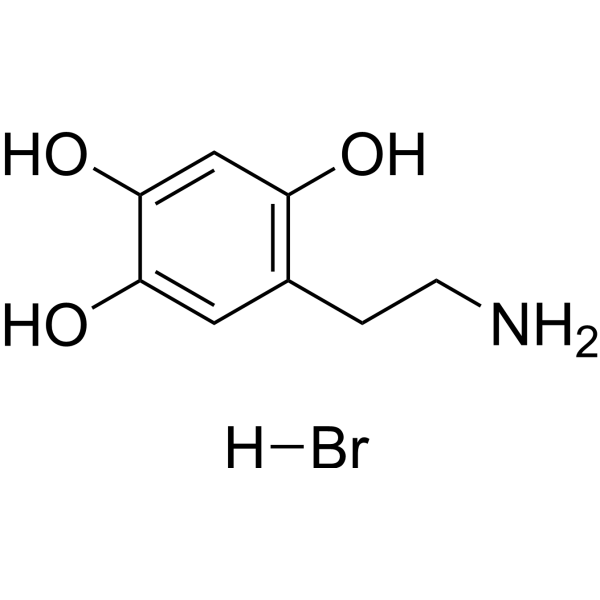
Oxidopamine (6-OHDA) hydrobromide is an antagonist of the neurotransmitter dopamine. Oxidopamine hydrobromide is a widely used neurotoxin and selectively destroys dopaminergic neurons. Oxidopamine hydrobromide promotes COX-2 activation, leading to PGE2 synthesis and pro-inflammatory cytokine IL-1β secretion. Oxidopamine hydrobromide can be used for the research of Parkinson’s disease (PD), attention-deficit hyperactivity disorder (ADHD), and Lesch-Nyhan syndrome .
|
-
-
- HY-129905A
-
|
LLOMe hydrobromide; Leu-Leu methyl ester hydrobromide; H-Leu-Leu-OMe hydrobromide
|
Endogenous Metabolite
|
Inflammation/Immunology
|
|
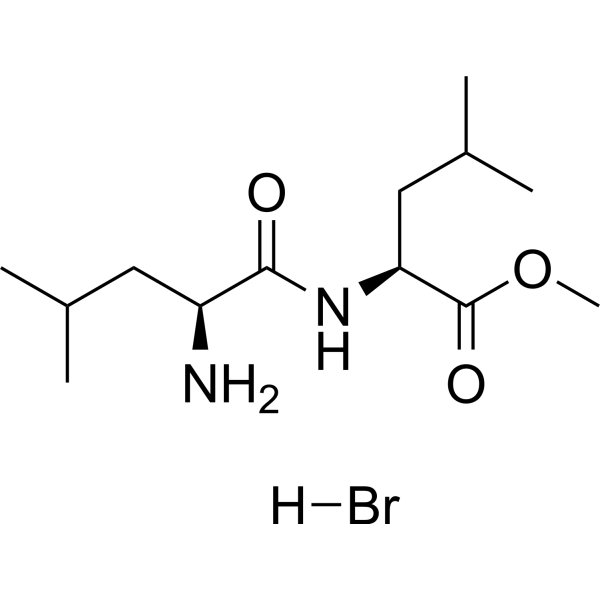
L-Leucyl-L-Leucine methyl ester (LLOMe) hydrobromide, a dipeptide condensation product of L-leucine methyl ester generated by human monocytes or polymorphonuclear leukocytes, selectively eliminates lymphocytes with cytotoxic potential. L-Leucyl-L-Leucine methyl ester hydrobromide also can induce endolysosomal pathway stress .
|
-
-
- HY-15484
-
|
Pifithrin hydrobromide; PFTα hydrobromide
|
MDM-2/p53
Aryl Hydrocarbon Receptor
Ferroptosis
Apoptosis
|
Cancer
|
|
Pifithrin-α hydrobromide is a p53 inhibitor which blocks its transcriptional activity and prevents cells from apoptosis. Pifithrin-α hydrobromide is also an aryl hydrocarbon receptor (AhR) agonist.
|
-
-
- HY-16706A
-
|
|
Histone Acetyltransferase
|
Cancer
|
|
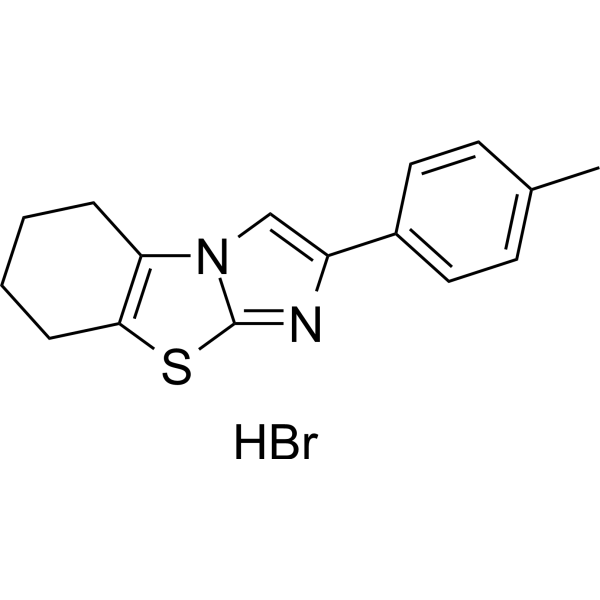
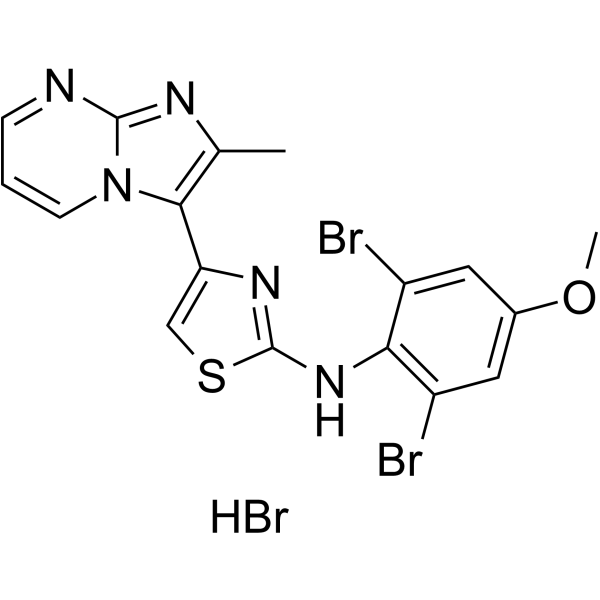
Remodelin hydrobromide is an orally active and selective inhibitor of acetyltransferase NAT10. Remodelin hydrobromide inhibits NAT10 activitity and slows DNA replication and suppresses growth of prostate cancer cells. Remodelin hydrobromide inhibits the growth of prostate cancer and hepatocellular carcinoma in xenograft model. Remodelin hydrobromide enhances the healthspan in hutchinson-gilford progeria syndrome (HGPS) mouse model .
|
-
-
- HY-W010892
-
|
Hyoscine hydrobromide trihydrate
|
mAChR
5-HT Receptor
|
Neurological Disease
|
|
Scopolamine (Hyoscine) hydrobromide trihydrate is a high-affinity muscarinic antagonist that can cross the blood-brain barrier. Scopolamine hydrobromide trihydrate competitively antagonizes 5-HT3 receptors with an IC50 of 2.09 μM. Scopolamine hydrobromide trihydrate can induce cognitive and memory deficits in animals. Scopolamine hydrobromide trihydrate can be used in the research of preventing postoperative nausea and vomiting, motion sickness, nervous system diseases, etc .
|
-
-
- HY-B0489
-
|
methyl 1,2,5,6-tetrahydro-1-methyl-3-pyridinecarboxylate hydrobromide
|
mAChR
nAChR
|
Infection
Neurological Disease
Metabolic Disease
Inflammation/Immunology
Cancer
|
|
Arecoline hydrobromide, a naturally brain-penetrant and orally active occurring psychoactive alkaloid, is a partial agonist of nicotinic and muscarinic acetylcholine receptor. Arecoline hydrobromide exhibits stimulation, alertness, anxiolysis and anti-parasitic effects. Arecoline hydrobromide also can induce oxidative stress .
|
-
-
- HY-A0012
-
|
UK-88525 hydrobromide
|
mAChR
p38 MAPK
Akt
|
Neurological Disease
Metabolic Disease
Cancer
|
|
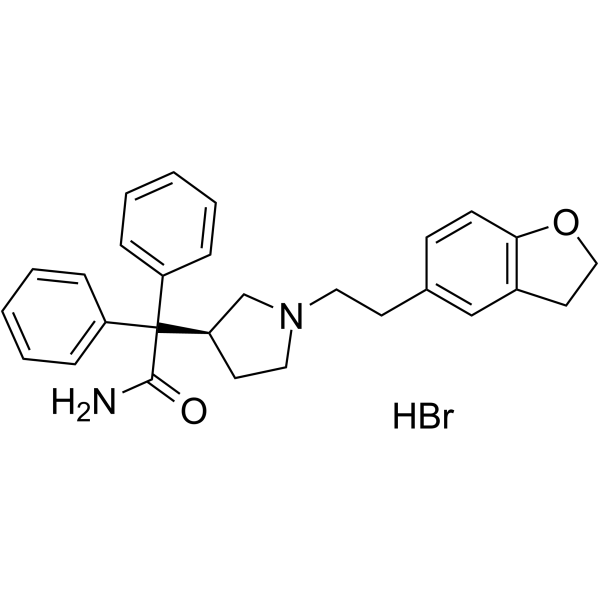
Darifenacin (UK-88525) hydrobromide is a selective and orally active M3 muscarinic receptor (M3R) antagonist with a pKi of 8.9. Darifenacin hydrobromide binds >20-fold more specifically to M3R than to other muscarinic receptors. Darifenacin hydrobromide can be used in the study of urinary incontinence and other symptoms of overactive bladder. Darifenacin hydrobromide inhibits tumor growth in colorectal cancer cells and has anti-tumor effects .
|
-
-
- HY-14452A
-
|
125B11 hydrobromide
|
Fatty Acid Synthase (FASN)
|
Cancer
|
|
Fatostatin hydrobromide (125B11 hydrobromide), a specific inhibitor of SREBP activation, impairs the activation of SREBP-1 and SREBP-2. Fatostatin hydrobromide binds to SCAP (SREBP cleavage-activating protein), and inhibits the ER-Golgi translocation of SREBPs. Fatostatin hydrobromide decreases the transcription of lipogenic genes in cells. Fatostatin hydrobromide possesses antitumor properties, and lowers hyperglycemia in ob/ob mice .
|
-
-
- HY-B0976A
-
|
Th-1165a; Phenoterol hydrobromide
|
Adrenergic Receptor
|
Inflammation/Immunology
Endocrinology
|
|
Fenoterol hydrobromide (Th-1165a), a sympathomimetic agent, is a selective and orally active β2-adrenoceptor agonist. Fenoterol hydrobromide is an effective bronchodilator and can be used for bronchospasm associated with asthma, bronchitis and other obstructive airway diseases research .
|
-
-
- HY-10435A
-
|
(±)-SKF-82958 hydrobromide; Chloro-APB hydrobromide
|
Dopamine Receptor
|
Neurological Disease
|
|
SKF-82958 ((±)-SKF 82958) hydrobromide is a dopamine D1 receptor full agonist (K0.5=4 nM), displays selective for D1 over D2 receptors (K0.5=73 nM). SKF-82958 hydrobromide induces dopamine D1 receptor-dependent adenylate cyclase activity in rat striatal membranes (EC50=491 nM) .
|
-
-
- HY-107670
-
|
DHβE hydrobromide
|
nAChR
|
Neurological Disease
|
|
Dihydro-β-erythroidine (DHβE) hydrobromide is a potent, orally active, and competitive antagonist of neuronal nAChRs. Dihydro-β-erythroidine hydrobromide shows selectivity for α4β4 and α4β2 nAChRs, with IC50s of 0.19 and 0.37 μM, respectively. Antidepressant-like activities .
|
-
-
- HY-A0009
-
|
Galantamine hydrobromide
|
Cholinesterase (ChE)
nAChR
|
Neurological Disease
|
|
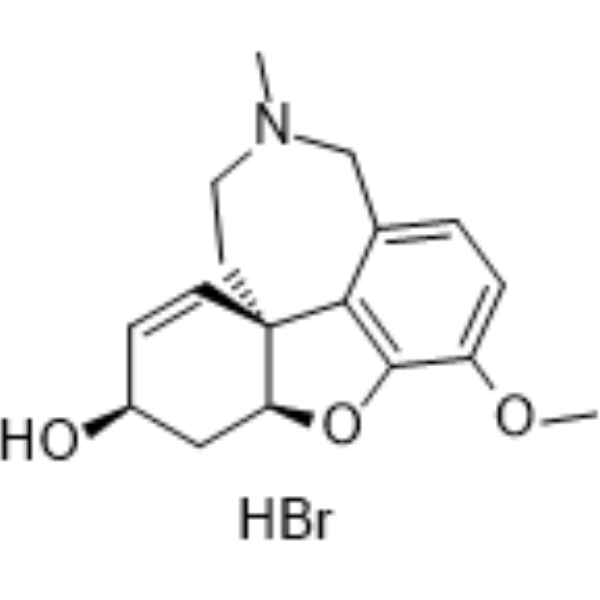
Galanthamine hydrobromide (Galantamine hydrobromide) is a selective, reversible, competitive, alkaloid AChE inhibitor, with an IC50 of 0.35 µM. Galanthamine hydrobromide is a potent allosteric potentiating ligand (APL) of human α3β4, α4β2, α6β4 nicotinic receptors ( nAChRs). Galanthamine hydrobromide is developed for the research of Alzheimer's disease (AD) .
|
-
-
- HY-15688
-
|
8-Hydroxy-DPAT hydrobromide
|
5-HT Receptor
|
Neurological Disease
Metabolic Disease
|
|
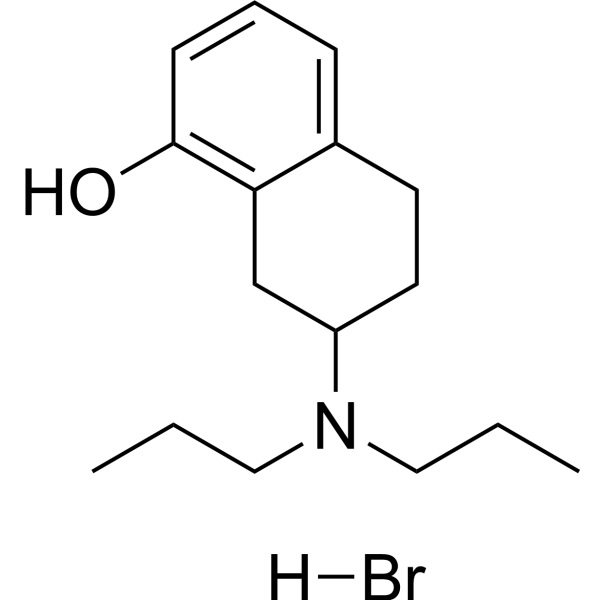
8-OH-DPAT (8-Hydroxy-DPAT) hydrobromide is a potent, brain-penetrant and selective 5-HT1A agonist with a pIC50 of 8.19. 8-OH-DPAT hydrobromide has selectivity of almost 1000 fold for a subtype of the 5-HT1 binding site .
|
-
-
- HY-16702A
-
|
PFT β hydrobromide; Cyclic Pifithrin-α hydrobromide
|
MDM-2/p53
Ferroptosis
|
Cancer
|
|
Pifithrin-β hydrobromide (PFT β hydrobromide) is a potent p53 inhibitor with an IC50 of 23 μM.
|
-
-
- HY-B1287
-
|
(±)-Citalopram hydrobromide; Lu 10-171
|
Serotonin Transporter
Autophagy
|
Neurological Disease
Cancer
|
|
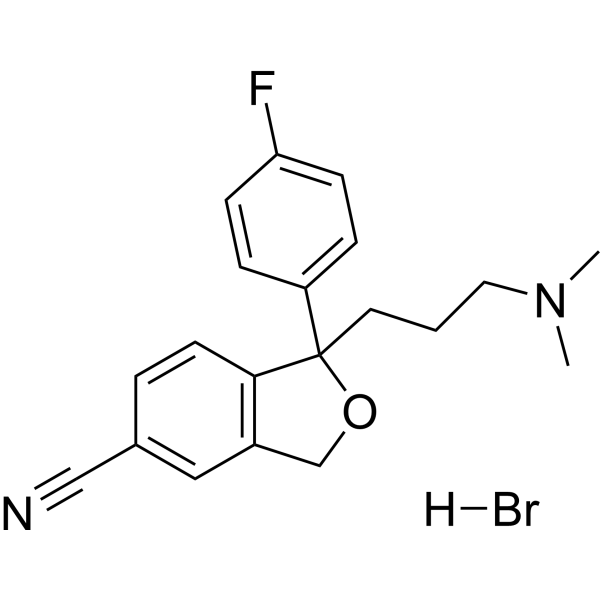
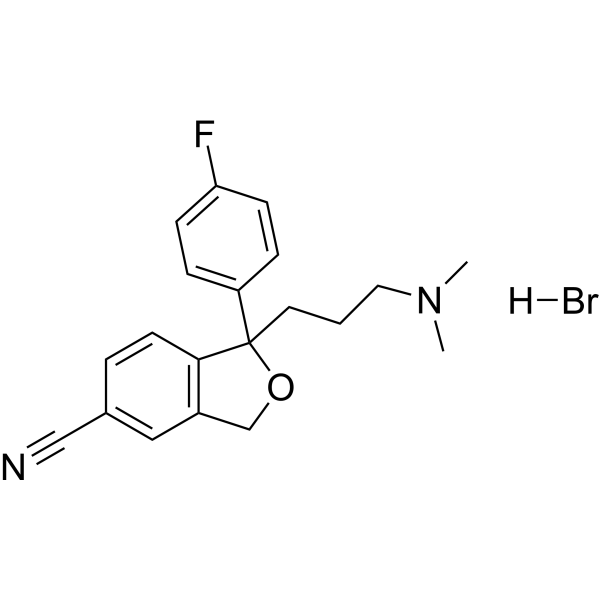
Citalopram hydrobromide is a selective serotonin reuptake inhibitor (SSRI), with blood-brain barrier permeability. Citalopram hydrobromide inhibits 5-HT uptake into synaptosomes with an IC50 of 1.8 nM. Citalopram hydrobromideinhibits the 5-HT uptake in rabbit blood platelets with an IC50 of 14 nM. Antidepressant effect .
|
-
-
- HY-14806A
-
-
-
- HY-19867A
-
|
TG-0054 hydrobromide
|
CXCR
|
Cardiovascular Disease
Cancer
|
|
Burixafor (TG-0054) hydrobromide is a potent CXCR4 antagonist with a pIC50 of 7.4. Burixafor hydrobromide inhibits the binding of CXCL12 to CXCR4, antagonizes CXCL12-induced recruitment of Gαᵢ and β-arrestin2, and blocks the downstream Gαᵢ-mediated inhibitory effect on cAMP signal transduction. Burixafor hydrobromide mobilizes CD34 + hematopoietic stem/progenitor cells (HSPC) from the bone marrow to the peripheral blood. Burixafor hydrobromide can be used for research on autologous hematopoietic stem cell transplantation (ASCT) .
|
-
-
- HY-122273
-
|
|
Drug Derivative
|
Neurological Disease
|
|
Pyrithiamine hydrobromide is a thiamine metabolic inhibitor that can act as a substrate for thiamine pyrophosphokinase. Pyrithiamine hydrobromide can be used in the research of nervous system diseases .
|
-
-
- HY-14806B
-
-
-
- HY-N0584A
-
|
6-Hydroxyhyoscyamine hydrobromide
|
mAChR
|
Inflammation/Immunology
Cancer
|
|
Anisodamine hydrobromide (6-Hydroxyhyoscyamine hydrobromide), a belladonna alkaloid, is a non-subtype-selective muscarinic and a nicotinic cholinoceptor antagonist. Anisodamine hydrobromide shows antioxidant, anti-inflammatory properties .
|
-
-
- HY-W206168
-
|
Norlaudanosoline hydrobromide
|
Dopamine Receptor
|
Neurological Disease
|
|
Tetrahydropapaveroline (Norlaudanosoline) hydrobromide, an isoquinoline alkaloid, is a condensation product of dopamine and dopaldehyde. Tetrahydropapaveroline hydrobromide inhibits [ 3H]DA uptake with a Ki of 41 μM. Tetrahydropapaveroline hydrobromide can be used for the study of Parkinson's disease and/or alcohol addiction .
|
-
-
- HY-N3023
-
|
NSC 263475 hydrobromide
|
DNA/RNA Synthesis
|
Cancer
|
|
3,4-Dihydroxybenzylamine hydrobromide (NSC 263475 hydrobromide) is an improved dopamine analog cytotoxic and inhibits DNA polymerase activity in melanoma cells . 3,4-Dihydroxybenzylamine hydrobromide (NSC 263475 hydrobromide) displays growth inhibitory activity in melanoma cell lines with varying degrees of tyrosinase activity .
|
-
-
- HY-15729A
-
|
CO-1686 hydrobromide; AVL-301 hydrobromide; CNX-419 hydrobromide
|
EGFR
|
Cancer
|
|
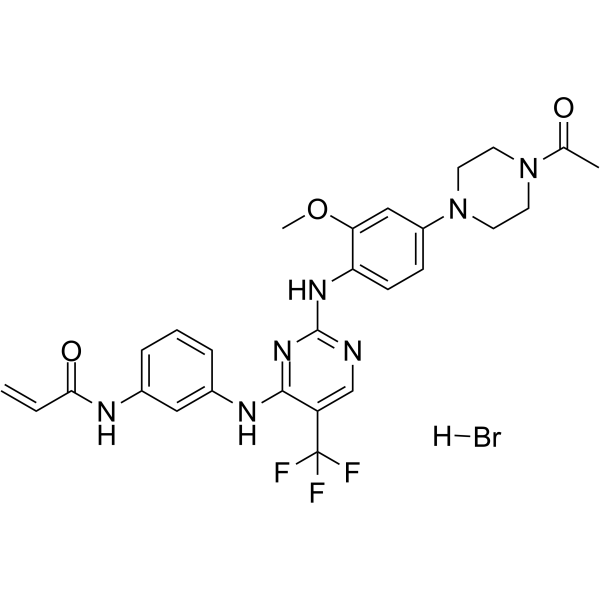
Rociletinib hydrobromide (CO-1686 hydrobromide) is an orally delivered kinase inhibitor that specifically targets the mutant forms of EGFR including T790M, and the Ki values for EGFRL858R/T790M and EGFRWT are 21.5 nM and 303.3 nM, respectively.
|
-
-
- HY-128975
-
-
-
- HY-108447
-
|
|
Ser/Thr Protease
SARS-CoV
PAI-1
|
Infection
Cancer
|
|
BC-11 hydrobromide is a selective TMPRSS2 inhibitor (TMPRSS2 is a key host cellular factor for viral entry and SARS-CoV-2 pathogenesis), and a selective urokinase (uPA) inhibitor (IC50=8.2 μM). BC-11 hydrobromide is cytotoxic to triple-negative MDA-MB231 breast cancer cells. BC-11 hydrobromide is used in research on viral infections and cancer .
|
-
-
- HY-126436C
-
|
L-Ornithine homopolymer hydrobromide (MW 5000-15000)
|
Biochemical Assay Reagents
|
Others
|
|
Poly-L-ornithine (hydrobromide) (MW 5000-15000) (L-Ornithine homopolymer (hydrobromide) (MW 5000-15000)) is a biochemical reagent that can be used as a biological material or organic compound for life science related research .
|
-
-
- HY-Y0039
-
|
|
PROTAC Linkers
|
Cancer
|
|
3-Bromopropylamine hydrobromide is a PROTAC linker that can be used in the synthesis of PROTACs.
|
-
-
- HY-118700A
-
|
Guanidinobiotin hydrobromide
|
NO Synthase
|
Neurological Disease
|
|
2-Iminobiotin hydrobromide (Guanidinobiotin hydrobromide) is a biotin (vitamin H or B7) analog. 2-Iminobiotin hydrobromide is a reversible nitric oxide synthases inhibitor with Kis of 21.8 and 37.5 μM for murine iNOS and rat n-cNOS, respectively . 2-Iminobiotin hydrobromide superimposes on hypothermia protects human neuronal cells from hypoxia-induced cell damage .
|
-
-
- HY-121650A
-
|
|
Dopamine Receptor
|
Neurological Disease
|
|
ADTN hydrobromide is a long-acting dopamine agonist. ADTN hydrobromide significantly decreases the behavioral visual threshold of DA-IPC-depleted zebrafish .
|
-
-
- HY-N2037C
-
|
(S)-Norcoclaurine hydrobromide
|
Endogenous Metabolite
|
Others
|
|
(S)-Higenamine ((S)-Norcoclaurine) hydrobromide, a S-enantiomer of Higenamine, is the entry compound in benzylisoquinoline alkaloid biosynthesis. (S)-Higenamine hydrobromide is produced by the condensation of dopamine and 4-hydroxyphenylacetaldehyde (4-HPAA) by norcoclaurine synthase (NCS) .
|
-
-
- HY-N2368B
-
|
|
GABA Receptor
|
Neurological Disease
|
|
Arecaidine hydrobromide, a pyridine alkaloid, is a potent GABA uptake inhibitor. Arecaidine hydrobromide is a substrate of H +-coupled amino acid transporter 1 (PAT1, SLC36A1) and competitively inhibits L-proline uptake .
|
-
-
- HY-15888A
-
|
|
BMI1
Autophagy
|
Cancer
|
|
PTC-209 hydrobromide is a specific BMI-1 inhibitor with an IC50 of 0.5 μM in HEK293T cell line. PTC-209 hydrobromide irreversibly impairs colorectal cancer-initiating cells (CICs). PTC-209 hydrobromide shows potent anti-myeloma activity and impairs the tumor microenvironment .
|
-
-
- HY-126222
-
|
|
Apoptosis
Mitochondrial Metabolism
|
Cancer
|
|
MitoTam bromide, hydrobromide, a Tamoxifen derivative , is an electron transport chain (ETC) inhibitor. MitoTam bromide, hydrobromide reduces mitochondrial membrane potential in senescent cells and affects mitochondrial morphology . MitoTam bromide, hydrobromide is an effective anticancer agent, suppresses respiratory complexes (CI-respiration) and disrupts respiratory supercomplexes (SCs) formation in breast cancer cells .
|
-
-
- HY-134061
-
|
|
Apoptosis
Mitosis
|
Cancer
|
|
Arecaidine propargyl ester hydrobromide is an agonist of M2 muscarinic acetylcholine receptors and has the activity of inhibiting tumor cell proliferation. The application of arecaidine propargyl ester hydrobromide has shown that it can reduce the number of ovarian cancer cells in vitro and induce apoptosis and the production of reactive oxygen species (ROS) at specific concentrations. Arecaidine propargyl ester hydrobromide can also arrest cells at the G2/M phase of the cell cycle and increase the percentage of abnormal mitosis. Arecaidine propargyl ester hydrobromide is more sensitizing to ovarian surface epithelial cells with higher M2 receptor levels than to cancer cells. Arecaidine propargyl ester hydrobromide exhibits the effect of lowering arterial blood pressure when interacting with the cardiovascular system in a natural physiological state, indicating its potential pharmacological application .
|
-
-
- HY-103417
-
-
-
- HY-N2482A
-
|
|
GABA Receptor
|
Neurological Disease
|
|
Guvacine hydrobromide, an alkaloid found in the nut of Areca catechu, is a potent GABA uptakp inhibitor. Guvacine hydrobromide inhibits rat GAT-1, rat GAT-2 and rat GAT-3 with IC50 values of 39 μM, 58 μM and 378 μM, respectively .
|
-
-
- HY-16020
-
|
|
JAK
|
Cancer
|
|
AC-430 hydrobromide (example 1) is a potent JAK2 inhibitor. AC-430 hydrobromide can be used for the research of myeloproliferative disorders and cancer .
|
-
-
- HY-103412
-
|
|
Dopamine Receptor
Sigma Receptor
|
Neurological Disease
|
|
SKF83959 hydrobromide is a potent and selective dopamine D1-like receptor partial agonist. SKF83959 hydrobromide Ki values for rat D1, D5, D2 and D3 receptors are 1.18, 7.56, 920 and 399 nM, respectively. SKF83959 hydrobromide is a potent allosteric modulator of sigma (σ)-1 receptor. SKF83959 hydrobromide belongs to benzazepine family and has improvements on cognitive dysfunction. SKF83959 hydrobromide can be used for the research of Alzheimer's disease and depression .
|
-
-
- HY-W105860S
-
-
-
- HY-19463
-
|
|
Sodium Channel
|
Cardiovascular Disease
|
|
F 15845 hydrobromide is a highly effective persistent sodium current blocker. F 15845 hydrobromide is also a cardioprotective agent, has anti-ischemic activity and exerts short- and long-term cardioprotection after myocardial infarction. F 15845 hydrobromide can be used for the research of myocardium functional impairment .
|
-
-
- HY-110033
-
|
SCH 39166 hydrobromide
|
Dopamine Receptor
5-HT Receptor
Adrenergic Receptor
|
Neurological Disease
Metabolic Disease
|
|
Ecopipam (SCH 39166) hydrobromide is a potent, selective and orally active antagonist of dopamine D1/D5 receptor, with Kis of 1.2 nM and 2.0 nM, respectively. Ecopipam hydrobromide shows more than 40-flod selectivity over D2, D4, 5-HT, and α2a receptor (Ki=0.98, 5.52, 0.08, and 0.73 μM, respectively). Ecopipam hydrobromide can be used for the research of schizophrenia and obesity .
|
-
-
- HY-175209A
-
|
|
Keap1-Nrf2
Ferroptosis
Reactive Oxygen Species (ROS)
Atg8/LC3
|
Cancer
|
|
Nrf2-IN-4 (Compound PhcY) hydrobromide is a Nrf2 inhibitor. Nrf2-IN-4 hydrobromide induces ferroptosis via NRF2 inhibition. Nrf2-IN-4 hydrobromide disrupts cellular iron homeostasis, facilitates ferritin degradation, and ultimately triggers ferroptosis. Nrf2-IN-4 hydrobromide induces lysosome activation by promoting iron-dependent ROS production and lysosomal acidification. Nrf2-IN-4 hydrobromide demonstrates significant antitumor efficacy. Nrf2-IN-4 hydrobromide can be used for the study of breast cancer .
|
-
-
- HY-15414AR
-
|
Lu AA21004 hydrobromide (Standard)
|
5-HT Receptor
Serotonin Transporter
Reference Standards
|
Neurological Disease
Cancer
|
|
Vortioxetine (hydrobromide) (Standard) is the analytical standard of Vortioxetine (hydrobromide). This product is intended for research and analytical applications. Vortioxetine (Lu AA 21004) hydrobromide is an antagonist of 5-HT3A and 5-HT7 receptors (Ki: 3.7 nM, 19 nM) and an inhibitor of 5-hydroxytryptamine transporter (SERT) (Ki: 1.6 nM), as well as a 5-HT1A agonist and a partial 5-HT1B agonist (Ki: 15 nM, 33 nM) .
|
-
-
- HY-101252
-
|
S-Ethylisothiourea hydrobromide
|
Biochemical Assay Reagents
|
Others
|
|
S-EIT (hydrobromide) is a biochemical reagent that can be used as a biological material or organic compound for life science related research.
|
-
-
- HY-126436B
-
|
L-Ornithine homopolymer hydrobromide (MW>100000)
|
Biochemical Assay Reagents
|
Others
|
|
Poly-L-ornithine (hydrobromide) (MW>100000) (L-Ornithine homopolymer (hydrobromide) (MW>100000)) is a biochemical reagent that can be used as a biological material or organic compound for life science related research .
|
-
-
- HY-15484R
-
|
Pifithrin hydrobromide (Standard); PFTα hydrobromide (Standard)
|
MDM-2/p53
Aryl Hydrocarbon Receptor
Ferroptosis
Apoptosis
Reference Standards
|
Cancer
|
|
Pifithrin-α (hydrobromide) (Standard) is the analytical standard of Pifithrin-α (hydrobromide). This product is intended for research and analytical applications. Pifithrin-α hydrobromide is a p53 inhibitor which blocks its transcriptional activity and prevents cells from apoptosis. Pifithrin-α hydrobromide is also an aryl hydrocarbon receptor (AhR) agonist.
|
-
-
- HY-A0009R
-
|
Galantamine hydrobromide (Standard)
|
nAChR
Cholinesterase (ChE)
Reference Standards
|
Neurological Disease
|
|
Galanthamine (hydrobromide) (Standard) is the analytical standard of Galanthamine (hydrobromide). This product is intended for research and analytical applications. Galanthamine hydrobromide (Galantamine hydrobromide) is a selective, reversible, competitive, alkaloid AChE inhibitor, with an IC50 of 0.35 µM. Galanthamine hydrobromide is a potent allosteric potentiating ligand (APL) of human α3β4, α4β2, α6β4 nicotinic receptors ( nAChRs). Galanthamine hydrobromide is developed for the research of Alzheimer's disease (AD) .
|
-
-
- HY-15729AR
-
|
CO-1686 hydrobromide (Standard); AVL-301 hydrobromide (Standard); CNX-419 hydrobromide (Standard)
|
EGFR
Reference Standards
|
Cancer
|
|
Rociletinib hydrobromide (Standard) is the analytical standard of Rociletinib hydrobromide. This product is intended for research and analytical applications. Rociletinib hydrobromide (CO-1686 hydrobromide) is an orally delivered kinase inhibitor that specifically targets the mutant forms of EGFR including T790M, and the Ki values for EGFRL858R/T790M and EGFRWT are 21.5 nM and 303.3 nM, respectively.
|
-
-
- HY-127022A
-
|
Daturamine hydrobromide; α-Hydroxyscopolamine hydrobromide
|
mAChR
Calcium Channel
Reactive Oxygen Species (ROS)
|
Neurological Disease
|
|
Anisodine (Daturamine) hydrobromide is a neuroprotective compound that reduces exacerbated M1, M2, M4, and M5 receptor expression in brain tissues under hypoxia/reoxygenation conditions. Anisodine hydrobromide inhibits calcium ion influx and reactive oxygen species (ROS)levels. Anisodine hydrobromide leads to decreased aspartate levels during hypoxia .
|
-
-
- HY-B1098A
-
|
4-Hydroxyamphetamine hydrobromide
|
Adrenergic Receptor
|
Neurological Disease
|
|
Hydroxyamphetamine (4-Hydroxyamphetamine) hydrobromide is a sympathomimetic agent, stimulates the sympathetic nervous system. Hydroxyamphetamine hydrobromide can be used in eye drops to dilate the pupil .
|
-
- HY-W010892R
-
|
Hyoscine hydrobromide trihydrate (Standard)
|
mAChR
Reference Standards
5-HT Receptor
|
Neurological Disease
|
|
Scopolamine hydrobromide trihydrate (Standard) is the analytical standard of Scopolamine hydrobromide trihydrate (HY-W010892). This product is intended for research and analytical applications. Scopolamine (Hyoscine) hydrobromide is a high-affinity muscarinic antagonist that can cross the blood-brain barrier. Scopolamine hydrobromide competitively antagonizes 5-HT3 receptors with an IC50 of 2.09 μM. Scopolamine hydrobromide can induce cognitive and memory deficits in animals. Scopolamine hydrobromide can be used in the research of preventing postoperative nausea and vomiting, motion sickness, nervous system diseases, etc .
|
-
- HY-100815C
-
|
(±)-AMPA hydrobromide
|
iGluR
|
Neurological Disease
|
|
(RS)-AMPA ((±)-AMPA) hydrobromide is a glutamate analogue and a potent and selective excitatory neurotransmitter L-glutamic acid agonist. (RS)-AMPA hydrobromide does not interfere with binding sites for kainic acid or NMDA receptors .
|
-
- HY-121203S
-
-
- HY-W105748
-
|
6-Bromohexylamine hydrobromide
|
PROTAC Linkers
|
Cancer
|
|
6-Bromohexan-1-amine hydrobromide (6-Bromohexylamine Hydrobromide) is a PROTAC linker that can be used in the synthesis of PROTACs.
|
-
- HY-18200B
-
|
E5555 hydrobromide; ER 172594-06
|
Protease Activated Receptor (PAR)
JAK
Apoptosis
|
Cardiovascular Disease
Cancer
|
|
Atopaxar (E5555) hydrobromide is a potent, orally active, selective and reversible thrombin receptor protease-activated receptor-1 (PAR-1) antagonist. Atopaxar hydrobromide, an antiplatelet agent, interferes with platelet signaling. Atopaxar hydrobromide can be used for the research of atherothrombotic disease .
|
-
- HY-B1751C
-
|
|
Parasite
Cytochrome P450
Potassium Channel
|
Infection
|
|
Quinidine hydrobromide is an antiarrhythmic agent. Quinidine is a potent, orally active, selective cytochrome P450db inhibitor. Quinidine hydrobromide is also a K + channel blocker with an IC50 of 19.9 μM. Quinidine hydrobromide can be used for malaria research .
|
-
- HY-B0976AR
-
|
Th-1165a (Standard); Phenoterol hydrobromide (Standard)
|
Reference Standards
Adrenergic Receptor
|
Inflammation/Immunology
Endocrinology
|
|
Fenoterol (hydrobromide) (Standard) is the analytical standard of Fenoterol (hydrobromide). This product is intended for research and analytical applications. Fenoterol hydrobromide (Th-1165a), a sympathomimetic agent, is a selective and orally active β2-adrenoceptor agonist. Fenoterol hydrobromide is an effective bronchodilator and can be used for bronchospasm associated with asthma, bronchitis and other obstructive airway diseases research .
|
-
- HY-101485
-
|
Autophagy enhancer-99 hydrobromide
|
Phosphatase
|
Neurological Disease
|
|
AUTEN-99 (hydrobromide) is a novel inhibitor of the myotubularin phosphatase Jumpy (also called MTMR14). AUTEN-99 (hydrobromide) crosses the blood-brain barrier and exerts potent neuroprotective effects .
|
-
- HY-B0489R
-
|
methyl 1,2,5,6-tetrahydro-1-methyl-3-pyridinecarboxylate hydrobromide (Standard)
|
Reference Standards
mAChR
nAChR
|
Infection
Neurological Disease
Metabolic Disease
Inflammation/Immunology
Cancer
|
|
Arecoline hydrobromide (Standard) is the analytical standard of Arecoline hydrobromide. This product is intended for research and analytical applications. Arecoline hydrobromide, a naturally brain-penetrant and orally active occurring psychoactive alkaloid, is a partial agonist of nicotinic and muscarinic acetylcholine receptor. Arecoline hydrobromide exhibits stimulation, alertness, anxiolysis and anti-parasitic effects. Arecoline hydrobromide also can induce oxidative stress .
|
-
- HY-W108867
-
|
|
Drug Intermediate
|
|
|
N-Fmoc-ethylenediamine hydrobromide is an important chemical reagent with the activity of promoting organic synthesis reactions. N-Fmoc-ethylenediamine hydrobromide is often used in the synthesis of peptides and other amino compounds in the field of biochemistry because it can effectively protect the amino group and provide good reactivity. The application of N-Fmoc-ethylenediamine hydrobromide helps to improve the efficiency and selectivity of synthesis and becomes a key component in organic synthesis.
|
-
- HY-118406B
-
|
Ponalid hydrobromide; UK 738 hydrobromide
|
mAChR
|
Neurological Disease
|
|
Ethybenztropine hydrobromide (Ponalid hydrobromide) is an anticholinergic drug with antiparkinsonian activity. Ethybenztropine hydrobromide may also act as a dopamine reuptake inhibitor. Ethybenztropine hydrobromide is commonly used to suppress Parkinson's disease .
|
-
- HY-N0584AR
-
|
6-Hydroxyhyoscyamine hydrobromide (Standard)
|
Reference Standards
mAChR
|
Inflammation/Immunology
|
|
Anisodamine (hydrobromide) (Standard) is the analytical standard of Anisodamine (hydrobromide). This product is intended for research and analytical applications. Anisodamine hydrobromide (6-Hydroxyhyoscyamine hydrobromide), a belladonna alkaloid, is a non-subtype-selective muscarinic and a nicotinic cholinoceptor antagonist. Anisodamine hydrobromide shows antioxidant, anti-inflammatory properties .
|
-
- HY-106688A
-
|
St-567 hydrobromide
|
Potassium Channel
|
Cardiovascular Disease
|
|
Alinidine (St-567) hydrobromide is a specific bradycardic agent. Alinidine hydrobromide reduces the slope of the diastolic depolarization in sinoatrial tissue and Purkinje fibers. Alinidine hydrobromide shows antiischemic and antiarrhythmic effects .
|
-
- HY-A0009S
-
|
Galantamine-d3 hydrobromide
|
Isotope-Labeled Compounds
Cholinesterase (ChE)
nAChR
|
Neurological Disease
|
|
Galanthamine-d3 (hydrobromide) is deuterium labeled Galanthamine (hydrobromide). Galanthamine hydrobromide (Galantamine hydrobromide) is a selective, reversible, competitive, alkaloid AChE inhibitor, with an IC50 of 0.35 μM. Galanthamine hydrobromide is a potent allosteric potentiating ligand (APL) of human α3β4, α4β2, α6β4 nicotinic receptors ( nAChRs). Galanthamine hydrobromide is developed for the research of Alzheimer's disease (AD) .
|
-
- HY-N0471B
-
|
Hyoscyamine hydrobromide
|
mAChR
|
Neurological Disease
|
|
L-Hyoscyamine (Hyoscyamine) hydrobromide is an anticholinergic agent that may potentially affect breastfeeding and milk production. L-Hyoscyamine hydrobromide is not likely to interfere with breastfeeding when used in single doses. L-Hyoscyamine hydrobromide should be monitored for signs of decreased lactation during long-term use.
|
-
- HY-A0012R
-
|
UK-88525 hydrobromide (Standard)
|
Reference Standards
mAChR
p38 MAPK
Akt
|
Neurological Disease
Metabolic Disease
Cancer
|
|
Darifenacin (hydrobromide) (Standard) is the analytical standard of Darifenacin (hydrobromide). This product is intended for research and analytical applications. Darifenacin (hydrobromide) is a selective and orally active M3 muscarinic receptor (M3R) antagonist with a pKi of 8.9. Darifenacin (hydrobromide) binds >20-fold more specifically to M3R than to other muscarinic receptors. Darifenacin (hydrobromide) can be used in the study of urinary incontinence and other symptoms of overactive bladder. Darifenacin (hydrobromide) inhibits tumor growth in colorectal cancer cells and has anti-tumor effects .
|
-
- HY-14744C
-
|
(S)-Amlodipine hydrobromide; Levoamlodipine hydrobromide
|
Calcium Channel
MMP
|
Cardiovascular Disease
Others
|
Levamlodipine ((S)-Amlodipine; Levoamlodipin) hydrobromide is an orally active L-type calcium channel blocker and MMP-9 modulator with high permeability and retention properties. Levamlodipine hydrobromide significantly enhances plaque stability and improves lipid profiles by reducing blood pressure, decreasing systolic blood pressure variability, and inhibiting MMP-9 expression in atherosclerotic plaques. Levamlodipine hydrobromide not only alleviates cardiac and aortic hypertrophy and prevents renal atrophy, but also produces synergistic effects in blood pressure reduction and organ protection when combined with bisoprolol (HY-129029). Levamlodipine hydrobromide exerts no significant inhibitory effect on abdominal aortic intimal hyperplasia. When excessively accumulated in the epidermis, Levamlodipine hydrobromide may induce changes in keratin structure, impair the skin barrier and trigger inflammation; long-term use further exacerbates skin irritation caused by local administration. Levamlodipine hydrobromide can be used in research related to hypertension and atherosclerosis .
|
-
- HY-B1205B
-
|
Tropine tropate hydrobromide; DL-Hyoscyamine hydrobromide
|
mAChR
|
Cardiovascular Disease
Neurological Disease
Cancer
|
|
Atropine (Tropine tropate) hydrobromide is a competitive muscarinic acetylcholine receptor (mAChR) antagonist with IC50 values of 0.39 and 0.71 nM for Human mAChR M4 and Chicken mAChR M4, respectively. Atropine hydrobromide inhibits ACh-induced relaxations in human pulmonary veins. Atropine hydrobromide can be used for research of anti-myopia and bradycardia .
|
-
- HY-19399C
-
|
(-)-BRX 005 hydrobromide; (-)-BRX 235 hydrobromide
|
p38 MAPK
HSP
|
Cardiovascular Disease
|
|
Iroxanadine hydrobromide (BRX 005) is a vasculoprotector. Iroxanadine is a p38 kinase and HSP protein dual activator. Iroxanadine hydrobromide has the potential for atherosclerosis and vascular diseases research .
|
-
- HY-B1624C
-
|
Debrisoquine hydrobromide; Isocaramidine hydrobromide; Ro 5-3307/1 hydrobromide
|
SARS-CoV
Ser/Thr Protease
|
Infection
|
|
Debrisoquine (Ro 5-3307/1) hydrobromide is a TMPRSS2 inhibitors that inhibits SARS-CoV-2 entry into human lung cell line by a TMPRSS2-depedent manner, with an IC50 of 22μM. Debrisoquine hydrobromide can be used for antiviral research .
|
-
- HY-10435AR
-
|
(±)-SKF-82958 hydrobromide (Standard); Chloro-APB hydrobromide (Standard)
|
Reference Standards
Dopamine Receptor
|
Neurological Disease
|
|
SKF-82958 (hydrobromide) (Standard) is the analytical standard of SKF-82958 (hydrobromide). This product is intended for research and analytical applications. SKF-82958 ((±)-SKF 82958) hydrobromide is a dopamine D1 receptor full agonist (K0.5=4 nM), displays selective for D1 over D2 receptors (K0.5=73 nM). SKF-82958 hydrobromide induces dopamine D1 receptor-dependent adenylate cyclase activity in rat striatal membranes (EC50=491 nM) .
|
-
- HY-B1287R
-
|
(±)-Citalopram hydrobromide(Standard); Lu 10-171 (Standard)
|
Reference Standards
Serotonin Transporter
Autophagy
|
Neurological Disease
Cancer
|
|
Citalopram (hydrobromide) (Standard) is the analytical standard of Citalopram (hydrobromide). This product is intended for research and analytical applications. Citalopram hydrobromide is a selective serotonin reuptake inhibitor (SSRI). Citalopram hydrobromide inhibits 5-HT uptake into synaptosomes with an IC50 of 1.8 nM. Citalopram hydrobromideinhibits the 5-HT uptake in rabbit blood platelets with an IC50 of 14 nM. Antidepressant effect .
|
-
- HY-N6619
-
|
|
Cholinesterase (ChE)
|
Neurological Disease
|
|
Lycoramine hydrobromide, a dihydro-derivative of galanthamine, is isolated from Lycoris radiate. Lycoramine hydrobromide is a potent acetylcholinesterase (AChE) inhibitor .
|
-
- HY-128975R
-
|
|
Endogenous Metabolite
Reference Standards
|
Neurological Disease
|
|
m-Tyramine (hydrobromide) (Standard) is the analytical standard of m-Tyramine (hydrobromide). This product is intended for research and analytical applications. m-Tyramine hydrobromide is an endogenous trace amine neuromodulator. m-Tyramine hydrobromide has effects on the adrenergic and dopaminergic receptor[1, 2].
|
-
- HY-122049
-
-
- HY-W013353
-
|
|
Endogenous Metabolite
Opioid Receptor
|
Neurological Disease
|
|
(RS)-Salsolinol hydrobromide is the hydrobromide form of (±)-Salsolinol (HY-113316). (RS)-Salsolinol hydrobromide is a Dopamine (HY-B0451)-derived endogenous metabolite. (RS)-Salsolinol hydrobromide activates μ-opioid receptors (MORs), reduces GABAergic transmission, increases the excitability of dopamine (DA) neurons, and thus accelerates the sustained firing of neurons in the posterior ventral tegmental area (pVTA) .
|
-
- HY-124245S1
-
-
- HY-W740245
-
|
|
Isotope-Labeled Compounds
GABA Receptor
|
Neurological Disease
|
|
Arecaidine-d5 hydrobromide is the deuterium labeled Arecaidine hydrobromide (HY-N2368B). Arecaidine hydrobromide, a pyridine alkaloid, is a potent GABA uptake inhibitor. Arecaidine hydrobromide is a substrate of H+-coupled amino acid transporter 1 (PAT1, SLC36A1) and competitively inhibits L-proline uptake .
|
-
- HY-125971
-
-
- HY-W706171
-
-
- HY-W408607
-
|
|
NO Synthase
|
Inflammation/Immunology
|
|
N-Benzylacetamidine (hydrobromide) is a acetamidine compound. N-Benzylacetamidine (hydrobromide) is a selective inducible nitric oxide synthase (iNOS) inhibitor with an IC50 of 0.20 μM .
|
-
- HY-101377B
-
|
S(-)-8-Hydroxy-2-dipropylaminotetralin hydrobromide
|
5-HT Receptor
|
Neurological Disease
|
|
S(-)-8-OH-DPAT (S(-)-8-Hydroxy-2-dipropylaminotetralin) hydrobromide is an enantiomer of 8-OH-DPAT hydrobromide. 8-OH-DPAT hydrobromide is a potent, selective 5-HT1A agonist with a pIC50 of 8.19 .
|
-
- HY-A0010R
-
|
Eletriptan HBr (Standard); UK-116044 hydrobromide (Standard)
|
Reference Standards
5-HT Receptor
|
Neurological Disease
|
|
Eletriptan hydrobromide (Standard) is an analytical standard for Eletriptan hydrobromide. This product is intended for research and analytical applications. Eletriptan hydrobromide (Eletriptan HBr) is a 5-HT1B and 5-HT1D receptor agonist with antimigraine activity, with Ki of 0.92 nM and 3.14 nM, respectively .
|
-
- HY-138064
-
|
|
Biochemical Assay Reagents
|
Others
|
|
4-APC hydrobromide is a highly sensitive and selective derivatization agent for aldehydes. 4-APC hydrobromide possesses an aniline moiety for a fast selective reaction with aliphatic aldehydes as well as a quaternary ammonium group for improved MS sensitivity. 4-APC hydrobromide allows highly sensitive and selective MS detection of aldehydes .
|
-
- HY-B0976AS
-
|
|
Isotope-Labeled Compounds
Adrenergic Receptor
|
Inflammation/Immunology
Endocrinology
|
|
Fenoterol-d6 (hydrobromide) (Th-1165a-d6) is the deuterium labeled Fenoterol hydrobromide. Fenoterol hydrobromide (Th-1165a), a sympathomimetic agent, is a selective and orally active β2-adrenoceptor agonist. Fenoterol hydrobromide is an effective bronchodilator and can be used for bronchospasm associated with asthma, bronchitis and other obstructive airway diseases research .
|
-
- HY-19818AR
-
|
|
5-HT Receptor
|
Neurological Disease
|
|
NAN-190 (hydrobromide) (Standard) is the analytical standard of NAN-190 (hydrobromide). This product is intended for research and analytical applications. NAN-190 hydrobromide is a serotonin receptor 5-HT antagonist. NAN-190 is a selective antagonist of 5-HT1A .
|
-
- HY-B1287S
-
|
(±)-Citalopram hydrobromide-d3; Lu 10-171-d3
|
Isotope-Labeled Compounds
Serotonin Transporter
Autophagy
|
Neurological Disease
Cancer
|
|
Citalopram-d3 ((±)-Citalopram-d3) hydrobromide is deuterium labeled Citalopram (hydrobromide). Citalopram hydrobromide is a selective serotonin reuptake inhibitor (SSRI). Citalopram hydrobromide inhibits 5-HT uptake into synaptosomes with an IC50 of 1.8 nM. Citalopram hydrobromideinhibits the 5-HT uptake in rabbit blood platelets with an IC50 of 14 nM. Antidepressant effect .
|
-
- HY-158735
-
|
|
Biochemical Assay Reagents
|
Others
|
|
Thioarginine hydrobromide is a colorimetric substrate for arginase that can be used in the spectrophotometric assay of arginase .
|
-
- HY-N8580
-
|
|
Others
|
Others
|
|
Hydrocotarnine (hydrobromide) is a Alkaloids product that can be isolated from From Vaccinium macrocarpon .
|
-
- HY-103411
-
|
|
Dopamine Receptor
|
Neurological Disease
|
|
SKF83822 hydrobromide is a potent dopamine D1 receptor agonist. SKF83822 hydrobromide activates Gs/olf/adenylyl cyclase (AC)-coupled D1 receptors, but not phospholipase C (PLC)-coupled D1-like receptors .
|
-
- HY-Z8868
-
|
DCIT hydrobromide
|
Drug Intermediate
|
Others
|
|
Desmethylcitalopram hydrobromide (DCIT hydrobromide) is a drug impurity.
|
-
- HY-W416464
-
|
8-Hydroxymoxifloxacin hydrobromide; Moxifloxacin impurity E hydrobromide
|
Drug Intermediate
|
Others
|
|
Moxifloxacin impurity 6 hydrobromide (8-Hydroxymoxifloxacin hydrobromide) is an impurity of Moxifloxacin hydrobromide.
|
-
- HY-108723
-
|
|
Cholinesterase (ChE)
|
Neurological Disease
|
|
Dihydrogalanthamine hydrobromide is an acetylcholinesterase inhibitor. Dihydrogalanthamine hydrobromide can be used in research on neurological diseases such as sequelae of poliomyelitis and myasthenia gravis .
|
-
- HY-W739837
-
-
- HY-101755R
-
|
Lu AA24530 hydrobromide (Standard)
|
Reference Standards
5-HT Receptor
Adrenergic Receptor
|
Neurological Disease
Endocrinology
|
|
Tedatioxetine hydrobromide (Standard) (Lu AA24530 hydrobromide (Standard)) is the analytical standard of Tedatioxetine hydrobromide (HY-101755). This product is intended for research and analytical applications. Tedatioxetine (Lu AA24530) hydrobromide acts as a serotonin and norepinephrine (NE)-preferring triple reuptake inhibitor (TRI) and 5-HT2A, 5-HT2C, 5-HT3 and α1A-adrenergic receptor antagonist .
,
|
-
- HY-175100
-
|
|
mGluR
|
Neurological Disease
|
|
HexylHIBO hydrobromide is a potent group I mGluR antagonist with Kbs of 140 μM and 110 μM at mGlu1a and mGlu5a receptors, respectively. HexylHIBO hydrobromide does not inhibits mGlu2 and mGlu4a. HexylHIBO hydrobromide decreases spontaneous excitatory postsynaptic currents (sEPSCs) in rat .
|
-
- HY-Z8077
-
-
- HY-Z6086
-
-
- HY-105223A
-
|
|
Drug Intermediate
|
Cancer
|
|
Pibrozelesin hydrobromide is a hydrolytic prodrug of Carzelesin (HY-19601). Pibrozelesin hydrobromide has an anticancer activity. Carzelesin is a cyclopropylpyrroloindole precursor molecule and effectively inhibits tumor growth. Carzelesin may be used in cancer research .
|
-
- HY-N18471A
-
|
5,7-DHP hydrobromide
|
Monoamine Oxidase
5-HT Receptor
|
Neurological Disease
|
|
5,7-Dihydroxytryptamine (5,7-DHT) hydrobromide is an autofluorescent (Ex ≈ 365 nm), selective neurotoxin and a transport substrate for MAO-A and 5-HT. 5,7-Dihydroxytryptamine hydrobromide can specifically target and damage central and peripheral 5-HTergic neurons, while affecting 5-HT-related pathways and neurotransmitter balance. 5,7-Dihydroxytryptamine hydrobromide can be used to establish 5-HTergic neuron injury models for studies on neural development, neurodegenerative diseases, as well as mechanisms related to platelet function and retinal neurons .
|
-
- HY-126437
-
|
|
Apoptosis
Bcl-2 Family
MDM-2/p53
VEGFR
|
Cardiovascular Disease
Cancer
|
|
Poly-L-lysine hydrobromide (MW 30000-70000) is a water-soluble synthetic polypeptide. Poly-L-lysine hydrobromide (MW 30000-70000) downregulates Bcl-2 and upregulates Bax and p53 proteins. Poly-L-lysine hydrobromide (MW 30000-70000) promotes Apoptosis and reduces VEGF expression. Poly-L-lysine hydrobromide (MW 30000-70000) shows anticancer activity against a variety of tumors. Poly-L-lysine hydrobromide (MW 30000-70000) can also be used as a coating material .
|
-
- HY-134230A
-
|
L-α-aminooxy-β-phenylpropionic acid hydrobromide; AOPP hydrobromide
|
Others
|
Metabolic Disease
|
L-2-Aminooxy-3-phenylpropanoic acid hydrobromide is a potent inhibitor of L-phenylalanine ammonia-lyase .
|
-
- HY-142101S
-
-
- HY-110012
-
|
|
Adenosine Receptor
|
Infection
|
|
SCH-202676 hydrobromide is an allosteric modulator of G protein-coupled receptors (GPCRs) and adenosine receptor (AR). SCH-202676 hydrobromide has antiviral activity and inhibits 3CL pro in a time-dependent manner with an IC50 value of 0.655 μM .
|
-
- HY-117436
-
|
|
Dopamine Receptor
|
Cardiovascular Disease
|
|
R(+)-6-Bromo-APB hydrobromide is a dopamine (DA) agonist. R(+)-6-Bromo-APB hydrobromide increased the expression of µ opioid receptor (MOR) mRNA in the nucleus accumbens .
|
-
- HY-115418
-
|
U-68553B
|
Dopamine Receptor
|
Neurological Disease
|
|
Alentemol (hydrobromide) is a dopamine antagonist and dihydrophenalene analog with dimethylamino substitution and an orthophenolic hydroxy group relative to the amino nitrogen. Alentemol (hydrobromide) does not impair escape response at a dose that completely suppresses conditioned avoidance in rats .
|
-
- HY-W106724S
-
-
- HY-12237
-
|
(±)-SKF-38393 hydrobromide
|
Dopamine Receptor
|
Neurological Disease
|
|
SKF 38393 ((±)-SKF-38393) hydrobromide is a selective agonist of the dopamine D1 receptor (D1DR) with an IC50 of 110 nM .
|
-
- HY-126437I
-
-
- HY-116490
-
|
|
mAChR
|
Cardiovascular Disease
|
Guvacoline hydrobromide, a pyridine alkaloid found in Areca triandra, can act as a weak full agonist of atrial and ileal mAChR .
|
-
- HY-169882A
-
|
|
Microtubule/Tubulin
|
Cancer
|
|
Tubulin inhibitor 49 (Compound 18) hydrobromide is an inhibitor for tubulin polymerization with an IC50 of 48 μM. Tubulin inhibitor 49 hydrobromide disrupts the cell microtubule network, arrests the cell cycle at G2 phase, and exhibits cytotoxicity (IC50=8.8 μM in HeLa cell). Tubulin inhibitor 49 hydrobromide can be used in the research of cervical cancer .
|
-
- HY-126437D
-
|
|
Biochemical Assay Reagents
|
Others
|
|
Poly-L-lysine hydrobromide (MW 150000-300000), a positively charged amino acid polymer, is a nonspecific attachment factor for cells. Poly-L-lysine hydrobromide (MW 150000-300000) has good biocompatibility. Poly-L-lysine hydrobromide (MW 150000-300000) is used to increase cell adhesion to solid substrates by enhancing electrostatic interaction between negatively charged ions of the cell membrane and the culture surface .
|
-
- HY-19568A
-
|
ASP015K hydrobromide; JNJ-54781532 hydrobromide
|
JAK
|
Inflammation/Immunology
|
|
Peficitinib (ASP015K) hydrobromide is an orally active JAK inhibitor, with IC50s of 3.9, 5.0, 0.7 and 4.8 nM for JAK1, JAK2, JAK3 and Tyk2, respectively .
|
-
- HY-14690B
-
-
- HY-W707812
-
|
|
Isotope-Labeled Compounds
|
Others
|
|
Didemethyl citalopram-d6 hydrobromide is the deuterium labeled 1-(3-Aminopropyl)-1-(4-fluorophenyl)-1,3-dihydroisobenzofuran-5-carbonitrile hydrobromide (HY-W707778).
|
-
- HY-B0937S
-
|
|
Parasite
|
Infection
|
|
Amprolium-d7 (bromide hydrobromide) is a deuterium-labeled of Amprolium (HY-B0937). Amprolium-d7 (bromide hydrobromide) is a coccidiostat used in poultry, is a thiamine analog, and blocks the thiamine transporter of Eimeria species .
|
-
- HY-120128
-
-
- HY-145119AS
-
|
VV116; GS-621763-d1 hydrobromide
|
SARS-CoV
RSV
Influenza Virus
|
Infection
|
|
Mindeudesivir (JT001; VV116; GS-621763-d1) hydrobromide is a deuterated version of Remdesivir (HY-104077), a highly orally active nucleoside antiviral against SARS-CoV-2 and respiratory syncytial virus (RSV). Mindeudesivir hydrobromide retains the antiviral activity of Remdesivir against COVID-19, and is the first domestically produced deuterium targeting the COVID-19 .
|
-
- HY-126436A
-
|
L-Ornithine homopolymer hydrobromide (MW 30000-70000)
|
Biochemical Assay Reagents
|
Neurological Disease
|
|
Poly-L-ornithine hydrobromide (MW 30000-70000) is a poly-lysine derivative with a molecular weight of 30000-70000. Poly-L-ornithine hydrobromide (MW 30000-70000) binds to the surface of cell culture vessels through positively charged amino acid residues to form a coating that promotes cell adhesion and provides cells with a matrix environment required for growth. Poly-L-ornithine hydrobromide (MW 30000-70000) is used as a coating agent in cell culture and can be used for the study of primary culture of neurons (such as dopaminergic neurons and oligodendrocytes) .
|
-
- HY-22437S1
-
-
- HY-B2168S
-
-
- HY-W010892S
-
|
Hyoscine-d3 hydrobromide
|
Isotope-Labeled Compounds
mAChR
5-HT Receptor
|
Neurological Disease
|
|
Scopolamine-d3 hydrobromide is the deuterium labeled Scopolamine hydrobromide (HY-B2065). Scopolamine (Hyoscine) hydrochloride is a high-affinity muscarinic antagonist that can cross the blood-brain barrier. Scopolamine hydrochloride competitively antagonizes 5-HT3 receptors with an IC50 of 2.09 μM. Scopolamine hydrochloride can induce cognitive and memory deficits in animals. Scopolamine hydrochloride can be used in the research of preventing postoperative nausea and vomiting, motion sickness, nervous system diseases, etc .
|
-
- HY-131453A
-
|
|
Mitochondrial Metabolism
|
Metabolic Disease
|
|
Mitochondrial respiration-IN-1 hydrobromide (compound 49) is a potent mitochondrial inhibitor (IC50=8.8 mg/mL) extracted from patent US20110301180A1, compound 49. Mitochondrial respiration-IN-1 hydrobromide significantly reduces mitochondrial respiration in platelets .
|
-
- HY-101414A
-
-
- HY-126437C
-
|
|
Biochemical Assay Reagents
|
Others
|
|
Poly-L-lysine (hydrobromide) (MW 150000-300000), a positively charged amino acid polymer, is a nonspecific attachment factor for cells. Poly-L-lysine (hydrobromide) (MW 150000-300000) has good biocompatibility. Poly-L-lysine (hydrobromide) (MW 150000-300000) is used to increase cell adhesion to solid substrates by enhancing electrostatic interaction between negatively charged ions of the cell membrane and the culture surface .
|
-
- HY-126437B
-
|
|
Biochemical Assay Reagents
|
Others
|
|
Poly-L-lysine (hydrobromide) (MW 70000-150000), a positively charged amino acid polymer, is a nonspecific attachment factor for cells. Poly-L-lysine (hydrobromide) (MW 70000-150000) has good biocompatibility. Poly-L-lysine (hydrobromide) (MW 70000-150000) is used to increase cell adhesion to solid substrates by enhancing electrostatic interaction between negatively charged ions of the cell membrane and the culture surface .
|
-
- HY-113843
-
|
|
MDM-2/p53
|
Cancer
|
|
RETRA (hydrobromide) is a mutant p53-dependent activator of p73 that can inhibit cancer cells carrying mutant p53. RETRA (hydrobromide) increases the expression level of p73, induces transcriptional activation of several common to transcriptional targets p53 and p73, which leads to mutant p53- and p73-dependent inhibition of tumor growth, reduction of colony formation and induction of effector caspases .
|
-
- HY-W004131
-
|
|
Biochemical Assay Reagents
|
Others
|
|
3-(Bromomethyl)pyridine hydrobromide is a biochemical reagent that can be used as a biological material or organic compound for life science related research.
|
-
- HY-W021299
-
-
- HY-12236
-
-
- HY-W243914S
-
-
- HY-Z9163
-
-
- HY-Z9163R
-
|
|
Reference Standards
|
|
|
4-(Aminomethyl)-2-chlorophenol hydrobromide (Avanafil Impurity) (Standard) is the analytical standard of 4-(Aminomethyl)-2-chlorophenol hydrobromide (Avanafil Impurity). This product is intended for research and analytical applications.
|
-
- HY-14538C
-
|
Haloperidol hydrobromide
|
Drug Intermediate
|
Others
|
|
Haloperidol impurity 6 (Haloperidol hydrobromide) is an impurity of Haloperidol.
|
-
- HY-13610B
-
|
|
Caspase
|
Cancer
|
|
N1,N11-Diethylnorspermine hydrobromide is a potent anticancer agent. N1,N11-Diethylnorspermine hydrobromide is a spermine analog that activates polyamine catabolism. N1,N11-Diethylnorspermine hydrobromide induces the release of cytochrome c from mitochondria, resulting in activation of caspase 3. N1,N11-Diethylnorspermine hydrobromide kills glioblastoma multiforme (GBM) cells through induction of SSAT (spermidine/spermine N1-acetyltransferase) coupled with H2O2 production .
|
-
- HY-126437H
-
|
|
Biochemical Assay Reagents
|
Others
|
|
Poly-L-lysine hydrobromide (MW 4000-15000) is a positively charged amino acid polymer that acts as a non-specific attachment factor for cells. Poly-L-lysine hydrobromide (MW 4000-15000) enhances the electrostatic interaction between the negative ions of the cell membrane and the surface of the culture medium, thereby promoting the adhesion of cells to solid substrates. Poly-L-lysine hydrobromide (MW 4000-15000) can be used for gene delivery .
|
-
- HY-W701470
-
-
- HY-139201H
-
|
PDLHB (MW ≥300000)
|
CaSR
|
Others
|
|
Poly-D-lysine hydrobromide (MW ≥300000) (PDLHB (MW ≥300000)) is a cationic polymer and cell adhesion promoter. Poly-D-lysine hydrobromide (MW ≥300000) serves as a substrate coating to support the adhesion and proliferation of rat dorsal root ganglion satellite glial cells in vitro. Poly-D-lysine hydrobromide (MW ≥300000) promotes the adhesion and immobilization of cells on plastic culture dishes. Poly-D-lysine hydrobromide is also known as a calcium-sensing receptor (CaSR) agonist peptide .
|
-
- HY-133411A
-
|
6-Aminooxy-hexanoic acid hydrobromide
|
PROTAC Linkers
|
Cancer
|
|
NH2-O-C5-COOH (hydrobromide) is an alkyl chain-based PROTAC linker that can be used in the synthesis of PROTACs .
|
-
- HY-N1584AR
-
|
RU-19110 hydrobromide (Standard)
|
Reference Standards
DNA/RNA Synthesis
TGF-beta/Smad
Parasite
Sodium Channel
Calcium Channel
|
Infection
Cardiovascular Disease
Inflammation/Immunology
Cancer
|
|
Halofuginone (hydrobromide) (Standard) is the analytical standard of Halofuginone (hydrobromide). This product is intended for research and analytical applications. Halofuginone (RU-19110) hydrobromid, a Febrifugine derivative, is a competitive prolyl-tRNA synthetase inhibitor with a Ki of 18.3 nM . Halofuginone hydrobromid is a specific inhibitor of type-I collagen synthesis and attenuates osteoarthritis (OA) by inhibition of TGF-β activity . Halofuginone hydrobromid is also a potent pulmonary vasodilator by activating Kv channels and blocking voltage-gated, receptor-operated and store-operated Ca 2+ channels. Halofuginone hydrobromid has anti-malaria, anti-inflammatory, anti-cancer, anti-fibrosis effects .
|
-
- HY-77482
-
|
|
PROTAC Linkers
|
Cancer
|
|
5-Bromopentan-1-amine hydrobromide is a PROTAC linker that can be used in the synthesis of PROTACs.
|
-
- HY-W614497
-
|
|
PROTAC Linkers
|
Cancer
|
|
7-Bromoheptan-1-amine hydrobromide is a PROTAC linker that can be used in the synthesis of PROTACs.
|
-
- HY-W005399
-
|
|
PROTAC Linkers
|
Cancer
|
|
4-Bromobutan-1-amine hydrobromide is a PROTAC linker that can be used in the synthesis of PROTACs.
|
-
- HY-W739518
-
|
|
PROTAC Linkers
|
Cancer
|
|
10-Bromo-1-aminodecane, Hydrobromide is a PROTAC linker that can be used in the synthesis of PROTACs.
|
-
- HY-139201B
-
|
PDLHB (MW 84000)
|
CaSR
|
Neurological Disease
Cancer
|
|
Poly-D-lysine hydrobromide (MW 84000) is a synthetic polymeric substrate and is one of the most widely used substrate in neural cell culture. Poly-D-lysine hydrobromide is a CaSR agonist peptide .
|
-
- HY-A0010
-
|
Eletriptan HBr; UK-116044 hydrobromide
|
5-HT Receptor
|
Neurological Disease
|
|
Eletriptan hydrobromide (Eletriptan HBr) is a 5-HT1B and 5-HT1D receptor agonist with antimigraine activity, with Ki of 0.92 nM and 3.14 nM, respectively .
|
-
- HY-19818A
-
-
- HY-140396C
-
|
|
PROTAC Linkers
|
Cancer
|
|
Aminooxy-PEG3-bromide hydrobromide is a PEG-based PROTAC linker that can be used in the synthesis of PROTACs .
|
-
- HY-143844B
-
|
|
PROTAC Linkers
|
Cancer
|
|
Bromo-PEG7-amine hydrobromide is a PEG-based PROTAC linker that can be used in the synthesis of PROTACs .
|
-
- HY-W787749
-
|
|
Biochemical Assay Reagents
|
Others
|
|
L-Histidyl-L-lysine hydrobromide is a biochemical reagent that can be used as a biological material or organic compound for life science related research.
|
-
- HY-137834
-
|
|
Fluorescent Dye
|
Others
|
|
Gly-Pro-AMC hydrobromide is a fluorescent dye, it can be used as a specific fluorescent substrate for detecting Dipeptidyl peptidase IV (DPP-IV) activity .
|
-
- HY-126437E
-
|
|
Biochemical Assay Reagents
|
Others
|
|
Poly-L-lysine hydrobromide (with a molecular weight of 15,000 - 30,000) is an amino acid polymer with positive charge, and it serves as a non-specific attachment factor for cells. Poly-L-lysine hydrobromide (with a molecular weight of 15,000 - 30,000) can be used for gene delivery and the construction of nano-delivery systems .
|
-
- HY-137859
-
-
- HY-115406A
-
|
|
Apoptosis
|
Cancer
|
|
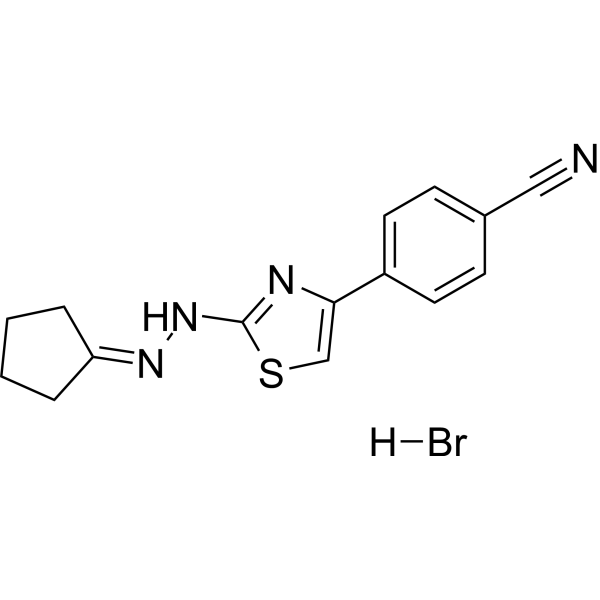
CPTH6 hydrobromide is a thiazole derivative which activates apoptotic program and increases autophagic features in human acute myeloid leukemia cell lines. CPTH6 can be used for cancer research .
|
-
- HY-12236B
-
-
- HY-101102
-
|
|
Dopamine Receptor
|
Neurological Disease
|
|
7-Hydroxy-DPAT hydrobromide is a selective D3 dopamine receptor agonist, exhibiting significant pharmacological activity in modulating locomotor behavior and dopamine metabolism within the brain.
|
-
- HY-101755
-
-
- HY-59343
-
|
|
Biochemical Assay Reagents
|
Others
|
|
2-Amino-5-bromothiazole hydrobromide is a biochemical reagent that can be used as a biological material or organic compound for life science related research.
|
-
- HY-139201A
-
|
PDLHB (MW 70000-150000)
|
Biochemical Assay Reagents
CaSR
|
Neurological Disease
Cancer
|
|
Poly-D-lysine hydrobromide (MW 70000-150000) is a synthetic polymeric substrate and is one of the most widely used substrate in neural cell culture. Poly-D-lysine hydrobromide is a CaSR agonist peptide .
|
-
- HY-139201
-
|
PDLHB (MW 30000-70000)
|
CaSR
|
Neurological Disease
Metabolic Disease
Cancer
|
|
Poly-D-lysine hydrobromide (MW 30000-70000) is a synthetic polymeric substrate and is one of the most widely used substrate in neural cell culture. Poly-D-lysine hydrobromide is a CaSR agonist peptide .
|
-
- HY-134694
-
|
|
PROTAC Linkers
|
Cancer
|
|
Bromo-PEG2-NH2 hydrobromide is a PEG-based PROTAC linker that can be used in the synthesis of PROTACs .
|
-
- HY-134736
-
|
|
PROTAC Linkers
|
Cancer
|
|
Bromo-PEG1-NH2 hydrobromide is a PEG-based PROTAC linker that can be used in the synthesis of PROTACs .
|
-
- HY-W109594
-
|
|
PROTAC Linkers
|
Cancer
|
|
4-Bromo-N-methylbutan-1-amine hydrobromide is a PROTAC linker that can be used in the synthesis of PROTACs.
|
-
- HY-15414A
-
|
Lu AA21004 hydrobromide
|
5-HT Receptor
Serotonin Transporter
|
Neurological Disease
Cancer
|
|
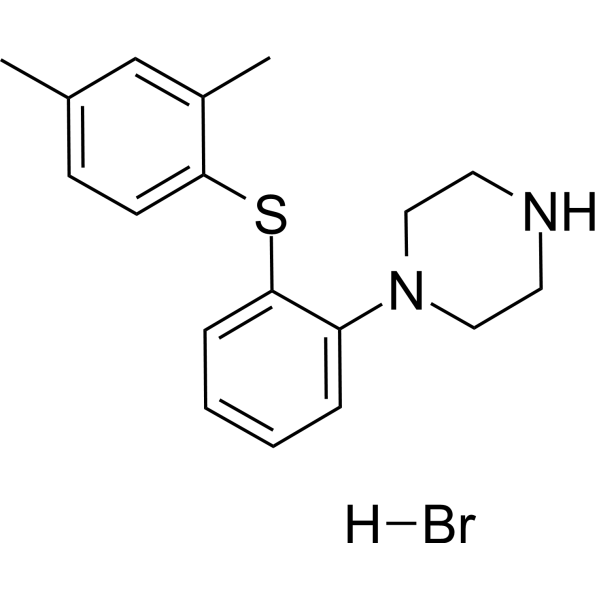
Vortioxetine (Lu AA 21004) hydrobromide is an antagonist of 5-HT3A and 5-HT7 receptors (Ki: 3.7 nM, 19 nM) and an inhibitor of 5-hydroxytryptamine transporter (SERT) (Ki: 1.6 nM), as well as a 5-HT1A agonist and a partial 5-HT1B agonist (Ki: 15 nM, 33 nM) .
|
-
- HY-139201D
-
|
PDLHB (MW 4000-15000)
|
CaSR
|
Others
|
|
Poly-D-lysine hydrobromide (MW 4000-15000) (PDLHB (MW 4000-15000)) is an artificially synthesized polymer matrix widely used in neuronal cell culture. Poly-D-lysine hydrobromide is also known as a calcium-sensing receptor (CaSR) agonist peptide .
|
-
- HY-B0539S4
-
-
- HY-139201C
-
|
PDLHB (MW 1000-5000)
|
CaSR
|
Others
|
|
Poly-D-lysine hydrobromide (MW 1000-5000) (PDLHB (MW 1000-5000)) is a synthetic cationic polypeptide polymer commonly used as a cell adhesion promoter and surface coating molecule. Poly-D-lysine hydrobromide is also known as a calcium-sensing receptor (CaSR) agonist peptide .
|
-
- HY-139201E
-
|
PDLHB (MW 150000-300000)
|
CaSR
5-HT Receptor
|
Metabolic Disease
|
|
Poly-D-lysine hydrobromide (MW 150000-300000) is a synthetic polymer composed of D-lysine residues and is one of the most widely used matrices in neural cell culture applications. Poly-D-lysine hydrobromide (MW 150000-300000) can be used as a non-specific cell adhesion enhancer. Poly-D-lysine hydrobromide (MW 30000-70000) is an orally active CaSR agonist peptide that indirectly activates the 5-HT₃ receptor signaling pathway, delaying gastric emptying and thereby slowing the rate at which glucose enters the small intestine and is absorbed .
|
-
- HY-101377A
-
|
(R)-8-Hydroxy-2-dipropylaminotetralin hydrobromide
|
5-HT Receptor
|
Neurological Disease
|
|
R(+)-8-OH-DPAT ((R)-8-Hydroxy-2-dipropylaminotetralin) hydrobromide is a potent 5-HT1A agonist. R(+)-8-OH-DPAT potentiates SUL (HY-B1059)-induced dopamine (DA) release in the medial prefrontal cortex (mPFC) .
|
-
- HY-101304
-
|
S-isopropyl ITU; IPTU
|
NO Synthase
|
Cardiovascular Disease
Neurological Disease
|
|
S-Isopropylisothiourea hydrobromide (S-isopropyl ITU; IPTU) is a blood-brain barrier (BBB) penetrant NOS inhibitor with IC50 values of 0.66, 0.75 and 0.29 μM against mouse spinal cord, cerebellar, bovine aortic and porcine endothelial cell NOS. S-Isopropylisothiourea exhibits a significant blood pressure-raising effect without damaging the perfusion of vital organs and can also inhibit the late-phase pain response induced by formalin. S-Isopropylisothiourea hydrobromide is used in the researchs for hemorrhagic shock and pain response based on NOS .
|
-
- HY-B0640S
-
-
- HY-15414AS
-
|
Lu AA21004-d8 hydrobromide
|
Isotope-Labeled Compounds
5-HT Receptor
Serotonin Transporter
|
Neurological Disease
|
|
Vortioxetine-d8 (Lu AA 21004-d8) hydrobromide is the deuterated form of Vortioxetine. Vortioxetine (Lu AA 21004) is an antagonist of 5-HT3A and 5-HT7 receptors (Ki: 3.7 nM, 19 nM) and an inhibitor of 5-hydroxytryptamine transporter (SERT) (Ki: 1.6 nM), as well as a 5-HT1A agonist and a partial 5-HT1B agonist (Ki: 15 nM, 33 nM) .
|
-
- HY-D1156A
-
|
|
Reactive Oxygen Species (ROS)
Fluorescent Dye
|
Others
|
HKSOX-1m (5/6-mixture) hydrobromide is a O2 fluorescent probe for mitochondria-targeting (Ex/Em=509/534nm; green), exhibiting excellent selectivity and sensitivity toward O2 over a broad range of pH, strong oxidants, and abundant reductants found in cells .
|
-
- HY-W124384
-
|
|
MOFs
|
Others
|
|
6-(2,3,3-Trimethyl-3H-indol-1-ium-1-yl)hexanoate hydrobromide is a metal-organic framework (MOF).
|
-
- HY-103430
-
|
|
Dopamine Receptor
5-HT Receptor
Adenylate Cyclase
|
Neurological Disease
|
|
SKF-83566 hydrobromide is a potent, blood-brain permeable and orally active D1-like dopamine receptor (D1DR) antagonist and a weaker competitive antagonist at the vascular 5-HT2 receptor (Ki=11 nM) . SKF-83566 is a competitive DAT (dopamine transporter) inhibitor with an IC50 of 5.7 μM . SKF-83566 also shows selective inhibition for adenylyl cyclase 2 (AC2) over AC1 and AC5 in the isolated rabbit thoracic aorta . SKF-83566 can be used for the research of parkinson’s disease and nicotine craving alleviation .
|
-
- HY-W416131
-
|
|
Biochemical Assay Reagents
|
Others
|
|
2-(2,3,4,6-Tetra-O-acetyl-β-D-galactopyranosyl)thiopseudourea (hydrobromide) is a class of biochemical reagents used in glycobiology research. Glycobiology studies the structure, synthesis, biology, and evolution of sugars. It involves carbohydrate chemistry, enzymology of glycan formation and degradation, protein-glycan recognition, and the role of glycans in biological systems. This field is closely related to basic research, biomedicine, and biotechnology .
|
-
- HY-126437K
-
|
PLL solution 0.01%, sterile-filtered, hydrobromide, MW 70000-150000, for cell culture
|
Biochemical Assay Reagents
|
Others
|
|
Poly-L-lysine solution (0.01%, sterile-filtered, MW 70000-150000) (PLL solution (0.01%, sterile-filtered, hydrobromide, MW 70000-150000, for cell culture)) is a polycationic electrolyte polymer solution polymerized from L-lysine monomers and can be used for cell culture .
|
-
- HY-W011235R
-
|
|
Reference Standards
5-HT Receptor
Calcium Channel
Drug Metabolite
|
Cardiovascular Disease
Neurological Disease
|
|
Arecoline (hydrobromide) (Standard) is the analytical standard of Arecoline (hydrobromide). This product is intended for research and analytical applications. Arecoline hydrobromide, a naturally occurring psychoactive alkaloid, is a partial agonist of nicotinic and muscarinic acetylcholine receptor. Arecoline hydrobromide exhibits stimulation, alertness, anxiolysis and anti-parasitic effects. Arecoline hydrobromide also can induce oxidative stress .
|
-
- HY-N1584A
-
|
RU-19110 hydrobromide
|
DNA/RNA Synthesis
TGF-beta/Smad
Parasite
Sodium Channel
Calcium Channel
|
Infection
Cardiovascular Disease
Inflammation/Immunology
Cancer
|
|
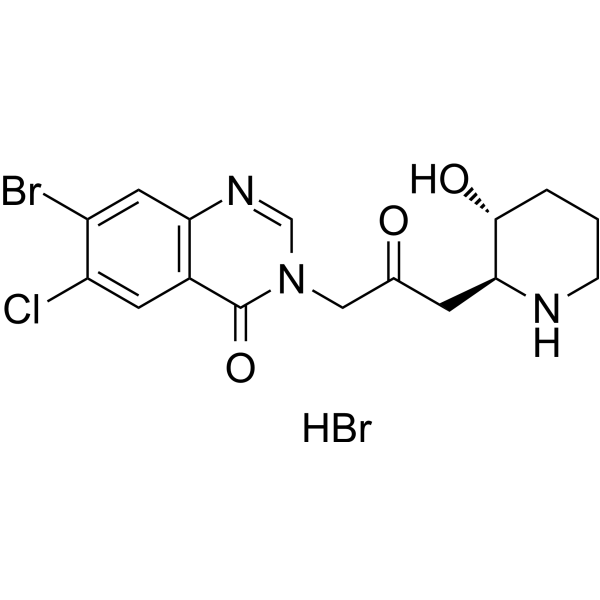
Halofuginone (RU-19110) hydrobromid, a Febrifugine derivative, is a competitive prolyl-tRNA synthetase inhibitor with a Ki of 18.3 nM . Halofuginone hydrobromid is a specific inhibitor of type-I collagen synthesis and attenuates osteoarthritis (OA) by inhibition of TGF-β activity . Halofuginone hydrobromid is also a potent pulmonary vasodilator by activating Kv channels and blocking voltage-gated, receptor-operated and store-operated Ca 2+ channels. Halofuginone hydrobromid has anti-malaria, anti-inflammatory, anti-cancer, anti-fibrosis effects .
|
-
- HY-118700AR
-
|
Guanidinobiotin hydrobromide (Standard)
|
Reference Standards
NO Synthase
|
Neurological Disease
|
|
H-Gly-Gly-Gly-OH (Standard) is the analytical standard of H-Gly-Gly-Gly-OH. This product is intended for research and analytical applications. H-Gly-Gly-Gly-OH, also known as Triglycine, is a tripeptide composed of glycine, glycine and glycine, which are linked by peptide bonds. Often used as a model compound in the study of protein structure and function. Glycylglycylglycine also acts as a neurotransmitter in the central nervous system and has been shown to have antioxidant properties. Furthermore, it may have potential research roles in various diseases such as cancer, diabetes and neurodegenerative diseases.
|
-
- HY-109097A
-
|
SP-8203 hydrochloride
|
MMP
iGluR
|
Cardiovascular Disease
Neurological Disease
|
|
Otaplimastat (SP-8203) hydrobromide, a matrix metalloproteinase (MMP) inhibitor, blocks N-methyl-D-aspartate (NMDA) receptor-mediated excitotoxicity in a competitive manner. Otaplimastat hydrobromide also exhibits anti-oxidant activity. Otaplimastat hydrobromide can be used for the research of brain ischemic injury .
|
-
- HY-121866
-
|
|
Topoisomerase
|
Cancer
|
|
Hippeastrine hydrobromide is an active alkaloid that exhibits a good dose-dependent inhibitory effect on topoisomerase I (Top I) with an IC50 of 7.25 μg/mL. Hippeastrine hydrobromide exhibits antiproliferative and anticancer activities.
|
-
- HY-130893B
-
-
- HY-108441
-
|
|
Wnt
β-catenin
|
Cancer
|
|
CCT 031374 hydrobromid is a potent inhibitor of β-catenin/transcription factor (TCF) complex signaling. CCT031374 inhibits TCF-dependent transcription of genes of Wnt signaling pathway. CCT 031374 has antitumor activity .
|
-
- HY-125043
-
-
- HY-132219
-
|
|
mGluR
|
Cancer
|
|
N. N-dipropyrldopamine is a potent inhibitor of glutamate release and has anticancer activity. The increase of glutamate secretion leads to cancer-induced bone pain (CIBP). N. N-dipropyrldopamine plays an analgesic role in CIBP .
|
-
- HY-A0039S
-
-
- HY-W710540
-
-
- HY-14806
-
|
MP-513
|
Dipeptidyl Peptidase
|
Cardiovascular Disease
Neurological Disease
Metabolic Disease
|
|
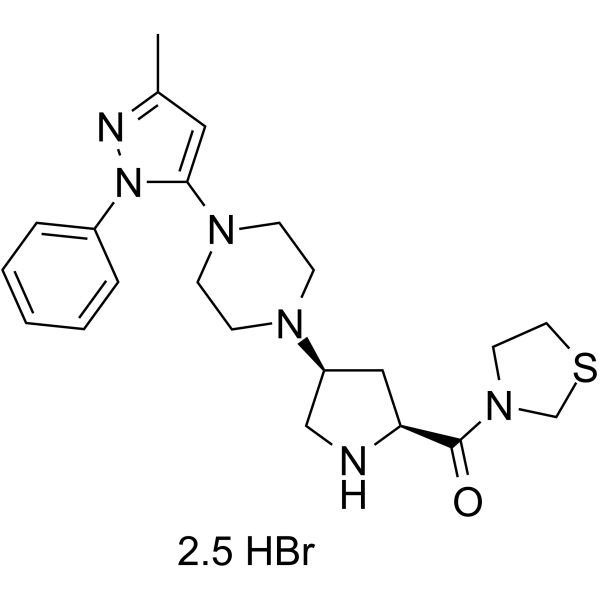
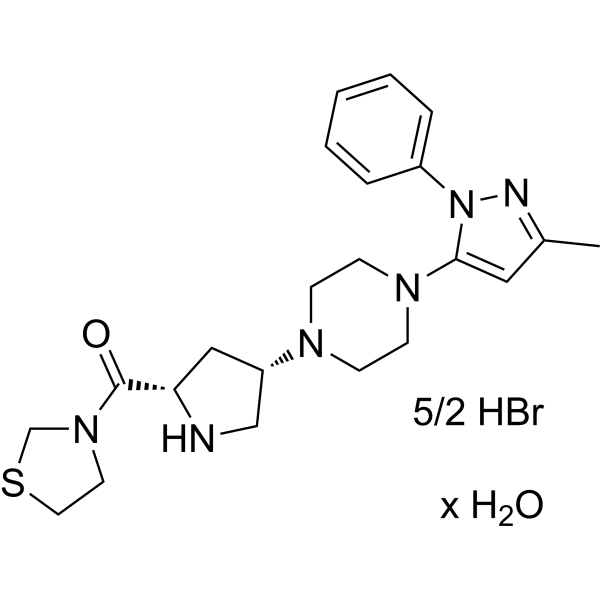
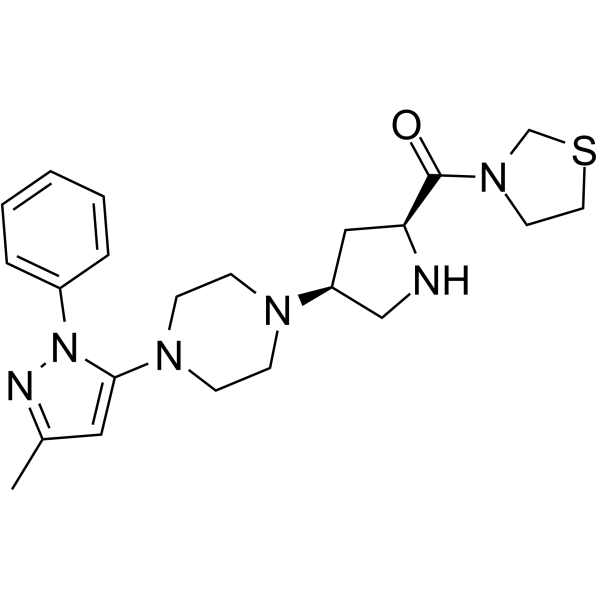
Teneligliptin (MP-513) hydrobromide hydrate is an orally active and selective dipeptidyl peptidase 4 (DPP-4) inhibitor (IC50s: 0.37 and 0.29 nM for the human and rat DPP-4, respectively). Teneligliptin hydrobromide hydrate improves blood glucose levels and can be used in researches related to type 2 diabetes mellitus .
|
-
- HY-W115674
-
|
|
P-glycoprotein
PARP
Caspase
Apoptosis
Potassium Channel
|
Cardiovascular Disease
Neurological Disease
Cancer
|
|
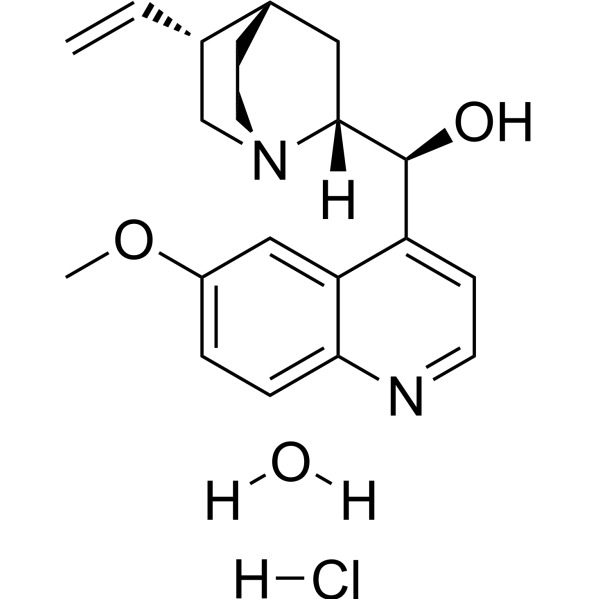
Quinidine hydrochloride is an orally active antiarrhythmic agent. Quinidine hydrochloride reduces the expression level of P-gp, inhibits P-gp-mediated efflux, increases the intracellular accumulation of P-gp substrates, induces PARP cleavage and Caspase-3 activation, and elevates the proportion of Apoptotic cells at the sub-G1 phase. Quinidine hydrochloride exerts sustained block and open-channel block effects on IK(f). Quinidine hydrochloride alters the urinary metabolic ratio of Amphetamine, modulates the Pentylenetetrazol-induced seizure threshold, and regulates the anticonvulsant effect of Dextromethorphan. Quinidine hydrochloride can be used in studies related to uterine sarcoma and seizures .
|
-
- HY-B1302
-
|
|
P-glycoprotein
PARP
Caspase
Apoptosis
Potassium Channel
|
Cardiovascular Disease
Neurological Disease
|
|
Quinidine hydrochloride monohydrate is an orally active antiarrhythmic agent. Quinidine hydrochloride monohydrate reduces the expression level of P-gp, inhibits P-gp-mediated efflux, increases the intracellular accumulation of P-gp substrates, induces PARP cleavage and Caspase-3 activation, and elevates the proportion of Apoptotic cells at the sub-G1 phase. Quinidine hydrochloride monohydrate exerts sustained block and open-channel block effects on IK(f). Quinidine hydrochloride monohydrate alters the urinary metabolic ratio of Amphetamine, modulates the Pentylenetetrazol-induced seizure threshold, and regulates the anticonvulsant effect of Dextromethorphan. Quinidine hydrochloride monohydrate can be used in studies related to uterine sarcoma and seizures .
|
-
- HY-100815E
-
|
(±)-AMPA hydrochloride
|
iGluR
|
Neurological Disease
|
|
(RS)-AMPA ((±)-AMPA) hydrochloride is a glutamate analogue and a potent and selective excitatory neurotransmitter L-glutamic acid agonist. (RS)-AMPA hydrobromide does not interfere with binding sites for kainic acid or NMDA receptors .
|
-
- HY-14806S2
-
-
- HY-W394935
-
|
Disulfide,bis(2,4-dimethylphenyl)
|
Biochemical Assay Reagents
|
Others
|
|
Dixylyl disulphide (Disulfide, bis(2,4-dimethylphenyl)) is a 1,2-bis(2,4-dimethylphenyl) thioether that can serve as an impurity reference standard for hydrobromide vortioxetine, used for monitoring impurities in the synthesis process. Hydrobromide vortioxetine is a 5-HT3, 5-HT7, and 5-HT1D receptor antagonist and a 5-HT1A receptor agonist, exhibiting antidepressant activity .
|
-
- HY-N2129
-
|
|
Cytochrome P450
Cholinesterase (ChE)
|
Cardiovascular Disease
Metabolic Disease
|
|
N-Nornuciferine is an orally active, blood-brain barrier-permeable CYP2D6 inhibitor, with an IC50 of 3.76 μM and a Ki of 2.34 μM against human CYP2D6. N-Nornuciferine also acts as a BChE inhibitor, showing an IC50 of 5.6 μM in mice . N-Nornuciferine can be used in the research of neurological-related diseases .
|
-
- HY-N2129A
-
|
|
Cytochrome P450
Cholinesterase (ChE)
|
Neurological Disease
|
|
N-Nornuciferine hydrochloride is an orally active, blood-brain barrier-permeable CYP2D6 inhibitor, with an IC50 of 3.76 μM and a Ki of 2.34 μM against human CYP2D6. N-Nornuciferine hydrochloride also acts as a BChE inhibitor, showing an IC50 of 5.6 μM in mice . N-Nornuciferine hydrochloride can be used in the research of neurological-related diseases .
|
-
- HY-126437J
-
|
PLL solution 0.01%, sterile-filtered, hydrobromide, MW 150000-300000, for cell culture
|
Biochemical Assay Reagents
|
Others
|
|
Poly-L-lysine solution (0.01%, sterile-filtered, MW 150000-300000), a positively charged amino acid polymer, is a nonspecific attachment factor for cells. Poly-L-lysine solution (0.01%, sterile-filtered, MW 150000-300000) has good biocompatibility. Poly-L-lysine solution (0.01%, sterile-filtered, MW 150000-300000) is used to increase cell adhesion to solid substrates by enhancing electrostatic interaction between negatively charged ions of the cell membrane and the culture surface .
|
-
- HY-136963AR
-
|
Benzonitrile, 4-[4-(dimethylamino)-1-(4-fluorophenyl)-1-hydroxybutyl]-3-(hydroxymethyl)-, monohydrobromide (Standard)
|
Reference Standards
|
|
|
|
-
| Cat. No. |
Product Name |
Type |
-
- HY-137834
-
|
|
Fluorescent Dyes
|
|
Gly-Pro-AMC hydrobromide is a fluorescent dye, it can be used as a specific fluorescent substrate for detecting Dipeptidyl peptidase IV (DPP-IV) activity .
|
-
- HY-D1156A
-
|
|
Fluorescent Dyes
|
HKSOX-1m (5/6-mixture) hydrobromide is a O2 fluorescent probe for mitochondria-targeting (Ex/Em=509/534nm; green), exhibiting excellent selectivity and sensitivity toward O2 over a broad range of pH, strong oxidants, and abundant reductants found in cells .
|
-
- HY-130893B
-
| Cat. No. |
Product Name |
Type |
-
- HY-126437
-
|
|
Biochemical Assay Reagents
|
|
Poly-L-lysine hydrobromide (MW 30000-70000) is a water-soluble synthetic polypeptide. Poly-L-lysine hydrobromide (MW 30000-70000) downregulates Bcl-2 and upregulates Bax and p53 proteins. Poly-L-lysine hydrobromide (MW 30000-70000) promotes Apoptosis and reduces VEGF expression. Poly-L-lysine hydrobromide (MW 30000-70000) shows anticancer activity against a variety of tumors. Poly-L-lysine hydrobromide (MW 30000-70000) can also be used as a coating material .
|
-
- HY-126436A
-
|
L-Ornithine homopolymer hydrobromide (MW 30000-70000)
|
Biochemical Assay Reagents
|
|
Poly-L-ornithine hydrobromide (MW 30000-70000) is a poly-lysine derivative with a molecular weight of 30000-70000. Poly-L-ornithine hydrobromide (MW 30000-70000) binds to the surface of cell culture vessels through positively charged amino acid residues to form a coating that promotes cell adhesion and provides cells with a matrix environment required for growth. Poly-L-ornithine hydrobromide (MW 30000-70000) is used as a coating agent in cell culture and can be used for the study of primary culture of neurons (such as dopaminergic neurons and oligodendrocytes) .
|
-
- HY-126437H
-
|
|
Biochemical Assay Reagents
|
|
Poly-L-lysine hydrobromide (MW 4000-15000) is a positively charged amino acid polymer that acts as a non-specific attachment factor for cells. Poly-L-lysine hydrobromide (MW 4000-15000) enhances the electrostatic interaction between the negative ions of the cell membrane and the surface of the culture medium, thereby promoting the adhesion of cells to solid substrates. Poly-L-lysine hydrobromide (MW 4000-15000) can be used for gene delivery .
|
-
- HY-126437E
-
|
|
Biochemical Assay Reagents
|
|
Poly-L-lysine hydrobromide (with a molecular weight of 15,000 - 30,000) is an amino acid polymer with positive charge, and it serves as a non-specific attachment factor for cells. Poly-L-lysine hydrobromide (with a molecular weight of 15,000 - 30,000) can be used for gene delivery and the construction of nano-delivery systems .
|
-
- HY-126437J
-
|
PLL solution 0.01%, sterile-filtered, hydrobromide, MW 150000-300000, for cell culture
|
Biochemical Assay Reagents
|
|
Poly-L-lysine solution (0.01%, sterile-filtered, MW 150000-300000), a positively charged amino acid polymer, is a nonspecific attachment factor for cells. Poly-L-lysine solution (0.01%, sterile-filtered, MW 150000-300000) has good biocompatibility. Poly-L-lysine solution (0.01%, sterile-filtered, MW 150000-300000) is used to increase cell adhesion to solid substrates by enhancing electrostatic interaction between negatively charged ions of the cell membrane and the culture surface .
|
-
- HY-126437K
-
|
PLL solution 0.01%, sterile-filtered, hydrobromide, MW 70000-150000, for cell culture
|
Biochemical Assay Reagents
|
|
Poly-L-lysine solution (0.01%, sterile-filtered, MW 70000-150000) (PLL solution (0.01%, sterile-filtered, hydrobromide, MW 70000-150000, for cell culture)) is a polycationic electrolyte polymer solution polymerized from L-lysine monomers and can be used for cell culture .
|
-
- HY-126437I
-
|
|
Biochemical Assay Reagents
|
|
Poly-L-lysine hydrobromide (MW 1000-5000) is a homopolymer of L-lysine and a polycationic non-viral gene delivery vector. Poly-L-lysine hydrobromide (MW 1000-5000) forms complexes with plasmid DNA. Poly-L-lysine hydrobromide (MW 1000-5000) is applicable to relevant research on lung cancer .
|
-
- HY-139201D
-
|
PDLHB (MW 4000-15000)
|
Biochemical Assay Reagents
|
|
Poly-D-lysine hydrobromide (MW 4000-15000) (PDLHB (MW 4000-15000)) is an artificially synthesized polymer matrix widely used in neuronal cell culture. Poly-D-lysine hydrobromide is also known as a calcium-sensing receptor (CaSR) agonist peptide .
|
-
- HY-126436C
-
|
L-Ornithine homopolymer hydrobromide (MW 5000-15000)
|
Biochemical Assay Reagents
|
|
Poly-L-ornithine (hydrobromide) (MW 5000-15000) (L-Ornithine homopolymer (hydrobromide) (MW 5000-15000)) is a biochemical reagent that can be used as a biological material or organic compound for life science related research .
|
-
- HY-139201H
-
|
PDLHB (MW ≥300000)
|
Biochemical Assay Reagents
|
|
Poly-D-lysine hydrobromide (MW ≥300000) (PDLHB (MW ≥300000)) is a cationic polymer and cell adhesion promoter. Poly-D-lysine hydrobromide (MW ≥300000) serves as a substrate coating to support the adhesion and proliferation of rat dorsal root ganglion satellite glial cells in vitro. Poly-D-lysine hydrobromide (MW ≥300000) promotes the adhesion and immobilization of cells on plastic culture dishes. Poly-D-lysine hydrobromide is also known as a calcium-sensing receptor (CaSR) agonist peptide .
|
-
- HY-121650A
-
|
|
Biochemical Assay Reagents
|
|
ADTN hydrobromide is a long-acting dopamine agonist. ADTN hydrobromide significantly decreases the behavioral visual threshold of DA-IPC-depleted zebrafish .
|
-
- HY-139201C
-
|
PDLHB (MW 1000-5000)
|
Biochemical Assay Reagents
|
|
Poly-D-lysine hydrobromide (MW 1000-5000) (PDLHB (MW 1000-5000)) is a synthetic cationic polypeptide polymer commonly used as a cell adhesion promoter and surface coating molecule. Poly-D-lysine hydrobromide is also known as a calcium-sensing receptor (CaSR) agonist peptide .
|
-
- HY-139201E
-
|
PDLHB (MW 150000-300000)
|
Biochemical Assay Reagents
|
|
Poly-D-lysine hydrobromide (MW 150000-300000) is a synthetic polymer composed of D-lysine residues and is one of the most widely used matrices in neural cell culture applications. Poly-D-lysine hydrobromide (MW 150000-300000) can be used as a non-specific cell adhesion enhancer. Poly-D-lysine hydrobromide (MW 30000-70000) is an orally active CaSR agonist peptide that indirectly activates the 5-HT₃ receptor signaling pathway, delaying gastric emptying and thereby slowing the rate at which glucose enters the small intestine and is absorbed .
|
-
- HY-W004131
-
|
|
Biochemical Assay Reagents
|
|
3-(Bromomethyl)pyridine hydrobromide is a biochemical reagent that can be used as a biological material or organic compound for life science related research.
|
-
- HY-59343
-
|
|
Biochemical Assay Reagents
|
|
2-Amino-5-bromothiazole hydrobromide is a biochemical reagent that can be used as a biological material or organic compound for life science related research.
|
-
- HY-101252
-
|
S-Ethylisothiourea hydrobromide
|
Biochemical Assay Reagents
|
|
S-EIT (hydrobromide) is a biochemical reagent that can be used as a biological material or organic compound for life science related research.
|
-
- HY-126436B
-
|
L-Ornithine homopolymer hydrobromide (MW>100000)
|
Biochemical Assay Reagents
|
|
Poly-L-ornithine (hydrobromide) (MW>100000) (L-Ornithine homopolymer (hydrobromide) (MW>100000)) is a biochemical reagent that can be used as a biological material or organic compound for life science related research .
|
-
- HY-137859
-
-
- HY-W416131
-
|
|
Biochemical Assay Reagents
|
|
2-(2,3,4,6-Tetra-O-acetyl-β-D-galactopyranosyl)thiopseudourea (hydrobromide) is a class of biochemical reagents used in glycobiology research. Glycobiology studies the structure, synthesis, biology, and evolution of sugars. It involves carbohydrate chemistry, enzymology of glycan formation and degradation, protein-glycan recognition, and the role of glycans in biological systems. This field is closely related to basic research, biomedicine, and biotechnology .
|
| Cat. No. |
Product Name |
Target |
Research Area |
-
- HY-126437B
-
|
|
Biochemical Assay Reagents
|
Others
|
|
Poly-L-lysine (hydrobromide) (MW 70000-150000), a positively charged amino acid polymer, is a nonspecific attachment factor for cells. Poly-L-lysine (hydrobromide) (MW 70000-150000) has good biocompatibility. Poly-L-lysine (hydrobromide) (MW 70000-150000) is used to increase cell adhesion to solid substrates by enhancing electrostatic interaction between negatively charged ions of the cell membrane and the culture surface .
|
-
- HY-126437D
-
|
|
Biochemical Assay Reagents
|
Others
|
|
Poly-L-lysine hydrobromide (MW 150000-300000), a positively charged amino acid polymer, is a nonspecific attachment factor for cells. Poly-L-lysine hydrobromide (MW 150000-300000) has good biocompatibility. Poly-L-lysine hydrobromide (MW 150000-300000) is used to increase cell adhesion to solid substrates by enhancing electrostatic interaction between negatively charged ions of the cell membrane and the culture surface .
|
-
- HY-W021299
-
| Cat. No. |
Product Name |
Category |
Target |
Chemical Structure |
-
- HY-129905A
-
-
-
- HY-W010892
-
|
Hyoscine hydrobromide trihydrate
|
Alkaloids
Other Alkaloids
Datura metel L.
Solanaceae
Plants
Source Classification
|
mAChR
5-HT Receptor
|
|
Scopolamine (Hyoscine) hydrobromide trihydrate is a high-affinity muscarinic antagonist that can cross the blood-brain barrier. Scopolamine hydrobromide trihydrate competitively antagonizes 5-HT3 receptors with an IC50 of 2.09 μM. Scopolamine hydrobromide trihydrate can induce cognitive and memory deficits in animals. Scopolamine hydrobromide trihydrate can be used in the research of preventing postoperative nausea and vomiting, motion sickness, nervous system diseases, etc .
|
-
-
- HY-B0489
-
-
-
- HY-107670
-
-
-
- HY-N1584A
-
-
-
- HY-B1302
-
-
-
- HY-A0009
-
|
Galantamine hydrobromide
|
Alkaloids
Other Alkaloids
Plants
Amaryllidaceae
|
Cholinesterase (ChE)
nAChR
|
|
Galanthamine hydrobromide (Galantamine hydrobromide) is a selective, reversible, competitive, alkaloid AChE inhibitor, with an IC50 of 0.35 µM. Galanthamine hydrobromide is a potent allosteric potentiating ligand (APL) of human α3β4, α4β2, α6β4 nicotinic receptors ( nAChRs). Galanthamine hydrobromide is developed for the research of Alzheimer's disease (AD) .
|
-
-
- HY-122273
-
|
|
Microorganisms
Source Classification
|
Drug Derivative
|
|
Pyrithiamine hydrobromide is a thiamine metabolic inhibitor that can act as a substrate for thiamine pyrophosphokinase. Pyrithiamine hydrobromide can be used in the research of nervous system diseases .
|
-
-
- HY-N0584A
-
-
-
- HY-N2129
-
-
-
- HY-128975
-
-
-
- HY-N2037C
-
-
-
- HY-N1584AR
-
-
-
- HY-A0009R
-
|
Galantamine hydrobromide (Standard)
|
Structural Classification
Alkaloids
Other Alkaloids
Plants
Amaryllidaceae
Source Classification
|
nAChR
Cholinesterase (ChE)
Reference Standards
|
|
Galanthamine (hydrobromide) (Standard) is the analytical standard of Galanthamine (hydrobromide). This product is intended for research and analytical applications. Galanthamine hydrobromide (Galantamine hydrobromide) is a selective, reversible, competitive, alkaloid AChE inhibitor, with an IC50 of 0.35 µM. Galanthamine hydrobromide is a potent allosteric potentiating ligand (APL) of human α3β4, α4β2, α6β4 nicotinic receptors ( nAChRs). Galanthamine hydrobromide is developed for the research of Alzheimer's disease (AD) .
|
-
-
- HY-W010892R
-
|
Hyoscine hydrobromide trihydrate (Standard)
|
Alkaloids
Structural Classification
Other Alkaloids
Datura metel L.
Solanaceae
Plants
Source Classification
|
mAChR
Reference Standards
5-HT Receptor
|
|
Scopolamine hydrobromide trihydrate (Standard) is the analytical standard of Scopolamine hydrobromide trihydrate (HY-W010892). This product is intended for research and analytical applications. Scopolamine (Hyoscine) hydrobromide is a high-affinity muscarinic antagonist that can cross the blood-brain barrier. Scopolamine hydrobromide competitively antagonizes 5-HT3 receptors with an IC50 of 2.09 μM. Scopolamine hydrobromide can induce cognitive and memory deficits in animals. Scopolamine hydrobromide can be used in the research of preventing postoperative nausea and vomiting, motion sickness, nervous system diseases, etc .
|
-
-
- HY-B0489R
-
|
methyl 1,2,5,6-tetrahydro-1-methyl-3-pyridinecarboxylate hydrobromide (Standard)
|
Alkaloids
Structural Classification
Areca catechu L.
Other Alkaloids
Palmae
Plants
Source Classification
|
Reference Standards
mAChR
nAChR
|
|
Arecoline hydrobromide (Standard) is the analytical standard of Arecoline hydrobromide. This product is intended for research and analytical applications. Arecoline hydrobromide, a naturally brain-penetrant and orally active occurring psychoactive alkaloid, is a partial agonist of nicotinic and muscarinic acetylcholine receptor. Arecoline hydrobromide exhibits stimulation, alertness, anxiolysis and anti-parasitic effects. Arecoline hydrobromide also can induce oxidative stress .
|
-
-
- HY-101414A
-
-
-
- HY-N0584AR
-
-
-
- HY-N6619
-
-
-
- HY-128975R
-
-
-
- HY-N8580
-
-
-
- HY-N2129A
-
-
| Cat. No. |
Product Name |
Chemical Structure |
-
- HY-145119AS
-
|
|
|
Mindeudesivir (JT001; VV116; GS-621763-d1) hydrobromide is a deuterated version of Remdesivir (HY-104077), a highly orally active nucleoside antiviral against SARS-CoV-2 and respiratory syncytial virus (RSV). Mindeudesivir hydrobromide retains the antiviral activity of Remdesivir against COVID-19, and is the first domestically produced deuterium targeting the COVID-19 .
|
-
-
- HY-W105860S
-
|
|
|
Guanidine Hydrobromide- 15N3 is the 15N labeled Guanidine Hydrobromide[1].
|
-
-
- HY-121203S
-
|
|
|
Citalopram-d4 (hydrobromide) is the deuterium labeled Citalopram hydrobromide. Citalopram hydrobromide is a selective serotonin reuptake inhibitor (SSRI) .
|
-
-
- HY-W106724S
-
|
|
|
Diethylamine-d10 hydrobromide is the deuterium labeled Diethylamine hydrobromide .
|
-
-
- HY-W010892S
-
|
|
|
Scopolamine-d3 hydrobromide is the deuterium labeled Scopolamine hydrobromide (HY-B2065). Scopolamine (Hyoscine) hydrochloride is a high-affinity muscarinic antagonist that can cross the blood-brain barrier. Scopolamine hydrochloride competitively antagonizes 5-HT3 receptors with an IC50 of 2.09 μM. Scopolamine hydrochloride can induce cognitive and memory deficits in animals. Scopolamine hydrochloride can be used in the research of preventing postoperative nausea and vomiting, motion sickness, nervous system diseases, etc .
|
-
-
- HY-B0640S
-
|
|
|
Epinastine- 13C,d3 (hydrobromide) is the 13C- and deuterium labeled Epinastine. Epinastine (WAL801) is an antihistamine and mast cell stabilizer. Epinastine is a potent, selective and orally-active histamine H1 receptor antagonist. Epinastine also inhibits IL-8 release and has an antiallergic action .
|
-
-
- HY-15414AS
-
|
|
|
Vortioxetine-d8 (Lu AA 21004-d8) hydrobromide is the deuterated form of Vortioxetine. Vortioxetine (Lu AA 21004) is an antagonist of 5-HT3A and 5-HT7 receptors (Ki: 3.7 nM, 19 nM) and an inhibitor of 5-hydroxytryptamine transporter (SERT) (Ki: 1.6 nM), as well as a 5-HT1A agonist and a partial 5-HT1B agonist (Ki: 15 nM, 33 nM) .
|
-
-
- HY-A0009S
-
|
|
|
Galanthamine-d3 (hydrobromide) is deuterium labeled Galanthamine (hydrobromide). Galanthamine hydrobromide (Galantamine hydrobromide) is a selective, reversible, competitive, alkaloid AChE inhibitor, with an IC50 of 0.35 μM. Galanthamine hydrobromide is a potent allosteric potentiating ligand (APL) of human α3β4, α4β2, α6β4 nicotinic receptors ( nAChRs). Galanthamine hydrobromide is developed for the research of Alzheimer's disease (AD) .
|
-
-
- HY-124245S1
-
|
|
|
3-Hydroxy desloratadine-d4 (hydrobromide) is the deuterium labeled 3-Hydroxy desloratidine hydrobromide[1].
|
-
-
- HY-W740245
-
|
|
|
Arecaidine-d5 hydrobromide is the deuterium labeled Arecaidine hydrobromide (HY-N2368B). Arecaidine hydrobromide, a pyridine alkaloid, is a potent GABA uptake inhibitor. Arecaidine hydrobromide is a substrate of H+-coupled amino acid transporter 1 (PAT1, SLC36A1) and competitively inhibits L-proline uptake .
|
-
-
- HY-W706171
-
|
|
|
Desmethyl amisulpride-d5 hydrobromide is the deuterium labeled Desmethyl amisulpride hydrobromide.
|
-
-
- HY-B0976AS
-
|
|
|
Fenoterol-d6 (hydrobromide) (Th-1165a-d6) is the deuterium labeled Fenoterol hydrobromide. Fenoterol hydrobromide (Th-1165a), a sympathomimetic agent, is a selective and orally active β2-adrenoceptor agonist. Fenoterol hydrobromide is an effective bronchodilator and can be used for bronchospasm associated with asthma, bronchitis and other obstructive airway diseases research .
|
-
-
- HY-B1287S
-
|
|
|
Citalopram-d3 ((±)-Citalopram-d3) hydrobromide is deuterium labeled Citalopram (hydrobromide). Citalopram hydrobromide is a selective serotonin reuptake inhibitor (SSRI). Citalopram hydrobromide inhibits 5-HT uptake into synaptosomes with an IC50 of 1.8 nM. Citalopram hydrobromideinhibits the 5-HT uptake in rabbit blood platelets with an IC50 of 14 nM. Antidepressant effect .
|
-
-
- HY-142101S
-
|
|
|
5,6-Orthoquinone Primaquine-d6 (hydrobromide) is the deuterium labeled 5,6-Orthoquinone Primaquine hydrobromide .
|
-
-
- HY-W707812
-
|
|
|
Didemethyl citalopram-d6 hydrobromide is the deuterium labeled 1-(3-Aminopropyl)-1-(4-fluorophenyl)-1,3-dihydroisobenzofuran-5-carbonitrile hydrobromide (HY-W707778).
|
-
-
- HY-B0937S
-
|
|
|
Amprolium-d7 (bromide hydrobromide) is a deuterium-labeled of Amprolium (HY-B0937). Amprolium-d7 (bromide hydrobromide) is a coccidiostat used in poultry, is a thiamine analog, and blocks the thiamine transporter of Eimeria species .
|
-
-
- HY-22437S1
-
|
|
|
(±)-Darifenacin-d4 (hydrobromide) is deuterium labeled (±)-Darifenacin. (±)-Darifenacin is the racemate of Darifenacin. Darifenacin is a selective M3 muscarinic receptor antagonist[1].
|
-
-
- HY-B2168S
-
|
|
|
Mequitazine-d8 hydrobromide is deuterated labeled Mequitazine (HY-B2168). Mequitazine is a potent, and long-acting histamine H1 antagonist.
|
-
-
- HY-W243914S
-
|
|
|
tert-Butylamine-d9 Hydrobromide is the deuterium labeled tert-Butylamine Hydrobromide .
|
-
-
- HY-B0539S4
-
|
|
|
Desloratadine-d4 hydrobromide is deuterated labeled Desloratadine (HY-B0539). Desloratadine (Sch34117) is the orally active major metabolite of the nonsedating H1-antihistamine Loratadine. Desloratadine is a selective H1-receptor antagonist that has anti-allergic and anti-inflammatory activities .
|
-
-
- HY-A0039S
-
|
|
|
Eletriptan-d3 is the deuterium labeled Eletriptan hydrobromide. Eletriptan hydrobromide is a selective 5-HT1B and 5-HT1D receptor agonist with Ki of 0.92 nM and 3.14 nM, respectively .
|
-
-
- HY-W710540
-
|
|
|
Guanidine- 15N3 hydrochloride is the 15N-labeled Guanidine Hydrobromide (HY-W710540) .
|
-
-
- HY-14806S2
-
|
|
|
Teneligliptin-d5 (MP-513-d5) is deuterium labeled Teneligliptin. Teneligliptin (MP-513) hydrobromide hydrate is an orally active and selective dipeptidyl peptidase 4 (DPP-4) inhibitor (IC50s: 0.37 and 0.29 nM for the human and rat DPP-4, respectively). Teneligliptin hydrobromide hydrate improves blood glucose levels and can be used in researches related to type 2 diabetes mellitus .
|
-
-
- HY-W739837
-
|
|
|
Arecoline-d5 hydrobromide is the deuterium labeled Arecoline hydrobromide (HY-B0489). Arecoline hydrobromide, a naturally occurring psychoactive alkaloid, is a partial agonist of nicotinic and muscarinic acetylcholine receptor. Arecoline hydrobromide exhibits stimulation, alertness, anxiolysis and anti-parasitic effects. Arecoline hydrobromide also can induce oxidative stress .
|
-
| Cat. No. |
Product Name |
|
Classification |
-
- HY-134061
-
|
|
|
Alkynes
|
|
Arecaidine propargyl ester hydrobromide is an agonist of M2 muscarinic acetylcholine receptors and has the activity of inhibiting tumor cell proliferation. The application of arecaidine propargyl ester hydrobromide has shown that it can reduce the number of ovarian cancer cells in vitro and induce apoptosis and the production of reactive oxygen species (ROS) at specific concentrations. Arecaidine propargyl ester hydrobromide can also arrest cells at the G2/M phase of the cell cycle and increase the percentage of abnormal mitosis. Arecaidine propargyl ester hydrobromide is more sensitizing to ovarian surface epithelial cells with higher M2 receptor levels than to cancer cells. Arecaidine propargyl ester hydrobromide exhibits the effect of lowering arterial blood pressure when interacting with the cardiovascular system in a natural physiological state, indicating its potential pharmacological application .
|
| Cat. No. |
Product Name |
|
Classification |
-
- HY-126437
-
|
|
|
Polymers
|
|
Poly-L-lysine hydrobromide (MW 30000-70000) is a water-soluble synthetic polypeptide. Poly-L-lysine hydrobromide (MW 30000-70000) downregulates Bcl-2 and upregulates Bax and p53 proteins. Poly-L-lysine hydrobromide (MW 30000-70000) promotes Apoptosis and reduces VEGF expression. Poly-L-lysine hydrobromide (MW 30000-70000) shows anticancer activity against a variety of tumors. Poly-L-lysine hydrobromide (MW 30000-70000) can also be used as a coating material .
|
Your information is safe with us. * Required Fields.
Inquiry Information
- Product Name:
- Cat. No.:
- Quantity:
- MCE Japan Authorized Agent:

