



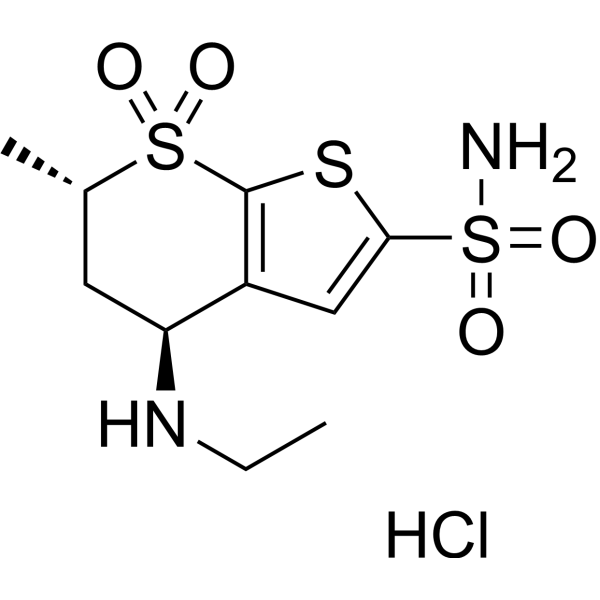
Dorzolamide hydrochloride
Based on 7 publication(s) in Google Scholar
Dorzolamide (L671152) hydrochloride is a potent carbonic anhydrase II inhibitor, with IC50 values of 0.18 nM and 600 nM for red blood cell CA-II and CA-I respectively. Dorzolamide possesses anti-tumor activity.
For research use only. We do not sell to patients.
- Purity : 99.86%
- CAS No.: 130693-82-2
- Formula: C10H17ClN2O4S3
- Molecular Weight:360.90
-
Storage:
4°C, sealed storage, away from moisture
* In solvent : -80°C, 6 months; -20°C, 1 month (sealed storage, away from moisture)

To place orders, for customer services and technical support, please contact: MedChemExpress USA
Tel: 609-228-6898 E-mail: [email protected] [email protected]


-
 Biological Activity
-
Chemical Information
-
Solvent & Solubility
- Purity & Documentation
- References
-
 Help & FAQs


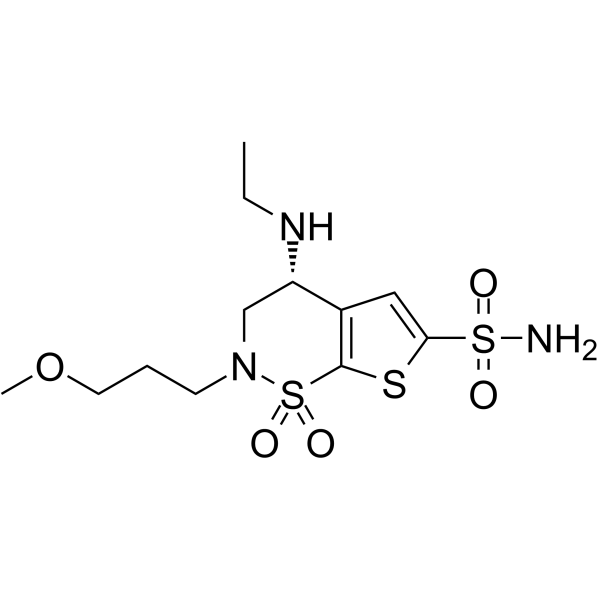
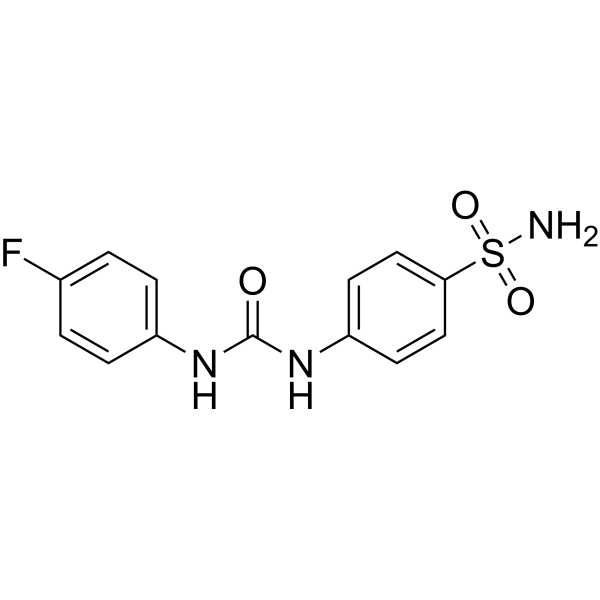
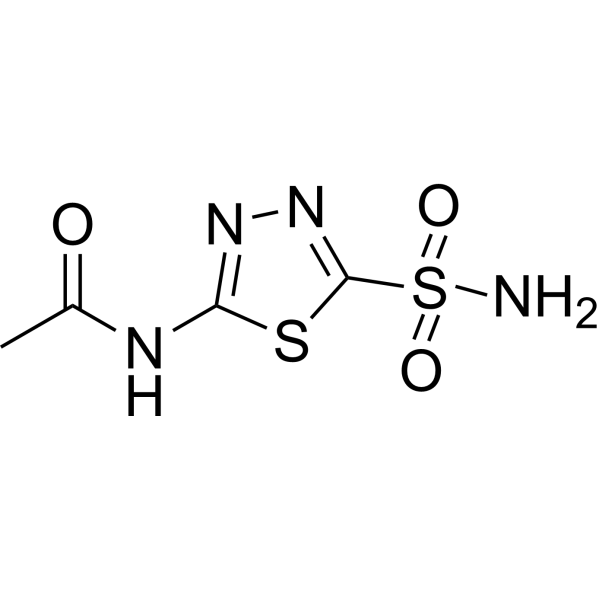
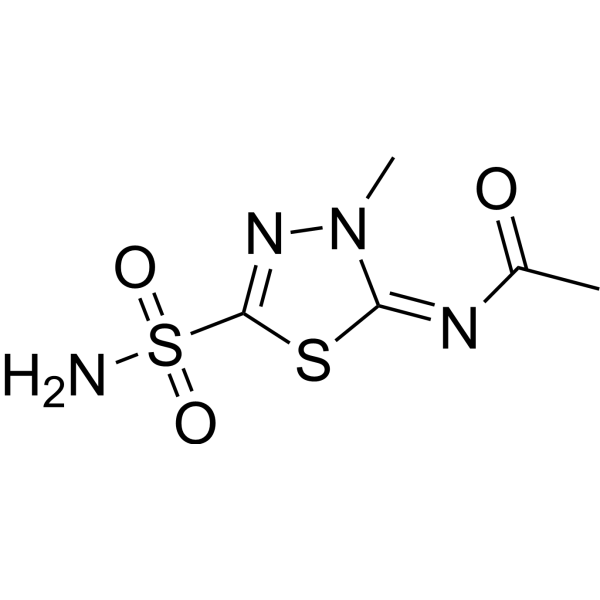
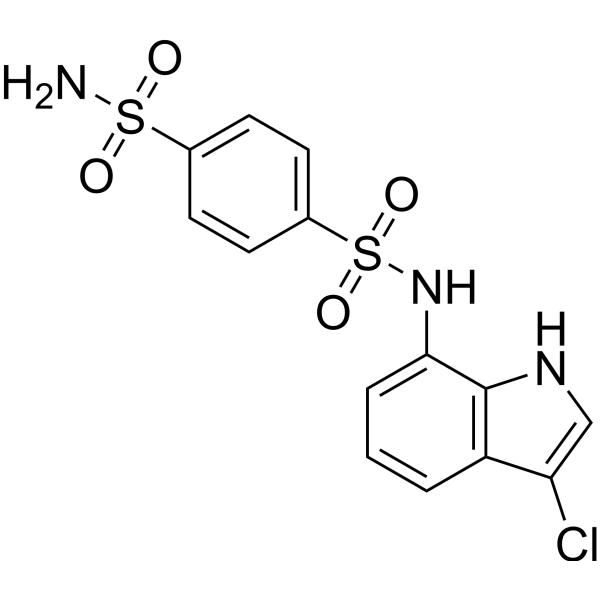
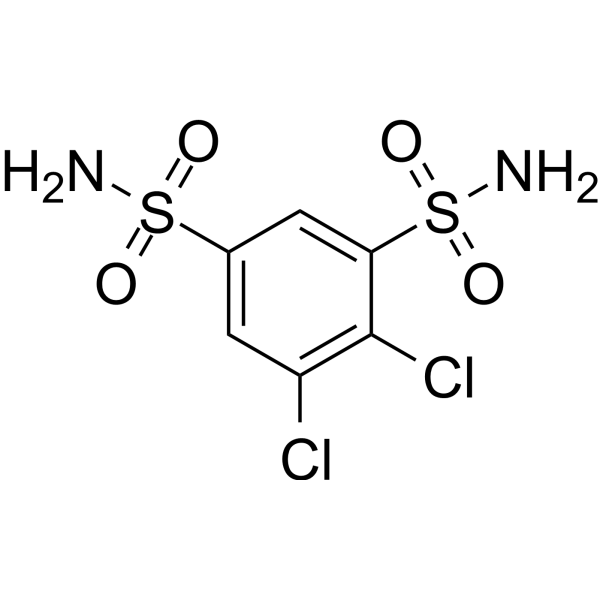
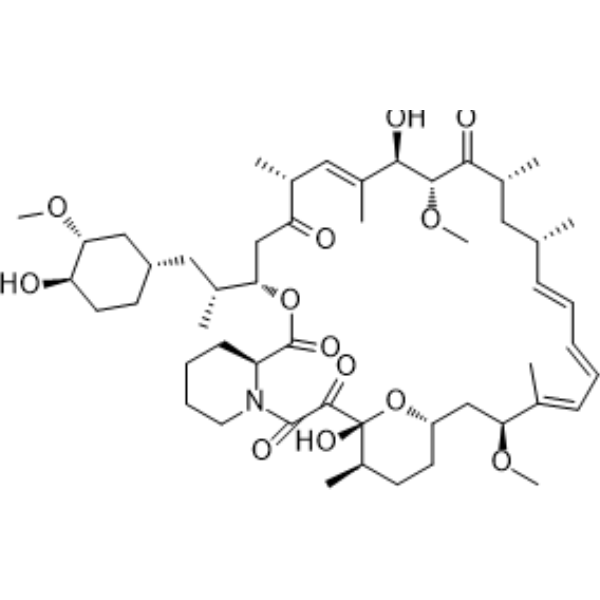
Publications Citing Use of MedChemExpress (MCE) Dorzolamide hydrochloride
More- ACS Environ Au. 2025 Aug 5;5(6):573-582. [Abstract]
- Cell Rep. 2024 Nov 27;43(12):114996. [Abstract]
- Anal Chem. 2025 Jun 3;97(21):11099-11109. [Abstract]
- Anal Chem. 2020 Dec 15;92(24):15745-15756. [Abstract]
- Sci Data. 2024 Sep 19;11(1):1024. [Abstract]
- J Pharm Biomed Anal. 2021 Feb 20:195:113870. [Abstract]
- ETH Zurich. 2020 Dec.


Biological Activity
Description
IC50 & Target
|
CA Ⅱ |
In Vitro
Component A, caused by an inward flux of CO2 and its subsequent hydration by CA-II, is blocked by Dorzolamide in a dose-dependent manner with an 50% inhibitory concentration IC50 of 2.4 μM (95% confidence interval: 0.5-10.85 μM)[2].
MedChemExpress (MCE) has not independently confirmed the accuracy of these methods. They are for reference only.
In Vivo
MedChemExpress (MCE) has not independently confirmed the accuracy of these methods. They are for reference only.
-
Animal Model:Female Swiss albino mice (EAC solid tumor)[3].
-
Dosage:3, 10, or 30 mg/kg/day (synergized mitomycin C).
-
Administration:IP, daily for 3 weeks.
-
Result:Upregulated TXNIP and p53 while downregulated bcl-2.
Effective in retarding the growth of EAC in mice.


Chemical Information
-
CAS No. 130693-82-2
-
Appearance Solid
-
Molecular Weight 360.90
-
Formula C10H17ClN2O4S3
-
Color White to off-white
-
SMILES
O=S(C(S1)=CC2=C1S([C@@H](C)C[C@@H]2NCC)(=O)=O)(N)=O.Cl
-
Synonyms
L671152 hydrochloride; MK507 hydrochloride
-
Shipping
Room temperature in continental US; may vary elsewhere.
-
Storage
4°C, sealed storage, away from moisture
* In solvent : -80°C, 6 months; -20°C, 1 month (sealed storage, away from moisture)


Publications (7)
-
Journal Impact Factor
-
Most Recent
-
ACS Environ Au
Machine Learning-Assisted Recognition of Environmental Sulfur-Containing Chemicals in Nontargeted Mass Spectrometry Analysis of Inadequate Mass Resolution. [Abstract]2025 Aug 5;5(6):573-582. PMID: 41277996 -
Cell Rep
Carbonic anhydrase 2 facilitates sorafenib resistance by counteracting MCT4-mediated intracellular pH dysregulation in HCC. [Abstract]2024 Nov 27;43(12):114996. PMID: 39607826 -
Anal Chem
Exposome-Scale Investigation of Cl-/Br-Containing Chemicals Using High-Resolution Mass Spectrometry, Multistage Machine Learning, and Cloud Computing. [Abstract]2025 Jun 3;97(21):11099-11109. PMID: 40401576 -
Anal Chem
Comparability of Raman Spectroscopic Configurations: A Large Scale Cross-Laboratory Study. [Abstract]2020 Dec 15;92(24):15745-15756. PMID: 33225709 -
Sci Data
High-throughput drug screening identifies novel therapeutics for Low Grade Serous Ovarian Carcinoma. [Abstract]2024 Sep 19;11(1):1024. PMID: 39300112 -
J Pharm Biomed Anal
Screening method of mildronate and over 300 doping agents by reversed-phase liquid chromatography-high resolution mass spectrometry. [Abstract]2021 Feb 20:195:113870. PMID: 33453569 -


Solvent & Solubility
In Vitro:
DMSO : 100 mg/mL (277.09 mM; Need ultrasonic; Hygroscopic DMSO has a significant impact on the solubility of product, please use newly opened DMSO)
H2O : 12.5 mg/mL (34.64 mM; Need ultrasonic)
Please refer to the solubility information to select the appropriate solvent. Once prepared, please aliquot and store the solution to prevent product inactivation from repeated freeze-thaw cycles.
Storage method and period of stock solution: -80°C, 6 months; -20°C, 1 month (sealed storage, away from moisture). When stored at -80°C, please use it within 6 months. When stored at -20°C, please use it within 1 month.
* Note: If you choose water as the stock solution, please dilute it to the working solution, then filter and sterilize it with a 0.22 μm filter before use.
Please refer to the solubility information to select the appropriate solvent. Once prepared, please aliquot and store the solution to prevent product inactivation from repeated freeze-thaw cycles.
Storage method and period of stock solution: -80°C, 6 months; -20°C, 1 month (sealed storage, away from moisture). When stored at -80°C, please use it within 6 months. When stored at -20°C, please use it within 1 month.
* Note: If you choose water as the stock solution, please dilute it to the working solution, then filter and sterilize it with a 0.22 μm filter before use.
Concentration (start) × Volume (start) = Concentration (final) × Volume (final)
In Vivo:
Select the appropriate dissolution method based on your experimental animal and administration route.
- For the following dissolution methods, please ensure to first prepare a clear stock solution using an In Vitro approach and then sequentially add co-solvents:
- To ensure reliable experimental results, the clarified stock solution can be appropriately stored based on storage conditions. As for the working solution for In Vivo experiments, it is recommended to prepare freshly and use it on the same day.
- The percentages shown for the solvents indicate their volumetric ratio in the final prepared solution. If precipitation or phase separation occurs during preparation, heat and/or sonication can be used to aid dissolution.
Add each solvent one by one: 10% DMSO 40% PEG300 5% Tween-80 45% Saline
Solubility: ≥ 2.5 mg/mL (6.93 mM); Clear solution
This protocol yields a clear solution of ≥ 2.5 mg/mL (saturation unknown).
Taking 1 mL working solution as an example, add 100 μL DMSO stock solution (25.0 mg/mL) to 400 μL PEG300, and mix evenly; then add 50 μL Tween-80 and mix evenly; then add 450 μL Saline to adjust the volume to 1 mL.
Preparation of Saline: Dissolve 0.9 g sodium chloride in ddH₂O and dilute to 100 mL to obtain a clear Saline solution.
Add each solvent one by one: 10% DMSO 90% (20% SBE-β-CD in Saline)
Solubility: ≥ 2.5 mg/mL (6.93 mM); Clear solution
This protocol yields a clear solution of ≥ 2.5 mg/mL (saturation unknown).
Taking 1 mL working solution as an example, add 100 μL DMSO stock solution (25.0 mg/mL) to 900 μL 20% SBE-β-CD in Saline, and mix evenly.
Preparation of 20% SBE-β-CD in Saline (4°C, storage for one week): 2 g SBE-β-CD powder is dissolved in 10 mL Saline, completely dissolve until clear.
For the following dissolution methods, please prepare the working solution directly:
It is recommended to prepare fresh solutions and use them promptly within a short period of time.
The percentages shown for the solvents indicate their volumetric ratio in the final prepared solution. If precipitation or phase separation occurs during preparation, heat and/or sonication can be used to aid dissolution.
Add each solvent one by one: PBS
Solubility: 11 mg/mL (30.48 mM); Clear solution; Need ultrasonic
In Vivo Dissolution Calculator
Please enter the basic information of animal experiments:
-
-
-
-
Recommended: Prepare an additional quantity of animals to account for potential losses during experiments.
Please enter your animal formula composition:
-
%DMSO +
Recommended: Keep the proportion of DMSO in working solution below 2% if your animal is weak.
-
%+
-
+%Tween-80 + +
-
%Saline +
The co-solvents required include: DMSO, . All of co-solvents are available by MedChemExpress (MCE). , Tween 80. All of co-solvents are available by MedChemExpress (MCE).
Working solution concentration: 0.22 mg/mL
Method for preparing stock solution: mg drug dissolved in μL DMSO. Stock solution concentration: mg/mL. * In solvent : -80°C, 6 months; -20°C, 1 month (sealed storage, away from moisture)
1. Take μL DMSO stock solution;
2. Add μL .
μL , mix evenly;
3. Then add μL Tween 80, mix evenly;
4. Then add μL
Please ensure that the stock solution in the first step is dissolved to a clear state, and add co-solvents in sequence. You can use ultrasonic heating (ultrasonic cleaner, recommended frequency 20-40 kHz), vortexing, etc. to assist dissolution.


Purity & Documentation
-
Data Sheet (281 KB)
-
SDS (557 KB)
- English - EN (557 KB)
- Français - FR (557 KB)
- Deutsch - DE (557 KB)
- Norwegian - NO (557 KB)
- Español - ES (557 KB)
- Swedish - SV (557 KB)
- Italian - IT (557 KB)
- Korean - KR (557 KB)
- Portuguese - PT (557 KB)
-
Handling Instructions (2659 KB)
References
[1]. J Biollaz, et al. Whole-blood pharmacokinetics and metabolic effects of the topical carbonic anhydrase inhibitor dorzolamide. Eur J Clin Pharmacol. 1995;47(5):455-60. [Content Brief]
[2]. Sangly P Srinivas, et al. Inhibition of carbonic anhydrase activity in cultured bovine corneal endothelial cells by dorzolamide. Invest Ophthalmol Vis Sci. 2002 Oct;43(10):3273-8. [Content Brief]
[3]. Belal M Ali, et al. Dorzolamide synergizes the antitumor activity of mitomycin C against Ehrlich's carcinoma grown in mice: role of thioredoxin-interacting protein. Naunyn Schmiedebergs Arch Pharmacol. 2015 Dec;388(12):1271-82. [Content Brief]


Complete Stock Solution Preparation Table
Please refer to the solubility information to select the appropriate solvent. Once prepared, please aliquot and store the solution to prevent product inactivation from repeated freeze-thaw cycles.
Storage method and period of stock solution: -80°C, 6 months; -20°C, 1 month (sealed storage, away from moisture). When stored at -80°C, please use it within 6 months. When stored at -20°C, please use it within 1 month.
| Optional Solvent | Concentration Solvent Mass | 1 mg | 5 mg | 10 mg | 25 mg |
|---|---|---|---|---|---|
| H2O / DMSO | 1 mM | 2.7709 mL | 13.8543 mL | 27.7085 mL | 69.2713 mL |
| 5 mM | 0.5542 mL | 2.7709 mL | 5.5417 mL | 13.8543 mL | |
| 10 mM | 0.2771 mL | 1.3854 mL | 2.7709 mL | 6.9271 mL | |
| 15 mM | 0.1847 mL | 0.9236 mL | 1.8472 mL | 4.6181 mL | |
| 20 mM | 0.1385 mL | 0.6927 mL | 1.3854 mL | 3.4636 mL | |
| 25 mM | 0.1108 mL | 0.5542 mL | 1.1083 mL | 2.7709 mL | |
| 30 mM | 0.0924 mL | 0.4618 mL | 0.9236 mL | 2.3090 mL | |
| DMSO | 40 mM | 0.0693 mL | 0.3464 mL | 0.6927 mL | 1.7318 mL |
| 50 mM | 0.0554 mL | 0.2771 mL | 0.5542 mL | 1.3854 mL | |
| 60 mM | 0.0462 mL | 0.2309 mL | 0.4618 mL | 1.1545 mL | |
| 80 mM | 0.0346 mL | 0.1732 mL | 0.3464 mL | 0.8659 mL | |
| 100 mM | 0.0277 mL | 0.1385 mL | 0.2771 mL | 0.6927 mL |
* Note: If you choose water as the stock solution, please dilute it to the working solution, then filter and sterilize it with a 0.22 μm filter before use.


Dorzolamide hydrochloride Related Classifications
HY-B0109A Related Classifications
 Powered by Bioz