



GNF-5
Based on 3 publication(s) in Google Scholar
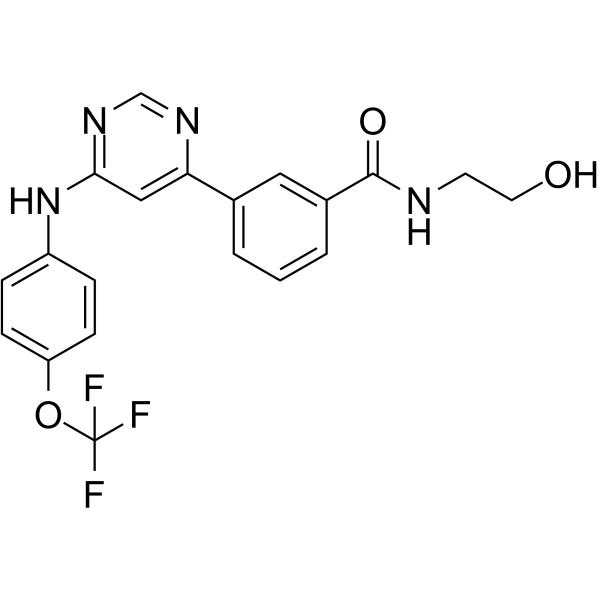
GNF-5, the N-hydroxyethyl carboxamide analog of GNF-2, is an orally active Bcr-Abl inhibitor. GNF-5 has Bcr-Abl inhibition activity with an IC50 value of 0.22 µM. GNF-5 has good favorable pharmacokinetic properties. GNF-5 can be used for the research of kinds of cancer including chronic myelogenous leukemia (CML) and breast cancer.
For research use only. We do not sell to patients.
- Purity : 99.95%
- CAS No.: 778277-15-9
- Formula: C20H17F3N4O3
- Molecular Weight:418.37
-
Storage:Powder -20°C, 3 years , 4°C, 2 years ; In solvent -80°C, 2 years , -20°C, 1 year

To place orders, for customer services and technical support, please contact: MedChemExpress USA
Tel: 609-228-6898 E-mail: [email protected] [email protected]


-
 Biological Activity
-
Chemical Information
-
Solvent & Solubility
- Protocols
- Purity & Documentation
- References
-
 Help & FAQs


-
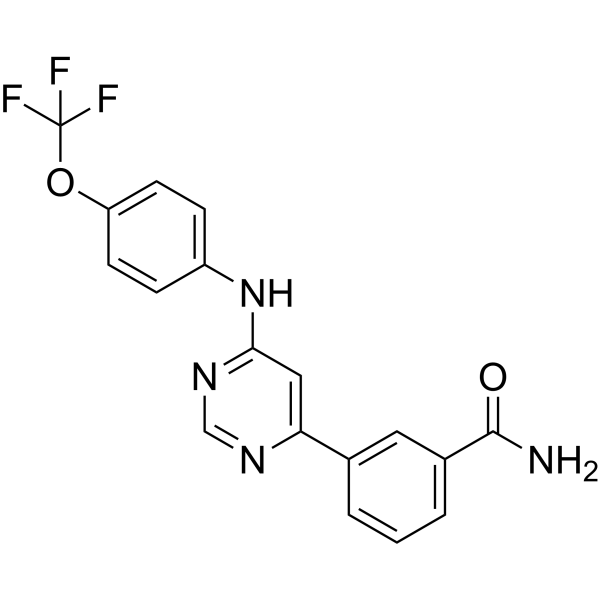
HY-11007
GNF-2Bcr-Abl Inhibitor -
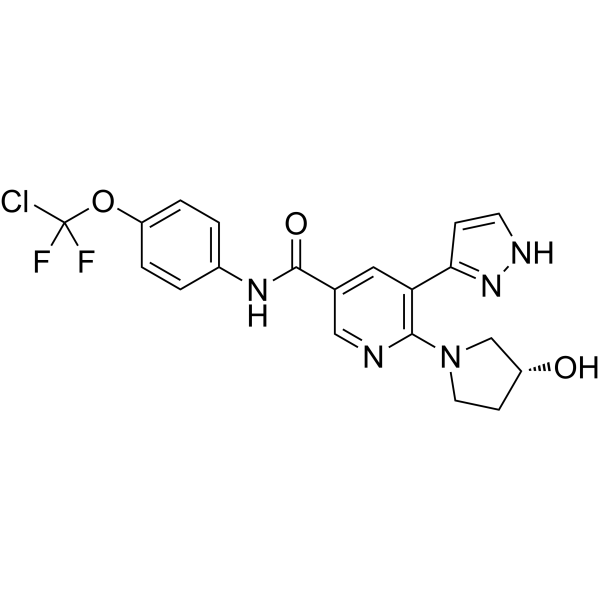
HY-104010
AsciminibBCR-ABL1 Inhibitor -
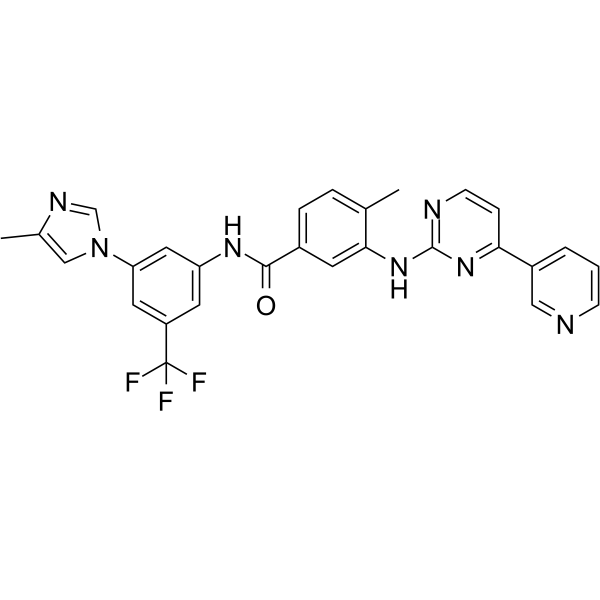
HY-10159
NilotinibBcr-Abl Inhibitor -
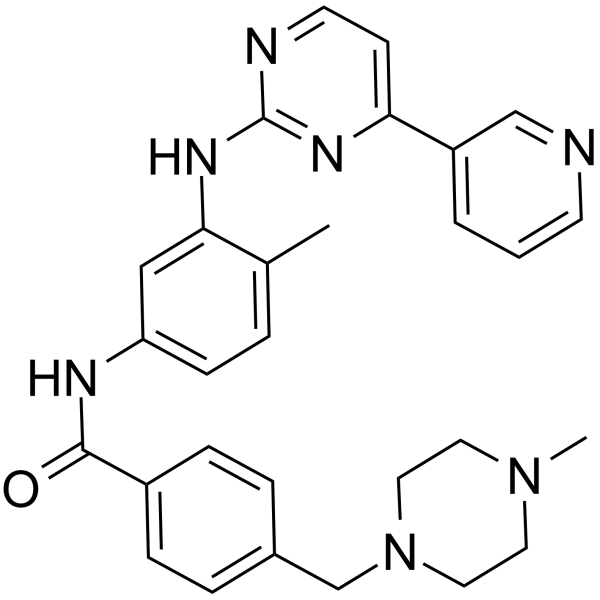
HY-15463
ImatinibTyrosine Kinases Inhibitor -
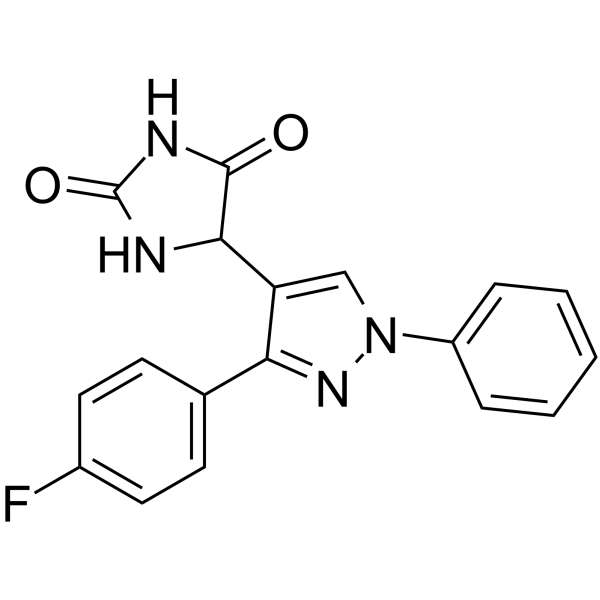
HY-12070
DPHBcr-Abl Activator -
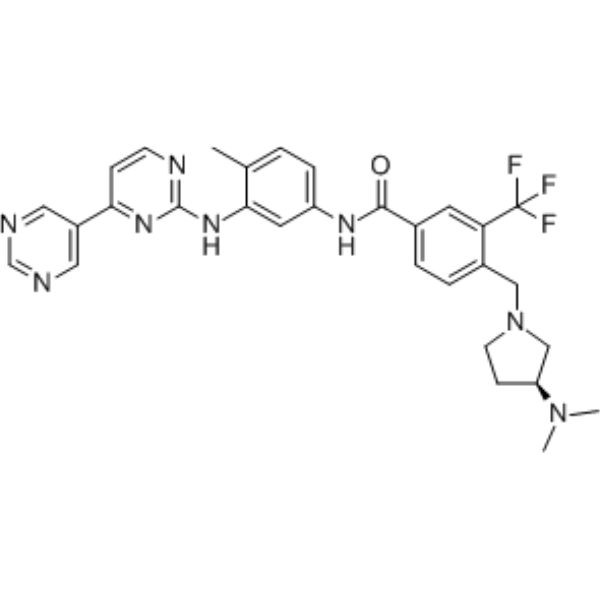
HY-50868
BafetinibLyn/Bcr-Abl Inhibitor -
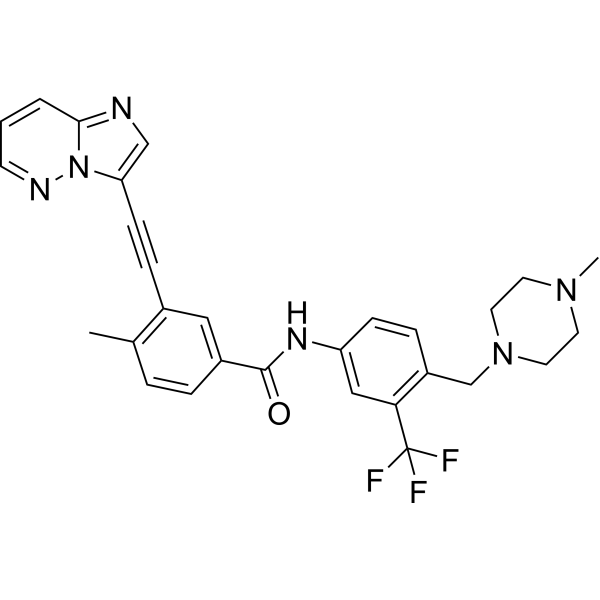
HY-12047
PonatinibMulti-targeted Kinase Inhibitor -
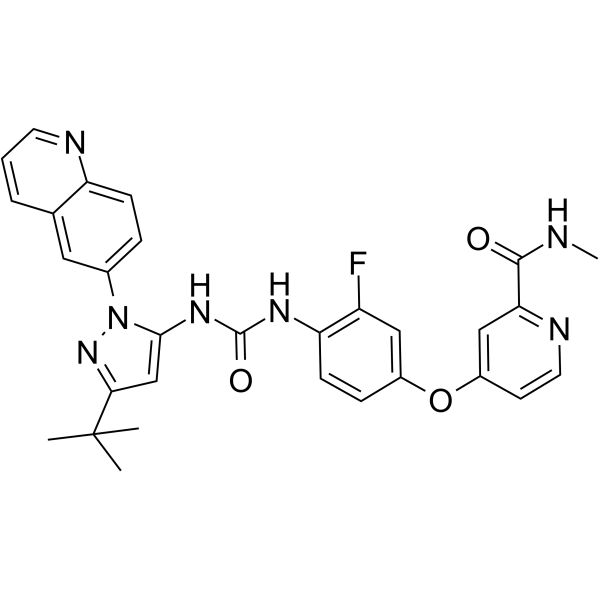
HY-13024
RebastinibKinase Inhibitor -
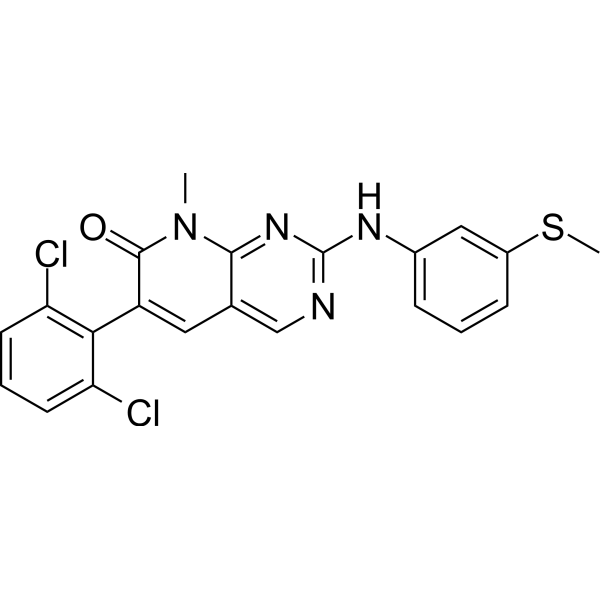
HY-10395
PD173955Src Inhibitor -
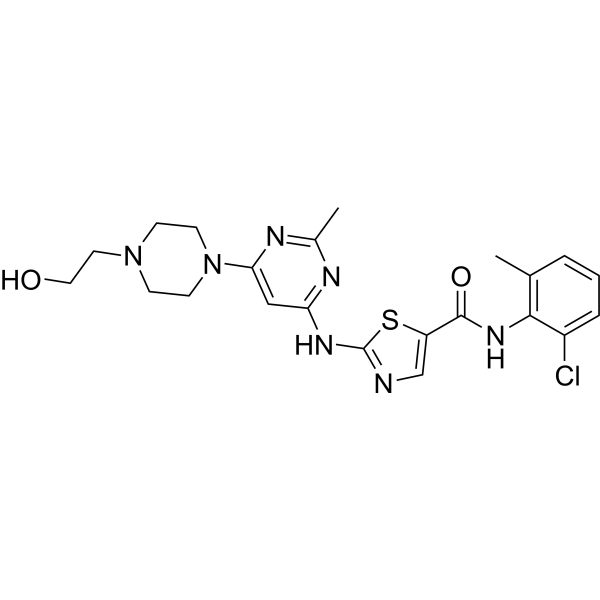
HY-10181
DasatinibSrc/Bcr-Abl Inhibitor -
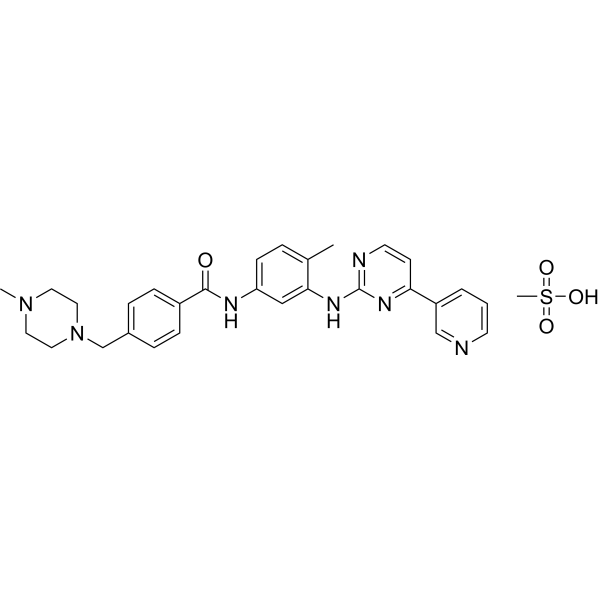
HY-50946
Imatinib Mesylatec-Kit Inhibitor -

HY-10159R
Nilotinib (Standard)Bcr-Abl Inhibitor
Publications Citing Use of MedChemExpress (MCE) GNF-5
More Customer Validation & Images

-
IHC


Biological Activity
Description
IC50 & Target
IC50: 0.22 µM (Abl)[1]
Cellular Effect
|
Cell Line

|
Type | Value | Description | References |
|---|---|---|---|---|
| BaF3 | EC50 |
>10 μM
Compound: 2
|
Cytotoxicity against mouse BA/F3 cells
Cytotoxicity against mouse BA/F3 cells
|
[PMID: 20828158] |
| BaF3 | EC50 |
>10 μM
Compound: 2
|
Inhibition of Bcr-Abl E505K mutant in mouse BA/F3 cells assessed as cell growth inhibition
Inhibition of Bcr-Abl E505K mutant in mouse BA/F3 cells assessed as cell growth inhibition
|
[PMID: 20828158] |
| BaF3 | EC50 |
>10 μM
Compound: 2
|
Inhibition of Bcr-Abl T315I mutant in mouse BA/F3 cells assessed as cell growth inhibition
Inhibition of Bcr-Abl T315I mutant in mouse BA/F3 cells assessed as cell growth inhibition
|
[PMID: 20828158] |
| BaF3 | EC50 |
0.43 μM
Compound: 2
|
Inhibition of Bcr-Abl in mouse BA/F3 cells
Inhibition of Bcr-Abl in mouse BA/F3 cells
|
[PMID: 20828158] |
| BaF3 | EC50 |
0.58 μM
Compound: 2
|
Inhibition of Bcr-Abl E225K mutant in mouse BA/F3 cells assessed as cell growth inhibition
Inhibition of Bcr-Abl E225K mutant in mouse BA/F3 cells assessed as cell growth inhibition
|
[PMID: 20828158] |
| BaF3 | GI50 |
0.43 μM
Compound: Fig 5b, Cpd 14
|
Antiproliferative activity against mouse BaF3 cells expressing Bcr-Abl assessed as cell growth inhibition
Antiproliferative activity against mouse BaF3 cells expressing Bcr-Abl assessed as cell growth inhibition
|
[PMID: 35609336] |
In Vitro
GNF-5 has inhibition of wild-type Abl with an IC50 value of 0.22 µM but no inhibition for myristate site mutant E505K (IC50 >10 µM)[1].
MedChemExpress (MCE) has not independently confirmed the accuracy of these methods. They are for reference only.
-
Cell Line:wild type and mutant Bcr-Abl expressing Ba/F3 cells
-
Concentration:0.2, 0.8 and 1.6 μM
-
Incubation Time:48 h
-
Result:Inhibited wild-type Abl in a non-ATP competitive fashion.
In Vivo
GNF-5 (oral, 50 or 100 mg/kg, twice daily, for 7 days) shows efficacious in vivo but can observe relapses[1].
GNF-5 (75 mg/kg, b.i.d) inhibits T315I Bcr-Abl combination with nilotinib in vivo[1].
MedChemExpress (MCE) has not independently confirmed the accuracy of these methods. They are for reference only.
-
Animal Model:Male Balb/c mice[1]
-
Dosage:5 mg/kg, 20 mg/kg
-
Administration:5 mg/kg intravenously or 20 mg/kg orally
-
Result:
AUC_inf (min*ug/mL) 292.37 AUC_inf (hrs*nM 11647 Cmax(nM) 4386.08 Tmax(hrs) 0.50 Clast (nM) 636.16 T1/2(hrs) 2.30 Vss(L/kg) 9.18 F (%) 44.82
-
Animal Model:p210 xenograft model[1]
-
Dosage:50 or 100 mg/kg
-
Administration:oral, twice daily, for 7 days
-
Result:Could normalize blood counts and spleen size.
-
Animal Model:Bone marrow transduction/transplantation model[1]
-
Dosage:75 mg/kg
-
Administration:twice daily
-
Result:Showed no significant response (alone).
Showed no toxicity and had a strong and sustained inhibition of Bcr-Abl-mediated signaling combination with nilotinib.


Chemical Information
-
CAS No. 778277-15-9
-
Appearance Solid
-
Molecular Weight 418.37
-
Formula C20H17F3N4O3
-
Color White to off-white
-
SMILES
FC(F)(F)OC(C=C1)=CC=C1NC2=NC=NC(C3=CC=CC(C(NCCO)=O)=C3)=C2
-
Shipping
Room temperature in continental US; may vary elsewhere.
-
Storage
Powder -20°C 3 years 4°C 2 years In solvent -80°C 2 years -20°C 1 year


Publications (3)
-
Journal Impact Factor
-
Most Recent
-
Nat Commun
Human iPSC-based Modeling of Pulmonary Fibrosis Reveals p300/CBP Inhibition Suppresses Alveolar Transitional Cell State. [Abstract]2026 Feb 12;17(1):1214. PMID: 41680175 -
Nucleic Acids Res
COVID19 Drug Repository: text-mining the literature in search of putative COVID19 therapeutics. [Abstract]2021 Jan 8;49(D1):D1113-D1121. PMID: 33166390 -
Oncotarget
2018 Apr 24;9(31):22158-22183. PMID: 29774130
GNF-5 purchased from MedChemExpress. Usage Cited in: Oncotarget. 2018 Apr 24;9(31):22158-22183. [Abstract]
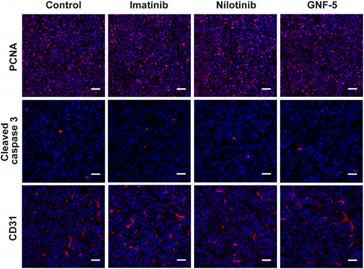
Primary tumors are dissected at the end of experiment and subjected to immunohistochemistry. Representative images of primary tumor sections stained with anti-PCNA (proliferation), anti-cleaved caspase 3 (apoptosis), and anti-CD31 (angiogenesis).


Solvent & Solubility
In Vitro:
DMSO : ≥ 49 mg/mL (117.12 mM; Hygroscopic DMSO has a significant impact on the solubility of product, please use newly opened DMSO)
* "≥" means soluble, but saturation unknown.
Please refer to the solubility information to select the appropriate solvent. Once prepared, please aliquot and store the solution to prevent product inactivation from repeated freeze-thaw cycles.
Storage method and period of stock solution: -80°C, 2 years; -20°C, 1 year. When stored at -80°C, please use it within 2 years. When stored at -20°C, please use it within 1 year.
Please refer to the solubility information to select the appropriate solvent. Once prepared, please aliquot and store the solution to prevent product inactivation from repeated freeze-thaw cycles.
Storage method and period of stock solution: -80°C, 2 years; -20°C, 1 year. When stored at -80°C, please use it within 2 years. When stored at -20°C, please use it within 1 year.
Concentration (start) × Volume (start) = Concentration (final) × Volume (final)
In Vivo:
Select the appropriate dissolution method based on your experimental animal and administration route.
- For the following dissolution methods, please ensure to first prepare a clear stock solution using an In Vitro approach and then sequentially add co-solvents:
- To ensure reliable experimental results, the clarified stock solution can be appropriately stored based on storage conditions. As for the working solution for In Vivo experiments, it is recommended to prepare freshly and use it on the same day.
- The percentages shown for the solvents indicate their volumetric ratio in the final prepared solution. If precipitation or phase separation occurs during preparation, heat and/or sonication can be used to aid dissolution.
Add each solvent one by one: 10% DMSO 40% PEG300 5% Tween-80 45% Saline
Solubility: ≥ 2.5 mg/mL (5.98 mM); Clear solution
This protocol yields a clear solution of ≥ 2.5 mg/mL (saturation unknown).
Taking 1 mL working solution as an example, add 100 μL DMSO stock solution (25.0 mg/mL) to 400 μL PEG300, and mix evenly; then add 50 μL Tween-80 and mix evenly; then add 450 μL Saline to adjust the volume to 1 mL.
Preparation of Saline: Dissolve 0.9 g sodium chloride in ddH₂O and dilute to 100 mL to obtain a clear Saline solution.
Add each solvent one by one: 10% DMSO 90% (20% SBE-β-CD in Saline)
Solubility: ≥ 2.5 mg/mL (5.98 mM); Clear solution
This protocol yields a clear solution of ≥ 2.5 mg/mL (saturation unknown).
Taking 1 mL working solution as an example, add 100 μL DMSO stock solution (25.0 mg/mL) to 900 μL 20% SBE-β-CD in Saline, and mix evenly.
Preparation of 20% SBE-β-CD in Saline (4°C, storage for one week): 2 g SBE-β-CD powder is dissolved in 10 mL Saline, completely dissolve until clear.
In Vivo Dissolution Calculator
Please enter the basic information of animal experiments:
-
-
-
-
Recommended: Prepare an additional quantity of animals to account for potential losses during experiments.
Please enter your animal formula composition:
-
%DMSO +
Recommended: Keep the proportion of DMSO in working solution below 2% if your animal is weak.
-
%+
-
+%Tween-80 + +
-
%Saline +
The co-solvents required include: DMSO, . All of co-solvents are available by MedChemExpress (MCE). , Tween 80. All of co-solvents are available by MedChemExpress (MCE).
Working solution concentration: 0.22 mg/mL
Method for preparing stock solution: mg drug dissolved in μL DMSO. Stock solution concentration: mg/mL.
1. Take μL DMSO stock solution;
2. Add μL .
μL , mix evenly;
3. Then add μL Tween 80, mix evenly;
4. Then add μL
Please ensure that the stock solution in the first step is dissolved to a clear state, and add co-solvents in sequence. You can use ultrasonic heating (ultrasonic cleaner, recommended frequency 20-40 kHz), vortexing, etc. to assist dissolution.


Purity & Documentation
-
Data Sheet (279 KB)
-
SDS (479 KB)
- English - EN (479 KB)
- Français - FR (479 KB)
- Deutsch - DE (479 KB)
- Norwegian - NO (479 KB)
- Español - ES (479 KB)
- Swedish - SV (479 KB)
- Italian - IT (479 KB)
- Korean - KR (479 KB)
- Portuguese - PT (479 KB)
-
Handling Instructions (2659 KB)
References
[1]. Zhang J, et al. Targeting Bcr-Abl by combining allosteric with ATP-binding-site inhibitors. Nature. 2010 Jan 28;463(7280):501-6. [Content Brief]
[2]. Meirson T, et al. Targeting invadopodia-mediated breast cancer metastasis by using ABL kinase inhibitors. Oncotarget. 2018 Apr 24;9(31):22158-22183. [Content Brief]


Complete Stock Solution Preparation Table
Please refer to the solubility information to select the appropriate solvent. Once prepared, please aliquot and store the solution to prevent product inactivation from repeated freeze-thaw cycles.
Storage method and period of stock solution: -80°C, 2 years; -20°C, 1 year. When stored at -80°C, please use it within 2 years. When stored at -20°C, please use it within 1 year.
| Optional Solvent | Concentration Solvent Mass | 1 mg | 5 mg | 10 mg | 25 mg |
|---|---|---|---|---|---|
| DMSO | 1 mM | 2.3902 mL | 11.9511 mL | 23.9023 mL | 59.7557 mL |
| 5 mM | 0.4780 mL | 2.3902 mL | 4.7805 mL | 11.9511 mL | |
| 10 mM | 0.2390 mL | 1.1951 mL | 2.3902 mL | 5.9756 mL | |
| 15 mM | 0.1593 mL | 0.7967 mL | 1.5935 mL | 3.9837 mL | |
| 20 mM | 0.1195 mL | 0.5976 mL | 1.1951 mL | 2.9878 mL | |
| 25 mM | 0.0956 mL | 0.4780 mL | 0.9561 mL | 2.3902 mL | |
| 30 mM | 0.0797 mL | 0.3984 mL | 0.7967 mL | 1.9919 mL | |
| 40 mM | 0.0598 mL | 0.2988 mL | 0.5976 mL | 1.4939 mL | |
| 50 mM | 0.0478 mL | 0.2390 mL | 0.4780 mL | 1.1951 mL | |
| 60 mM | 0.0398 mL | 0.1992 mL | 0.3984 mL | 0.9959 mL | |
| 80 mM | 0.0299 mL | 0.1494 mL | 0.2988 mL | 0.7469 mL | |
| 100 mM | 0.0239 mL | 0.1195 mL | 0.2390 mL | 0.5976 mL |


GNF-5 Related Classifications
HY-15738 Related Classifications
 Powered by Bioz