



Polyether Antibiotics
-
Polyether Antibiotics (16)

- 1
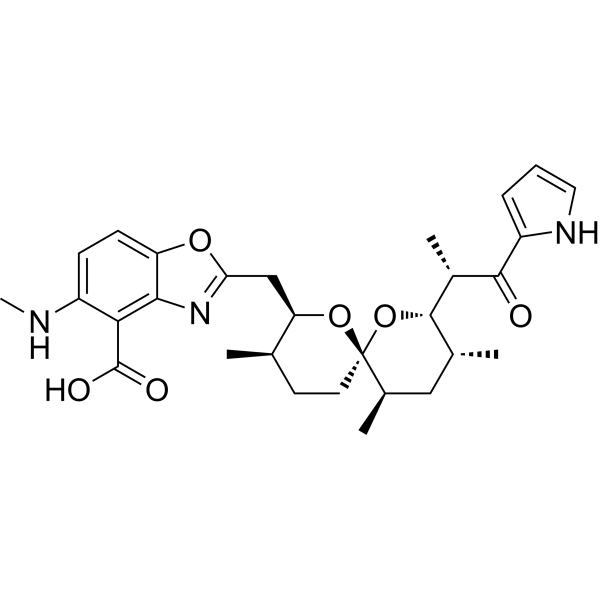
- Formule: C29H37N3O6
- Masse moléculaire: 523.62
Calcimycin (A-23187) is an antibiotic and a unique divalent cation ionophore (like calcium and magnesium). Calcimycin induces Ca2+-dependent cell death by increasing intracellular calcium concentration. Calcimycin inhibits the growth of Gram-positive bacteria and some fungi. Calcimycin also inhibits the activity of ATPase and uncouples oxidative phosphorylation (OXPHOS) of mammalian cells. Calcimycin induces apoptosis and autophagy.
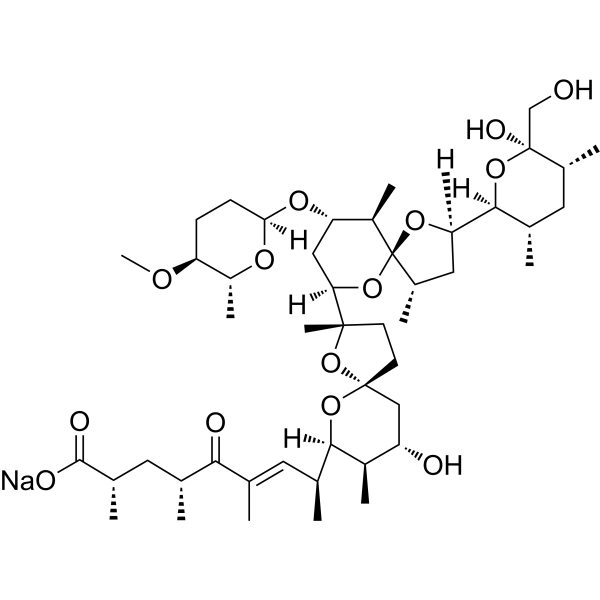
- Formule: C47H77NaO14
- Masse moléculaire: 889.10
Nanchangmycin, a polyether antibiotic produced by Streptomyces nanchangensis NS3226, inhibits gram-positive bacteria. Nanchangmycin is a broad spectrum antiviral active against Zika virus.
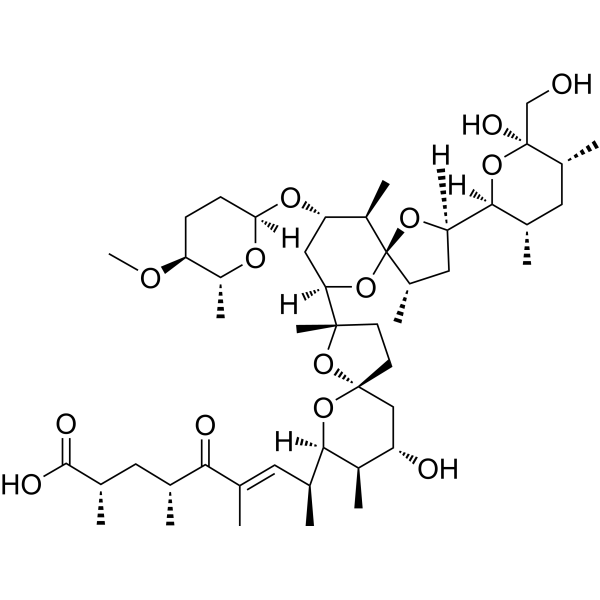
- Formule: C47H78O14
- Masse moléculaire: 867.11
Dianemycin (Nanchangmycin free acid), a polyether antibiotic produced by Streptomyces nanchangensis NS3226, inhibits gram-positive bacteria. Nanchangmycin is a broad spectrum antiviral active against Zika virus.

- Formule: C47H78O14
- Masse moléculaire: 867.11
Dianemycin (Standard) is the analytical standard of Dianemycin (HY-100528A). This product is intended for research and analytical applications. Dianemycin (Nanchangmycin free acid), a polyether antibiotic produced by Streptomyces nanchangensis NS3226, inhibits gram-positive bacteria. Nanchangmycin is a broad spectrum antiviral active against Zika virus.

- Formule: C47H66O11
- Masse moléculaire: 807.02

- Formule: C47H77NaO14
- Masse moléculaire: 889.10
Nanchangmycin (Standard) is the analytical standard of Nanchangmycin. This product is intended for research and analytical applications. Nanchangmycin, a polyether antibiotic produced by Streptomyces nanchangensis NS3226, inhibits gram-positive bacteria[1]. Nanchangmycin is a broad spectrum antiviral active against Zika virus[2].

- Formule: C37H60N4O16
- Masse moléculaire: 816.89
Tunicamycin A1 (Tunicamycin 14:1; Tunicamycin II; Tunicamycin C) is an antibiotic. Tunicamycin A1 exhibits antibacterial activity against a variety of bacterial. Tunicamycin A1 can be used in studies related to bacterial infections.

- Formule: C40H66N4O16
- Masse moléculaire: 858.97
Tunicamycin X (Tunicamycin 17:1) is a nucleoside Antibiotic. Tunicamycin X is isolated from Streptomyces xinghaiensis SCSIO S15077. Tunicamycin X acts as a growth inhibitor against bacteria and fungi. Tunicamycin X inhibits the growth of Bacillus thuringiensis strains. Tunicamycin X inhibits the growth of Candida albicans strains.
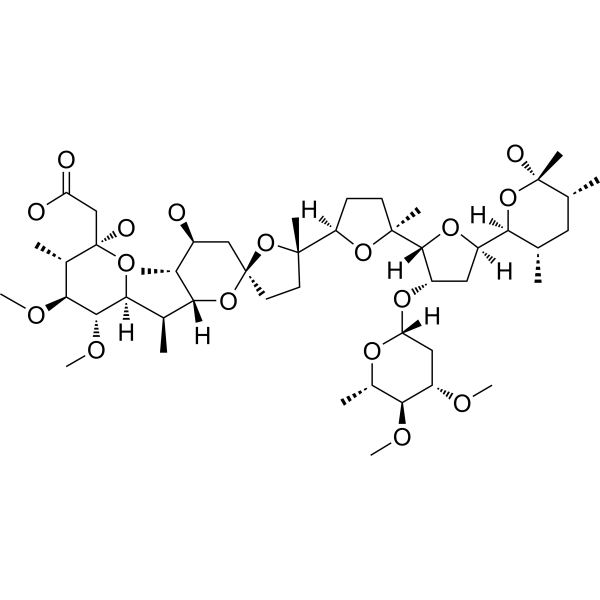
- Formule: C47H80O17
- Masse moléculaire: 917.13
Maduramicin (Maduramycin) is isolated from the actinomycete Actinomadura rubra. Maduramicin is an anticoccidial agent for the the treatment of Eimeria spp., E. adenoeides, E. gallopavonis, and E. dispersa infection. Maduramicin induces cell apoptosis in chicken myocardial cells via intrinsic and extrinsic pathways.
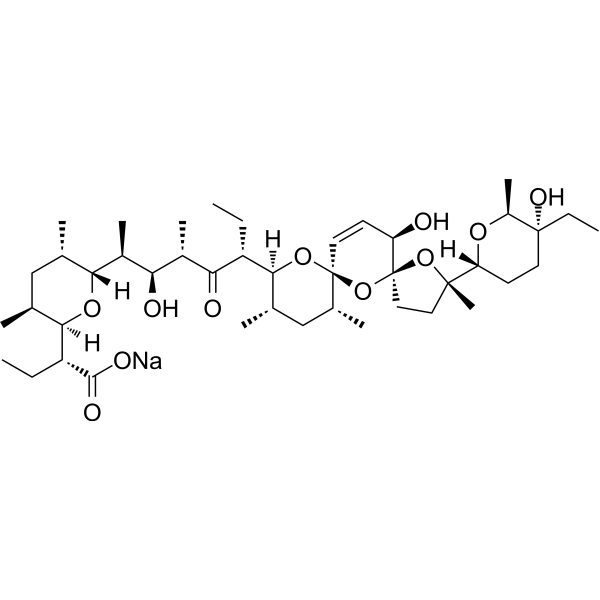
- Formule: C43H71NaO11
- Masse moléculaire: 787.01
Narasin sodium is a cationic ionophore and coccidiostat agent. Narasin inhibits NF-κB signaling and induces tumor cells apoptosis. Narasin sodium has antimicrobial and anticancer activity.
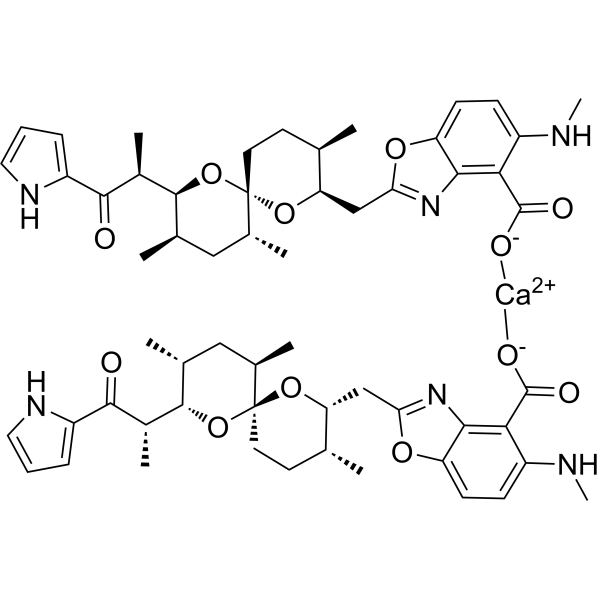
- Formule: C58H72CaN6O12
- Masse moléculaire: 1085.30
Calcimycin (A-23187) hemicalcium salt is an antibiotic and a unique divalent cation ionophore (like calcium and magnesium). Calcimycin hemicalcium salt induces Ca2+-dependent cell death by increasing intracellular calcium concentration. Calcimycin hemicalcium salt inhibits the growth of Gram-positive bacteria and some fungi. Calcimycin hemicalcium salt also inhibits the activity of ATPase and uncouples oxidative phosphorylation (OXPHOS) of mammalian cells. Calcimycin hemicalcium salt induces apoptosis and autophagy.

- Formule: C43H64O14
- Masse moléculaire: 804.96
Noboritomycins A is a polyether antibiotic. Noboritomycins A has anti-Gram-positive bacterial effect. Noboritomycins A has weak anti-coccidial effect.

- Formule: C46H75NaO14
- Masse moléculaire: 875.07
4'-O-Demethyldianemycin (TM-531B) is a polyether antibiotic found in Streptomyces hygroscopicus TM-531. Activity against Gram-positive bacteria.

- Formule: C40H68O11
- Masse moléculaire: 724.96
Abierixin has good anti-coccidial activity and weak antibacterial and ionophore activity.

- Formule: C44H66O14
- Masse moléculaire: 818.99
Noboritomycins B is a polyether antibiotic. Noboritomycins B has anti-Gram-positive bacterial effect. Noboritomycins B has weak anti-coccidial effect.

- Formule: C29H37N3O6
- Masse moléculaire: 523.62
Calcimycin (Standard) is the analytical standard of Calcimycin. This product is used for research and analytical applications. Calcimycin is an antibiotic and a unique divalent cation ionophore, such as calcium ions and magnesium ions. Calcimycin induces Ca2+ -dependent cell death by increasing the intracellular calcium concentration. Calcimycin inhibits the growth of Gram-positive bacteria and some fungi, and also inhibits the activity of ATPase and uncouples the oxidative phosphorylation (OXPHOS) of mammalian cells, inducing apoptosis and autophagy.
- 1



