



ONO-AE3-208
Based on 14 publication(s) in Google Scholar
ONO-AE3-208 is a selective and orally active EP4 receptor antagonist with a Ki of 1.3 nM. ONO-AE3-208 shows less potently affects EP3, FP, and TP receptors (Ki of 30 nM, 790 nM, and 2400 nM, respectively). ONO-AE3-208 suppresses cell invasion, migration, and metastasis of prostate cancer.
For research use only. We do not sell to patients.
- Purity : 98.97%
- CAS No.: 402473-54-5
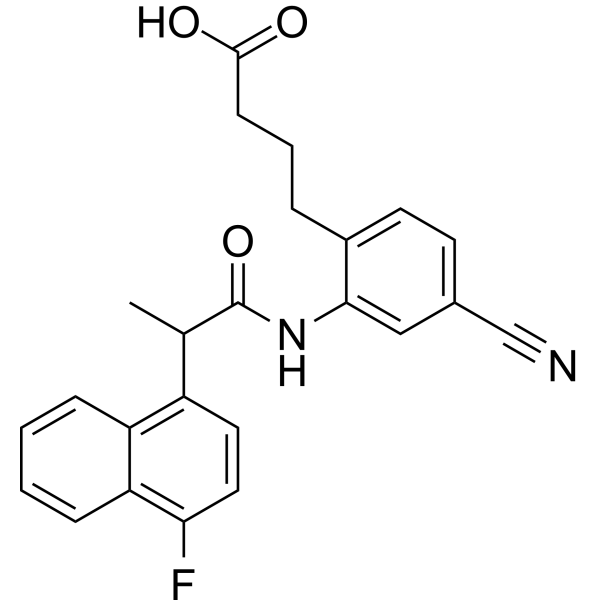
- Formula: C24H21FN2O3
- Molecular Weight:404.43
-
Storage:Powder -20°C, 3 years , 4°C, 2 years ; In solvent -80°C, 2 years , -20°C, 1 year

To place orders, for customer services and technical support, please contact: MedChemExpress USA
Tel: 609-228-6898 E-mail: [email protected] [email protected]


-
 Biological Activity
-
Chemical Information
-
Solvent & Solubility
- Protocols
- Purity & Documentation
- References
-
 Help & FAQs


-
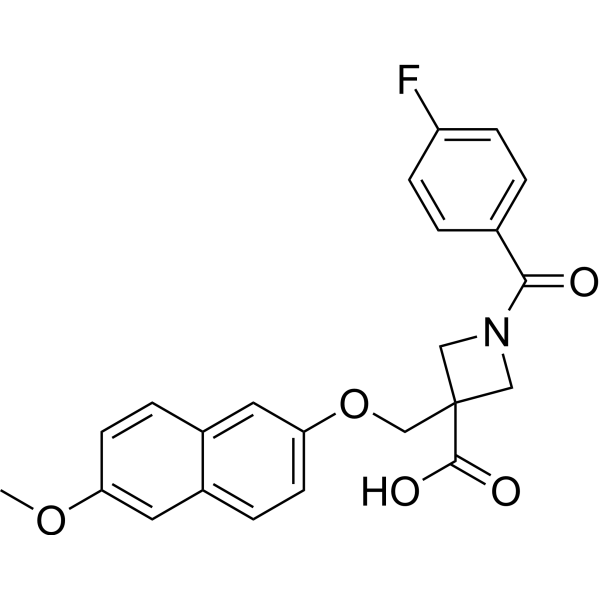
HY-18966
PF-04418948EP2 Receptor Antagonist -
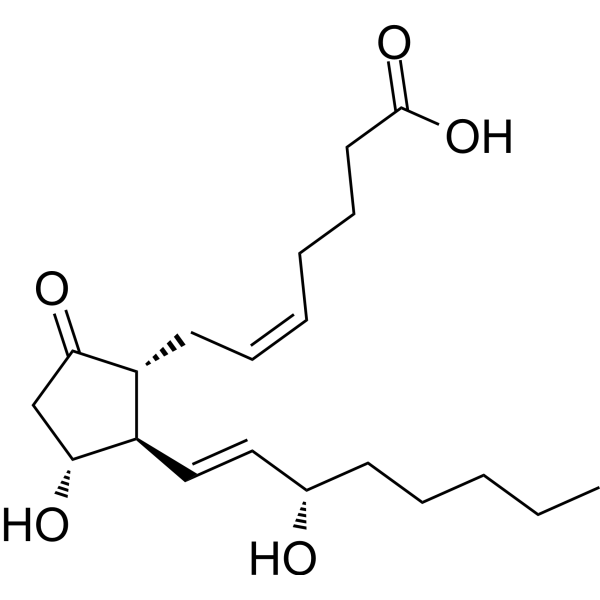
HY-101952
Prostaglandin E2Prostaglandin Receptor Agonist -
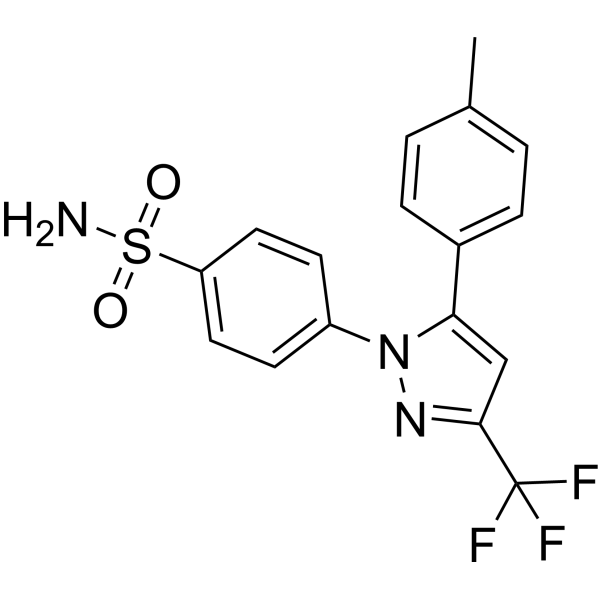
HY-14398
CelecoxibCOX-2inhibitor -
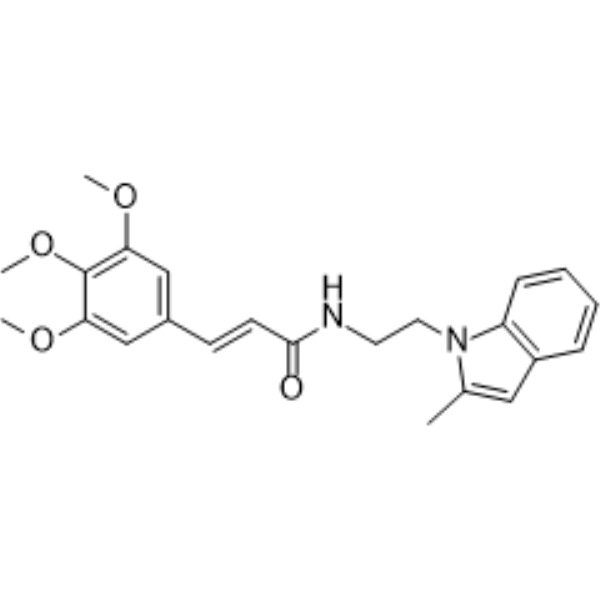
HY-18971
TG4-155EP2 Receptor Antagonist -
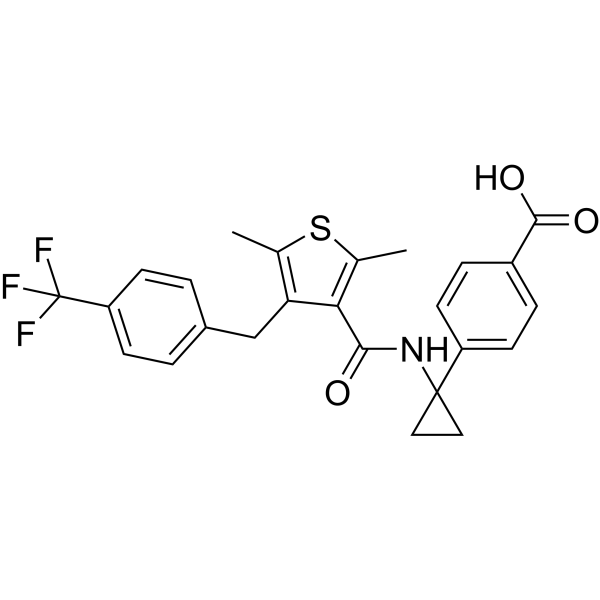
HY-10413
MK-2894EP4 Receptor Antagonist -
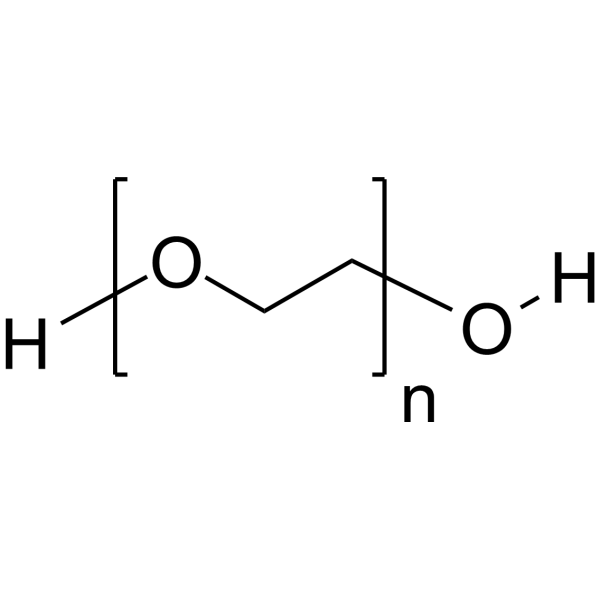
HY-Y0873
PEG300Neutral Polymer -
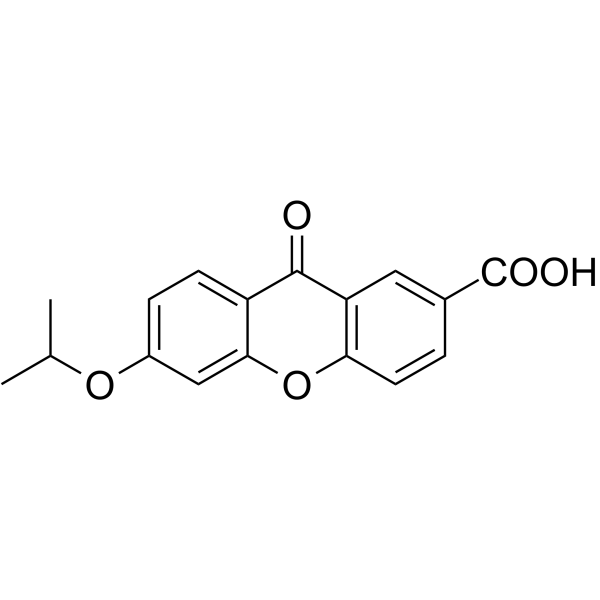
HY-10418
AH 6809EP/DP Antagonist -
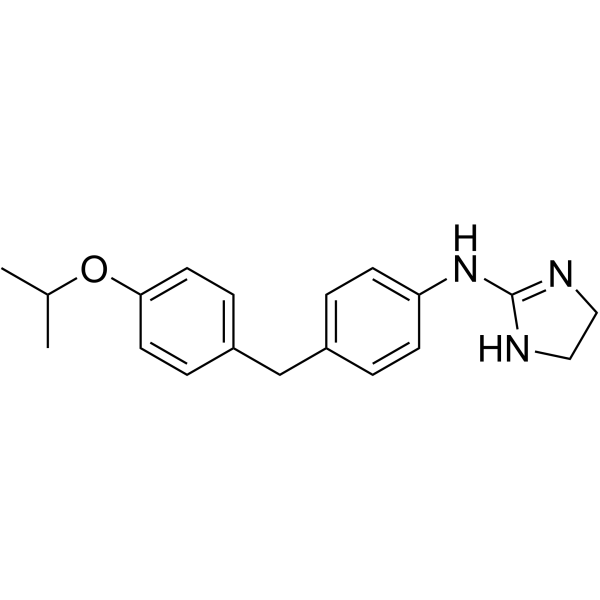
HY-108912
RO1138452Prostaglandin Receptor Antagonist -
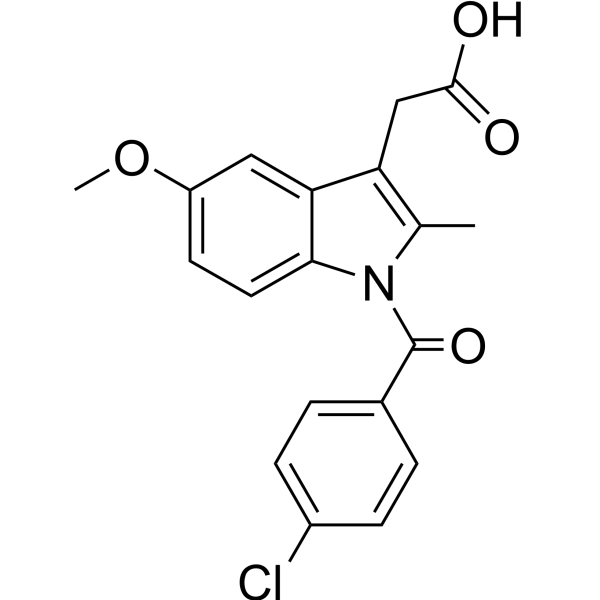
HY-14397
IndomethacinCOX1/2 Inhibitor -
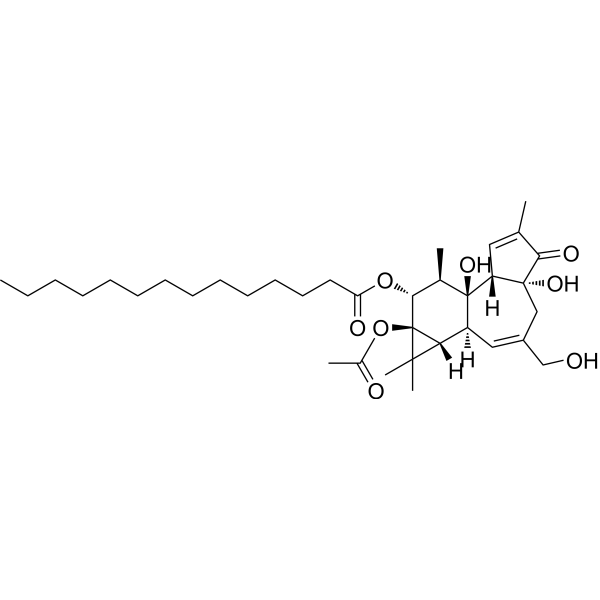
HY-18739
Phorbol 12-myristate 13-acetatePKC Activator -

HY-Y0320
Dimethyl sulfoxide, meets analytical specification of Ch.P.Aprotic Solvent -
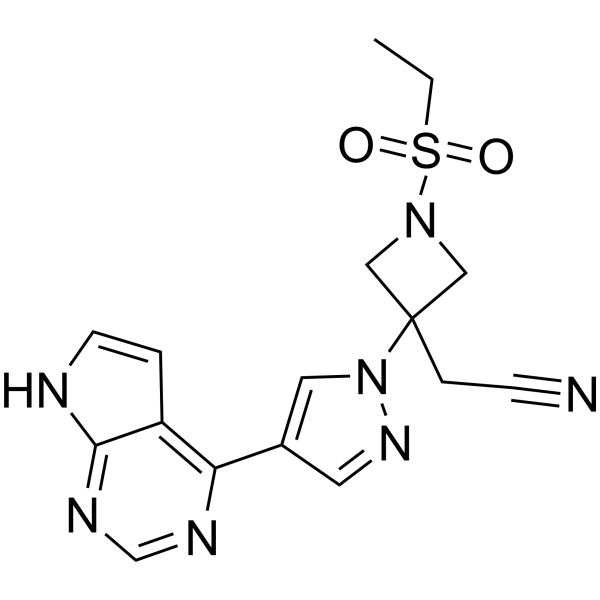
HY-15315
BaricitinibJAK1/2 Inhibitor
Publications Citing Use of MedChemExpress (MCE) ONO-AE3-208
More- Immunity. 2026 Jul 2:S1074-7613(26)00257-8.
- Cancer Res. 2026 Jan 22. [Abstract]
- Cancer Res. 2018 Oct 1;78(19):5586-5599. [Abstract]
- Genes Dis. 2026 Jun 15.
- J Neuroinflammation. 2025 Oct 14;22(1):233. [Abstract]
- Hypertension. 2014 Aug;64(2):369-77. [Abstract]
- Clin Sci. 2020 Feb 14;134(3):331-347. [Abstract]
- Int J Mol Sci. 2026 Mar 15;27(6):2687. [Abstract]
- Sci Rep. 2017 Jun 13;7(1):3442. [Abstract]
- Cell Immunol. 2020 Jan:347:104025. [Abstract]
- Am J Physiol Gastrointest Liver Physiol. 2012 Jan 15;302(2):G267-75. [Abstract]
- Mod Rheumatol. 2020 May;30(3):509-516. [Abstract]
- Genes Cells. 2020 Mar;25(3):197-214. [Abstract]
- Research Square Preprint. 2023 May 19.
 Customer Validation & Images

-
In Vivo Imaging
-
In Vivo Efficacy Study
-
RT-PCR
-
ELISA
-
Cell Proliferation/Viability Assay


Biological Activity
Description
IC50 & Target
[1]|
FP 790 nM (Ki) |
TP Receptor 2400 nM (Ki) |
EP4 1.3 nM (Ki) |
EP3 30 nM (Ki) |
In Vitro
ONO-AE3-208 surpresses the in vitro cell invasion and migration in a dose-dependent manner without affecting cell proliferation[2]. ONO-AE3-208 abolisheS CTGF in the presence of the EET synthesis inhibitor MS-PPOH. Arachidonic acid (AA) causeS dose-dependent dilation of the attached Af-Art, and this effect is blocked by ONO-AE3-208[3].
MedChemExpress (MCE) has not independently confirmed the accuracy of these methods. They are for reference only.
In Vivo
MedChemExpress (MCE) has not independently confirmed the accuracy of these methods. They are for reference only.
- Spheroid/Tumor Organoid Invasion Assay
- Invadopodia/Fluorescent Gelatin Degradation Assay
- Ex Vivo Tissue Slice/Explant Invasion Assay
- Patient-Derived Organoid Invasion Assay
- Cell migration
- Organotypic 3D Invasion Assay
- Cell invasion
- Matrigel/ECM Transwell Invasion Assay
- 3D Tumor Spheroid Invasion Assay
- Orthotopic Cell-Line Xenograft
- 3D Collagen/Hydrogel Matrix Invasion Assay
- Matrigel Transwell/Boyden Chamber Invasion Assay


Chemical Information
-
CAS No. 402473-54-5
-
Appearance Solid
-
Molecular Weight 404.43
-
Formula C24H21FN2O3
-
Color White to yellow
-
SMILES
N#CC1=CC=C(C(NC(C(C2=C3C=CC=CC3=C(F)C=C2)C)=O)=C1)CCCC(O)=O
-
Synonyms
AE 3-208
-
Shipping
Room temperature in continental US; may vary elsewhere.
-
Storage
Powder -20°C 3 years 4°C 2 years In solvent -80°C 2 years -20°C 1 year


Publications (14)
-
Journal Impact Factor
-
Most Recent
-
-
Cancer Res
ACSL5 Mediates Adaptation to the Palmitic Acid-Enriched Pulmonary Microenvironment to Enhance Metastatic Breast Cancer Cell Survival and Lung Metastasis. [Abstract]2026 Jan 22. PMID: 41570334
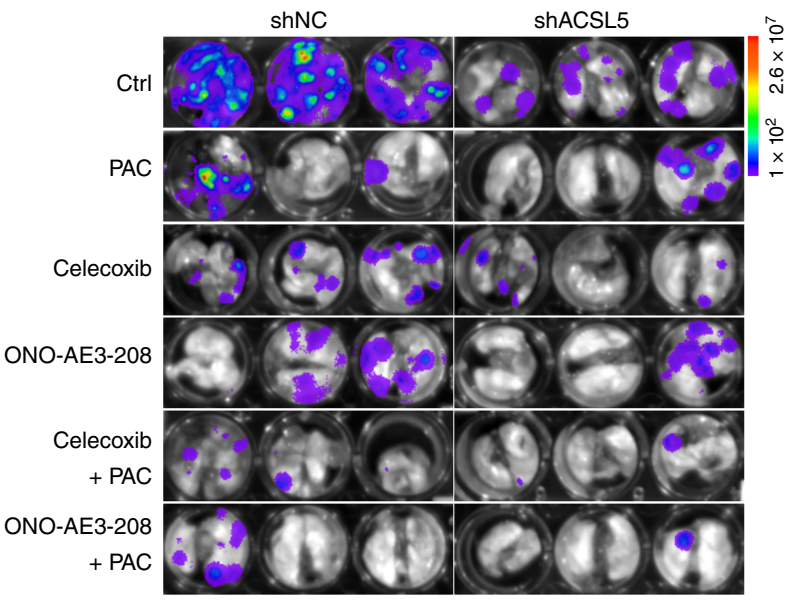
ONO-AE3-208 purchased from MedChemExpress. Usage Cited in: Cancer Res. 2026 Jan 22. [Abstract]
BALB/c nude mice intravenously injected with shNC or shACSL5 LM3 cells were administered with PAC, celecoxib, and ONO-AE3-208 (10 mg/kg; p.o.) alone or in combination. Representative images are shown. The results showed that ACSL5 knockdown, celecoxib, ONO-AE3-208, or PAC dramatically mitigated lung metastasis, whereas targeting ACSL5, COX2, or EP4 in combination with PAC led to a more pronounced reduction in lung metastasis.
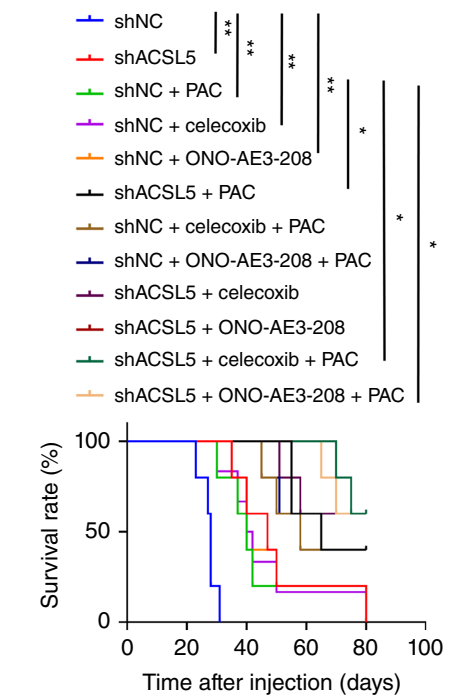
ONO-AE3-208 purchased from MedChemExpress. Usage Cited in: Cancer Res. 2026 Jan 22. [Abstract]
BALB/c nude mice intravenously injected with shNC or shACSL5 LM3 cells were administered with PAC, celecoxib, and ONO-AE3-208 (10 mg/kg; p.o.) alone or in combination. Overall survival are shown. The results showed that ACSL5 knockdown, celecoxib, ONO-AE3-208, or PAC dramatically mitigated lung metastasis, whereas targeting ACSL5, COX2, or EP4 in combination with PAC increased overall survival compared with PAC monotherapy.
-
Cancer Res
A RIPK3-PGE2 Circuit Mediates Myeloid-Derived Suppressor Cell-Potentiated Colorectal Carcinogenesis. [Abstract]2018 Oct 1;78(19):5586-5599. PMID: 30012671 -
-
J Neuroinflammation
IL-1β+ tumor-associated macrophages accelerate glioblastoma progression by amplifying the PGE2-EP4 signaling. [Abstract]2025 Oct 14;22(1):233. PMID: 41088217
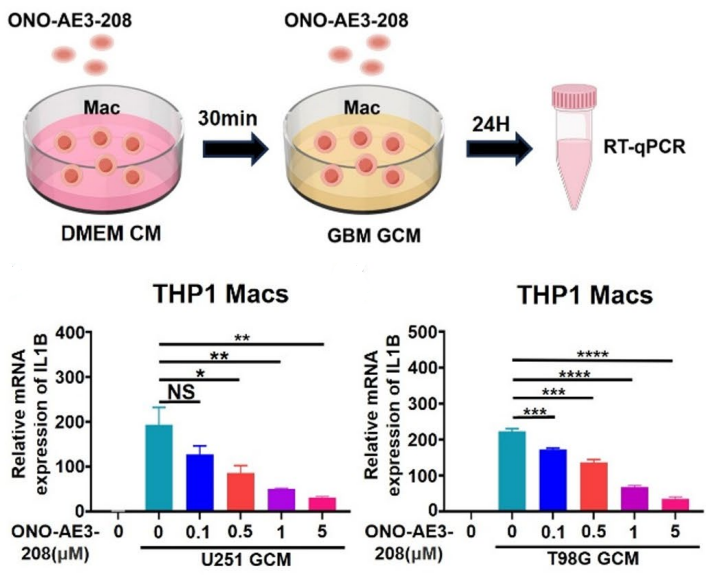
ONO-AE3-208 purchased from MedChemExpress. Usage Cited in: J Neuroinflammation. 2025 Oct 14;22(1):233. [Abstract]
Effects of ONO-AE3-208 on the expression of IL1B mRNA in macrophages stimulated with GCM from U251 and T98G cells (n = 3). Macrophages were pre-incubated with ONO-AE3-208 (0.1-5 μM), a selective EP4 receptor antagonist, for 30 min prior to treatment with GCM. After 24 h, IL1B mRNA expression was significantly reduced in macrophages treated with GCM derived from U251 or T98G cells in a dose-dependent manner when EP4 was blocked.
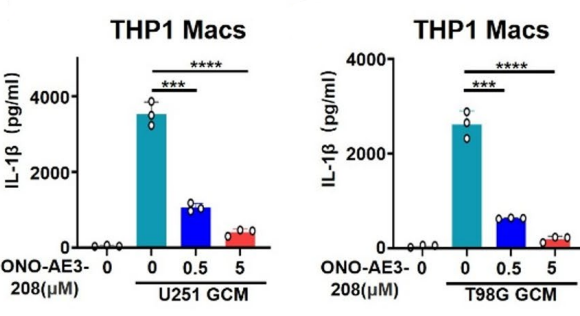
ONO-AE3-208 purchased from MedChemExpress. Usage Cited in: J Neuroinflammation. 2025 Oct 14;22(1):233. [Abstract]
Effects of ONO-AE3-208 (0.5-5 μM; pretreatment for 30 min) on the expression of IL1B protein in macrophages stimulated with GCM from U251 and T98G cells (n = 3). ELISA results showed that ONO-AE3-208 reduced IL-1β secretion by inhibiting the EP4 receptor.
ONO-AE3-208 purchased from MedChemExpress. Usage Cited in: J Neuroinflammation. 2025 Oct 14;22(1):233. [Abstract]
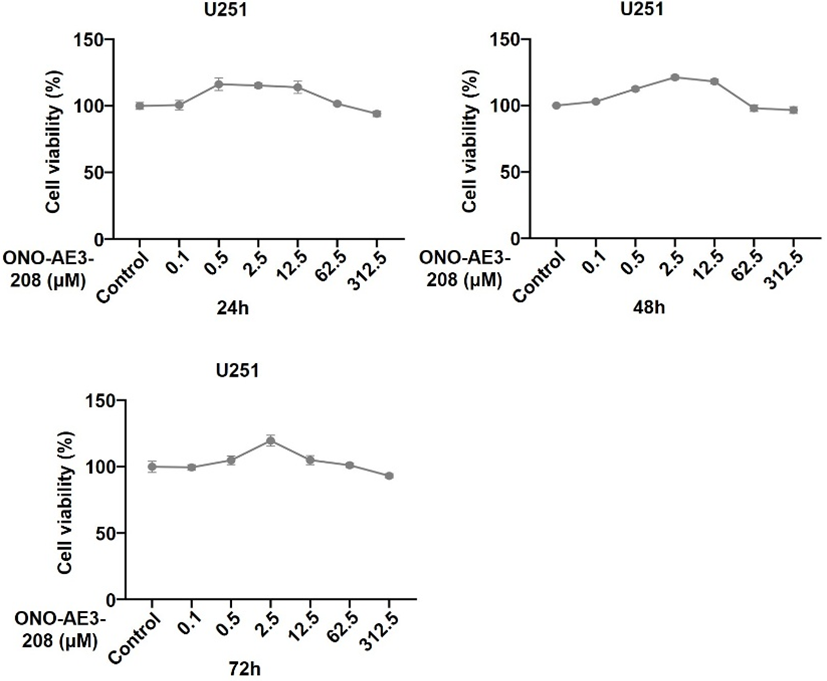
The impact of various concentrations of ONO-AE3-208 on U251 cell proliferation was evaluated in vitro over multiple time points. ONO-AE3-208 showed no direct cytotoxicity toward U251 cells in vitro.
-
Hypertension
Prostaglandin E-prostanoid4 receptor mediates angiotensin II-induced (pro)renin receptor expression in the rat renal medulla. [Abstract]2014 Aug;64(2):369-77. PMID: 24866147 -
Clin Sci
CP-25 inhibits PGE2-induced angiogenesis by down-regulating EP4/AC/cAMP/PKA-mediated GRK2 translocation. [Abstract]2020 Feb 14;134(3):331-347. PMID: 31967309 -
Int J Mol Sci
Renal Tubule-Specific Deletion of Nephrocystin 3 (Nphp3) Causes Infantile Nephronophthisis-like Phenotypes in Mice. [Abstract]2026 Mar 15;27(6):2687. PMID: 41898549 -
Sci Rep
EP4 inhibition attenuates the development of diabetic and non-diabetic experimental kidney disease. [Abstract]2017 Jun 13;7(1):3442. PMID: 28611444 -
Cell Immunol
PGE2 ameliorated viral myocarditis development and promoted IL-10-producing regulatory B cell expansion via MAPKs/AKT-AP1 axis or AhR signaling. [Abstract]2020 Jan:347:104025. PMID: 31837749 -
Am J Physiol Gastrointest Liver Physiol
Prophylactic and therapeutic benefits of COX-2 inhibitor on motility dysfunction in bowel obstruction: roles of PGE₂ and EP receptors. [Abstract]2012 Jan 15;302(2):G267-75. PMID: 22038825 -
Mod Rheumatol
ER-stressed MSC displayed more effective immunomodulation in RA CD4+CXCR5+ICOS+ follicular helper-like T cells through higher PGE2 binding with EP2/EP4. [Abstract]2020 May;30(3):509-516. PMID: 31370727 -
Genes Cells
Prostaglandin E2 and its receptor EP2 trigger signaling that contributes to YAP-mediated cell competition. [Abstract]2020 Mar;25(3):197-214. PMID: 31989743 -


Solvent & Solubility
In Vitro:
DMSO : 33.33 mg/mL (82.41 mM; Need ultrasonic; Hygroscopic DMSO has a significant impact on the solubility of product, please use newly opened DMSO)
Please refer to the solubility information to select the appropriate solvent. Once prepared, please aliquot and store the solution to prevent product inactivation from repeated freeze-thaw cycles.
Storage method and period of stock solution: -80°C, 2 years; -20°C, 1 year. When stored at -80°C, please use it within 2 years. When stored at -20°C, please use it within 1 year.
Please refer to the solubility information to select the appropriate solvent. Once prepared, please aliquot and store the solution to prevent product inactivation from repeated freeze-thaw cycles.
Storage method and period of stock solution: -80°C, 2 years; -20°C, 1 year. When stored at -80°C, please use it within 2 years. When stored at -20°C, please use it within 1 year.
Concentration (start) × Volume (start) = Concentration (final) × Volume (final)
In Vivo:
Select the appropriate dissolution method based on your experimental animal and administration route.
- For the following dissolution methods, please ensure to first prepare a clear stock solution using an In Vitro approach and then sequentially add co-solvents:
- To ensure reliable experimental results, the clarified stock solution can be appropriately stored based on storage conditions. As for the working solution for In Vivo experiments, it is recommended to prepare freshly and use it on the same day.
- The percentages shown for the solvents indicate their volumetric ratio in the final prepared solution. If precipitation or phase separation occurs during preparation, heat and/or sonication can be used to aid dissolution.
Add each solvent one by one: 10% DMSO 40% PEG300 5% Tween-80 45% Saline
Solubility: ≥ 2.08 mg/mL (5.14 mM); Clear solution
This protocol yields a clear solution of ≥ 2.08 mg/mL (saturation unknown).
Taking 1 mL working solution as an example, add 100 μL DMSO stock solution (20.8 mg/mL) to 400 μL PEG300, and mix evenly; then add 50 μL Tween-80 and mix evenly; then add 450 μL Saline to adjust the volume to 1 mL.
Preparation of Saline: Dissolve 0.9 g sodium chloride in ddH₂O and dilute to 100 mL to obtain a clear Saline solution.
Add each solvent one by one: 10% DMSO 90% (20% SBE-β-CD in Saline)
Solubility: 2.08 mg/mL (5.14 mM); Suspended solution; Need ultrasonic
This protocol yields a suspended solution of 2.08 mg/mL. Suspended solution can be used for oral and intraperitoneal injection.
Taking 1 mL working solution as an example, add 100 μL DMSO stock solution (20.8 mg/mL) to 900 μL 20% SBE-β-CD in Saline, and mix evenly.
Preparation of 20% SBE-β-CD in Saline (4°C, storage for one week): 2 g SBE-β-CD powder is dissolved in 10 mL Saline, completely dissolve until clear.
In Vivo Dissolution Calculator
Please enter the basic information of animal experiments:
-
-
-
-
Recommended: Prepare an additional quantity of animals to account for potential losses during experiments.
Please enter your animal formula composition:
-
%DMSO +
Recommended: Keep the proportion of DMSO in working solution below 2% if your animal is weak.
-
%+
-
+%Tween-80 + +
-
%Saline +
The co-solvents required include: DMSO, . All of co-solvents are available by MedChemExpress (MCE). , Tween 80. All of co-solvents are available by MedChemExpress (MCE).
Working solution concentration: 0.22 mg/mL
Method for preparing stock solution: mg drug dissolved in μL DMSO. Stock solution concentration: mg/mL.
1. Take μL DMSO stock solution;
2. Add μL .
μL , mix evenly;
3. Then add μL Tween 80, mix evenly;
4. Then add μL
Please ensure that the stock solution in the first step is dissolved to a clear state, and add co-solvents in sequence. You can use ultrasonic heating (ultrasonic cleaner, recommended frequency 20-40 kHz), vortexing, etc. to assist dissolution.


Purity & Documentation
-
Data Sheet (278 KB)
-
SDS (396 KB)
- English - EN (396 KB)
- Français - FR (396 KB)
- Deutsch - DE (396 KB)
- Norwegian - NO (396 KB)
- Español - ES (396 KB)
- Swedish - SV (396 KB)
- Italian - IT (396 KB)
- Korean - KR (396 KB)
- Portuguese - PT (396 KB)
-
Handling Instructions (2659 KB)
References
[1]. Kenji Kabashima, et al. The prostaglandin receptor EP4 suppresses colitis, mucosal damage and CD4 cell activation in the gut. J Clin Invest. 2002 Apr;109(7):883-93. [Content Brief]
[2]. Ren Y, et al. Prostaglandin E2 mediates connecting tubule glomerular feedback. Hypertension. 2013 Dec;62(6):1123-8. [Content Brief]
[3]. Xu S, et al. An EP4 Antagonist ONO-AE3-208 Suppresses Cell Invasion, Migration, and Metastasis of Prostate Cancer. Cell Biochem Biophys. 2014 Apr 18. [Content Brief]
[4]. Xu S, et al. Inhibitory effect of ONO-AE3-208 on the formation of bone metastasis of prostate cancer in mice. Zhonghua Nan Ke Xue. 2014 Aug;20(8):684-9. [Content Brief]
[5]. Thieme K, et al. EP4 inhibition attenuates the development of diabetic and non-diabetic experimental kidney disease. Sci Rep. 2017 Jun 13;7(1):3442. [Content Brief]


Complete Stock Solution Preparation Table
Please refer to the solubility information to select the appropriate solvent. Once prepared, please aliquot and store the solution to prevent product inactivation from repeated freeze-thaw cycles.
Storage method and period of stock solution: -80°C, 2 years; -20°C, 1 year. When stored at -80°C, please use it within 2 years. When stored at -20°C, please use it within 1 year.
| Optional Solvent | Concentration Solvent Mass | 1 mg | 5 mg | 10 mg | 25 mg |
|---|---|---|---|---|---|
| DMSO | 1 mM | 2.4726 mL | 12.3631 mL | 24.7262 mL | 61.8154 mL |
| 5 mM | 0.4945 mL | 2.4726 mL | 4.9452 mL | 12.3631 mL | |
| 10 mM | 0.2473 mL | 1.2363 mL | 2.4726 mL | 6.1815 mL | |
| 15 mM | 0.1648 mL | 0.8242 mL | 1.6484 mL | 4.1210 mL | |
| 20 mM | 0.1236 mL | 0.6182 mL | 1.2363 mL | 3.0908 mL | |
| 25 mM | 0.0989 mL | 0.4945 mL | 0.9890 mL | 2.4726 mL | |
| 30 mM | 0.0824 mL | 0.4121 mL | 0.8242 mL | 2.0605 mL | |
| 40 mM | 0.0618 mL | 0.3091 mL | 0.6182 mL | 1.5454 mL | |
| 50 mM | 0.0495 mL | 0.2473 mL | 0.4945 mL | 1.2363 mL | |
| 60 mM | 0.0412 mL | 0.2061 mL | 0.4121 mL | 1.0303 mL | |
| 80 mM | 0.0309 mL | 0.1545 mL | 0.3091 mL | 0.7727 mL |


ONO-AE3-208 Related Classifications
HY-50901 Related Classifications
 Powered by Bioz