



Others
-
Others Related Products (75346)
Related Products (75346)


-
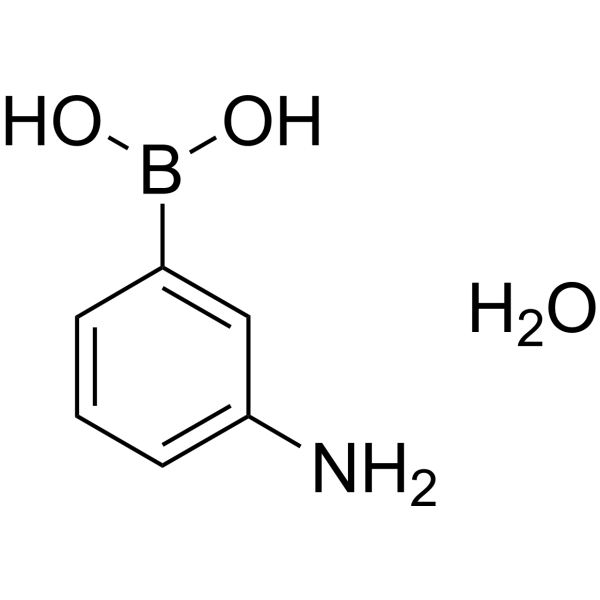
3-Aminophenylboronic acid monohydrate
 0 Images
3-Aminophenylboronic acid monohydrate is a biochemical reagent that can be used as a biological material or organic compound for life science related research.
-
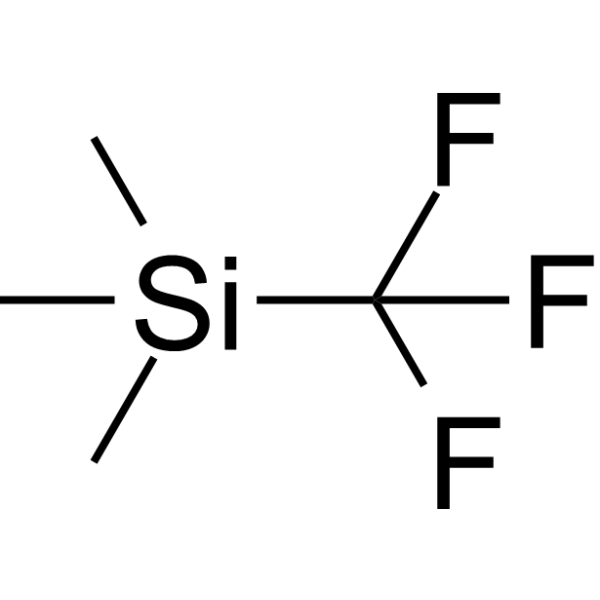
(Trifluoromethyl)trimethylsilane
 0 Images
Trimethylsilyl(trifluoromethyl)silane is a biochemical reagent that can be used as a biological material or organic compound for life science related research.
-
Sodium phosphate dibasic, for molecular biology
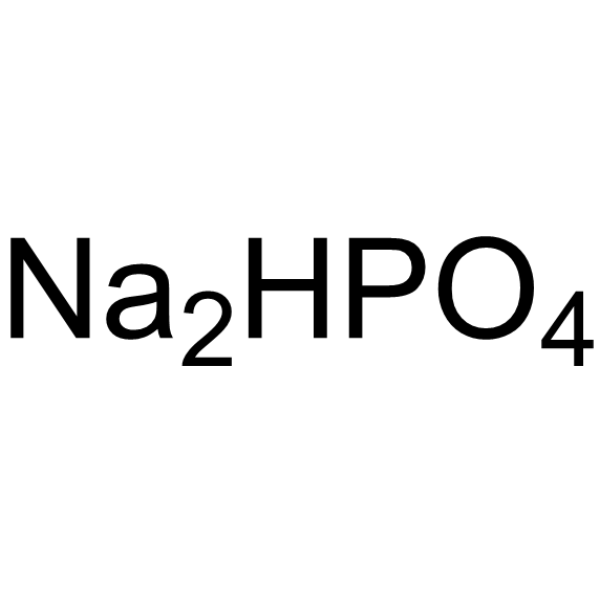 0 ImagesSynonyms: Disodium hydrogen phosphate, for molecular biology
Sodium phosphate dibasic (Disodium hydrogen phosphate), for molecular biology, is a type of phosphate salt that can be used in molecular biology research to prepare stable buffers free of RNase/DNase/protease.
-
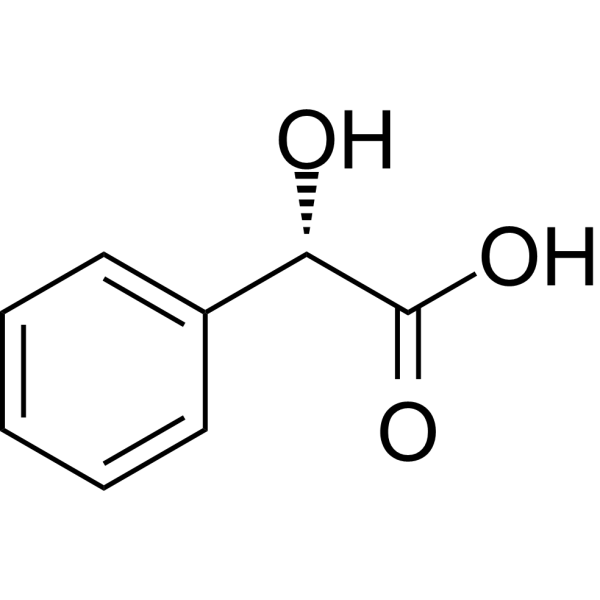
(S)-Mandelic acid
 0 Images
(S)-Mandelic Acid is a (S)-enantiomer of Mandelic Acid (HY-W015591). (S)-Mandelic Acid undergoes one-directional chiral inversion to (R)-Mandelic Acid in rat models. (S)-Mandelic acid is a biochemical reagent that can be used as a biological material or organic compound for life science related research.
-
tert-Butyl L-valinate hydrochloride
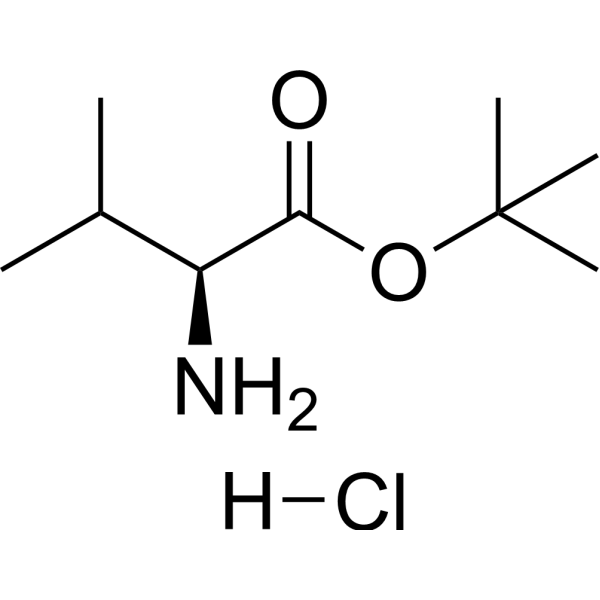 0 ImagesSynonyms: tert-Butyl (S)-2-amino-3-methylbutanoate hydrochloride
tert-Butyl L-valinate hydrochloride is a valine derivative.
-
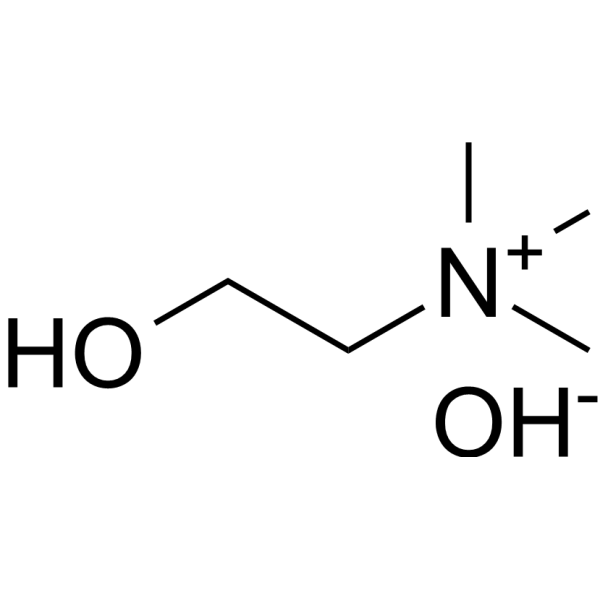
Choline hydroxide (44% in water)
 0 Images
Choline hydroxide is a Choline hydrogen oxidized derivative and a strong organic base, can be used as the standard alkaline to adjust the pH of the medium. Choline is an orally active nutrient, serves as an important component of lecithin and sphingomyelin, promotes fat metabolism .
-
Bis(benzonitrile)palladium chloride
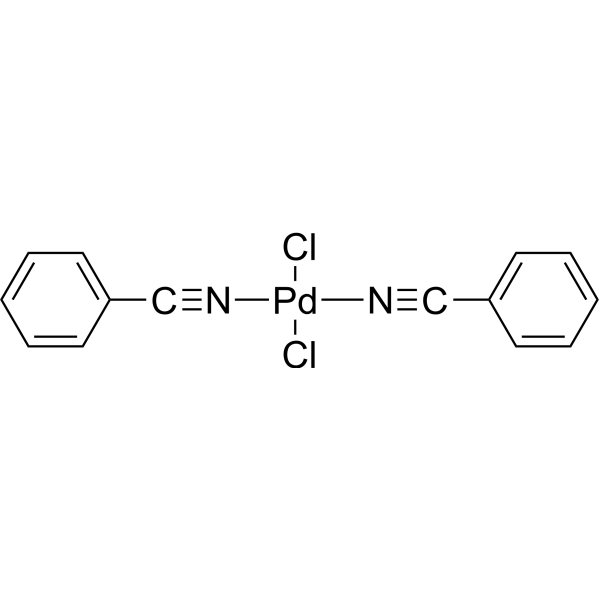 0 ImagesSynonyms: Dichlorobis(benzonitrile)palladium(II)
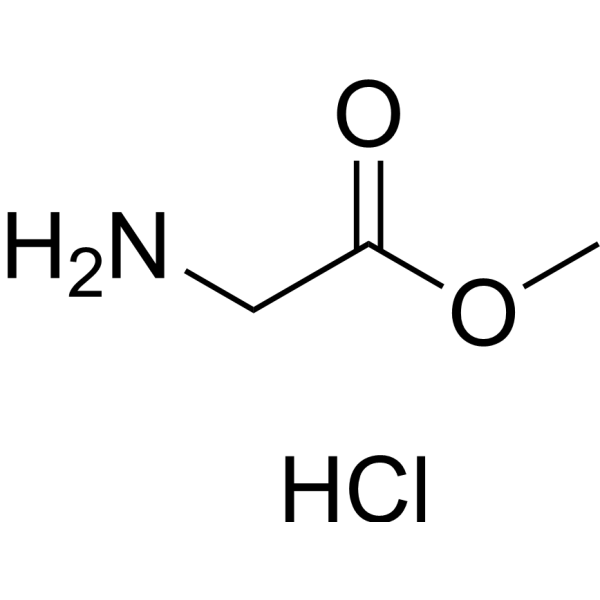
Bis (benzonitrile) palladium (II) chloride (Dichlorobis (benzonitrile) palladium (II)) serves as a catalyst for the preparation of green amine compounds from terminal olefins.
-
Lignin alkali
 0 ImagesCat. No.: HY-W250112CAS No.: 8068-05-1
Lignin alkali acts as a decomposer, depolymerizer and structural modifier. Lignin alkali is recovered from lignocellulosic biomass via alkaline pretreatment. Lignin alkali consists of p-hydroxyphenyl, guaiacyl and syringyl propanoid units. Lignin alkali can be custom-converted into high-value-added chemicals and materials. Lignin alkali exhibits significant application potential in the fields of biomass refining and high-value utilization.
-
Polyoxyethylene(10) oleyl ether
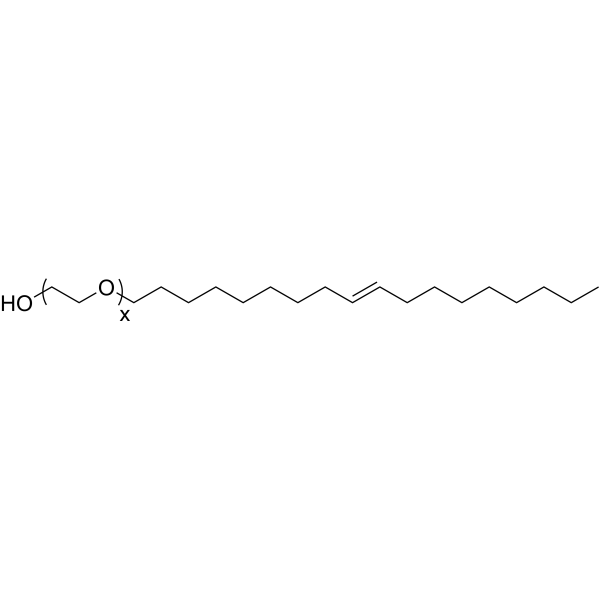 0 ImagesSynonyms: Polyethylene glycol oleyl ether, average Mn~709; Polyethylene glycol monooleyl ether, n~10
Polyoxyethylene(10) oleyl ether, also known as POE(10) monooleate, is a nonionic surfactant consisting of a polyethylene glycol chain with 10 ethylene oxide units and an oleic acid residue. It has excellent emulsifying, wetting and dispersing properties, making it suitable for a variety of applications including personal care products and pharmaceutical formulations. POE(10) monooleate is commonly used as a solubilizer to improve the solubility and bioavailability of poorly soluble drugs. Furthermore, it is biodegradable and has low toxicity, making it an environmentally friendly ingredient suitable for various industrial applications.
-
7-Benzyloxy-4-(trifluoromethyl)coumarin
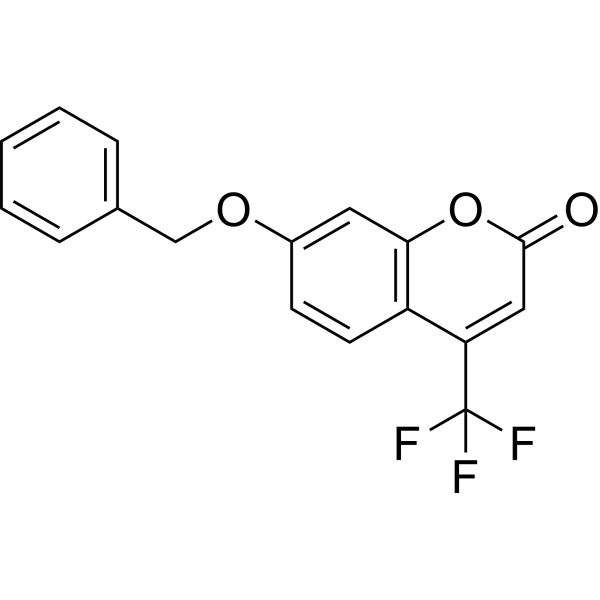 0 ImagesSynonyms: 7-BFC
7-Benzyloxy-4-(trifluoromethyl)coumarin (7-BFC) is a coumarin fluorescent substrate. 7-Benzyloxy-4-(trifluoromethyl)coumarin is a substrate for cDNA-expressed CYP1A2 and CYP3A4 and is metabolized to 7-hydroxy-4-trifluoromethylcoumarin (HFC). 7-Benzyloxy-4-(trifluoromethyl)coumarin is used for rapid CYP isoform metabolism and inhibition screening studies.
-
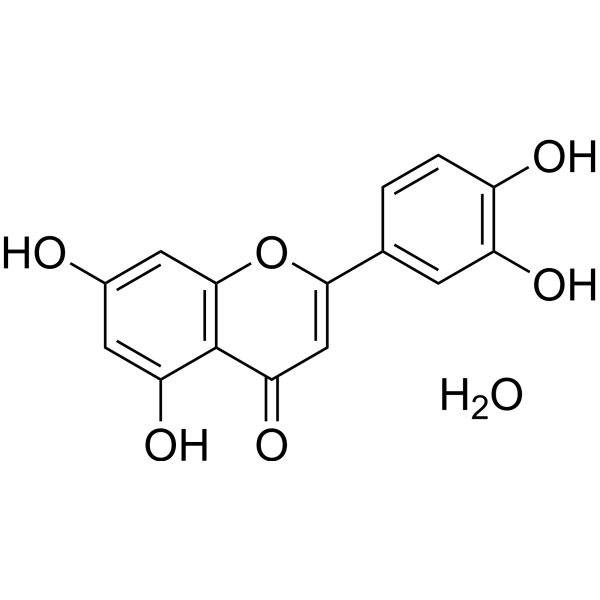
Luteolin monohydrate
 0 Images
Luteolin (monohydrate) is the monohydrate of Luteolin. Luteolin (Luteoline), a flavonoid, is also a potent Nrf2 inhibitor. Luteolin has anti-inflammatory and anticancer properties, induces apoptosis and cell cycle arrest in multiple human cancer cell lines, including non-small lung cancer cells, and inhibits cell metastasis and angiogenesis.
-
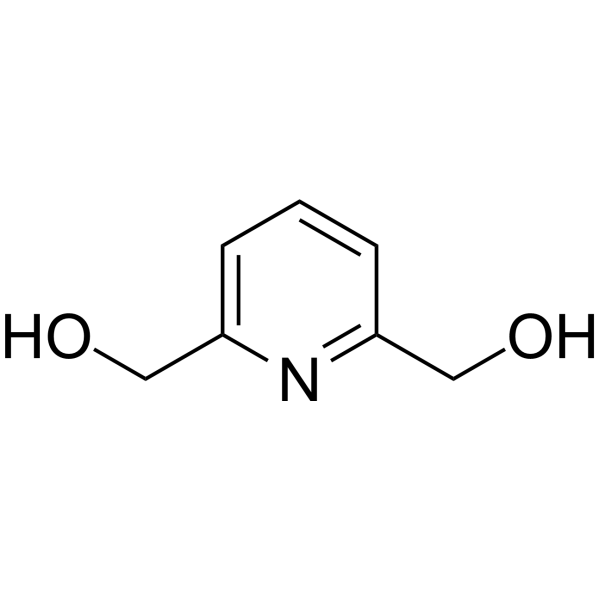
2,6-Pyridinedimethanol
 0 Images
2,6-Pyridinedimethanol is a biochemical reagent that can be used as a biological material or organic compound for life science related research.
-
1,2-Di(pyridin-4-yl)ethyne
 0 ImagesSynonyms: 4,4'-Ethyne-1,2-diyldipyridine
1,2-Di(pyridin-4-yl)ethyne (4,4'-Ethyne-1,2-diyldipyridine) is a metal-organic framework (MOF).
-
Aminopropyltrimethoxysilane
 0 ImagesCat. No.: HY-W036410CAS No.: 13822-56-5Synonyms: 3-Aminopropyltrimethoxysilane
Aminopropyltrimethoxysilane (APTMS) is a silane coupling agent. Aminopropyltrimethoxysilane couples with Tosylcellulose. Aminopropyltrimethoxysilane improves the thermal stability of the material. Aminopropyltrimethoxysilane can be used in the preparation of GNBP substrates.
-
Titanium(IV) oxide
 0 ImagesSynonyms: Titanium dioxide
Titanium(IV) oxide is a photosensitizer and photocatalyst. Titanium(IV) oxide can be used as a pharmaceutical excipient such as a flow aid, coating agent, sunscreen, colorant, etc. Pharmaceutical excipients or pharmaceutical excipients refer to other chemical substances used in the pharmaceutical process other than the drug ingredients. Pharmaceutical excipients generally refer to inactive ingredients in pharmaceutical preparations that can improve the stability, solubility and processability of pharmaceutical preparations. Pharmaceutical excipients also affect the absorption, distribution, metabolism and elimination (ADME) process of co-administered drugs. Titanium(IV) oxide can use light energy to generate electron-hole pairs to degrade pollutants. Photons excite electrons in TiO2 to generate active oxygen species (such as ·OH and ·O2-), thereby oxidizing and mineralizing pollutants such as organic compounds and heavy metals. TiO2 can be used in the research of environmental remediation fields such as water treatment, air purification and self-cleaning materials.
-
2,3-Dihydroxyterephthalic acid
 0 ImagesCat. No.: HY-W075181CAS No.: 19829-72-2Synonyms: 1,4-Benzenedicarboxylic acid,2,3-dihydroxy
2,3-Dihydroxyterephthalic acid (1,4-Benzenedicarboxylic acid,2,3-dihydroxy) is a metal-organic framework (MOF).
-
2,5-Dimercaptoterephthalic acid
 0 ImagesCat. No.: HY-W075206CAS No.: 25906-66-5Synonyms: 2,5-Disulfhydrylbenzene-1,4-dicarboxylic acid
2,5-Dimercaptoterephthalic acid (2,5-Disulfhydrylbenzene-1,4-dicarboxylic acid) is a metal-organic framework (MOF).
-
Bromocresol purple
 0 Images
Bromocresol purple is a pH indicator, whose color changes from yellow to purple when the pH increases from 5.2 to 6.8. Bromocresol purple can be used for detecting yeast cells with plasma membrane damage and measuring serum albumin concentrations.



