



Others
-
Others Related Products (75346)
Related Products (75346)


-
Palmitic anhydride
 0 ImagesSynonyms: Palmitic acid anhydride
Palmitic anhydride, a saturated fatty acid found in many natural sources such as animal fats and vegetable oils, is commonly used as a reagent in organic synthesis to introduce palmitoyl(hexadecanoyl) functional groups into other organic molecules, moreover, Palmitic anhydride has been Used in the production of surfactants, lubricants and plasticizers, as well as in the preparation of cosmetics and pharmaceuticals.
-
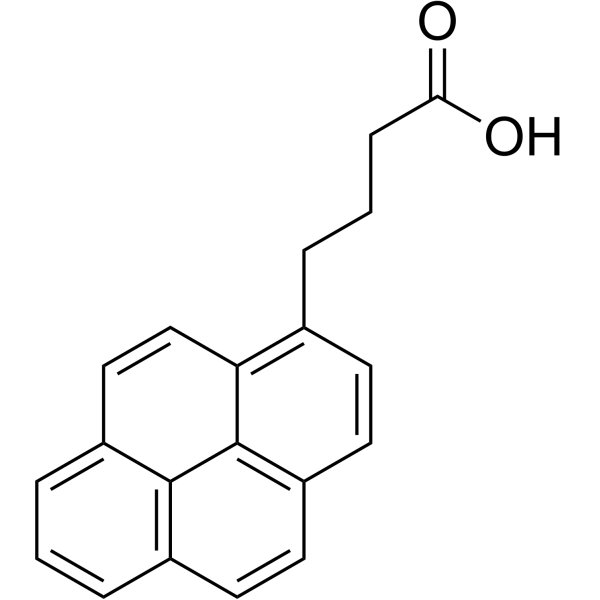
1-Pyrenebutyric acid
 0 Images
1-Pyrenebutyric acid is a fluorescence probe whose fluorescence lifetime depends on local oxygen and free radical concentrations. 1-Pyrenebutyric acid is used in fluorescence determination of DNA. 1-Pyrenebutyric acid can be used as a linker for biomolecules to form a self-assembled monolayer on grapheme. 1-Pyrenebutyric acid can also be used for the measurement of free radicals in solution and in living cells.
-
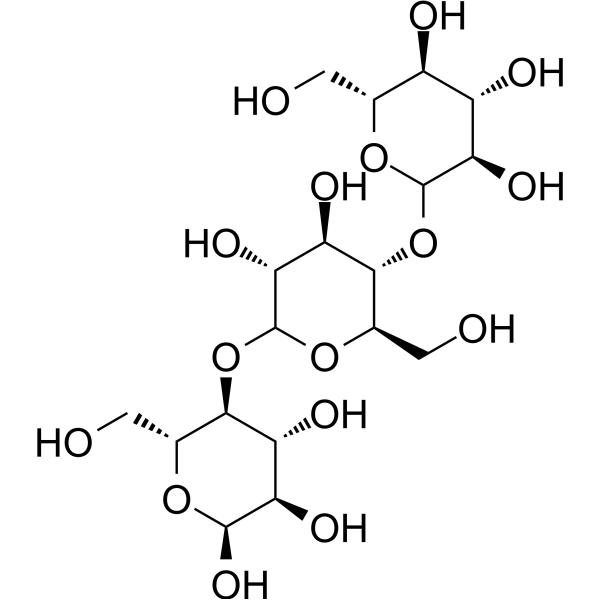
Dextrin
 0 ImagesCat. No.: HY-W115731CAS No.: 9004-53-9
Dextrins are a group of low molecular weight carbohydrates produced by the hydrolysis of starch. Dextrin is commonly used as a thickener, stabilizer or binder in a variety of foods including baked goods, beverages and confectionary. In addition, it is used in the production of adhesives, paper and textiles. Its unique chemical properties make it an important ingredient in a variety of industrial processes, especially in construction and packaging.
-
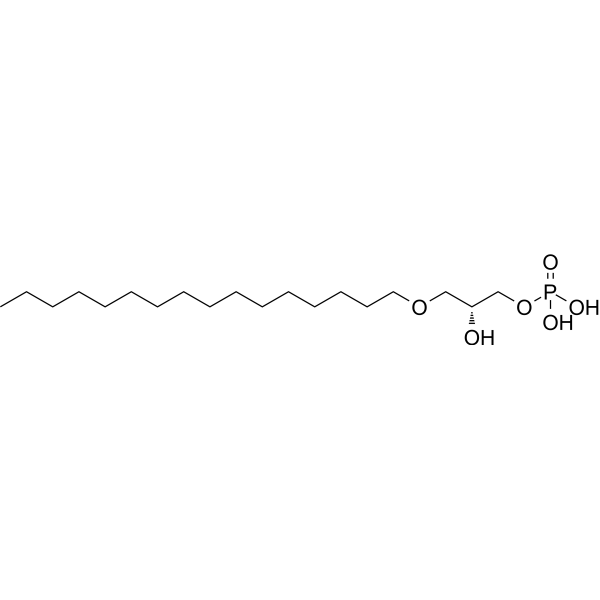
1-Hexadecyl lysophosphatidic acid
 0 ImagesSynonyms: 1-Hexadecyl LPA; 1-Palmityl LPA; LPA O-16:0
1-Hexadecyl lysophosphatidic acid is an ether analog of lysophosphatidic acid (LPA) containing a hexadecyl group in the sn-1 position. LPA binds to five different G protein-coupled receptors and mediates a variety of biological responses, including cell proliferation, smooth muscle contraction, platelet aggregation, neurite contraction, and cell motility.
-
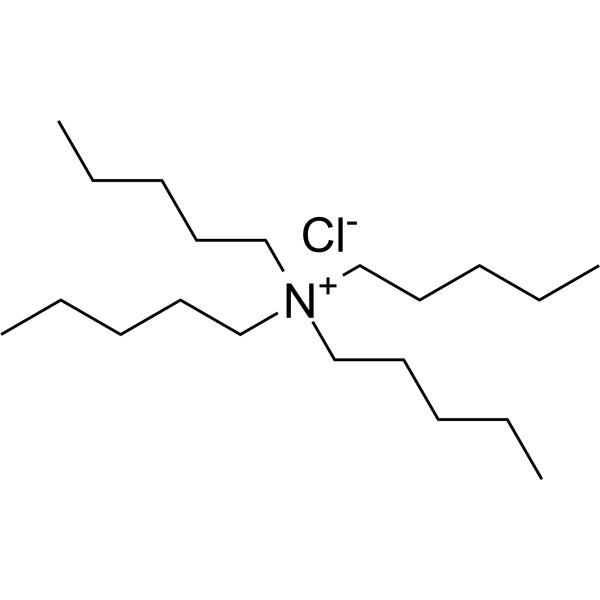
Tetraamylammonium chloride
 0 ImagesSynonyms: Tetrapentylammonium chloride
Tetraamylammonium chloride is an organic compound containing ammonium and chloride ions. It is commonly used as a phase transfer catalyst in organic synthesis, especially in the production of pharmaceuticals and agrochemicals. Tetraamylammonium Chloride has a strong base that facilitates the transfer of reactants between immiscible solvents, resulting in more efficient chemical reactions. In addition, it can also be used as an intermediate in the synthesis of other quaternary ammonium compounds.
-
N,N-Dimethyldodecylamine N-oxide
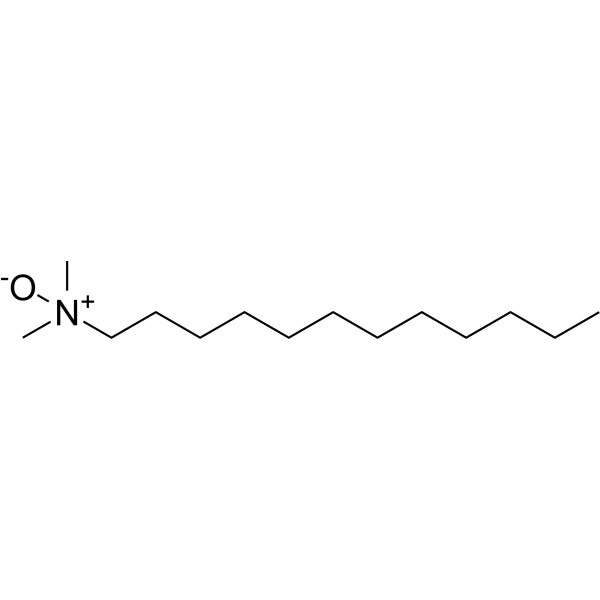 0 ImagesSynonyms: N,N-Dimethyldodecan-1-amine oxide; Dodecyldimethylamine oxide
N,N-Dimethyldodecylamine N-oxide is an amine oxide surfactant commonly used as a detergent, emulsifier and wetting agent in various industrial processes, especially in personal care products and household cleaning in the production of agents. N,N-Dimethyldodecylamine N-oxide has unique chemical properties that make it an effective ingredient in many product formulations to help reduce surface tension and enhance cleaning power.
-
Phe-Gly
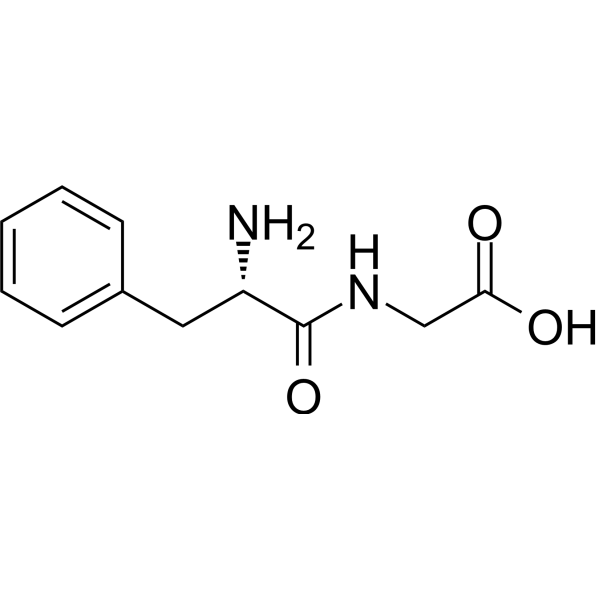 0 ImagesCat. No.: HY-W141936CAS No.: 721-90-4Synonyms: L-Phenylalanylglycine; H-Phe-Gly-OH
-
Hexa-L-Tyrosine
 0 Images
Hexa-L-Tyrosine is a tyrosine derivative.

-
Lens Culinaris Agglutinin
 0 ImagesCat. No.: HY-NP087Synonyms: LCA
Lens Culinaris Agglutinin (LCA) is a plant lectin that can be used as a probe to specifically bind biomolecules (such as polysaccharides, peptides, etc.).Lens Culinaris Agglutinin (LCA) is a biological material or organic compound that can be used in life science research.
-
Histone H1 (calf thymus)
 0 ImagesCat. No.: HY-NP155ACAS No.: 1523001-32-2
Histone H1 (calf thymus) is a linker histone subtype found in the deoxyribonucleoprotein of calf thymus and can be obtained by separation and purification from total calf thymus histones.

-
D-Lactate dehydrogenase, Microorganism
 0 Images
D-Lactate dehydrogenase, Microorganism (D-LDH) is an oxidoreductase that uses NAD+ or NADP+ as an acceptor and acts on the donor CH-OH group, and can catalyze the oxidation of D-lactate to pyruvate. D-Lactate dehydrogenase widely exists in bacteria and fungi, and is often used in biochemical research.
-
Inulinase
 0 Images
Inulinase is a fructan hydrolase (fructan hydrolase) that catalyzes the hydrolysis of β-(2→1) fructosidic linkages in inulin, producing fructose and oligosaccharides depending on the enzyme's source and type. Inulinase also exhibits hydrolytic activity toward fructose-containing substrates such as sucrose, raffinose and stachyose. Inulinase can be used in studies related to inulin degradation, production of fructose and fructooligosaccharides (FOS), carbohydrate metabolism and food processing.
-
Mca-(ala7,lys(dnp)9)-bradykinin
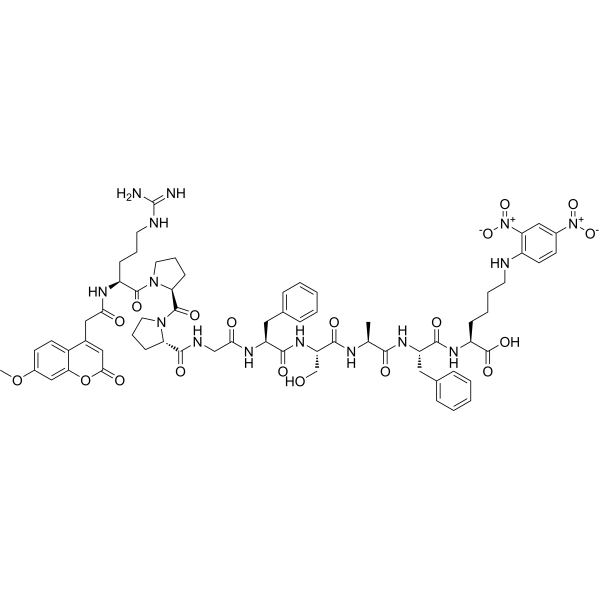 0 Images
Mca-(ala7,lys(dnp)9)-bradykinin is a sensitive fluorogenic substrate for ECE-1 (endothelin-converting enzyme-1). The incorporation of a (7-methoxycoumarin-4-yl)acetyl (Mca) fluorescent group and a 2,4-dinitrophenyl (Dnp) quenching group has resulted in a large fluorescence increase upon substrate cleavage.
-
Boc-Glu-Lys-Lys-AMC
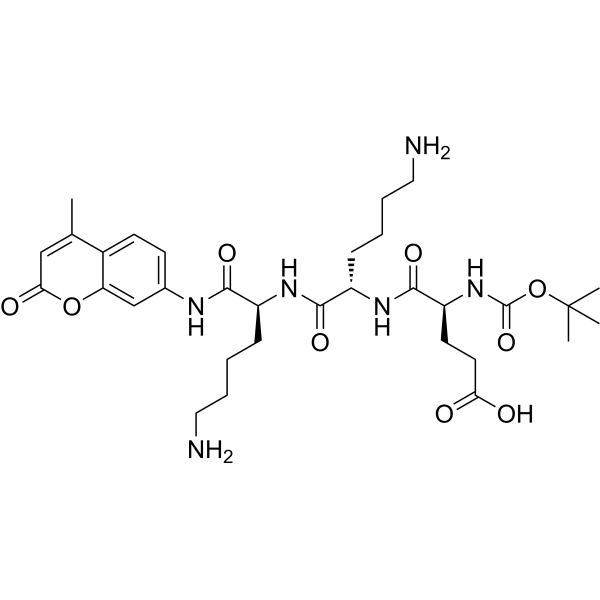 0 Images
Boc-Glu-Lys-Lys-AMC is a sensitive fluorogenic substrate for urokinase-activated plasmin.
-
Gly-Phe-AMC
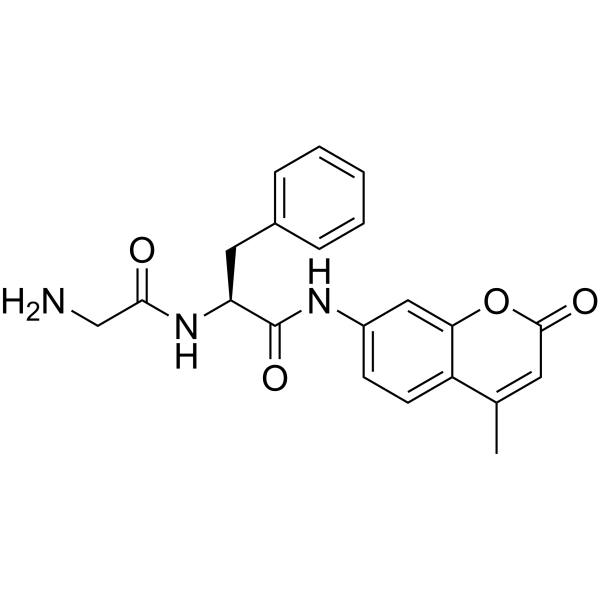 0 Images
Gly-Phe-AMC is a fluorogenic peptide substrate consisting of a peptide sequence composed of glycine and phenylalanine, linked to the fluorophore AMC. Gly-Phe-AMC also serves as a cathepsin C substrate. Gly-Phe-AMC is widely used to detect the activity of various proteases.
-
(Ser(Ac)3)-Ghrelin (mouse, rat)
 0 Images
(Ser(Ac)3)-Ghrelin (mouse, rat) is a polypeptide that can be found by peptide screening. Peptide screening is a research tool that pools active peptides primarily by immunoassay. Peptide screening can be used for protein interaction, functional analysis, epitope screening, especially in the field of agent research and development.
-
5-FAM-Amylin (human)
 0 Images
5-FAM-Amylin (human) is a polypeptide that can be found by peptide screening. Peptide screening is a research tool that pools active peptides primarily by immunoassay. Peptide screening can be used for protein interaction, functional analysis, epitope screening, especially in the field of agent research and development.



