



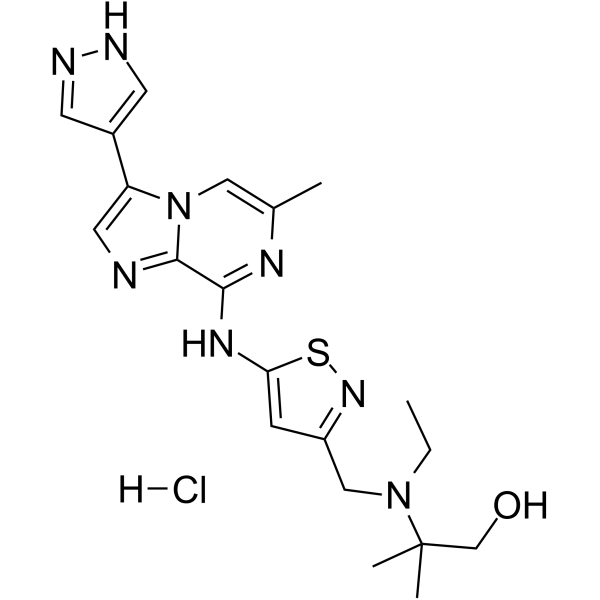
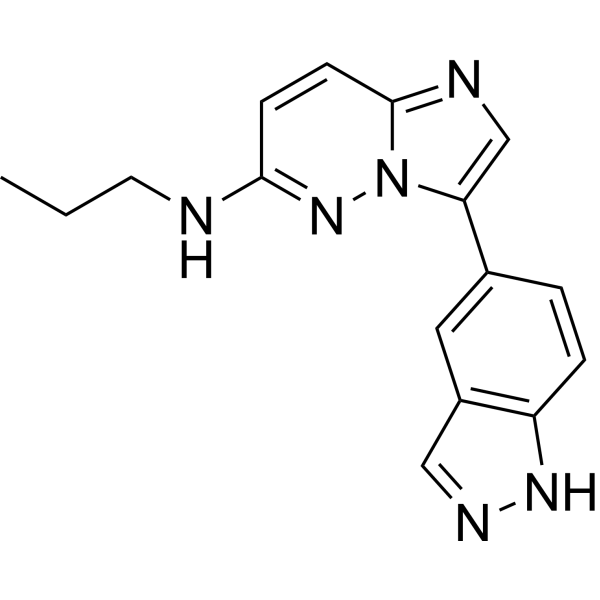
SCH-1473759 hydrochloride

Based on 1 Customer Validation
SCH-1473759 hydrochloride is an aurora inhibitor with IC50s of 4 and 13 nM for aurora A and B, respectively.
For research use only. We do not sell to patients.
- Purity : 99.19%
- CAS No.: 1094067-13-6
- Formula: C20H27ClN8OS
- Molecular Weight:463.00
-
Storage:
4°C, sealed storage, away from moisture
* In solvent : -80°C, 6 months; -20°C, 1 month (sealed storage, away from moisture)

To place orders, for customer services and technical support, please contact: MedChemExpress USA
Tel: 609-228-6898 E-mail: [email protected] [email protected]


-
 Biological Activity
-
Chemical Information
-
Solvent & Solubility
- Protocol
- Purity & Documentation
- References
-
 Help & FAQs


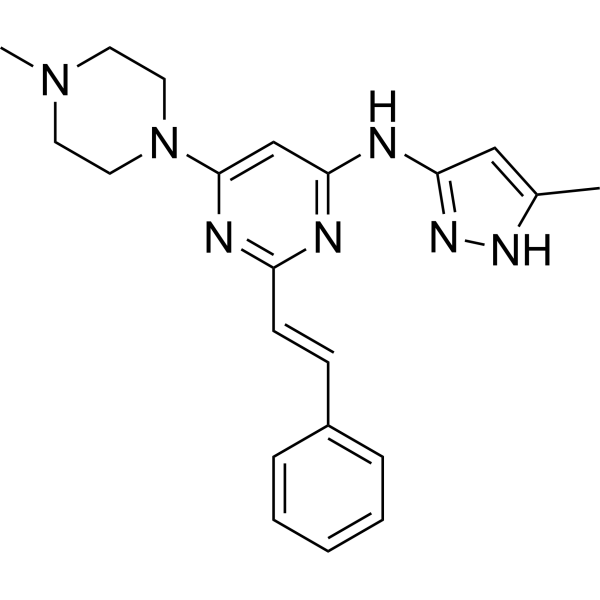
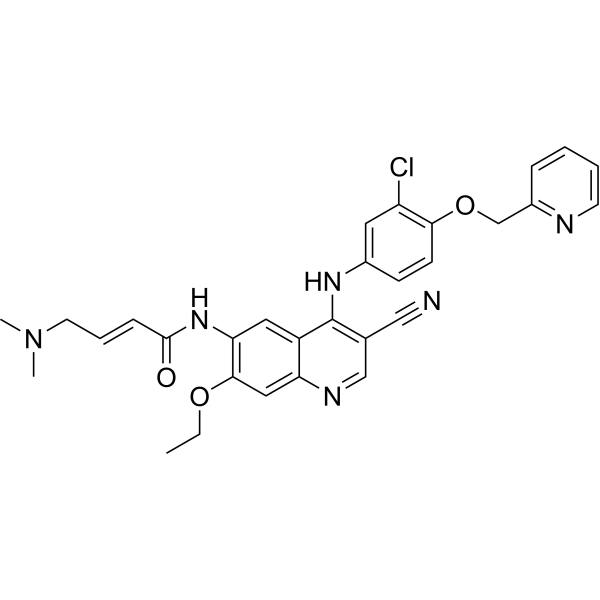
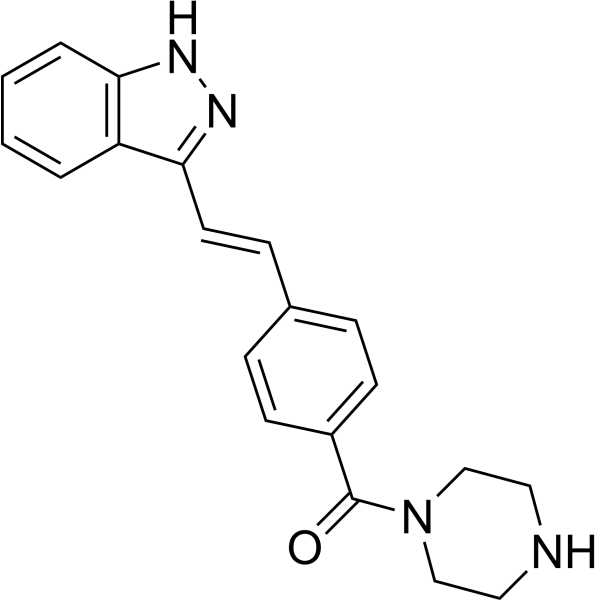
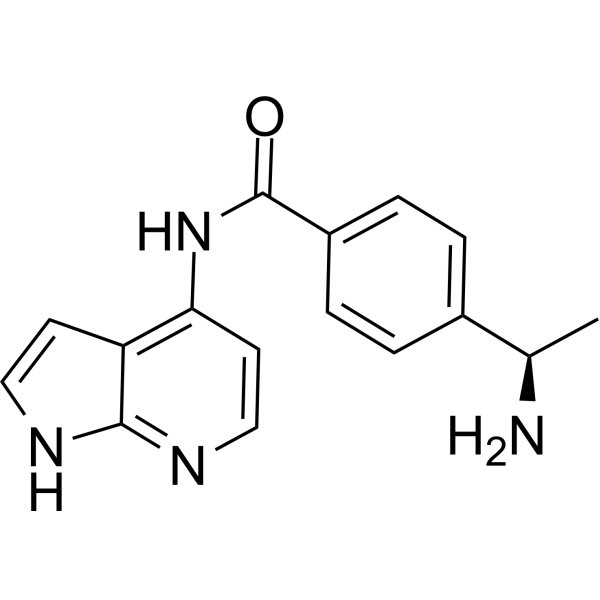
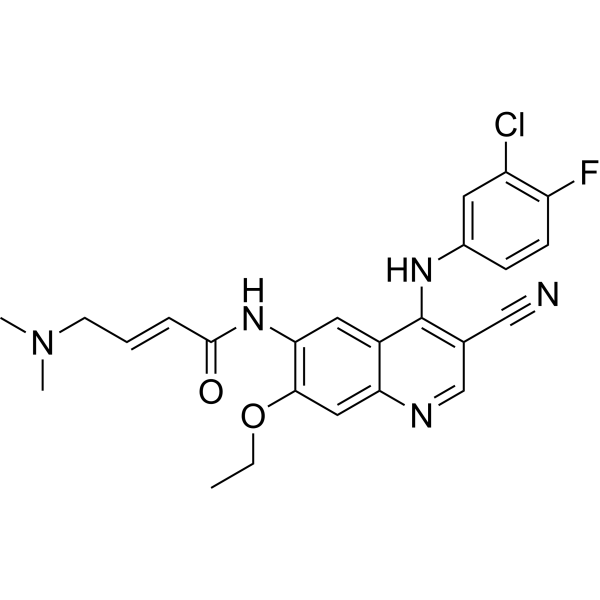
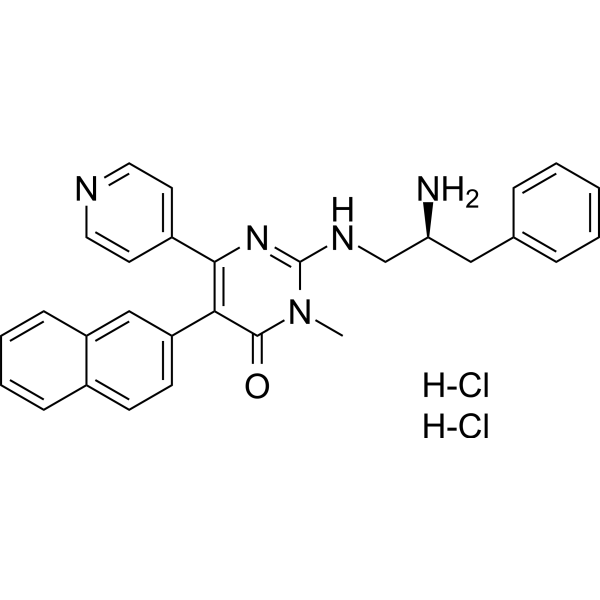
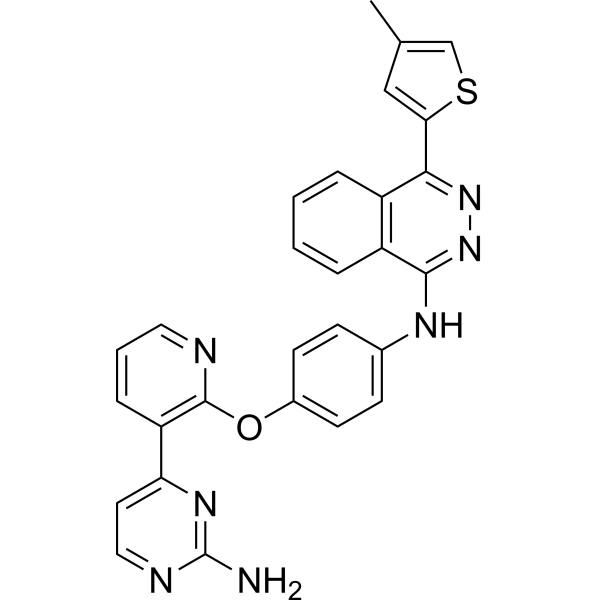
All Aurora Kinase Isoforms
More

Biological Activity
Description
IC50 & Target
[1]|
Aurora A 4 nM (IC50) |
Aurora B 13 nM (IC50) |
Cellular Effect
|
Cell Line

|
Type | Value | Description | References |
|---|---|---|---|---|
| HCT-116 | IC50 |
25 nM
Compound: 1
|
Inhibition of Aurora B in human HCT116 cells assessed as inhibition of histone H3 phosphorylation by immunofluorescence assay
Inhibition of Aurora B in human HCT116 cells assessed as inhibition of histone H3 phosphorylation by immunofluorescence assay
|
[PMID: 21128646] |
In Vitro
SCH-1473759 directly binds to aurora A and B with Kds of 20 and 30 nM, respectively. SCH-1473759 also inhibits the Src family of kinases (IC50<10 nM), Chk1 (IC50=13 nM), VEGFR2 (IC50=1 nM), and IRAK4 (IC50=37 nM). It does not have significant activity (IC50>1000 nM) against 34 other kinases representing different families of the kinome. SCH-1473759 inhibits HCT116 cells proliferation with an IC50 of 6 nM[1]. SCH 1473759 inhibits tumor cell lines from different tissues (breast, ovarian, prostate, lung, colon, brain, gastric, renal, skin, and leukemia). The most sensitive cell lines includ A2780, LNCap, N87, Molt4, K562, and CCRF-CEM with IC50 values <5 nM[2].
MedChemExpress (MCE) has not independently confirmed the accuracy of these methods. They are for reference only.
In Vivo
MedChemExpress (MCE) has not independently confirmed the accuracy of these methods. They are for reference only.


Chemical Information
-
CAS No. 1094067-13-6
-
Appearance Solid
-
Molecular Weight 463.00
-
Formula C20H27ClN8OS
-
Color White to yellow
-
SMILES
[H]Cl.CC1=CN2C(C(NC3=CC(CN(C(C)(CO)C)CC)=NS3)=N1)=NC=C2C4=CNN=C4
-
Shipping
Room temperature in continental US; may vary elsewhere.
-
Storage
4°C, sealed storage, away from moisture
* In solvent : -80°C, 6 months; -20°C, 1 month (sealed storage, away from moisture)


Solvent & Solubility
In Vitro:
H2O : 8.33 mg/mL (17.99 mM; ultrasonic and warming and heat to 60°C)
DMSO : 7.14 mg/mL (15.42 mM; ultrasonic and warming and heat to 60°C; Hygroscopic DMSO has a significant impact on the solubility of product, please use newly opened DMSO)
Please refer to the solubility information to select the appropriate solvent. Once prepared, please aliquot and store the solution to prevent product inactivation from repeated freeze-thaw cycles.
Storage method and period of stock solution: -80°C, 6 months; -20°C, 1 month (sealed storage, away from moisture). When stored at -80°C, please use it within 6 months. When stored at -20°C, please use it within 1 month.
* Note: If you choose water as the stock solution, please dilute it to the working solution, then filter and sterilize it with a 0.22 μm filter before use.
Please refer to the solubility information to select the appropriate solvent. Once prepared, please aliquot and store the solution to prevent product inactivation from repeated freeze-thaw cycles.
Storage method and period of stock solution: -80°C, 6 months; -20°C, 1 month (sealed storage, away from moisture). When stored at -80°C, please use it within 6 months. When stored at -20°C, please use it within 1 month.
* Note: If you choose water as the stock solution, please dilute it to the working solution, then filter and sterilize it with a 0.22 μm filter before use.
Concentration (start) × Volume (start) = Concentration (final) × Volume (final)
In Vivo:
Select the appropriate dissolution method based on your experimental animal and administration route.
- For the following dissolution methods, please ensure to first prepare a clear stock solution using an In Vitro approach and then sequentially add co-solvents:
- To ensure reliable experimental results, the clarified stock solution can be appropriately stored based on storage conditions. As for the working solution for In Vivo experiments, it is recommended to prepare freshly and use it on the same day.
- The percentages shown for the solvents indicate their volumetric ratio in the final prepared solution. If precipitation or phase separation occurs during preparation, heat and/or sonication can be used to aid dissolution.
Add each solvent one by one: 10% DMSO 40% PEG300 5% Tween-80 45% Saline
Solubility: ≥ 0.71 mg/mL (1.53 mM); Clear solution
This protocol yields a clear solution of ≥ 0.71 mg/mL (saturation unknown).
Taking 1 mL working solution as an example, add 100 μL DMSO stock solution (7.1 mg/mL) to 400 μL PEG300, and mix evenly; then add 50 μL Tween-80 and mix evenly; then add 450 μL Saline to adjust the volume to 1 mL.
Preparation of Saline: Dissolve 0.9 g sodium chloride in ddH₂O and dilute to 100 mL to obtain a clear Saline solution.
Add each solvent one by one: 10% DMSO 90% (20% SBE-β-CD in Saline)
Solubility: ≥ 0.71 mg/mL (1.53 mM); Clear solution
This protocol yields a clear solution of ≥ 0.71 mg/mL (saturation unknown).
Taking 1 mL working solution as an example, add 100 μL DMSO stock solution (7.1 mg/mL) to 900 μL 20% SBE-β-CD in Saline, and mix evenly.
Preparation of 20% SBE-β-CD in Saline (4°C, storage for one week): 2 g SBE-β-CD powder is dissolved in 10 mL Saline, completely dissolve until clear.
In Vivo Dissolution Calculator
Please enter the basic information of animal experiments:
-
-
-
-
Recommended: Prepare an additional quantity of animals to account for potential losses during experiments.
Please enter your animal formula composition:
-
%DMSO +
Recommended: Keep the proportion of DMSO in working solution below 2% if your animal is weak.
-
%+
-
+%Tween-80 + +
-
%Saline +
The co-solvents required include: DMSO, . All of co-solvents are available by MedChemExpress (MCE). , Tween 80. All of co-solvents are available by MedChemExpress (MCE).
Working solution concentration: 0.22 mg/mL
Method for preparing stock solution: mg drug dissolved in μL DMSO. Stock solution concentration: mg/mL. * In solvent : -80°C, 6 months; -20°C, 1 month (sealed storage, away from moisture)
1. Take μL DMSO stock solution;
2. Add μL .
μL , mix evenly;
3. Then add μL Tween 80, mix evenly;
4. Then add μL
Please ensure that the stock solution in the first step is dissolved to a clear state, and add co-solvents in sequence. You can use ultrasonic heating (ultrasonic cleaner, recommended frequency 20-40 kHz), vortexing, etc. to assist dissolution.

Protocol
Kinase Assay[1]
Aurora A and Aurora B kinase assays are performed in low protein binding 384-well plates. SCH-1473759 is diluted in 100% DMSO to the desired concentrations. For the Aurora A assay, each reaction consists of 8 nM enzyme Aurora A, 100 nM Tamra-PKAtide, 25μM ATP, 1 mM DTT, and kinase buffer. For the Aurora B assay, each reaction consisted of 26 nM enzyme Aurora B, 100 nM Tamra-PKAtide, 50 μM ATP, 1 mM DTT, and kinase buffer. Dose-response curves are plotted from inhibition data generated in duplicate, from 8 point serial dilutions of SCH-1473759[1].
MedChemExpress (MCE) has not independently confirmed the accuracy of these methods. They are for reference only.
Cell Assay[1]
Cells are plated at a cell density ranging from 625 to 3,750 cells per well and treated in triplicate wells with SCH-1473759 (0.1% final DMSO concentration). A plate is stained at the start of the study (zero hour) and a second plate is incubated for 72 hour at 37°C and then stained. Cells are fixed with fixation solution plus 1,000 nM Hoechst 33342 dye and incubated for 30 minutes. The fixation solution is removed and cells are ished twice with PBS. Then 15 immunofluorescence images are captured at 10X using automated fluorescent microscope [1].
MedChemExpress (MCE) has not independently confirmed the accuracy of these methods. They are for reference only.
Animal Administration[2]
Mice: Anti-tumor efficacy of SCH 1473759 dosed i.p. is evaluated in mice bearing established A2780 ovarian tumor xenografts. Three schedules are tested at their respective maximum tolerated doses: 10 mg/kg bid (twice daily), 20 mg/kg qd (daily), and 100 mg/kg day 0, 4, 7. Additionally, 60 mg/kg day 0, 4, 7 is tested[2].
MedChemExpress (MCE) has not independently confirmed the accuracy of these methods. They are for reference only.


Purity & Documentation
-
Data Sheet (279 KB)
-
SDS (252 KB)
- English - EN (252 KB)
- Français - FR (252 KB)
- Deutsch - DE (252 KB)
- Norwegian - NO (252 KB)
- Español - ES (252 KB)
- Swedish - SV (252 KB)
- Italian - IT (252 KB)
- Korean - KR (252 KB)
- Portuguese - PT (252 KB)
-
Handling Instructions (2659 KB)
References
[1]. Yu T, et al. Discovery of a Potent, Injectable Inhibitor of Aurora Kinases Based on the Imidazo-[1,2-a]-Pyrazine Core. ACS Med Chem Lett. 2010 Jun 7;1(5):214-8. [Content Brief]
[2]. Basso AD, et al. SCH 1473759, a novel Aurora inhibitor, demonstrates enhanced anti-tumor activity in combination with taxanes and KSP inhibitors. Cancer Chemother Pharmacol. 2011 Oct;68(4):923-33. [Content Brief]


Complete Stock Solution Preparation Table
Please refer to the solubility information to select the appropriate solvent. Once prepared, please aliquot and store the solution to prevent product inactivation from repeated freeze-thaw cycles.
Storage method and period of stock solution: -80°C, 6 months; -20°C, 1 month (sealed storage, away from moisture). When stored at -80°C, please use it within 6 months. When stored at -20°C, please use it within 1 month.
| Optional Solvent | Concentration Solvent Mass | 1 mg | 5 mg | 10 mg | 25 mg |
|---|---|---|---|---|---|
| DMSO / H2O | 1 mM | 2.1598 mL | 10.7991 mL | 21.5983 mL | 53.9957 mL |
| 5 mM | 0.4320 mL | 2.1598 mL | 4.3197 mL | 10.7991 mL | |
| 10 mM | 0.2160 mL | 1.0799 mL | 2.1598 mL | 5.3996 mL | |
| 15 mM | 0.1440 mL | 0.7199 mL | 1.4399 mL | 3.5997 mL |
* Note: If you choose water as the stock solution, please dilute it to the working solution, then filter and sterilize it with a 0.22 μm filter before use.


SCH-1473759 hydrochloride Related Classifications
HY-10483 Related Classifications
 Powered by Bioz