



Apolipoprotein Inhibitor
- 1
- 2
-
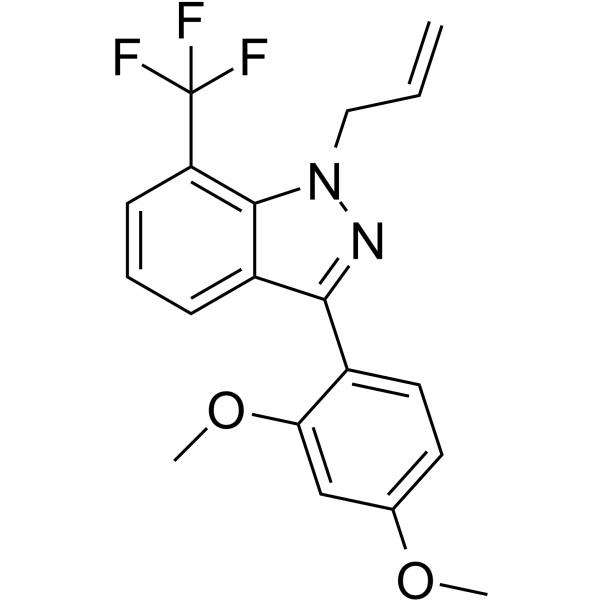
SGA360
 0 Images
SGA360 suppress inflammatory SAA1 signaling in an AHR-dependent manner through a mechanism that does not require AHR binding to its cognate response element (partial antagonist).
-
Lepodisiran
 0 ImagesCat. No.: HY-177640CAS No.: 2808361-18-2Synonyms: LY3819469
Lepodisiran (LY3819469) is a GalNAc-conjugated small interfering RNA lipid-lowering agent. Lepodisiran targets the hepatic LPA gene and degrades apolipoprotein (a) mRNA to silence its expression, thereby effectively reducing the production of apolipoprotein (a) and serum lipoprotein (a) in a dose-dependent manner. Lepodisiran can be used in studies related to atherosclerotic cardiovascular disease.
-
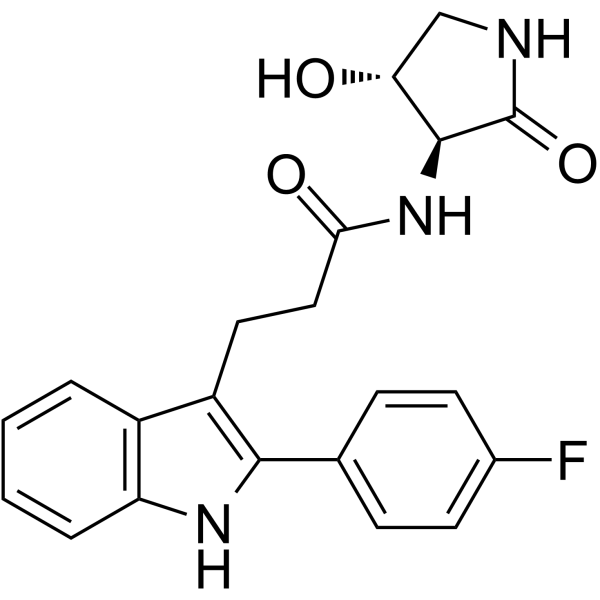
APOL1-IN-1
 0 Images
APOL1-IN-1 is an apolipoprotein L1 (APOL1) inhibitor that suppresses the functional activity of the APOL1 G1 risk variant. APOL1-IN-1 inhibits the pore function of APOL1, thereby reducing APOL1-mediated membrane permeability and abnormal ion flux, and thus intervenes in APOL1-related cellular injury processes. APOL1-IN-1 is used in research related to focal segmental glomerulosclerosis and non-diabetic kidney disease.
-
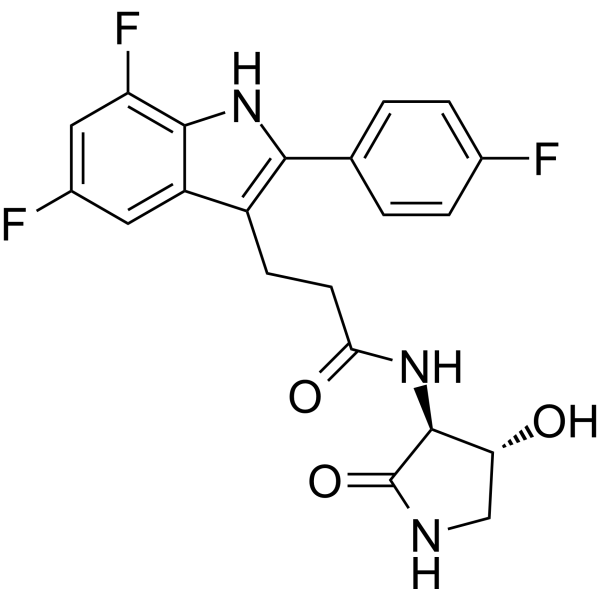
Inaxaplin
 0 ImagesSynonyms: VX-147
Inaxaplin (VX-147) is an orally active apolipoprotein L1 (APOL1) function inhibitor (WO2020131807, compound 2). Inaxaplin can be used for the research of kidney disease.
-
Zerlasiran sodium
 0 ImagesCat. No.: HY-147425ASynonyms: SLN360 sodium
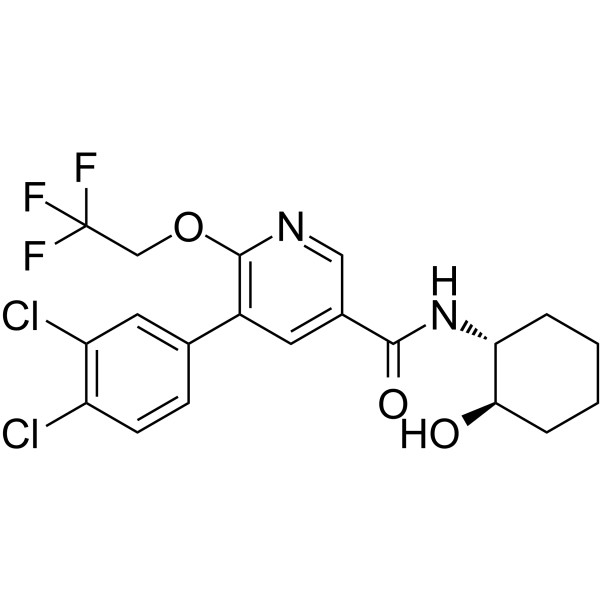
Zerlasiran (SLN360) sodium is a siRNA targeting apolipoprotein A (ApoA). Zerlasiran sodium targets hepatic ApoA synthesis via RNA interference to degrade encoding mRNA. Zerlasiran sodium can be used for the research of atherosclerotic cardiovascular disease and elevated ApoA levels.
-
Opemalirsen sodium
 0 ImagesCat. No.: HY-177653ACAS No.: 2639854-33-2Synonyms: AZD2373 sodium, ION-972190 sodium
Opemalirsen sodium is an antisense oligonucleotide targeted to apolipoprotein L1 (APOL1). It is used for the study of Kidney disorders.
-
Zerlasiran
 0 ImagesCat. No.: HY-147425CAS No.: 2646703-64-0Synonyms: SLN360
Zerlasiran (SLN360) is a siRNA targeting apolipoprotein A (ApoA). Zerlasiran targets hepatic ApoA synthesis via RNA interference to degrade encoding mRNA. Zerlasiran can be used for the research of atherosclerotic cardiovascular disease and elevated ApoA levels.
-
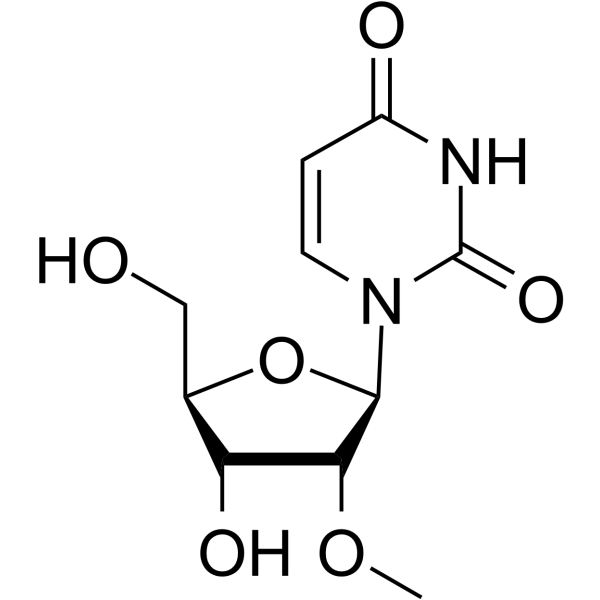
2′-O-Methyluridine-d3
 0 ImagesCat. No.: HY-W011824SPurity: 99.19%
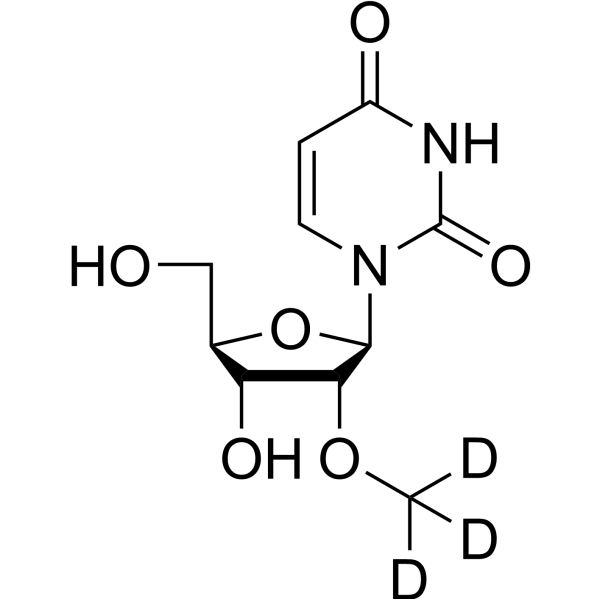
2′-O-Methyluridine-d3 is deuterium labeled 2′-O-Methyluridine (HY-W011824).2’-O-Methyluridine is a modified nucleoside that can be found in T. thermophile tRNA. 2’-O-Methyluridine level in serum is decreased in patients with breast cancer.
-
2′-O-Methyluridine (Standard)
 0 Images
2′-O-Methyluridine (Standard) is the analytical standard of 2′-O-Methyluridine (HY-W001824). This product is intended for research and analytical applications. 2’-O-Methyluridine is a modified nucleoside that can be found in T. thermophile tRNA. 2’-O-Methyluridine level in serum is decreased in patients with breast cancer.
-
Mipomersen sodium scrambled negative control
 0 ImagesCat. No.: HY-108764B
Mipomersen sodium scrambled negative control is the sequence scrambled negative control of Mipomersen sodium.
-
Lp(a)-IN-8
 0 ImagesCat. No.: HY-173322CAS No.: 3070206-18-4
Lp(a)-IN-8 is a Lp(a) assembly inhibitor with an IC50 of 0.749 nM. Lp(a)-IN-8 can be used in studies related to cardiovascular diseases and elevated plasma Lp(a) levels.
-
Alcedaplin
 0 ImagesCat. No.: HY-187856CAS No.: 2956780-66-6Synonyms: MZE829
Alcedaplin (MZE829) is an Apolipoprotein L1 (ApoL1) function inhibitor.
-
APOL1-IN-3
 0 ImagesCat. No.: HY-176196CAS No.: 2762826-72-0
APOL1-IN-3 (Compound 1) is an APOL1 inhibitor. APOL1-IN-3 can be used in the research of kidney diseases.
-
FAM labled Zerlasiran sodium
 0 ImagesCat. No.: HY-147425DSynonyms: FAM labled SLN360 sodium
FAM labled Zerlasiran sodium is a FAM labled Zerlasiran sodium (HY-147425A). Zerlasiran sodium is a siRNA targeting apolipoprotein A (ApoA). Zerlasiran sodium targets hepatic ApoA synthesis via RNA interference to degrade encoding mRNA. Zerlasiran sodium can be used for the research of atherosclerotic cardiovascular disease and elevated ApoA levels.
-
Obicetrapib potassium
 0 ImagesCat. No.: HY-18778BCAS No.: 866399-90-8Synonyms: TA-8995 potassium; DEZ-001 potassium; AMG-899 potassium
Obicetrapib (TA-8995; DEZ-001) potassium is an orally active cholesteryl ester transfer protein (CETP) inhibitor. Obicetrapib potassium potently reduces atherogenic lipoproteins (such as LDL-C, ApoB, Lp (a)) and increases HDL-C. Obicetrapib potassium can be used for the research of dyslipidemia and atherosclerotic cardiovascular disease (ASCVD).
-
APOL1-IN-2
 0 ImagesCat. No.: HY-169932CAS No.: 2956781-84-1
APOL1-IN-2 (Compound 467) is the inhibitor for Apolipoprotein 1 (APOL1). APOL1-IN-2 reduces the APOL1 G2/G1 induced cell death in HEK293 with EC50 of 4.74 nM and 14.3 nM. APOL1-IN-2 reduces the APOL1 G2/G1/G0 induced death of trypanosomes with EC50 of 2.24, 6.03 and 3.72 nM, respectively.
-
Tiadenol
 0 Images
Tiadenol is an orally effective lipid-lowering compound and peroxisome proliferator. Tiadenol promotes peroxisome-associated fatty acid metabolism, and its induction of the activities of enzymes such as palmitoyl-CoA hydrolase, carnitine acetyl-transferase and catalase is mainly associated with de novo protein synthesis. The triglyceride-lowering effect of Tiadenol is not accompanied by increased activities of lipoprotein lipase (LPL) and hepatic lipase (HL), and it reduces VLDL Apo E. Tiadenol can be used in studies related to lipid metabolism, peroxisome proliferation and hyperlipoproteinemia.
-
5(Z),11(Z),14(Z)-Eicosatrienoic acid
 0 Images
5(Z),11(Z),14(Z)-Eicosatrienoic acid (Sciadonic acid), a polyunsaturated fatty acid sourced from maritime pine seed oil, gymnospermae leaves and seeds, and freshwater gastropods, has been shown to reduce high-density lipoprotein and ApoA1 levels in transgenic mice expressing human ApoA1 when included in their diet. In vitro studies indicate that it diminishes cholesterol efflux, and when applied topically in its methyl ester form, it alleviates inflammatory processes, likely by displacing arachidonic acid from phospholipid pools and lowering concentrations of downstream inflammatory mediators such as prostaglandin E2 and leukotrienes.
- 1
- 2



