



Fluorescent Dye
Fluorescence is a phenomenon of photoluminescence in luminescence. When an atom is irradiated by light, some electrons around the nucleus jump from their original orbitals to higher energy orbitals under the influence of light energy, i.e., from the ground state to the first or second excited single-line state, etc. Due to the instability of the first or second excited singlet state, the electron returns from the excited singlet state to the ground state accompanied by released energy, resulting in fluorescence.
Fluorescent dyes can be covalently bound or physically adsorbed in the structure of the substance. The fluorescence properties allow for the characterization, localization and quantitative analysis of the labeled object. Fluorescent dyes have shown great potential for the detection of proteins, nucleic acids, cells, and immunoassays, attributed to the advantages in non-radioactive contamination, simple experimental operation and easy observation.
Fluorescent dyes have penetrated many fields such as pharmacology, physiology, environmental science, and information science, as well as functional studies of proteins and drug screening.
All Product Categories
-
Fluorescent Dye Related Products (4790)
Related Products (4790)

-
Antibodies (4)
-
Basic Brown 1
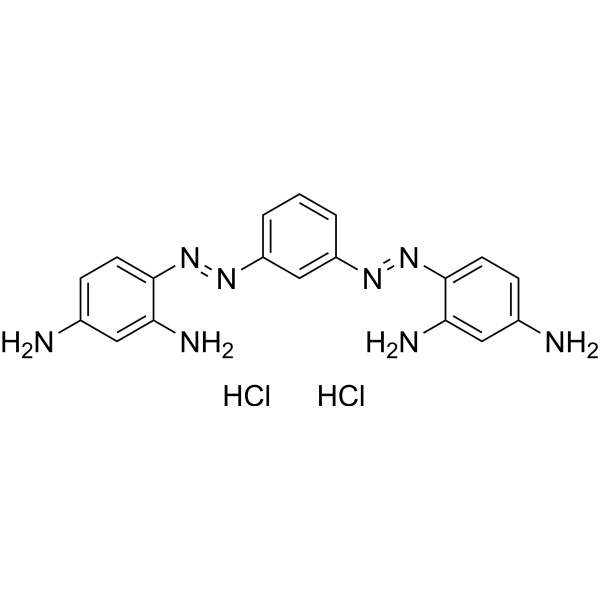 0 ImagesCat. No.: HY-D0468CAS No.: 10114-58-6Basic Brown 1 is a diazo dyes.
-
H-D-Val-Leu-Lys-AFC
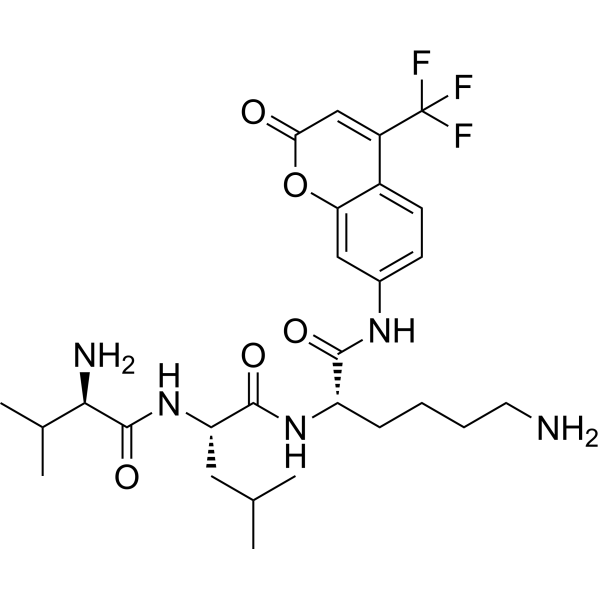 0 ImagesCat. No.: HY-P5356CAS No.: 97055-77-1Synonyms: Plasmin substrateH-D-Val-Leu-Lys-AFC (Plasmin substrate) is a biological active peptide. (This is a fluorescent plasmin substrate, Abs/Em=380/500 nm.Plasmin belongs to the family of serine proteases. It plays a key role in fibrinolysis by dissolving fibrin in blood clots. Besides fibrinolysis, plasmin is also involved in such physiological and pathological processes as wound healing, liver repair, and the maintenance of liver homeostasis.)
-
Dansyl-Gly-Cys-Val-Leu-Ser
 0 ImagesCat. No.: HY-P4337CAS No.: 143744-88-1Dansyl-Gly-Cys-Val-Leu-Ser is a dansyl-labeled peptide.
-
Lys-Pro-AMC
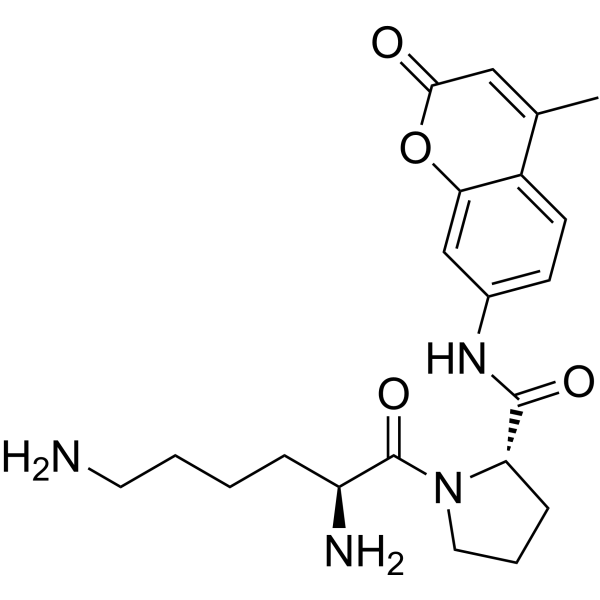 0 ImagesCat. No.: HY-P4426CAS No.: 133066-53-2Lys-Pro-AMC is a fluorogenic substrate for the detection and measurement of the activity of specific enzymes.
-
Dextran-CY5.5 (MW 10000)
 0 ImagesCat. No.: HY-D2460ADextran-CY5.5 (MW 10000) is a CY5.5 (HY-D0924) labeled Dextran (HY-112624) conjugate. CY5.5 is a Cyanine dye (The excitation wavelength is usually 673 nm and the emission wavelength is 707 nm) that can be used for the labeling of proteins, antibodies and small molecular compounds. Dextran has an inhibitory effect on thrombocyte aggregation and coagulation factors and is used as a plasma volume expander.
-
Rhodamine 6G (Standard)
 0 ImagesRhodamine 6G (Standard) is the analytical standard of Rhodamine 6G. This product is intended for research and analytical applications. Rhodamine dyes are membrane-permeable cationic fluorescent probes that specifically recognize mitochondrial membrane potentials, thereby attaching to mitochondria and producing bright fluorescence, and at certain concentrations, rhodamine dyes have low toxicity to cells, so they are commonly used to detect mitochondria in animal cells, plant cells, and microorganisms.
-
Chromozym PL
 0 ImagesChromozym PL is a chromogenic substrate for plasmin, and the enzymatic reaction can be carried out in 0.1mL Tris-HCl buffer (50 mM, pH 7.8). 100 μM Chromozym PL was dissolved and prepared. After adding the hydrolase, the generation of p-nitroaniline (pNA) at 405 nm was continuously observed, and the hydrolysis products were calculated.
-
Pigment Yellow 14
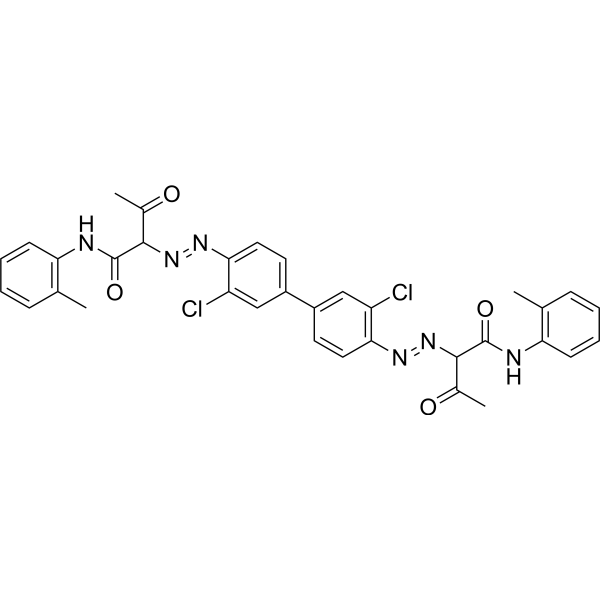 0 ImagesPigment Yellow 14 is a fluorescent dye.
-
Vari Fluor 350 SE
 0 ImagesCat. No.: HY-D1798Synonyms: VF 350 SEVari Fluor 350 SE (VF 350 SE) is a dye marker of the Vari Fluor SE series (Ex/Em=350 nm/448 nm). The Vari Fluor SE series of dyes are a class of fluorescent dyes containing NHS ester groups used to label free amines (-NHX) on antibodies, proteins, peptides, amine-modified oligonucleotides and other biomolecules.
-
KMG-104AM
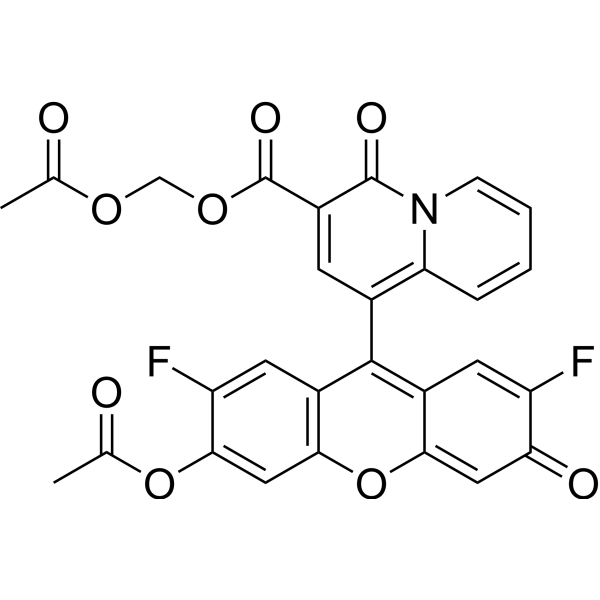 0 ImagesCat. No.: HY-128536CAS No.: 2436544-28-2KMG-104AM is a Mg2+ fluorescent probe. KMG-104AM is a membrane-permeable ester-modified derivative of KMG-104, which serves as a reporter and imaging agent. KMG-104AM can track the increase in intracellular free magnesium ion concentration induced by mitochondrial uncoupling. KMG-104AM enables visualization of the three-dimensional distribution of intracellular magnesium ion concentration. KMG-104AM is applicable to research related to the functions of intracellular magnesium ions.
-
Boc-Asp(OBzl)-Pro-Arg-AMC
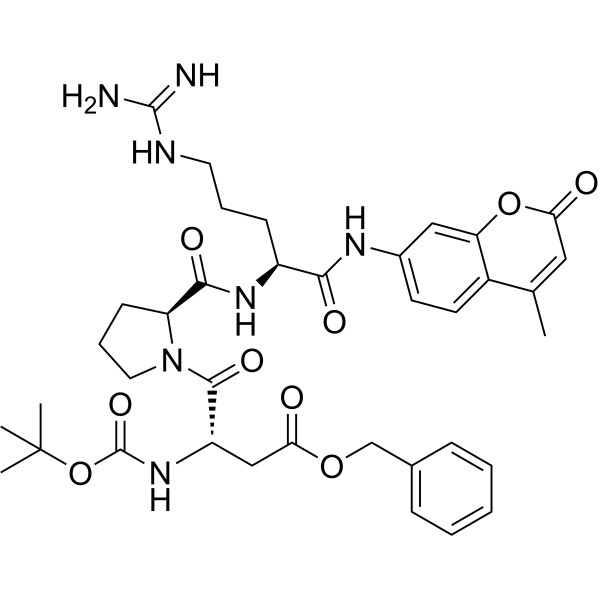 0 ImagesCat. No.: HY-P4419CAS No.: 113866-00-5Boc-Asp(OBzl)-Pro-Arg-AMC is a fluorogenic substrate for the determination of protease activity. Boc-Asp(OBzl)-Pro-Arg-AMC undergoes hydrolysis and releases the fluorescent product 7-amino-4-methylcoumarin (AMC). The excitation and emission wavelengths are 351 nm and 430 nm, respectively.
-
Copper Fluor-4 (solution)
 0 ImagesCat. No.: HY-DY1104CAS No.: 2365532-64-3Synonyms: CF4 (solution)Copper Fluor-4 (solution) (CF4 (solution)) is a Cu+-specific fluorescent probe based on a rhodol dye scaffold. Copper Fluor-4 solution has high copper selectivity with a Kd value of 2.9×10?13 M, particularly over zinc and iron, as well as abundant cellular alkali and alkaline earth metals. Copper Fluor-4 solution is stable in a physiologically relevant pH regime between 6 and 8 (wavelengths of 415 nm for excitation and 660 nm for emission).
Solvent and concentration: DMSO: 5 mM
-
D-Val-Leu-Lys-pNA acetate
 0 ImagesCat. No.: HY-168378APurity: 99.74%Synonyms: S-2251 acetateD-Val-Leu-Lys-pNA acetate (S-2251 acetate) is a chromogenic peptide substrate that serves as a characteristic substrate for plasmin and plasminogen. D-Val-Leu-Lys-pNA acetate acts as a sensitive substrate for the DFE27 serine protease derived from Bacillus subtilis DC27. Catalyzed by plasmin, D-Val-Leu-Lys-pNA acetate binds and hydrolyzes to release p-nitroaniline (pNA), which can be detected colorimetrically at 405 nm as a measure of fibrinolytic activity.
-
Fluorescent polyamine probe-1
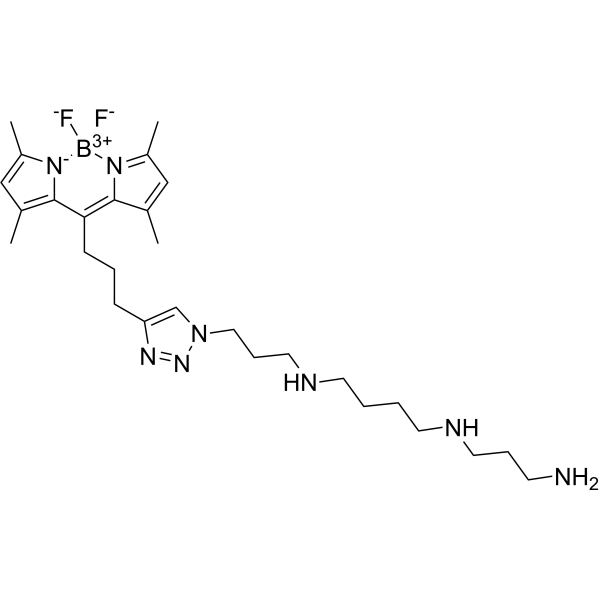 0 ImagesCat. No.: HY-D1478CAS No.: 2678634-03-0Fluorescent polyamine probe-1 (compound 15) is a linear polyamine probe with high uptake efficiency. Fluorescent polyamine probe-1 can be used for the research of transport system into cancer cells.
-
CY5.5-PEG2000-Mal
 0 ImagesCat. No.: HY-D2373CY5.5-PEG2000-Mal is used for preparing fluorescently labeled molecules. It is formed by condensing maleimide groups (Mal), PEG2000, and fluorescent dye CY5.5 (HY-D0924).
-
FITC-Polysucrose 100
 0 ImagesCat. No.: HY-179074DFITC-Polysucrose 100 is FITC-labeled Polysucrose 100. FITC-Polysucrose 100 is mainly used for permeability and microcirculation studies (Ex/Em = 488/525 nm).
-
ATTO 488 maleimide
 0 ImagesCat. No.: HY-D2002CAS No.: 1219127-42-0ATTO 488 maleimide is a thiol-reactive fluorescent labeling reagent that forms a covalent bond via its maleimide group with the thiol group of the C-terminal cysteine residue of α-synGC. ATTO 488 maleimide enables α-syn fiber imaging via super-resolution stimulated emission depletion (STED) fluorescence microscopy. ATTO 488 maleimide is applicable to research related to Parkinson's disease (Ex/Em = 488/592nm).
-
4-Amino-3-hydroxynaphthalene-1-sulfonic acid
 0 Images4-Amino-3-hydroxynaphthalene-1-sulfonic acid is utilized as a fluorescent dye. 4-Amino-3-hydroxynaphthalene-1-sulfonic acid forms polypyrrole (PPy) conducting film with pyrrole, and is utilized in electrochemie.
-
MQA-P
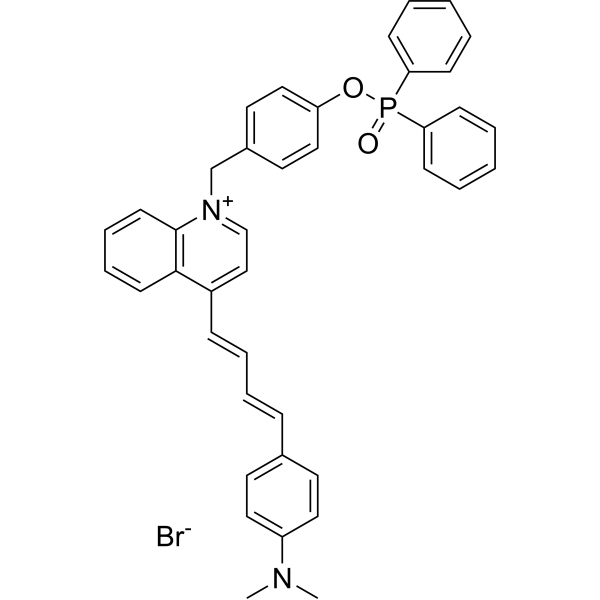 0 ImagesCat. No.: HY-149203MQA-P is a multifunctional near-infrared (NIR) fluorescent probe for simultaneously detecting ONOO-, viscosity, and polarity within mitochondria. MQA-P exhibits a remarkable turn-on response to ONOO- (λem=645 nm) and is highly sensitive to viscosity/polarity in the NIR channel with λem>704 nm. MQA-P exhibits excited-state intramolecular charge transfer (ESICT) feature that is highly polarity-sensitive by engineering N,N-dimethylamino as the electron donor and a quinoline cationic unit as the electron acceptor. MQA-P is used for ferroptosis or cancer diagnosis in vitro and in vivo via dual-channel images.
-
ICG-Tetrazine
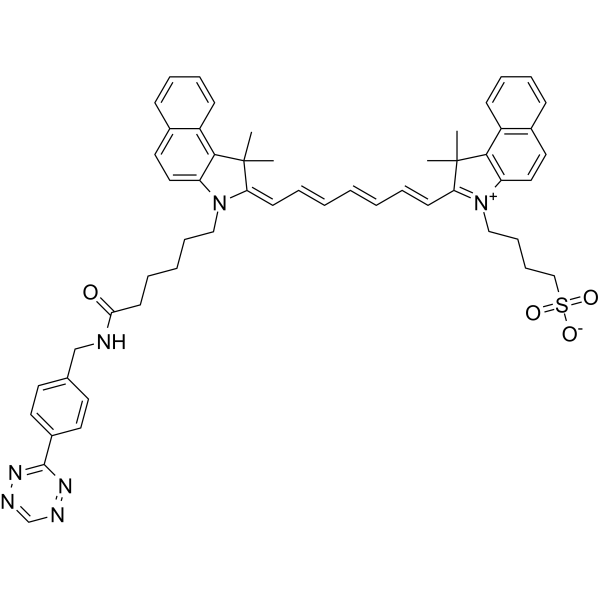 0 ImagesCat. No.: HY-W879342ICG-Tetrazine is a fluorescent dye.




