



Fluorescent Dye
Fluorescence is a phenomenon of photoluminescence in luminescence. When an atom is irradiated by light, some electrons around the nucleus jump from their original orbitals to higher energy orbitals under the influence of light energy, i.e., from the ground state to the first or second excited single-line state, etc. Due to the instability of the first or second excited singlet state, the electron returns from the excited singlet state to the ground state accompanied by released energy, resulting in fluorescence.
Fluorescent dyes can be covalently bound or physically adsorbed in the structure of the substance. The fluorescence properties allow for the characterization, localization and quantitative analysis of the labeled object. Fluorescent dyes have shown great potential for the detection of proteins, nucleic acids, cells, and immunoassays, attributed to the advantages in non-radioactive contamination, simple experimental operation and easy observation.
Fluorescent dyes have penetrated many fields such as pharmacology, physiology, environmental science, and information science, as well as functional studies of proteins and drug screening.
All Product Categories
-
Fluorescent Dye Related Products (4790)
Related Products (4790)

-
Antibodies (4)
-
Dextran-CY5.5 (MW 40000)
 0 ImagesCat. No.: HY-D2460BDextran-CY5.5 (MW 40000) is a CY5.5 (HY-D0924) labeled Dextran (HY-112624) conjugate. CY5.5 is a Cyanine dye (The excitation wavelength is usually 673 nm and the emission wavelength is 707 nm) that can be used for the labeling of proteins, antibodies and small molecular compounds. Dextran has an inhibitory effect on thrombocyte aggregation and coagulation factors and is used as a plasma volume expander.
-
JC-10
 0 ImagesJC-10 is a lipophilic mitochondrial membrane potential indicator and is a fluorescent dye. JC-10 accumulates and aggregates in healthy mitochondria to emit red fluorescence; exists as a monomer emitting green fluorescence in the cytosol or apoptotic cells with collapsed mitochondrial membrane potential, enabling measurement of mitochondrial depolarization via the green/red fluorescence ratio.
-
Datura Stramonium Lectin (Biotinylated)
 0 ImagesCat. No.: HY-NP0175Synonyms: DSL,BiotinylatedDatura Stramonium Lectin (DSL,Biotinylated) is a plant lectin that can be used as a probe to specifically bind biomolecules (such as polysaccharides, peptides, etc.).Datura Stramonium Lectin (DSL,Biotinylated) is a biological material or organic compound that can be used in life science research.
-
Cy3 hydrazide
 0 ImagesCat. No.: HY-172285CAS No.: 871514-32-8Cy3 hydrazide is a fluorescent probe for carbonylated proteins. Cy3 hydrazide covalently links to aldehyde or ketone residues on carbonylated proteins, reacts with protein carbonyl groups to form stable hydrazones, and enables fluorescent detection (Ex/Em = 555/570 nm).
-
Cresol red, 97%
 0 ImagesCresol red, 97% is an acidic phenolsulfonphthalein triphenylmethane dye. Cresol red, 97% generates reactive oxygen species and singlet oxygen under ultrasonic irradiation, interacts with bovine serum albumin, alters the structure of bovine serum albumin, and oxidizes the fluorescent amino acid residues of bovine serum albumin. Cresol red, 97% can be decolorized and biodegraded by *Absidia spinosa* M15, producing phenylacetic acid and benzoic acid metabolites. Cresol red, 97% serves as a pH indicator (orange at pH 1.8-yellow at pH 2.0, yellow at pH 7.0-purple at pH 8.8). Cresol red, 97% can be used to indicate pH, temperature and salinity.
-
AF 594 azide
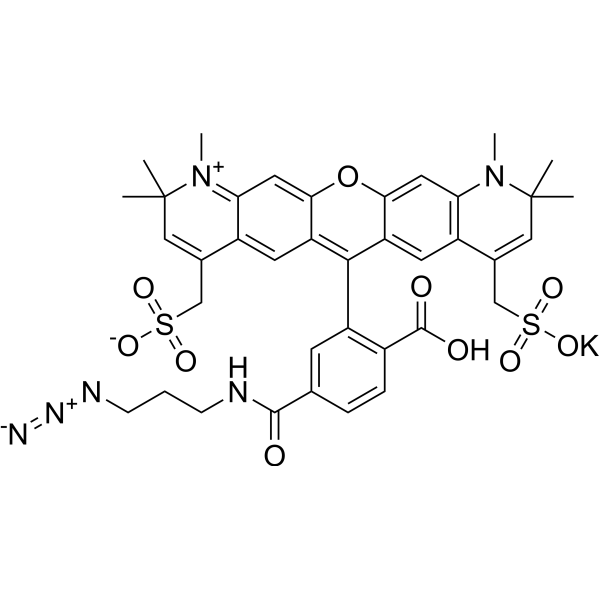 0 ImagesCat. No.: HY-D2161AF 594 azide is an azide derivative of the red fluorescent dye AF 594, which has high fluorescence quantum yield and high photostability (maximum absorption wavelength of 586 nm, maximum emission wavelength of 613 nm). AF 594 azide forms stable adducts by reaction of the azide group with alkynyl derivatives (terminal alkynes and cyclooctyne). It contains an azide group and can undergo copper-catalyzed azide-alkyne cycloaddition (CuAAc) with molecules containing alkyne groups. It can also undergo ring strain-promoted alkyne-azide cycloaddition (SPAAC) with molecules containing DBCO or BCN groups.
-
Cyanine 7 free acid bromide
 0 ImagesCat. No.: HY-N16309CAS No.: 3091879-31-8Cyanine 7 free acid bromide is a near-infrared fluorescent probe for labelling amine groups such as those on antibodies, nucleic acids, and proteins and can be detected using a variety of fluorescence detection techniques such as microscopy and flow cytometry.
-
4-(4,5-Diphenyl-1H-imidazol-2-yl)benzoyl chloride
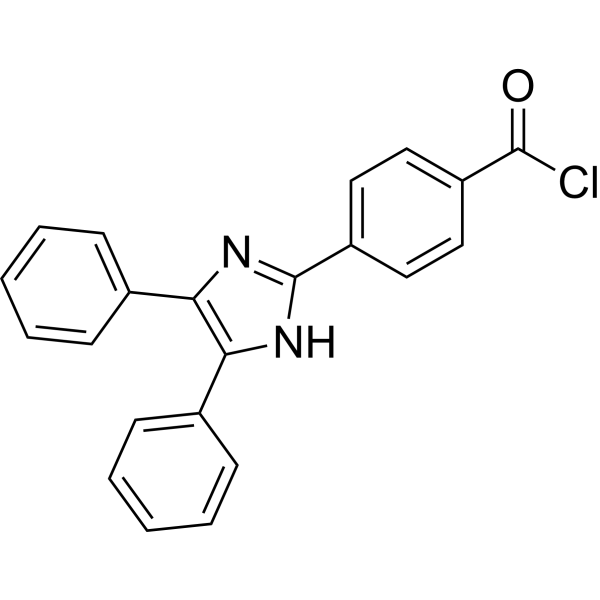 0 ImagesSynonyms: DIB-Cl4-(4,5-Diphenyl-1H-imidazol-2-yl)benzoyl chloride (DIB-Cl) is a fluorescent labeling reagent. 4-(4,5-Diphenyl-1H-imidazol-2-yl)benzoyl chloride can be used for labeling amines and successfully being applied to determine activator amines by HPLC.
-
Maackia Amurensis Lectin I (Fluorescein)
 0 ImagesCat. No.: HY-NP0137Synonyms: MAL I (Fluorescein)Maackia Amurensis Lectin I (MAL I) Fluorescein is a plant lectin that can be used as a probe to specifically bind biomolecules (such as polysaccharides, peptides, etc.).Maackia Amurensis Lectin I (MAL I) Fluorescein is a biological material or organic compound that can be used in life science research.
-
Vari Fluor 647 Carboxylic acid free acid
 0 ImagesCat. No.: HY-D1885Purity: 98.0%Vari Fluor 647 Carboxylic acid free acid is a carboxylic acid derivative of Vari Fluor. Vari Fluor carboxylic acid derivative is an inactive labeled fluorescent dye, which can be used to label proteins, antibodies, polysaccharides. The use of Vari Fluor carboxylic acid derivatives requires carboxylic acid activation.
-
Concanavalin A-AF647
 0 ImagesCat. No.: HY-NP164LSynonyms: Con A-AF647Concanavalin A-AF647 (Con A-AF647) is an AF647-labled Concanavalin A (HY-P2149). Concanavalin A is a Ca2+/Mn2+-dependent and mannose/glucose-binding plant lectin. Concanavalin A binds the N- and O-glycosylated proteins of head and neck carcinoma cells glycoproteins.
-
MitoA bromide
 0 ImagesCat. No.: HY-172342Purity: 99.4%MitoA (bromide) is a mitochondria-targeted H2S probe, which can be used to assess relative changes in mitochondrial levels of H2S in vivo. MitoA (bromide) can accumulate inside mitochondria within tissues in vivo due to tryphenylphosphonium (TPP) cation. MitoA (bromide) can be studied in research on myocardial ischemia.
-
TMRM
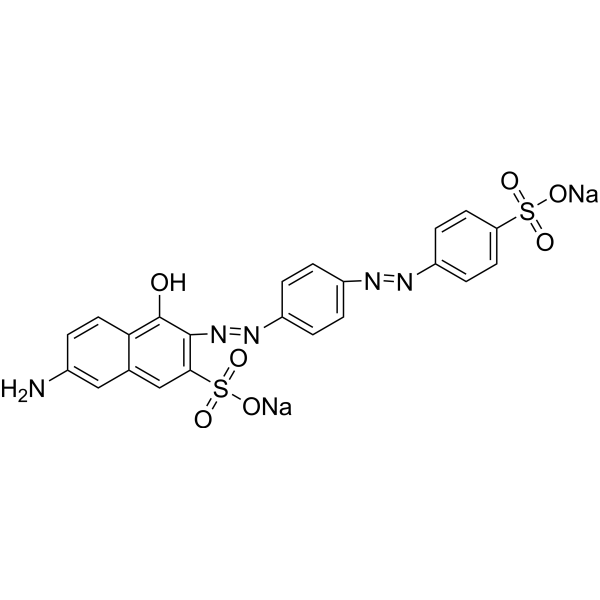
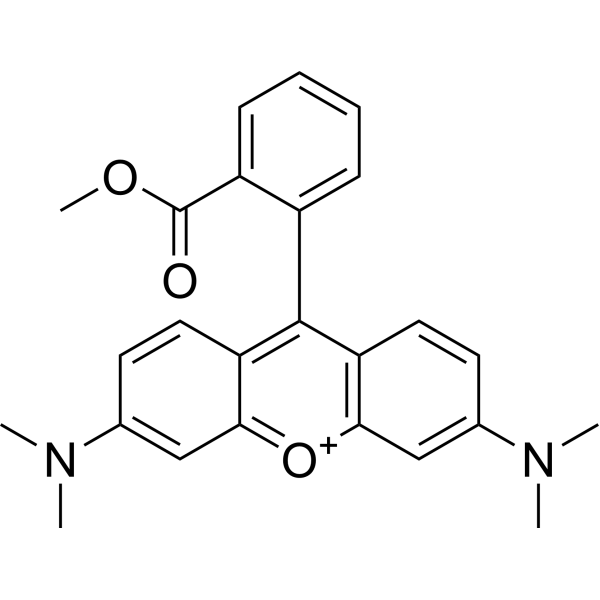 0 ImagesCat. No.: HY-D0984CAS No.: 115532-49-5Rhodamine dyes are membrane-permeable cationic fluorescent probes that specifically recognize mitochondrial membrane potentials, thereby attaching to mitochondria and producing bright fluorescence, and at certain concentrations, rhodamine dyes have low toxicity to cells, so they are commonly used to detect mitochondria in animal cells, plant cells, and microorganisms.
-
3,4,5,6-Tetrabromophenolsulfonephthalein
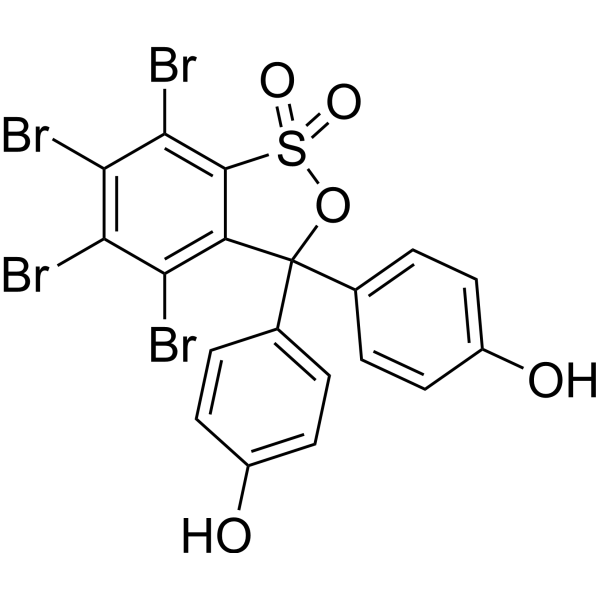 0 ImagesCat. No.: HY-D0895CAS No.: 77172-72-63,4,5,6-Tetrabromophenolsulfonephthalein is a stain for cell biology.
-
HKSOX-1m (5/6-mixture)
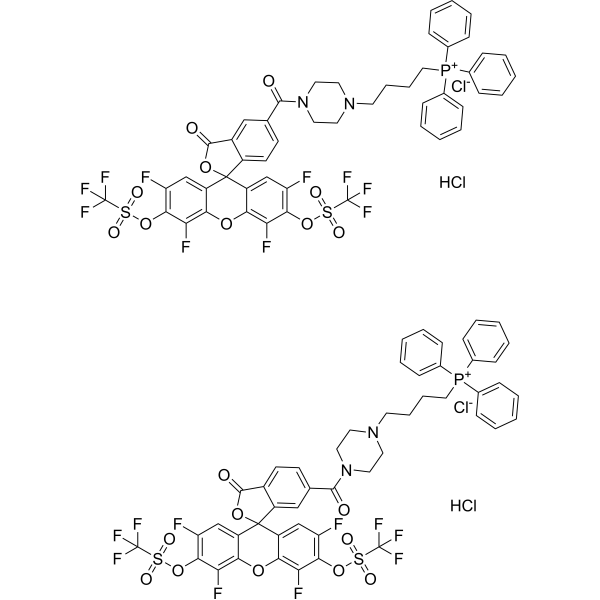 0 ImagesCat. No.: HY-D1156CAS No.: 1786411-19-5HKSOX-1m (5/6-mixture) is a O2 fluorescent probe for mitochondria-targeting (Ex/Em=509/534nm; green), exhibiting excellent selectivity and sensitivity toward O2 over a broad range of pH, strong oxidants, and abundant reductants found in cells.
-
GZ22-4
 0 ImagesCat. No.: HY-D2345Purity: 99.37%GZ22-4 is a near-infrared (NIR) fluorescent probe. GZ22-4 shows high affinity for carbonic anhydrase IX (CAIX), with a Kd of 0.2 nM. GZ22-4 can be used for the research of visualize CAIX-positive tumors.
-
Cyanine7.5 amine
 0 ImagesCat. No.: HY-133883CAS No.: 2104005-17-4Cyanine7.5 amine is a near-infrared Cy7.5-based dye and also a substrate for amide bond coupling (Ex/Em = 788 nm/808 nm). Cyanine7.5 amine contains a free amino group and can be used for coupling with activated carboxylic acid derivatives.
-
WST-1 (solution)
 0 ImagesCat. No.: HY-DY1100CAS No.: 150849-52-8WST-1 (solution) is a kind of water-soluble tetrazolium salt. WST induces the intracellular mitochondrial dehydrogenase to conduct NADH-dependent enzyme digestion reaction, releasing the water-soluble methyl benzene product. WST-1 can be used for the detection of cell proliferation and cytotoxicity, via the determination of the light absorption value at 450 nm.
Solvent and concentration: ddH2O: 10 mg/mL
-
NIR-H2O2
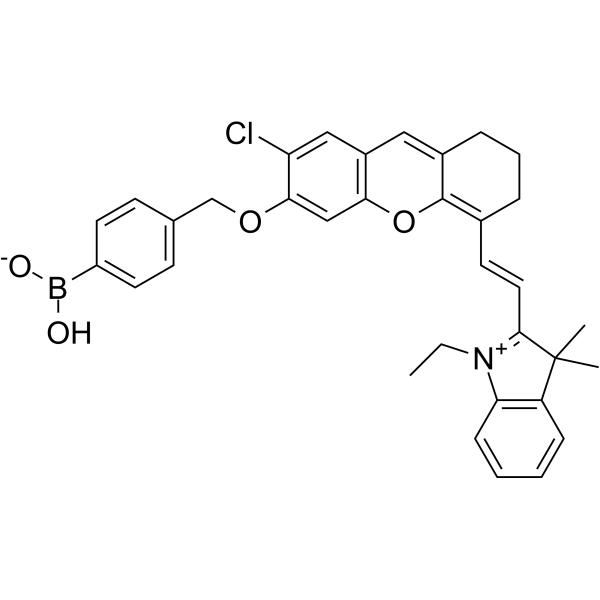 0 ImagesCat. No.: HY-D1065CAS No.: 1392488-04-8NIR-H2O2 is a cell-permeable near-infrared (NIR) fluorescent turn-on sensor. NIR-H2O2 has both absorption and emission in the NIR region. NIR-H2O2 responds to H2O2 with a large turn-on NIR fluorescence signal upon excitation in the NIR region. NIR-H2O2 is capable of imaging endogenously produced H2O2 in living cells and mice.




