



Fluorescent Dye
Fluorescence is a phenomenon of photoluminescence in luminescence. When an atom is irradiated by light, some electrons around the nucleus jump from their original orbitals to higher energy orbitals under the influence of light energy, i.e., from the ground state to the first or second excited single-line state, etc. Due to the instability of the first or second excited singlet state, the electron returns from the excited singlet state to the ground state accompanied by released energy, resulting in fluorescence.
Fluorescent dyes can be covalently bound or physically adsorbed in the structure of the substance. The fluorescence properties allow for the characterization, localization and quantitative analysis of the labeled object. Fluorescent dyes have shown great potential for the detection of proteins, nucleic acids, cells, and immunoassays, attributed to the advantages in non-radioactive contamination, simple experimental operation and easy observation.
Fluorescent dyes have penetrated many fields such as pharmacology, physiology, environmental science, and information science, as well as functional studies of proteins and drug screening.
All Product Categories
-
Fluorescent Dye Related Products (4790)
Related Products (4790)

-
Antibodies (4)
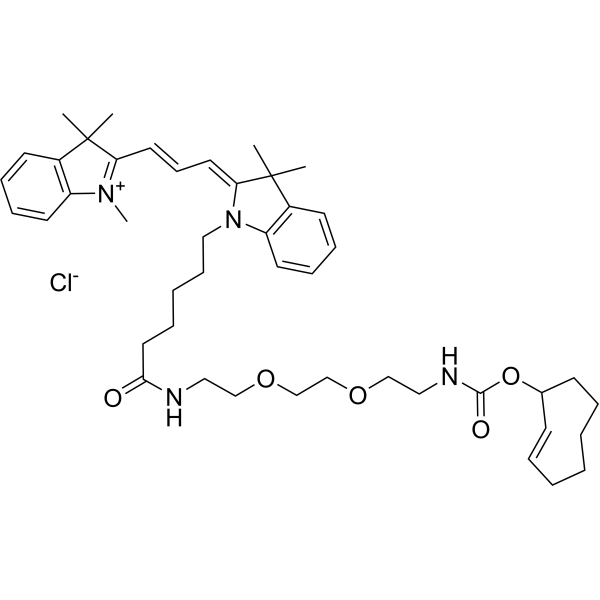
-
Cyanine5.5 NHS ester tetrafluoroborate
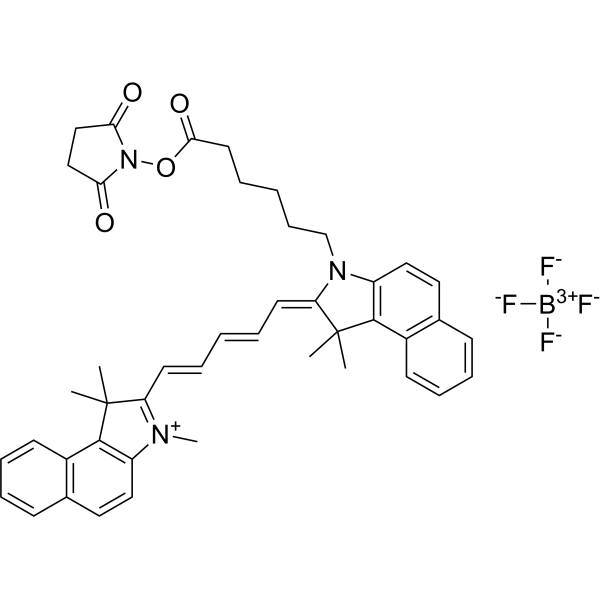 0 ImagesCyanine5.5 NHS ester tetrafluoroborate belongs to the cyanine dye series and is a common fluorescent marker for biomolecules that can interact with biomolecules. Cyanine dyes may also bind to double-helical DNA through intercalation and exhibit enhanced fluorescence upon binding.
-
sulfo-Cy7.5 amine
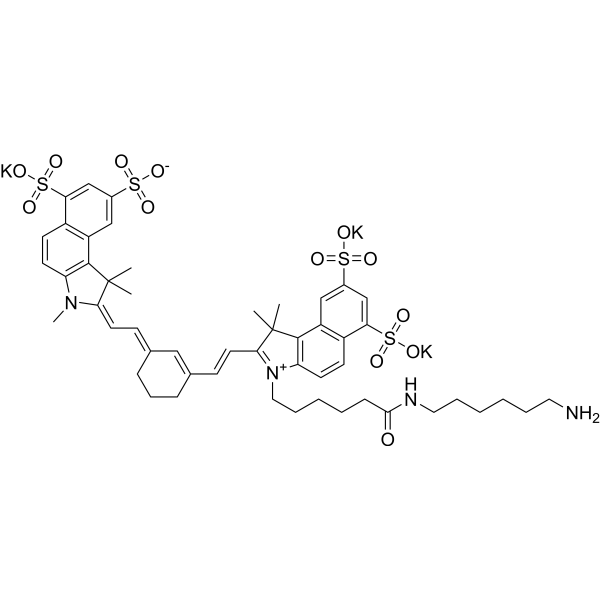 0 ImagesCat. No.: HY-D1863sulfo-Cy7.5 amine is a dye derivative of Cyanine 7.5 (Cy7.5) (HY-D0926) bearing an amine group. The sulfonate ion increases the water solubility of the compound, making it suitable for use in aqueous solutions. Cy7.5 is a near-infrared fluorescent dye commonly used for biolabeling and cell imaging. The amine functionality of sulfo-Cy7.5 amine can react with carboxyl groups to form covalent bonds. Sulfo-Cy7.5 amine can bind to biomolecules such as proteins and antibodies to track their location and dynamic changes in biological samples.
-
Abz-AGLA-Nba TFA
 0 ImagesCat. No.: HY-P4406AAbz-AGLA-Nba TFA is a fluorogenic substrate for the determination of protease activity. Abz-AGLA-Nba TFA is hydrolyzed to release aminoacyl benzimide (Abz-AGLA) and 2-naphthylaminoacyl (Nba). The product Abz-AGLA produced by this hydrolysis reaction is fluorescent under ultraviolet light and can emit a fluorescent signal.
-
3,3'-Dipropylthiacarbocyanine iodide
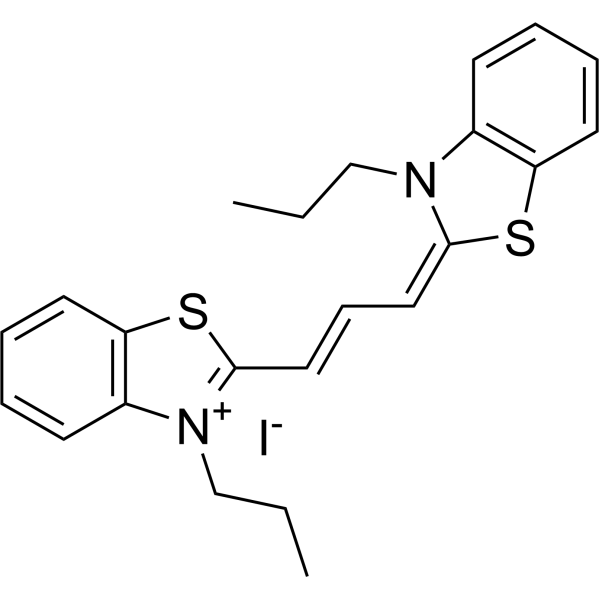 0 Images3,3'-Dipropylthiacarbocyanine (iodide) is a multifunctional dye. Dyes are important tools in biological experiments. They can help researchers observe and analyze cell structures, track biomolecules, evaluate cell functions, distinguish cell types, detect biomolecules, study tissue pathology and monitor microorganisms. Their applications range from basic scientific research to clinical A wide range of diagnostics. Dyes are also widely used in traditional fields such as textile dyeing, as well as in emerging fields such as functional textile processing, food pigments and dye-sensitized solar cells.
-
Citrus red 2
 0 ImagesSynonyms: C.I. Solvent red 80Citrus red 2 (CI Solvent red 80) is a synthetic dye with coloring power and antioxidant activity. Citrus red 2 can be used in food and cosmetics to provide a bright color to the product. Citrus red 2 is also used as a reference substance for testing and analysis in certain situations.
-
Vari Fluor 750 Carboxylic acid(free acid)
 0 ImagesCat. No.: HY-D1821Synonyms: VF 750 Carboxylic acid(free acid)Vari Fluor 750 Carboxylic acid (VF 750 Carboxylic acid) free acid is a carboxylic acid derivative of Vari Fluor. Vari Fluor carboxylic acid derivatives are unactivated labeled fluorescent dyes for protein, antibody, and polysaccharide labeling that require carboxylic acid activation for use.
-
Sulfo-Cy3(Me)COOH sodium
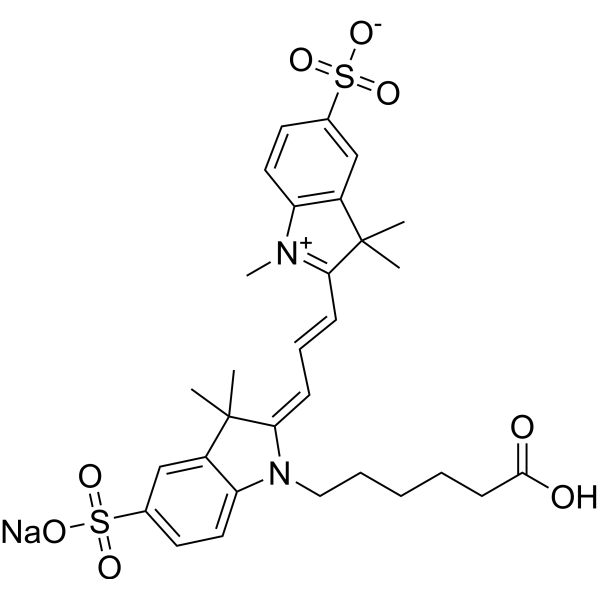 0 ImagesCat. No.: HY-W748361CAS No.: 1941997-61-0Sulfo-Cy3(Me)COOH sodium is a derivative of Cy3 (Cyanine3) (HY-D0822) dye containing sulfonate ions. Trisulfo-Cy3-acid disodium contains sulfonate ions and has improved water solubility.
-
HKOCl-4m
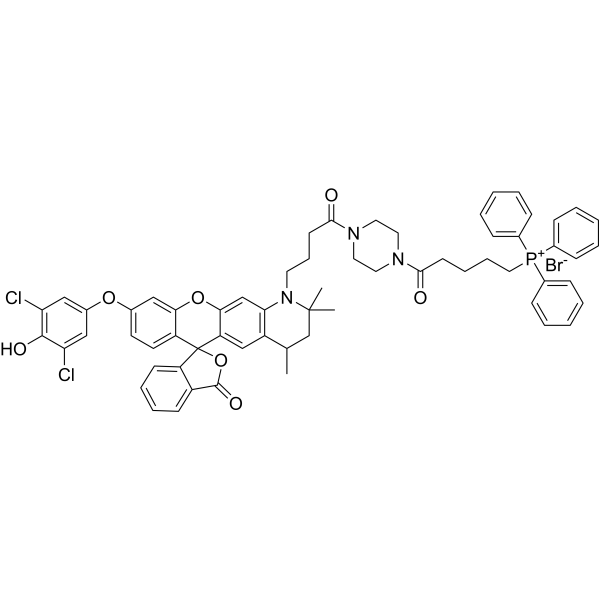 0 ImagesHKOCl-4m is a selective and mitochondria-targeting rhodol-based fluorescent probe for monitoring mitochondrial hypochlorous acid (HOCl).
-
Vat Blue 2
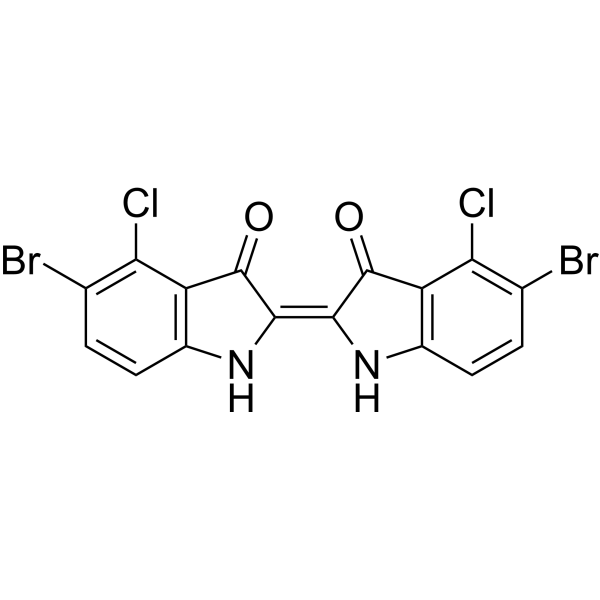 0 ImagesCat. No.: HY-D1195CAS No.: 29245-44-1Vat Blue 2, a indigo (HY-N0335) derivative, is a dark blue 5,5'-dibromo-4,4'-dichloroindigo dye.
-
MQA-P TFA
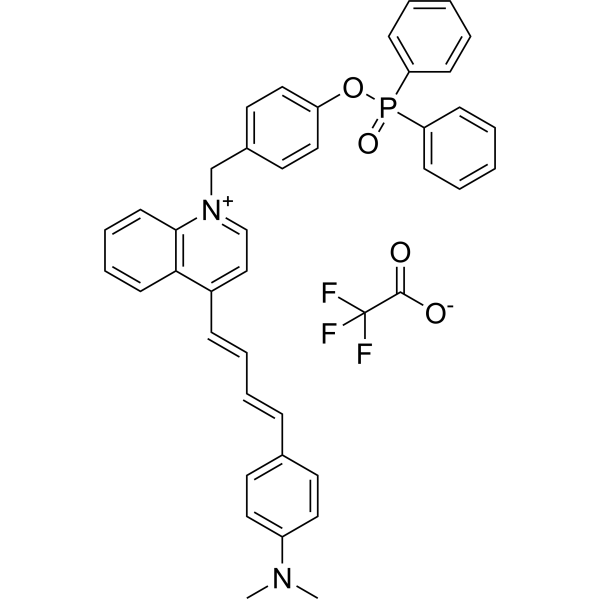 0 ImagesCat. No.: HY-149203AMQA-P is a multifunctional near-infrared (NIR) fluorescent probe that simultaneously detects ONOO-, viscosity, and polarity within mitochondria. MQA-P exhibits significant response to ONOO-, λem=645 nm; and NIR channel at λem>704 nm Medium is highly sensitive to viscosity/polarity. MQA-P possesses excited-state intramolecular charge transfer (ESICT) properties that are highly sensitive to polarity by designing the N,N-dimethylamino group as the electron donor and the quinoline cation unit as the electron acceptor. MQA-P is used for ferroptosis or cancer diagnosis in vitro and in vivo via dual-channel images.
-
Fmoc-Lys(5-FITC)-OH
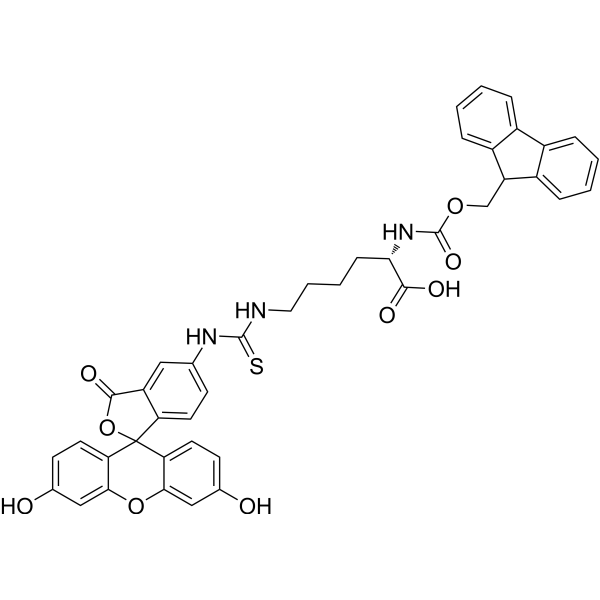 0 ImagesCat. No.: HY-147104CAS No.: 1095493-05-2Fmoc-Lys(5-FITC)-OH is a marker for polypeptides or proteins. FITC is a fluorescence probe for the labeling of amines. FITC is a pH- and Cu2+-sensitive fluorescence dye.
-
DSPE-PEG5000-Fluor 647
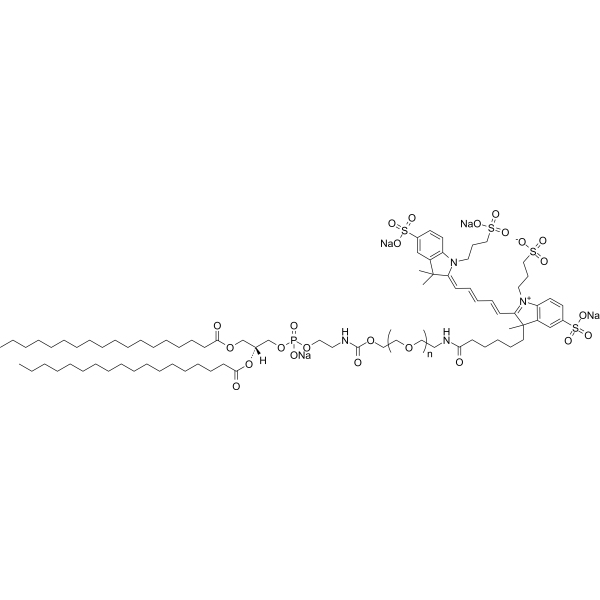 0 ImagesCat. No.: HY-160279DSPE-PEG5000-Fluor 647 is a fluorescent lipid (Ex/Em=648/671 nm) composed of PEG-lipid-dye conjugation. DSPE is a phospholipid. Fluor 647 is a fluorescent dye. DSPE-PEG5000-Fluor 647 can be used to prepare nanoparticles or liposomes with fluorescent signals.
-
FITC-Ahx-β-Amyloid (1-42), (rat/mouse) tris
 0 ImagesCat. No.: HY-P1388FSynonyms: FITC-Ahx-Amyloid β-peptide (1-42) (rat/mouse) trisFITC-Ahx-β-Amyloid (1-42), (rat/mouse) (tris) (FITC-Ahx-Amyloid β-peptide (1-42) (rat/mouse) (tris)) is a fluorescently labeled (FITC) form of β-Amyloid (1-42), (rat/mouse) (HY-P1388), which can be used in Alzheimer's disease-related research, such as aggregation, fiber formation, cellular uptake or imaging experiments. This product is provided in the form of Tris salt.
-
NHS-5(6)Carboxyrhodamine
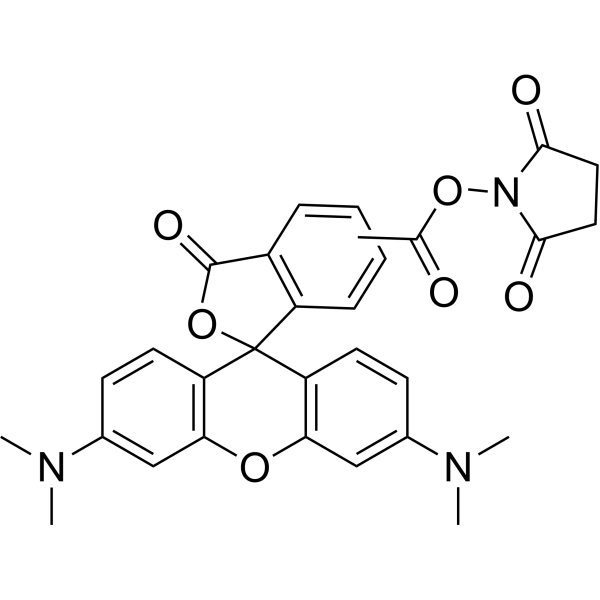 0 ImagesCat. No.: HY-D0167CAS No.: 150408-83-6NHS-5(6)Carboxyrhodamine is a dye used for fluorescence labeling applications, where accurate dye/protein ratios can be obtained under native conditions.
-
Ulex Europaeus Agglutinin I
 0 ImagesCat. No.: HY-NP090Synonyms: UEA IUlex Europaeus Agglutinin I (UEA I) is a plant lectin that can be used as a probe to specifically bind biomolecules (such as polysaccharides, peptides, etc.).Ulex Europaeus Agglutinin I (UEA I) is a biological material or organic compound that can be used in life science research.
-
AC-green
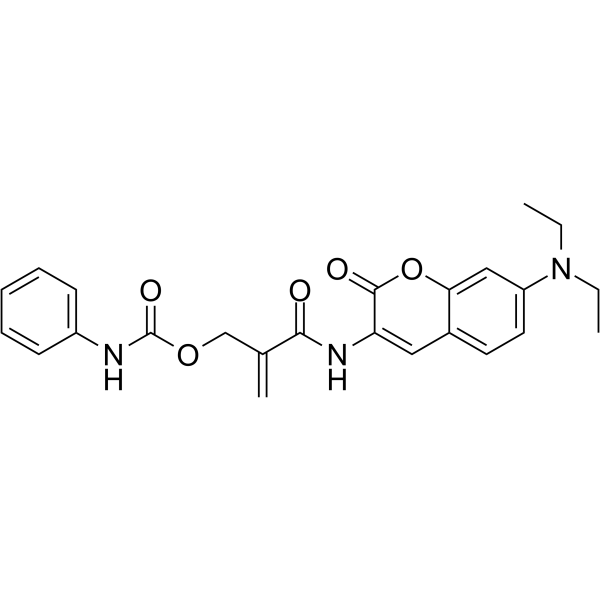 0 ImagesSynonyms: VDP-greenAC-green (VDP-green) is a β-allyl carbamate fluorescent probe for specifically imaging vicinal dithiol proteins (VDPs) in living systems (λex/λem=400/475 nm). AC-green can detect the reduced bovine serum albumin (rBSA) with high sensitivity. AC-green displays low toxicity and features high sensitivity, and is suitable for sensing VDPs in living cells and zebrafishes.
-
AzGGK TFA
 0 ImagesCat. No.: HY-148835APurity: 99.77%AzGGK TFA is an unnatural amino acid. AzGGK TFA is site-specifically incorporated into proteins via genetic-code expansion. AzGGK TFA can be used as a site-specific probe for ubiquitylation and SUMOylation. AzGGK TFA is a click chemistry reagent, it contains an Azide group and can undergo copper-catalyzed azide-alkyne cycloaddition reaction (CuAAc) with molecules containing Alkyne groups. It can also undergo strain-promoted alkyne-azide cycloaddition (SPAAC) reactions with molecules containing DBCO or BCN groups.
-
Rhodamine-PEG2000
 0 ImagesCat. No.: HY-D2892DRhodamine-PEG2000 a fluorescent PEG derivative composed of Rhodamine B (HY-Y0016) and PEG. Rhodamine-PEG2000 can be used for fluorescent labeling and imaging (Ex/Em=546/610 nm).
-
Coumarin 314
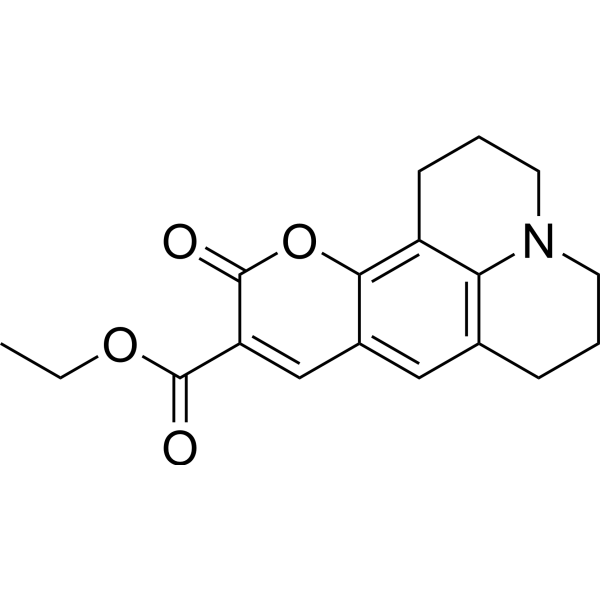 0 ImagesCoumarin 314 is a dye which has an intense absorption in the visible and additionally presents a large solvent dependence.




