



KMO Inhibitor
- 1
-
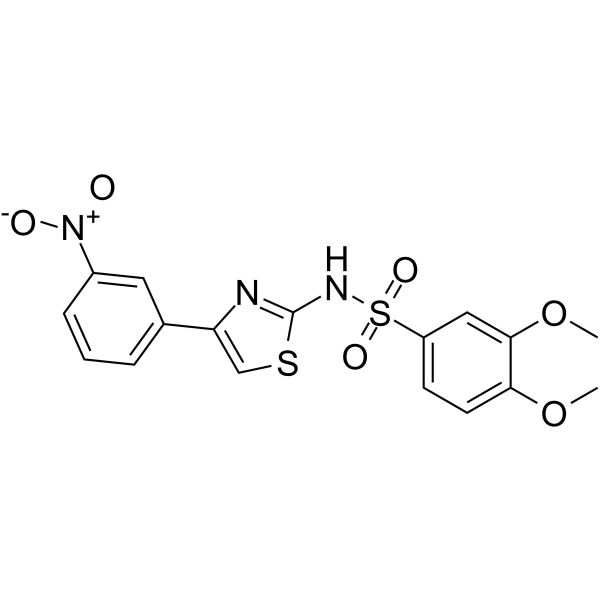
Ro 61-8048
 0 Images
Ro 61-8048 is an orally active and selective inhibitor of kynurenine 3-hydroxylase, with an IC50 of 37 nM. Ro 61-8048 provokes a significant increase of extracellular kynurenic acid concentrations.
-
TES-1025
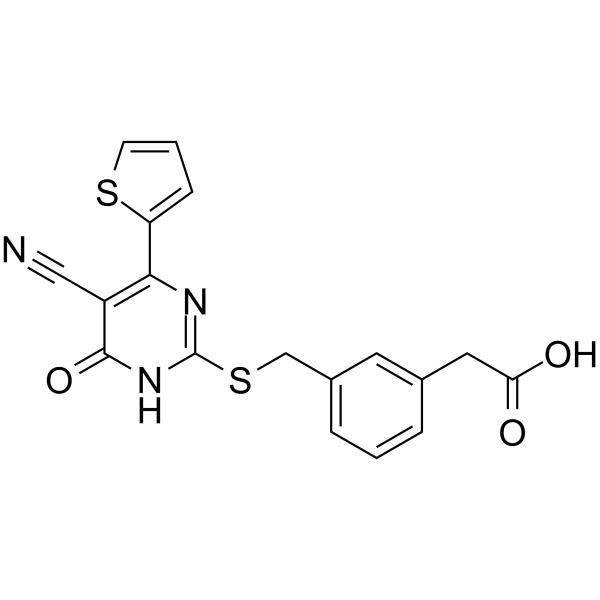 0 ImagesSynonyms: ACMSD-IN-1
TES-1025 (ACMSD-IN-1) is a potent and selective human α-amino-β-carboxymuconate-ε-semialdehyde decarboxylase (ACMSD) inhibitor with an IC50 of 13 nM.
-
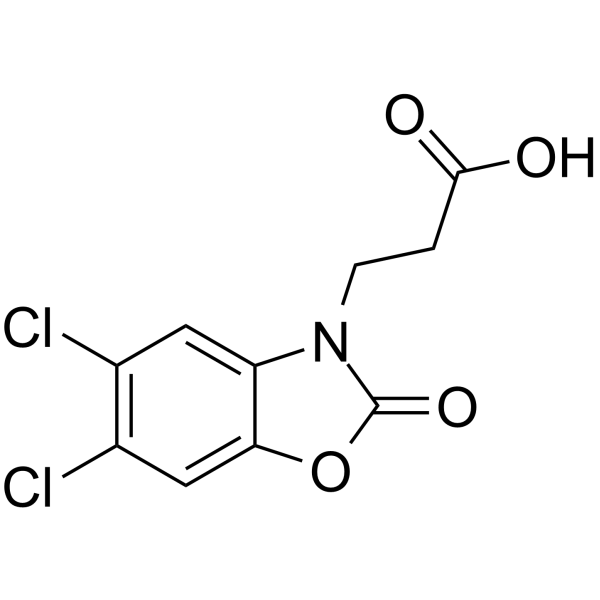
GSK180
 0 Images
GSK180 is a selective, competitive, and potent inhibitor of kynurenine-3-monooxygenase (KMO), a key enzyme of tryptophan metabolism (IC50, ~6 nM), but shows negligible activity against other enzymes on the tryptophan pathway. GSK180 rapidly changes levels of kynurenine pathway metabolites, and acts as a useful tool to probe the therapeutic potential of KMO inhibition.
-
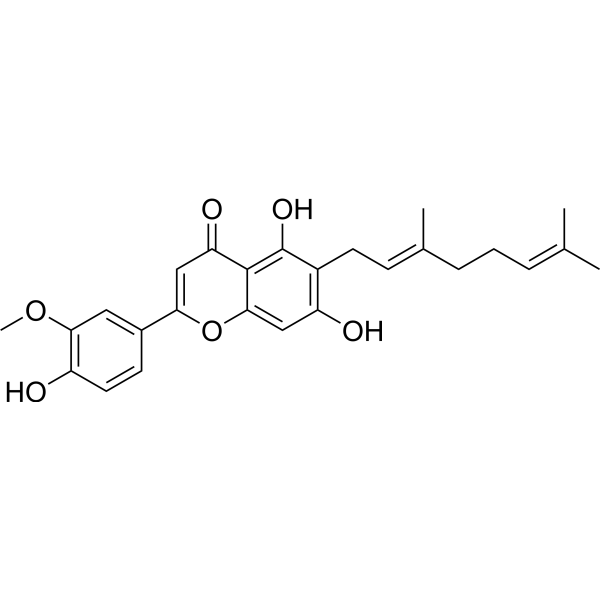
Cannflavin A
 0 Images
Cannflavin A can be isolated from Cannabis sativa L.. Cannflavin A has anti-cancer, neuroprotective and anti-inflammatory activity. Cannflavin A inhibits Aβ1-42 aggregation. Cannflavin A also inhibits kynurenine-3-monooxygenase (KMO) (IC50 = 29.4 μM). Cannflavin A activates apoptosis via caspase-3 cleavage. Cannflavin A exerts anti-inflammatory effects by inhibiting pro-inflammatory enzymes, including prostaglandin E2 and cytochrome c oxidases I and II in PC12 cell line.
-
GSK 366
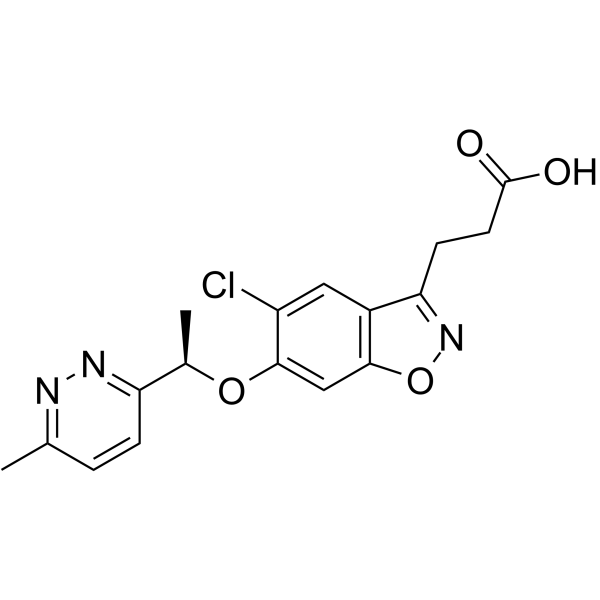 0 Images
GSK 366 is a type II kynurenine-3-monooxygenase (KMO) inhibitor with IC50 values of 2.3 nM and 0.7 nM for human KMO and P. fluorescens-KMO (Pf-KMO). GSK 366 binds to KMO’s substrate site, prevents productive NADPH association, substrate binding, and FAD hydroperoxy species formation. GSK 366 does not stimulate hydrogen peroxide (H2O2) production and reduces H2O2 levels. GSK 366 can be used for the researches of inflammation and neurological disease, such as acute pancreatitis multiple organ dysfunction syndrome and Alzheimer’s disease.
-
GSK065
 0 ImagesArt. -Nr.: HY-117086CAS. Nr.: 1953156-61-0
GSK065 is a KMO inhibitor with an IC50 of 2.5 nM and a Ki of 0.05 nM. GSK065 prevents the effective binding of NADPH to its substrate. GSK065 can be used in studies related to multiple organ dysfunction syndrome associated with acute pancreatitis.
-
KMO-IN-1
 0 ImagesArt. -Nr.: HY-182692CAS. Nr.: 1953156-92-7
KMO-IN-1 is a KMO inhibitor with a mean pIC50 of 8.5 against KMO. KMO-IN-1 can be used in the research of acute pancreatitis.
-
Cannflavin A (Standard)
 0 ImagesArt. -Nr.: HY-W748591RCAS. Nr.: 76735-57-4
Cannflavin A (Standard) is the analytical standard of Cannflavin A. This product is intended for research and analytical applications. Cannflavin A can be isolated from Cannabis sativa L.. Cannflavin A has anti-cancer, neuroprotective and anti-inflammatory activity. Cannflavin A inhibits Aβ1-42 aggregation. Cannflavin A also inhibits kynurenine-3-monooxygenase (KMO) (IC50 = 29.4 μM). Cannflavin A activates apoptosis via caspase-3 cleavage. Cannflavin A exerts anti-inflammatory effects by inhibiting pro-inflammatory enzymes, including prostaglandin E2 and cytochrome c oxidases I and II in PC12 cell line.
-
JM6
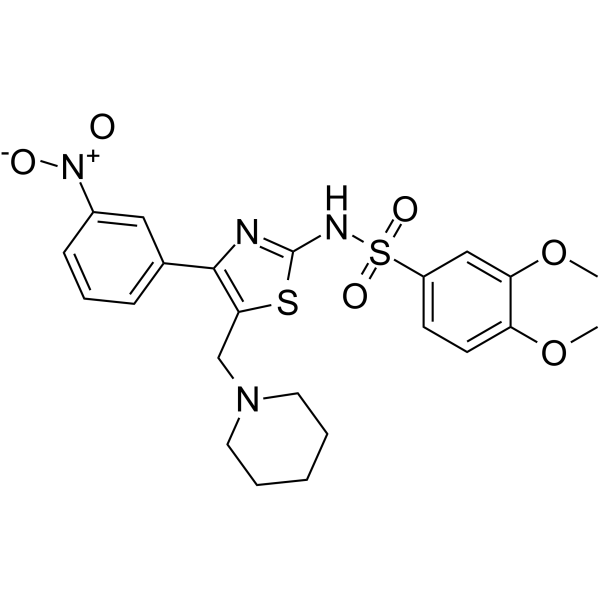 0 ImagesArt. -Nr.: HY-15500CAS. Nr.: 1008119-83-2
-
CHDI-340246
 0 ImagesArt. -Nr.: HY-182456CAS. Nr.: 1426319-74-5
CHDI-340246 is an orally active kynurenine monooxygenase (KMO) inhibitor. CHDI-340246 blocks KMO activity, alters the metabolic flux of the kynurenine pathway, inhibits the production of 3-hydroxykynurenine and quinolinic acid, elevates the levels of kynurenine and kynurenic acid, and restores electrophysiological abnormalities in transgenic mouse models of Huntington's disease. CHDI-340246 can be used in studies related to Huntington's disease.
-
Ro 61-8048 (Standard)
 0 Images
Ro 61-8048 (Standard) is the analytical standard of Ro 61-8048. This product is intended for research and analytical applications. Ro 61-8048 is an orally active and selective inhibitor of kynurenine 3-hydroxylase, with an IC50 of 37 nM. Ro 61-8048 provokes a significant increase of extracellular kynurenic acid concentrations.
-
TES-1025 (Standard)
 0 ImagesArt. -Nr.: HY-111365RCAS. Nr.: 1883602-21-8
- 1



