



mAChR2 Agonist
- 1
-
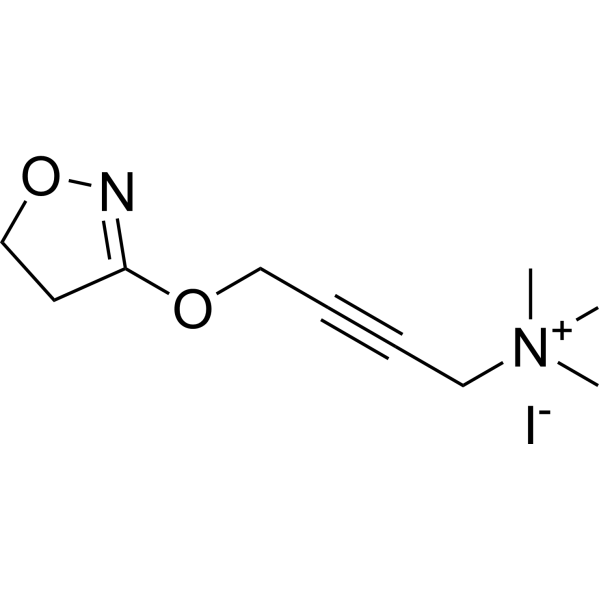
Iperoxo
 0 Images
Iperoxo is a potent superagonist of muscarinic acetylcholine receptor (mAChR) that activates M1, M2 and M3 receptors with pEC50 of 9.87, 10.1 and 9.78. Iperoxo can be used for direct probing activation-related conformational transitions of muscarinic receptors when labeled with tritium.
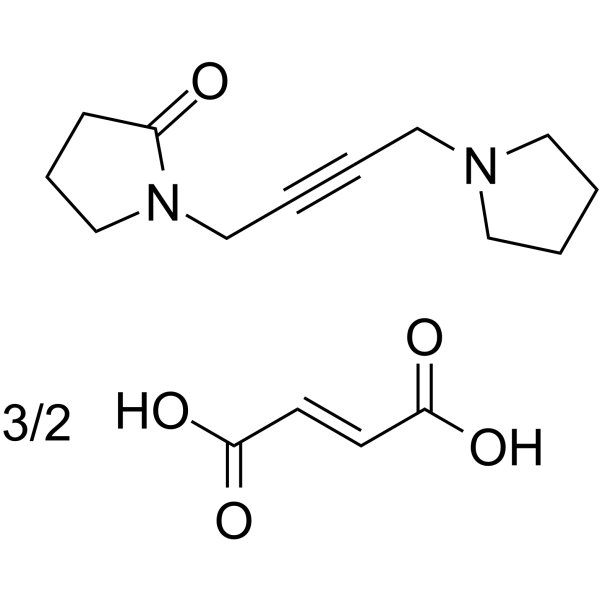
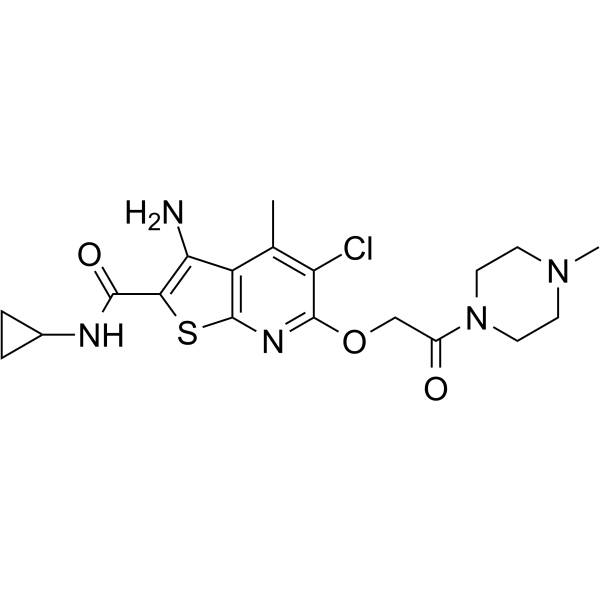
-
Milameline hydrochloride
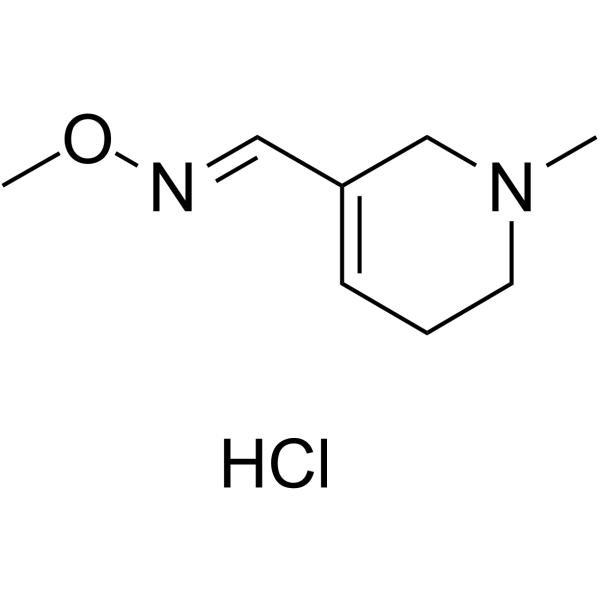 0 ImagesCat. No.: HY-107650CAS No.: 139886-04-7Synonyms: CI 979 hydrochloride; RU 35926 hydrochloride
Milameline (CI 979; RU35926) hydrochloride is a nonselective, partical and orally active muscarinic receptor agonist that improves cognition. Milameline hydrochloride has equal affinity for different subtypes of human muscarinic receptors with IC50 of 1.3 µM for M1-, 1.1 µM for M2-, 1.5 µM for M3-, and 1.9 µM for M4-muscarinic receptors. Milameline hydrochloride has a higher affinity for sites [3H]CMD (IC50 = 20 nM), than [3H]QNB, (IC50 = 3059 nM). Milameline hydrochloride produces both central and peripheral cholinergic effects and reverses the cognitive deficits induced by Scopolamine (HY-N0296). Milameline hydrochloride can be used for the study of Alzheimer’s Disease.
-
Lu AE51090
 0 Images
Lu AE51090 is selective muscarinic M1 receptor agonist with blood-brain barrier penetration. Lu AE51090 activates human M1 receptor with EC50 of 61 nM, while showing no significant agonism at M2-M5 receptors. Lu AE51090 exerts procognitive effects in mice. Lu AE51090 can be used for the study of Alzheimer’s disease (AD) and cognitive impairment associated with schizophrenia (CIAS).
-
Milameline
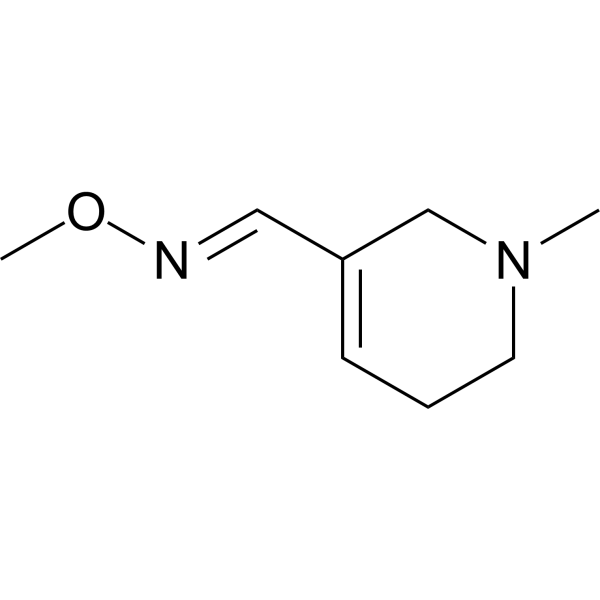 0 ImagesCat. No.: HY-135460CAS No.: 139886-32-1Synonyms: CI-979; RU35926
Milameline (CI-979; RU35926) is a nonselective, partical and orally active muscarinic receptor agonist that improves cognition. Milameline has equal affinity for different subtypes of human muscarinic receptors with IC50 of 1.3 µM for M1-, 1.1 µM for M2-, 1.5 µM for M3-, and 1.9 µM for M4-muscarinic receptors. Milameline has a higher affinity for sites [3H]CMD (IC50 = 20 nM), than [3H]QNB, (IC50 = 3059 nM). Milameline produces both central and peripheral cholinergic effects and reverses the cognitive deficits induced by Scopolamine (HY-N0296). Milameline can be used for the study of Alzheimer’s Disease.
-
Milameline hydroiodide
 0 ImagesCat. No.: HY-107650ASynonyms: CI 979 hydroiodide; RU 35926 hydroiodide
Milameline (CI 979; RU35926) hydroiodide is a nonselective, partical and orally active muscarinic receptor agonist that improves cognition. Milameline hydroiodide has equal affinity for different subtypes of human muscarinic receptors with IC50 of 1.3 µM for M1-, 1.1 µM for M2-, 1.5 µM for M3-, and 1.9 µM for M4-muscarinic receptors. Milameline hydroiodide has a higher affinity for sites [3H]CMD (IC50 = 20 nM), than [3H]QNB, (IC50 = 3059 nM). Milameline hydroiodide produces both central and peripheral cholinergic effects and reverses the cognitive deficits induced by Scopolamine (HY-N0296). Milameline hydroiodide can be used for the study of Alzheimer’s Disease.
-
Dicyclomine
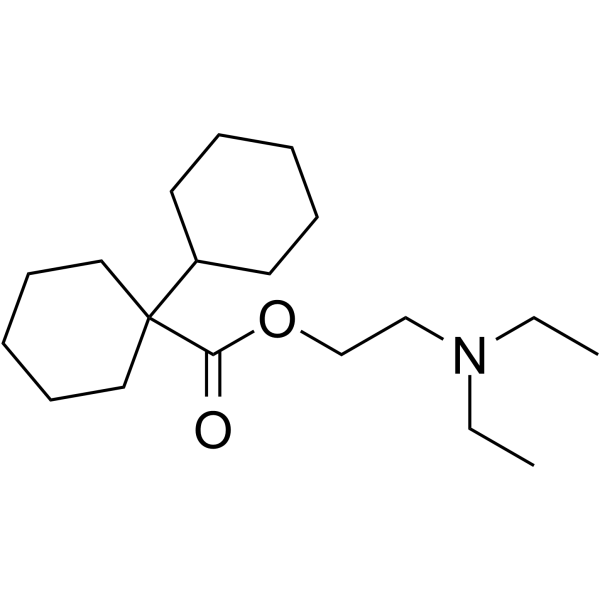 0 Images
Dicyclomine (Dicycloverine) is a potent and orally active muscarinic cholinergic receptors antagonist. Dicyclomine (Dicycloverine) shows high affinity for muscarinic M1 receptor subtype (Ki=5.1 nM) and M2 receptor subtype (Ki=54.6 nM) in brush-border membrane and basal plasma membranes, respectively. Dicyclomine is an antispasmodic agent and relieves smooth muscle spasm of the gastrointestinal tract in vivo.
-
A-72055
 0 ImagesCat. No.: HY-108157CAS No.: 150358-76-2
A-72055 is a partial agonist of muscarinic receptors. A-72055 has binding activity to both M1 and M2 receptors, with Ki values of 32 nM and 30 nM, respectively. A-72055 can enhance cognitive function and improve learning and memory deficits. A-72055 has better security. A-72055 can be used for research on neurological disorders such as cognitive impairment.
-
M1/M2/M4 muscarinic agonist 1
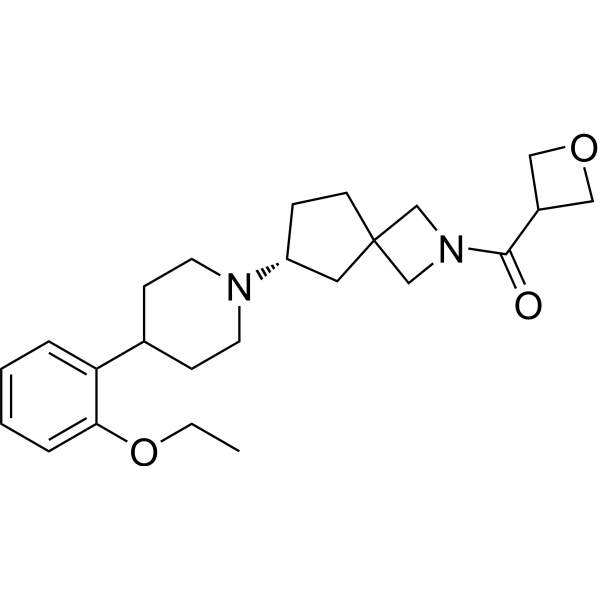 0 ImagesCat. No.: HY-149704CAS No.: 2640109-42-6
M1/M2/M4 muscarinic agonist 1 (Compound 42) is a muscarinic M4/M1/M2 agonist with EC50 values of 6.5, 26 and 210 nM for M4/M1/M2, respectively. M1/M2/M4 muscarinic agonist 1 can be used for research on mental diseases, such as schizophrenia, delusion, etc.
-
TAAR1 agonist 2
 0 ImagesCat. No.: HY-W909173CAS No.: 1804128-38-8
TAAR1 agonist 2 (compound 30) is a full agonist of trace amine-associated receptor 1 (TAAR1) (pEC50=7.5). TAAR1 agonist 2 also exhibits agonist activity at H1 receptors and activates several members of the muscarinic acetylcholine receptor family, such as the M2 receptor (pEC50=5). TAAR1 agonist 2 can be used in the study of neuropsychiatric diseases.
-
Arecaidine-propargyl ester
 0 ImagesCat. No.: HY-183853CAS No.: 35516-99-5
Arecaidine-propargyl ester is a selective M2 muscarinic receptor agonist with blood-brain barrier permeability, with a pKi of 5.91 for hm1, 7.06 for hm2, 6.07 for hm3, 6.01 for hm4, and 6.03 for hm5. Arecaidine-propargyl ester stimulates central and peripheral muscarinic receptors. Arecaidine-propargyl ester increases intracellular ROS, induces DNA damage and Apoptosis, and upregulates the expression of MnSOD and SIRT1. Arecaidine-propargyl ester reduces sympathetic nerve outflow, induces dose-dependent hypotension, and triggers negative chronotropic effects at high peripheral doses. Arecaidine-propargyl ester can be used in research related to Alzheimer's disease and glioblastoma.
- 1



